

Finding the right crate for a small breed puppy matters more than you might expect. The right crate provides a secure den-like space for sleep, helps with housetraining, and keeps a curious puppy safe when you cannot supervise. For small breeds you must balance interior room, visibility, and portability without sacrificing security or easy cleaning. This guide highlights the top seven crates suited to small breed puppies and explains how we evaluated size, durability, ventilation, and maintenance. Read on for the features that matter and quick guidance to help you pick the best crate for your puppy.
Top Picks at a Glance
| Best Overall Crate for Small Breed Puppy A well-rounded crate that suits most small puppies and owners | MidWest iCrate 24-Inch Single Door |  |
| Best Budget Crate for Small Breed Puppy A low-cost crate that still provides safe, basic confinement | FDW 18" Foldable Dog Crate |  |
| Best Compact Crate A small-footprint crate ideal for tight spaces and apartments | MidWest iCrate 18-Inch |  |
| Best Lightweight Crate An easy-to-move crate for frequent rearranging or short trips | Petsfit Collapsible Dog Crate Small |  |
| Best Heavy-Duty Crate A tougher, more durable crate built for chewers and escape artists | Aurapaws 30-Inch Diamond Mesh Dog Crate |  |
| Best Easy-Clean Crate A crate designed for fast cleanup after accidents or shedding | Amazon Basics Foldable Metal Dog Crate 24" |  |
| Best Travel Crate A travel-ready crate that meets portability and airline-friendly needs | Petprsco Soft Collapsible Dog Crate 24" |  |
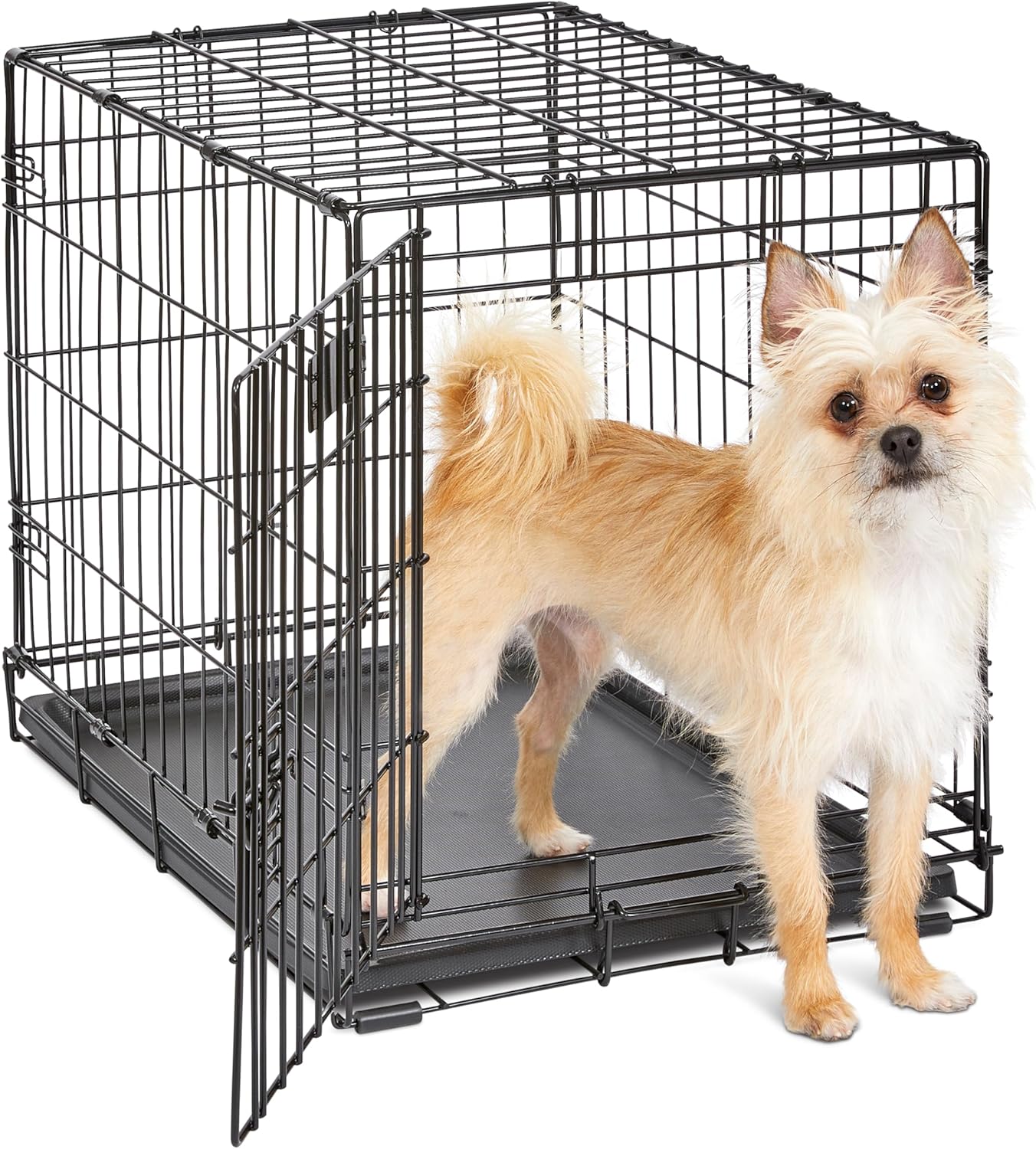
MidWest iCrate 24-Inch Single Door
Best Overall Crate for Small Breed Puppy
| Breed Recommendation | Small |
|---|---|
| Included Components | Divider, Removable Tray |
| Material Type | Metal |
| Number of Doors | 2 |
| Gap Size | 1.5 inches |
The MidWest iCrate 24-inch single door is a basic folding wire crate built for small dogs and puppies and is optimized for crate training and everyday containment. It sets up without tools, folds flat for storage, and includes a removable divider panel so the same crate can be used as a puppy grows. The slide-bolt latch has a Paw Block and locking tips for added escape resistance, and the leak-proof pan plus rubber feet make cleaning and floor protection straightforward. The metal wire construction with a black e-coat finish offers good ventilation and visibility so puppies can see their surroundings while staying contained. Practical limits are its small interior size—dogs near the top of the recommended weight range may need the next size up for comfort—and the simple wire build is not designed for heavy chewers or long-term outdoor exposure. For at-home crate training and short-term travel this crate covers the essentials with a durable, easy-to-clean design.
Best for: Buyers who need a practical, easy-to-clean crate to start crate training a small-breed puppy and want a unit that grows with the dog.
Less Ideal for: Owners who require a heavy-duty, chew-proof kennel or who need a larger, more spacious crate for bigger or long-legged small breeds.
- Includes divider panel to adapt from puppy to adult
- Slide-bolt latch with Paw Block and locking tips improves escape resistance
- Leak-proof removable tray speeds cleanup
- Folds flat for tool-free storage and travel
- Precision-welded metal with e-coat finish resists rust and provides good ventilation
- Interior is compact and may feel tight for dogs close to 20 pounds
- Not reinforced for strong chewers or aggressive escape behavior
Verdict: The best overall crate for a small breed puppy balances secure containment, appropriate interior dimensions, ventilation, and easy cleaning for everyday home use.
FDW 18" Foldable Dog Crate
Best Budget Crate for Small Breed Puppy

| Number of Doors | 1 |
|---|---|
| Number of Levels | 1 |
| Material Type | Metal, Plastic |
| Specific Uses For Product | Indoor, Outdoor |
| Included Components | Dog crate |
This FDW 18" foldable metal crate is a straightforward, no-frills kennel for small-breed dogs and puppies. It sets up without tools, folds flat for storage, and includes a slide-out ABS tray with a raised lip and retaining bar that makes spot cleaning simple. The single door uses a slide-bolt latch and dual latches for a secure closure, and the electro-coat finish helps resist rust and fading for indoor or occasional outdoor use. Rounded edges reduce the chance of scrapes and the optional carrying handle adds portability for short trips. On the downside the crate is basic in features: it has only one door, no divider panel listed for puppy training, and the metal wire spacing and latch are common to budget crates so persistent chewers or very active escape artists may need a heavier-duty option. For everyday home containment, travel between rooms, and short-term training, this crate delivers reliable function at an affordable level.
Best for: Buyers who prioritize a low-cost, reliable crate for basic containment and easy cleaning for a small-breed puppy or young dog.
Less Ideal for: Owners who need a heavy-duty chew-proof kennel, multiple-door access, or a built-in divider for staged housetraining should consider sturdier or feature-rich alternatives.
- Quick tool-free setup and fold-flat design for easy storage and transport
- Durable electro-coat finish provides corrosion and fade resistance for indoor or occasional outdoor use
- Slide-out ABS tray with perimeter lip and retaining bar simplifies cleaning
- Rounded edges and secure slide-bolt latch improve safety and containment
- No divider panel included for adjusting space as a puppy grows
- Single-door layout limits access and placement options
Verdict: The best budget crate for a small breed puppy gives reliable containment and adequate comfort at the lowest reasonable price without unsafe shortcuts.
MidWest iCrate 18-Inch
Best Compact Crate

| Breed Recommendation | Extra Small |
|---|---|
| Included Components | Divider, Removable Tray |
| Number of Doors | 2 |
| Material Type | Metal |
| Gap Size | 37.5 millimeters |
The MidWest iCrate 18-inch is a compact wire crate designed for tiny breeds and young puppies, offering a safe, space-saving den for indoor use. It folds flat for storage and travel and sets up without tools, making it convenient for small apartments or rooms where floor space is limited. Notable features include a divider panel to adjust usable space as a puppy grows, a leak-proof removable tray for easier cleaning, rubber feet to protect floors, and a slide-bolt latch with added Paw Block and locking tips for improved security. The metal wire with a black e-coat finish is durable and resists rust, and the low threshold and larger openings help puppies enter comfortably during crate training. The crate is lightweight and portable thanks to the carry handle, but its compact interior is intentionally tight—suitable for very small breeds up to about 10 pounds rather than larger or highly active dogs. If you need a small-footprint, easily stored crate that still gives a secure, washable space for crate training a small-breed puppy, this model delivers practical, well-executed basics.
Best for: Buyers who need a truly compact, easy-to-store crate for a small-breed puppy or an extra-small adult dog and prioritize secure, simple crate training over roomy interior space.
Less Ideal for: Households with medium or large dogs, very active chewers, or owners who want a plush, insulated den rather than a basic wire crate.
- Compact footprint and folds flat for easy storage and travel
- Includes divider panel so the crate adapts as a puppy grows
- Leak-proof removable tray simplifies cleaning
- Slide-bolt latch with Paw Block and locking tips improves escape resistance
- Interior is small and best suited to extra-small breeds or young puppies
- Metal wire construction offers limited sound insulation and comfort without added bedding
Verdict: The best compact crate is sized specifically for small spaces and small-breed puppies, offering adequate room to lie down while minimizing floor footprint.
Petsfit Collapsible Dog Crate Small
Best Lightweight Crate

| Material Type | Polyester |
|---|---|
| Closure Type | Zipper |
| Dog Breed Size | Small |
| Compatible with Vehicle Type | Car |
| Maximum Weight Recommendation | 15 pounds |
The Petsfit Collapsible Dog Crate is a lightweight, pop-up soft-sided kennel intended for small, crate-trained pets and short trips. It pops up for instant use and folds flat for storage, making it convenient for car travel, camping, or moving around the house. The kennel uses 600D fabric with three mesh panels for ventilation and visibility, a self-locking zipper on the front door to reduce escapes, and a waterproof base that cleans up easily. At about 2.2 pounds and compact dimensions it is very easy to carry and reposition, and the soft construction reduces bulk compared with wire or plastic crates. That said, the soft build and fabric sides mean it is best for calm, crate-trained puppies under the recommended weight and not for chewers or dogs that try to force exits. The crate provides fast, portable confinement and good airflow but sacrifices the rigid structure and bite resistance of a hard-sided crate.
Best for: Owners who need an easy-to-carry, travel-ready crate for a calm, small breed puppy or cat and prioritize portability and quick setup over heavy-duty confinement.
Less Ideal for: People who need a chew-proof, heavy-duty crate for strong, unsupervised dogs or for long-term heavy confinement should choose a rigid metal or plastic kennel instead.
- Very lightweight and easy to carry or reposition
- Pop-up design sets up instantly with no assembly
- Three mesh sides provide good ventilation and visibility
- Waterproof base wipes clean for simple maintenance
- Soft fabric construction is not chew- or escape-proof for determined dogs
- Not suitable for unsupervised use with strong or untrained puppies
Verdict: The best lightweight crate is easy for owners to carry and reposition while still providing secure confinement and stable construction for a small puppy.
Aurapaws 30-Inch Diamond Mesh Dog Crate
Best Heavy-Duty Crate

| Item model number | ZH30DC01 |
|---|---|
| Breed Recommendation | Small, Puppy |
| Specific Uses For Product | Indoor, Outdoor, Transport |
| Material Type | Metal, Wire |
| Included Components | Crate, Mounting accessories, Removable Tray |
This Aurapaws 30-inch diamond mesh crate is built for small dogs and puppies that test standard wire cages. The patented diamond mesh panels and reinforced double latch system are intended to resist chewing and block escape attempts, while rounded corners reduce pinch risks. It ships as a screw-assembled metal kennel with lockable 360 degree wheels for easy repositioning and a removable bottom tray that simplifies cleanup after accidents. Assembly is straightforward with included hardware and a hex wrench, and the brand positions the crate for indoor, outdoor, and transport use. Practical benefits include stronger paneling that lowers the chance of paw or jaw entrapment, stable construction compared with foldable wire crates, and mobility when you need to move the crate between rooms. Important limitations are that this is not a collapsible or fold-flat design, so it takes more effort to disassemble and store, and the manufacturer notes it is not suitable for highly energetic or destructive dogs that can bend metal over time. For a small-breed puppy whose owner prioritizes chew resistance and secure latches, this model offers a noticeably beefier alternative to basic wire crates.
Best for: Owners of small-breed puppies who want a sturdier, chew-resistant indoor crate that prioritizes secure latches and easy cleaning.
Less Ideal for: People who need a portable, collapsible crate for frequent travel or owners of highly destructive chewers who require heavy industrial kennels.
- Diamond mesh panels designed to resist biting and reduce paw or jaw entrapment
- Reinforced double latch system for improved escape resistance
- Lockable 360° wheels allow easy movement and secure positioning
- Removable bottom tray for quick, hygienic cleaning
- Rounded corners and reinforced frame increase durability and safety
- Not foldable or quick-collapsible, so takes more space and effort to store
- Manufacturer advises against use with very destructive dogs despite reinforced construction
Verdict: The best heavy-duty crate is designed for owners who need reinforced materials and stronger latches to prevent chewing or repeated escape attempts from a small puppy.
Amazon Basics Foldable Metal Dog Crate 24"
Best Easy-Clean Crate

| Specific Uses For Product | Indoor |
|---|---|
| Breed Recommendation | Small Breeds |
| Included Components | Divider |
| Number of Doors | 1 |
| Material Type | Metal |
This Amazon Basics 24-inch foldable metal dog crate provides straightforward containment for small-breed puppies and indoor use. It assembles quickly and folds flat for storage or transport, and the included divider lets you reduce the usable floor space as your puppy grows or to limit roaming during housetraining. The removable plastic base tray slides out for fast cleaning after accidents, and the metal wire frame wipes down easily. A single manual-locking door keeps the crate secure while a carry handle helps move the collapsed crate between rooms. Construction is basic but durable enough for routine use, and the crate uses recycled metal in its frame. Limitations include a single door layout that can make access to a distressed pet less convenient and a simple latch that is not escape-proof for very determined chewers or climbers. The crate is best for supervised indoor containment and housetraining where easy cleanup is a priority.
Best for: Buyers needing a low-maintenance indoor crate for a small-breed puppy who prioritize fast cleanup and easy storage during housetraining.
Less Ideal for: Owners who need heavy-duty, chew-proof confinement or regular full access from multiple sides should consider sturdier or multi-door options.
- Removable plastic base tray for quick, tool-free cleaning
- Foldable design that collapses flat for storage or transport
- Divider panel lets you reduce interior space for puppy housetraining
- Durable metal wire frame that wipes down easily
- Top carry handle simplifies moving the crate when folded
- Single door layout limits access options compared with two-door crates
- Basic latch may not deter very determined chewers or escape-prone dogs
Verdict: The best easy-clean crate features removable trays, wipeable surfaces, or washable components to simplify handling accidents, dirt, and routine maintenance for puppy care.
Petprsco Soft Collapsible Dog Crate 24"
Best Travel Crate

| Size | 24"L x 17"W x 17"H |
|---|---|
| Maximum Weight Recommendation | 25 pounds |
| Material Type | 600D Oxford cloth, anti-bite mesh |
| Closure Type | Zipper |
| Included Components | Mat, Blanket, Foldable Bowl |
This 24-inch soft collapsible crate is built for short trips, camping, and quiet indoor use where portability matters. It sets up and folds down without tools, uses a lightweight steel frame covered in 600D Oxford cloth with four-sided mesh for airflow, and includes a removable washable mat, blanket, and a foldable travel bowl for comfort on the go. Three zippered doors and lockable zippers make access flexible and give you options for vehicle placement, while corner anti-collision pads and a short tether add basic protection and restraint during travel. Practical benefits include easy storage, good visibility and ventilation for anxious puppies, and included accessories that reduce what you need to pack. Important limitations are that the soft mesh and zippers are not chewproof, so the crate is not suitable for untrained or determined chewers, and it is not rated for airline travel or compact-car installs where space is tight.
Best for: Buyers who prioritize lightweight, easy-to-fold travel solutions for a small, crate-trained puppy and want included bedding and accessories for short trips and camping.
Less Ideal for: Owners of puppies that are not crate trained, persistent chewers, or anyone needing an airline-approved hard-sided carrier should consider sturdier alternatives.
- Very portable and tool-free setup for travel and storage
- Four-sided mesh panels provide excellent ventilation and visibility
- Includes removable washable mat, blanket, and travel bowl for comfort
- Multiple zippered doors and lockable zippers allow flexible placement and access
- Soft mesh and zippers can be damaged by chewing so not suited for escape-prone or untrained puppies
- Not approved for airline transport and may not fit compact cars
Verdict: The best travel crate is focused on portability, secure fastening, and compliant dimensions for car or airline travel while keeping a small puppy safe and comfortable.
Choosing the Right Crate Small Breed Puppy: Key Factors to Consider
Interior Size and Divider Options
Size matters for a small breed puppy because too-large a crate can undermine housetraining while too-small one will be uncomfortable. Look for interior dimensions that allow the puppy to stand, turn around, and lie down comfortably with a little extra room. A removable or adjustable divider is useful: it lets you start with a smaller usable space for a young puppy and expand the space as the dog grows.
Consider the full internal height as well as floor area. Some small breeds curl tightly and need less floor space but appreciate headroom. Measuring your puppy and planning for short-term growth prevents buying a crate that is either immediately too small or so large it slows training progress.
Door Type and Latching Security
Door placement, number of doors, and latch design affect daily use and safety. Single-door front crates are common and simple, but top-and-front access or dual-door crates can make cleaning and access easier in certain homes. For small breed puppies, latch security should prevent accidental escapes yet be simple for adults to operate quickly.
Check for latches that resist pawing and chewing but do not require excessive force to open. Magnetic or spring-loaded latches can offer a good balance. If you plan to use the crate in a multipet home or in busy areas, a more secure latch helps prevent nervous pups from escaping.
Ventilation and Visibility
Proper airflow keeps a puppy comfortable and prevents stuffiness, especially in enclosed designs. Wire or slatted crates provide consistent ventilation and allow the puppy to see out, which helps reduce anxiety for some dogs. Solid-sided crates offer more den-like privacy and can be preferable for dogs who need a darker sleep area, but ensure they still provide adequate airflow.
Visibility affects how easily you can check on the puppy without opening the crate. Good sightlines also help puppies feel connected to their environment, which can reduce distress while crated. Evaluate how the crate balances airflow, visibility, and privacy based on your puppy's temperament.
Materials and Chew Resistance
Small breed puppies explore with their mouths, so crate materials should resist chewing and be safe if gnawed. Metal wire and reinforced plastic are common choices that withstand teething behavior better than thin plastic or brittle panels. Avoid coatings or finishes that might flake or expose sharp edges as the puppy chews.
Consider whether the crate has small parts that could be detached and swallowed. Look for smooth welds, rounded corners, and protective finishes that withstand repeated cleaning. The right material choice reduces maintenance and safety risks during the energetic early months.
Cleaning and Maintenance
Accidents are inevitable with puppies, so ease of cleaning is a major practical concern. Removable trays, water-resistant floor pans, and wipeable surfaces speed cleanup and reduce lingering odors. Crates with machine-washable covers or cushions simplify maintenance for bedding.
Consider how often you will need to deep clean and whether disassembling the crate is feasible. Designs that fold flat but still allow tray removal combine convenience for storage with easy sanitation. Good cleaning access also helps keep the crate hygienic if the puppy is prone to motion sickness or urinary accidents.
Portability and Home Placement
Where you plan to use the crate affects the ideal design. Lightweight, foldable crates work well for travel and temporary placement, while heavier, sturdier crates suit permanent indoor use. Consider how often you will move the crate, whether you need latch protection during transit, and how the crate fits doorways or car interiors if you travel with the puppy.
Think about noise transfer and floor protection. Crates with rubber feet or protective bumpers prevent floor scratches and reduce rattling, which can calm a sensitive puppy. Also consider whether the crate will live in communal spaces; quieter door designs and lower profiles can be less obtrusive.
How Big Should the Crate Be for a Small Breed Puppy?
Choose a crate that allows the puppy to stand, turn, and lie down with room to spare, but not so much empty space that the puppy might soil one corner and sleep in another. For many small breeds, a compact crate with a divider creates the right balance between comfort and training control.
Measure your puppy from nose to base of tail and from floor to top of head while standing. Use those measurements to find a crate where the floor area is slightly larger than the puppy's length and the height provides comfortable headroom.
- Add 2 to 4 inches to length measurements for small breeds.
- Plan for short-term growth but rely on a divider rather than buying a much larger crate immediately.
Should I Use a Soft-sided Crate or a Wire/plastic One?
Soft-sided crates are lightweight and portable, making them suitable for supervised naps and travel with puppies that are calm and not destructive. They provide a cozy den feel but are not ideal for chewers or unsupervised confinement because they offer less chew resistance.
Wire and hard plastic crates are more robust for everyday use and for puppies that mouth and explore aggressively. They also tend to offer easier cleaning options through removable trays and better airflow.
- Soft-sided: good for calm puppies and travel under supervision.
- Wire/plastic: better for unsupervised use, ventilation, and cleaning.
Where Should the Crate Go in Your Home?
Place the crate in a quiet but inhabited area so the puppy feels included without being overwhelmed by traffic or noise. Bedrooms, living rooms, and home offices often work well because they let the puppy rest near family activity without constant disturbances.
Avoid direct sunlight, drafts, and high-traffic hallways. If the crate will be used for nighttime sleeping, consider placing it where you can hear the puppy during early housetraining so you can respond to nighttime needs.
- Keep the crate off direct sunlight and away from heating vents.
- Use rugs or mats under the crate to protect floors and reduce noise.
How to Introduce a Small Breed Puppy to a New Crate
Start slowly and make the crate welcoming. Use bedding and a few safe chew toys, and encourage exploration with treats placed just inside the door. Begin with short, supervised sessions with the door open so the puppy associates the crate with calm and positive experiences.
Gradually increase time spent inside with the door closed for brief intervals, always returning before the puppy becomes anxious. Consistency and a calm approach help the puppy accept the crate as a safe resting place rather than a punishment.
- Use positive reinforcement and short sessions at first.
- Avoid forcing or hurriedly closing the door while the puppy resists.
Bedding and Accessories Appropriate for Small Breed Puppies
Pick bedding that fits the crate size securely and is easy to wash. Thin, supportive pads or small plush beds that do not bunch up are safer for confined spaces. Avoid overly thick cushions that reduce usable interior room for tiny pups.
Consider chew-resistant toy options and a non-slip floor liner if the crate sits on smooth surfaces. If your puppy tends to chew bedding, choose fabrics rated for durability and that are machine-washable for frequent cleaning.
- Choose washable, size-appropriate bedding.
- Rotate safe chew toys to keep the puppy engaged.
How We Chose the Best Crate Small Breed Puppy
We selected the seven crates on this list using criteria focused on the needs of small breed puppies and their owners. Primary filters included appropriate interior dimensions for toy and small-breed pups, secure door hardware that resists accidental openings, and materials that are safe and nonhazardous for teething puppies. We also prioritized ventilation and visibility so puppies stay comfortable and can see their surroundings, plus options that allow removal or adjustment of dividers to grow with the puppy. Durability and ease of cleaning were key evaluation dimensions: crates with washable flooring, removable trays, or wipeable finishes ranked higher. Portability and setup were considered for owners who travel or move crates between rooms; collapsible or lightweight but sturdy designs scored well. We excluded products intended only for adult large dogs or crates lacking secure closure systems. The final list balances safety, daily practicality, and long-term usefulness for small breed puppies.
Our full evaluation process is outlined in our review methodology.
FAQ
When can a small breed puppy stay in a crate overnight?
Many small breed puppies can sleep overnight in a crate once they are comfortable with short closed-door periods. Nighttime durations depend on age and bladder control; young puppies may require nighttime bathroom breaks and should not be left in a crate for excessively long periods without a break.
How do I prevent my puppy from chewing through the crate?
Choose a crate with durable materials and smooth welds, and provide appropriate chew toys. Supervise initial crate time and correct destructive behavior with redirection. If chewing persists, avoid leaving the puppy unsupervised in a soft-sided crate until it outgrows the chewing phase.
Can a crate be left open all the time?
Leaving a crate open can be fine as a voluntary den if the puppy reliably uses it. However, for housetraining and safety during unsupervised periods, closing and securing the crate is often necessary. Balance open access with supervised use to reinforce positive crate habits.
What type of bedding is safest for a small breed puppy?
Choose bedding that fits snugly, is machine-washable, and does not have loose pieces that could be chewed off and swallowed. Thin pads or low-profile beds work well in small crates, and waterproof liners can simplify cleaning after accidents.
How often should I clean a puppy crate?
Clean the crate surface and tray as soon as accidents occur and perform a deeper clean weekly or as needed. Machine-washable bedding should be washed frequently, and removable trays or pans should be wiped and disinfected regularly to reduce odors and bacteria.
Final Verdict
Focus on size, security, and cleanability when choosing a crate for a small breed puppy. An appropriately sized crate with a divider supports housetraining while durable materials and secure latches protect against escapes and chewing. Prioritize ventilation and easy-clean features if you expect frequent accidents or travel use. Balance portability with sturdiness based on whether you will move the crate often. Ultimately, choose a crate that fits your puppy now and adapts as they grow so you can use a single safe, comfortable space during the crucial early months.

