

Finding the right crate for a toy poodle matters more than most owners expect. A properly sized, safe crate becomes the dog's den for rest, housetraining, and short supervised travel. If the crate is too large the pup may soil one corner; if it is too small the dog will be uncomfortable and stressed. This guide shortlist includes the top crates suited to toy poodle needs and typical home routines. We evaluated models with a focus on interior dimensions, ventilation, security, and ease of cleaning. Read on to see the compact options that provide comfort, containment, and practical maintenance features.
Top Picks at a Glance
| Best Overall Crate The best all-around crate for most toy poodle owners | MidWest iCrate 24-Inch Pink |  |
| Best Budget Crate A low-cost crate that still provides basic safety and durability | FDW 18" Foldable Dog Crate |  |
| Best Compact Crate A space-saving crate sized for small breeds and tight living spaces | MidWest iCrate 18-Inch |  |
| Best Heavy-Duty Crate Built for strength and chew resistance to withstand persistent escape attempts | FLARUZIY Dog Crate 24-inch |  |
| Best Travel-Friendly Crate Lightweight, foldable, or airline-compliant crate for trips and vet visits | SportPet Small Travel Dog Kennel |  |
| Best Easy-Clean Crate Designed with removable trays and wipes-friendly surfaces for faster cleanup | Amazon Basics Foldable Metal Dog Crate 22" |  |
| Best Premium Crate A higher-end crate with superior materials, finish, and comfort features | Feandrea Dog Crate Furniture 27.2" |  |
MidWest iCrate 24-Inch Pink
Best Overall Crate

| Breed recommendation | Small |
|---|---|
| Included components | Divider, Removable Tray |
| Number of Doors | 1 |
| Material Type | Metal |
The MidWest iCrate 24-inch is a compact, foldable metal wire crate designed for small dogs and puppies and is commonly used for home crate training, travel, and short-term confinement. It includes a divider panel so the same crate can grow with a puppy, a removable leak-proof tray for easy cleanup, rubber feet to protect floors, and a carrying handle for portability. Security features such as a slide-bolt latch with a Paw Block and locking tips reduce escapes and make the crate safer for an active small breed. The pink e-coat finish resists rust while giving it a softer look than plain black crates, and the low threshold and larger openings help toy poodles climb in and out comfortably during training. Because it folds flat without tools, it is convenient to transport or store between uses. The main limitation is its interior space: at 24 inches it fits toy poodles but offers limited room for long-term use as the dog grows or for dogs that like to stretch out, so owners expecting rapid growth should consider a larger size.
Best for: Owners who want a durable, secure, and portable crate that supports crate training and puppy growth for a toy poodle.
Less Ideal for: Families seeking a long-term roomy resting space for an adult toy poodle that prefers to fully stretch or for owners needing extra insulation and cushioning from a soft-sided crate.
- Includes divider panel so the crate adapts from puppy to adult
- Slide-bolt latch with Paw Block and locking tips for improved security
- Leak-proof removable tray simplifies cleaning
- Folds flat for tool-free storage and easy transport
- Pink e-coat finish resists rust while offering a softer appearance
- 24-inch interior is tight for larger or fully grown toy poodles that like to stretch out
- Metal wire construction can feel less insulated than soft-sided options in cold environments
Verdict: The best all-around crate that balances size, comfort, durability, and safety for toy poodles.
FDW 18" Foldable Dog Crate
Best Budget Crate

| Number of Doors | 1 |
|---|---|
| Number of Levels | 1 |
| Material Type | Metal, Plastic |
| Included Components | Dog crate |
| Specific Uses For Product | Indoor, Outdoor |
The FDW 18" Foldable Dog Crate is a compact, portable wire kennel intended for small dogs and short-term confinement or travel. It sets up without tools and folds flat to just a few inches, making it easy to store or carry using the removable handle. The crate uses commercial‑style metal wire with an electrocoated black finish to resist rust and corrosion, and it includes a slide-out ABS plastic tray with a raised lip for straightforward cleaning and to help contain messes. A single door secures with a slide-bolt latch and retaining bar for the tray keeps the pan from shifting during use. Because it is lightweight and sized for small breeds, it is best for apartment owners, travel, or temporary training sessions rather than as a permanent heavy‑duty kennel; the single-door, lightweight construction and compact dimensions limit space for larger dogs and long-term heavy chewers. For buyers needing a small, collapsible crate that balances ventilation, portability, and basic security, this unit delivers practical performance at a modest size.
Best for: Buyers who need a space-saving, easily transportable crate for a small dog or short-term use, especially in apartments or for travel.
Less Ideal for: Owners seeking a heavy-duty, permanent kennel solution or a crate for medium to large or strong-chewing dogs should look at larger, sturdier options.
- Compact fold-flat design that stores and transports easily
- Electrocoat finish for improved rust and corrosion resistance
- Tool-free setup for fast deployment
- Slide-out ABS tray with perimeter lip makes cleaning simple
- Single door and lightweight frame are not intended for large or highly destructive dogs
- No divider panel included for growing puppies
Verdict: The best budget crate that keeps costs down while providing dependable containment and easy cleaning for everyday use.
MidWest iCrate 18-Inch
Best Compact Crate

| Breed Recommendation | Extra Small |
|---|---|
| Included Components | Divider, Removable Tray |
| Number of Doors | 2 |
| Material Type | Metal |
| Gap Size | 37.5 millimeters |
The MidWest iCrate 18-inch is a compact folding metal dog crate intended for extra small dogs and crate training in tight spaces. It folds flat for storage and travel, includes a divider panel so it can be used for puppies as they grow, and has a leak-proof removable tray that makes cleanup simple. The slide-bolt latch has added safety features such as a Paw Block and locking tips to reduce escapes, and rubber feet protect floors while a carry handle helps move the crate between rooms or on trips. Built from precision-welded wire with a black e-coat finish, it resists rust and is durable for everyday indoor use. Limitations are its small internal space — dogs near the 10 lb limit may need the next size up for comfortable long-term housing — and the metal wire design offers no built-in padding, so a separate bed or mat is necessary for comfort. For apartment or travel use the iCrate balances security, portability, and easy cleanup in a compact footprint.
Best for: Buyers who need a space-saving, portable crate for apartment living or short-term confinement of very small dogs and puppies prioritizing easy cleanup and transport.
Less Ideal for: Owners of medium or larger dogs or anyone wanting a plush, padded crate where pets will spend long unsupervised periods should choose a larger or more cushioned option.
- Compact fold-flat design for easy storage and travel
- Includes divider panel to adapt as a puppy grows
- Leak-proof removable tray speeds cleanup
- Slide-bolt latch with Paw Block and locking tips for added security
- Durable welded wire with rust-resistant e-coat finish
- Small interior best suited to extra small dogs and short-term use
- No built-in bedding so a separate pad is required
Verdict: The best compact crate for toy poodles and apartment living when footprint and transportability are top priorities.
FLARUZIY Dog Crate 24-inch
Best Heavy-Duty Crate

| Material Type | Carbon Steel, Metal |
|---|---|
| Number of Doors | 2 |
| Included Components | Removable Tray |
| Breed Recommendation | Small |
This 24-inch FLARUZIY metal dog crate is a basic, foldable indoor kennel intended for small breeds and puppies up to about 25 pounds. It assembles with snap connections and folds flat for transport, and the double-door layout (front and top) makes access and interaction easier for training or settling a nervous toy poodle. The carbon steel frame and reinforced latches aim to deter escape attempts, while the slide-out removable tray keeps the interior cleaner and simplifies maintenance. Anti-slip feet and a compact footprint suit apartment or travel use, but the wire spacing and light 4-pound construction mean very determined chewers could still cause damage over time. It also lacks heavy-duty reinforcement or chew-proof panels found on purpose-built heavy-duty crates. For owners prioritizing portability, easy cleaning, and everyday containment for a toy poodle, this crate performs well; for households with extreme chewers or dogs that test hardware aggressively, a thicker-gauge, reinforced crate is a safer choice.
Best for: Owners of toy poodles or other small indoor breeds who want a compact, easy-to-clean crate for training, travel, or everyday containment and value portability and access over maximum chew resistance.
Less Ideal for: Families with dogs that are strong chewers, repeatedly test latches, or need a purpose-built heavy-duty chewproof kennel should choose a reinforced steel or bolt-together model instead.
- Foldable design makes it easy to store and transport
- Two-door configuration including top access improves handling and interaction
- Slide-out removable tray speeds cleaning without disturbing the dog
- Carbon steel construction and reinforced latches provide basic escape resistance
- Compact footprint suited to small breeds and apartment spaces
- Lightweight 4-pound frame is not as chew-proof as heavy-gauge steel alternatives
- Not specifically reinforced for extreme chewers or persistent escape behaviors
Verdict: The best heavy-duty crate for owners who need extra durability and security against chewers and escape artists.
SportPet Small Travel Dog Kennel
Best Travel-Friendly Crate
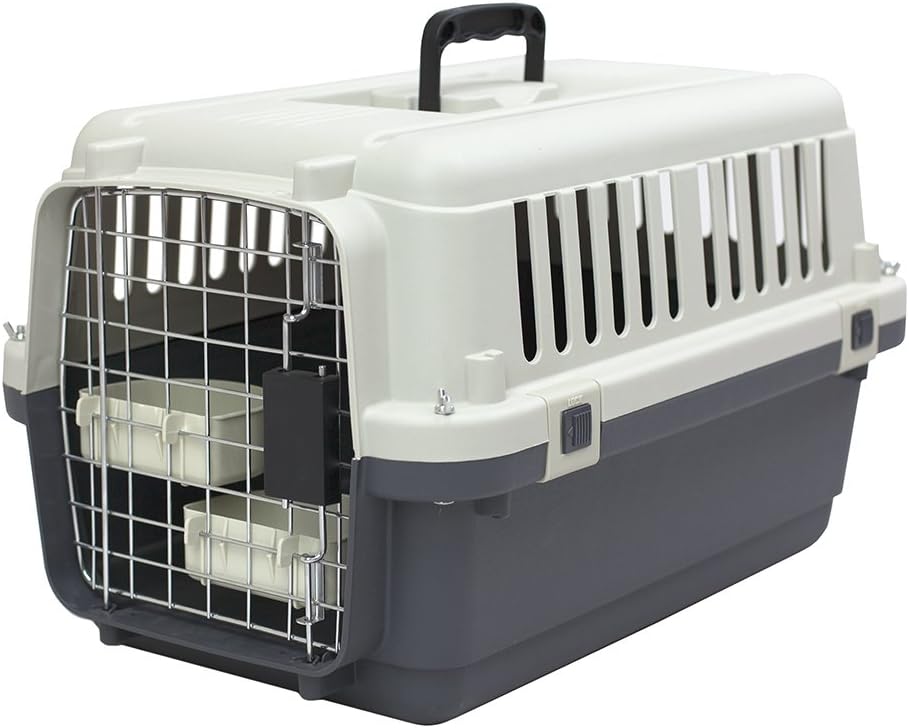
| Airline approved | IATA compliant (51st Edition) |
|---|---|
| Included accessories | 2 food/water dishes, 4 live animal labels, bolts & nuts |
| Number of doors | 1 |
| Material type | Plastic, Metal |
The SportPet Small Travel Dog Kennel is a hard-sided, airline-compliant crate built for real travel use. It separates into two pieces for compact storage, snaps together with metal bolts and nuts, and includes two food/water dishes, live-animal labels, and tie-down holes required for air transport. Ventilation on all sides, an accident moat around the floor, and a strong metal door with a secure latch help keep a small dog comfortable and contained during transit. A top carry handle and removable snap-on wheels make moving through airports or between car and terminal easier, and the plastic shell wipes clean or hoses out for quick maintenance. Limitations are its size: it is intended for small breeds only and is bulky compared with soft-sided carriers when carried long distances without wheels; assembly uses bolts which take a few minutes and basic hand tools to tighten. For frequent short trips and airline travel where a sturdy, compliant kennel is required, it performs well; for long walks through terminals without wheels or owners who want a lightweight shoulder carry option, a soft carrier may be easier to manage.
Best for: Owners who travel frequently with a toy poodle and need a sturdy, airline-compliant kennel that is easy to move through airports and stores compactly when not in use.
Less Ideal for: People who prioritize a lightweight shoulder-carry option for long walks through terminals or who need a crate that fits medium or large breeds.
- IATA airline compliant and includes required tie-down holes and live-animal labels
- Hard-sided plastic shell with reinforced metal hardware and secure metal-door latch for sturdy containment
- Removable snap-on wheels and top carry handle for easier airport navigation
- Includes two food/water dishes and is easy to clean by wiping or hosing out
- Separates into two pieces for more compact storage when not in use
- Intended only for small breeds so it will not fit larger dogs
- Assembly requires bolts and nuts which add setup time compared with tool-free carriers
- Bulkier to carry without wheels compared with soft-sided travel carriers
Verdict: The best travel-friendly crate for owners who frequently transport their toy poodle and need easy setup and portability.
Amazon Basics Foldable Metal Dog Crate 22"
Best Easy-Clean Crate

| Specific Uses For Product | Indoor |
|---|---|
| Breed Recommendation | Toy Breeds |
| Number of Doors | 1 |
| Included Components | Divider |
| Material Type | Metal |
This compact Amazon Basics metal wire crate is a straightforward containment option for small dogs and puppies in tight living spaces. It sets up without tools and folds flat for storage or transport, with a top carry handle making it convenient to move between rooms or on trips. The crate includes a removable plastic tray that slides out for faster cleaning and a metal hook to keep the tray from shifting during use. A built-in adjustable divider lets you reduce the usable space as a puppy grows, extending the crate's usefulness over time. The single-door latch is manual and secure for everyday indoor use, and the 22-inch footprint is intended for toy and other small breeds. Limitations include its basic metal-wire build, which lacks padding or noise-dampening features, and the single-door layout may be less flexible for some room placements. For those who want a simple, affordable containment solution that is easy to store, this crate covers the essentials without extras.
Best for: Buyers living in small apartments or anyone needing a low-footprint, easy-to-store indoor kennel for toy and small-breed dogs who prioritize portability and simple maintenance.
Less Ideal for: Owners seeking a plush, noise-reducing crate, multiple-access door layouts, or a containment solution for medium to large dogs should consider larger or more feature-rich alternatives.
- Compact foldable design for easy storage and transport
- Removable plastic tray that slides out for quick cleaning
- Included adjustable divider panel to tailor space as a puppy grows
- Top handle and lightweight build for convenient moving between rooms
- Basic metal wire construction offers no built-in padding or sound insulation
- Only a single door which can limit placement flexibility
Verdict: The best easy-clean crate for households that prioritize fast, hygienic maintenance after accidents or outdoor outings.
Feandrea Dog Crate Furniture 27.2"
Best Premium Crate

| Intended use | Indoor |
|---|---|
| Number of doors | 2 |
| Top load capacity | 154 lb (70 kg) |
| Breed recommendation | Small Breeds up to 30 lb |
This Feandrea furniture-style crate combines a pet-safe kennel with a usable end table top, making it a discreet option for small-breed owners who want the crate to blend into their living space. Constructed from particleboard and steel, it offers a more finished look than a wire crate while the wire sides and two doors maintain visibility and easy access. The removable mesh plus pull-out tray helps manage fur and small accidents, and the top supports substantial weight so it can be used as a nightstand or end table. The side door can be installed on either side to fit room layout, and assembly is straightforward if you follow the numbered parts. Limitations: the engineered wood construction is not as heavy-duty as solid hardwood and the interior fits small breeds only, so larger or highly destructive chewers will need a sturdier, metal-only kennel. Also the finish can show wear over time if exposed to moisture or heavy scratching.
Best for: Owners of toy and small-breed dogs who prioritize a refined, home-friendly crate that looks like furniture and adds usable surface space.
Less Ideal for: People with large dogs, very heavy chewers, or those who need an all-metal, heavy-duty travel crate for frequent transport.
- Furniture-style design doubles as a usable side table with a high top load capacity
- Particleboard plus steel frame offers a finished look with chew-resistant wire sides
- Double doors (front and side) for flexible access and room placement
- Removable mesh and pull-out tray simplify cleaning and contain debris
- Interior size only suitable for small breeds up to about 30 lb
- Engineered wood surfaces are more susceptible to scratches and moisture than solid wood
Verdict: The best premium crate for owners willing to pay more for refined construction, better finishes, and extra comfort features.
Choosing the Right Crate Toy Poodle: Key Factors to Consider
Correct Interior Dimensions
Interior dimensions determine whether a toy poodle can stand, turn around, and lie down comfortably. Measure your dog from nose to tail and from paw to shoulder to choose a crate that gives about two to four inches of extra length and height so the dog has room without excess space that could hinder housetraining.
A crate with insufficient height will force a hunched posture, causing stress and reluctance to rest inside. Excessively long crates encourage elimination at one end, which undermines training. Look for models that list usable interior dimensions rather than only external measurements.
Door and Latch Security
Small dogs can be surprisingly persistent about testing weak latches. A secure door design reduces escape risk and prevents accidental openings during transport. Check that latches lock firmly and that doors align cleanly without gaps that a curious paw could exploit.
Multiple-latch designs or secondary locks help with chewers or anxious dogs. For travel, look for latches that resist vibration and rattle; for home use, a simple but sturdy slide or bolt latch is usually sufficient. Avoid flimsy plastic snaps that can break under persistent pressure.
Ventilation and Visibility
Good airflow keeps the crate comfortable and reduces odors, while visibility helps your toy poodle feel less isolated. Wire- or slatted-sided crates offer the best circulation and let dogs observe their surroundings, which can lower anxiety for many small breeds.
However, ventilation must balance draft control. For very young puppies or in cooler environments, consider crates with partial solid panels or a cover to prevent direct drafts. Ensure ventilation openings are sized safely so paws cannot get stuck.
Cleanability and Hygiene
Small dogs still have accidents and shed, so a crate that is easy to clean is a practical time-saver. Removable trays, washable bedding, and smooth, non-porous finishes make routine cleaning faster and more thorough.
Avoid fabrics or crevices that trap moisture and hair. If the tray is difficult to remove or the crate has many welded seams, cleaning will be more time-consuming and less effective at controlling odor and bacteria.
Durability and Materials
Durability matters even for toy breeds. Wire crates should have corrosion-resistant finishes; plastic or composite crates must resist cracking from occasional impacts. Durable materials withstand crate training, relocations, and routine handling without deforming.
Consider how the crate will be used. If the dog chews or paws at the crate, plated metal or reinforced plastic is preferable to thin wire. Materials should also be free of toxic coatings and safe for prolonged contact.
Portability and Setup
Many owners move crates between rooms or pack them for short trips. Lightweight designs that fold flat or include carrying handles make relocation easier. Conversely, very heavy crates offer stability but are harder to reposition.
Assembly complexity varies widely; look for models that fold or snap together without tools if you need frequent moves. Check that collapsing mechanisms lock securely so the crate cannot accidentally fold while occupied.
What Size Crate Does a Toy Poodle Need?
Toy poodles typically need a compact interior that still allows standing and turning. Aim for a crate length that is your dog's nose-to-tail measurement plus about two to four inches, and height that is comfortable when the dog stands without hunching. Many small crates marketed for toy breeds meet these dimensions, but always verify the interior measurements rather than relying on general size labels.
If you have a growing puppy, pick a crate with a divider panel or plan to move up in size as the dog matures. A divider lets you use a slightly larger crate while keeping a cozy den area that helps with housetraining.
- Measure your dog before choosing a crate.
- Use a divider for puppies instead of an oversized crate.
How to Set Up the Crate for Comfort and Training
Create a calm den by adding a low-profile, washable pad that fills the floor without bunching. Avoid cushions that are too bulky; they can reduce usable interior space. Place the crate in a quiet, temperature-controlled area where the dog still sees family activity but is not in a high-traffic corridor.
Introduce crate training gradually with short, positive sessions and treats. Keep doors open initially so the dog can explore; once the dog accepts the space, close the door for brief intervals and lengthen them over time. Consistent routines around nap and bedtime help the dog associate the crate with rest.
- Choose washable bedding sized for the crate interior.
- Start with short, positive crate sessions and build up gradually.
Is Wire, Plastic, or Soft-sided Best for a Toy Poodle?
Wire crates offer superior ventilation and visibility, which helps many toy poodles feel secure. They are typically easier to clean and more adaptable with divider panels. Plastic crates can be cozier and block drafts, which benefits very small or anxious dogs, but they often offer less visibility.
Soft-sided crates are lightweight and portable and can work well for well-trained dogs or supervised indoor naps. They usually are not suitable for dogs that chew or that may try to escape, and they are less effective for housetraining because they are not fully waterproof.
- Use wire for ventilation and easy cleaning.
- Choose plastic for enclosed, cozy den environments.
- Reserve soft-sided crates for supervised, calm situations.
How to Travel Safely with a Toy Poodle in a Crate
For short car trips, use a crate sized for the dog that can be secured to the vehicle to prevent shifting. Ensure the crate provides good airflow and that the latch cannot bounce open during travel. Add a low-profile pad to reduce sliding and secure bedding so it does not obstruct ventilation.
Avoid placing crates in direct sun or near heating vents. During travel stops, check your dog frequently for signs of stress or overheating and offer water. For air travel or regulated transport, consult carrier-specific rules and use a crate that meets those dimensions and security standards.
- Secure the crate so it cannot move during transport.
- Provide ventilation and a stable, low-profile bedding surface.
Managing Chewing, Separation Anxiety, and Destructive Behaviors
Chewing and anxiety are common causes of crate damage and owner concern. To reduce chewing, provide safe chew items and rotate them so the dog stays engaged. For separation anxiety, combine crate time with training that gradually builds independence and confidence.
If destructive behavior persists, re-evaluate crate placement, enrichment during crate time, and the daily exercise schedule. Excess energy is often a root cause, so adding short play sessions before crating can reduce restlessness.
- Offer safe chew toys while supervised in the crate.
- Use exercise and gradual desensitization to alleviate anxiety-driven behavior.
Accessories That Improve Crate Use
Useful accessories include removable trays for cleaning, divider panels for growing puppies, and washable pads sized to the crate interior. A crate cover can provide darkness for better sleep but ensure it does not obstruct ventilation. Attachment points or straps can help stabilize bowls or toys during travel.
Avoid adding loose items that can tangle or block airflow. Choose accessories designed for small crates to prevent overcrowding the interior space.
- Use a divider panel for puppies.
- Pick washable, low-profile bedding that fits the interior.
How We Chose the Best Crate Toy Poodle
We evaluated crates through criteria that reflect the everyday needs of toy poodles and the owners who care for them. Primary filters included appropriate interior dimensions for small-breed anatomy, secure door latches and construction to prevent escapes, and ventilation patterns that keep air flowing without excessive drafts. Durability and materials were weighted for chewers and active small dogs, while removable, washable bedding compatibility and easy-clean tray access were prioritized for hygiene. We also assessed portability and weight for owners who move a crate between rooms or travel with their dog, plus setup complexity for households that need a quick, tool-free assembly. Safety-compliant finishes and non-toxic coatings were required screening factors. Models that sacrificed safety features, offered inadequate interior space, or used unsafe finishes were excluded. The resulting shortlist represents crates that meet size, safety, cleaning, and durability expectations for toy poodle households.
Our full evaluation process is outlined in our review methodology.
FAQ
what size crate should i buy for a toy poodle puppy?
Buy a crate that allows standing, turning, and lying down comfortably. For puppies, consider a crate with a divider or plan to upgrade as the dog grows, so the space stays appropriately sized during housetraining.
can a toy poodle sleep in a crate every night?
Yes, many toy poodles sleep in crates nightly if the crate is comfortable and the dog has a positive association with it. Ensure the crate provides enough room and a soft, washable bed so the dog can rest without stress.
are soft-sided crates safe for toy poodles?
Soft-sided crates can be safe for calm, well-trained toy poodles during supervised indoor use or travel, but they are not ideal for dogs that chew or try to escape because they offer less bite resistance and less protection from accidents.
how do i clean a crate that my toy poodle soils?
Remove bedding and washable pads and launder them. Pull out any removable tray or pan and wipe it with a pet-safe cleaner or mild soap and water. For wire or plastic surfaces, clean seams and corners to remove hair and residue, then dry thoroughly before reassembling.
should i cover my toy poodle's crate at night?
Covering the crate can help block excess light and create a den-like environment that aids sleep, but ensure the cover does not block ventilation. Use a breathable fabric and monitor the room temperature to prevent overheating.
what if my toy poodle cries in the crate at night?
Crying is often a symptom of anxiety, discomfort, or a need to eliminate. First confirm the dog does not need to go out, then use calm reassurances and short comfort checks rather than frequent letting out, which can reinforce crying. Gradual training and consistent nighttime routines usually reduce vocalizing over time.
Final Verdict
Prioritize interior dimensions, secure latching, and easy cleaning when choosing a crate for a toy poodle. Tradeoffs are inevitable: more breathable wire models offer visibility and airflow, while enclosed plastic crates provide a cozier den. Consider your dog's temperament, chewing tendency, and whether you need portability or a heavy-duty design. Focus on fit first, then layer in safety and maintenance features. With the right size and a few smart accessories, a crate becomes a safe, comfortable retreat that supports housetraining and restful sleep for your toy poodle.

