

Finding the right crate for a yorkie puppy matters more than you might think. The wrong size or style can slow housetraining, make your pup anxious, or create safety risks. A well-chosen crate becomes a den-like refuge that speeds potty training, protects your puppy when you cannot supervise, and gives both of you predictable routines. This guide shortlists the top crates suited specifically for yorkie puppies. We focused on options that balance interior space, ventilation, secure latching, and easy cleaning. Below you will find practical guidance on sizing, features that matter for small-breed puppies, and what to expect from each style of crate before the product list.
Top Picks at a Glance
| Best Overall Crate The best all-around crate for most Yorkie puppy owners | MidWest iCrate 18-Inch |  |
| Best Budget Crate A low-cost crate that covers core needs without extras | BestPet Dog Crate 18" |  |
| Best Compact Crate A smaller-footprint crate designed for tight spaces and small dogs | MidWest iCrate 18-Inch Double Door |  |
| Best Heavy-Duty Crate A rugged, durable crate built to withstand chewing and wear | EOXNYZR 26 Inch Dog Crate |  |
| Best Large Crate A roomier crate that gives extra space for growing puppies | Homey Pet 43" Dog Crate |  |
| Best Premium Crate A higher-end crate with superior materials, finish, and features | Diggs Evolv Dog Crate Small |  |
MidWest iCrate 18-Inch
Best Overall Crate

| Breed Recommendation | Extra Small |
|---|---|
| Included Components | Divider, Removable Tray |
| Number of Doors | 2 |
| Material Type | Metal |
| Gap Size | 37.5 millimeters |
The MidWest iCrate 18-inch is a compact folding metal dog crate intended for extra small dogs and crate training in tight spaces. It folds flat for storage and travel, includes a divider panel so it can be used for puppies as they grow, and has a leak-proof removable tray that makes cleanup simple. The slide-bolt latch has added safety features such as a Paw Block and locking tips to reduce escapes, and rubber feet protect floors while a carry handle helps move the crate between rooms or on trips. Built from precision-welded wire with a black e-coat finish, it resists rust and is durable for everyday indoor use. Limitations are its small internal space — dogs near the 10 lb limit may need the next size up for comfortable long-term housing — and the metal wire design offers no built-in padding, so a separate bed or mat is necessary for comfort. For apartment or travel use the iCrate balances security, portability, and easy cleanup in a compact footprint.
Best for: Buyers who need a space-saving, portable crate for apartment living or short-term confinement of very small dogs and puppies prioritizing easy cleanup and transport.
Less Ideal for: Owners of medium or larger dogs or anyone wanting a plush, padded crate where pets will spend long unsupervised periods should choose a larger or more cushioned option.
- Compact fold-flat design for easy storage and travel
- Includes divider panel to adapt as a puppy grows
- Leak-proof removable tray speeds cleanup
- Slide-bolt latch with Paw Block and locking tips for added security
- Durable welded wire with rust-resistant e-coat finish
- Small interior best suited to extra small dogs and short-term use
- No built-in bedding so a separate pad is required
Verdict: The best overall crate balances size, safety, ventilation, durability, and ease of cleaning to suit most Yorkie puppies and everyday home use.
BestPet Dog Crate 18"
Best Budget Crate
| Breed Recommendation | for Small Breeds |
|---|---|
| Specific Uses For Product | Indoor, Outdoor |
| Material Type | Alloy Steel |
| Included Components | dog crate+Manual |
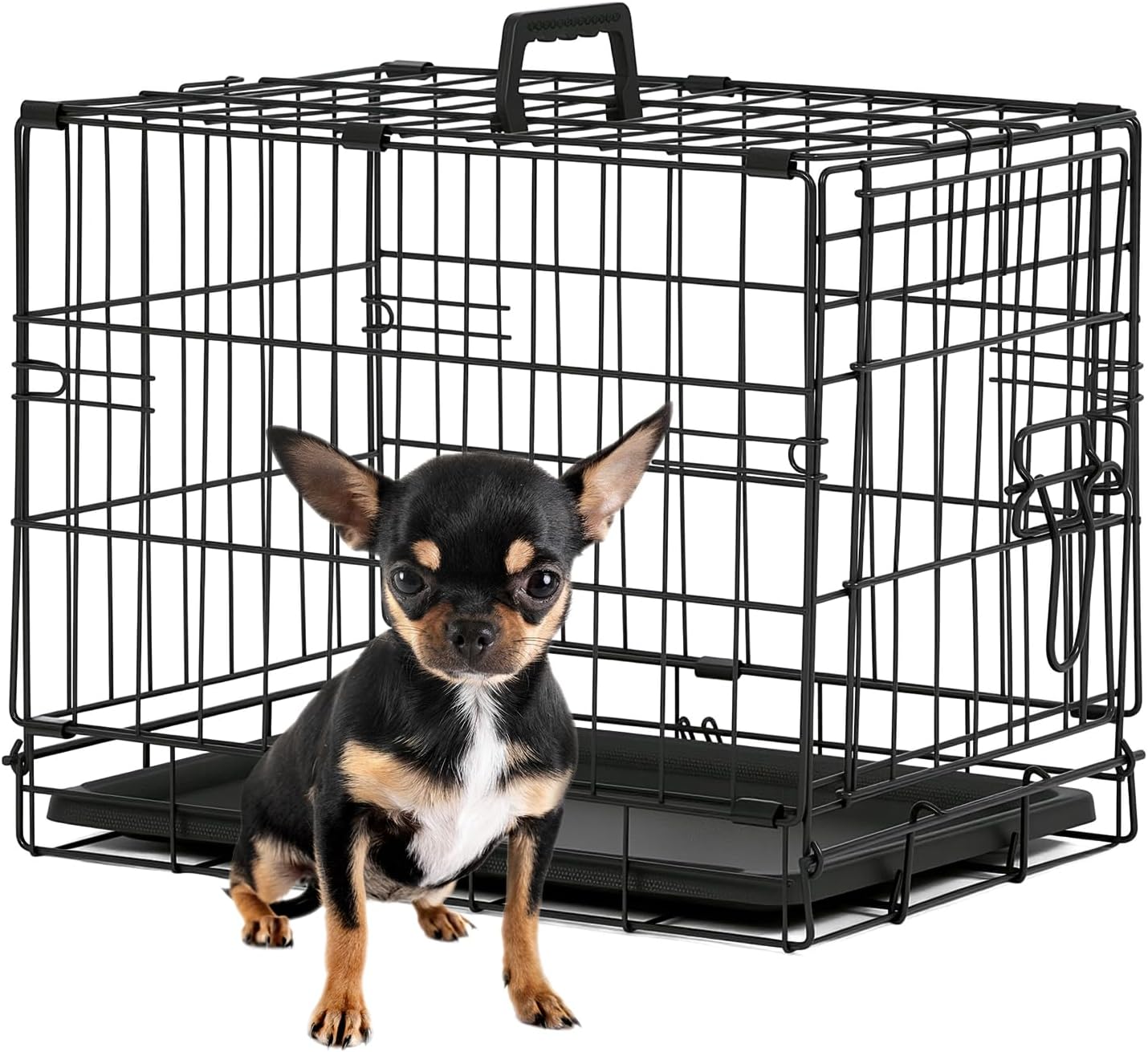
This BestPet 18" foldable metal crate is a straightforward, budget-friendly kennel for small dogs and puppies. It sets up and folds down without tools and includes a plastic carry handle for moving the folded crate, which makes it convenient for travel or occasional use. The wire construction provides good ventilation and visibility while reinforced corners and double slide-bolt latches help keep an energetic pup contained. A removable ABS tray captures messes and lifts out for easy cleaning. Expect a basic build rather than heavy-duty hardware—the alloy steel frame is lightweight and rust-resistant but not meant for extreme chewers or highly destructive dogs. The single-door layout is simple to use but limits placement options compared with double-door models. Overall, this crate covers essential safety and portability needs at a low cost and is best suited to short-term confinement, travel, and training for small, calm dogs.
Best for: Owners of small, well-behaved dogs or puppies who need an affordable, portable crate for training, short confinement, or travel.
Less Ideal for: People with large breeds, extremely strong or destructive dogs, or those who want premium features like double doors, heavier-gauge steel, or integrated travel locks.
- Tool-free setup and fold-down for easy storage and travel
- Removable ABS tray that is leakproof and simple to clean
- Reinforced corners and dual slide-bolt latches improve security
- Lightweight, rust-resistant wire construction for everyday indoor or outdoor use
- Lightweight frame is not designed for heavy chewers or large, aggressive dogs
- Single-door design reduces placement flexibility compared with double-door crates
Verdict: The best budget crate gives reliable containment and basic comfort at a low price, ideal for owners prioritizing affordability over premium features.
MidWest iCrate 18-Inch Double Door
Best Compact Crate

| Breed Recommendation | Extra-Small |
|---|---|
| Included Components | Divider, Removable Tray |
| Material Type | Metal |
| Number of Doors | 2 |
The MidWest iCrate 18-inch double-door crate is a compact, foldable metal wire kennel built for extra-small dogs and puppies. It provides secure confinement with precision-welded wires, slide-bolt latches with a Paw Block and locking tips, and a removable leak-proof tray for easy cleanup. The front and side doors give flexible placement in small homes, and the included divider panel lets you adjust interior space as a Yorkie puppy grows. Rubber feet and a carrying handle make it easy to move or protect floors, and the black e-coat finish resists rust for long-term use. Setup requires no tools and the crate folds flat for storage or travel. Limitations are its small internal volume at the 18-inch size, which may feel snug for active puppies or for long periods, and the metal construction offers minimal sound insulation compared with soft-sided carriers. For a small-space home the iCrate balances security, ventilation, and portability while keeping maintenance simple.
Best for: Buyers in small apartments or tight living spaces who need a secure, well-ventilated crate sized for Yorkie-sized puppies and want an easy-to-clean, portable solution that grows with a pup.
Less Ideal for: Owners who plan long unsupervised confinement for rapidly growing breeds or who prefer quieter, cushioned soft-sided carriers for travel should consider other options.
- Sized for extra-small breeds and includes a divider to adapt as a puppy grows
- Sturdy metal wire construction with rust-resistant e-coat for durability
- Slide-bolt latches with Paw Block and locking tips improve escape resistance
- Fold-flat, tool-free setup and a removable leak-proof tray make cleaning and storage easy
- Front and side doors provide flexible placement in tight living spaces
- 18-inch internal space is compact and can be cramped for active or fast-growing puppies
- Metal wire design offers little noise dampening compared with soft crates
Verdict: The best compact crate fits small living spaces and Yorkie-sized puppies while still offering secure confinement and adequate ventilation.
EOXNYZR 26 Inch Dog Crate
Best Heavy-Duty Crate

| Material Type | Metal |
|---|---|
| Number of Doors | 2 |
| Additional Features | Lockable |
| Specific Uses For Product | Indoor |
This furniture-style crate functions as both a secure indoor kennel and a usable side table, making it easy to integrate into living spaces. It is constructed from reinforced metal bars and thickened particleboard panels, with multiple sliding locks on the front and side doors to prevent escape-prone or anxious small dogs from opening the doors. The top surface is scratch-resistant so you can place lamps or books, and the crate includes non-slip rubber feet for stability. Assembly is straightforward and the padded finish wipes clean for everyday maintenance. As a heavy-duty option for small dogs, its chew-resistant metal and multi-lock design give added durability and containment compared with basic wire crates. Limitations are that the unit is designed for indoor use only and the product weight and particleboard panels mean it is not as portable as collapsible single-piece wire crates; larger or very powerful dogs will outgrow the size and strength offered here.
Best for: Buyers who need a durable, room-friendly crate for small, active dogs that prefer a secure, chew-resistant enclosure while keeping living spaces tidy.
Less Ideal for: People who need a lightweight, highly portable or outdoor-rated crate or who have larger, very strong dogs that require a heavy-gauge kennel.
- Furniture-style top doubles as an end table for space-saving use
- Reinforced metal bars and thickened wooden panels resist chewing and increase durability
- Multiple sliding locks on two doors provide strong escape prevention
- Scratch-resistant top and wipe-clean surfaces simplify maintenance
- Non-slip rubber feet improve stability on hard floors
- Designed for indoor use and not intended for frequent transport
- Particleboard panels add weight and reduce portability compared with foldable wire crates
Verdict: The best heavy-duty crate is constructed from stronger materials and reinforced hardware to resist chewing and rough use for long-term durability.
Homey Pet 43" Dog Crate
Best Large Crate

| Material Type | Alloy Steel |
|---|---|
| Included Components | Bowl, Divider, Lockable Caster Wheels, Raised Metal Floor, Removable Tray |
| Number of Doors | 2 |
| Stackable Design | Yes |
| Gap Size | 1.15 inches |
The Homey Pet 43" dog crate is a durable steel kennel built for indoor use, breeders, or multi-pet homes where space flexibility matters. It functions as a single roomy crate or, with the included slide-in divider, two smaller compartments — useful for a growing puppy that needs extra room now and a smaller space later. The open-top design and two side doors make access, feeding and training straightforward, and the removable raised metal grids plus slide-out plastic tray simplify cleaning. Lockable 360 degree casters add mobility so you can move the crate between rooms without heavy lifting. Security features include an auto-locking latch, additional screw locks and tray stop tabs intended to reduce escapes and shifting when stacked. Trade-offs are its weight and bulk compared with soft or foldable crates, and the metal floor grids may feel firm so you will want a padded bed or mat for a Yorkie puppy's comfort. Assembly takes some time but yields a sturdy, long-lasting kennel that adapts as your pup grows.
Best for: Buyers who want a roomy, durable crate that adapts as a puppy grows and prioritizes security and easy cleaning over portability.
Less Ideal for: Owners needing a lightweight, travel-friendly, or quickly collapsible crate should consider other styles.
- Removable divider lets you change interior size as a puppy grows.
- Dual doors and open-top access make feeding, training, and handling easy.
- Strong steel construction with multiple locks provides escape-resistant security.
- Removable raised grids and slide-out tray speed up cleaning and keep pets elevated.
- Lockable 360° casters allow safe, convenient movement between rooms.
- Heavy and bulky compared with soft-sided or collapsible crates.
- Metal floor grids are firm and need additional bedding for puppy comfort.
Verdict: The best large crate provides extra interior space for comfort and growth, suited for owners who want more room for their puppy to move.
Diggs Evolv Dog Crate Small
Best Premium Crate

| Number of Doors | 4 |
|---|---|
| Included Components | Removable Tray |
| Material Type | Mesh |
| Breed Recommendation | Small Breeds |
The Diggs Evolv is a premium indoor dog crate that combines a furniture-forward look with practical crate features for daily home use. It is built as a modular system: the crate ships with two doors and allows repositioning or adding up to four doors to create an open playpen or change traffic flow. Safety features include dual-lock doors, rounded corners, and diamond mesh that reduces the risk of jaw or paw entrapment, and the finish is free of phthalates and heavy metals. Assembly is tool-friendly and the included removable tray makes cleaning straightforward. The Evolv is intended as a room-facing, stationary crate rather than a travel kennel, so its focus is on aesthetics, durability, and comfort compatibility — Diggs offers fitted accessories such as an orthopedic Bolstr bed and clip-on crate bowl to complete the setup. Limitations are that additional doors and some accessories require separate purchase and the mesh/mesh construction and design prioritize indoor style over packable portability.
Best for: Buyers who prioritize a high-quality, home-friendly crate that looks like furniture and will be used daily as a permanent indoor space for their dog.
Less Ideal for: People who need a lightweight, portable travel kennel or a budget metal wire crate for occasional use should consider other options.
- Modular door system lets you reposition doors or convert into a playpen for flexible use.
- Dual-lock doors and rounded corners improve security and reduce pinch risk.
- Removable tray simplifies cleaning and maintenance.
- Designed to pair with fitted comfort accessories like an orthopedic bed and clip-on bowl.
- Additional doors and some accessories are sold separately, increasing total cost.
- Not designed for travel or outdoor use due to its furniture-style construction.
Verdict: The best premium crate offers top-tier build quality, refined finishes, and advanced features for owners willing to invest in long-lasting comfort and appearance.
Choosing the Right Crate Yorkie Puppy: Key Factors to Consider
Correct Size and Adjustability
Size directly affects comfort, housetraining, and safety. A crate should be large enough for a yorkie puppy to stand, turn, and lie down comfortably but not so large that the puppy will use one end as a bathroom. For growing puppies, look for crates with built-in dividers or models that can be adjusted to create a smaller usable space as the puppy grows.
Adjustability reduces the need to replace the crate as your puppy gains weight and length. It also helps establish den-like boundaries that support housetraining and reduce anxiety. Measure your puppy from nose to tail and add a few inches to choose the right interior length; factor in extra height for upright sitting and play.
Secure Latching and Escape Resistance
Latch design matters for small breeds that are often clever and persistent. A secure latch prevents accidental openings during play, transport, or if the crate is bumped. Look for latches that are easy for an adult to operate but not for a puppy to nudge open.
Consider whether the wire spacing, door frame, and hinge hardware are robust enough to resist twisting or bending. For puppies that mouth or chew, stronger latches and reinforced corners reduce the chance of compromise. Ease of using the latch multiple times per day is important; avoid designs that require complex motions each time you open or close the door.
Ventilation and Visibility
Proper airflow prevents overheating and keeps odors from concentrating inside the crate. Wire crates and ventilated plastic models provide good crossflow. Yorkie puppies can be sensitive to being closed in a boxy, low-ventilation space, so visibility to a caregiver can also reduce stress.
Balance visibility with a sense of den-like enclosure; too much exposure may increase anxiety in some puppies. Look for crates with vent placement that allows air circulation while offering a spot where the puppy can retreat from excessive stimulation. Materials that resist trapping moisture and dry quickly after cleaning are helpful for ongoing hygiene.
Materials and Chew Resistance
Crates come in wire, plastic, fabric, or hybrid constructions. For a yorkie puppy, materials should resist chewing and not create small, detachable parts that could be ingested. Metal wire frames typically offer durability and predictable failure modes, while plastic crates can be easier to clean and quieter but may be more vulnerable to chewing.
Check that finishes are non-toxic and that welded joints or sewn seams are robust. Removable and washable bedding surfaces help manage accidents. If your puppy is a persistent chewer, prioritize thicker-gauge wire or reinforced fabrics and inspect the crate regularly for wear.
Portability and Storage
Portability matters if you plan to move the crate between rooms, travel with your puppy, or store it when not in use. Lightweight collapsible wire crates and soft-sided carriers fold flat for storage, while more rigid plastic crates take more space but offer a stable interior.
Consider whether the crate will live in a single spot or need frequent transport. Handle quality, folded footprint, and how easily the crate reassembles are practical concerns. If you anticipate travel, choose a model designed for secure secure fastening and with vents for airline or car safety where applicable.
Ease of Cleaning
Puppies have accidents and can track dirt into bedding, so easy cleaning saves time and keeps the crate sanitary. Crates with removable trays, smooth plastic interiors, or machine-washable fabric components simplify cleanup. Wire crates with a slide-out pan provide quick spot cleaning without disturbing the puppy.
Avoid designs with many small crevices that trap hair and moisture. Materials that tolerate common pet-safe cleaners and repeated washing will extend the useful life of the crate. Regular cleaning also reduces odor and helps prevent skin or respiratory irritation in sensitive puppies.
How Big Should a Crate Be for My Yorkie Puppy?
Choose a crate that lets your yorkie puppy stand up, turn around, and lie down stretched out comfortably. For very young puppies, use a divider or temporarily smaller space so the sleeping area stays separate from where the puppy might relieve itself. As the puppy grows, adjust the divider or move to a larger interior so movement and play remain comfortable without encouraging elimination at one end.
- Measure from nose to base of tail and add a few inches for length
- Ensure enough height for the puppy to sit without hitting the top
- Use dividers to create a smaller den-like space that expands with growth
Wire, Plastic, or Fabric: Which Style Works Best for a Small-breed Puppy?
Each style has tradeoffs. Wire crates offer maximum ventilation and visibility and usually fold flat. Plastic crates provide a cozier enclosed den and are often easier to clean. Soft-sided crates are lightweight and portable but can be vulnerable to chewing and are better suited to supervised use or travel.
Choosing the right one depends on your puppy's temperament and how you intend to use the crate. If you need a secure, long-term containment solution, heavier-gauge wire or reinforced plastic is typically more durable. For short outings and hotel stays, a soft-sided carrier may be acceptable when the puppy is calm and supervised.
- Wire: best for airflow and visibility
- Plastic: den-like environment and easier to contain messes
- Fabric: lightweight and portable but less chew-resistant
How to Use a Crate for Housetraining a Yorkie Puppy
Use the crate as part of a consistent routine rather than as punishment. Keep sessions short at first and reward calm behavior with treats and quiet praise. Take the puppy to the same elimination spot immediately after releasing from the crate and after naps to reinforce the association between confinement and scheduled bathroom breaks.
Avoid leaving a young puppy confined for long stretches; frequent supervised outings and scheduled feeding help regulate potty cadence. If you need to extend confinement time, use a properly sized sectioned crate so the puppy cannot eliminate where it sleeps.
- Start with short, pleasant crate sessions and gradually increase duration
- Schedule potty breaks after naps and meals
- Use the crate nighttime to consolidate housetraining when supervised
Making the Crate a Comfortable Den
Line the crate with washable bedding and include a small safe toy for comfort. Keep bedding minimal in the very early weeks for chewers, swapping in chew-safe items as your puppy matures. Position the crate where the puppy can see household activity without constant stimulation, such as a corner of a family room rather than a busy hallway.
Maintain a predictable routine around bedtimes and naps so the crate becomes associated with rest. If your puppy shows signs of separation anxiety, brief, timed departures paired with calming treats can help build independence without creating negative crate associations.
- Use machine-washable bedding and remove damaged items promptly
- Place crate near family activity but not in the highest-traffic path
- Introduce toys and comfort items gradually and under supervision
Safety Checks and Ongoing Maintenance
Inspect the crate regularly for loose wires, chewed fabric, or worn latches. Small-breed puppies can exploit gaps or damaged components, so tighten hardware and replace parts as needed. Clean trays and bedding frequently and check for rust or splinters on older crates.
If you travel with the crate, confirm that folding mechanisms lock securely and that handles and joints are intact. Keep a small maintenance kit with spare fasteners and a mild cleaner to address issues quickly and maintain a hygienic space for your puppy.
- Inspect latches, welds, and seams weekly during the first months
- Replace bedding after accidents and clean pans immediately
- Keep a small repair kit for quick fixes
How We Chose the Best Crate Yorkie Puppy
To assemble the shortlist we applied several category-specific filters and practical performance checks relevant to yorkie puppies. First, we required correct sizing ranges for small-breed puppies so each crate can be made cozy without being cramped. Second, we prioritized secure latch systems and sturdy construction to prevent accidental escapes and handle the activity level of curious puppies. Third, ventilation and visibility were evaluated to ensure airflow and to reduce stress for a small dog that can overheat easily. We also considered ease of cleaning and materials that tolerate frequent bedding washes, since puppies have accidents. Portability and whether the crate can be partially closed or sectioned for growth were additional selection criteria. Options that lacked basic safety features, used fragile materials that could break into sharp pieces, or did not offer proper ventilation were excluded. The final picks reflect a balance of puppy-safe design, durable construction, and practical features that help housetraining and daily care.
Our full evaluation process is outlined in our review methodology.
FAQ
When can my yorkie puppy stay in a crate overnight?
Most yorkie puppies can begin sleeping in a crate overnight once they tolerate short daytime sessions and can hold their bladder through the night. This often occurs between 10 and 16 weeks but depends on individual development. Start gradually and be prepared for scheduled nighttime bathroom breaks until the puppy is reliably dry.
How long can I leave a yorkie puppy in a crate during the day?
Limit unsupervised crate time for young puppies to short periods aligned with feeding and nap schedules. A general rule is no more than one hour per month of age for continuous confinement, plus nighttime. Puppies need frequent social interaction and potty breaks to develop properly.
Is a soft-sided crate safe for unsupervised use?
Soft-sided crates are lightweight and comfortable but are generally not recommended for unsupervised daytime confinement with a teething or chewing puppy. They can be suitable for supervised calm use and travel when the puppy is already comfortable and unlikely to chew through the fabric.
How do I choose bedding that is safe for a small puppy?
Select bedding that is low-profile, machine-washable, and made from durable, chew-resistant fabric. Avoid loose stuffing or items with small parts a puppy could pull off. Replace bedding promptly if you notice tears or persistent chewing.
Do I need a special crate for a yorkie versus other small breeds?
You do not need a unique crate type specifically labeled for yorkies, but size and temperament matter. Choose a crate that provides an appropriately small internal space, good ventilation, and secure hardware to match the behavior and growth rate typical of tiny-breed puppies.
Final Verdict
Prioritize correct sizing, secure latching, and materials that tolerate puppy behavior when choosing a crate for a yorkie puppy. Size and adjustability will have the biggest impact on housetraining success and daily comfort, while ventilation and chew resistance affect safety and longevity. Balance portability and ease of cleaning with sturdiness to match how you plan to use the crate. With the right tradeoffs, a crate becomes a safe, calming den that supports housetraining and helps your yorkie puppy settle into household routines confidently.

