

Finding the right dental chew for a French Bulldog matters because this breed has compact jaws, crowding, and a higher risk of tartar buildup. The wrong chew can break too quickly, be hard to grip, or include ingredients that irritate sensitive stomachs. This guide shortlists seven dental chews chosen for their suitability to French Bulldog bite force, dental anatomy, and dietary tolerances. We evaluated texture, ingredient quality, and safety to help you pick options that support cleaner teeth and fresher breath without stressing your dog. Read on to see the top picks and what to consider when choosing the best chew for your Frenchie.
Top Picks at a Glance
| Best Overall Dental Chew for French Bulldogs The top all-around chew that balances safety, effectiveness, and value | Greenies Regular Dental Dog Treats 36 Count |  |
| Best Budget Dental Chew for French Bulldogs An affordable chew that still cleans teeth and satisfies chewing needs | Dingo Dental Sticks Chicken 48-Pack |  |
| Best Premium Dental Chew Higher-end ingredients and design for superior cleaning and durability | C.E.T. Hextra Premium Oral Hygiene Chews Medium |  |
| Best Natural Dental Chew Made from minimal, recognizable ingredients with fewer additives | Whimzees Brushzees Small |  |
| Best Small-Breed Dental Chew Sized and textured for smaller mouths and gentler jaws | Pedigree Dentastix Small & Toy |  |
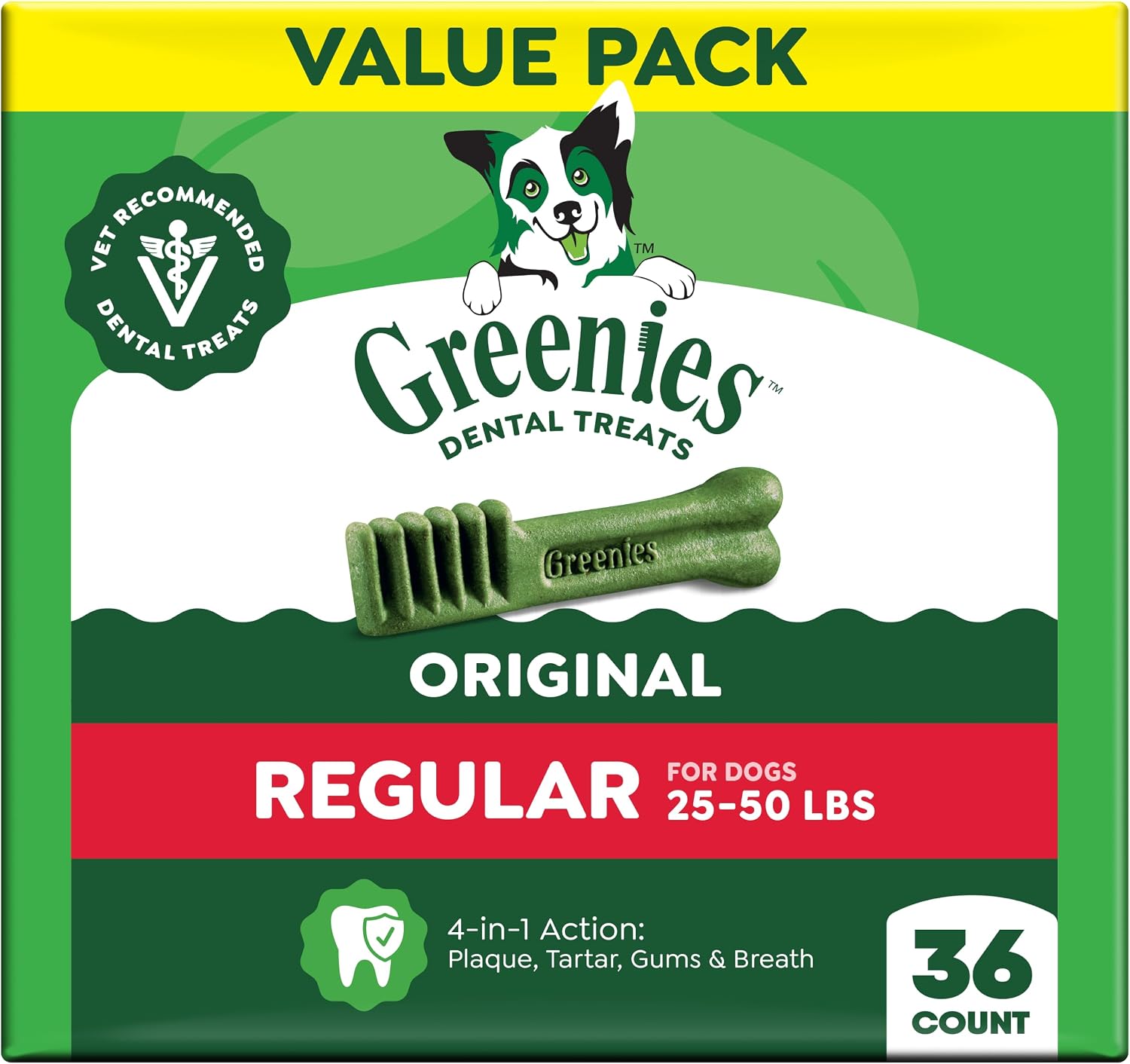
Greenies Regular Dental Dog Treats 36 Count
Best Overall Dental Chew for French Bulldogs
| Flavor | Original |
|---|---|
| Item Form | Bone |
| Unit Count | 36 Count |
| Breed Recommendation | Medium Breeds |
| Allergen Information | Rawhide-Free |
Greenies Regular Dental Dog Treats are chewy dental chews made for dogs around 25–50 lb to support daily oral care. Designed with a toothbrush-like shape and flexible texture, the chews scrub down to the gumline while remaining bendable so they are less likely to snap; the manufacturer cites reductions in tartar and plaque when used daily. Owners typically give one chew per day as a treat or part of a dental routine, and the pouch packaging is convenient for storage. The treats are rawhide-free, made with common pantry ingredients plus added vitamins and minerals, and are veterinarian-recommended and VOHC-accepted as an option for plaque and tartar control. Expect good palatability — most dogs find the original chicken flavor tasty — but these are a daily edible product so supervision is recommended to ensure adequate chewing. They are sized for medium breeds, so buyers with very small or very large dogs should pick the appropriate size variant.
Best for: Dog owners who want a convenient, veterinarian-recommended daily chew that most medium-breed dogs will eat and that supports routine plaque and tartar control.
Less Ideal for: Owners of toy or giant breeds, or dogs with specific grain or ingredient sensitivities, should choose a size or formula made for those needs instead.
- Toothbrush-shaped chewy texture that helps clean to the gumline
- Vet-recommended formula accepted by VOHC for plaque and tartar control
- Rawhide-free and bendable texture reduces risk of snapping
- Formulated with added vitamins and minerals and common ingredients familiar to pet owners
- Single-daily-use and pouch packaging make them easy to include in a routine
- Sized specifically for medium dogs so this package is not ideal for very small or very large breeds
- Contains wheat and other common allergens that may not suit dogs with ingredient sensitivities
Verdict: The best overall dental chew for French Bulldogs that offers effective tartar control, a texture safe for their jaws, and broad appeal for everyday use.
Dingo Dental Sticks Chicken 48-Pack
Best Budget Dental Chew for French Bulldogs

| Flavor | Chicken |
|---|---|
| Item Form | Stick |
| Recommended Uses For Product | Dental Care, Daily Treat |
| Unit Count | 15.2 Ounce |
| Package Size Name | 48 Pack |
Dingo Dental Sticks are daily dental chews made with a real chicken center and a twisted rawhide exterior intended to clean teeth as dogs chew. You give one stick a day as a treat or after meals; the twist shape and firm texture help scrape plaque and massage gums while added baking soda and parsley seed aim to freshen breath. The product comes in a resealable 48-pack bag that keeps chews fresher between servings and is sized for all life stages and breed sizes. Ingredients include rawhide, chicken, rice and common preservatives and colorants, so they are broadly accepted by dogs that enjoy chewy rawhide treats. Limitations are that these are rawhide-based so they are not suitable for dogs that must avoid rawhide, and owners should supervise chewing to prevent large pieces breaking off. For pet owners wanting a low-cost, easy-to-use daily dental chew, these deliver practical oral benefits in a familiar format.
Best for: Budget-conscious dog owners who want a daily, easy-to-use chew that most dogs will eat and that contributes to routine oral care.
Less Ideal for: Owners seeking grain-free, rawhide-free, or veterinary-formulated dental treats for dogs with specific dietary restrictions or extreme chewers should look elsewhere.
- Real chicken center increases palatability for picky dogs
- Twist shape and firm texture help remove tartar and massage gums through chewing
- Resealable bag preserves freshness between servings
- Formulated with baking soda and parsley seed to help freshen breath
- Contains rawhide and common preservatives and food colorings which some owners avoid
- Not appropriate for dogs that must not consume rawhide or who are aggressive chewers prone to swallowing large pieces
Verdict: The best budget dental chew for French Bulldogs that delivers reasonable dental benefits and durability at a lower price for cost-conscious owners.
C.E.T. Hextra Premium Oral Hygiene Chews Medium
Best Premium Dental Chew

| Flavor | Beef |
|---|---|
| Age Range Description | Adult |
| Breed Recommendation | Medium Breeds |
| Special Ingredients | Beef rawhide |
C.E.T. Hextra Premium Oral Hygiene Chews are single-layer beef rawhide sticks coated with a patented 10% chlorhexidine solution and intended as a daily dental supplement for medium dogs. Dogs chew the textured rawhide to abrade plaque while the chlorhexidine coating provides sustained antimicrobial action to help control bacteria that cause bad breath and plaque buildup. The chews are formulated for dogs 26 to 50 pounds and are used one per day between professional cleanings. Practical benefits include veterinary-trusted active ingredient, a palatable poultry flavor that encourages acceptance, and a firm, yet digestible rawhide that cleans as the dog chews. Limits to consider are that results depend on regular daily use and chewing behavior, rawhide is not ideal for heavy power chewers that destroy chews quickly, and this is an adjunct to—not a replacement for—professional dental care. For owners prioritizing high-quality ingredients and proven antiseptic action, these chews deliver a premium daily option for maintaining oral hygiene.
Best for: Owners of French Bulldogs seeking a veterinarian-trusted, premium daily chew that combines antiseptic action with a textured rawhide to support oral care between cleanings.
Less Ideal for: Owners whose dogs are aggressive chewers or prone to swallowing large rawhide pieces should choose a more durable or non-rawhide dental product.
- Chlorhexidine coating provides sustained antimicrobial action to help reduce bacteria and control bad breath.
- Abrasive rawhide texture aids mechanical plaque and tartar removal during chewing.
- Formulated and marketed for daily use with a veterinarian-trusted active ingredient.
- Palatable poultry flavor and beefhide base encourage acceptance by many dogs.
- Single-layer rawhide can be consumed rapidly by very strong chewers, limiting cleaning time.
- Requires daily use to see benefit and does not replace professional dental cleanings.
Verdict: The best premium dental chew for owners who want superior build quality, longer-lasting cleaning action, and premium ingredients even at a higher price.
Whimzees Brushzees Small
Best Natural Dental Chew

| Package size | 24 Count |
|---|---|
| Flavor | Dental Small |
| Special Ingredients | grain-free |
| Target Species | Dog |
Whimzees Brushzees are firm, shaped dental treats made to mechanically scrub teeth as a dog chews, with a design that encourages longer chew time and reaches crevices with nubs and ridges. They are intended for daily use as a complement to brushing and veterinary care, with the manufacturer recommending one chew per day for dogs between 15 and 25 pounds and advising supervision. The chews are grain-free, use a short ingredient list (potato starch, glycerin, powdered cellulose and plant-based meals), and carry Veterinary Oral Health Council acceptance, which supports their plaque- and tartar-reducing claims. In practice they offer a convenient, low-effort option to help freshen breath and provide a brushing-like action without toothpaste or a brush. Limitations are that sizing and age guidelines must be followed closely, they are not suitable for very small dogs or puppies under recommended ages, and any hard chew can still pose a choking or swallowing risk if not monitored.
Best for: Pet parents who prioritize simple, naturally derived ingredients and want a daily, low-effort dental chew that supports plaque and tartar control for small adult dogs.
Less Ideal for: Owners of very small dogs, puppies below the recommended age range, or dogs that gulp treats without chewing should consider alternative dental options.
- VOHC accepted formulation with veterinarian recommendation for dental benefits
- Grain-free recipe and short ingredient list suitable for dogs with some sensitivities
- Firm, textured shapes and ridges provide extended chew time for mechanical cleaning
- Daily single-treat serving makes at-home dental care simple and low-effort
- Sized and age-restricted so not suitable for all dogs
- Requires supervision to prevent swallowing large pieces
Verdict: The best natural dental chew for owners who prefer simple, minimally processed ingredients and an alternative to synthetic or heavily processed treats.
Pedigree Dentastix Small & Toy
Best Small-Breed Dental Chew

| Flavor | Mint |
|---|---|
| Age Range Description | Adult |
| Breed Recommendation | Small Breeds |
| Unit Count | 24.64 Ounce |
Pedigree Dentastix Small & Toy are X-shaped dental chews designed to be given once a day to adult small-breed dogs (7 to 22 lb). The distinctive X-shape and chewy texture work while the dog chews to mechanically scrape plaque from tooth surfaces and reach crevices, and the formula is VOHC accepted for tartar control. These come in a fresh mint flavor and are intended as a convenient addition to an everyday oral-care routine rather than a replacement for brushing. The treats are formulated with no added sugar and include rice flour and other common ingredients; feeding guidance specifies one treat daily and fresh water available. Practical benefits include easy portioning for small dogs, breath-freshening flavor that many dogs accept, and a product developed with Waltham Science backing. Limitations are that the chews are for adult small breeds only, are not suitable for dogs under 7 lb or puppies, and they contain common allergens like wheat and added colors, so owners with sensitive dogs should check the ingredient list first.
Best for: Owners of adult toy and small-breed dogs who want a simple, once-daily dental chew sized and formulated for smaller mouths and focused on tartar reduction and fresher breath.
Less Ideal for: People caring for puppies, dogs under 7 lb, or pets with ingredient sensitivities or wheat allergies should choose size-appropriate alternatives or consult a vet.
- X-shape and chewy texture designed to scrape plaque from hard-to-reach areas while chewing
- VOHC accepted for tartar control, supporting demonstrated dental benefit
- Single-daily serving sized for toy and small breeds makes dosing simple
- No added sugar formulation and mint flavor help freshen breath
- Developed with Waltham Science input for nutrition and oral care context
- Not suitable for puppies or dogs under 7 lb
- Contains wheat and artificial colorants which may bother sensitive dogs
- Intended as a supplement to brushing rather than a full substitute for professional dental care
Verdict: The best small-breed dental chew for dogs that need appropriately sized pieces and gentler textures to prevent choking and jaw strain.
Choosing the Right Dental Chew French Bulldog: Key Factors to Consider
Texture and Density
Texture determines how well a chew can mechanically remove plaque. A medium-firm texture allows a dog to compress and grind the surface fibers against teeth, which helps scrub away soft buildup. Too hard and there is a risk of fractured teeth, especially for breeds with short muzzles and concentrated bite force. Too soft and the product will crumble without providing abrasive action, offering little dental benefit. Evaluate whether the chew maintains structure during normal chewing sessions rather than shattering into sharp fragments.
Density also affects how long a chew lasts. Longer-lasting chews provide more cumulative brushing action, but if they are overly durable they may encourage prolonged hard biting. For French Bulldogs, aim for a balance: enough durability to last several minutes of chewing but not so much that the dog uses full jaw strength repeatedly on an unyielding surface.
Size and Shape
Size and shape influence whether your French Bulldog can grip and position the chew effectively. Because French Bulldogs have short, wide muzzles, chews that are too long or thin can be awkward to hold and may force an inefficient chewing angle. Pieces with a squat, slightly bulbous shape or those with easy-to-grip edges let the dog stabilize the chew with their front teeth and work the cheek teeth where tartar accumulates.
Shape also affects how the chew contacts different tooth surfaces. Ridges, grooves, and textured surfaces increase contact area across molars and premolars. Avoid oversized or oversized-thick items that require the dog to open its mouth unnaturally. Properly sized chews reduce the chance of gagging or swallowing large chunks.
Ingredient Profile and Digestibility
Ingredients matter for both safety and digestive tolerance. Many dental chews combine structural components with flavorings and binding agents. Choose chews that use recognizable, digestible proteins and carbohydrate sources, and avoid products with heavy artificial additives that can cause stomach upset. Some dogs have food sensitivities; chews free from common triggers such as excessive artificial coloring, high levels of wheat, or obscure protein sources are generally preferable.
Additionally, flavoring agents should not rely on high salt, sugar, or alcohol-based extracts. Natural breath-supporting ingredients like certain enzymes or mint-type botanicals can help breath but should be present at safe levels. Always consider your dog's overall diet and any known intolerances when selecting a chew.
Safety and Breakability
A key safety concern is how a chew behaves as it wears down. Some chews splinter into shards or break into large pieces that present choking or obstruction risks. Ideally, a dental chew softens or wears into small, manageable bits that can be swallowed without issue. Inspect a chew's break pattern: does it crumble into digestible crumbs or form hard shards? Also consider the chew's performance under vigorous chewing.
Supervise initial chews to observe how your dog handles the item, and remove pieces that become small enough to swallow whole. Manufacturers sometimes provide age and weight guidance; use those as starting points but adapt based on your dog's individual chewing style.
Dental Design Features
Design features such as ridges, grooves, and variable textures increase the probability that the chew will contact multiple tooth surfaces and reach into gaps. Chews that combine abrasive zones with softer pockets allow both mechanical scraping and comfortable mastication. Look for chews shaped to encourage chewing toward the back teeth, where tartar tends to build.
Also consider whether the chew promotes saliva flow. Increased salivation helps buffer acids and can assist in cleaning, so products that stimulate steady chewing without causing stress are beneficial. Avoid overly uniform shapes that limit contact to just the front teeth.
Palatability and Training Value
Even the best-designed chew is useless if your French Bulldog refuses it. Palatability depends on flavor, aroma, and the chew's initial mouthfeel. Strong, pleasant flavors encourage sustained chewing, which increases the cleaning benefit. However, highly attractive flavors can lead to gulping or aggressive chewing, so balance is important.
Dental chews can also serve as a training reward or a way to encourage calm chewing behavior. Choose chews that your dog finds motivating but that do not cause hyperexcitability. For multi-dog households, consider whether the chew's aroma will cause resource guarding; if so, use it under controlled conditions.
How Do Dental Chews Actually Reduce Tartar?
Dental chews reduce tartar primarily through mechanical abrasion. As a dog chews, textured surfaces and ridges rub against enamel and gumline areas, loosening soft plaque before it mineralizes into tartar. Stimulated chewing also increases saliva production, which helps dilute sugars and neutralize acids that contribute to bacterial growth.
Some chews include enzymatic or antibacterial ingredients that complement the physical action, but mechanical contact remains the main driver for plaque disruption. Regular, moderately paced chewing sessions are more effective than infrequent long bouts of destructive biting.
- Mechanical abrasion scrapes plaque from accessible tooth surfaces
- Increased saliva helps neutralize acids and wash away debris
- Textured designs reach premolars and molars where buildup often starts
When Should I Introduce Dental Chews to My French Bulldog?
Introduce dental chews once your dog has a full set of adult teeth and is comfortable with chewing durable items, typically after puppy teething finishes. Start by supervising short sessions to confirm your dog can grip and break the chew safely. If your pet shows gum sensitivity or avoids chewing, consult a veterinarian before continuing.
For dogs with dental disease, structured veterinary guidance is important. Chews are preventative and maintenance tools rather than treatments for advanced periodontal issues.
- Introduce after teething is complete
- Always supervise initial use
- Seek veterinary advice for existing dental problems
How to Match Chew Size and Texture to Your Dog's Bite Style
Observe how your French Bulldog chews: does it nibble gently, use short repetitive bites, or apply strong crushing force? For nibblers, a firmer chew with raised textures encourages sustained contact. For aggressive crunchers, choose a slightly softer chew that still offers abrasion but reduces fracture risk. Measure the chew against your dog's mouth—your dog should be able to hold it comfortably without overextending the jaw.
Always adapt based on individual behavior rather than relying solely on weight charts. If a chew quickly crumbles or shatters during the first supervised session, try a different density or shape.
- Gentle chewers: medium-firm textured chews
- Aggressive chewers: softer but textured options
- Use observation to fine-tune size and form
Can Dental Chews Replace Brushing and Professional Cleanings?
Dental chews are complementary to tooth brushing and professional care, not replacements. Brushing provides direct access to gumline surfaces and can use enzymatic toothpaste that targets bacteria in a way a chew cannot. Professional cleanings address subgingival tartar and infections that surface chews cannot reach.
Use chews as part of a broader oral care routine: regular brushing, periodic veterinary exams, and appropriate chews together produce the best long-term results for dental health.
- Chews supplement but do not replace brushing
- Veterinary cleanings are necessary for established tartar and gum disease
- Combine approaches for comprehensive oral care
Signs a Dental Chew Is Not Working for Your Dog
If you notice persistent bad breath, visible tartar accumulation despite regular chewing, or reluctance to chew, the current product may not be effective. Other red flags include excessive drooling beyond the first few sessions, pieces that splinter into hard shards, or gastrointestinal upset after use. Monitor your dog's stools and behavior for any digestive changes tied to a new chew.
Also watch for changes in eating habits or signs of oral pain such as pawing at the mouth. These symptoms warrant replacing the chew with a gentler option and consulting a veterinarian if they persist.
- Persistent bad breath or visible tartar
- Reluctance to chew or signs of oral pain
- Splintering pieces or digestive upset
How We Chose the Best Dental Chew French Bulldog
We prioritized criteria that matter specifically for French Bulldogs and for routine dental care. First, texture and density: chews must be firm enough to abrade plaque but not so hard that they risk tooth fractures in a brachycephalic jaw. Second, size and shape: pieces should be easy for a compact muzzle to grasp and chew without forcing awkward jaw angles. Third, ingredient safety: we favored formulas with readily digestible proteins, limited fillers, and no common gastrointestinal irritants. Fourth, dental efficacy evidence: we looked for chews designed to reach molars and premolars where tartar commonly accumulates. Fifth, breath-impacting components such as enzymes or natural breath fresheners were weighted. Sixth, manufacturing quality and clear ingredient sourcing were considered to minimize contamination risks. We excluded treats that are essentially soft snacks with no mechanical cleaning action, and anything intended solely for teething puppies rather than adult dental maintenance. We also filtered out products with one-off ingredient red flags or unclear labeling. The final list consists of chews that meet multiple dimensions of safety, usability, and plausible dental benefit for adult French Bulldogs.
Our full evaluation process is outlined in our review methodology.
FAQ
How often should my French Bulldog get a dental chew?
Often once daily is sufficient for maintenance, though some dogs benefit from several times per week. Frequency depends on chew durability and your dog's overall dental health; monitor tartar and breath to adjust.
Are there chews that are safer for dogs with sensitive stomachs?
Yes. Opt for chews with simple, recognizable ingredients and minimal fillers or artificial additives. Look for options labeled for sensitive digestion and introduce new chews gradually while watching stool quality.
What should I do if a chew breaks into a large piece?
Remove the remaining chew immediately and check your dog for signs of choking or distress. If you suspect your dog swallowed a large fragment or shows vomiting, lethargy, or loss of appetite, contact a veterinarian promptly.
Can small French Bulldogs use the same chews as standard-sized ones?
It depends on the chew size and the dog's jaw strength. Choose a size and texture appropriate to the individual dog rather than relying only on breed labels. Supervise use and adjust if the piece is too large to manage safely.
Should I rotate different dental chews?
Rotating chews can reduce boredom and expose teeth to varied textures, which may improve overall cleaning. Rotating also helps identify which formulas your dog tolerates best and minimizes repeated exposure to any single ingredient.
Final Verdict
Choose dental chews that match your French Bulldog's chewing style, muzzle shape, and digestive tolerance. Prioritize balanced textures that provide abrading action without excessive hardness, and pick sizes and shapes your dog can hold comfortably. Use chews as part of a complete oral care routine that includes brushing and periodic veterinary checks. By focusing on safety features, ingredient clarity, and real-world usability, you can confidently add dental chews to your French Bulldog's dental maintenance plan.

