

If you own a Pomeranian, controlling loose fur is a regular part of pet care. The right deshedding tool reduces undercoat loss, lowers the amount of hair left on furniture, and makes brushing sessions faster and more comfortable for both of you. This guide highlights the top shortlisted deshedding tools suited to the Pomeranian's dense double coat and explains the practical tradeoffs buyers should expect. We evaluated tools based on how well they remove undercoat without damaging guard hairs, ease of use, and how gentle they are on sensitive skin. The following picks represent the best options across those criteria and common grooming needs. Read on to find which style of tool fits your routine and coat condition best.
Top Picks at a Glance
| Best Overall Deshedding Tool The best all‑around choice for most Pomeranian owners | SleekEZ Deshedding Brush 5 Inch |  |
| Best Budget Deshedding Tool A low‑cost option that still removes loose undercoat effectively | Maxpower Planet Grooming Rake |  |
| Best Premium Deshedding Tool A higher-end pick focused on top performance and durability | Andis Premium Fine-Tooth Deshedding Rake |  |
| Best Ergonomic Deshedding Tool Designed for comfortable handling during longer grooming sessions | Dipoo Self Cleaning Shedding Brush |  |
| Best Compact Deshedding Tool A smaller, travel‑friendly design for quick touchups on the go | Pet Teezer De-Shedding Dog Brush Small |  |
| Best Gentle Deshedding Tool Lower‑aggression teeth or blades for sensitive skin and coats | Pecute Self-Cleaning Slicker Brush |  |
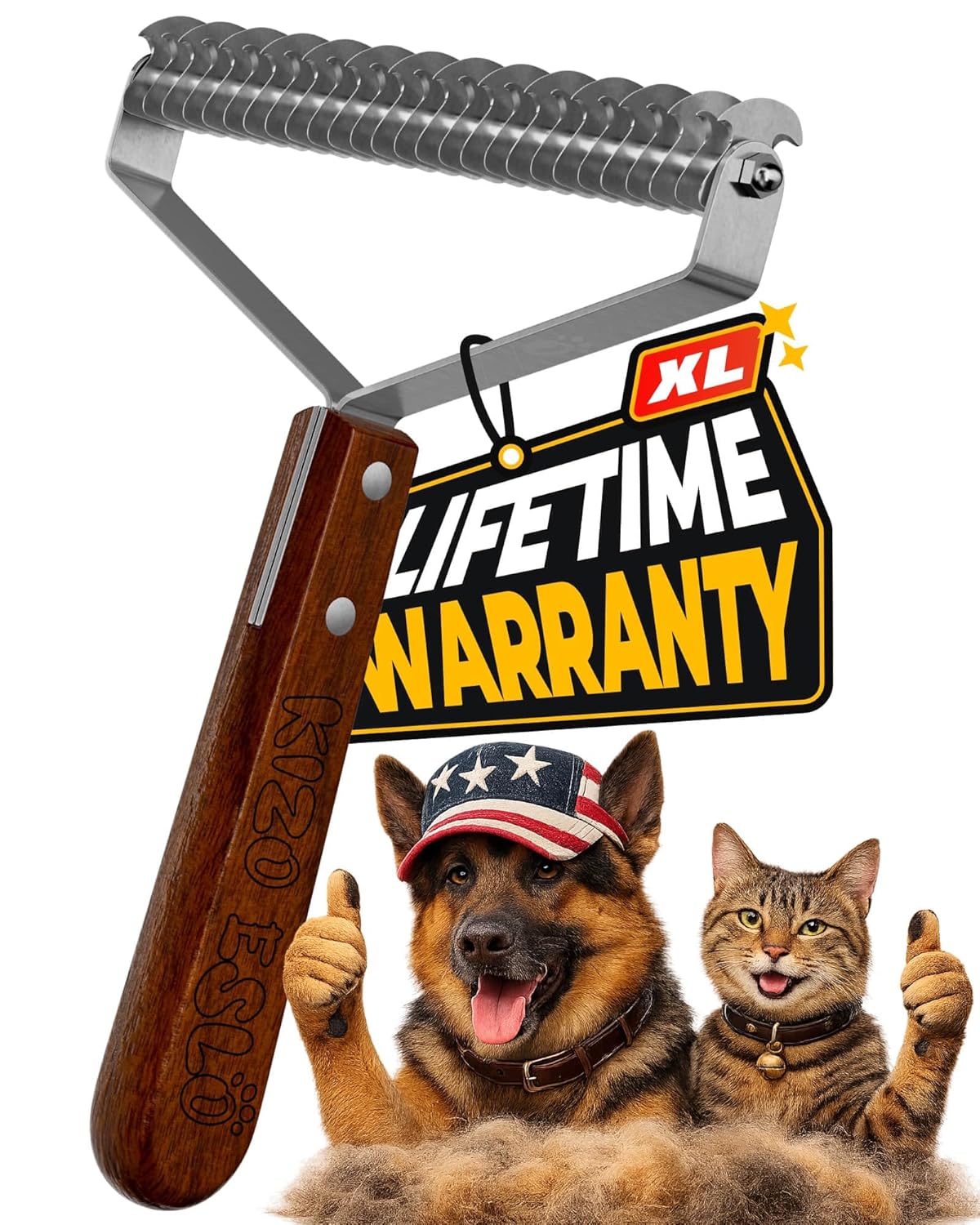
| Best Heavy‑Duty Deshedding Tool Built for frequent use and thicker double coats or large jobs | KIZO ESLO XL Undercoat Rake |  |
SleekEZ Deshedding Brush 5 Inch
Best Overall Deshedding Tool

| Item model number | 4121411 |
|---|---|
| Manufacturer | SleekEZ |
| UPC | 731236552734 |
The SleekEZ Deshedding Brush uses a patented metal deshedding blade to grab loose fur at the tips and pull it out without cutting healthy hair, making it useful for routine grooming and heavy-shed seasons. You use it with smooth strokes from head to tail, applying light to moderate pressure depending on coat density; the same tool can also be used as a carpet or upholstery rake to lift embedded pet hair. Its compact 5 inch profile and lightweight construction make it easy to handle for quick touch-ups and weekly maintenance, and cleanup is straightforward since the lifted fur collects where you can remove it by hand. The brush performs well on short, medium, long, and double-coated breeds but is not recommended for curly or non-shedding coats. Expect to use it more frequently during seasonal blowouts, and be careful to follow the directions to avoid overworking sensitive areas around the face and belly.
Best for: Buyers who want a single, easy-to-use groomer that handles most shedding coat types and reduces the need for frequent professional deshedding.
Less Ideal for: Owners of dogs with curly or non-shedding coats or those who need a wide-head tool for very large breeds should consider specialized alternatives.
- Patented blade designed to lift and remove loose fur and undercoat without cutting healthy hair
- Works across short, medium, long, and double-coated breeds
- Also functions off-pet as a hair remover for carpets, upholstery, and car interiors
- Compact, lightweight design is easy to hold for short grooming sessions
- Not recommended for curly or non-shedding coat types
- Small 5 inch head may require more passes on very large dogs
Verdict: The best overall deshedding tool balances fur removal efficiency, comfort for the dog, durability, and ease of cleaning for everyday grooming needs.
Maxpower Planet Grooming Rake
Best Budget Deshedding Tool

| Item model number | PGT-002 |
|---|---|
| Manufacturer | Maxpower Planet |
| UPC | 850050643067 |
| ASIN | B07P2N8HQH |
The Maxpower Planet Grooming Rake is a two-sided deshedding tool that combines a nine-teeth side for breaking up mats and tangles with a 17-teeth side for thinning and removing loose undercoat. It is used on dry coats and is intended primarily for pets with dense or double fur; start with the coarser side to work through problem areas, then finish with the finer side for overall deshedding. The teeth are sharpened but rounded, which lets the rake lift loose hair and trapped dirt while minimizing irritation when used with light, short strokes. A rubber-coated, non-slip handle keeps the tool comfortable and controllable during longer sessions, and the design sheds fur cleanly instead of packing it into the teeth. Important limitations: the rake is not effective on very short, fine coats because the teeth will glide over the surface, and it requires gentle technique around sensitive areas to avoid catching skin. For heavy shedders with thicker coats this rake is an efficient, handheld solution that reduces loose undercoat when used regularly.
Best for: Buyers who need a handheld deshedding solution for dogs or cats with thick fur or dense double coats and who prioritize removing undercoat to cut down on loose hair around the home.
Less Ideal for: Owners of short-haired breeds with fine coats or people wanting a tool that works aggressively without careful technique should consider alternatives designed for short coats or softer contact.
- Dual-sided heads for dematting (9 teeth) and deshedding (17 teeth) provide a clear workflow for mats then undercoat
- Sharpened yet rounded teeth lift loose hair and dander while reducing surface irritation when used gently
- Non-slip rubber-coated handle makes longer grooming sessions easier to control
- Design sheds hair out of the teeth rather than packing it, simplifying cleanup
- Not effective on very short, fine coats where teeth cannot engage hair
- Requires careful, gentle technique near sensitive areas to avoid catching loose skin
Verdict: The best budget deshedding tool provides reliable undercoat removal and acceptable build quality for owners who want good performance without a high price.
Andis Premium Fine-Tooth Deshedding Rake
Best Premium Deshedding Tool

| Included Components | Deshedding Rake |
|---|---|
| Material Type | Polymer |
| Item Type Name | Deshedding Rake |
| Number of Items | 1 |
The Andis Premium Fine-Tooth Deshedding Rake is a handheld grooming tool built to pull loose undercoat and reduce shedding without cutting the topcoat. Its fine-tooth stainless-steel blade penetrates dense fur to lift and remove loose hair, and the ergonomic, anti-slip polymer handle is shaped for extended use during longer grooming sessions. In practice it is used like a traditional rake: short, controlled strokes through the undercoat, paying attention around sensitive areas and joints. The manufacturer claims up to 90% reduction in shedding when used correctly, and the tool's durable construction and salon-oriented handle make it suitable for frequent grooming of heavy-shedding breeds. Limitations are that the fine teeth require careful use on matted or very short coats to avoid irritation, and it is a single-condition tool best suited to de-shedding rather than detangling or trimming. For owners with dense double coats who groom regularly, this rake delivers focused removal and a sturdy feel, but it should be used attentively to avoid overworking thin areas of the coat.
Best for: Owners of dense-coated, heavy-shedding dogs who groom frequently and prioritize a durable, high-performance tool for removing undercoat.
Less Ideal for: Owners who only need occasional light grooming, those with very short coats, or people seeking an all-in-one detangling and trimming tool.
- Fine-tooth stainless-steel blade removes undercoat and loose hair effectively
- Ergonomic anti-slip handle built for extended salon-style use
- Durable construction suited to frequent grooming sessions
- Designed to reduce overall shedding when used properly
- Not intended for detangling or cutting so separate tools may be needed for mats
- Fine teeth require careful technique on matted or sensitive skin areas
Verdict: The best premium deshedding tool offers superior materials, long-lasting sharpness or teeth, and refined ergonomics for owners willing to pay more for a top-tier grooming experience.
Dipoo Self Cleaning Shedding Brush
Best Ergonomic Deshedding Tool

| Item model number | Dip-202401 |
|---|---|
| Manufacturer | Dipoo |
| Suitable coat types | Medium short and medium long hair |
This compact Dipoo deshedding brush is built for quick touch-ups and regular maintenance rather than heavy-duty dematting. It uses closely spaced stainless steel bristles with rounded plastic tips to lift loose undercoat and surface hair without scratching skin, and a one-button release pushes trapped fur off the head for fast cleanup. The lightweight TPR handle and small profile make it easy to hold for longer sessions and simple to pack for travel or storage in small homes. It performs best on medium-short and medium-long coats and can noticeably reduce shedding between deeper grooming sessions, but the bristles can bend if used on very thick or heavily matted coats and it is not intended for detangling. Expect efficient daily or weekly touch-ups and much easier cleanup compared with a non-self-cleaning brush, while owners of very short or very dense coats should consider a tool designed specifically for those coat types.
Best for: Buyers who need a small, travel-friendly brush for regular touch-ups and to reduce loose hair between deeper grooming sessions.
Less Ideal for: Owners who need a tool for heavy shedding, thick double coats, or dematting should choose a sturdier de-shedding or detangling tool instead.
- Compact, lightweight profile easy to store and pack for travel
- Self-cleaning button ejects collected fur for fast, hygienic cleanup
- Stainless steel bristles with rounded tips lift loose hair without irritating skin
- Ergonomic TPR handle provides a comfortable grip for short grooming sessions
- Not suitable for dematting or detangling heavily tangled fur
- Bristles may bend on very thick coats or when used aggressively
Verdict: The best ergonomic deshedding tool minimizes hand fatigue with a well-shaped grip and balanced weight, making it ideal for owners who groom frequently or have multiple grooming sessions.
Pet Teezer De-Shedding Dog Brush Small
Best Compact Deshedding Tool

| Item model number | ROW-SDS-BLB-010319 |
|---|---|
| Manufacturer | Tangle Teezer |
| ASIN | B081ZQPVYQ |
The Pet Teezer De-Shedding Dog Brush is a compact, palm-friendly grooming tool for short-haired and double-coated dogs. Its patented two-tier teeth combine longer teeth that reach the undercoat with shorter teeth that pick up loose hair, so you can use it for quick touch-ups or a more thorough deshedding session. The polymer teeth are gentle on skin to reduce brushing irritation, and the lightweight, ergonomic design makes it easy to hold during travel or multi-minute grooming without tiring your wrist. It works wet or dry and cleans simply by lifting trapped hair from the teeth and rinsing under warm water. Because it is small and designed for short fur, it may require more passes on larger dogs or very heavy shedders compared with full-size tools, and it does not have a mechanical hair-eject feature. For owners who want a portable, low-irritation brush that still reaches the undercoat on short coats, this brush is a practical choice.
Best for: Buyers who need a portable, easy-to-pack brush for short-coated dogs and value a gentle, lightweight tool for quick touch-ups or travel grooming.
Less Ideal for: Owners of very large dogs or heavy shedders who need a full-size deshedding tool capable of covering large areas more quickly should consider a larger brush.
- Two-tier polymer teeth reach undercoat and collect loose hair for effective deshedding
- Lightweight, ergonomic palm-friendly shape reduces wrist strain during use
- Gentle teeth reduce brush burn and irritation on sensitive skin
- Works wet or dry and is easy to clean by rinsing and removing trapped hair
- Small size means more passes are needed on larger dogs or heavy shedders
- No mechanical hair-eject mechanism to clear teeth automatically
Verdict: The best compact deshedding tool is sized for portability and quick maintenance, fitting easily in a grooming kit or for use during travel and short touchups.
Pecute Self-Cleaning Slicker Brush
Best Gentle Deshedding Tool

| Item model number | PGT-SB05 |
|---|---|
| Bristle Material | Stainless Steel |
| Handle Material | ABS+TPR+ Non-Slip Coating |
| Item Weight | 3.1 ounces |
The Pecute self-cleaning slicker brush is a compact grooming tool built to pull loose undercoat and dander from short-to-medium and double-coated pets. You use it like a standard slicker brush, working section by section along the direction of hair growth; the 135° stainless-steel bristles reach into the undercoat while capped tips give a gentle massage that most pets tolerate. A one-click hair ejection button clears accumulated fur quickly, which reduces cleanup and makes routine brushing faster. The non-slip TPR handle and 3.1-ounce weight keep sessions comfortable so you can groom multiple times a week without wrist fatigue. It is optimized for small to medium animals and performs well on heavy shedders with straight or double coats, but the bristle design and size mean it is not intended for very long, very curly, or fragile hair types. For owners of large, dense-coated breeds you may need a larger undercoat rake to move heavy mats more efficiently, but for regular deshedding on a budget this brush offers strong day-to-day value.
Best for: Siberian Husky caretakers looking for an inexpensive, easy-to-use deshedding tool to manage regular shedding sessions without salon-level expense.
Less Ideal for: Owners who need a heavy-duty, full-size undercoat rake for large-area de-shedding or for detangling significant mats should consider a larger, more aggressive tool.
- Self-cleaning button ejects collected fur for fast cleanup
- 135° stainless steel bristles reach the undercoat while capped tips reduce skin irritation
- Lightweight with a non-slip TPR handle for comfortable, frequent grooming
- Works well on double coats and short-to-medium hair types common to shedding breeds
- Brush head and bristle spacing are small so heavy matting on large breeds may require a separate rake
- Not recommended for very long, very curly, or fragile coats
Verdict: The best gentle deshedding tool removes loose hair with minimal tugging or irritation, making it the right choice for Pomeranians with sensitive skin or skittish temperament.
KIZO ESLO XL Undercoat Rake
Best Heavy‑Duty Deshedding Tool
| Head type | Dual-sided 14/27 teeth |
|---|---|
| Intended coats | Long, thick, double coats |
| Handle | Solid wood |
| Blade material | Stainless steel (rounded edges) |
This XL two-sided undercoat rake pairs a wide-tooth side for detangling and a fine-tooth side for deshedding, making it a practical heavy-duty grooming tool for coarse, wiry coats. The extra-large head covers more fur per stroke so grooming goes faster on big dogs, while the rounded stainless-steel teeth are shaped to reduce pulling when used gently. It is intended for regular home use during shedding season and for breaking up mats after loosening them by hand or with scissors. The solid wood handle and metal frame give the tool a sturdy, durable feel that stands up to frequent use, though the aggressive blades mean you must follow the brand cautions to avoid sensitive areas and work carefully on tight mats. For short-coated dogs with minimal undercoat this rake is more than needed and it is not designed to be forced through severe tangles without pre-cutting. Used properly, it speeds up undercoat removal and leaves thicker coats looking neater with fewer passes.
Best for: Owners who groom frequently or manage coarse, resilient double coats and want a stout, efficient tool to remove undercoat, reduce shedding, and break up light mats at home.
Less Ideal for: People with short-haired, sensitive, or light-shedding dogs who need a softer, less aggressive brush or for users unwilling to work carefully around mats and skin.
- Dual-sided head combines wide teeth for dematting and fine teeth for deshedding in one tool
- Extra-large head covers more coat per stroke for faster grooming on large or thick-coated dogs
- Rounded stainless-steel teeth designed to glide with less pulling when used gently
- Solid wood handle and metal frame provide a durable, heavy-duty build suited to frequent use
- Aggressive blade teeth require careful technique and pre-loosening of severe mats to avoid discomfort
- Not ideal for short coats or very sensitive skin where a softer brush would be gentler
Verdict: The best heavy‑duty deshedding tool is engineered for tougher jobs and frequent use, with robust construction and aggressive tooth/blade design for thick undercoats and long grooming sessions.
Choosing the Right Deshedding Tool Pomeranian: Key Factors to Consider
Undercoat Removal Effectiveness
How well a deshedding tool reaches and removes loose undercoat determines how many brushing sessions you need. Pomeranians have a dense undercoat that can mat and trap loose fur; a tool that extracts hair from the root of loose fibers reduces seasonal blowouts and daily shedding.
Effectiveness is not just about aggressive pulling. A good tool should lift and collect loose undercoat while leaving the longer guard hairs intact to preserve coat texture and insulation. Too much blunt force can damage guard hairs, causing the coat to look thin or uneven over time. Consider tools with thin, closely spaced teeth or a fine blade designed specifically for fine double coats.
Blade or Tooth Design and Safety
The shape, spacing, and finish of blades or teeth affect both performance and skin safety. Rounded, polished tips and narrow profiles slide under the topcoat to reach the undercoat without cutting or nicking the skin. Tools with exposed sharp edges or wide, aggressive teeth are more likely to catch and pull live hair or irritate the skin.
Look for designs that reduce tugging and have protective guards or adjustable depth settings so you can use a light touch on sensitive areas such as the belly, armpits, and face. A safe blade design also helps prevent breakage of guard hairs, which maintains the coat's natural look and barrier properties.
Ergonomics and User Comfort
Grooming a Pomeranian can take time, so handle design matters for the person doing the work. Comfortable, non-slip grips reduce hand fatigue and slipping during longer sessions, which lowers the chance of accidental nicks or uneven strokes. Weight distribution is important too; a top-heavy tool becomes tiring and can encourage hurried brushing.
Consider whether the tool allows one-handed use for busy owners and whether its size fits your hand. Tools with swivel heads or flexible connections can follow body contours more naturally, making it easier to work around the neck, hindquarters, and tail without forcing awkward wrist positions.
Coat and Skin Sensitivity
Pomeranians sometimes have sensitive skin and thin areas where aggressive brushing causes redness or discomfort. A deshedding tool should be gentle enough for frequent use on problem areas while still removing loose hair effectively. Pay attention to whether the tool is intended for sensitive coats and whether it provides variable intensity settings or a softer blade option.
If your dog has a history of skin issues, choose tools that minimize friction and avoid excessive pulling. Regular, gentle grooming prevents mats and hotspots and reduces the need for forceful deshedding sessions that can irritate the skin.
Cleaning, Maintenance, and Blade Replacement
A tool that clogs or dulls quickly will underperform and require more effort per session. Tools that collect hair cleanly, have easy-release mechanisms, or include cleaning combs speed up post-grooming chores and keep tools working well. Consider whether blades or heads are replaceable and how simple the replacement process is.
Stainless steel or corrosion-resistant materials extend life, while sealed joints and easy-disassembly designs help prevent hair buildup. Maintenance also impacts cost of ownership because replaceable blades or cartridges may be more economical over several seasons than disposable designs.
Versatility for Seasonal and Spot Grooming
Pomeranians need different attention across the year: regular light brushing, seasonal de-shedding when the undercoat blows out, and occasional spot work to remove mats or loose tufts. A versatile tool handles both daily maintenance and deeper seasonal work without damaging the topcoat.
Tools that come with multiple heads or adjustable settings let you switch between gentle and deeper action. Versatility means fewer purchases and a better fit for mixed grooming routines, from short weekly sessions to more thorough seasonal treatments.
How Often Should I Deshed a Pomeranian?
Frequency depends on coat condition and season. During normal months, a short session two to three times per week keeps loose hairs under control and prevents tangles. In spring and fall when the undercoat is shedding heavily, you may need longer, more thorough sessions once or twice a week until the loose undercoat is reduced.
Pay attention to problem areas such as behind the ears, the ruff, and the tail plume—these spots often trap loose hair and small mats. Short, frequent sessions are gentler than infrequent marathon sessions and help keep the coat healthy.
- Weekly light brushings for maintenance
- More thorough deshedding once or twice weekly during seasonal blowouts
- Check and treat mat-prone areas more frequently
Which Tool Style Is Best for Tight Double Coats?
Different deshedding styles exist, including fine-toothed rakes, single-blade tools, and powered options. For a tight double coat like a Pomeranian's, a fine-toothed tool with closely spaced blades is often the most effective because it reaches the undercoat without removing guard hairs. Rakes that are too coarse can pull or break long outer hairs.
If you prefer a single tool to handle both maintenance and deeper work, look for designs that have adjustable depth or include a softer comb head for sensitive areas. The best style balances undercoat extraction with preservation of coat form.
- Fine-toothed rakes for gentle undercoat removal
- Single-blade tools for larger coverage areas
- Avoid overly coarse rakes that catch guard hairs
How to Avoid Skin Irritation While Deshedding
Use light pressure and work in the direction of hair growth. Heavy pulling or scraping increases friction and can cause redness or small abrasions, especially on thin-skinned areas. Keep the dog calm and check the skin frequently during brushing.
Start with a gentler head or lower setting on adjustable tools and increase only as necessary. If you encounter mats, soften them with a detangling spray or use a mat splitter rather than forcing them out with a deshedding blade.
- Brush with the grain, not against it
- Use gentle settings on sensitive areas
- Soften mats first instead of forcing removal
What to Expect During a Seasonal Blowout
Seasonal shedding typically means a lot more loose undercoat in a short period. Expect longer sessions and more hair collected. Plan to deshed more frequently and combine deshedding with a bath using a clarifying shampoo to loosen dead undercoat before brushing.
Be prepared for additional cleanup and consider wearing clothes that manage lint. Consistent sessions during the blowout will limit the total amount of loose fur in the house and help the dog stay cooler and more comfortable.
- More frequent sessions reduce long-term workload
- Bathing before deshedding can help release dead undercoat
- Protect furniture and plan cleanup during peak shedding
How to Care for Blades and Replace Parts
After each use, remove trapped hair and check blades or teeth for damage. Wipe metal parts dry to prevent corrosion and inspect any plastic components for stress cracks. Regular cleaning preserves cutting action and prevents hair buildup that reduces efficiency.
If the tool has replaceable blades, follow the manufacturer's guidance on replacement intervals based on frequency of use. Dull teeth pull rather than cut or lift, which increases tugging and discomfort for the dog; timely replacement maintains performance and safety.
- Clean hair from teeth after every session
- Dry metal parts to reduce corrosion
- Replace blades if they become dull or damaged
What Grooming Routine Complements a Deshedding Tool?
A full grooming routine includes regular light brushing, occasional baths with appropriate shampoos, and spot checking for mats or skin issues. Use a soft bristle brush or finishing comb after deshedding to realign guard hairs and smooth the coat. Finish grooming sessions with praise and a treat to build a positive association.
Trim long feathering around paws and sanitary areas as needed, but avoid aggressive cutting of the ruff or tail plume. Consistent, moderate care reduces the need for aggressive deshedding and keeps the coat looking full and healthy.
- Light brushing between deshedding sessions
- Bath and dry before heavy deshedding when practical
- Use finishing tools to tidy the coat after undercoat removal
How We Chose the Best Deshedding Tool Pomeranian
We started by focusing on features that directly matter for Pomeranian coats: undercoat removal capability, hair retention (how much fur the tool actually pulls out versus disperses), blade or tooth design that spares guard hairs, and safety features that reduce the risk of nicks or skin irritation. We prioritized tools that offer adjustable depth or different blade sizes so owners can tune pressure for a fine double coat. Ergonomics and handle design were assessed for frequent brushing sessions, along with cleaning and maintenance ease to keep performance consistent. Durability and materials were included because a worn blade or brittle teeth quickly reduce effectiveness. We also considered suitability for different coat conditions, such as seasonal blowing of coat, mat-prone areas, and sensitivity on the belly and ears. Tools were excluded if they were primarily marketed for heavy-shedding large breeds without clear adjustments for fine double coats or if they lacked basic safety features. The final list favors options that balance effective undercoat removal with coat protection, user comfort, and straightforward upkeep.
Our full evaluation process is outlined in our review methodology.
FAQ
Can I use a deshedding tool every day on a Pomeranian?
Daily use is usually unnecessary and can irritate the skin. Short, gentle sessions two to three times per week are typically sufficient for maintenance, with increased frequency during seasonal shedding. Monitor the skin and reduce frequency if you notice redness or sensitivity.
Will deshedding make my Pomeranian's coat thinner permanently?
Proper deshedding removes loose undercoat without affecting guard hairs, so it should not permanently thin the coat. Overly aggressive or improper use can damage guard hairs and create a thin appearance, which is why gentle technique and appropriate tool selection matter.
Is it better to bathe before or after deshedding?
Bathing before a deep deshedding session can help loosen dead undercoat, making removal easier. Make sure the coat is fully dry before using metal blades or rakes to avoid corrosion and reduce the chance of clumping wet hair.
How do I handle mats when deshedding?
Soften mats with a detangling product or conditioner and gently work them out with your fingers or a mat splitter rather than forcing them with a deshedding blade. If a mat is tight or near the skin, consult a professional groomer to avoid injury.
Can I use the same deshedding tool on puppies and adults?
Puppies have more delicate coats and skin, so use the gentlest setting or the softest head available. Start with very short sessions to accustom the puppy to grooming and avoid aggressive tools until the adult coat is fully developed.
Final Verdict
Choose a deshedding tool that balances effective undercoat removal with protection of the Pomeranian's guard hairs and skin. Prioritize blade design and safety features, comfortable ergonomics for regular use, and maintenance ease so the tool performs well season after season. Ultimately, pick a tool you will use consistently. Gentle, frequent grooming sessions are better for coat health than occasional aggressive treatments, and the right tool makes those sessions faster and more comfortable for both you and your dog.

