

Finding the right diet dog treat matters whether you are managing your dog's weight, supporting joint health, or simply reducing daily calories. The wrong treat can quickly erase progress from portion control or special diets, so choosing snacks that fit your dog's calorie budget and ingredient needs is important. This guide shortlists seven top diet treats, selected for low calorie counts, clear labeling, and ingredient transparency. Below we summarize what matters when comparing options and how each pick meets common goals for training, weight management, and picky eaters.
Top Picks at a Glance
| Best Overall Diet Treat A balanced choice that suits most pets’ dietary needs | Covetrus Nutrisential Lean Treats 4 oz |  |
| Best Budget Diet Treat An affordable option that still meets basic dietary standards | Fruitables Skinny Mini Apple & Bacon |  |
| Best Premium Diet Treat Higher-end ingredients and craftsmanship for owners wanting top quality | JustFoodForDogs JustChicken Dog Treats 5 oz |  |
| Best Low-Calorie Diet Treat Specifically formulated for trimming calories and managing weight | Fruitables Baked Dog Treats 12oz |  |
| Best High-Protein Diet Treat Higher-protein snacks to support lean muscle and active pets | Vital Essentials Beef Liver Treats 2.1 oz |  |
| Best Grain-Free Diet Treat No-grain recipes for pets with grain sensitivities or owner preference | Hill's Grain Free Soft-Baked Naturals Chicken & Carrot |  |
| Best Limited-Ingredient Diet Treat Simpler formulas to reduce allergens and track key components | Pupford Freeze Dried Training Treats 4 oz |  |
Covetrus Nutrisential Lean Treats 4 oz
Best Overall Diet Treat
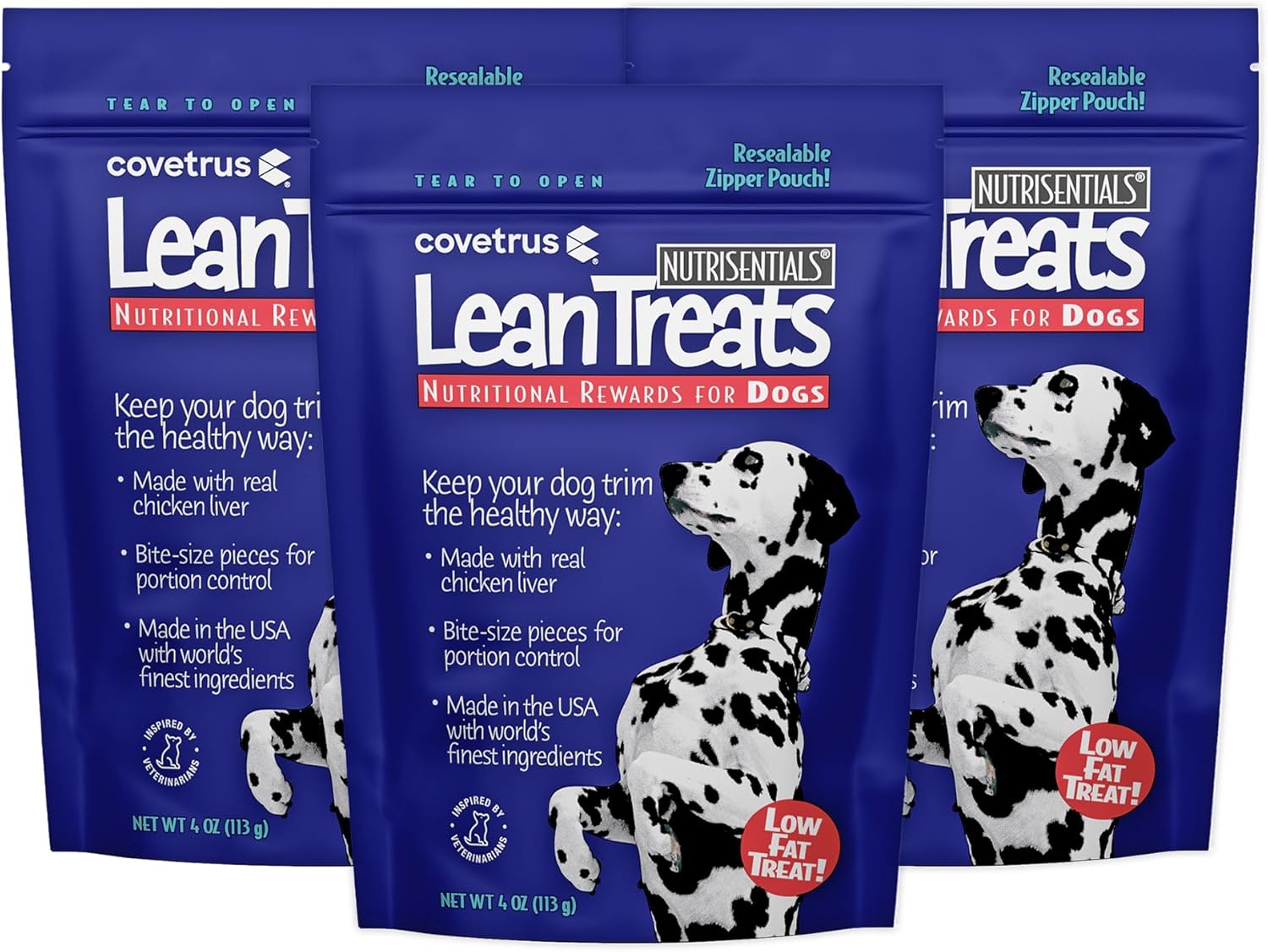
| Flavor | Chicken |
|---|---|
| Crude protein | Not less than 23% |
| Crude fat | Not less than 4%, not more than 7% |
| Calorie content | 2674 kcal/kg; 7.2 kcal/treat |
| Package size | 4 oz (3 pack = 12 oz total) |
These lean treats are small, soft morsels made primarily from chicken liver and chicken meal that are designed for training and weight management. They are portion-controlled — each treat is about 7.2 kcal — and their tender texture makes them easy to break into smaller pieces or hand out rapidly during training sessions. The formula emphasizes low fat and limited ingredients with added preservatives and natural extracts for flavor stability, so they stay palatable and convenient in a resealable bag. Practical benefits include easy portioning for frequent rewards, a flavor profile most dogs find appealing, and suitability for dogs that need calorie-conscious treats. Limitations are that the ingredient list includes wheat and some preservatives, so dogs with specific grain sensitivities or owners avoiding certain additives may prefer a different option, and the treats are relatively small so they are not a meal replacement. For everyday rewarding where flavor and low calories matter, these treats strike a solid balance between palatability and portion control.
Best for: Buyers who want a tasty, low-calorie training reward that lets them give frequent treats without blowing a daily calorie budget.
Less Ideal for: Owners seeking grain-free or preservative-free treats or those who need larger, higher-calorie rewards for very large dogs should consider alternatives.
- Low calorie per treat (about 7.2 kcal) for easier weight management
- Soft, bite-size pieces suitable for rapid training rewards
- Real chicken/chicken liver provides a strong, appealing flavor
- Resealable bag and small pieces make portion control convenient
- Contains wheat and several preservatives that some owners prefer to avoid
- Small package size (4 oz per pack) may require frequent repurchasing for heavy training use
Verdict: The best overall diet treat for most pet owners, balancing nutrition, palatability, ingredient quality, and portion control for everyday rewarding.
Fruitables Skinny Mini Apple & Bacon
Best Budget Diet Treat

| Flavor | Apple Bacon |
|---|---|
| Unit Count | 5 Ounce |
| Made in | USA |
| Calories per treat | Under 4 calories |
| Special Ingredients | gluten-free |
Fruitables Skinny Mini Apple & Bacon are bite-sized, soft training treats designed for frequent rewards without adding many calories. Each treat is under 4 calories and the recipe highlights real ingredients such as sweet potato, apple, and bacon flavoring while excluding wheat, corn, and soy, which makes them suitable for dogs with common sensitivities. They come in a resealable bag and their small, soft texture is convenient for rapid training sessions or multiple short rewards. The formulation uses chickpeas, peas, flaxseed and vegetable glycerin alongside natural flavors and mixed tocopherols for preservation, so you get a treat that leans toward wholesome, plant-forward ingredients rather than meat-first jerky. On the downside, these are not a high-protein meaty treat and they contain added glycerin and natural bacon flavor rather than whole meat pieces, so very meat-motivated dogs might prefer a different style. For owners focused on calorie control and ingredient simplicity on a budget, these deliver consistent rewards and a variety of superfood claims without premium pricing.
Best for: Buyers who prioritize calorie control and straightforward, mostly plant-based ingredients for regular training rewards without wanting to pay premium prices.
Less Ideal for: Owners seeking high-protein, meat-first treats or long-lasting chews for strong chewers should consider meat-heavy or chew-style alternatives.
- Low-calorie formula (under 4 calories per treat) suitable for frequent rewards
- Made with recognizable plant-based ingredients like sweet potato and apple
- Free of wheat, corn, and soy which can help dogs with common sensitivities
- Soft, small pieces that are easy to break up and use in rapid training
- Contains vegetable glycerin and added natural bacon flavor rather than whole meat as the primary protein source
- Small bag size may require more frequent repurchases for heavy trainers
Verdict: The best budget diet treat for shoppers prioritizing cost, offering reasonable ingredients and portion control while keeping treats wallet-friendly.
JustFoodForDogs JustChicken Dog Treats 5 oz
Best Premium Diet Treat

| Flavor | Chicken |
|---|---|
| Item Form | Treats |
| Unit Count | 5 Ounce |
| Age Range Description | All Life Stages |
| Specific Uses For Product | Behavior, Coat, Skin, Stomach, Weight |
These treats are thin strips of real chicken breast dried into a chewy, semi-crisp jerky that works well as a high-value training reward or an everyday healthy snack. They are single-ingredient, human-grade chicken breast with no preservatives, fillers, artificial colors, or growth hormones, which makes them easy to feed to dogs with sensitivities and straightforward to track in an elimination diet. The resealable pouch helps keep portions fresh and the low-calorie profile is convenient for reinforcing behavior without adding many extra calories. Texture is appealing to most dogs and breaks into small pieces for training sessions, though because they are real meat they can be softer or more pliable than baked crunchy treats and may not last as long for very enthusiastic chewers. Packaging is pantry-stable but should be stored in a cool, dry place after opening. If you want a simple, high-quality meat-only treat with a gourmet ingredient list, these deliver the expected flavor and simplicity.
Best for: Pet owners who prioritize clean, transparent ingredient lists and want a human-grade, single-protein treat for training, allergy management, or everyday healthy rewards.
Less Ideal for: Owners seeking long-lasting chew toys or large bulk packs for frequent dispensing should consider firmer or higher-quantity alternatives.
- Single-ingredient recipe (100% chicken breast) suitable for dogs with food sensitivities
- Human-grade sourcing and no artificial colors, preservatives, or growth hormones
- Resealable 5 oz pouch for freshness and easy portioning
- Low-calorie, high-protein formulation appropriate for training and weight management
- Real-meat texture can be softer and less long-lasting than baked or hard chews
- Small 5 oz pouch may require frequent repurchasing for multi-dog households
Verdict: The best premium diet treat for owners willing to pay more for superior ingredient sourcing, nutrient profiles, and careful manufacturing.
Fruitables Baked Dog Treats 12oz
Best Low-Calorie Diet Treat

| Flavor | Bacon |
|---|---|
| Unit Count | 12 Ounce |
| Item Form | Stick |
| Calorie Content | 8 calories per treat |
| Free From | No artificial flavors, wheat, corn, or soy |
Fruitables Baked Dog Treats are oven-baked crunchy sticks flavored with apple and bacon and formulated to be a low-calorie reward. At about 8 calories per piece they are designed for frequent rewarding during training or daily snacking without adding much to a dog's daily calorie intake. The recipe highlights pumpkin and apple as nutrient-packed ingredients and the bag is free from wheat, corn, soy, and artificial flavors, which can help with common sensitivities. In practice these treats work well as quick, motivating rewards because of their aroma and crisp texture, and the stick form makes them easy to break or hand out during short training sessions. Limitations include a relatively soft crunch that some very small morsels may crumble, and the bag format means you need to monitor portions to avoid over-treating across multiple sessions. For French Bulldogs that need careful portion control, these treats offer a flavorful, low-calorie option that keeps training moving without major calorie cost.
Best for: Owners who need a motivating, low-calorie reward to support frequent training and weight management for a compact, food-motivated dog.
Less Ideal for: Owners seeking single-serve, pre-portioned treats or veterinary therapeutic diets should consider other options.
- Very low calories at about 8 calories per treat, good for portion-controlled rewarding
- Made without wheat, corn, soy, or artificial flavors, suitable for dogs with common sensitivities
- Oven-baked crunchy sticks with strong aroma that motivate dogs during training
- Stick form is easy to break or offer quickly in short training repetitions
- Bag packaging requires owners to track portions to maintain strict calorie control
- Not formulated specifically for brachycephalic breeds so treat size may need adjustment for French Bulldogs
Verdict: The best low-calorie diet treat for pet owners focused on weight management, providing satisfying taste with reduced calories per serving.
Vital Essentials Beef Liver Treats 2.1 oz
Best High-Protein Diet Treat

| Item Form | Freeze Dried |
|---|---|
| Flavor | Beef |
| Special Ingredients | 100% Raw Freeze Dried Beef |
| Unit Count | 2.1 Ounce |
| Allergen Information | Grain-Free, Corn-Free, Gluten Free, Soy Free, Wheat Free |
These bite-sized freeze-dried beef liver treats deliver strong aroma and concentrated meat flavor that keeps dogs focused during training sessions. Each piece is made from 100% beef liver with no fillers or artificial additives, making them an easy single-ingredient reward for dogs with sensitivities. The freeze-drying process preserves nutrients and creates a lightweight, shelf-stable snack that is simple to carry and portion into multiple tiny rewards during repetition-heavy sessions. Because they are dense in protein and low in calories per piece, you can reward frequently without overfeeding, and the texture provides enough interest for picky eaters. Limitations include the small 2.1 ounce bag size, which may run out fast for heavy trainers, and the strong smell that some owners may find intense when opened. These treats are best used as high-value training rewards, meal toppers for picky dogs, or short-session incentives.
Best for: Trainers and pet owners who need a reliably enticing, single-ingredient reward for repeated short training intervals or to motivate picky eaters.
Less Ideal for: People who give large-volume treats during long training sessions, those who prefer low-odor rewards, or households needing bulk quantities for multiple dogs.
- Single-ingredient formula (100% beef liver) suitable for dogs with food sensitivities
- Freeze-dried to retain aroma, flavor, and nutrients for strong training appeal
- Small, bite-sized pieces that are easy to portion for frequent reinforcement
- Shelf-stable and lightweight for easy storage and on-the-go training
- Small 2.1 oz bag may be insufficient for frequent trainers or multi-dog households
- Very strong aroma that can be off-putting to some owners
Verdict: The best high-protein diet treat for active or working pets that need extra protein in a controlled treat form.
Hill's Grain Free Soft-Baked Naturals Chicken & Carrot
Best Grain-Free Diet Treat

| Flavor | Chicken & Carrots |
|---|---|
| Item Form | Granule |
| Unit Count | 8 Ounce |
| Age Range Description | All Life Stages |
These soft-baked treats are designed as an easy-to-chew, grain-free biscuit option for dogs that need tender snacks, such as seniors, puppies, or small breeds. They are made with real chicken and carrots and have a moist, granule-like texture that breaks apart easily for training or hand-feeding. The recipe lists peas, potatoes, glycerin and mixed tocopherols for freshness, and the treats are marketed as free from artificial preservatives and flavors. In practice the soft texture makes portioning and hiding pieces in a treat pouch simple, and the small bag size is convenient for short training sessions or mixing into a meal as a topper. Limitations to consider are that the bag is an 8-ounce pouch so you may need to repurchase frequently for multi-dog households, and the ingredient list includes peas and potatoes which some owners avoid for specific diets. For dogs that require very soft or single-ingredient treats for allergies, a simpler limited-ingredient option might be preferable.
Best for: Buyers seeking a tender, easy-to-chew natural biscuit for puppies, elderly dogs, or small breeds who need softer treats for training or hand-feeding.
Less Ideal for: Owners who need single-ingredient hypoallergenic treats or who prefer larger bulk packages for multiple dogs should consider alternatives.
- Soft-baked texture that is easy to break into small pieces for puppies, seniors, and training
- Grain-free formula made with real chicken and carrots
- No artificial preservatives or flavors listed
- Small 8-ounce bag is convenient for short training sessions and travel
- Small package size may require frequent repurchase for larger households
- Contains multiple carbohydrate ingredients (peas, potatoes) that some restricted diets avoid
Verdict: The best grain-free diet treat for pets with grain sensitivities or owners preferring grain-free ingredient lists while maintaining balanced nutrition.
Pupford Freeze Dried Training Treats 4 oz
Best Limited-Ingredient Diet Treat

| Flavor | Beef |
|---|---|
| Item Form | Pellet |
| Unit Count | 4 Ounce |
| Ingredients | Beef Liver, Beef Heart, Mixed Tocopherols (Natural Antioxidant) |
These freeze-dried beef liver treats are made from just a few natural ingredients and are built for everyday training. The pellets are bite-sized and lightweight so you can give multiple rewards in a short session without overfeeding, and the dry texture keeps hands and treat pouches clean during walks, classes, or clicker work. Because they are essentially meat, they are highly motivating for most dogs and work well for shaping behaviors, recall practice, and reward-based training. The simple ingredient list and low calorie profile also make them a reasonable choice for dogs with sensitive stomachs or owners tracking intake. Limitations include the small 4 ounce pouch, which will be used up quickly with frequent sessions, and the single-flavor profile may not suit dogs that need stronger variety to stay interested long term.
Best for: Trainers who want a simple, highly motivating everyday reward that stays mess free and supports frequent, low-calorie reinforcement.
Less Ideal for: People looking for large bulk quantities or multiple flavor mixes for long-term variety should consider larger or multi-flavor packs.
- Single-ingredient, natural meat formula that boosts motivation
- Freeze-dried, low-odor pellets that do not make hands or pockets messy
- Small, bite-sized pieces suitable for rapid repetition during training
- Low calorie so you can reward frequently without large calorie load
- Small 4 oz pouch can be depleted quickly with heavy training use
- Only one flavor option in this listing limits variety for picky dogs
Verdict: The best limited-ingredient diet treat for owners seeking minimal, easy-to-read ingredient lists to reduce potential allergens and simplify feeding.
Choosing the Right Diet Dog Treat: Key Factors to Consider
Calorie Density
Calorie density determines how many treats you can give without exceeding daily calorie targets. A treat that delivers the same reinforcement value with fewer calories per piece makes it easier to keep training sessions frequent while protecting weight goals.
When comparing calorie density, look at calories per treat and calories per tablespoon or per ounce for soft or bulk formats. Also consider how the treat breaks down: a treat that splits into many small pieces can be more training-friendly than a single large bite with the same calorie count.
Ingredient Transparency
Clear, short ingredient lists help you avoid hidden sugars, unnecessary fillers, and common allergens. Whole-food ingredients and named protein sources are preferable to generic 'meat meal' or 'by-product' entries because they are easier to evaluate for quality and digestibility.
Transparency matters for dogs with sensitivities and for owners who want to control macronutrient ratios. Ingredients also indicate whether a treat will be more filling (higher fiber or protein) or simply palatable (higher fat or sugar).
Protein and Fiber Balance
Protein promotes satiety and helps support lean mass, while fiber slows digestion and can extend the feeling of fullness. Treats designed for diet management often emphasize one or both of these nutrients to reduce downstream hunger between meals.
Examine the guaranteed analysis to estimate how a treat will support satiety relative to its calorie content. A small increase in protein or fiber per treat can make a meaningful difference when used repeatedly over the day.
Format and Ease of Portioning
Treat format affects how you use the snack. Tiny, low-calorie bites are ideal for high-repetition training, whereas freeze-dried pieces, soft chews, or thin strips may be better for casual rewards. Some formats are easier to break into uniform portions, which helps accurate calorie control.
Also consider how the treat holds up during handling. Crumbly treats can lose mass quickly, making calorie tracking inconsistent, while very hard chews may be inappropriate for small or dental-sensitive dogs.
Palatability Versus Nutrition
A treat must be enticing enough for your dog to work for it, but extremely palatable treats often have higher fat or sugar that undermines diet goals. Balancing palatability with low calorie content is the key tradeoff for diet-focused snacks.
If your dog is picky, look for treats that use concentrated flavor from lean proteins or natural flavorants rather than added sugars. Trial-size packages or small resealable formats can help test palatability without committing to a large quantity.
Packaging and Storage
Packaging affects freshness, portion control, and convenience. Resealable bags and single-serve pouches help maintain crispness and make it easier to control portions throughout the day. Clear labeling of serving sizes and calories per piece simplifies tracking.
Storage considerations also include whether the treat requires refrigeration or is sensitive to humidity. Consistent texture and shelf stability ensure that calorie estimates remain accurate over time.
How Many Diet Treats Can I Give Each Day Without Affecting Weight Goals?
Start by calculating your dog's daily calorie allowance based on size, activity level, and any weight-target adjustments. From there, reserve no more than 10 to 15 percent of total daily calories for treats and extras if weight loss is the goal; for maintenance you can allocate a slightly higher percentage. Divide the treat-calorie budget by the calories per treat to determine a safe daily count.
Remember to include hidden calories from toppers, chews, and training snacks when you tally totals. Using lower-calorie, high-reward formats during training lets you give more repetitions without exceeding the budget.
- Use a treat portion notebook or app to track daily calories.
- Break larger treats into consistent smaller pieces for training.
- Adjust treat allowance on high-activity days to compensate.
Which Treat Formats Work Best for High-repetition Training?
Tiny low-calorie bites, thin soft strips, and very small freeze-dried pieces are ideal for high-repetition training because they provide immediate reinforcement without costing many calories. Soft textures allow for quick chewing, which keeps practice sessions flowing.
For dogs that take treats slowly, try formats that break safely into many uniform pieces so you can reward frequently while keeping individual portion sizes small.
- Prefer bite-sized treats under 5 calories for intensive training.
- Consider moist or soft textures for fast consumption.
- Avoid long-lasting chews during training; save them for enrichment.
How to Read Labels to Avoid Hidden Sugars and Fillers
Read the ingredient list from top to bottom and check the guaranteed analysis for crude protein, fat, and fiber. Ingredients should be named and specific rather than vague. Watch for corn syrup, molasses, or other added sweeteners high on the ingredient list, which add calories without nutritional benefits.
If the label lacks a clear calorie-per-treat figure, calculate it from the calories per serving and the number of pieces per serving. When in doubt, choose products that clearly disclose serving size and calories.
- Prioritize treats with whole-food protein sources listed first.
- Watch out for multi-syllable chemical additives and unspecified 'flavors'.
- Use per-piece calories to compare different formats fairly.
Are Freeze-dried Treats a Good Diet Choice?
Freeze-dried treats can be excellent for diet plans because they retain strong flavor from concentrated whole proteins while remaining lightweight and often low in added fats. Their intense aroma and texture make them highly motivating even in small portions.
However, because freeze-dried items can be calorie-dense by weight, check the per-piece calorie count and use small pieces for training. Some freeze-dried forms rehydrate slightly in the mouth, making them fast rewards without excessive calories.
- Use freeze-dried treats sparingly in training to control calories.
- Break larger pieces into uniform bits for consistency.
- Store in airtight packaging to preserve texture and calorie estimates.
Managing Treats for Dogs with Dietary Sensitivities
For dogs with food sensitivities or allergies, choose treats with single-source proteins or limited-ingredient formulas. Eliminating common allergens and unnecessary fillers reduces the chance of digestive upset and makes treats safer for routine use in a restricted diet.
When introducing a new treat, do a short trial and watch for changes in stool quality, itchiness, or digestive signs. Keep a log of ingredients that cause issues so you can avoid them in future selections.
- Favor named protein sources like turkey, chicken, or salmon rather than generic meat meals.
- Avoid treats with multiple added flavorings or colorants if sensitivities are suspected.
- Introduce new treats gradually over several days.
Using Treats to Support Weight-loss Plans Beyond Snacks
Treats can complement weight-loss strategies by acting as meal toppers that increase palatability without adding many calories, or by serving as low-calorie rewards that replace higher-calorie snacks. Combine treat control with portioned meals, increased activity, and regular weigh-ins for measurable progress.
Consider using treats to reinforce desired behaviors like calmer meal-time habits or increased leash walking. Behavioral rewards that encourage activity can indirectly support weight loss.
- Swap high-calorie treats for lean protein pieces during weight-loss phases.
- Use treats to reinforce exercise-based cues or longer walks.
- Monitor weight every 2 to 4 weeks and adjust treat allowance accordingly.
How We Chose the Best Diet Dog Treat
We prioritized options that help owners control calories and manage common diet-related concerns without sacrificing treat value during training. Our selection criteria focused on measurable, dog-centric features: calorie density per treat or per serving; protein and fiber content as indicators of satiety; limited or identifiable ingredient lists to reduce allergens and unnecessary fillers; presence or absence of added sugars and artificial additives; texture and format options suitable for training and dental needs; and packaging or format that supports portion control. We excluded products that lacked clear nutrition facts, used vague ingredient labeling, or could not document calorie or serving-size information. We also excluded novelty items that were not suitable for routine use in weight-managed feeding plans. The final list favors treats that balance low calories with palatability and practical formats for owners who need reliable, repeatable portions. Where applicable we noted options that are easier to break into pieces for training without losing their structure.
Our full evaluation process is outlined in our review methodology.
FAQ
How do I calculate calories per treat if the label only lists calories per serving?
Divide the calories per serving by the number of pieces in that serving to get calories per treat. If serving piece counts are not provided, estimate by weight: weigh a small number of treats, calculate calories per gram, then multiply by the piece weight.
Are natural or whole-food treats always better for dieting dogs?
Natural ingredients can be easier to evaluate and may avoid unnecessary additives, but they are not automatically lower in calories. Focus on calorie density and macronutrient balance rather than the label claim alone.
Can I use meal kibble as treats to reduce extra calories?
Using a portion of your dog's regular meal kibble as training rewards is a common and effective strategy. This keeps total daily calories stable while allowing frequent reinforcement during training.
How quickly should I expect weight change after switching to diet treats?
Weight change depends on the overall calorie deficit, activity level, and your dog's metabolism. Small reductions in treat calories can contribute to gradual weight loss over weeks when combined with portion control and increased activity.
Are soft treats worse for dental health than crunchy treats?
Soft treats are often easier to chew and better for older dogs or those with dental issues, but they do not provide the abrasive cleaning action that some crunchy treats offer. For dental benefits rely on dedicated dental chews and regular dental care rather than treat texture alone.
How should I transition my dog to a new diet treat?
Introduce the new treat gradually over several days, mixing small amounts with the current treat or using it in a few training sessions. Monitor for digestive upset or changes in appetite and stop if you notice adverse reactions.
Final Verdict
When choosing diet dog treats, prioritize low calorie density, clear ingredients, and formats that fit how you reward your dog. Balance palatability with nutrition by selecting treats that offer protein or fiber to support satiety while keeping calories minimal. Tradeoffs are unavoidable: the lowest-calorie option may be less appealing to a picky dog, while very tasty treats often cost you more calories. Decide which factors matter most for your goals and use portioning strategies to maintain consistency. With a clear calorie plan and the right treat format, you can keep training frequent and effective without compromising weight or health goals.

