

If you want a low-visibility, permanent way to keep a dog safely inside your yard, a diy underground dog fence can be an effective option. Installing an in-ground system gives you precise boundary control, customizable signal strength, and options for multiple pets without changing your landscaping. This guide covers six shortlisted diy underground fence systems chosen for reliability, installation flexibility, and humane containment features. We evaluate each option for coverage, signal consistency, and ease of installation so you can match a solution to your yard size and your dog's behavior.
Top Picks at a Glance
| Best Overall Diy Underground Fence A reliable all-around system that balances performance and ease | PetSafe Stubborn Dog In-Ground Fence 500 ft |  |
| Best Budget Diy Underground Fence A low-cost option that provides basic containment without extras | Jewyow Electric Underground Dog Fence 1-Dog |  |
| Best Premium Diy Underground Fence A higher-end system with advanced features and superior materials | SportDOG Contain + Train System |  |
| Best Heavy-Duty Diy Underground Fence Built for durability and long-term outdoor exposure and use | Extreme Dog Fence 1000ft Wire |  |
| Best Long-Range Diy Underground Fence Designed to cover larger yards and extended perimeter distances | Extreme Dog Fence Pro-Max 1-Dog 2000 ft |  |
| Best Easy-Install Diy Underground Fence Simplified setup with clear instructions and minimal tools required | Extreme Dog Fence Underground Kit 1000 ft |  |
PetSafe Stubborn Dog In-Ground Fence 500 ft
Best Overall Diy Underground Fence

| Coverage | 500 ft (1/3 Acre) |
|---|---|
| Collar correction | Tone, vibration, 4 static levels |
| Collar fit | Adjusts to 6-28 in neck |
| Power | Transmitter with power adaptor; collar uses 9V battery (included) |
The PetSafe Stubborn Dog In-Ground Fence is a DIY wired containment kit intended to create a custom boundary for a yard up to 1/3 acre using the included 500 ft of buried wire. Installation is a weekend, two-person project: you lay and bury the wire in the shape you want, hook up the transmitter, and train your dog with the included flags and collar. The kit's receiver collar is waterproof, fits dogs 8 lb and up with neck sizes 6–28 in, and offers tone plus vibration modes plus four levels of adjustable static correction to handle stubborn or hearing-impaired dogs. Practical benefits include expandable coverage (additional wire can extend the system to much larger areas), compatibility with most PetSafe in-ground collars, and straightforward training guidance that many dogs learn boundaries in about two weeks. Important limitations are the hands-on installation and trenching required, the need to buy extra collars for multiple dogs, and reliance on static correction which some owners may prefer to avoid; planning the boundary and routing landscaping or irrigation around the wire also takes time. For owners wanting a simple, expandable in-ground fence and willing to do a weekend install, this system delivers reliable containment for large dogs.
Best for: Owners who want a straightforward, no-frills in-ground fence they can install over a weekend to contain large, determined dogs and expand coverage later as needed.
Less Ideal for: People who need a no-install, instant wireless solution or who do not want to perform yard trenching and wiring should consider alternative containment options.
- Includes 500 ft of wire covering up to 1/3 acre with option to expand to much larger yards
- Waterproof receiver collar with tone, vibration, and four adjustable static correction levels
- Compatible with most PetSafe in-ground receiver collars so you can add more pets
- Designed for DIY weekend installation with training flags and instructions
- Collar fits a wide range of neck sizes and works for small to large dogs (8 lb and up)
- Requires burying wire and a multi-hour, two-person installation effort
- Additional collars must be purchased separately for multiple dogs
- Uses static correction which some owners may find undesirable
Verdict: The best overall DIY underground fence for most pet owners, offering dependable containment, straightforward setup, and a balanced mix of range, durability, and features.
Jewyow Electric Underground Dog Fence 1-Dog
Best Budget Diy Underground Fence

| Boundary wire length | 721 ft |
|---|---|
| Neck size fit | 9.5 to 26 inches |
| Waterproof rating | IPX7 |
| Power | Rechargeable (1.5 hours charging) |
This Jewyow underground fence kit provides a straightforward way to keep one dog contained in a defined yard area without professional installation. The system uses a transmitter and up to the included 721-foot boundary wire to create an adjustable signal field around buried wire; when the dog approaches the boundary the collar emits a tone and then escalating static stimulation to train the dog to retreat. The receiver is rechargeable (about 1.5 hours to full) and rated IPX7 so it tolerates swimming or wet conditions when wiped dry afterwards. The collar fits necks from about 9.5 to 26 inches and uses conductive silicone contact points to reduce direct metal contact. Setup is a DIY weekend job of laying and connecting wire and adjusting the transmitter field width. Expect basic, effective containment and customizable correction levels, but note this is a single-dog kit with no GPS, smartphone app, or advanced safety failsafes found on pricier models.
Best for: Owners who want an affordable, no-frills in-ground solution to keep a single dog safely contained and who are comfortable doing a weekend DIY installation and training the pet to respond to tone and correction.
Less Ideal for: Buyers who need multi-dog coverage out of the box or who expect app-based monitoring, GPS tracking, or advanced safety features should consider higher-end alternatives.
- Rechargeable receiver with short 1.5-hour charge time for quick turnaround
- IPX7 waterproof rating lets the collar be used in wet conditions and swimming when dried afterward
- Includes 721-foot boundary wire capable of covering roughly one acre for a single dog
- Adjustable tone and static levels plus configurable transmitter field let you tailor training intensity
- Silicone conductive contact points reduce direct metal contact for safer skin contact
- Designed for only one dog in this kit so adding dogs requires purchasing extra collars or different kit variants
- No GPS, mobile app, or smartphone integration for remote monitoring or alerts
- Signal-based systems require careful wire placement and training so effectiveness depends on installation and owner consistency
Verdict: The best budget DIY underground fence for owners who need effective, no-frills containment at the lowest reasonable cost while still meeting safety and reliability needs.
SportDOG Contain + Train System
Best Premium Diy Underground Fence

| Coverage | Up to 1 1/3 acres (with 1,000 ft wire) |
|---|---|
| Included wire | 1,000 Feet of 20-Gauge Wire |
| Collar functions | Tone, Vibration, 7 Levels Static Stimulation |
| Expandability | Expandable to 100 acres with additional wire and flags |
| Dogs supported | Train up to 3 dogs with remote; contains unlimited dogs with add-on collars |
The SportDOG Contain + Train System pairs an underground wire boundary with a waterproof collar receiver and a handheld remote so you can both contain and actively train a dog using the same equipment. Typical use is to bury or lay the included 1,000 feet of 20-gauge wire to define a perimeter, flag the boundary during training, then use the remote to deliver tone, vibration, or one of seven static stimulation levels while the collar provides warning tones and stimulation at the boundary. Notable features include a wall-mount transmitter with lightning protection and a wire-break alarm, rechargeable collar and remote with low-battery indicators, and expandability for more acreage or additional dogs. In practice the kit suits owners who want a durable, field-tested system with flexible training modes and clear support resources, and the included manual and DVD help with setup and behavior shaping. Limitations are that installation requires time and some digging or planning for wire routing, the static stimulation levels require responsible adjustment for temperament, and additional wire or add-on collars are needed to cover larger properties or many dogs.
Best for: Owners who prioritize a durable, feature-rich containment system and want the flexibility to both contain and actively train a dog using one integrated solution.
Less Ideal for: People who need a plug-and-play, no-installation solution or those unwilling to manage a wired installation and training process.
- Combined containment and remote training in a single system for on- and off-boundary control
- Waterproof, submersible collar receiver suitable for outdoor conditions
- Transmitter includes lightning protector and wire-break alarm for added reliability
- Expandable system that supports more acreage and additional collars
- Includes comprehensive starter kit: 1,000 ft wire, 100 flags, training manual and DVD
- Installation requires running and securing underground wire which takes time and basic DIY skills
- Uses static stimulation which must be set carefully to match a dog’s temperament
Verdict: The best premium DIY underground fence for buyers willing to invest in top-tier build quality, expanded feature sets, and longer-lasting components.
Extreme Dog Fence 1000ft Wire
Best Heavy-Duty Diy Underground Fence

| Item Length | 1000 feet |
|---|---|
| Recommended Uses For Product | Underground electric dog fencing |
| Material | Metal |
| Grade Rating | Industrial |
This 1,000-foot spool of heavy duty direct-burial wire is designed to form the buried perimeter of an underground electric dog fence system. The polyethylene coating gives the cable extra protection from UV and moisture, so it holds up better than bare or lightly coated wire for long-term outdoor use. Installers use it to run a continuous loop around a yard without splicing, which simplifies layout and reduces connection points that can fail. The wire is described as industrial grade and compatible with any wired underground fence system, so it works with most transmitters and receiver collars. Practical benefits include a full acre of coverage per spool and reduced maintenance from the robust coating, but buyers should plan their route carefully because a single continuous spool means you will need to manage endpoints and connectors for tie-in to the transmitter. Also, this product is wire only, so you still need a compatible transmitter and collars to complete a working system.
Best for: Owners who need a durable, professional-grade buried perimeter wire for strong or persistent dogs and who are prepared to install a DIY underground fence system.
Less Ideal for: People looking for an all-in-one kit, a wireless solution, or those who do not want to handle burying and routing long cable runs.
- 1,000-foot continuous spool covers up to about 1 acre without splices
- Polyethylene coating resists UV and water for longer outdoor life
- Marketed as industrial/heavy duty for tougher installations
- Universally compatible with wired underground fence transmitters
- Wire only — requires a transmitter, receiver collars, and installation accessories
- Continuous spool means planning and handling a long run during installation
Verdict: The best heavy-duty DIY underground fence for owners who require rugged, weather-resistant components and stronger wire and hardware to withstand rough conditions.
Extreme Dog Fence Pro-Max 1-Dog 2000 ft
Best Long-Range Diy Underground Fence

| Coverage | 2000 ft |
|---|---|
| Wire | 14 gauge-plus and 16 gauge twisted |
| Receiver | Waterproof submersible to 10 ft |
| Includes | Transmitter, receiver, surge protector, splice kits, flags, staples |
The eXtreme Dog Fence Pro-Max 1-Dog 2000 ft kit is a full underground containment and training system intended for homeowners who want a durable, professional-grade perimeter solution. It includes a digital transmitter, waterproof submersible receiver collar with battery, heavy-gauge boundary wire (14 gauge-plus and 16 gauge twisted), surge protector, splice kits, training flags, and staples, and can be run above ground or buried. In practice the system sets a clear boundary using the transmitter and wire loop while the receiver collar delivers adjustable corrections for containment and training; the waterproof receiver allows use in wet conditions and immersion. The heavy wire and USA assembly point to long-term durability and a wide signal field that can cover large properties, and the inclusion of splice kits and staples makes installation manageable for a confident DIYer. Limitations are that this kit is sold for a single dog out of the box and requires careful layout and tuning for reliably containing strong, determined large breeds, and professional installation help may be worth considering for complex yards or multi-dog households.
Best for: Owners who prioritize a heavy-duty, long-lasting containment system and are willing to plan or install a buried perimeter for reliable long-range coverage for big dogs.
Less Ideal for: People seeking a plug-and-play, multi-dog solution without installation work or those who want a collar-only remote trainer without boundary wiring.
- Includes heavy 14 gauge-plus and 16 gauge twisted boundary wire for long-lasting underground use
- Waterproof, submersible receiver collar suitable for wet conditions
- Complete kit with transmitter, surge protector, splice kits, training flags and staples for DIY installation
- Designed to produce a wide signal field capable of covering large properties
- Kit ships configured for one dog; additional receiver collars must be purchased separately
- Effective use requires careful layout, tuning, and owner training time to condition a large dog to the boundary
Verdict: The best long-range DIY underground fence for households needing greater coverage and reliable signal strength across expansive properties.
Extreme Dog Fence Underground Kit 1000 ft
Best Easy-Install Diy Underground Fence
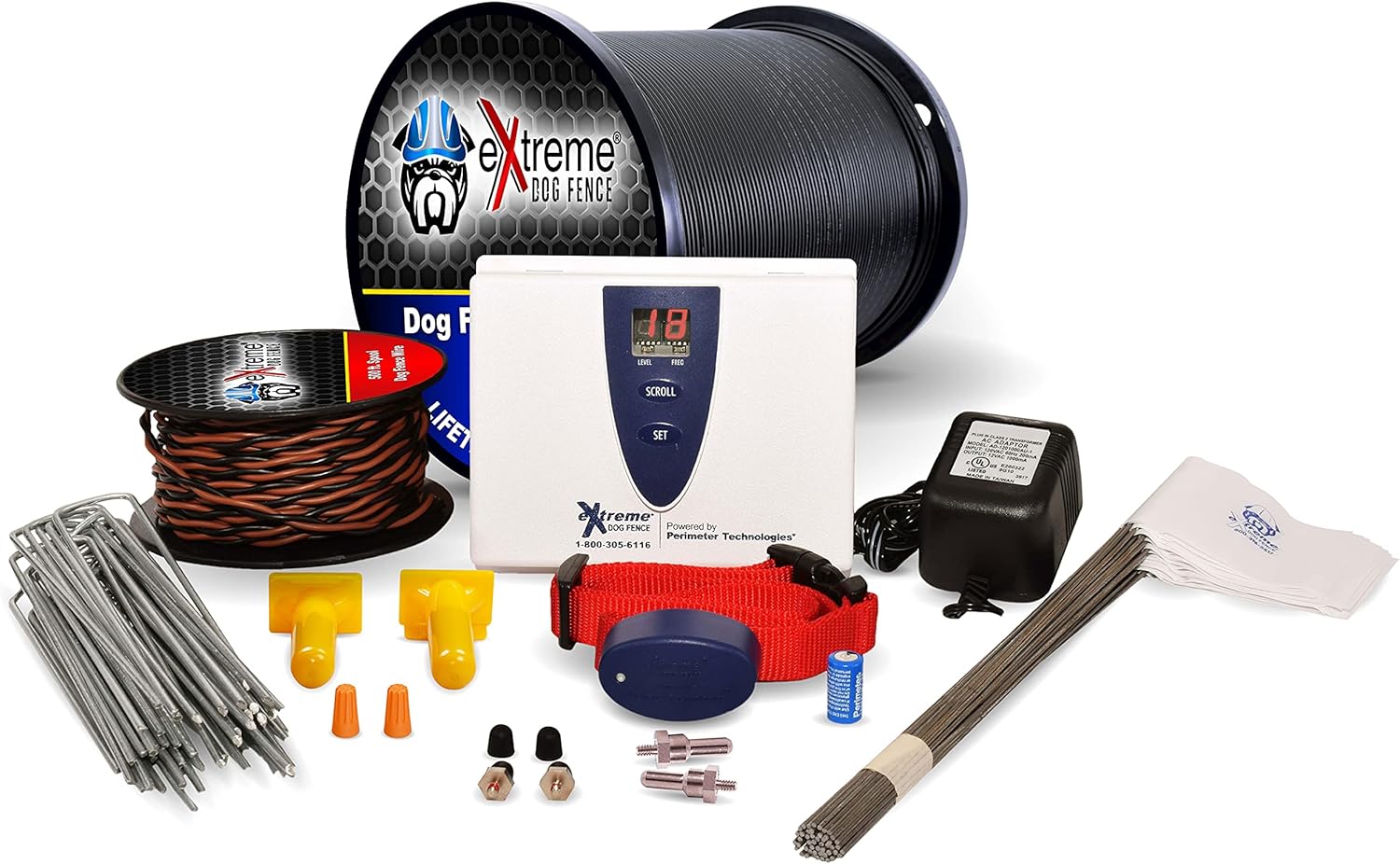
| Size | 1000 ft |
|---|---|
| Batteries | 1 Lithium Ion required |
| Manufacturer | Extreme Dog Fence |
This Extreme Dog Fence kit is a pro-grade DIY underground containment and training system intended for one dog and up to roughly 1000 feet of boundary wire. The system pairs a control transmitter with a waterproof receiver collar and includes wire that can be run above or below ground, letting you shape a custom perimeter around a yard. It is typically used to mark property lines, deliver adjustable static correction levels, and reinforce boundaries during training using the included remote trainer features. Notable benefits include straightforward DIY installation guidance from the brand, the option to add receivers for multiple dogs, and a waterproof collar receiver for reliable outdoor use. Expect practical advantages such as flexibility in routing the wire around landscaping and the ability to fine tune correction intensity to match a dog's temperament. Limitations are that the kit is aimed at one dog by default and requires careful planning of the layout and basic yard work to bury or secure the wire, so some users may want a larger multi-dog package or professional help for complex properties.
Best for: Buyers who want a straightforward DIY containment solution with brand guidance and a kit they can install themselves without professional excavation.
Less Ideal for: Property owners with complex large-acre layouts or those who prefer a plug-and-play wireless fence without any burying or wiring work should look elsewhere.
- Includes waterproof receiver collar suitable for outdoor use
- Provides about 1000 ft of boundary wire for a full yard perimeter
- Brand offers clear DIY support and layout guidance based on professional installation experience
- Wire can be run above or below ground to suit landscaping and ease installation
- Base kit targets a single dog so adding more dogs requires purchasing extra receivers
- Installation still needs planning and some manual digging to bury or secure the wire
Verdict: The best easy-install DIY underground fence for pet owners who want a straightforward, low-hassle installation process with clear guides and beginner-friendly components.
Choosing the Right Diy Underground Dog Fence: Key Factors to Consider
Boundary Type and Yard Layout
The shape and surface of your yard determine how the buried wire must be routed and whether the system can create the containment area you need. A simple rectangular yard needs straightforward runs of wire, while irregular shapes, detached garages, pools, or steep slopes require more planning to avoid signal gaps.
Consider where you want the dog to roam and whether you need multiple separate zones. Complex layouts can increase installation time and may require more wire length or additional transmitter power to maintain a consistent signal. Mapping the boundary before you buy helps you estimate wire length and plan for any fences, driveways, or landscaping that could interrupt the buried loop.
Signal Consistency and Coverage
Signal strength and how evenly it radiates from the buried wire affect whether the boundary is clear to the dog. Inconsistent coverage can create dead spots where a dog may break containment. Look for systems that let you adjust transmitter power and create a uniform detection band around the buried loop.
Soil type, buried objects, and nearby electrical interference can all influence signal behavior. Systems with measured transmission ranges and simple adjustment controls make it easier to tune the field during and after installation. For larger yards, check whether the transmitter supports long loop lengths or multiple transmitters to avoid weak spots.
Correction Options and Safety Features
Most in-ground systems use graduated correction — a warning beep followed by a varying level of stimulation if the dog continues toward the boundary. The ability to start with audible alerts, then escalate only when necessary, reduces stress and allows training to work. Adjustable intensity and short-duration pulses are important safety considerations.
Look for receivers with multiple correction levels, an initial tone-only mode, and quick reset behavior when the dog moves back inside the boundary. Waterproof housings and contact designs that avoid skin irritation also matter because receivers are worn continuously outdoors. Safety-minded owners should favor systems with clear, gradual correction paths rather than abrupt, high-intensity impulses.
Receiver Fit and Comfort
A receiver that fits well and stays in place ensures reliable detection and reduces the chance of false triggers. Consider the collar size range the receiver supports, the weight of the unit, and whether the contact points are adjustable to maintain good skin contact without pinching.
Comfort matters for daily wear. Lightweight receivers with rounded edges and secure fastening make it easier for dogs to tolerate training. Battery changes and waterproofing influence long-term comfort and maintenance, because a bulky or heavy unit increases the chance the dog will shake it off or rub at the collar.
Installation Effort and Maintenance
Installing buried wire requires time, planning, and some basic tools. Some owners prefer to trench and bury the wire themselves, while others choose to lay it shallow and pin it until they are satisfied with the route. Systems that include clear installation guides and labeled components reduce the chance of wiring errors that can cause cross-talk or out-of-range zones.
Maintenance includes testing the loop continuity, replacing receiver batteries, and occasionally repairing a damaged section of wire. Choose systems with accessible transmitter controls and clear diagnostic indicators so you can identify breaks or signal problems quickly. Easy access to spare parts and straightforward wire splice instructions reduce long-term upkeep hassles.
Expandability and Multi-dog Support
If you have more than one dog or plan to add another, check whether the system supports additional receivers and how additional units are paired. Some transmitters can handle multiple collar channels with separate correction settings, while others require each dog to use the same settings, which may not suit dogs with different sensitivities.
Expandability also covers whether the system can be extended with extra wire length or supplemented with an additional transmitter to cover very large properties. Systems that let you fine-tune each receiver individually offer more flexibility when dogs vary in size, temperament, or training progress.
How Should I Plan the Buried Wire Route for a Tricky Yard?
Start by sketching a scaled map of your yard and marking immovable features like buildings, driveways, pools, and utility lines. Decide whether you want the containment to follow the property line exactly or to create a set distance inside the line to avoid accidental escapes near gates or fences.
Avoid routing the loop too close to large metal structures or parallel to buried electrical lines, which can cause interference. For gates and driveways consider an alternate containment path or a temporary crossover that keeps the signal consistent while letting vehicles pass.
If the layout requires separate zones, plan for additional wire length or a second transmitter. Test the planned route by loosely laying the wire along the path and checking the signal strength at various points before you bury it permanently.
- Use flags or temporary markers when testing the boundary with the receiver.
- Leave an accessible splice box near the transmitter for future repairs.
- Record the final wire route for maintenance and landscaping work.
How Do I Introduce My Dog to an Underground Boundary?
Training usually starts with the receiver on tone-only mode so the dog learns the audible cue that signals a boundary. Walk the dog on a leash around the perimeter, rewarding calm behavior when they respond to the tone and retreat. Keep sessions short and positive, gradually increasing exploration time as the dog reliably respects the tone.
After the dog consistently responds to the tone, enable low-level correction and repeat the boundary walks. Watch body language closely and avoid overcorrecting; the goal is clear communication rather than punishment. Consistency and repetition over several days are typical before the dog understands the containment pattern.
- Begin training in a quiet yard without distractions.
- Use high-value treats and praise at first to reinforce correct responses.
- Monitor for signs of stress and reduce or pause correction levels if needed.
What Maintenance Should I Plan After Installation?
Regularly check the transmitter indicators and test the loop continuity to detect breaks early. Walk the perimeter with a functioning receiver to confirm the detection band is even and has not shifted after landscaping or heavy equipment work. Replace receiver batteries on a schedule based on manufacturer guidance and keep spare batteries on hand.
Inspect the receiver contacts and collar fit monthly to ensure good contact and to avoid skin irritation. After storms, check exposed splice points and any sections of wire that could have been displaced by ground movement. Document any repairs or changes to the loop so future troubleshooting is easier.
- Test the system after major yard work or seasonal thawing.
- Keep the transmitter in a dry, protected location with good ventilation.
- Maintain a basic repair kit with wire connectors and replacement flags.
Can These Systems Work for Multiple Dogs with Different Sensitivities?
Many systems allow additional receivers and let you set correction levels individually on each collar, which is useful when dogs differ in size or tolerance. If you plan to manage several dogs, prioritize systems that support individual receiver settings and straightforward pairing.
When receivers share the same static setting, training must be tailored to the most sensitive dog to avoid overstimulation. For mixed sensitivity households, choose a system that permits per-collar adjustments and that has a clear, low-intensity tone-only training mode to minimize stress during learning.
- Label each receiver and track its settings to keep training consistent.
- Introduce each dog to the boundary separately until they are reliable.
- Consider receivers with multiple level settings spaced widely for better customization.
What Are Common Installation Mistakes and How Do I Avoid Them?
A frequent error is running the buried loop too close to metal fencing or reflective surfaces that alter the signal. Maintain a reasonable distance from large metal objects and avoid parallel runs alongside buried electrical wiring. Another mistake is not testing the route before burying the wire; temporary pinning makes it easy to adjust the layout if you find weak spots.
Poorly secured splices and exposed connections lead to intermittent faults. Use proper waterproof splice connectors and place splice points in an accessible junction box. Finally, underestimating collar fit and receiver orientation can produce false triggers; confirm contact points rest against the skin and the receiver is snug but not tight.
- Always perform a full system test with the dog before final burial.
- Use manufacturer-recommended splice materials and protectors.
- Keep a detailed map of the buried loop for future landscaping or repairs.
How We Chose the Best Diy Underground Dog Fence
To build this list we applied practical, pet-centered filters that matter to owners installing an in-ground containment system. We prioritized reliable boundary detection, consistent signal transmission across common yard types, and adjustable stimulation or correction levels to accommodate different dogs. Installation demands were graded by how easy the buried wire and transmitter setup would be for a typical homeowner, plus whether the system allows clear boundary shaping and multi-pet operation. We also evaluated receiver durability, battery life, and water resistance so systems hold up to outdoor use. We excluded systems that rely solely on visual barriers or handheld-only containment because those do not meet the permanent, in-ground scope. We also filtered out units with unclear safety features or inadequate options for adjusting correction intensity. The final picks balance ease of installation, configurable boundary control, dependable signal performance, and pet safety features that owners consistently prioritize.
Our full evaluation process is outlined in our review methodology.
FAQ
How deep should I bury the wire for an underground fence?
Wire is typically buried a few inches below the surface or laid in a shallow trench and then covered. The depth protects the wire from routine yard activity while keeping future repairs manageable. In areas with frequent digging or heavy equipment, consider slightly deeper burial and mark the route before landscaping work.
Will heavy rain or wet soil affect the boundary signal?
Wet soil can change how the signal radiates, sometimes enlarging the detection field slightly. Good systems allow tuning of transmitter power to compensate for seasonal variation. It is wise to test the perimeter after storms and adjust settings if you notice changes in detection distance.
Can a buried wire break and how do I find the break?
Yes, buried wire can sever from digging, rodent damage, or ground movement. Loop testers or continuity meters help locate breaks by measuring resistance along the wire. Many owners keep spare wire and connectors and place an accessible junction box near the transmitter for faster repairs.
Is an underground fence humane for my dog?
When introduced gradually with tone-first training and using the lowest effective correction, in-ground systems can be a humane containment method. The most humane setups emphasize audible warnings, adjustable levels, and short, low-intensity corrections rather than harsh, continuous stimulation. Monitor your dog's behavior and stop or reduce correction if you see signs of fear or distress.
Can I install an underground fence myself or should I hire someone?
Many owners complete installation themselves using common tools and clear instructions, especially for simple yard layouts. If your property has complex landscaping, buried utilities, or you prefer not to dig, hiring a professional can save time and reduce the chance of wiring errors. The decision often depends on your comfort with outdoor wiring and trenching.
Final Verdict
Choosing a diy underground dog fence comes down to matching boundary control, signal reliability, and humane correction options to your yard and your dog's temperament. Prioritize systems that offer adjustable transmission power, per-collar settings for multi-dog households, and durable, comfortable receivers you can fit securely. Expect some installation effort and plan the wire route carefully to avoid interference and future landscaping conflicts. Focus on clear, gradual training with tone-first introductions to build predictable behavior without excessive correction. With the right planning and a system that supports customization and easy maintenance, you can create a dependable containment solution that balances safety, comfort, and long-term reliability.

