

Picking the right dog bark training collar can make daily life calmer for you and safer for your dog. You want a tool that stops nuisance barking while staying comfortable and easy to use, not something that adds stress or confusion. This guide shortlists the six best bark training collars that meet those goals and explains how they perform in real-world situations. We evaluated controls, comfort, and effectiveness so you can quickly identify which collar style suits your dog and training approach. Read on to find products that match different sizes, temperaments, and owner experience levels.
Top Picks at a Glance
| Best Overall Bark Training Collar The best all-around collar for most dog owners and homes | FAFAFROG Dog Bark Collar S1 |  |
| Best Budget Bark Training Collar A low-cost pick that still offers core training features | Honeynet Q10 Dog Bark Collar |  |
| Best Rechargeable Bark Training Collar A pick with built-in rechargeable battery for longer use | ianciu Bark Collar 2-Pack |  |
| Best Waterproof Bark Training Collar Water-resistant design for outdoor use and rainy conditions | Aolulf AI Dog Training Collar CP69 |  |
| Best Heavy-Duty Bark Training Collar Built tougher to withstand strong chewers and active dogs | BLACKDOG Military Shock Collar OT9 |  |
| Best Premium Bark Training Collar Higher-end option with advanced features and refined design | Garmin BarkLimiter Deluxe |  |
FAFAFROG Dog Bark Collar S1
Best Overall Bark Training Collar

| Battery type | Rechargeable (magnetic charging cable) |
|---|---|
| Waterproof rating | IP67 |
| Sensitivity levels | 5 adjustable levels |
| Suitability | Dogs 8 to 150 lbs, neck 8 to 25 inches |
The FAFAFROG S1 is a rechargeable bark collar designed to reduce nuisance barking during everyday training. It uses a smart recognition chip that responds to sustained barking and vocal-cord vibrations, and offers five sensitivity levels plus four operating modes so you can tune how it reacts to your dog. The collar includes a digital color display that shows mode and battery level, a protect mode that pauses after repeated activations, and an IP67 waterproof rating for use around water. Charging is fast and the manufacturer claims roughly 15 to 20 days of runtime on a full charge depending on use, which makes it convenient for owners who train regularly and do not want to swap disposable batteries. Practical limitations include the need to fit and position the metal prongs correctly for reliable sensing, and that vibration or beep-only modes may be less effective on some dogs compared with stronger corrections. The unit is lightweight and adjustable to fit a wide range of small to large dogs, but owners should follow the manual on placement and start at gentle settings when introducing it to a small dog.
Best for: Owners who prefer a rechargeable collar they can charge quickly and use repeatedly for ongoing training sessions with small dogs, and who want configurable sensitivity and waterproofing.
Less Ideal for: People seeking a fully passive solution who will not commit to proper fitting and gradual training, or owners of very young puppies under six months who need gentler behavior methods.
- Rechargeable with fast charge and long claimed runtime for frequent training
- Adjustable sensitivity and multiple modes let you tailor correction level
- IP67 waterproof rating permits use during wet play or light swimming
- Protect mode pauses after repeated activations to avoid overstimulation
- Digital display shows mode and battery level for straightforward monitoring
- Effectiveness depends on correct collar fit and prong contact with the dog’s skin
- Some dogs may not respond to beep or vibration modes and need stronger correction
Verdict: The best overall bark training collar balances reliable bark detection, humane correction options, comfortable fit, battery life, and ease of use for everyday training needs.
Honeynet Q10 Dog Bark Collar
Best Budget Bark Training Collar

| Power source | Rechargeable battery |
|---|---|
| Sensitivity levels | 8 levels |
| Modes | 4 working modes |
| Waterproof rating | IP67 |
| Strap length | 27 inches |
The Honeynet Q10 is a straightforward rechargeable bark collar that detects barking and applies one of three correction options to deter the behavior. It offers 8 sensitivity levels and four working modes so you can tune detection to a small dog's voice and reduce false triggers, and the unit includes a visible color display that shows status and battery level. The collar charges in about two hours and the company claims 15 to 20 days of run time on a full charge, which makes it convenient for busy owners. IP67 waterproofing means it can be worn for outdoor play or light swimming without worry, and the included silicone conductive contacts and adjustable 27 inch strap aim to fit a wide range of neck sizes. The device also has a built-in protect mode that pauses corrections after repeated activations to avoid overstimulation. This is a budget-focused option, so it lacks advanced remote controls or app integration and some users may need time to find the right sensitivity setting for very small or soft-voiced dogs.
Best for: Owners who want a low-cost, no-frills electronic collar that reduces barking and can be tuned to a small dog’s voice rather than a feature-packed training system.
Less Ideal for: People who need app control, multi-dog management, or a collar specifically tailored for very young puppies or dogs under six months of age.
- Adjustable 8-level sensitivity to better match small dog vocal patterns
- Rechargeable battery with roughly 15–20 days claimed runtime per charge
- IP67 waterproof rating suitable for outdoor use and light swimming
- Protect mode that temporarily stops corrections after repeated activations to prevent overstimulation
- No remote control or smartphone app for distance or multi-dog management
- May require careful sensitivity tuning for very small or soft-barked dogs
Verdict: The best budget bark training collar provides effective basic bark control and a safe, simple interface for owners who want solid performance without extra features.
ianciu Bark Collar 2-Pack
Best Rechargeable Bark Training Collar

| Number of Items | 2 |
|---|---|
| Included Components | Bark Collar |
| Batteries | 1 Lithium Ion (included) |
| Dog Breed Size | All |
This two-pack ianciu bark collar is a straightforward, budget-friendly option for households with more than one dog. Each collar offers three correction modes—beep, vibration, and combined beep plus vibration—plus five sensitivity levels, so you can tune responses for different dogs and environments. The units are lightweight and use an AI voice recognition chip and motion sensor to reduce false triggers from background noise, and a seamless contact design is intended to avoid chafing. Practical safety features include an automatic 30-second pause after repeated activations to prevent overstimulation. Rechargeable batteries are included, and the reflective nylon strap adds visibility for nighttime use. Limitations to expect are basic controls without remote programmability or app integration and a simple buckle closure rather than a quick-release system, so fine tuning requires hands-on adjustment. For owners who want reliable, no-frills bark suppression for two dogs without premium extras, these collars deliver solid value.
Best for: Owners with two or more dogs who want an affordable, easy-to-use solution to reduce excessive barking across pets without paying for advanced app features.
Less Ideal for: People seeking high-end programmable systems with remote controls, smartphone apps, or specialized fitment options should consider more feature-rich models.
- Two collars in a pack cover multiple dogs right away
- AI voice recognition and motion sensor reduce false triggers
- Three correction modes and five sensitivity levels for tuning
- Seamless contact design minimizes rubbing and skin irritation
- Rechargeable battery included and reflective strap increases visibility
- No remote or app control for adjusting settings from a distance
- Basic buckle closure instead of a quick-release or faster fastening option
Verdict: The best rechargeable bark training collar is ideal for owners who prefer the convenience and lower long-term cost of USB-rechargeable power over disposable batteries.
Aolulf AI Dog Training Collar CP69
Best Waterproof Bark Training Collar

| Fits neck size | 7 to 26 inches |
|---|---|
| Recommended weight | 10-120Lbs |
| Remote range | 3300FT |
| Waterproof rating | IPX7 |
| Charging time | 2 hours |
The Aolulf CP69 is a two-channel training collar designed for straightforward remote training up to about 3300 feet. Setup is simple: pair the remote to one or two collars, adjust the nylon strap for a 7–26 inch neck, and choose between beep, nine vibration levels, or 18 shock levels using clearly labeled controls and a safety lock to prevent accidental activation. The remote includes a flashlight and a keypad lock for easy, confident handling during walks or field sessions. Practical benefits include IPX7 waterproofing for use in wet conditions, fast charging with long standby times, and a lightweight collar unit that minimizes interference with activity. Limitations are that the shock mode is adjustable but still requires careful, informed use to avoid overcorrection, and the remote-focused interface means most training is manual rather than app-guided. For buyers prioritizing clear physical controls, simple pairing, and a dependable long-range remote, the CP69 delivers a usable, no-frills training solution.
Best for: Owners who want a straightforward, button-driven training system with quick pairing and clear tactile controls for outdoor training sessions with one or two dogs.
Less Ideal for: People who prefer app-based training, data tracking, or entirely reward-based methods should consider alternatives focused on those features instead.
- Two-channel remote supports training two dogs without re-pairing
- Long remote range (about 3300 ft) suitable for large yards and open spaces
- IPX7 waterproof collar lets dogs train in rain or while swimming
- Multiple feedback modes (beep, 9 vibration levels, 18 shock levels) for tailored responses
- Keypad lock and flashlight on the remote improve safety and usability during walks
- Shock mode requires responsible use and may not be appropriate for inexperienced owners
- No smartphone app or logging features for progress tracking
Verdict: The best waterproof bark training collar is designed for dogs that spend time outdoors or swim, providing reliable operation and durability in wet conditions.
BLACKDOG Military Shock Collar OT9
Best Heavy-Duty Bark Training Collar

| Training modes | Beep, Vibration, Safe Shock, Strobe Light |
|---|---|
| Range | 4200ft |
| Waterproof rating | IP67 |
| Power | USB-C fast charge; 90-day claimed runtime (1 hr/day) |
The BLACKDOG OT9 is a rechargeable training collar system aimed at regular use in outdoor conditions. The remote and collar provide four user-selectable modes—beep, vibration, safe shock, and a strobe light—with multiple intensity levels, an LCD on the transmitter for clear mode and battery readouts, and tool-free removable prongs so you can switch to no-shock operation. Its rechargeable design (USB-C fast charge) and claimed 90-day battery life based on one hour of daily use make it convenient for owners who train often and want low running costs compared with disposable batteries. The unit is built to a rugged spec with an IP67 rating and reinforced casing for heavy-duty outdoor use, while the remote flashlight and collar strobe improve night safety. Practical limits: the shock mode is present so careful, informed use is required, and real-world range and battery life will vary with terrain and usage intensity. The system suits hands-on, consistent trainers who need a weatherproof rechargeable collar with visible lighting features.
Best for: Owners who train regularly and prioritize a rechargeable collar that is rugged enough for outdoor use and includes visibility features for night or low-light sessions.
Less Ideal for: People who want a purely positive-reinforcement tool without any static stimulation or those who need a collar-free solution for noise-only behavior control.
- Rechargeable USB-C system with fast charging and long claimed runtime
- Multiple training modes including beep, vibration, and adjustable safe shock levels
- IP67 waterproof build and reinforced casing for rugged outdoor use
- Integrated remote flashlight and collar-mounted strobe for night visibility
- Tool-free removable prongs allow switching to no-shock configuration
- Shock feature requires responsible use and may not suit sensitive or inexperienced handlers
- Real-world range and battery life depend on terrain and usage and may be lower than claims
Verdict: The best heavy-duty bark training collar is made for active or strong dogs needing a more robust build, stronger hardware, and durable materials that hold up over time.
Garmin BarkLimiter Deluxe
Best Premium Bark Training Collar
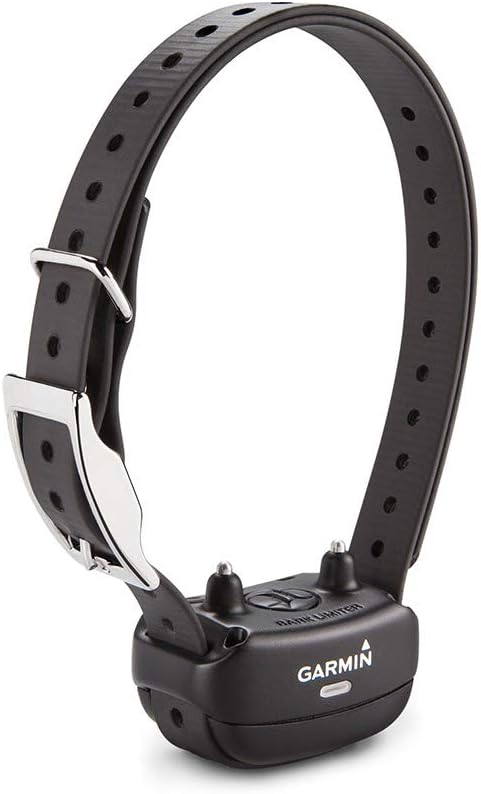
| Included Components | Bark |
|---|---|
| Breed Recommendation | All Breed Sizes |
| Material Type | Stainless Steel |
| Warranty Description | 1 year |
The Garmin BarkLimiter Deluxe is a compact, rechargeable bark-control collar that uses motion-based sensors to identify barking and deliver correction automatically or by manual selection. It is typically worn on the dog's neck and used to reduce nuisance barking at home or in the yard; the unit offers an Auto Rise setting that programs stimulation intensity based on each dog's barking, plus vibration and manual stimulation options. Notable features include advanced bark-differentiation to reduce false triggers, a bark odometer that tracks barking events, integrated stainless steel contact points sized to work across coat types, and a long-lasting rechargeable battery rated up to three months per charge. In practice the device is easy to fit with a buckle closure and stays lightweight for daily wear, and the rechargeable design avoids frequent battery swaps. Limitations are that effective and humane use requires correct fit and gradual training, and the collar focuses solely on bark correction rather than broader training functions or multi-dog remote control capabilities.
Best for: Owners who prioritize a refined, durable bark-specific solution and are willing to invest in a premium, rechargeable collar with advanced false-trigger protection.
Less Ideal for: Owners seeking a multifunction remote training system, multi-dog controller, or a collar that focuses on obedience beyond barking should consider other training tools.
- Advanced bark identification reduces false corrections from non-bark noises
- Auto Rise feature automatically adjusts stimulation level to the dog’s barking pattern
- Rechargeable lithium-ion battery with long run time up to three months per charge
- Stainless steel contact points designed to work across coat types and integrated for durability
- Bark odometer provides measurable feedback on effectiveness
- Device is single-purpose for barking correction and lacks broader remote-training features
- Needs correct fit and responsible, gradual use to avoid overcorrection
Verdict: The best premium bark training collar suits owners willing to pay more for advanced detection, finer control settings, superior materials, and a more ergonomic user experience.
Choosing the Right Dog Bark Training Collar: Key Factors to Consider
Bark Detection Accuracy
Accurate bark detection matters because you want the collar to respond to your dog's own barking and not to other dogs, traffic, or household noises. Better detection reduces unnecessary corrections, which helps maintain trust between you and your dog.
Look for collars that combine vibration and sound sensing or use directional microphones and adjustable sensitivity. Misfires can confuse a dog and slow training progress, so choose a collar with clear controls for sensitivity and a way to test detection before regular use.
Output Modes and Adjustability
Different dogs respond to different stimuli, so collars with multiple output modes give you safer options for shaping behavior. Common modes include vibration, beep/tone, and graduated static levels. Each mode should be adjustable so you can start with the least intrusive option and only increase intensity if needed.
Having several steps of adjustment helps fit training to a small puppy, a sensitive adult dog, or a thicker-coated breed that needs stronger contact. Controls should be easy to access and change so you can adapt settings during a session without disrupting training.
Fit and Comfort
A collar that fits poorly will either slip and fail to work or sit too tight and irritate the dog. Comfort affects how readily a dog accepts the device and how well training translates into lasting behavior change. Look for collars with clear sizing guidance, padding or rounded contact points, and straps that stay secure without pinching.
Consider how the collar sits on your dog's neck during normal activity, including turns and play. Materials that resist chafing and are water-resistant will last longer and reduce skin irritation risks during daily use.
Safety Features
Safety features protect the dog from accidental overcorrection and ensure humane operation. Important elements include automatic shutoffs after repeated activations, maximum intensity limits, and low-voltage or short-duration pulses where static is used. Visual indicators for battery level and clear mode icons also help prevent misuse.
A collar should allow you to select non-static modes or disable stimulation entirely when needed. Built-in safeguards prevent prolonged exposure during a barking episode, and manufacturer guidance on proper fit and use reduces the risk of injury.
Battery Life and Power Type
How a collar is powered affects convenience and long-term cost of ownership. Rechargeable batteries are convenient and avoid frequent cell replacements, while replaceable batteries can be easier to swap quickly if you do not have charging access. Consider how long a fully charged or fresh battery lasts under typical daily use and whether a low-battery indicator is provided.
Also check charging time and whether charging requires removing the collar module from the strap. A reliable battery system reduces interruptions in training and keeps the collar available for unscheduled sessions or travel.
Ease of Use and Controls
A collar that is hard to program or operate will limit consistent training, which reduces effectiveness. Controls should be intuitive, with clearly labeled buttons or a simple app interface if wireless connectivity is offered. Indicators that show current mode, intensity level, and battery status help you make quick adjustments when needed.
Instruction clarity matters too. Good user guides include a quick-start path and safety warnings, plus suggestions for introducing the collar to your dog. Simpler controls encourage repeatable, consistent application during everyday training.
How Do Different Output Modes Affect Training Success?
Owners often ask whether vibration, tone, or static works best. Vibration and tone provide a less intrusive way to interrupt barking and are often effective for dogs that respond to attention or surprise. Static modes can be more immediately noticeable but should be used conservatively, starting at the lowest level and only increased when gentler signals fail.
When selecting a mode, consider your dog's temperament. Sensitive dogs often do well with tone or vibration, while stubborn or thick-coated dogs may require stronger stimulation to create a clear association. Always pair corrections with positive reinforcement so the dog learns the desired behavior instead of simply avoiding the correction.
- Start with the least intrusive mode and escalate only if necessary
- Use consistent timing so the dog connects the correction to the barking
- Combine with rewards for quiet behavior to speed learning
Will a Bark Training Collar Work for Puppies and Small Breeds?
Puppies and very small breeds are more sensitive, so collars designed for them use lower-intensity modes and smaller contact points. For young dogs, prioritize vibration and tone over static stimulation and ensure correct fit so the contact points do not press too hard against a developing neck.
For puppies, short, gentle sessions and pairing the collar with treat-based training help establish the right behavior without creating anxiety. If in doubt, consult a trainer about the timing and intensity that suit a puppy's age and temperament.
- Look for models with low minimum intensity settings
- Short training bursts work better for developing dogs
- Check sizing charts to avoid oversized contact along the throat
How to Introduce the Collar Without Causing Stress
Introduce the collar gradually. Let the dog wear an inactive collar first so they get used to the feel. Follow short, calm training sessions where you reward quiet behavior and use the collar only when necessary. This reduces surprise and helps the dog understand the association between barking and the collar signal.
Monitor the dog's body language during early sessions. Signs of stress like persistent lip licking, yawning, or avoidance behavior indicate you should pause and lower the intensity or switch to a gentler mode. Positive reinforcement and patient progression are essential for humane, lasting results.
- Begin with short wearing periods and no stimulation
- Use treats and praise to reinforce quiet behavior
- Watch for stress signals and adjust training accordingly
Maintenance and Cleaning Tips for Long-term Use
Regular maintenance keeps the collar working reliably and prevents skin issues. Wipe contact points and the strap after active play or exposure to moisture. Inspect the strap and connection points for wear and replace them if they show cracking or fraying to avoid sudden failures.
If the collar is rechargeable, keep charging contacts clean and dry to ensure good electrical connection. Store the device in a cool, dry place when not in use and follow manufacturer guidance on safe charging practices to preserve battery longevity.
- Clean contact points weekly or after heavy use
- Check strap integrity before extended wear
- Avoid submerging non-waterproof modules during cleaning
When Should You Stop Using a Bark Training Collar?
A collar should be a training tool, not a permanent fixture. You can begin phasing out use once your dog consistently responds to cues without corrections. Gradually reduce reliance on the collar by increasing verbal or visual cues and rewarding quiet behavior until the dog responds reliably without stimulation.
If a dog shows ongoing stress or if barking problems change in nature, pause use and reassess your approach. Consult a behavior professional for persistent or complex issues rather than relying solely on extended collar usage.
- Phase out after consistent behavior change over several weeks
- Use alternative cues and reward systems to replace the collar
- Seek professional help if barking persists or worsens
How We Chose the Best Dog Bark Training Collar
We evaluated candidates that are specifically designed to reduce excessive barking without adding unnecessary complication. Our selection process prioritized reliable response modes, adjustable intensity, and safety-focused design features that matter for everyday training. We looked for collars with user-friendly controls and clear feedback so owners can apply consistent corrections during sessions. Key criteria included the accuracy of bark detection to avoid false triggers, adjustable output levels and modes to fit different dog sizes and sensitivities, and comfortable, durable materials that stand up to daily wear. Usability factors such as intuitive controls, battery life or rechargeability, and clear indicator lights or signals were also important. We checked available fit ranges and attachment systems to ensure collars can be worn securely and safely by most dogs within intended size classes. We excluded devices that rely on overly punitive or unclear stimulation methods, products with poor or unclear safety features, and designs that lack basic user controls. Final picks are the items that best balanced effectiveness, humane operation, and real-world practicality for owners focused on reducing nuisance barking.
Our full evaluation process is outlined in our review methodology.
FAQ
Are bark training collars safe for all dogs?
Safety depends on proper use, fit, and choosing appropriate output modes. Many collars offer non-static options and adjustable intensity, which makes them suitable for most adult dogs when used as directed. Puppies and dogs with medical conditions may need gentler approaches, so consult a veterinarian or trainer if you have concerns.
How long until I see results using a bark training collar?
You may see initial changes within days, but consistent results typically require several weeks of regular, disciplined training. Results depend on the dog's temperament, training consistency, and whether you pair corrections with positive reinforcement for quiet behavior.
Can collars mistake other dogs or noises for my dog's bark?
Some collars can register ambient sounds if sensitivity is set too high. Models with directional detection or combined vibration and sound sensors reduce false triggers. Adjusting sensitivity and testing detection in your environment helps minimize misfires.
Is it better to choose rechargeable or replaceable batteries?
Rechargeable units are convenient and avoid frequent battery swaps, while replaceable batteries can be handy if you need quick field changes. Consider charging time, runtime, and whether the collar allows easy battery replacement without disturbing fit.
Will a collar work for dogs that bark only when left alone?
Bark training collars address the behavior itself but do not solve underlying causes like separation anxiety. For barking driven by stress or fear, combine collar use with behavior modification, desensitization techniques, and, if needed, professional guidance.
Final Verdict
Choose a bark training collar that matches your dog's size, sensitivity, and the specific barking problem you want to address. Prioritize accurate detection, adjustable output modes, and a comfortable, secure fit so corrections are clear but not harmful. Expect to pair collar use with consistent training and rewards to teach an alternative behavior. When used thoughtfully, a bark training collar can shorten the learning curve and reduce nuisance barking. Start conservatively, watch for stress signals, and shift toward non-stimulation cues as your dog learns to stay quiet reliably.

