

If your dog snores regularly, a bed that supports the head and neck while reducing respiratory vibration can make a big difference for both of you. The right snoring-focused bed helps position your pet to keep airways open, cushions pressure points that can worsen noisy breathing, and can include fabric or fill choices that dampen sound-producing movement. This guide shortlists five top options chosen for their support, sleep posture benefits, and materials that help minimize snoring-related noise. Read on to see the evaluation criteria and which features to prioritize when picking a bed aimed at quieter nights.
Top Picks at a Glance
| Best Overall Bed for Snoring The all-around best pick for dogs that snore | Bedsure Orthopedic Dog Bed Medium |  |
| Best Budget Bed for Snoring A low-cost choice that still helps reduce noisy sleep | Spotted Play Orthopedic Dog Sofa Bed M |  |
| Best Memory-Foam Bed Conforming support to improve head and neck alignment | EHEYCIGA Orthopedic Dog Bed Large | 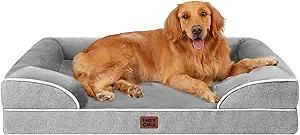 |
| Best Cooling Bed Materials and construction that dissipate heat during naps | Dwanton Orthopedic Dog Bed Medium |  |
| Best Premium Bed Higher-end construction and materials for long-term comfort | Dog Friendly Co Chill Pill Dog Bed Medium |  |
Bedsure Orthopedic Dog Bed Medium
Best Overall Bed for Snoring

| Material Type | Polyester, Polyurethane foam |
|---|---|
| Fill Material | Foam |
| Washable | Machine Wash |
| Waterproof | Laminated cover |
| Maximum Weight Recommendation | 30 pounds |
The Bedsure Medium Orthopedic Dog Bed is a compact sofa-style bed that delivers targeted joint support for smaller dogs and pets with limited floor space. It uses high-density egg-crate foam in a flat mat with a 4-sided bolster so pets can rest against the padded edges or stretch out on the center. The lowered entrance and reinforced bolsters make it easy for older or arthritic pets to climb in and support head and neck positioning. The cover has a laminated waterproof layer and a zip-off design so you can remove it for machine washing, while a non-skid bottom keeps the bed from sliding on hard floors. Materials are CertiPUR-US certified foam and flannel-faced fabric for a soft feel. Trade-offs are that the mattress is a single-piece foam rather than layered memory foam, so it is supportive but not as contouring as thicker multi-layer orthopedic beds, and the medium size is best for dogs under the stated weight recommendation.
Best for: Buyers who need an orthopedic solution for smaller dogs or tight rooms and prioritize easy cleaning and accessible entry for aging or mobility-limited pets.
Less Ideal for: Owners of large or heavy dogs who need thicker, more contouring memory foam or a larger footprint should look at bigger, multi-layer orthopedic beds.
- High-density egg-crate foam provides even weight distribution and pressure relief.
- 4-sided bolster design supports head and neck and gives pets a secure nest-like feel.
- Removable laminated waterproof cover for easy machine washing and accident protection.
- Lowered entrance and non-skid bottom improve accessibility and prevent sliding on hard floors.
- Single-layer foam construction is less contouring than multi-layer memory foam alternatives.
- Medium footprint limits use to smaller dogs or very compact spaces.
Verdict: The best overall bed for snoring dogs, offering the right mix of support, sleeping posture improvement, and breathable materials to reduce noisy breathing at night.
Spotted Play Orthopedic Dog Sofa Bed M
Best Budget Bed for Snoring

| Breed Recommendation | Medium |
|---|---|
| Material Type | Polyester |
| Fill Material | Foam |
| Other Special Features of the Product | Water Resistant |
This bolstered dog sofa uses textured egg-crate foam and a raised four-sided bolster to give medium dogs pressure relief and a cozy place to curl or rest their head. It is typically used as an everyday bed placed on indoor floors where the non-slip base helps prevent sliding and the lowered front makes entry easy for older or smaller pets. The cover zips off for machine washing and a waterproof inner liner protects the foam from spills and minor accidents, simplifying cleanup. The foam insert is not washable, so you will need to spot-clean or replace it if it becomes soiled, and the polyester/flannel cover prioritizes softness over heavy chew resistance. Assembly is minimal — remove packaging and allow the foam to expand for up to 48 hours. For homes focused on comfort and routine hygiene, the bed balances supportive sleep surfaces with practical maintenance features, but it is not intended as a chew-proof solution for aggressive chewers.
Best for: Buyers who prioritize strong liquid protection and easy cleanup for a medium dog and want a supportive, cozy bed used indoors for daily rest.
Less Ideal for: Households with determined chewers that regularly destroy beds or owners seeking an aggressively chew-proof, heavy-duty chew deterrent product.
- Egg-crate high-density foam provides pressure relief and joint support.
- Four-sided bolsters and lowered front offer multiple resting positions and easy access.
- Zippered, machine-washable cover simplifies cleaning.
- Water-resistant inner liner protects foam from spills and accidents.
- Textured non-slip base reduces sliding on smooth floors.
- Foam insert is not machine washable and requires spot cleaning or replacement if heavily soiled.
- Cover fabric and construction are not designed to withstand sustained chewing by determined dogs.
Verdict: The best budget bed for snoring dogs that balances affordability with adequate support and a breathable cover so owners on a tight budget can still help their pet sleep quieter.
EHEYCIGA Orthopedic Dog Bed Large
Best Memory-Foam Bed

| Material Type | Cover 100% Polyester fill 1 100% Polyester fill 2 Polyurethane foam |
|---|---|
| Fill Material | Polyurethane Foam |
| Wash Care | Machine Wash |
| Special Features | Easy to Clean, Non Skid Bottom, Orthopedic, Waterproof |
This EHEYCIGA large dog bed pairs memory foam and egg-crate foam to deliver a balance of cushion and support aimed at older or joint‑sensitive dogs. The three-sided bolster design gives head and neck support and provides a cozy nest for dogs that like to lean or curl. A waterproof film is laminated between the fleece top and the bottom fabric to protect the foam core from spills and accidents, while the faux linen sides are not waterproof. The cover zips off for machine washing after you remove the foam insert, though the foam itself is not washable and needs spot care. The sleeping surface uses soft fleece for comfort and the bottom is non-skid, so the bed stays put on harder floors. For buyers prioritizing moisture protection and easy cleaning, this bed offers solid performance, but keep in mind the waterproofing is a hidden liner rather than fully waterproof sides and the foam requires airing after unboxing to regain shape.
Best for: Households with large dogs who need a supportive, comfortable bed that resists moisture on the sleeping surface and is simple to clean.
Less Ideal for: Owners who want fully waterproof sides or a machine‑washable foam core should consider alternatives with sealed outer shells or washable inserts.
- Memory foam plus egg-crate foam for pressure relief and supportive comfort
- Three-sided bolsters provide neck and head support and a den-like feel
- Waterproof film between top and bottom protects the foam core from moisture
- Removable zip-off cover is machine washable for easy cleanup
- Non‑skid bottom helps keep the bed in place on hard floors
- Waterproof layer does not extend to the faux linen sides so edges can still soak through
- Foam insert is not washable and needs spot cleaning or replacement over time
Verdict: The best memory-foam bed for snoring dogs because its contouring support helps stabilize head and neck position, which can reduce airway restriction during sleep.
Dwanton Orthopedic Dog Bed Medium
Best Cooling Bed

| Size | Medium (36 x 25.5 x 6 inch) |
|---|---|
| Material Type | Polyester |
| Fill Material | Polyurethane Foam |
| Cover Material | Faux Fur |
| Special Feature | Non Skid Bottom |
This medium Dwanton orthopedic dog bed pairs a 3-inch reversible pad of gel-infused memory foam and high-density egg-crate foam to give a balance of cushioning and firm joint support in a relatively small footprint. Dogs can flip the top layer to choose a softer gel memory foam side or a firmer egg-crate side, which is useful for pets that need different levels of pressure relief. The mattress has a waterproof liner and a zip-off faux fur cover that is machine washable, so accidents and spills are easy to manage. Built-in bolsters filled with PP provide head and neck support and a lower center entrance makes it easier for less mobile dogs to step in and out. A non-skid bottom keeps the bed stable on floors and inside crates. The main compromises are that the bed is sized for medium dogs so it will not suit large breeds and the foam stack is not replaceable if it compresses over many years, but for owners with limited space seeking targeted orthopedic support this compact design delivers practical features and comfortable support.
Best for: Owners living in apartments or small homes who need an orthopedic mattress that saves floor space while giving senior or arthritic dogs real joint support and easy-to-clean protection.
Less Ideal for: Households with large or heavy breeds that require a bigger surface and thicker support should choose a larger, heavy-duty orthopedic bed instead.
- Reversible 3-inch padding with gel memory foam and egg-crate foam for selectable softness or firmer support
- Waterproof liner and zip-off washable faux fur cover for easy cleaning after accidents
- Bolstered wrap-around pillow offers head and neck support for resting dogs
- Non-slip bottom keeps the bed stable on floors, in crates, and playpens
- Medium size limits use to small and medium breeds and not suitable for large or extra large dogs
- Foam layers are integral to the mattress and not user-replaceable if they compress over time
Verdict: The best cooling bed for snoring dogs whose overheating contributes to noisy breathing, using breathable fabrics and cooling layers to keep body temperature down overnight.
Dog Friendly Co Chill Pill Dog Bed Medium
Best Premium Bed

| Size | Medium |
|---|---|
| Fill Material | Memory Foam |
| Cover | Removable, machine washable |
| Use | Indoor |
| Special Features | Waterproof inner lining; Non-slip base |
The Chill Pill Memory Foam Dog Bed uses a high-density memory foam sleeping surface and raised bolsters to give dogs a supportive place to rest and cradle their head. It is built as an indoor bolster bed: the foam core provides pressure-relieving support, the bolster edges act as a chin rest, and the non-slip underside keeps the bed in place on smooth floors. The cover zips off for machine washing and the bed includes a waterproof inner lining to protect the foam from accidents or spills. Practical benefits include better spinal alignment for dogs that like to nest or tuck in, easier cleaning thanks to the removable cover, and stable placement on hardwood or tile. Limitations are that the product comes in set size options so owners should verify the medium dimensions for larger breeds, and memory foam can retain some heat compared with airier fill types which may be a consideration for very warm sleepers.
Best for: Owners who prioritize a well-constructed, supportive bed to help improve their dog’s sleep posture and reduce noisy breathing by stabilizing head and neck alignment.
Less Ideal for: People who need an ultra-breathable, cooling sleep surface for very hot-weather dogs or who require oversized bedding for large breeds should consider other options.
- Supportive memory foam core for pressure relief and improved sleep posture
- Raised bolster edges provide a chin/head rest for added comfort
- Removable, machine-washable cover for easy cleaning
- Waterproof inner lining protects the foam from spills and accidents
- Non-slip base keeps the bed stable on smooth floors
- Memory foam can feel warm for dogs that run hot
- Medium size may be small for larger or tall breeds
Verdict: The best premium bed for snoring dogs for owners who want superior build quality, advanced support layers, and breathable, durable coverings that together aim to improve sleep posture and reduce snoring.
Choosing the Right Dog Bed Snoring: Key Factors to Consider
Head and Neck Support
Proper head and neck alignment helps keep airways open and reduces the soft-tissue vibration that causes snoring. Look for bolsters, raised rims, or contoured surfaces that let your dog rest in a slightly elevated position without bending the neck unnaturally.
The material behind the head support matters because too-soft fills will collapse over time and fail to maintain airway-friendly elevation. Medium-firm foam or supportive polyfill that holds shape under normal use is preferable. Consider how the shape matches your dog's preferred sleeping position: side sleepers need a different bolster height than back or belly sleepers.
Mattress Firmness and Thickness
Mattress firmness affects spinal alignment and throat positioning. Beds that are too soft allow the body to sag, which can compress the chest and upper airway, increasing snoring. Conversely, a bed that is too firm may be uncomfortable and lead to restlessness, which can also worsen noisy breathing.
Choose a thickness and firmness that match your dog's size and weight. Orthopedic foam or layered constructions often provide a balance of pressure relief and structural support. Thickness is important for larger dogs or breeds with deep chests because it prevents contact with hard floors that forces compensatory postures.
Breathable, Noise-dampening Fabrics
Fabric choice influences both airflow around the muzzle and the amount of noise generated when your dog shifts. Breathable covers help reduce heat buildup that can increase nasal congestion, while fabrics with a felt-like or brushed finish tend to produce less rustling than slick synthetics.
Consider covers that combine breathability with a soft, low-friction surface to minimize sound when the dog moves. Removable, washable covers are also useful for removing allergens and dander that can exacerbate snoring by irritating nasal passages.
Fill Type and Long-term Resilience
Fill material determines how well the bed maintains its shape and support over time. Memory foam conforms to body contours and can cradle the head to reduce airway collapse, but lower-density foams can break down and lose support. High-resilience foam or engineered polyfills hold loft longer and preserve elevation behind the head.
Check product details on density, layering, and whether the fill is encased to prevent shifting. Long-term resilience is particularly important for older dogs or breeds prone to airway issues because a collapsing bed will quickly negate any short-term benefit for snoring reduction.
Size and Fit for Sleeping Posture
A bed must let the dog lie in its natural posture without forcing compression or awkward head positions. Size determines whether a dog can stretch, curl, or rest its head on a bolster while maintaining airway alignment. Too-small beds push the neck into flexed positions; too-large beds may not provide the intended head elevation.
Match bed dimensions to your dog's sleeping style and body measurements. Consider internal sleeping area, not just external diameter, and whether bolsters or raised edges are proportioned for your dog's head height.
Washability and Allergen Control
Allergens, dust, and pet hair trapped in bedding can inflame nasal passages and make snoring worse. A bed with a removable, machine-washable cover helps keep the sleep surface clean and reduces sources of irritation. Look for covers with zippers and accessible seams so the interior can be aired or spot-cleaned when needed.
Some fills are washable or have washable encasements; prioritize designs that make routine cleaning straightforward. Hypoallergenic materials and antimicrobial treatments can help, but regular laundering is the most reliable way to control irritants that affect breathing.
How Can Bed Elevation Change Breathing and Snoring?
Elevating a dog's head slightly can help keep the airway more open by reducing gravitational collapse of soft tissues during sleep. Small differences in head height and neck angle change the alignment of the throat and nasal passages, which can directly influence the loudness and frequency of snoring.
Elevation should feel natural for the dog. Use a bed with a modestly raised head area or a supportive bolster rather than propping with separate pillows, which can slip and create unsafe angles. If your dog resists a new height at first, gradual adaptation and choosing a familiar cover texture can help acceptance.
- Subtle elevation is usually better than extreme tilting
- Bolsters provide consistent support while letting the dog adjust posture
- Monitor comfort and breathing during initial nights to confirm benefit
Which Sleeping Positions Make Snoring Worse?
Dogs sleeping fully on their back often experience more airway vibration because the tongue and soft tissue can fall back and narrow the airway. Side sleeping tends to be better for keeping passages open, while belly sleeping can vary depending on chest compression.
Observe your dog's favorite positions and choose a bed geometry that supports that posture. For back sleepers, a bed that encourages a slight head elevation helps; for side sleepers, a low-contour mattress with a supportive edge is usually preferable.
- Back sleeping: higher risk of snoring due to tissue relaxation
- Side sleeping: generally lower risk when the head is supported
- Belly sleeping: depends on chest clearance and mattress softness
Can Washable Covers and Hygiene Affect Noisy Breathing?
Yes. Regular cleaning removes dander, dust mites, and allergens that can irritate nasal passages and increase mucus production, all of which can worsen snoring. Choosing a bed with a removable, machine-washable cover makes it practical to keep the sleep area clean on a schedule.
Also consider materials that resist odor buildup and repel hair to reduce the need for frequent deep cleaning. Even with washable covers, occasional airing of the inner fill and routine vacuuming helps maintain a low-irritant sleep environment.
- Wash covers at manufacturer-recommended intervals
- Vacuum or air the interior fill periodically
- Use gentle detergents to avoid fabric residues that can irritate skin or nasal passages
What Role Does Weight and Breed Play in Choosing a Snoring Bed?
Size, weight, and breed-specific anatomy influence how a bed supports the airway. Heavy-chested or short-faced breeds can have different support needs than lean breeds because of chest depth and facial conformation. Similarly, a heavier dog needs firmer support to prevent sinking and airway compression.
Match mattress firmness and bolster height to your dog's build. When in doubt, measure your dog lying in their preferred sleeping position and compare that to the bed's internal dimensions and recommended weight ranges.
- Heavy dogs need higher-density fills for sustained elevation
- Short-faced breeds may benefit more from subtle elevation and breathable fabrics
- Measure length and width for accurate sizing
When Should You Consult a Veterinarian About Snoring?
Persistent, loud snoring or new-onset noisy breathing can signal underlying health issues such as airway obstruction, allergies, dental problems, or obesity. If snoring is accompanied by choking sounds, daytime lethargy, coughing, or changes in appetite, seek veterinary advice.
A bed can help manage positional contributors to snoring but it does not treat medical causes. Your veterinarian can check for conditions that require medical treatment and advise whether positional support is appropriate as part of a broader care plan.
- Seek veterinary evaluation for sudden changes in snoring
- Look for accompanying symptoms like coughing or breathing difficulty
- Discuss whether weight management or allergy control could help
How We Chose the Best Dog Bed Snoring
We evaluated potential beds using criteria that reflect how sleep surface design affects noisy breathing in dogs. Primary considerations included head and neck support, overall ergonomic design, and whether the bed encourages posture that keeps airways aligned. Materials were assessed for their ability to dampen movement noise and reduce fabric-on-fabric friction that can amplify snoring. Ease of cleaning and cover durability matter because allergens, pet hair, and odors can contribute to airway irritation. Size and thickness were examined to ensure the bed can properly elevate and support larger heads or thicker necks. We also checked construction quality and warranties to favor long-term performance. We excluded beds focused solely on style or short-term novelty and any products with insufficient information about internal fill or structural support. Our process prioritized designs with measurable support elements, breathable but noise-dampening fabrics, washable covers, and clear size guidelines so owners can match bed geometry to their dog's body and sleeping posture.
Our full evaluation process is outlined in our review methodology.
FAQ
Will any raised bed stop my dog from snoring?
Not always. A modest, well-supported elevation can help some dogs by improving head and neck alignment, but the effect depends on the dog's anatomy and the cause of snoring. If snoring is due to medical issues, a bed alone may not resolve it.
How high should a dog's head be elevated to reduce snoring?
Small, incremental elevation is usually best. Aim for enough lift to keep the head level with the spine or slightly raised without forcing the neck into an uncomfortable angle. Overshooting elevation can create new breathing or comfort problems.
Are memory foam beds better for dogs that snore?
Memory foam can help by cradling the head and maintaining consistent support, but density and resilience matter. High-quality, medium-firm memory foam that holds shape provides more reliable long-term elevation than low-density foam that compresses quickly.
How often should I wash the bed to help with snoring?
Wash removable covers according to the manufacturer's recommendations, typically every few weeks for dogs that shed. Regular cleaning reduces allergens and irritants that can worsen noisy breathing, and spot-cleaning or airing inner fills periodically also helps.
Can changing a bed stop snoring caused by allergies?
A hypoallergenic, washable bed can reduce exposure to dust and dander, which may lessen snoring related to allergic irritation. However, allergy management often requires additional steps like veterinary guidance, environmental cleaning, and possible medication.
Final Verdict
When shopping for a bed to reduce snoring, prioritize features that support head and neck alignment while providing durable, breathable materials. Focus on appropriate mattress firmness and bolster height that match your dog's size and sleeping posture, and choose washable covers to manage allergens. Remember that beds address positional contributors to snoring but not underlying medical causes. If snoring is loud, new, or accompanied by other symptoms, consult a veterinarian for diagnosis and treatment. With the right balance of support, breathability, and cleanliness, you can often reduce nighttime noise and improve sleep quality for both you and your dog.

