

As dogs age, their chewing needs change. You want something that satisfies that instinct without stressing fragile teeth, aggravating arthritis, or causing digestive upset. This guide focuses on carefully shortlisted bones suitable for older dogs, chosen for forgiving textures, reduced splinter risk, and palatability. Below you will find our top picks plus clear criteria and practical advice for choosing a bone that keeps an older dog engaged safely. Read on to compare the features we prioritized.
Top Picks at a Glance
| Best Overall Bone The best all-around bone choice for most older dogs | Milk-Bone Comfort Chews |  |
| Best Budget Bone A low-cost bone that still offers safe, satisfying chews | Country Kitchen Beef Rings 7 Count |  |
| Best Gentle-Chew Bone Softer texture made for low-impact chewing and sensitive teeth | Milk-Bone Soft & Chewy Dog Treats 25 oz |  |
| Best Dental-Health Bone Designed to help clean teeth and reduce tartar buildup | Dentalife Purina Daily Dental Chews Large |  |
| Best Small-Size Bone Smaller, lighter bones suited to petite or weakening jaws | Nylabone Healthy Edibles Beef Small |  |
Milk-Bone Comfort Chews
Best Overall Bone

| Flavor | Beef |
|---|---|
| Item Form | Stick |
| Allergen Information | Rawhide-Free |
| Unit Count | 40.8 Ounce |
| Number of Items | 1 |
Milk-Bone Comfort Chews are soft, beef-flavored chew sticks made to comfort dogs with a uniquely chewy texture and twisted ridges that encourage gnawing without being as hard as traditional bones. They are intended as intermittent treats rather than full meals and are formulated to be rawhide-free and easy on digestion, which makes them a sensible option for older dogs that need gentler chews. The ridged surface provides mild scrubbing action to help reduce tartar while remaining tooth- and gum-friendly, and the product is made with real U.S. beef and contains no artificial flavors or FD&C colors. Practical use is simple: give as an occasional long-lasting treat while supervising and follow the recommended weekly serving by weight class; store sealed to maintain freshness. Limitations include ingredient list items like wheat and glycerin, which may not suit dogs with specific allergies, and the chews are not appropriate for dogs under one year or under 15 pounds, so they are not universal for all households.
Best for: Older dogs that still enjoy chewing but need softer, gentler textures and owners who want a long-lasting, comforting treat that also supports mild dental cleaning.
Less Ideal for: Dogs with known grain or ingredient sensitivities and very small or young dogs that require age- and size-specific chews.
- Rawhide-free formulation that is easier on digestion than rawhide chews
- Unique chewy texture with ridges that engage chewing and help mild tooth scrubbing
- Made with real USA-raised beef and no artificial flavors or FD&C colors
- Long-lasting snack format suitable for intermittent rewarding and comfort
- Contains wheat and other common ingredients that may trigger food sensitivities
- Not suitable for dogs under one year or adult dogs under 15 pounds
Verdict: The best overall bone that balances chewability, joint-friendly texture, and nutritional value to suit most older dogs' needs.
Country Kitchen Beef Rings 7 Count
Best Budget Bone

| Flavor | Beef Rings |
|---|---|
| Unit Count | 7 Count |
| Item Form | Roll |
| Age Range Description | All Life Stages |
| Animal Food Diet Type | Limited Ingredient |
Country Kitchen Rawhide Free Beef Rings are bite-sized, beef-flavored chews intended as everyday rewards and light dental chews. They are formulated without rawhide and use a puffed, airy texture with a meaty coating that makes them easy to chew and digest, which suits dogs that tend to struggle with traditional rawhide. Typical use is as a training treat or occasional chew, offered straight from the bag and paired with fresh water. Notable features include real meat ingredients, collagen for chew texture, and a limited-ingredient approach that excludes gluten, wheat, and soy. In practice the rings are low-calorie and friendly for frequent rewarding, but they are not a long-lasting, heavy-duty chew for power chewers and should be given under supervision like any treat. Ingredients list includes starches and preservatives, so owners managing strict ingredient sensitivities should check the panel. For budget-conscious buyers who want a safer, rawhide-free alternative for regular rewards, these deliver good flavor and digestibility at a low cost, though they are best for light to moderate chewers rather than aggressive chewers.
Best for: Owners who want an inexpensive, easy-to-digest treat for frequent rewards or training sessions and prefer a rawhide-free option.
Less Ideal for: People with dogs that chew aggressively or need strictly additive-free, single-ingredient diets should choose a different long-lasting or limited-ingredient option.
- 100% rawhide-free formulation reduces choking and digestion concerns compared with rawhide
- Made with real beef and collagen for a palatable, chewy texture
- Free of gluten, wheat, and soy which helps with some common sensitivities
- Sold in a 7-count bag that is convenient for frequent treat use
- Not designed for heavy or aggressive chewers and will not last long for power chewers
- Contains starches and preservative ingredients that may not suit dogs with strict dietary restrictions
Verdict: The best budget bone for owners who want an affordable, safe chew that still holds up reasonably well for occasional use by older dogs.
Milk-Bone Soft & Chewy Dog Treats 25 oz
Best Gentle-Chew Bone

| Flavor | Beef & Filet Mignon |
|---|---|
| Unit Count | 25 Ounce |
| Item Form | Wafer |
| Protein | 18% |
Milk-Bone Soft & Chewy are tender wafer-style treats designed for everyday rewarding and training. They are made with real beef and filet mignon flavor and contain about 18% protein plus 12 added vitamins and minerals, which makes them a straightforward snack to use during sessions or as a daily reward. The soft texture lets you give whole pieces to adult dogs or easily break treats into smaller portions for short training clicks or for dogs that struggle with harder biscuits. Packaged in a resealable canister, they stay accessible for frequent rewarding but are not shaped for long chewing or dental enrichment. Ingredients include common proteins and preservatives, so owners monitoring allergies or sensitive stomachs should check the list first. For German Shepherds with dental sensitivity or older dogs who need soft rewards, these treats offer palatable, easy-to-chew bites that simplify training and rewarding without extra effort.
Best for: Owners of German Shepherds who need a palatable, easy-to-chew training reward for older dogs or dogs with dental sensitivity and who prioritize convenience during frequent rewarding.
Less Ideal for: People looking for long-lasting chew treats, natural-preservative formulations, or hypoallergenic limited-ingredient options should consider alternatives.
- Soft, easy-to-chew texture suitable for older dogs or dogs with dental sensitivity
- Made with real beef and filet mignon flavors that dogs find appealing
- Fortified with 12 vitamins and minerals and 18% protein for a more nutritious treat option
- Resealable 25-ounce canister keeps treats convenient for frequent training sessions
- Contains common preservatives and ingredients (for example propylene glycol and BHA) that some owners avoid
- Not intended for long chewing or dental cleaning purposes
Verdict: The best gentle-chew bone for older dogs with worn teeth or weaker jaws that need a softer, lower-resistance option that still provides chewing satisfaction.
Dentalife Purina Daily Dental Chews Large
Best Dental-Health Bone

| Unit Count | 18 Count |
|---|---|
| Flavor | Chicken |
| Age Range Description | Adult |
| Breed Recommendation | Large Breeds |
Purina DentaLife Daily Oral Care chews are porous, ridged sticks intended as a once-per-day dental treat for large adult dogs. The chews use an airy, chewy texture with eight ridges and thousands of tiny air pockets to mechanically scrub teeth and reach the gumline while dogs gnaw, and they are VOHC accepted for controlling tartar buildup. Packaged in a resealable pouch, the treats are given as a daily reward to supplement brushing and other oral care. They are formulated without artificial colors or flavors and advertise a substantial average tartar reduction when used regularly. Important limitations: these chews are treats, not a replacement for professional cleanings or toothbrushing, and the product is sized for large dogs only, so portioning for smaller dogs is not appropriate. Ingredients include several preservatives and grain-based components, so owners managing specific ingredient sensitivities should check the label. For calorie-restricted dogs, monitor overall daily treat calories to keep the chews within your pet's diet plan.
Best for: Buyers looking to keep daily treat calories low while giving a dental-focused reward for large adult dogs and who prioritize an easy, once-a-day oral-care supplement.
Less Ideal for: Owners of small or very small dogs, dogs with specific food allergies, or those seeking a veterinary-prescribed low-calorie therapeutic diet should consider alternatives.
- VOHC accepted to help reduce tartar buildup
- Porous, ridged design cleans hard-to-reach teeth and gumline
- Resealable pouch preserves freshness between uses
- Formulated without artificial colors or flavors
- Intended for large dogs only and not sized for smaller breeds
- Contains grain and common preservatives that may not suit all dietary sensitivities
Verdict: The best dental-health bone for pet owners focused on maintaining oral hygiene, with textures and ingredients that help scrape plaque and freshen breath.
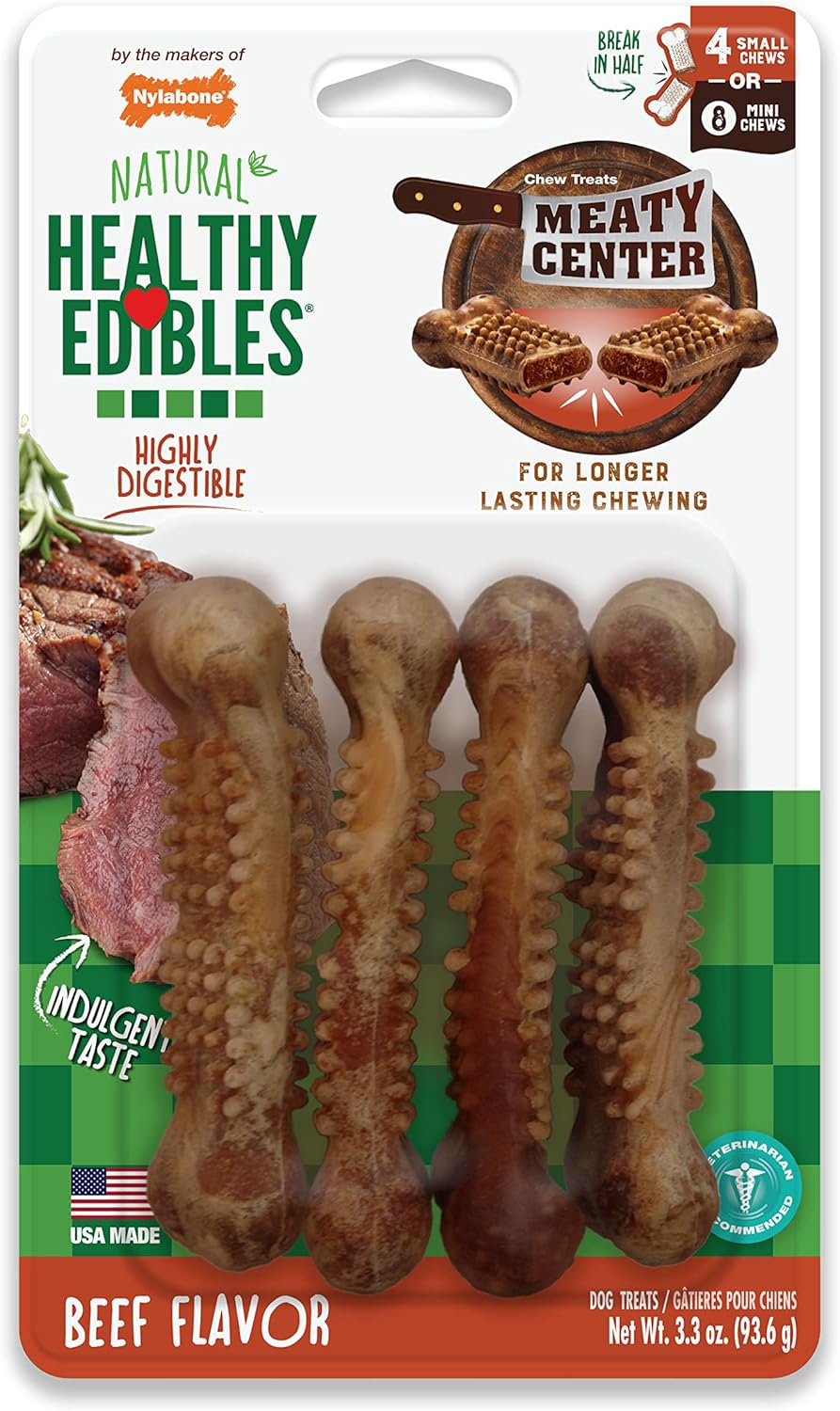
Nylabone Healthy Edibles Beef Small
Best Small-Size Bone
| Flavor | Beef |
|---|---|
| Age Range Description | Adult |
| Item Form | Stick |
| Package Size Name | 4 Count |
| Breed Recommendation | Small Breeds |
These Nylabone Healthy Edibles Meaty Center chews are compact, beef-flavored sticks made for small dogs and intended as a long-lasting, edible chew and dental aid. Each stick has a savory meaty center and textured dental nubs so chewing helps scrape plaque while keeping a dog occupied; the formulation is limited-ingredient and free of artificial colors, flavors, and preservatives. The sticks break at a designed weak point so you can split one into smaller servings, which helps when using them in crates, carriers, or for short training rewards. They are highly digestible and made in the USA, but because they are edible they will gradually break down with heavy chewing and are not an indestructible nylon toy replacement for aggressive chewers that can pulverize treats. Use them under supervision, offer water, and follow the guidance to give them to dogs with permanent teeth. For owners seeking a compact, flavorful chew that also contributes to dental cleaning and fits neatly in small spaces, these are a practical choice; if you need a truly indestructible nonedible chew, consider a different class of product.
Best for: Owners who need a space-saving, travel- and crate-friendly chew that keeps small dogs occupied while providing a tasty, digestible dental chew.
Less Ideal for: People seeking a nonedible, ultra-durable chew for destructive or very strong chewers should choose a heavy-duty nylon or rubber chew instead.
- Meaty center and textured nubs combine flavor with dental-cleaning action
- Compact, break-apart design lets you split chews for smaller servings
- Limited-ingredient recipe with no artificial colors, flavors, or preservatives
- Made in the USA and formulated to be highly digestible
- Edible composition means it wears down and is not suitable as an indestructible chew toy
- Recommended for dogs with permanent teeth only, not for teething puppies
Verdict: The best small-size bone for smaller older dogs or those with reduced jaw strength that need appropriately scaled chews.
Choosing the Right Dog Bone Older Dog: Key Factors to Consider
Texture and Hardness
Texture and hardness directly affect dental safety for older dogs. Softer or rubbery materials reduce the chance of chipping or cracking worn teeth, while extremely hard bones can lead to fractures. At the same time, a bone that is too soft may fall apart quickly and create small fragments that pose a swallowing hazard.
Look for materials that compress slightly under pressure but still provide tactile feedback. Multi-density designs can offer a softer outer layer for teeth and a firmer inner core for lasting interest. Consider your dog's current dental condition when choosing hardness to balance safety with chew satisfaction.
Size and Shape
Size and shape determine how comfortably a dog can hold and manipulate a bone. A bone that is too small increases choking and ingestion risks, while an overly long or awkward shape may force the dog to chew at unfavorable angles that stress teeth or jaw joints.
Choose bones with rounded edges and contours that encourage chewing with the front teeth and tongue rather than levering against a single point. Handles or grip-friendly shapes can help dogs with limited jaw strength keep the bone steady, reducing strain on the temporomandibular joint.
Material Safety and Ingredient Transparency
Older dogs can be more sensitive to additives and lower-quality materials. Materials should be non-toxic, free of harmful chemicals, and sourced from reputable processes. For edible bones or flavored chews, check that ingredients suit your dog's digestive tolerance and do not contain common triggers like excessive fat, artificial colors, or problematic preservatives.
Prefer items with clear labeling about composition and manufacturing standards. Avoid products with vague ingredient lists or unfamiliar chemical names that could indicate low-quality plastics or stabilizers. For dogs with known sensitivities, choose single-ingredient edible options or hypoallergenic synthetics.
Dental Safety Features
Dental safety features help older dogs chew without accelerating tooth wear. Features to look for include rounded chewing surfaces, reinforcement in high-wear areas to avoid flaking, and textures designed to clean plaque gently rather than scrape aggressively.
Avoid bones with sharp protrusions or thin points that can concentrate force on a small area of a tooth. If a bone claims to clean teeth, check that the mechanism is gentle: textured surfaces that massage gums and dislodge plaque are preferable to abrasive ridges that require heavy biting.
Digestibility and Breakage Behavior
How a bone breaks, and whether fragments are digestible, is crucial for older dogs who may swallow pieces. Some edible bones are designed to be safely digested if small pieces are consumed, while synthetic options may break into dangerous shards. Understanding the breakage pattern helps you choose whether a chew should be used only under supervision.
Select bones with predictable wear patterns and avoid materials known to splinter. For edible bones, check ingredient lists and consider potential calorie load, as some flavored chews add significant calories that may not be appropriate for less active older pets.
Ease of Cleaning and Maintenance
Hygiene matters because bacteria and residue can build up on chews and lead to oral or digestive issues. Bones that are machine washable or rinse clean easily reduce bacterial growth. Porous materials can trap saliva and food particles, so non-porous or sealed-surface designs are often safer for older dogs with weaker immune defenses.
Consider how often you are willing to clean the item and whether it will tolerate repeated washing. Removable covers or replaceable chew sleeves can extend usable life while maintaining hygiene.
How Soft Is Soft Enough for Dogs with Worn Teeth?
Assess softness by observing how much the material compresses under light pressure and whether the dog can make indentations with the front teeth. A material that allows slight give protects fragile enamel while still providing a satisfying chew.
If your dog hesitates to bite down hard, err toward the softer end of the spectrum. If they quickly grind down or shred a soft chew, choose something with a firmer core that still has a gentle outer layer.
- Test at home by pressing the bone with a fingernail to judge give
- Watch first interactions closely for reluctance or aggressive gnawing
- Replace any chew that shows small, loose fragments
Should I Choose Edible Bones or Reusable Chew Toys?
Edible bones can be good for nutritional enrichment and are safer if small pieces are swallowed, provided ingredients suit the dog. They tend to be consumed over time, which eliminates long-term splinter risk but may add calories and require portion control.
Reusable chew toys last longer and can provide ongoing engagement without extra calories, but they must not splinter. For older dogs, choose durable but forgiving materials and monitor wear closely. Rotating between an edible treat and a reusable chew can balance novelty, dental stimulation, and calorie intake.
- Use edible bones as occasional treats or training rewards
- Reserve reusable chews for supervised play and replace when visibly degraded
- Track caloric intake if edible bones are part of the daily diet
How to Introduce a New Bone to an Older Dog
Introduce new bones gradually during supervised sessions. Allow short, calm chew periods and observe how the dog holds and gnaws the item. If they show signs of discomfort, reluctance, or abnormal chewing patterns, remove the bone and choose a softer or differently shaped option.
Offer the bone when the dog is relaxed rather than highly excited to reduce the chance of aggressive biting. Praise and gentle encouragement help associate the new item with positive experiences.
- Inspect each session for cracks or fragments
- Limit initial sessions to 10 to 15 minutes
- Rotate chews to maintain interest and reduce overuse of any single tooth
Managing Dental Issues While Keeping Chewing Satisfying
Chewing helps maintain jaw muscles and can stimulate gums, but it must be balanced with dental safety. If your dog has exposed roots, loose teeth, or recent dental work, consult your veterinarian before introducing long-term chews. Short, frequent, low-force chewing sessions are often preferable to long, heavy gnawing.
Supplement chews with gentle dental care such as brushing, dental rinses, or veterinarian-recommended hygiene products to reduce the need for aggressive chewing and preserve remaining teeth.
- Avoid hard chews after dental surgery or when teeth are loose
- Use soft, textured items to massage gums gently
- Monitor dental changes and adjust chew types accordingly
When to Retire a Bone
Retire a bone if it develops cracks, sharp edges, or small pieces that could be swallowed. Visible thinning in high-wear areas is a sign the item may fail unpredictably. Routine inspection after each use helps prevent accidents.
Even if a bone appears intact, consider a scheduled replacement based on observed wear patterns. Older dogs may chew less aggressively but can still create hidden structural fatigue in reusable chews.
- Discard chews with any hard-to-see internal fractures
- Replace at the first sign of fraying, splintering, or softening into crumbs
- Keep a log of how long chews last to anticipate safe replacement intervals
How We Chose the Best Dog Bone Older Dog
We prioritized items that reduce dental strain and lower fracture risk while still offering chewing satisfaction. Our selection criteria focused on texture, material safety, size and shape appropriateness, nutritional considerations for flavored or edible bones, and ease of cleaning. We favored bones with softer or more flexible chewing surfaces for dogs with worn teeth, and designs that avoid sharp splinters or hard edges. We excluded any bones marketed primarily for aggressive chewers that rely on very hard materials known to cause tooth fractures. We also excluded products lacking clear composition details or safety testing information. Final selections balanced chew life with gentleness, emphasizing materials and shapes that accommodate reduced bite force, maintain interest without promoting destructive chewing, and minimize gastrointestinal risk if pieces are ingested.
Our full evaluation process is outlined in our review methodology.
FAQ
Can older dogs still get dental benefits from chewing?
Yes, chewing can help reduce plaque and keep jaw muscles active when done with appropriate items. Choose softer, textured bones that massage gums rather than abrasive options, and combine chews with regular dental care.
How often should I give my senior dog a bone?
Often depends on the dog's dental health and activity level. Short, supervised sessions a few times per week are usually safer than long daily chewing, but adjust based on how the dog tolerates the item and any veterinary advice.
Are flavored edible bones safe for older dogs with sensitive stomachs?
It depends on the ingredients. Single-ingredient or limited-ingredient edible bones are easier to tolerate. Avoid high-fat or heavily seasoned options and introduce new flavors slowly to watch for digestive reactions.
What signs indicate a bone is causing dental problems?
Watch for reluctance to chew, drooling, pawing at the mouth, bleeding gums, or changes in eating habits. Any sudden change should prompt a pause in chewing and a veterinary check if symptoms persist.
Can bones worsen arthritis or jaw pain?
Chewing can sometimes strain the jaw joint if the bone requires hard, sustained biting. Prefer softer chews and short sessions to minimize joint stress. If your dog shows pain or stiffness after chewing, switch to gentler options and consult your veterinarian.
Final Verdict
Older dogs benefit from chews that prioritize gentle textures, safe breakage behavior, and appropriate sizing. Focus on materials that compress slightly under pressure, rounded shapes that reduce concentrated force, and predictable wear patterns to avoid splintering. Balance chew frequency with supervised sessions and regular dental maintenance. Prioritize safety features and ingredient transparency over novelty so you can confidently offer a bone that satisfies chewing instincts without risking dental or digestive problems.

