

When you have a large dog, choosing the right booties matters for daily walks, winter outings, and rugged hikes. Ill-fitting or flimsy booties can slip off, cause chafing, or fail to protect paws from salt, ice, rough terrain, and hot pavement. This guide shortlists the top options for large dogs, focusing on secure fit, durable materials, and reliable traction. We evaluated models that work for heavier paws and active dogs so you can pick booties that stay on, protect, and last through regular use. Read on for the key buying details and practical tips to help you choose the best option for your dog.
Top Picks at a Glance
| Best Overall Booties for Large Dogs A dependable all-around pick that fits big breeds comfortably | LUCKYPAW Dog Shoes Size6 |  |
| Best Budget Booties for Large Dogs The most affordable option that still protects paws on a shoestring | DOGOYS Dog Shoes Size 5 |  |
| Best Premium Booties Higher-end materials and fit for long-lasting comfort and protection | Bark Brite Neoprene Dog Boots XL |  |
| Best Waterproof Booties Strong moisture protection for wet walks, rain, snow, and puddles | LONSUNEER Winter Paw Protector XL |  |
| Best Insulated Booties Warm, lined design to protect paws in cold or snowy weather | NAMSAN Winter Dog Boots Size 5 XL |  |
LUCKYPAW Dog Shoes Size6
Best Overall Booties for Large Dogs
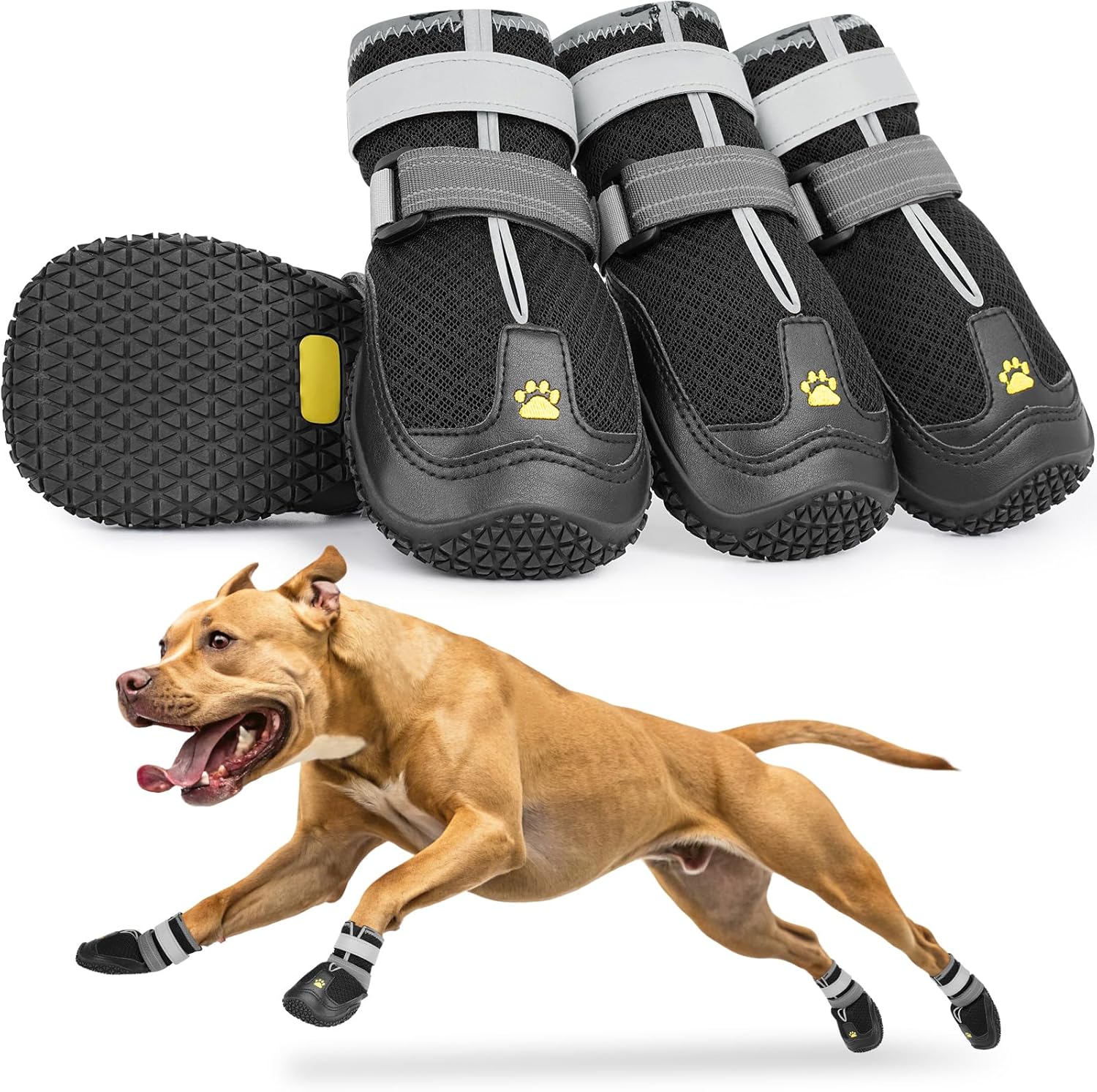
| Size | Size6: 2.6" W x 3.0" L |
|---|---|
| Unit Count | 4 Count |
| Material Type | Leather, Nylon, Rubber |
| Closure Type | Hook & Loop |
These LUCKYPAW dog shoes are made to protect paws on hot pavement and varied outdoor surfaces while remaining quick to put on. The wide slit and dual adjustable hook-and-loop straps make application fast and let you cinch a secure fit; reflective strips add visibility for evening walks. A breathable mesh upper helps prevent sweaty paws on long summer outings while the flexible rubber sole provides traction on tile, asphalt, and trails. In practice they work well for everyday walks, short hikes, and light winter use where water exposure is minimal. The shoes are not fully waterproof because the mesh can let water in, so they are not ideal for deep snow, heavy rain, or long wading. Sizing requires measuring paw width and length for a snug fit and a short training period helps most dogs accept them. If you want an easy-on boot that stays put during typical walks and offers strong traction and breathability, these deliver well for that role.
Best for: Buyers who prioritize fast, hassle-free application and a closure system that holds during regular walks and short outdoor adventures.
Less Ideal for: Owners who need fully waterproof boots for deep snow, heavy rain, prolonged wading, or users who cannot measure paws for a snug fit.
- Wide slit and dual hook-and-loop straps enable fast, straightforward on/off and a secure fit
- Reflective straps increase visibility on low-light walks
- Breathable mesh upper reduces paw sweat during hot-weather use
- Flexible rubber sole with anti-slip texture gives reliable traction on multiple surfaces
- Mesh upper is not fully waterproof and can allow water entry in deep puddles or heavy snow
- Requires careful paw measurement and initial training for best fit and retention
Verdict: The best overall booties for large dogs, balancing fit, protection, traction, and durability for everyday walks and light outdoor use.
DOGOYS Dog Shoes Size 5
Best Budget Booties for Large Dogs

| Dog Breed Size | Medium |
|---|---|
| Size | Size 5 (2.51" x 2.36") for 41-60lbs |
| Material Type | Fabric |
| Closure Type | Hook & Loop |
| Recommended Uses For Product | Outdoor Protection |
These DOGOYS dog shoes are a basic, budget-minded boot designed to give outdoor paw protection and traction for medium to large dogs. They have a fabric upper with a hook-and-loop closure that makes them quick to put on and adjust, and a rugged, anti-slip sole intended to shield paws from hot pavement, thorns, and rough surfaces. The shoes are lightweight and softer than many heavy-duty booties, so dogs tend to tolerate them for short walks and light activity, and the inner insole sizing is provided to help match paw measurements. Care is hand wash only, which keeps upkeep simple but means they will take longer to dry than machine-washable options. These are not heavy-duty mountaineering boots and may wear faster with very active dogs or on highly abrasive terrain, and some buyers should expect fit variability because sizing is measured by hand. For owners wanting straightforward, affordable paw protection and improved grip on wet or hot surfaces, these deliver reasonable performance for the price.
Best for: Owners of large dogs who want inexpensive, straightforward paw protection for everyday walks and light outdoor work without needing heavy-duty construction.
Less Ideal for: People who need rugged, long-lasting boots for intensive hiking, snow, or abrasive terrain should consider more durable, purpose-built options.
- Rugged anti-slip sole provides traction and protection from sharp objects and hot pavement
- Hook-and-loop closure makes the shoes quick to put on and adjust for a secure fit
- Lightweight and softer construction improves dog comfort and acceptance
- Simple hand-wash care keeps cleaning straightforward
- Not as durable as heavy-duty boots for very active dogs or abrasive terrain
- Sizing is based on inner insole measurements and measured by hand, so fit can vary
Verdict: The best budget booties for large dogs for owners who need basic paw protection and traction without spending much.
Bark Brite Neoprene Dog Boots XL
Best Premium Booties

| Size | XL |
|---|---|
| Unit Count | 4 Count |
| Material Type | Neoprene |
| Closure Type | Hook & Loop |
These Bark Brite neoprene booties are lightweight protective covers made for regular outdoor use and short indoor wear. They are constructed from ventilated neoprene with a lightly lined interior and a durable rubber sole with puncture-resistant tread, so they shield pads from hot pavement, sharp objects, and abrasive surfaces while still allowing natural paw movement. Hook-and-loop closures plus two elastic reflective straps and a rear slit make them relatively quick to put on and adjust, and the flexible material stretches to accommodate the paw shape. The set includes four booties and is hand-wash only, so upkeep is simple but requires manual cleaning. For very frequent or heavy-duty hiking on rocky terrain these booties may wear faster than thicker leather or heavy-duty rubber alternatives, and fit depends on careful sizing since neoprene stretches and the extended shaft is intended to keep them in place rather than provide rigid support.
Best for: Buyers who prioritize breathable, comfortable booties for regular urban walks and day adventures and who want a refined fit with reflective adjustment for safety.
Less Ideal for: Owners who need heavy-duty, long-lasting footwear for frequent rock-hopping or extended backcountry hikes should consider sturdier all-weather boots instead.
- Lightweight ventilated neoprene for breathability during warm-weather walks
- Durable rubber sole with puncture-resistant tread for traction on varied surfaces
- Hook-and-loop plus elastic reflective straps for adjustable fit and visibility
- Flexible, paw-conforming shape that does not inhibit natural paw movement
- Includes four booties so all paws are protected in one purchase
- Hand wash only care may be inconvenient after muddy or salty outings
- Neoprene construction is less rugged than heavy-duty leather or thick rubber for intensive off-trail use
Verdict: The best premium booties for owners who want superior materials, refined fit, and longer-lasting performance for frequent outdoor use.
LONSUNEER Winter Paw Protector XL
Best Waterproof Booties

| Size | X-Large (Inner sole 3.74 x 3.15 in) |
|---|---|
| Unit Count | 4 Count |
| Material Type | Fabric |
| Recommended Uses For Product | Outdoor Protection, Snow Protection |
These dog boots are a budget-focused option for large dogs that need basic paw protection in winter or during outdoor walks. The upper uses water-resistant fabric with a soft inner lining for warmth and comfort, while flexible, skid-proof soles add traction on pavement, snow, and indoor floors. Each boot fastens with an elastic, adjustable strap that includes reflective material for low-light visibility and helps keep the boot in place once secured. They come as a set of four and are hand-washable, which keeps care simple for repeated use. Practical limitations are the simplified elastic closure and fabric construction, which may not hold up as long as thicker, reinforced commercial boots for very active dogs or frequent rough-terrain use, and sizing requires careful measuring since the fit is snug by recommendation. For owners who want inexpensive, lightweight winter protection for big dogs, these boots deliver straightforward, usable coverage without extras.
Best for: Owners of large or extra-large dogs who want an affordable, practical solution for seasonal paw protection and short outdoor walks without specialty features.
Less Ideal for: Handlers who need heavy-duty, long-lasting boots for intensive hiking, working dogs, or frequent rough-terrain outings should look at more rugged, reinforced options.
- Water-resistant fabric upper with soft lining for warmth and comfort
- Skid-proof flexible sole gives traction on snow, pavement, and indoor floors
- Reflective adjustable strap improves visibility and helps secure the boot
- Sold as a 4-count set and is hand-washable for easy care
- Elastic-and-strap closure is basic and may not prevent slipping on very active dogs
- Fabric construction and light build may wear faster under heavy outdoor use
Verdict: The best waterproof booties for large dogs who regularly encounter wet conditions and need reliable moisture resistance and easy drying.
NAMSAN Winter Dog Boots Size 5 XL
Best Insulated Booties

| Intended fit | Long-legged large dogs |
|---|---|
| Pieces included | 4 PCS |
| Closure type | Hook-and-loop strap plus elastic cord |
| Feature | Waterproof fabric |
| Lining | Polycotton lining |
These NAMSAN winter dog boots are built for long-legged large breeds and wrap above the knee to protect the lower leg from snow, slush, and cold. They use a waterproof outer fabric and a polycotton lining to block moisture and add insulation, while a flexible sole with non-slip tread helps traction on icy or wet surfaces. Fastening is a two-part system: adjustable magic tape straps plus an elastic cord at the top to keep the boot from sliding down during activity. The wide boot shaft and flexible construction make them relatively easy to put on and do not overly restrict natural movement, which is helpful for dogs that still need to run and play. Expect solid warmth and coverage in winter walks, though because they are fabric-based boots they are not a heavy-duty crampon substitute on polished ice and will need occasional readjusting after vigorous activity. Fit and sizing are important for Huskies with thick fur and active gait, so measure carefully before buying.
Best for: Buyers who need extra insulated leg coverage for large, long-legged winter breeds and prioritize warmth and moisture protection during snowy walks.
Less Ideal for: Owners seeking metal-spiked or heavy-duty traction for walking on polished ice or people who prefer minimalist, low-profile paw protectors.
- Tall cut designed for long-legged breeds provides more coverage than ankle boots
- Waterproof outer fabric helps keep legs dry in snow and rain
- Polycotton lining adds insulation for cold-weather comfort
- Dual fixation (hook-and-loop strap plus elastic cord) improves stay-put performance
- Non-slip sole offers traction on varied winter surfaces
- Not intended as a heavy-duty ice crampon for extremely slick surfaces
- Fabric construction may require drying and occasional cleaning after wet use
Verdict: The best insulated booties for large dogs that require added warmth and paw protection during cold-weather walks and winter outings.
Choosing the Right Dog Booties Large Dog: Key Factors to Consider
Fit and Sizing
A secure fit is the single most important factor for large dog booties. Larger paws need wider toe boxes and longer lengths, but fit is also about how the boot stays on. Adjustable closures, such as wide hook-and-loop straps and ankle cinches, reduce slippage and prevent the boot from rotating or falling off while your dog walks. Measure paws when your dog is standing on a flat surface and account for slight swelling after activity.
An ill-fitting boot can lead to chafing, blisters, or rubbing that makes your dog resist wearing them. Look for boots with multiple size options and clear sizing guides. Some models include stretch panels or elastic gussets that improve fit across different paw shapes. For heavy or muscular breeds, choose a size that allows natural toe splay without excess length that causes tripping.
Sole Durability and Protection
The sole is where booties face the most abuse, so material and thickness matter. Durable rubber or heavy-duty synthetic soles resist abrasion from pavement, gravel, and rocky trails and extend the useful life of the boot. Thicker soles provide better protection from hot pavement and sharp objects, while multi-layer designs can offer a balance of protection and flexibility.
Also consider sole stiffness. Very stiff soles protect well but can interfere with natural gait, whereas extremely thin soles offer little protection. For large dogs that place more pressure on each paw, look for reinforced soles and strong attachment points to prevent delamination.
Traction and Grip
Good traction reduces slipping on wet, icy, or smooth surfaces and is particularly important for heavier dogs that generate more force with each step. Sole tread patterns, rubber compounds, and textured pads all influence grip. Deeper lugs and patterned treads shed mud and snow better than flat soles.
If you frequently walk on slippery surfaces, prioritize boots designed with aggressive tread and softer rubber for grip, while keeping in mind softer compounds can wear faster. Evaluate how traction performs on the typical surfaces you encounter, such as sidewalks, trails, or tile floors.
Closure System and Retention
The closure system determines how well a boot stays on during activity. Wide, adjustable straps and high-coverage cuffs increase retention and reduce the need for constant readjusting. Some boots combine hook-and-loop straps with elastic ankle collars to form a secure envelope around the paw.
Closure durability is also important; thin Velcro or small plastic fasteners can fail under frequent tension, especially for large dogs that pull. Look for reinforced stitching and broad contact areas for hook-and-loop closures. Closure design affects how easy the boots are to put on and remove, which matters for daily use.
Comfort and Paw Health
Booties must balance protection with comfort to avoid causing paw irritation. Soft inner linings, flexible seams, and breathable materials help prevent sweating and rubbing. Padding at pressure points reduces chafing, while seamless toe boxes minimize hotspots for sensitive paws.
Consider how the boot affects natural paw mechanics. Boots that are too stiff or restrict toe spread can alter gait and lead to joint stress over time. For dogs with existing paw injuries or sensitivity, choose models with extra cushioning and softer uppers to reduce discomfort.
Weather Resistance and Ease of Cleaning
Depending on your needs, waterproofing and quick-dry materials can be essential. Waterproof boots protect against snow, slush, and wet conditions, while breathable, quick-dry fabrics prevent prolonged dampness that can irritate skin. Salt and de-icing compounds can be harsh on paws and boot materials, so look for fabrics and soles that resist degradation from salt exposure.
Ease of cleaning matters for busy owners. Boots that are machine washable or wipe-cleanable save time. Removable insoles and fast-drying materials are helpful for repeated use in wet conditions.
How Do I Measure My Large Dog's Paws Correctly?
Measure your dog's paw while the dog is standing and bearing weight to get the longest and widest dimensions. Place the paw on a sheet of paper, press gently to mimic weight, and mark the front of the longest toe and the widest points across the pads.
Use the manufacturer's sizing guide against those measurements and round up slightly when between sizes to avoid restricting toe spread. If a boot brand provides width guidance, prefer the larger width for wide-chested or working breeds.
- Measure both front and rear paws; hind paws can be smaller.
- Measure after a walk when paws may be slightly expanded.
- Account for thicker socks or liners if you plan to use them.
Can Large Dogs Learn to Tolerate Booties?
Yes, most large dogs can be trained to accept booties with patient, incremental steps. Start by introducing a single boot for short periods indoors, rewarding calm behavior and removing the boot before frustration sets in.
Gradually increase wear time and add short walks on nonchallenging surfaces. Positive reinforcement and consistent sessions typically build tolerance within days to weeks, depending on the dog's temperament.
- Use treats and calm praise during fitting.
- Begin with nonrestrictive styles if your dog is anxious.
- Stop and retry if the dog shows clear distress to avoid negative associations.
Are Booties Useful Year-round or Just for Winter?
Booties are useful year-round when the hazards change with seasons. In winter, they protect against cold, ice, and chemical de-icers. In summer, they shield paws from hot pavement and blistering sand. During hikes, booties guard against cuts from rocks, thorns, and rough terrain.
Select breathable summer-weight options for warm weather and insulated, waterproof designs for cold or wet conditions. Having more than one style can be practical for owners who switch between seasonal hazards.
- Lightweight, breathable uppers for hot weather.
- Waterproof and insulated options for winter use.
- Reinforced soles for trail and hike protection.
How to Maintain and Clean Booties for Large Dogs
Rinse or wipe off dirt and salt after each use, and allow boots to air dry fully before storing. For washable materials, follow care instructions to avoid damaging waterproof membranes or hook-and-loop closures. Remove loose debris from treads to preserve traction.
Rotate multiple pairs if you use booties daily to allow thorough drying and reduce wear. Inspect seams and closures regularly for signs of wear and replace boots when soles delaminate or closures fail.
- Air dry away from direct heat to prevent material shrinkage.
- Brush out grit from treads after muddy hikes.
- Check fasteners and stitching before each outing.
What Should I Expect During the First Few Walks?
Expect some tentative steps and minor gait changes as your dog adjusts. Dogs often lift paws higher or take shorter steps until the boot becomes familiar. Keep initial walks short and on familiar terrain to avoid slips and frustration.
Monitor for rubbing or hotspots after the first few uses and adjust fit accordingly. If the dog consistently shakes boots off, reevaluate sizing and closure tightness rather than forcing longer wear sessions.
- Start with 5 to 10 minute walks and build up.
- Check paws after the first few sessions for irritation.
- Tighten closures gradually; too tight causes chafing.
How We Chose the Best Dog Booties Large Dog
We focused on attributes that matter most for large dogs and heavier use. Fit and retention was a top filter, prioritizing designs with adjustable closures, ankle support, and sizing ranges that accommodate larger paw widths. Durability and abrasion resistance were weighed heavily, with preference given to thicker soles and reinforced stitching that withstand repeated walks and rough surfaces. Traction and sole design were evaluated for grip on wet, icy, and uneven surfaces to reduce slipping for heavier dogs. Comfort and paw health considerations included breathable uppers, flexible soles that allow natural movement, and padding that reduces rubbing. Ease of use and learning curve were also considered, since stubborn or anxious dogs need designs that are quick to put on and secure. Finally, waterproofing and weather protection were part of the selection criteria for owners who need boots for snow, rain, or hot pavement. We excluded lightweight novelty booties and designs intended only for short indoor wear. The final list balances real-world durability with comfort and secure fit for large dogs, reflecting practical buyer concerns rather than untested claims.
Our full evaluation process is outlined in our review methodology.
FAQ
Will booties protect against road salt and ice melt?
Booties with waterproof uppers and durable soles block direct contact with salt and ice melt. Rinse paws and boots after exposure to chemical de-icers to prevent skin irritation and material breakdown.
Can large dogs wear booties for long hikes?
Many large dogs can wear booties for extended hikes if the boots fit well and have durable soles. Plan for breaks to check fit, remove debris, and allow paws to air if they become damp or hot.
How tight should closures be on dog booties?
Closures should be snug enough to prevent rotation and slipping but not so tight they compress the paw or restrict circulation. You should be able to slide one finger under the strap comfortably once secured.
Are boot socks necessary with booties?
Socks can add cushioning and warmth and help achieve a better fit in some cases. However, socks can shift inside the boot and cause rubbing if poorly matched. Use thin liners designed for paw wear when additional padding is needed.
How often should I replace booties for a large dog?
Replace booties when soles show significant wear, stitching unravels, or closures fail. Frequency depends on terrain and use, but heavy daily use on rough surfaces will shorten lifetime compared with occasional urban walks.
Final Verdict
Prioritize fit and retention first when choosing booties for large dogs, then balance sole protection, traction, and comfort based on your typical activities. Durable soles and broad, adjustable closures reduce the chance of loss and extend usable life for heavier dogs. Accept that tradeoffs exist: the most protective boots may be slightly less flexible, while the most flexible options may wear faster. Choose a style that matches your primary use—daily urban walks, winter protection, or rugged trail work—and plan for a short training period so your dog adapts comfortably.

