

If your dog is knuckling, choosing the right boots can reduce discomfort and help prevent further joint strain. You need boots that combine a secure fit, stable sole, and enough protection for daily walks or rehab work. This guide shortlists seven top options chosen for stability, traction, and fit control, with an eye toward dogs that turn or fold their paws under while walking. The picks focus on practical factors like fastening systems, sole stiffness, and materials so you can find a solution that supports safer, more confident movement.
Top Picks at a Glance
| Best Overall Boots The all-around top pick for dogs that knuckle and need protection | JZXOIVA Dog Boots Size 7 |  |
| Best Budget Boots A low-cost option that still protects paws and prevents further knuckling | TEOZZO Warm Winter Dog Shoes Size 3 |  |
| Best Premium Boots Higher-end construction and materials for long-term comfort and support | Ruffwear Grip Trex Dog Boots |  |
| Best Waterproof Boots Sealed designs to keep paws dry during wet walks and outings | DcOaGt Dog Shoes Size 9 |  |
| Best Easy-On Boots Designed for fast, simple putting on and taking off at home | Canada Pooch Suspender Boots Size 3 Short | 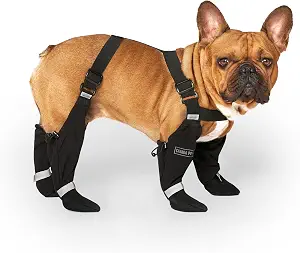 |
| Best Traction Boots Soles prioritized for grip on slippery surfaces and indoor floors | DOK TigerToes Dog Socks Large |  |
| Best Lightweight Boots Minimal bulk and weight for comfortable, natural paw movement | Dimicoo Breathable Dog Boots XL |  |
JZXOIVA Dog Boots Size 7
Best Overall Boots

| Size | Width 2.55 Inch |
|---|---|
| Unit Count | 4 Count |
| Material Type | Nylon |
| Product Care Instructions | Hand Wash Only |
These JZXOIVA dog boots are lightweight, breathable paw covers designed to protect paws during walks on hot pavement, icy sidewalks, or rough trails. They fasten with reflective straps that improve nighttime visibility and help keep the boot in place, while a rubber non-slip sole gives traction on wet or slick surfaces. The boots are pull-on with adjustable straps, so they are easy to put on and remove and can be used for short outdoor walks or to protect injured paws indoors. Care is hand wash only and the manufacturer recommends limiting continuous wear to about two hours to avoid rubbing or discomfort. Expect a modest lifespan with regular outdoor use and follow the size chart closely since the brand advises choosing the larger size when between measurements. These deliver solid visibility and basic protection but are not waterproof and are best for occasional outdoor use rather than continuous wear or heavy-duty trekking.
Best for: Owners prioritizing nighttime visibility and basic paw protection for small dogs during short walks or light outdoor activities who want an easy-to-fit, breathable boot.
Less Ideal for: Do not choose these boots if you need fully waterproof footwear, long-term continuous wear, or heavy-duty boots for extensive hiking and rough terrain.
- Reflective straps increase visibility for nighttime walks
- Breathable nylon upper for comfort in warm weather
- Rubber non-slip sole improves traction on pavement and wet surfaces
- Adjustable pull-on closure makes them easy to fit and remove
- Protects paws from hot pavement, snow, and sharp debris
- Not waterproof so wet conditions can let moisture reach paws
- Manufacturer recommends short wear periods which limits use for long outings
- Expected lifespan is relatively short with regular outdoor use
Verdict: The best all-around boots for dogs that knuckle, offering a balanced mix of fit, protection, traction, and ease of use for most pet owners.
TEOZZO Warm Winter Dog Shoes Size 3
Best Budget Boots

| Material Type | Rubber |
|---|---|
| Fleece lined | Yes |
| Suitable for | Small and Medium Dogs |
| Closure Type | Drawstring |
These TEOZZO dog shoes are a budget-friendly set of four fleece-lined booties intended to protect paws from cold floors, snow, hot pavement, and rough surfaces. They have a soft fleece interior for comfort, a rubber anti-slip sole for added traction, and a drawstring plus reflective strap to help keep the boot in place and increase visibility on walks. In practice they work well for short outdoor walks and indoor protection where you want to keep paws and floors clean; the lightweight construction and hand-washable fabric make them easy to care for. Limitations are that they are not waterproof and the fit can be fussy—you need to measure paw width and use the drawstring carefully to get a secure fit, especially for active dogs that pull or run. For light use and casual wear they provide good value, but heavy chewers or dogs that frequently run through mud and water will likely need something sturdier.
Best for: Buyers who prioritize low cost and basic paw protection for short walks or indoor use and who are willing to measure and adjust boots to get a reasonable fit.
Less Ideal for: Owners who need fully waterproof boots, heavy-duty protection for frequent outdoor runs, or a secure fit for very active, running, or chewing dogs.
- Fleece lining for comfort and warmth
- Rubber non-slip sole adds traction on indoor and dry outdoor surfaces
- Adjustable drawstring and reflective strap help keep boots on and improve visibility
- Machine-light care is simplified by hand-washable materials and simple construction
- Not waterproof so unsuitable for wet conditions
- Fit can be inconsistent and may require careful measuring and adjustment
Verdict: The best budget boots for dog owners seeking basic protection and traction for knuckling without paying for premium materials or extras.
Ruffwear Grip Trex Dog Boots
Best Premium Boots

| Upper Material | Polyester |
|---|---|
| Sole | Vibram non-marking rubber sole |
| Closure Type | Hook & Loop |
| Recommended Uses | Hiking, Walking, Cold Weather, Hot Weather |
The Ruffwear Grip Trex are a pair of all-purpose dog boots built for hikes, everyday walks, and variable weather. They pair a breathable polyester upper with a Vibram non-marking rubber outsole to give reliable traction on hot pavement, rocky trails, and slick surfaces, while ripstop construction and adjustable hook-and-loop ankle straps help them stay on during active play. You typically use them by measuring your dog's paw with the brand chart, sliding the boot on, and securing the strap; the boots are sold in pairs so you can mix sizes front to rear. The boots are hand wash only and come in a small-specific size range, so they are easy to clean but require accurate sizing to avoid slipping or discomfort. Notable benefits include a grippy Vibram sole for varied terrain and a breathable upper that avoids overheating in milder conditions. Limitations are that they are not fully waterproof and require careful fit checking for dogs new to boots, and smaller dogs need attention to get the correct size for a secure fit.
Best for: Buyers who want a single dependable dog boot for hiking, neighborhood walks, and mixed-weather protection that prioritizes traction and staying power.
Less Ideal for: Owners who need fully waterproof boots for prolonged wet or icy conditions or who prefer a low-effort slip-on sock-style protector.
- Vibram non-marking rubber sole provides strong traction across varied terrain
- Ripstop polyester upper offers breathability with durable abrasion resistance
- Adjustable hook-and-loop ankle strap helps boots stay on during active use
- Sold in pairs so front and rear paws can be sized independently
- Not fully waterproof so prolonged exposure to deep puddles or snow melt can let moisture through
- Requires careful paw measurement for a secure fit and may need a break-in period
Verdict: The best premium boots for owners willing to invest in superior fit, cushioning, durable materials, and refined closures to protect knuckling paws long-term.
DcOaGt Dog Shoes Size 9
Best Waterproof Boots
| Target Species | Dog |
|---|---|
| Dog Breed Size | Large |
| Included Components | 4 |
| Material Type | Leather, Nylon, Rubber |
| Closure Type | Hook & Loop |
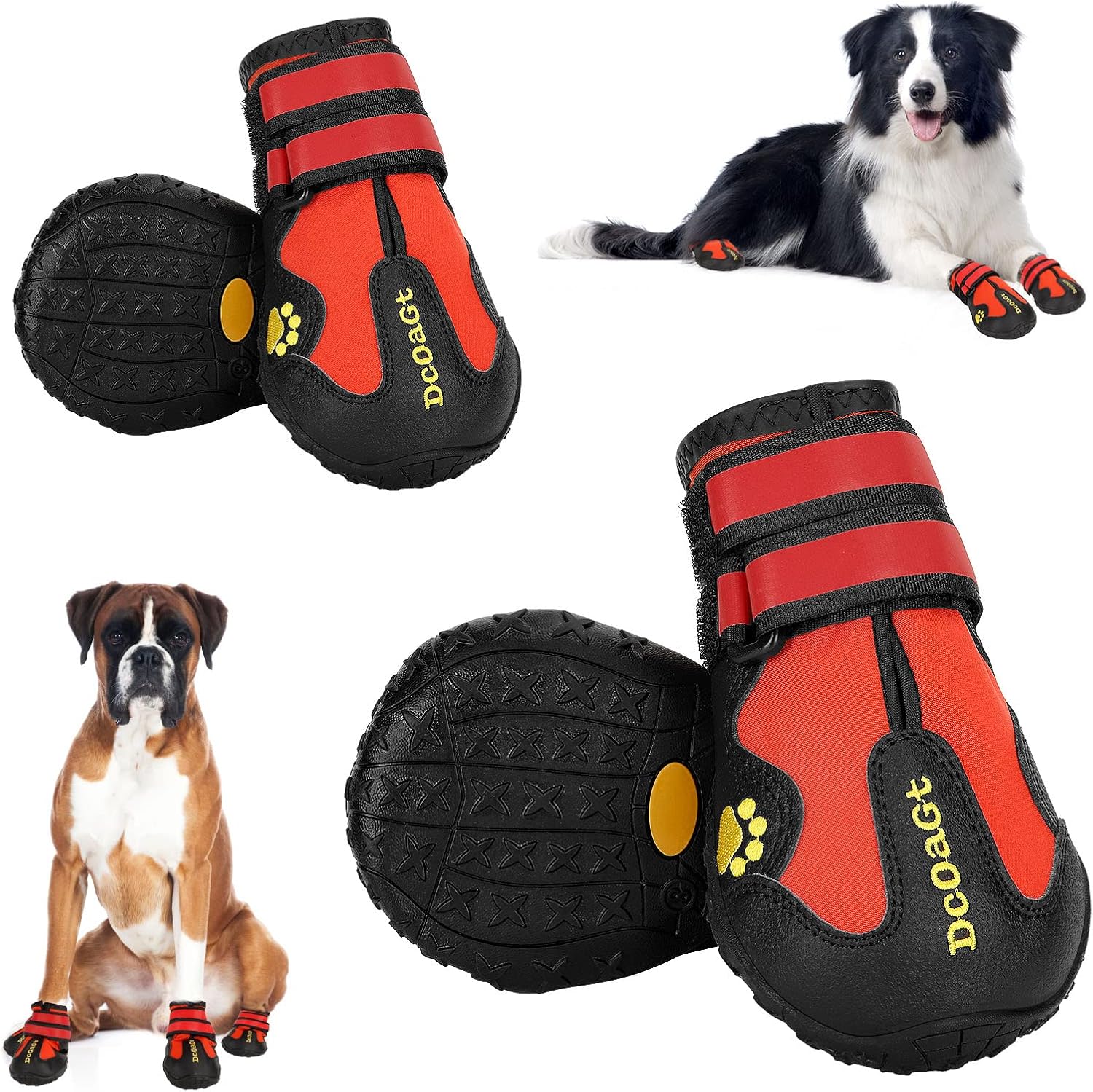
These DcOaGt dog shoes are a set of four waterproof, breathable boots intended to protect large dogs' paws from hot pavement, snow, ice, and rough terrain. They fasten with wide hook-and-loop straps and include reflective detailing for low-light visibility. The rubberized anti-slip sole and leather/nylon upper give decent traction and abrasion resistance, while the flexible construction keeps the boots comfortable for indoor and outdoor use. Buyers will appreciate that the boots are designed to be hand- or machine-washed and that the manufacturer provides sizing guidance tied to paw width. Important limitations are accurate sizing and retention: you need to measure paws carefully and tighten straps properly to avoid slippage, and very picky dogs may resist wearing them at first. The materials promise waterproofing but will perform best when straps are snug and boots are checked regularly during wet use. For dogs that knuckle and encounter puddles or snow, these offer straightforward moisture protection and added traction without a heavy, rigid feel.
Best for: Buyers needing reliable, stay-dry paw protection for large dogs that knuckle and frequently walk through rain, puddles, or snow and who are willing to measure for the correct size and check fit regularly.
Less Ideal for: Owners who want a minimalist barefoot option or who need a rigid, orthopedic boot for severe paw injuries should consider other specialized solutions.
- Waterproof and breathable upper for wet-weather protection
- Anti-slip rubber sole provides traction on slick surfaces
- Hook-and-loop straps allow quick on/off and adjustable fit
- Reflective strips improve visibility in low light
- Machine- and hand-washable for easy cleaning
- Accurate fit depends on careful paw measurement and can vary by dog
- May require a break-in period or training for dogs that resist boots
Verdict: The best waterproof boots for dogs that knuckle and regularly encounter rain, puddles, or snow and need reliable moisture protection and stay-dry comfort.
Canada Pooch Suspender Boots Size 3 Short
Best Easy-On Boots
| Size | 3 Short |
|---|---|
| Unit Count | 4 Count |
| Material Type | Shell: 96% Polyester, 4% Spandex; Lining: 100% Polyester |
| Closure Type | Hook & Loop, Strap |
| Recommended Uses For Product | Outdoor Protection, Snow Protection |
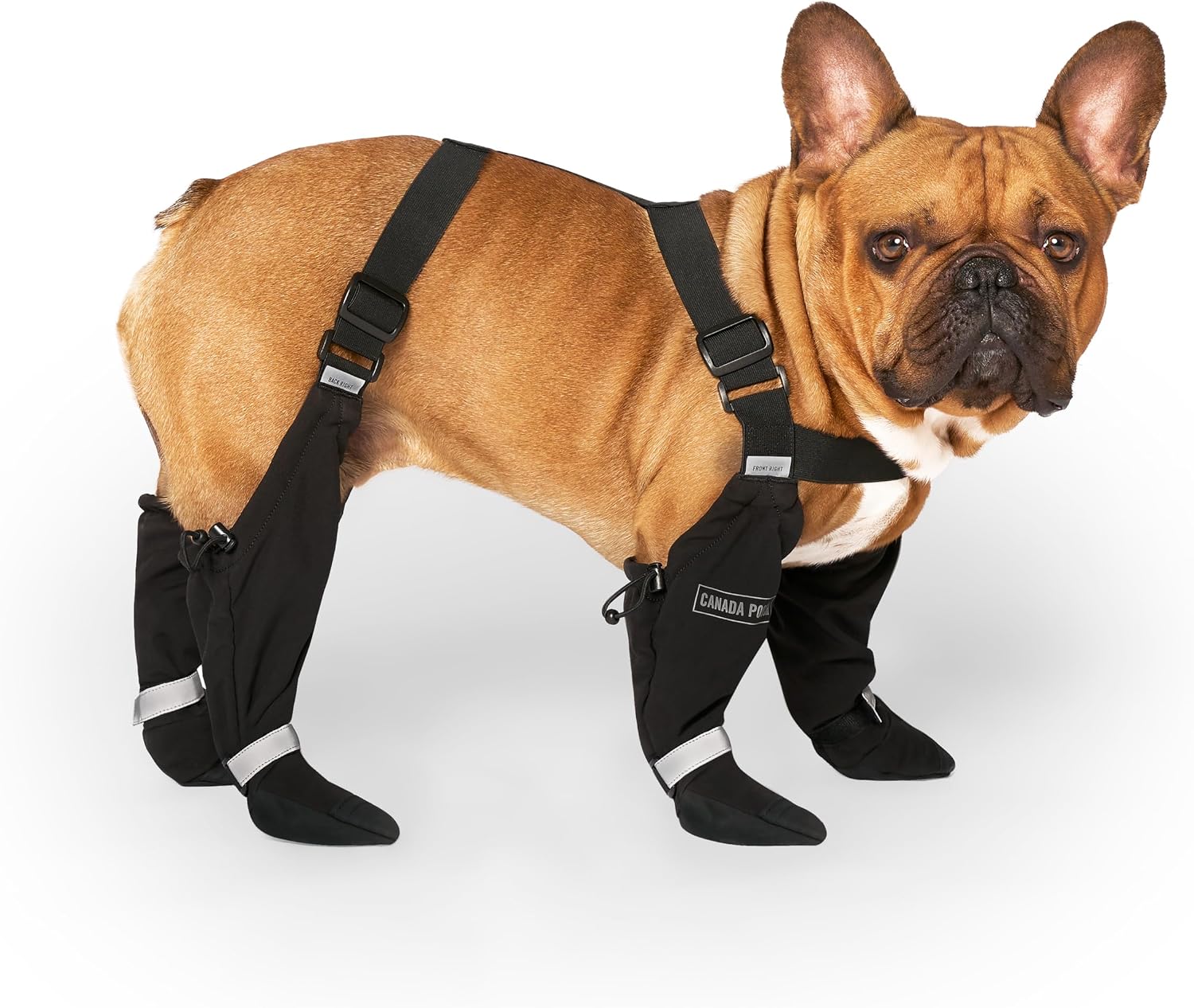
These suspender boots are a four-boot design joined by a fabric panel and straps to keep all paws in place while walking on snow and wet surfaces. They are intended to be slipped on, positioned with rubberized grips under each paw, then secured with reflective hook-and-loop straps, toggles, and body sliders; that combination makes them faster to put on than four separate booties and helps prevent a dog from removing a single loose boot. The water-resistant polyester-spandex shell and rubber soles give practical traction and protection from salt and slush, and the connected design offers added stability for dogs that knuckle or need assistance maintaining paw orientation. Care instructions allow gentle machine wash inside out and hang dry. Expect to spend a little time getting fit and adjusting straps the first few uses since the suspender layout requires correct front/back placement and leg-length choice, and the short leg length narrows the fit to small and some medium breeds.
Best for: Owners who need boots that go on quickly and stay put for dogs that knuckle or struggle to keep individual booties on, especially for short-legged small to medium breeds in winter conditions.
Less Ideal for: People with very large or deep-chested dogs or those who prefer independent single booties for paw-by-paw gait training should consider other options.
- Connected four-boot suspender design keeps all boots aligned and reduces single-boot loss
- Reflective hook-and-loop straps and toggles allow quick, low-friction fastening and nighttime visibility
- Rubber soles provide traction on snow, slush, and icy surfaces
- Water-resistant polyester-spandex shell shields paws and lower legs from moisture and salt
- Available in short and regular leg lengths to better match leg profiles for a secure fit
- Sizing requires careful measurement and initial adjustment to get correct fit and orientation
- Not ideal for very large breeds since this listing is short leg Size 3 and targets small/medium dogs
Verdict: The best easy-on boots for owners who need quick, low-friction application and secure closures so dogs with knuckling issues can be readied quickly.
DOK TigerToes Dog Socks Large
Best Traction Boots

| Size | Large |
|---|---|
| Unit Count | 4 Count |
| Material Type | Cotton, Nylon |
| Closure Type | Hook & Loop, Pull-On |
The DOK TigerToes Premium non-slip dog socks are designed to give dogs greater stability on hardwood and other slippery floors by combining a snug pull-on fit with an extra-thick, patterned grip. They are used by rolling the sock flat, inserting the paw, rolling it up the leg and securing the hook-and-loop strap for a close fit; the stiff grip material is intended to maintain traction even if the sock twists during movement. In practice they work well for dogs that knuckle or slide because the patented, high-friction sole provides consistent contact and helps prevent slips without bulky soles that interfere with paw placement. The cotton/nylon construction is machine-washable for easy cleaning and the buttonless strap reduces pressure points. Limitations include the intentionally snug fit and firmer sole feel, which can take time for some dogs to accept, and they are not a heavy-duty waterproof boot for prolonged outdoor use in rough terrain or deep wet conditions.
Best for: Owners of dogs that knuckle or struggle on smooth floors who prioritize improved traction and stability to reduce slipping and build confidence while walking indoors.
Less Ideal for: Owners needing rugged, fully waterproof boots for long outdoor hikes or protection in very rough environments should consider more heavy-duty models.
- Extra-thick, high-friction grip engineered to maintain traction even when the sock twists
- Patented buttonless strap and pull-on design for a snug, secure fit without hard buttons
- Machine-washable cotton/nylon construction for easy cleaning
- Designed to improve stability and mobility for senior or mobility-impaired dogs
- Snug, firmer fit may require a break-in period for some dogs to accept
- Not intended as a waterproof, heavy-duty outdoor boot for rough terrain
Verdict: The best traction boots for knuckling dogs who require enhanced non-slip soles to prevent slips and improve confidence on smooth or wet surfaces.
Dimicoo Breathable Dog Boots XL
Best Lightweight Boots

| Target Species | Dog |
|---|---|
| Dog Breed Size | Large, Medium |
| Material Type | Mesh Fabric, Rubber Sole |
| Closure Type | Hook & Loop |
These Dimicoo dog boots are built around a lightweight mesh upper and a soft rubber sole to shield paws from hot pavement, snow, salt, and rough terrain while keeping mobility easy. The breathable air-mesh fabric and flexible construction let a dog lift and place the paw with minimal added stiffness, which is helpful for dogs that knuckle and need protection without disrupting gait. Wide openings and adjustable hook-and-loop straps make the boots straightforward to put on and help them stay on during walks, and reflective strips increase visibility for evening outings. The rubber sole has a puncture-resistant tread for traction but remains thin and pliable compared with heavy winter boot designs. Expect the best results on short walks, hikes, or city surfaces where protection from heat, debris, or ice is needed; very aggressive chewers or dogs that need structured orthopedic support will want something stiffer or more specialized. Washable materials simplify cleaning after outdoor use.
Best for: Owners of medium to large dogs that knuckle and need light, breathable paw protection that preserves natural movement during short walks, hikes, or urban outings.
Less Ideal for: People whose dogs require rigid orthopedic support, heavy-duty boots for extreme cold or abrasion, or owners of very small-breed dogs.
- Lightweight breathable mesh upper that minimizes interference with natural gait
- Flexible rubber sole with puncture-resistant tread for traction without heavy bulk
- Adjustable hook-and-loop straps and wide opening for easy on/off and secure fit
- Reflective strips for improved visibility in low light
- Machine/hand washable for easy cleaning after outdoor use
- Not intended for small breeds; sizing starts at medium/large
- Thin, flexible sole provides less structured support for dogs needing orthopedic stabilization
Verdict: The best lightweight boots for dogs that knuckle but need minimal interference with gait, offering protection without adding excessive bulk or stiffness.
Choosing the Right Dog Boots Knuckling: Key Factors to Consider
Fit and Sizing Accuracy
A correct fit is the most important factor for dogs that knuckle. Boots that are too loose allow the paw to shift and rotate, which can make knuckling worse. Conversely, boots that are too tight can restrict circulation and cause discomfort, leading the dog to resist wearing them.
Look for boots with clear sizing guidance and adjustable closures that let you snug the boot across the pastern and over the foot independently. A shaped toe box that matches the dog's paw profile helps maintain toe splay while providing lateral support. When in doubt, measure the paw on a flat surface and follow the manufacturer's width and length recommendations rather than guessing by breed.
Fastening System and Security
How the boot fastens determines how well it stays in place during movement. For knuckling dogs, secure, layered closures are often best because single elastic straps can loosen when the paw bends. Hook-and-loop straps combined with a wraparound cuff or an ankle strap reduce rotation and slipping.
Fasteners should be wide enough to distribute pressure and should allow gradual tightening so you can customize support without creating pressure points. Check that closure materials are robust and positioned so the dog cannot easily bite or pull them off during activity.
Sole Stiffness and Tread
Sole design affects both protection and stability. A sole that is too soft will compress and reduce support, which can allow the paw to fold under. Too rigid a sole can feel unnatural and interfere with normal gait. For knuckling, a moderately stiff sole with a non-slip tread provides a stable platform that encourages proper paw placement and gives predictable ground feedback.
Tread pattern matters for traction on wet or slippery surfaces and for navigating common outdoor terrain. Soles with a defined heel or textured zones can help the dog find purchase and resist forward or inward slippage during weight-bearing.
Upper Material and Structure
The upper must balance containment and comfort. Structured uppers that gently guide the paw while allowing toe movement help prevent inward collapse. Materials that are breathable and slightly padded reduce the risk of chafing during wear.
Reinforced panels around the toe and medial side can add protection where knuckling tends to cause wear. At the same time, flexible zones near the joints preserve a natural range of motion. Look for linings that wick moisture to avoid irritation on longer walks.
Ease of Putting on and Keeping On
You will actually use the boots only if they are straightforward to put on and stay on during activity. Designs that can be donned with one hand or that include pull tabs speed the process and reduce stress for both you and the dog. Fasteners that provide audible or tactile feedback when secure help ensure consistent application.
Retention features such as ankle wraps, wide cuffs, or anti-slip interior textures are useful for dogs that tend to shake boots off. Consider how the boot performs when the dog walks, runs, or paws at it, not just how it looks on the table.
Maintenance and Durability
Boots for knuckling are likely to see concentrated wear in specific areas, so durability of materials and stitching matters. Reinforced soles and double-stitched seams will extend useful life, especially if the boots are used daily.
Ease of cleaning is also important because dirt and moisture trapped inside can irritate the paw and affect fit. Removable insoles or wipe-clean materials help keep boots hygienic. Evaluate whether closure components tolerate repeated use and whether replacement parts or repairs are feasible.
How Do Boots Help a Dog That Knuckles?
Boots work by creating a stable interface between the paw and the ground. For dogs that knuckle, properly fitted boots reduce excessive inward rotation and provide a predictable surface that encourages normal paw placement.
Beyond cushioning, boots can incorporate structural elements that support the foot from the sides and across the pastern. This support reduces compensatory movements and can make walking less tiring for dogs with mild to moderate knuckling issues.
- Provide non-slip surface for better traction
- Offer lateral containment to resist inward collapse
- Protect sensitive skin and calluses formed by abnormal contact
Should Boots Be Worn All the Time or Only During Walks?
Boot use should match activity and the underlying cause of knuckling. For short walks and outdoor outings, boots can provide protection and improve stability. Continuous wear inside the home is generally unnecessary and can cause overheating or skin irritation if left on for extended periods.
Consult your veterinarian or a rehabilitation professional if you are considering long-term use. They can advise a wearing schedule that balances support with opportunities for the paw and limb to move naturally and receive appropriate therapy.
- Use during walks, slippery surfaces, or rehabilitation sessions
- Avoid constant indoor wear unless directed by a clinician
- Inspect paws regularly for irritation when using boots frequently
How to Fit Boots to Reduce Knuckling
Measure the paw on a flat surface from heel to toe and across the widest part. Choose a size that allows the toes to splay slightly without excessive extra room. When fitting, fasten closures snugly but not tightly, and watch the dog take a few steps to confirm the boot stays centered on the foot.
Adjust fasteners in stages: secure the foot strap first, then the ankle or cuff to lock the boot's position. If the boot rotates or the dog appears to favor it, try a different closure configuration or consider a model with more structured support.
- Measure paws weight-bearing for accurate sizing
- Secure foot strap before tightening the cuff
- Observe several steps to check for rotation or slipping
When to Combine Boots with Other Interventions
Boots can be part of a larger plan that addresses the causes of knuckling. If the underlying issue is weakness, nerve injury, or joint disease, combining boots with targeted exercise, physical therapy, or medical management often produces better outcomes than relying on boots alone.
If you notice worsening knuckling, persistent limping, or new pain, seek veterinary assessment. Boots are supportive tools but do not replace diagnostic evaluation and treatment where needed.
- Use boots alongside strengthening and balance exercises
- Consider boots as part of post-injury or post-surgical rehab
- Refer to a clinician if symptoms progress despite support
Tips for Acclimating a Dog to Boots
Introduce boots in short, positive sessions. Offer treats and praise while fitting a single boot, then remove it. Gradually increase wear time and move to short, slow walks once the dog tolerates standing in the boot.
If the dog paws or chews at the boot, try distraction with gentle play or higher-value rewards during the initial sessions. Ensure each session ends on a positive note to build acceptance.
- Start with one boot and brief intervals
- Use rewards and calm encouragement
- Increase duration gradually, checking for chafing
Signs the Boots Are Helping or Need Reassessment
Improved paw placement, reduced dragging, and more confident steps are good signs that boots are beneficial. Watch for decreased slipping on walks and smoother gait patterns after a period of consistent use.
Reassess if the dog shows avoidance behaviors, increased limping, new rubbing sores, or if the boot consistently rotates despite adjustments. These signs indicate fit or design issues that require a different approach or professional input.
- Look for better toe placement and steadier strides
- Check paws daily for redness or pressure points
- Change or refit boots if problems persist
How We Chose the Best Dog Boots Knuckling
We prioritized features that directly affect stability and paw alignment for dogs that knuckle. Selection criteria included secure fastening systems that prevent rotation and slippage, sole stiffness and tread pattern for stability and traction on common surfaces, and upper materials that control paw movement without restricting circulation. We also evaluated boot shapes and toe-box design to ensure they allow natural toe splay while resisting inward collapse. Durability of stitching and closure hardware was considered to ensure the boots maintain support over time. Comfort factors such as interior cushioning and breathable fabrics were included so boots remain wearable during walks or therapy sessions. We excluded options that are purely decorative, lack structured soles, or depend solely on elastic without additional adjustment. Products were chosen for their real-world suitability to manage knuckling through a combination of fit, support, and ground contact.
Our full evaluation process is outlined in our review methodology.
FAQ
Can dog boots correct chronic knuckling on their own?
Boots provide supportive containment and better traction, which can reduce symptoms, but they rarely correct the underlying cause alone. Long-term improvement often requires addressing neurologic or orthopedic issues with targeted therapy alongside supportive boots.
How long should a dog wear boots each day for knuckling?
Start with short sessions of 10 to 15 minutes and gradually increase to the duration needed for walks or rehab sessions. Continuous all-day use is usually unnecessary and can cause irritation unless a clinician advises otherwise.
Are there boots specifically designed for rehabilitation?
Some boots emphasize structured soles and secure closures to aid rehab, but the key is matching those features to the dog's needs. Rehabilitation-focused boots typically prioritize stability and easy cleaning for repeated use during therapy.
How can I prevent boots from slipping off during activity?
Choose boots with layered fastening systems such as a secure foot strap plus an ankle cuff, and ensure closures are snug without cutting circulation. Anti-slip interior linings and appropriately sized cuffs also improve retention during movement.
Will boots change my dog's gait long term?
Short-term gait changes are common as the dog adapts to altered ground feel and support. Properly fitted boots that are used appropriately should not cause harmful long-term gait alterations, but persistent changes should prompt a veterinary evaluation.
Final Verdict
When choosing boots for knuckling, prioritize a secure, adjustable fit, a moderately stiff non-slip sole, and structured uppers that limit inward paw collapse while allowing natural toe movement. Balance stability with comfort and introduce boots gradually so the dog accepts them without stress. If knuckling stems from an underlying medical issue, use boots as part of a broader plan that includes professional assessment and appropriate therapy. With the right combination of fit and support, boots can improve footing and make daily mobility more comfortable.

