

When you take a dog into upland habitat, the wrong boots can slow them down or fail when you need protection most. You want gear that stays on through dense cover, shields paws from sharp vegetation and rough ground, and still lets your dog run and scent naturally. This guide shortlists the top boots built for upland hunting use and explains the features that matter most. Below you will find carefully chosen options that emphasize fit, durability, and traction. The evaluation covers construction, retention systems, and real-world considerations so you can pick boots that keep your dog comfortable and effective in the field.
Top Picks at a Glance
| Best Overall Boots for Upland Hunting The all-around pick balancing fit, protection, traction, and comfort | Ruffwear Grip Trex Dog Boots |  |
| Best Budget Boots for Upland Hunting A low-cost option that still handles field conditions reliably | PawZ Rubber Dog Boots Small 12-Pack |  |
| Best Premium Boots Higher-end construction and features for serious, frequent hunters | Ruffwear Polar Trex Dog Boots 1.75" |  |
| Best Waterproof Boots Built to keep paws dry in wet fields and soggy cover | Hipaw Waterproof Dog Boots Large |  |
| Best Lightweight Boots Low-weight construction for long days and fast, nimble movement | Wilderdog Dog Booties Medium |  |
| Best Rugged/Durable Boots Heavy-duty build for repeated use in abrasive, brushy terrain | Auburn Leathercraft Aussie-Style Dog Boots Large |  |
| Best Traction-Focused Boots Aggressive soles and tread for slippery, uneven upland surfaces | PAWsay Dog Hiking Boots Size 5 |  |
Ruffwear Grip Trex Dog Boots
Best Overall Boots for Upland Hunting

| Sole | Vibram non-marking rubber sole |
|---|---|
| Upper material | Polyester ripstop / breathable mesh variants noted |
| Closure Type | Hook & Loop |
| Intended Use | Outdoor Protection |
| Size (unit) | 3.25 in (2 Boots) |
The Ruffwear Grip Trex are rugged dog boots engineered for active outdoor use where traction and paw protection matter. They pair a Vibram non-marking rubber sole with a breathable polyester upper and hook-and-loop ankle closure, so dogs can handle hot pavement, rocky trails, snow and slick surfaces with less slipping. Typical use is hiking, running, biking and everyday protection on rough terrain; the ripstop upper and ergonomic shape help keep debris out while the adjustable straps improve retention during high-energy activity. The boots are sold as a pair to let owners mix sizes between front and rear paws for a better fit. They are hand-wash only and targeted at owners who plan frequent outdoor adventures, so the build quality and traction justify the higher-end positioning, but expect a break-in period for some dogs to accept the feel and occasional fit fiddling to prevent rotation. The Breathable design balances protection and airflow but is not fully insulated for extreme cold on its own.
Best for: Owners who frequently take their dogs on trails, hikes, or rough outdoor adventures and prioritize durable, high-traction footwear built to last.
Less Ideal for: Owners who need inexpensive, everyday indoor booties or fully waterproof insulated boots for prolonged wet or icy conditions should look elsewhere.
- Vibram non-marking rubber sole provides strong all-terrain traction.
- Breathable polyester ripstop upper protects against debris while allowing airflow.
- Adjustable hook-and-loop ankle straps and ergonomic shape improve retention during activity.
- Sold in pairs so owners can mix sizes for front and rear paws to achieve better fit.
- Not fully waterproof or insulated for extended exposure to deep water or extreme cold.
- Requires hand washing for cleaning rather than machine washable.
Verdict: The best overall boots for upland hunting offer a balanced mix of durable materials, good traction, comfortable fit for long walks, and sufficient protection for rough terrain.
PawZ Rubber Dog Boots Small 12-Pack
Best Budget Boots for Upland Hunting

| Material Type | Rubber |
|---|---|
| Size | S |
| Unit Count | 12 Count |
| Recommended Uses For Product | Indoor Protection, Outdoor Protection, Snow Protection |
PawZ Rubber Dog Boots are thin, pull-on rubber covers sold in a 12-pack to protect small dog paws from hot pavement, snow, salt, mud and wet conditions. Made from natural rubber and designed as disposable booties, they slip over the paw and create a waterproof barrier while preserving traction for short outdoor trips. The boots are easy to put on and clean because the smooth rubber surface wipes and rinses quickly, so post-walk maintenance is minimal. They work well for occasional messy outings and for owners who prefer a lightweight, packable solution rather than a structured, reusable boot with straps. Because they are thin and disposable, they can tear on rough terrain or if a dog chews them, and they offer less insulation and ankle support than thicker neoprene or fabric boots. Sizing needs attention since the brand recommends measuring paws and going up a size when in doubt. For low-maintenance protection on muddy or wet walks, these are a practical, easy-clean choice.
Best for: Owners who prioritize minimal cleanup after muddy or wet walks and want a simple, disposable boot they can rinse or wipe and replace as needed.
Less Ideal for: People seeking durable, long-term hiking boots, heavy insulation for very cold conditions, or boots that prevent chewing and ripping.
- Waterproof natural rubber sheds mud and moisture for fast rinsing or wiping
- Lightweight, disposable design is easy to carry and replace
- Pull-on shape is quick to put on for short outings
- Provides anti-slip traction on wet surfaces
- Comes in a 12-count pack so you have spares for multiple trips
- Thin rubber can tear on rough terrain or if chewed by the dog
- Not designed for long hikes or for dogs that need ankle support
Verdict: The best budget boots for upland hunting prioritize affordability while providing adequate durability, traction, and protection for occasional or cost-conscious hunters.
Ruffwear Polar Trex Dog Boots 1.75"
Best Premium Boots
| Target Species | Dog |
|---|---|
| Dog Breed Size | All, Extra Small, Small |
| Size | 1.75 in (2 Boots) |
| Closure Type | Hook & Loop, Pull-On |
| Product Care Instructions | Hand Wash Only |
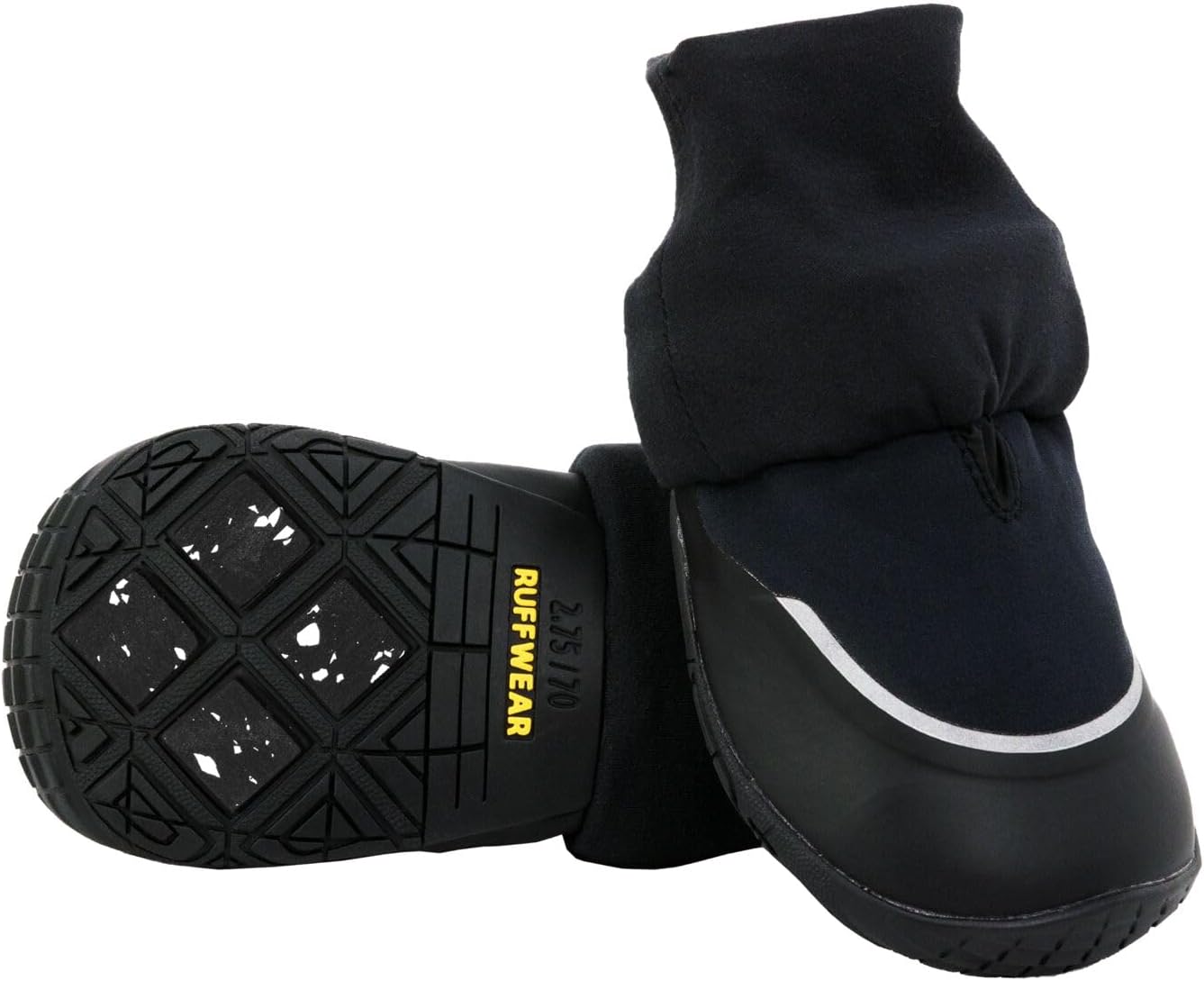
The Ruffwear Polar Trex are purpose-built winter boots that combine a weather-resistant upper with a lugged outsole for traction on ice and packed snow. You put them on using the pull-on gaiter and secure fit with a hook-and-loop strap; the gaiter helps keep snow and slush out of the closure so the boots stay on during activity. The winter-specific fiberglass lugs under each paw give a micro-cleat effect that improves confidence on slick surfaces, while the waterproof, windproof upper and reflective trim add protection and low-light visibility on cold-weather outings. They are sold in two-count sets so you can size front and rear paws independently. Expect a premium fit and durable construction appropriate for repeated cold-season use, but note these are optimized for winter traction rather than breathability or warm-weather wear and require hand washing to clean.
Best for: Buyers who want a high-quality winter boot built for traction and weather protection and who prioritize durability and secure fit for cold-season hikes and walks.
Less Ideal for: Owners who need all-season or highly breathable summer paw protection should consider lighter, more ventilated alternatives.
- Winter-specific lugged outsole for improved traction on ice and packed snow
- Waterproof, windproof upper with reflective trim for wet and low-light conditions
- Stretch gaiter plus hook-and-loop closure helps seal out snow and keep boots in place
- Sold in two-count sets so front and rear paws can be sized separately
- Designed for cold-weather traction so breathability and hot-weather comfort are limited
- Hand wash only care can be less convenient than machine-washable alternatives
Verdict: The best premium boots deliver top-tier materials, advanced comfort features, and superior durability for hunters who need long-lasting performance in demanding terrain.
Hipaw Waterproof Dog Boots Large
Best Waterproof Boots

| Target Species | Dog |
|---|---|
| Dog Breed Size | Large |
| Material Type | Waterproof Nylon, Warm Lining, Rubber Sole |
| Closure Type | Hook & Loop |
| Unit Count | 1 Count |
These Hipaw waterproof dog boots are built to shield paws from rain, slush, and light snow while keeping a secure fit during walks and hikes. They pair a soft nylon shell and warm fleece lining with an extended cuff that helps keep out moisture and debris, and adjustable hook-and-loop straps plus an elastic drawstring that tighten the boot around the ankle. The rubber outsole adds non-slip traction on wet or muddy surfaces and holds up to regular outdoor use. Machine- or hand-washable materials make them easy to clean after muddy outings, and reflective straps improve visibility on low-light walks. Expect a short break-in period for dogs not used to boots and pay attention to sizing, since a poor fit will reduce effectiveness and comfort. These are aimed at medium and large breeds and include a full set of four booties for balanced protection on all paws.
Best for: Owners who want a dependable, weather-resistant boot for medium to large dogs to use across rainy, slushy, and mild snowy conditions and who prioritize fit and traction.
Less Ideal for: People with very small dogs or owners needing heavy-duty winter boots for deep snow and extreme cold should look elsewhere.
- Waterproof nylon shell and extended cuff block moisture and debris
- Warm fleece lining provides insulation in cool weather
- Adjustable hook-and-loop straps plus elastic drawstring improve fit and retention
- Rubber non-slip sole offers traction on wet, muddy, or icy surfaces
- Machine-washable construction simplifies cleaning after outdoor use
- Sizing runs specific to breed/weight so measurement is important to avoid poor fit
- Not recommended for small breeds, limiting use to medium and large dogs
Verdict: The best waterproof boots are designed to keep feet dry during wet conditions without sacrificing breathability or traction for upland hunting.
Wilderdog Dog Booties Medium
Best Lightweight Boots

| Size | Medium |
|---|---|
| Unit Count | 1 Count |
| Closure Type | Hook & Loop |
| Included Components | Includes drawstring carry bag |
| Product Care Instructions | Machine Wash |
These Wilderdog booties are built for light, mobile use on trails and snowy surfaces where you want to protect paws without slowing a dog down. The cotton-poly upper keeps the boots breathable and light while the thin grippy rubber bottom provides traction on wet or uneven ground; double hook-and-loop straps hold them on during movement and the included drawstring bag makes them easy to stash. At about 0.7 ounces per bootie they are noticeably lighter than bulkier winter boots, which helps reduce leg fatigue on long hunts or extended hikes. Machine-washable construction makes cleanup simple after muddy outings. Expect the slim profile to offer less insulation and puncture resistance than heavyweight or reinforced hunting boots, so they are best for mobility and temporary protection rather than heavy brush, sharp rocks, or aggressive chewers.
Best for: Hunters and active hikers who prioritize mobility and low paw weight for long days on the move and need short-term protection from snow, wet ground, and slippery surfaces.
Less Ideal for: Dogs that will be traversing dense brush, rocky scree, or areas with sharp debris or for owners who need heavy-duty, highly insulated paw protection for extreme conditions.
- Very lightweight at about 0.7 ounces per boot, minimizing added weight on the paw
- Grippy rubber bottom improves traction on wet, snowy, or uneven terrain
- Double hook-and-loop straps help keep boots secure during active movement
- Breathable cotton-poly fabric reduces overheating and is machine washable
- Includes drawstring carry bag for compact storage and transport
- Slim construction offers limited insulation and less protection against sharp objects
- Not designed for heavy chewers or prolonged use in very rough terrain
Verdict: The best lightweight boots reduce fatigue on long hunts by offering a responsive, low-mass build while still providing enough protection and grip for rough ground.
Auburn Leathercraft Aussie-Style Dog Boots Large
Best Rugged/Durable Boots

| Material Type | Leather |
|---|---|
| Target Species | Dog |
| Dog Breed Size | Large |
| Product Care Instructions | Hand Wash Only |
These Australian-style leather boots are built for outdoor work and hunting dogs that encounter rough, rocky, or brushy terrain. Made from pliable natural leather, they quickly conform to each paw — including swollen or bandaged feet — and the design lets the dog's toenails protrude to help secure fit and preserve natural traction. They are lightweight and easy to carry, and the leather construction provides abrasion resistance compared with thin synthetic booties. The boots are pull-on style and intended for outdoor protection rather than long indoor wear, and they require hand washing to maintain the leather. Expect a break-in period as the leather softens and conforms, and the pull-on closure means they are not as adjustable as strap-fastened boots for very active dogs that need a tighter hold. Sold as a set of four and recommended for large-breed hunting or working dogs, these boots are a practical, traditional option when durable, leather protection is the priority.
Best for: Hunters and working-dog owners who prioritize durable, abrasion-resistant paw protection for dogs that run through brush and on rocky ground and who prefer a traditional leather build.
Less Ideal for: Owners who need quick-adjust, highly secure fastenings for extreme activity or who prefer fully waterproof synthetic boots for wet conditions should consider other styles.
- Pliable natural leather construction offers durable abrasion resistance on rocky and thorny terrain
- Conforms to swollen or bandaged paws for a secure, custom fit
- Lightweight and easy to carry in the field
- Design preserves natural traction by allowing toenails to protrude through the boot
- Pull-on closure is less adjustable than strap or hook-and-loop systems for very active dogs
- Requires hand washing and some leather care to maintain condition
Verdict: The best rugged/durable boots focus on long-term wear resistance and reinforced construction to withstand thorny cover, rocky ground, and frequent use.
PAWsay Dog Hiking Boots Size 5
Best Traction-Focused Boots

| Material Type | Polyester |
|---|---|
| Included Components | 4 x Dog Shoes |
| Size | 5# |
| Unit Count | 4 Count |
| Product Care Instructions | Hand Wash Only |
These PAWsay Dog Hiking Boots are built to protect paws during wet, icy, or rough outdoor activity while staying relatively easy to put on. The boots pair a water-resistant polyester upper and PU leather toe with an extended high-top that helps keep moisture out, and an anti-slip rubber sole with distinct tread for better grip on slick surfaces. Reflective straps and an adjustable closure improve visibility and help the boots stay put during active use, while a soft fleece lining adds warmth and comfort on cold trails. In practice they work well for hikes, snowy walks, and muddy routes where keeping paws dry and preventing slips matters, but they are not purpose-built for extreme rock scrambling or aggressive brush where reinforced toe caps or ankle support would be required. Fit requires careful measurement since improper sizing reduces traction and retention, and the polyester exterior needs hand washing rather than machine cleaning. For upland-style outings these deliver confident traction on wet and uneven ground, with the caveat that serious technical terrain may demand heavier-duty options.
Best for: Buyers who prioritize grip and wet-weather paw protection for medium to large dogs on hikes, muddy trails, and snowy upland outings where traction and visibility matter most.
Less Ideal for: Owners expecting heavy-duty rockproof boots or structured ankle support for technical climbing should consider more rugged, reinforced models instead.
- Water-resistant polyester upper and PU toe that help keep paws dry in rain and snow
- Anti-slip rubber sole with tread pattern for improved grip on wet and slippery surfaces
- Reflective straps plus adjustable closure for better visibility and a secure fit during active movement
- Fleece lining adds warmth and comfort for cold-weather outings
- Not reinforced for heavy rock abrasion or aggressive brush where a tougher shell would be preferable
- Requires hand washing care rather than machine laundering
Verdict: The best traction-focused boots feature specialized outsoles and tread patterns that maximize grip on mud, loose soil, and steep or uneven terrain common in upland hunting.
Choosing the Right Dog Boots Upland Hunting: Key Factors to Consider
Fit and Sizing Accuracy
A correct fit is the single most important factor in dog boots for upland hunting. Boots that are too loose will slip off during running, in thick cover, or when your dog leaps into brush; boots that are too tight cause rubbing and can cut off circulation. Look for brands and models that offer a wide size range and clear measuring guides so you can match paw length and width precisely.
Adjustable closures matter because even a well sized boot needs a secure way to stay on under activity. Consider trying boots at home on short walks and making small adjustments before relying on them in the field. A snug heel and secure ankle strap reduce rotation and loss while still allowing natural toe splay for traction.
Retention Systems and Closure Types
Retention systems determine how well boots remain on during high-speed activity and when moving through cover. Common options include hook-and-loop straps, quick-pull cinches, and elasticized collars. Each has tradeoffs: hook-and-loop is easy to adjust and often repairable in the field, cinches can be fast to secure but risk loosening, and elastic collars provide continuous compression but may stretch over time.
For upland hunting, choose retention systems that combine a snug ankle seal with at least one adjustable strap lower on the leg. Reinforced strap anchors and wide contact surfaces reduce pressure points and prevent straps from cutting into fur or skin while keeping the boot stable.
Sole Construction and Traction
Sole design affects grip, protection, and the dog's comfort when moving across varied terrain. Thick, rugged soles with defined tread patterns offer better protection from rocks and thorns but can add weight and reduce paw feel. Thin, flexible soles let dogs sense the ground and maintain agility, but they sacrifice puncture resistance.
Consider the typical ground you hunt on: rocky uplands call for reinforced soles with deep lugs, while grassy or soft fields benefit from more flexible soles for natural movement. Look for abrasion-resistant rubber compounds and tread patterns that shed mud and do not pack with debris.
Durability and Materials
Upland hunting exposes boots to repeated abrasion, moisture, and plant material that can quickly wear through weak fabrics. Durable materials such as reinforced synthetics, ripstop textiles, and heavy-duty rubber extend product life. Stitching quality, double-reinforced stress points, and protective overlays on toe and heel areas reduce failure risk.
Water resistance or quick-dry fabrics are useful because boots often get wet; breathable linings prevent long-term skin irritation. Evaluate how well closures are anchored and whether replacement parts or repairability are possible for extended field use.
Weight and Flexibility
Weight and flexibility influence how freely a dog moves and how quickly it tires. Heavy, stiff boots protect well but can alter gait, slow turning, and reduce scenting efficiency. Lightweight, flexible designs maintain natural movement but may compromise on puncture resistance and longevity.
Balance is key for upland hunting: boots should be light enough for sustained running and tight maneuvers yet flexible at the toe for push-off. Test boots in short exercises that simulate hunting movements to assess their real-world effect on performance.
Maintenance and Cleaning
Boots used in upland environments pick up mud, plant matter, and salt; easy cleaning extends life and prevents skin issues. Materials that tolerate rinsing and quick-dry fabrics reduce downtime between hunts. Look for boots with removable components or insoles that can be cleaned separately.
Consider how closures hold up after repeated wetting and drying. Simple designs with few small crevices and durable fasteners require less maintenance and are more reliable over a season of heavy use.
How Do I Measure My Dog's Paws Correctly for Hunting Boots?
Measure paws while your dog is standing and bearing weight, because paws spread under load. Place a sheet of paper under the paw, press gently to mimic weight, and mark the longest toe and the back of the heel before measuring the length and widest points.
Compare those measurements to the brand sizing chart and choose the size that matches the length first, then check width. If your dog is between sizes, opt for the larger size and use additional straps or socks to fine-tune the fit; cutting a small amount of internal padding is preferable to forcing a tight boot.
- Measure all four paws; front and rear paw sizes can differ.
- Measure more than once and average the results.
- Allow for toe splay when selecting length.
Can Boots Affect My Dog's Performance While Hunting?
Properly fitted boots should protect without significantly reducing mobility. If boots are too heavy or too stiff, dogs may change stride, tire sooner, or be less willing to pursue in dense cover. Lightweight, flexible soles help maintain natural gait and quick turns.
Introduce boots gradually during training so your dog learns to move confidently while wearing them. Short practice sessions, positive reinforcement, and varying terrain will help identify any performance issues before a hunt.
- Start with short walks, then progress to running and field-like obstacles.
- Use praise and treats to associate boots with positive outcomes.
What Closure Adjustments Help Prevent Boot Loss in Thick Cover?
A multi-point closure approach works best: a secure ankle seal combined with a lower strap near the paw keeps rotation minimal. Make small, incremental adjustments rather than overtightening, which can cause chafing or reduced circulation.
Check closures periodically during a hunt and resecure as needed. Some handlers add a thin elastic gaiter or lightweight sheath over the boot in extreme cover to reduce snagging without restricting movement.
- Fasten closure points in sequence: ankle first, then lower strap.
- Recheck fit after the first few minutes of activity.
How to Care for Boots After a Day in the Field
Rinse off mud and debris with fresh water and remove any loose plant matter by hand. Allow boots to air dry away from direct heat to prevent material shrinkage or glue failure. If the boots have removable liners or insoles, wash those separately to avoid odors and skin irritation.
Inspect seams, straps, and soles for early signs of wear and replace or repair parts before the next outing. Keeping a small repair kit with thread, adhesive patches, and spare fasteners in your pack can extend the usable life of boots while you are away from home.
- Avoid machine drying which can damage adhesives and fabrics.
- Store boots in a ventilated area to prevent mildew.
When Should I Use Boots Versus Letting My Dog Go Barefoot?
Consider boots when ground conditions include sharp rocks, dense brambles, hot dry ground, or cold wet surfaces that threaten paw pads. Boots are a proactive measure to prevent cuts, bruises, and lost pads that can sideline a dog for days or weeks.
However, for short outings on well-worn trails or when a dog is unaccustomed to boots, barefoot is often preferable. Use boots selectively for higher-risk terrain and slowly acclimate your dog so wearing them does not become a negative experience.
- Evaluate terrain and recent weather before deciding.
- Rotate between barefoot and booted sessions to build tolerance.
How We Chose the Best Dog Boots Upland Hunting
We prioritized real-world durability and field-focused fit when selecting boots for upland hunting. Key evaluation criteria included material toughness and abrasion resistance to handle brambles and rough ground; sole design and tread for traction on loose dirt, rocks, and wet grasses; closure and retention systems that resist loss during running and dense cover; flexibility and weight so the dog's gait and scenting ability are not impaired; and water resistance plus breathability for mixed wet-and-dry environments. We also considered sizing range and ease of adjustment so owners can achieve a secure, custom fit. Exclusions included lightweight walking or indoor-only boot designs and boots intended solely for snow or ice traction, because they do not meet the rugged demands of upland terrain. The list favors builds and features that consistently address abrasion, retention, and natural movement in the field.
Our full evaluation process is outlined in our review methodology.
FAQ
How long does it take a dog to get used to wearing hunting boots?
Adjustment time varies by dog but most will accept boots within a few short training sessions. Start with five to ten minute walks, gradually increasing duration and activity. Consistent, positive reinforcement speeds the process.
Are there boots that stay on better for running and jumping?
Boots with a combination of a snug ankle collar and a firmly anchored lower strap typically stay on better during high-speed activity. Reinforced strap attachment points and wider contact areas also reduce the chance of slippage.
Can boots protect against thorns and briars effectively?
Yes, boots with abrasion-resistant uppers and reinforced toe areas offer good protection against thorns and briars. No boot is invulnerable, so inspect boots regularly and replace them when wear compromises protection.
How do I prevent rubbing or hot spots from boots?
Ensure the boots fit correctly and are not overtightened. Use short trial sessions and check paws for friction marks after each session. Padding or a thin sock can help in the short term, but persistent hot spots indicate an improper fit.
Are waterproof boots better for upland hunting?
Waterproof boots protect paws in wet conditions but may reduce breathability and increase moisture buildup inside the boot. For mixed conditions, water-resistant, quick-dry materials often provide a good balance between protection and comfort.
Final Verdict
Prioritize secure fit, effective retention, and durable sole construction when choosing boots for upland hunting. Expect tradeoffs between protection and natural movement: heavier, stiffer boots offer more puncture resistance while lighter, flexible designs preserve agility. Test choices in training sessions that mimic hunting conditions to confirm fit and performance. Choose the boots that best match the terrain you hunt and the activity level of your dog, and be ready to adjust closures or switch designs if you notice gait changes or discomfort. With the right fit and maintenance, boots can protect paws without limiting field performance.

