

If your dog inhales meals in seconds, a purpose-built bowl can make a real difference in safety and digestion. Fast-paced eating increases the chance of choking, gagging, and uncomfortable bloating, and can also encourage regurgitation and weight-management challenges. This guide covers seven carefully shortlisted bowls designed to slow down rapid eaters, highlighting features that actually affect feeding pace and cleanup. Below you will find top picks selected for different feeding styles and household needs, with attention to flow control, stability, and cleaning convenience. Use the evaluation notes to match a bowl to your dog's size, eating habits, and your routine.
Top Picks at a Glance
| Best Overall Bowl for Fast Eaters The top all-around bowl to slow down speedy eaters | Outward Hound Fun Feeder Medium |  |
| Best Budget Bowl for Fast Eaters An affordable slow-down solution that still performs reliably | MateeyLife Slow Feeder Dog Bowls 2-Pack |  |
| Best Slow-Feed Bowl Engineered with ridges or mazes to reduce gulping speed | Outward Hound Fun Feeder Large |  |
| Best Non-Slip Bowl Weighted or rubber-backed design to prevent sliding and spills | Oiwliur Slow Feeder Bowl 2 Cup |  |
| Best Large-Capacity Bowl A bigger bowl for multi-dog households or large appetites | Oiwliur Slow Feeder Stainless Steel Bowl 5 Cups |  |
| Best Easy-Clean Bowl Simple-to-disassemble, dishwasher-safe parts for quick cleanup | Dyienocs Stainless Steel Slow Feeder 2-Pack |  |
| Best Premium Bowl Higher-end materials and design for long-term performance | LE TAUCI PET Ceramic Dog Bowl Set |  |
Outward Hound Fun Feeder Medium
Best Overall Bowl for Fast Eaters

| Capacity | 2 cups |
|---|---|
| Material Type | Plastic |
| Product Care Instructions | Dishwasher Safe |
| Recommended Uses For Product | Boredom Buster, Brain Game, Dry Food, Mental Stimulation, Wet Food |
| Dog Breed Size | Medium |
The Outward Hound Fun Feeder Medium is a maze-style slow bowl that intentionally stretches mealtime by forcing dogs to work around raised ridges and deep grooves, which can reduce gulping and digestion issues. You fill it with dry or wet food and let your dog forage through the channels; the manufacturer says it can extend eating time up to 10x compared with a standard bowl. It is made of dishwasher-safe plastic, is non-slip, and is available in a SLOWEST difficulty level for very fast eaters and flat-faced breeds. Practical benefits include easy cleaning on the top rack, a compact shape that holds a typical medium meal, and construction free of BPA, PVC, lead, and phthalates. Limitations are that the plastic can retain grease or odors over time and highly determined chewers should not be left unattended since it is not a chew toy, and very large breeds may need a larger capacity option. For most medium dogs who inhale their food, this model is a simple, low-effort way to slow feeding without complicated setup.
Best for: Buyers who want a practical, low-effort slow feeder that reliably reduces gulping for medium dogs and makes mealtime more engaging without extra accessories.
Less Ideal for: Owners looking for an indestructible bowl for aggressive chewers or those who need a much larger capacity for very large breeds should consider other options.
- Maze design and deep grooves meaningfully slow rapid eaters
- Dishwasher-safe top rack for easy cleaning
- Made without BPA, PVC, lead, or phthalates
- Non-slip base reduces sliding and spills during feeding
- Plastic material can retain grease or odors with heavy use
- Not suitable as a chew toy and can be damaged by determined chewers
Verdict: The best overall bowl for fast eaters that balances effective pace control, durable construction, and easy maintenance for most households.
MateeyLife Slow Feeder Dog Bowls 2-Pack
Best Budget Bowl for Fast Eaters

| Capacity | 2 cups |
|---|---|
| Material Type | Polypropylene |
| Included Components | 2 PCS Slow Feeder Bowl |
| Product Care Instructions | Dishwasher Safe |
| Recommended Uses For Product | Small, Medium Breeds |
These MateeyLife slow feeder bowls are a two-pack of polypropylene puzzle bowls aimed at slowing fast eaters and adding a bit of mealtime enrichment. Each shallow bowl holds roughly 2 cups and uses raised ridges and a maze layout so dogs must work around obstacles to access kibble, which typically stretches a quick meal into multiple bites and reduces gulping. The bowls have a non-slip rubber base to keep them from sliding during use and are top-rack dishwasher safe for easy cleaning. Because they are made of food-safe PP plastic they are lightweight and durable enough for regular feeding, though they are not intended as chew toys. The low-profile maze makes them suitable for medium-breed mouths but may be less challenging for very determined fast eaters or larger breeds that need larger, deeper feeders. For owners seeking an affordable, practical slow-feeding solution the set delivers clear pacing benefits and simple maintenance, while buyers wanting heavy-duty or chew-resistant options should look elsewhere.
Best for: Owners who want a low-cost, effective way to slow down mealtime for small to medium dogs and prefer easy-clean, no-frills feeders.
Less Ideal for: People seeking heavy-duty, chew-proof feeders for large or power-chewing dogs or those needing a more aggressive maze design.
- Maze pattern effectively slows eating and encourages chewing
- Holds about 2 cups, suitable for single meals for small to medium dogs
- Non-slip rubber base reduces slipping and tipping during feeding
- Top-rack dishwasher safe for easy cleaning
- Food-safe polypropylene is lightweight and resistant to wear for everyday use
- Not designed for chewing so may be damaged by strong chewers
- Low-profile design may not sufficiently challenge very fast or large-breed eaters
Verdict: The best budget bowl for fast eaters that provides meaningful pace control and decent durability without a high price tag.
Outward Hound Fun Feeder Large
Best Slow-Feed Bowl

| Capacity | 4 cups |
|---|---|
| Material Type | Plastic |
| Dishwasher Safe | Top-rack Dishwasher Safe |
| Recommended Uses For Product | Dry Food, Wet Food, Mental Stimulation |
The Outward Hound Fun Feeder is a maze-style slow bowl designed to extend mealtime for fast eaters by forcing dogs to work around raised ridges and deep grooves. You fill it like a normal bowl with dry or wet food and the pattern distributes kibble so dogs must nudge and lick to access each portion, which can stretch eating time up to roughly ten times compared with a flat dish. It is molded from dishwasher-safe plastic, rated for top-rack cleaning, and is made without BPA, PVC, lead, or phthalates, so sanitation between meals is straightforward if you run it through the dishwasher or rinse and scrub by hand. The non-slip base helps reduce sliding and spills during use. Trade-offs are that this model is plastic rather than metal, so it can show scratches over time and is not as heat-resistant or dent-proof as a metal feeder; very aggressive chewers should not be left unsupervised. For owners wanting a durable, easy-to-clean metal option this exact product is not metal, but it does deliver reliable slow-feeding performance and simple cleanup for everyday household use.
Best for: Buyers who prioritize a proven, easy-to-clean slow-feeding solution that reliably stretches mealtime for medium and large dogs and want minimal daily maintenance.
Less Ideal for: Owners specifically seeking a metal, heavy‑duty feeder for very rough use or high-heat environments should consider a true metal slow feeder instead.
- Effective maze design that significantly slows rapid eaters
- Holds up to a full large-dog meal (4 cups)
- Top-rack dishwasher safe for easy sanitation
- Non-slip base reduces sliding and spills
- Made without BPA, PVC, lead, or phthalates
- Constructed from plastic rather than metal so it is less dent- and heat-resistant
- Not intended as a chew toy and can be damaged by persistent chewing
Verdict: The best slow-feed bowl for owners who need proven obstruction patterns or compartments to force slower, safer eating.
Oiwliur Slow Feeder Bowl 2 Cup
Best Non-Slip Bowl
| Capacity | 2 cups |
|---|---|
| Material Type | Stainless Steel |
| Recommended Uses For Product | Dry Food, Wet Food, Indoor |
| Additional Features | Nonslip |
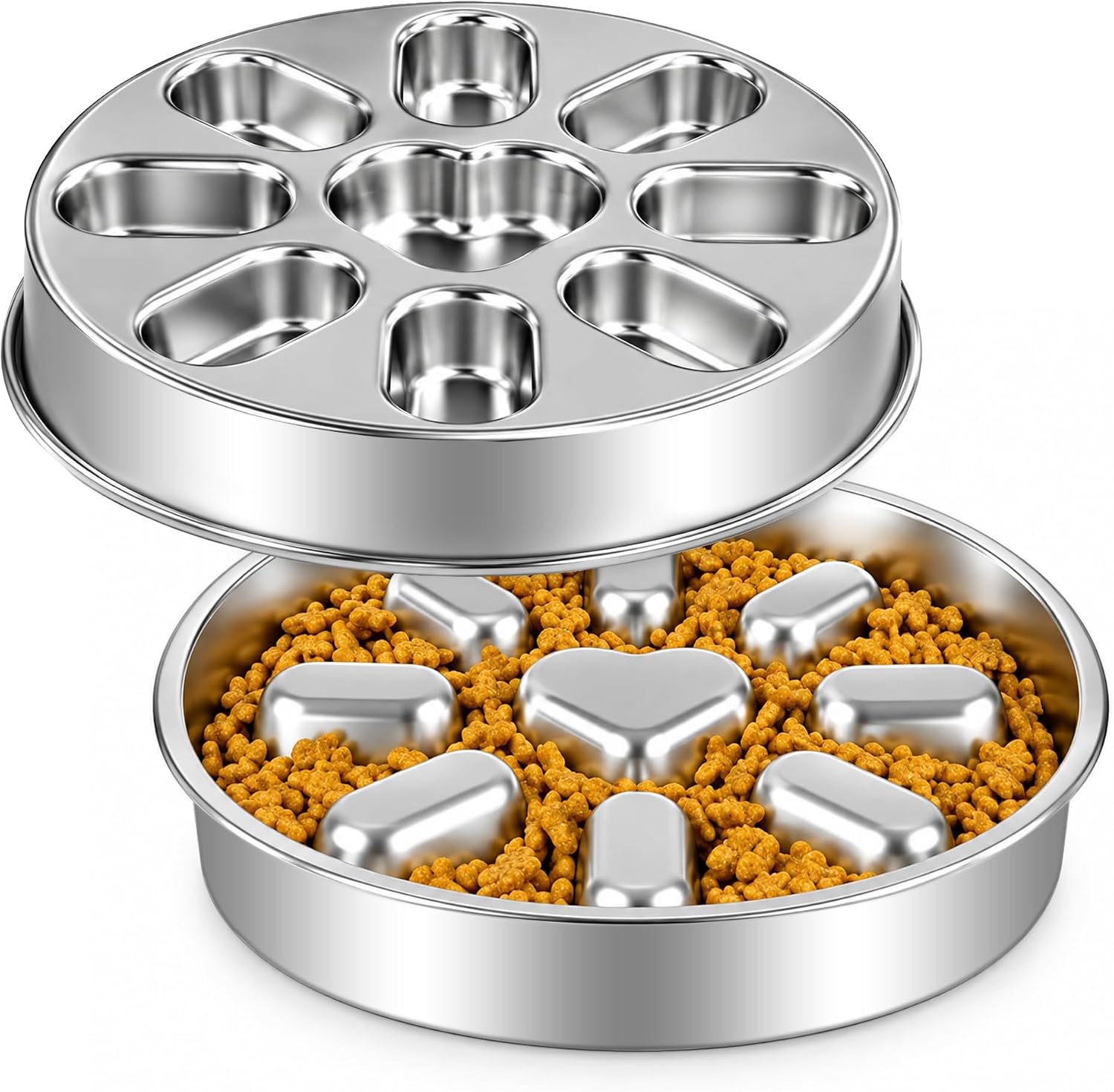
This stainless steel slow-feeder combines a raised flower-shaped maze with a silicone non-slip mat to slow fast eaters and stop bowls from sliding. You fill the 2-cup bowl with dry or wet food and the raised pattern forces dogs to work around obstacles, which spreads mealtime out and reduces gulping and choking risk. The 304 food-grade stainless construction resists rust and odors and is dishwasher safe for easy cleanup. The included silicone placemat and non-slip base greatly reduce movement on smooth floors, so dogs that paw or push at their dish make less mess. For small to medium breeds the capacity is a practical daily portion, but the compact footprint means larger dogs or multi-dog feeding will need a bigger option. The bowl is manual operation only and does not offer adjustable difficulty levels, so very aggressive gulpers may still need training or additional slowing strategies. Overall it is a sturdy, hygienic slow feeder that excels when stability and easy cleaning are priorities.
Best for: Buyers who need a stable, easy-to-clean slow feeder for small to medium dogs that tend to push or slide their bowl and who prioritize mess reduction at mealtime.
Less Ideal for: Owners of large dogs or households that need larger/multiple bowls, or those who want adjustable puzzle complexity in a slow feeder.
- Raised maze pattern slows eating without sharp edges
- 304 food-grade stainless steel resists rust and is dishwasher safe
- Included silicone non-slip mat and base keep the bowl stable on smooth floors
- 2-cup capacity fits most small and medium breed meals
- Only one size offered so not suitable for large or multi-dog households
- No adjustable difficulty settings for variable slowing
Verdict: The best non-slip bowl for fast eaters who push their dish around, offering stability that reduces mess and frustration during meals.
Oiwliur Slow Feeder Stainless Steel Bowl 5 Cups
Best Large-Capacity Bowl

| Material Type | Stainless Steel |
|---|---|
| Capacity | 5 cups |
| Additional Features | Nonslip |
| Product Care Instructions | Hand Wash Only |
| Power Source | Battery Powered |
The Oiwliur slow feeder is a stainless steel bowl shaped with internal ridges to slow a dog's eating and a rubberized non-slip base to keep it steady during mealtimes. It is intended for use with dry or wet food and water and holds up to 5 cups, so it works for single-meal portions for small to medium dogs or combined feeding for multiple smaller pets. The 304 stainless steel construction resists rust and is easy to clean by hand or in the dishwasher, which helps prevent lingering odors and staining over time. The manual operation and simple shape make it durable against chewing and rough use compared with plastic slow feeders, and the low profile helps dogs reach food while slowing their pace. Limitations are the flat, compact footprint that may not suit very large breeds that need raised feeders and the fixed internal pattern that cannot be adjusted for different slowdown levels.
Best for: Buyers who prioritize a durable, hygienic metal bowl that slows eating and is simple to clean will appreciate this product for everyday feeding of small to medium dogs or multi-pet setups.
Less Ideal for: Owners seeking an elevated feeder or an adjustable slow-feed solution for very large breeds should consider other formats designed for height or variable resistance.
- 304 stainless steel resists rust and is food-safe
- Non-slip rubber base keeps bowl stable during feeding
- 5-cup capacity handles typical single meals for small to medium dogs
- Dishwasher-safe finish makes cleaning and odor control easy
- Low, compact profile may be awkward for very large or tall dogs
- Fixed slow-feeder pattern cannot be changed to alter eating resistance
Verdict: The best large-capacity bowl for owners of big dogs or multi-dog feeders who need more volume without compromising pace-control features.
Dyienocs Stainless Steel Slow Feeder 2-Pack
Best Easy-Clean Bowl

| Material Type | Stainless Steel |
|---|---|
| Capacity | 1.25 cups |
| Number of Packs | 2 |
| Recommended Uses For Product | Slow Feeding |
These stainless steel slow feeder bowls use raised internal obstacles to break up large gulps and encourage slower, more controlled eating, which can reduce choking and aid digestion. They come as a two-pack sized for small breeds and are intended for dry kibble, wet food, and treats. The bowls are made from food-grade 304 stainless steel, so they resist chewing, scratching, and odors and can be rinsed or run through a dishwasher for quick cleaning. A weighted, non-slip base helps keep the bowl in place during meals to reduce spills and mess. Practical benefits include durable, hygienic material that avoids plastic odors, an easy interior profile that prevents trapped food, and the convenience of having a spare for travel or multi-pet homes. Limitations are that the shape and internal obstacles are targeted at small dogs so larger breeds may find the capacity and layout restrictive, and the product care notes recommend hand wash only in some places despite claims of dishwasher safe which may confuse buyers.
Best for: Busy owners who need a low-maintenance slow feeder that cleans up quickly and performs reliably for small-breed dogs, especially when they want a durable, hygienic material over plastic alternatives.
Less Ideal for: Households with medium or large dogs that need higher capacity or a different obstacle layout should look for larger slow feeders designed for bigger mouths.
- Raised internal obstacles effectively slow rapid eating to reduce choking and gulping
- Food-grade 304 stainless steel construction is durable, resistant to scratches and odors, and hygienic
- Weighted non-slip base keeps the bowl stable to limit tipping and spills
- Two-pack provides a spare for multi-pet homes or travel
- Designed and sized for small breeds so capacity and obstacle spacing may not suit larger dogs
- Some product info lists hand-wash only despite dishwasher-safe claims, creating cleaning ambiguity
Verdict: The best easy-clean bowl for busy pet owners who want effective slow-feeding features combined with parts that wash quickly and hygienically.
LE TAUCI PET Ceramic Dog Bowl Set
Best Premium Bowl

| Material Type | Ceramic |
|---|---|
| Capacity | 3.2 cups |
| Included Components | Tray |
| Product Care Instructions | Dishwasher Safe |
This ceramic two-bowl set pairs a wide food dish and a narrower water bowl on an acacia-style wooden tray to provide a stable, attractive feeding station for medium and small dogs. The food bowl has a generous opening and 3.2 cup capacity that makes it easy to serve kibble or wet food, while the shallower, narrower water bowl helps reduce splashes. Both bowls are made of high-quality, lead- and cadmium-free ceramic with a nonporous glazed finish that resists odors and is dishwasher- and microwave-safe for reheating wet food. The wooden tray keeps bowls from sliding during enthusiastic eating and adds a farmhouse look, though the tray needs hand-washing and should be kept out of prolonged wet or direct-sun exposure. Use-wise this set works well for indoor feeding, easy cleanup, and regular daily use, and the weighted feel of ceramic helps discourage bowl-chasing. It is not a specialized slow-feeder, so very determined fast eaters may still bolt food quickly compared with purpose-built anti-gulp bowls.
Best for: Owners who prioritize premium materials, easy cleaning, and an attractive, stable indoor feeding station for medium or small dogs and are willing to care for a wooden tray.
Less Ideal for: People whose dogs need dedicated slow-feed patterns or puzzle-style bowls to prevent gulping should choose a purpose-built anti-gulp feeder instead.
- High-quality ceramic construction that is nonporous and odor resistant
- Dishwasher- and microwave-safe bowls for easy cleaning and reheating
- Stable wooden tray reduces sliding and tipping during meals
- Generous bowl capacity and wide openings suited to medium and small dogs
- Not engineered as a slow-feeder, so it may not curb very fast eating
- Wooden tray requires hand-washing and is sensitive to prolonged moisture or sun exposure
Verdict: The best premium bowl for owners willing to invest in superior materials, refined slow-feed engineering, and enhanced durability for frequent use.
Choosing the Right Dog Bowl Fast Eater: Key Factors to Consider
Speed-reduction Mechanism
How the bowl physically slows a dog matters more than marketing claims. Look for internal walls, raised ridges, or maze-like channels that force the dog to take smaller bites or work around obstructions. Those features lengthen the time spent per bite and reduce the chance of gulping large mouthfuls.
Different mechanisms suit different eating styles. For dogs that lap quickly, shallow partitions may be enough; for aggressive gulpers, more pronounced barriers or center domes encourage chewing. Consider whether the mechanism requires the dog to change its head angle or use the tongue more, since that behavior change is what actually slows intake.
Bowl Capacity and Portion Control
Capacity should match your dog's normal meal size to avoid overfilling, which defeats the slow-down effect. Smaller, segmented compartments help you portion food precisely and reduce the temptation for a dog to shove its nose into a large pile.
Also consider whether the bowl supports wet and dry food equally well. Some slow-feed geometries trap wet food in crevices or make it harder to clean, so think about your usual meal type when selecting capacity and compartment layout.
Stability and Anti-slip Design
A bowl that slides or tips will frustrate both owner and dog and can make feeding more hazardous. Anti-slip bases, rubber rings, or wider footprints help keep the bowl in place during vigorous eating. Low-profile bowls with broad bases are generally more stable for heavy chewers.
If your dog pushes the bowl while eating, choose models with added weight or non-slip materials. Consider whether the bowl will be used on tile, hardwood, or carpet, since surface interaction affects slip resistance.
Material Safety and Durability
Materials matter for hygiene and longevity. Stainless steel resists bacteria, does not retain odors, and stands up to heavy use. High-quality ceramics are stable and easy to clean but can chip if dropped. Food-safe plastics are lightweight and inexpensive but can scratch and harbor bacteria if not well maintained.
Check for BPA-free labeling on plastic products and prefer non-porous surfaces when possible. Durability influences how long the slow-feed features remain effective; warped or cracked interiors defeat the design intent and can create sharp edges.
Cleaning and Maintenance
Frequent cleaning prevents bacterial buildup and keeps the slow-feed features working. Bowls with wide openings, removable inserts, or dishwasher-safe certification make maintenance straightforward. Intricate mazes or tiny channels can trap food and require hand scrubbing, which may be impractical for daily use.
Also consider stain and odor resistance, and whether replacement parts are available. For owners who feed wet food regularly, prioritize easily disassembled designs to maintain hygiene.
Suitability for Your Dog's Size and Feeding Habits
Match bowl geometry to your dog's face shape and size. Long-nosed breeds can access deep cavities differently than flat-faced breeds, so a design that slows a beagle may be ineffective for a bulldog. Puppies and small dogs need shallower, lower-obstruction bowls; large breeds need larger compartments and sturdier construction.
Observe your dog's feeding behavior before choosing: do they scoop with their tongue, bite directly, or shove their head in? That behavior will determine which slow-feed mechanism will work best.
How Do Slow-feed Bowls Actually Reduce Swallowing Speed?
Slow-feed bowls alter the mechanics of eating so that a dog cannot simply shovel large mouthfuls in a single motion. By introducing barriers, raised centers, or segmented chambers, bowls force dogs to take smaller, more deliberate bites or to use the tongue more actively, which naturally reduces intake rate.
The change in head angle and bite pattern also encourages chewing rather than gulping. Over time, repeated use of such bowls can help train a dog to eat more moderately, but the immediate benefit is reduced risk of choking and decreased rapid ingestion that contributes to digestive upset.
- Barriers encourage smaller bites
- Segments distribute food to force slower access
- Raised centers change head position and bite mechanics
Will a Slow-feed Bowl Help with Bloat or Gastric Issues?
Using a slow-feed bowl reduces the speed of ingestion, which lowers the chance of swallowing excessive air and may reduce the intensity of digestive distress for some dogs. However, bloat and serious gastric conditions have multiple contributing factors, and a bowl alone cannot eliminate risk.
If your dog has a history of severe gastric problems, combine slow-feed bowls with other best practices such as controlled portion sizes, feeding smaller, more frequent meals, and consulting with a veterinarian for tailored guidance.
- Slower eating can reduce air swallowing
- Bowl is one component of a broader risk-reduction strategy
How to Choose the Right Slow-feed Design for Your Dog
Start by observing how your dog eats. If they lap rapidly, look for shallow partitions and textured surfaces that disrupt tongue motion. If they try to bite large clumps, choose a bowl with pronounced internal walls or a raised center to break food into smaller access points.
Also factor in your cleaning habits and feeding environment. If you need a low-maintenance option, select models with removable parts or smooth interiors that can be washed in a dishwasher.
- Match obstacle type to eating behavior
- Balance cleaning needs with the complexity of the design
Are Raised or Weighted Bases Worth It for Fast Eaters?
Raised bases can help some dogs by improving comfort and reducing neck strain, which in turn can affect how they approach meals. Weighted or non-slip bases are primarily about preventing movement and tipping during vigorous feeding, which preserves the integrity of slow-feed features.
If your dog pushes the bowl or you have a slippery floor surface, choose a model with a heavier base or reliable anti-skid material to keep feeding consistent and safe.
- Raised bases aid posture for some breeds
- Weighted bases prevent tipping and maintain slow-feed effectiveness
Practical Tips to Introduce a Slow-feed Bowl
Introduce the new bowl gradually by offering a few supervised meals, especially with anxious or food-motivated dogs. Start with familiar food and avoid overly large first servings so your dog can learn the new access pattern without frustration.
If your dog seems confused, mix short supervised training sessions where you reward calm behavior at the bowl. Consistency matters: give the bowl several meals before judging whether it suits your dog's style.
- Supervise the first few uses
- Use small portions initially to build confidence
Cleaning Hacks to Keep Slow-feed Bowls Sanitary
Soak intricate bowls in warm soapy water immediately after meals to loosen trapped food before scrubbing. Use a small brush or bottle brush to reach into channels and remove residue efficiently.
Rotate bowls if you have more than one so you can deep-clean between uses, and follow manufacturer guidance for dishwasher-safe components when available to simplify maintenance.
- Soak promptly to loosen trapped food
- Use small brushes for channels and crevices
How We Chose the Best Dog Bowl Fast Eater
To assemble this list we applied practical, pet-owner oriented filters that focus on real-world performance and safety for dogs that eat quickly. We prioritized designs that physically interrupt or lengthen the eating process, looking for internal obstructions, raised partitions, or flow-restricting geometry proven to reduce bite speed. Stability was assessed by examining base footprint and anti-slip features so bowls resist tipping and spilling during frenzied meals. Cleaning and hygiene were another core filter: bowls with dishwasher-safe parts, removable inserts, or non-porous materials scored higher because residue and bacteria buildup are common with frequent feedings. Material safety and durability were considered, favoring food-safe plastics, stainless steel, and ceramic options that resist chipping and odor. We also evaluated portioning flexibility and compatibility with common feeders or mats to suit different dog sizes. Excluded from consideration were designs that rely solely on timing or treat-dispensing toys without altering how food is accessed, and any bowls lacking clear cleaning guidance or made from untested low-quality materials. The final list balances safety, daily usability, and maintenance requirements for owners managing fast eaters.
Our full evaluation process is outlined in our review methodology.
FAQ
Can a slow-feed bowl stop my dog from gaining weight?
A slow-feed bowl can help by reducing overeating that results from rapid consumption, but weight control also depends on portion size, caloric density of food, and activity level. Use the bowl together with portion control and exercise for best results.
Are slow-feed bowls safe for puppies?
Many slow-feed bowls are suitable for puppies but choose shallower designs with gentle obstructions to avoid frustration. Monitor young dogs to ensure they can access food without strain and consult your veterinarian about portion sizes for growth.
How often should I clean a slow-feed bowl?
Clean slow-feed bowls after every meal when possible, especially if you feed wet food. At minimum, rinse and scrub daily and perform a deeper wash several times per week to prevent bacteria buildup in crevices.
Will my dog learn to beat the slow-feed design?
Some dogs adapt to a new bowl over time, but many will still eat more slowly than before. If a dog consistently defeats the mechanism, try a different obstruction style or combine the bowl with feeding routines that limit how much they can access at once.
Is stainless steel better than plastic for slow-feed bowls?
Stainless steel is more resistant to scratching and odor retention, making it a durable hygienic choice. High-quality plastics can work well if they are food-safe and easy to clean, but they may degrade faster and retain odors if scratched.
Final Verdict
Choose a slow-feed bowl that matches your dog's bite mechanics and your household routine. Prioritize a design that physically forces smaller bites, a stable base that resists tipping, and materials that are easy to clean. Expect to combine the bowl with portion control and feeding schedule changes for the best outcomes. The right slow-feed bowl will reduce the immediate risks associated with rapid ingestion and help encourage healthier mealtime habits over time. Focus on mechanism, cleanliness, and fit for your dog's size to pick the most practical option.

