

Feeding a blind dog can be simpler and less stressful when you choose a bowl designed for stability and touch-based guidance. The right bowl reduces spills, helps the dog locate food by scent and texture, and makes mealtime predictable for both of you. This guide highlights seven shortlisted bowls that prioritize non-slip bases, clear tactile cues, and easy-clean materials. We evaluated practical features like how a bowl steadies on different floors, how it supports the dog's natural sniffing behavior, and how simple it is to maintain. Read on for the features that matter and tips for making mealtime easier for a blind dog.
Top Picks at a Glance
| Best Overall Bowl The best all-around choice for most blind-dog owners | PETKIT Elevated Stainless Steel Bowl Set |  |
| Best Budget Bowl A low-cost, reliable option that still performs well | Loving Pets Bella Bowl Medium |  |
| Best Premium Bowl A higher-end pick with upgraded materials and features | Fluff Trough Elevated Dog Bowl |  |
| Best Non-Slip Bowl Designed to stay put during mealtime without sliding | PEGGY11 Stainless Steel Dog Bowl 3.8 cup (2-pack) |  |
| Best Elevated Bowl Raised feeding to improve posture and easier access | COMESOON Elevated Dog Bowls DB-W01 |  |
| Best Spill-Proof Bowl Built to contain messes and reduce accidental spills | Petmate No Spill Bowl |  |
| Best Large-Capacity Bowl A bigger bowl for large dogs or multi-meal portions | Amazon Basics Stainless Steel Dog Bowl 38oz |  |
PETKIT Elevated Stainless Steel Bowl Set
Best Overall Bowl

| Material Type | Stainless Steel |
|---|---|
| Capacity | 275 ml |
| Power Source | Manual |
| Recommended Uses For Product | Indoor, Outdoor |
The PETKIT elevated bowl set pairs two 304 stainless steel bowls with a sturdy plastic base that holds them at either a flat or 15 degree tilt to reduce neck strain and minimize vomiting. Each bowl snaps into the base and is removable for dishwasher cleaning or hand washing, which makes daily sanitation straightforward. The base has non-slip silicone pads and a lip that catches spilled food, helping keep floors cleaner for pets that tend to scatter kibble. The stainless construction is rust resistant and recommended by veterinarians, so it stands up well to frequent use and cleaning. Capacity is modest at 275 ml per bowl, so it is best for small breeds or for wet food and portioned meals rather than a heavy daily supply for large eaters. The manual, tool-free angle adjustment is practical, but taller or large-headed breeds may prefer a higher single-dish stand for posture. Overall, this set is durable, easy to clean, and thoughtfully designed for small dogs and most cats who need a slightly elevated, hygienic feeding setup.
Best for: Owners who prioritize a durable, hygienic stainless steel feeding solution for small dogs or French bulldogs that eat modest portions and need a low elevated, easy-to-clean bowl.
Less Ideal for: People with large-breed dogs or owners who need high stands and large-capacity bowls for heavy daily feeding.
- 304 stainless steel bowls are durable, rust resistant, and dishwasher safe
- Removable bowls and simple angle locking make cleaning and repositioning easy
- Non-slip silicone pads and spill lip keep the base stable and protect floors
- 15 degree tilt option reduces neck strain and can help with vomiting or messy eaters
- 275 ml bowl capacity is small for medium or large dogs
- Base height is modest and may not suit wide-chested or very tall breeds
Verdict: The best overall bowl balances stability, accessibility, ease of cleaning, and size options to suit most blind dogs and their daily feeding routines.
Loving Pets Bella Bowl Medium
Best Budget Bowl

| Material Type | Rubber, Stainless Steel |
|---|---|
| Capacity | 1.7 pounds |
| Operation Mode | Manual |
| Product Care Instructions | Dishwasher Safe, Remove rubber ring before placing in dishwasher |
The Loving Pets Bella Bowl is a simple, attractively finished stainless steel pet bowl that pairs a polished poly-resin exterior with a removable soy-based rubber ring to keep the bowl from sliding and tipping during meals. It is intended for everyday feeding and water use and works well on hard floors or on a pet mat where movement and spill prevention matter. The stainless steel interior resists rust and odors and the bowl is dishwasher safe after removing the rubber base, so cleanup is quick for busy households. The bowl is lightweight and available in multiple colors, making it an easy low-cost swap-in for most feeding stations or for travel. Limitations are its modest capacity and light weight compared with heavy, weighted bowls, so very determined nosers or large dogs that push dishes hard may still nudge it; also the poly-resin exterior can chip if subjected to rough handling. For owners wanting a low-price, easy-to-clean water bowl that mostly stays put, this is a practical choice.
Best for: Cost-conscious owners who need a hygienic, easy-to-clean water or food bowl that stays mostly in place for everyday indoor use.
Less Ideal for: Owners of large, powerful dogs that repeatedly shove bowls or households that need an ultra-heavy, anti-tip feeder should consider heavier, weighted alternatives.
- Stainless steel interior resists rust and does not hold odors
- Removable soy-based rubber ring keeps bowl stable and reduces spills
- Dishwasher safe (remove rubber ring) for fast, hygienic cleaning
- Poly-resin exterior gives a stylish finish and multiple color options
- Relatively light weight compared with weighted bowls, so very strong pushers can still move it
- Poly-resin exterior can chip if dropped or handled roughly
Verdict: The best budget bowl gives owners a dependable, affordable feeding solution with enough stability and durability for everyday use with a blind dog.
Fluff Trough Elevated Dog Bowl
Best Premium Bowl

| Material Type | Plastic, Silicone |
|---|---|
| Capacity | 5 cups |
| Dishwasher Safe | Yes |
| Additional Features | Adjustable, Dishwasher Safe, Lightweight |
The Fluff Trough Elevated Dog Bowl is a raised feeding stand with a removable silicone bowl insert meant to make meals easier for flat-faced and toothless dogs by lifting food closer to mouth level and offering a shallow, ergonomic eating surface. You set the silicone insert into the plastic stand and fill it with dry or wet food; non-slip feet hold the unit steady during feeding and both pieces are dishwasher safe for easy cleanup. The shallow silicone insert and elevated stance reduce bending and strain, which helps pets that have limited neck mobility or missing teeth eat more comfortably and breathe more easily while feeding. Construction combines a lightweight plastic stand with a soft, food-safe silicone liner that is removable for washing, but the bowl is not metal and may be less chew-resistant than stainless options. Capacity and height suit small to medium breeds, so very large dogs will need a bigger model. For a premium-feeling elevated feeder that prioritizes an easy-to-access, gentle eating surface for a toothless dog, this unit delivers practical benefits with simple maintenance.
Best for: Owners of small to medium flat-faced or toothless dogs who prioritize an easy-to-access, shallow feeding surface and low-maintenance cleaning.
Less Ideal for: People with large, powerful chewers or owners seeking a heavy-duty stainless steel feeder for outdoor use should consider a more robust, larger bowl instead.
- Elevated design reduces neck strain and eases breathing during meals
- Removable food-safe silicone insert provides a shallow, gentle eating surface
- Dishwasher-safe components make cleaning straightforward
- Non-slip feet help keep the feeder stable while pets eat
- Designed specifically with flat-faced small to medium dogs in mind
- Plastic stand and silicone insert are less chew-resistant than stainless steel alternatives
- Sized for small to medium breeds so it may be too low or small for large dogs
Verdict: The best premium bowl offers superior build quality, enhanced stability, and thoughtful design details for owners willing to invest in long-term performance and comfort for a blind dog.
PEGGY11 Stainless Steel Dog Bowl 3.8 cup (2-pack)
Best Non-Slip Bowl

| Capacity | 3.8 cups |
|---|---|
| Material Type | Silicone, Stainless Steel |
| Included Components | 2 x Stainless Steel Pet Bowls |
| Recommended Uses For Product | Multiple Pets |
These PEGGY11 stainless steel bowls are basic, durable feeders intended for everyday meals and water. Each bowl holds about 3.8 cups and has a wide, low profile that sits stably on the floor while the silicone ring on the underside reduces sliding and noise on smooth surfaces. The bowls are dishwasher-safe and their smooth stainless interior rinses clean easily, which helps with hygiene and rust resistance compared with coated or painted options. They stack for compact storage and are sold as a two-pack so you can keep food and water separate. Limitations are minimal but notable: the shallow, wide shape suits small to medium dogs better than very large breeds, and the silicone bottom may wear over long-term heavy use or after repeated dishwasher cycles. For buyers who want a simple, long-lasting stainless feeding bowl that is easy to clean, these deliver reliable performance without extra features.
Best for: Buyers who prioritize a hygienic, durable everyday bowl that cleans easily and stays stable during meals, especially for small to medium dogs.
Less Ideal for: Owners needing very large-capacity or elevated bowls for giant breeds or those who want built-in slow-feeding features should look elsewhere.
- Durable stainless steel surface resists rust and is easy to sanitize
- Silicone nonslip base reduces sliding and feeding noise on smooth floors
- Dishwasher-safe design and smooth interior simplify cleaning
- Stackable two-pack for compact storage and having separate food and water bowls
- Capacity and shallow profile may be small for very large dogs
- Silicone nonslip ring can degrade over very long-term heavy use or frequent dishwasher cycles
Verdict: The best non-slip bowl is ideal for blind dogs who rely on consistent placement, featuring strong grip or suction to prevent movement and reduce mealtime frustration.
COMESOON Elevated Dog Bowls DB-W01
Best Elevated Bowl

| Included Components | 2 Stainless Steel Bowls + Dog Bowl Stand |
|---|---|
| Capacity | 50 oz per bowl |
| Material Type | Acrylonitrile Butadiene Styrene, Stainless Steel |
| Adjustable | 4 height settings |
The COMESOON Elevated Dog Bowls DB-W01 is a foldable raised feeder that pairs two thick 50 oz stainless steel bowls with a four-position adjustable stand so you can position food and water at a comfortable eating height. It is used as a home feeding station for medium and large dogs and supports shoulder heights roughly in the 6"–17" range by changing the stand between 3.7", 9.2", 10.75", and 12.36" settings. The stainless bowls are dishwasher safe and detachable for quick cleaning, and the stand includes noiseless rubber strips and anti-slip feet to reduce sliding and mealtime noise. The unit requires no assembly, folds flat for travel, and has rounded corners to reduce bumping. Limitations to consider are that the stand and bowls are sized toward medium/large breeds so small dogs may find the lowest setting high, and the plastic stand, while convenient and collapsible, will not match the long-term rigidity of heavy metal stands for very enthusiastic chewers or very large dogs that push hard on bowls.
Best for: Buyers seeking a practical everyday raised feeder that balances adjustable ergonomics, easy cleaning, and portability for medium to large household dogs.
Less Ideal for: Owners who need an ultra-heavy-duty metal stand for very large powerful dogs or who primarily feed very small breeds should consider other specialized options.
- Four height settings to fit growing dogs and a range of shoulder heights
- Thick 50 oz stainless steel bowls that are dishwasher safe and durable
- Foldable, no-assembly stand that collapses for travel or storage
- Non-slip foot pads and silent rubber strips keep the feeder stable and quiet during meals
- Stand is plastic-based so it is less rigid than heavy metal stands under extreme force
- Lowest height may still be too tall for many small-breed dogs
Verdict: The best elevated bowl is for owners who want a raised feeding height to help blind dogs reach food more comfortably and maintain a consistent head position while eating.
Petmate No Spill Bowl
Best Spill-Proof Bowl
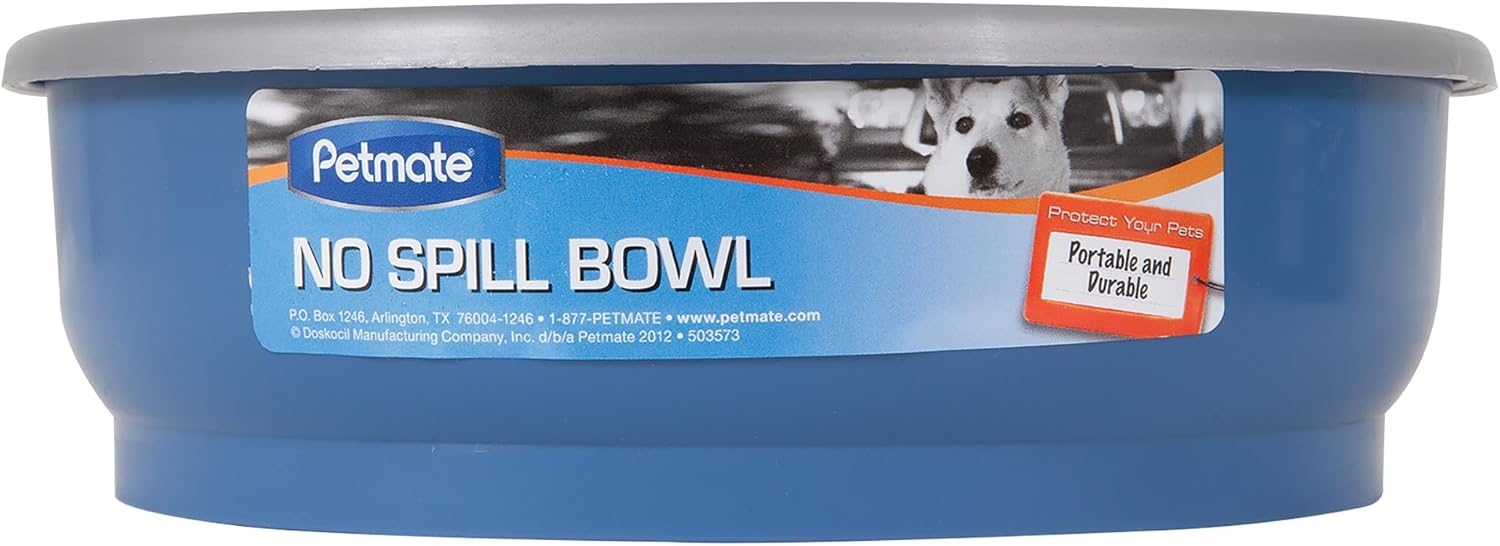
| Capacity | 3 pounds |
|---|---|
| Material Type | Plastic |
| Operation Mode | Manual |
| Additional Features | Spill Proof |
The Petmate No Spill Bowl is a simple, low-cost bowl intended to keep water and food from spilling during travel or everyday use. Its shallow, wide design with a raised rim and splash-proof lid helps contain splashes and soggy floors, and the heavy-duty plastic construction feels durable for regular handling. The bowl is dishwasher-safe and has an open top for easy cleaning, which makes maintenance straightforward for busy households. It holds roughly six cups (48 ounces), so it suits medium to large dogs for a single meal or water session, and the included lid helps when packing it for car trips or crate use. On the downside, the spill resistance is basic rather than fully leakproof, so very enthusiastic drinkers or dogs who paw at bowls may still cause messes, and the plastic surface can show scratches over time. For the price this bowl delivers dependable performance and easy upkeep, especially for owners who need a portable, no-frills solution rather than a heavy-duty anti-spill system.
Best for: Buyers wanting a reliable, inexpensive bowl for everyday hydration or travel who prioritize easy cleaning and basic spill control over advanced anti-spill engineering.
Less Ideal for: Owners of very messy drinkers who need a fully leakproof or weighted anti-tip bowl should look at specialized heavy-duty alternatives.
- Splash-proof rim and lid help reduce spills during travel or crate use
- Durable heavy-duty plastic construction suitable for frequent use
- Dishwasher-safe and open-top design for easy cleaning
- Generous 48 oz capacity fits medium to large dogs for a single serving
- Not fully leakproof for dogs that paw or play with their water
- Plastic can scratch and show wear over time
Verdict: The best spill-proof bowl minimizes mess from nosing or sudden movement, keeping food and water contained and making cleanup easier for households with blind dogs.
Amazon Basics Stainless Steel Dog Bowl 38oz
Best Large-Capacity Bowl

| Material Type | Rubber, Stainless Steel |
|---|---|
| Capacity | 907.18 g |
| Product Care Instructions | Dishwasher Safe |
| Number of Items | 2 |
These Amazon Basics stainless steel bowls are basic, durable bowls intended for everyday feeding and watering. Each bowl holds up to 38 ounces at the rim (recommended fill lower for spills) and is made from rust-resistant stainless steel that does not retain odors, so it cleans up easily after wet food or water. A rubber ring on the base keeps the bowl from sliding and helps protect floors during messy eaters. They are dishwasher-safe, which simplifies sanitizing and regular maintenance for owners focused on hygiene. The set includes two identical bowls, which is convenient for separating food and water or keeping a spare while one is in the dishwasher. The design is simple with no-frills construction, so buyers looking for raised stands, slow-feed features, or decorative finishes should look elsewhere. Overall this is a practical, low-cost stainless steel option that emphasizes easy cleaning and steady placement rather than specialty feeding functions.
Best for: Owners who prioritize a hygienic, long-lasting bowl that is easy to clean and stays put during use, and who want a simple, functional pair for food and water.
Less Ideal for: People seeking specialty bowls such as elevated feeders, slow-feed inserts, or decorative finishes should consider other options.
- Rust-resistant stainless steel resists odors and is easy to sanitize
- Dishwasher-safe for straightforward, frequent cleaning
- Rubber non-slip base keeps bowls stable and protects floors
- Two-bowl set lets you keep food and water separate or have a backup
- Flat, low design may allow more tipping for very enthusiastic eaters
- No elevated or anti-gulp features for dogs with neck or digestion concerns
Verdict: The best large-capacity bowl suits larger blind dogs or owners who prefer fewer refills, offering ample volume while remaining stable and easy to access.
Choosing the Right Dog Bowl Blind Dog: Key Factors to Consider
Stability and Anti-slip Base
A stable bowl minimizes tipping, spillage, and the need to chase scattered food. Look for a broad, low-profile design that lowers the center of gravity and reduces wobble when a dog pushes with its nose. A robust non-slip base or heavy material helps the bowl stay put on smooth surfaces like tile or hardwood, while a balanced shape prevents easy rotation. Stability matters more for a blind dog because they rely on consistent tactile feedback; a bowl that shifts changes the location of food and increases anxiety.
Some bowls incorporate removable silicone skirts or rubber rings to increase traction; these are helpful because they can be replaced if they wear out. In multi-surface homes, test the bowl on the surfaces where the dog usually eats to confirm grip. Overall durability of the base should be considered since worn anti-slip material will reduce effectiveness over time.
Tactile Cues and Raised Rims
Tactile features are essential for helping a blind dog locate and orient to the bowl. Raised rims, textured edges, or a slightly elevated lip give the dog a consistent physical landmark to find the food surface with their muzzle. These features also guide the approach angle, making it easier for the dog to learn where to place its head and how far to reach for food or water.
Choose a bowl where tactile cues are pronounced but comfortable for the dog's snout. Avoid sharp edges or thin lips that could cause whisker fatigue. For dogs that feed from the side, a rim with a gentle slope can be easier to use than a steep lip. Over time, consistent tactile landmarks reduce searching behavior and speed up independent feeding.
Material and Ease of Cleaning
Bowl material affects hygiene, scent retention, and longevity. Nonporous materials like stainless steel and certain ceramics resist odor buildup and are easy to sanitize, which is important because residual smells can either help or confuse a blind dog. Plastic tends to hold odors and can scratch, creating crevices for bacteria, while higher-quality glazed ceramics and stainless steel are less likely to retain scent and are simpler to clean.
Consider how frequently you will wash the bowl and whether it needs to be dishwasher-safe. Removable inserts that can be taken out and cleaned separately are convenient. Also evaluate chip resistance and whether the finish will remain smooth after extended use, since rough spots can trap food and smell.
Shape and Depth
The bowl's shape and depth influence how easily a blind dog can access food and water. Shallow, wide bowls reduce the need for deep snout insertion and are often better for dogs with short muzzles or dental sensitivity. Deeper, narrower bowls can be fine for some dogs but may require more precise head placement, which can be challenging for a blind dog learning the bowl's location.
Think about the dog's feeding style: do they push food around, scoop with their tongue, or use their snout to retrieve kibbles? Match the bowl profile to that behavior. Also factor in the amount of food typically served; for larger portions or multiple meals without immediate washing, choose a size that keeps the food surface within comfortable reach.
Weight and Portability
Weight affects a bowl's tendency to move during feeding and how easy it is for you to clean or relocate. Heavier bowls resist being nudged or tipped, which helps keep a blind dog's feeding area consistent. However, very heavy bowls can be impractical if you need to move them frequently for cleaning or storage.
Balance weight with convenience. Removable weighted bases or bowls with sturdy non-slip attachments offer compromise: they stay stable in use but can be separated for washing. If you travel with your dog or need to reposition the bowl often, select materials and designs that make carrying manageable without sacrificing on-floor stability.
Noise and Sensory Feedback
Auditory and tactile feedback can help a blind dog locate the bowl and understand that food or water is present. Bowls that make predictable, low-level sounds when the dog nudges them or when kibble lands can reinforce location learning. Avoid designs that clang loudly or produce startling noises that could make the dog wary.
Consider pairing a bowl with subtle sound cues during training, such as tapping the rim before placing food to create a reliable association. Also think about texture underfoot or matting that provides additional tactile reference points near the bowl. These sensory elements should be consistent and gentle, not intrusive.
How Do I Teach a Blind Dog to Find Its Bowl?
Start by creating a consistent feeding routine and location. Place the bowl in the same spot every time and offer small, frequent meals while using a short, calm cue word or a gentle tap on the bowl's rim before feeding. The physical tap becomes an auditory and tactile marker that the dog can associate with food being available.
- Use short training sessions with high-value treats to reinforce approach behavior.
- Pair a gentle sound cue with the tactile landmark of the rim until the dog reliably orients to the bowl.
- Gradually increase the interval between cues to encourage independent finding once the dog shows consistent behavior.
Should I Use a Mat or Other Landmarks Around the Bowl?
Yes. A textured mat or a low-profile rug under the bowl provides an additional tactile reference that a blind dog can feel with its paws and snout. Mats also protect floors from spills and reduce bowl movement when paired with a non-slip base. Choose a mat with a distinct edge and consistent texture so it becomes a reliable landmark.
- Place the mat so that its border aligns with the preferred approach path.
- Avoid mats that bunch or slide; they should lie flat and be easy to clean.
- Consider using scent markers, such as a small dab of safe food scent near the bowl, only during training and not as a long-term dependency.
What Bowl Placement Works Best in Multi-pet Homes?
In homes with multiple pets, separate the blind dog's bowl from other animals' feeding areas to minimize competition and anxiety. Position the bowl where the blind dog can approach from a consistent side without being blocked or startled by other pets. If space allows, create a small alcove or corner that offers clear approach lines and reduces foot traffic.
- Feed the blind dog at a slightly different height or use a distinctive mat to differentiate its area.
- Supervise feeding until the dog reliably eats without interference.
- If another pet is food-driven, stagger mealtimes or use physical barriers briefly until the blind dog is confident.
How to Maintain Hygiene and Reduce Scent Confusion
Regular cleaning is essential because lingering food odors can either help or confuse a blind dog. Wash bowls after each meal when possible, and deep-clean them periodically to remove any food residue. If you use scent cues during training, avoid multiple competing smells around the feeding area that might mask the bowl's scent profile.
- Choose nonporous materials that resist odor retention.
- Rinse and dry bowls promptly to prevent bacterial growth.
- Rotate between two bowls if you do not wash immediately after each meal so one is always clean and neutral-smelling.
When Might a Raised or Elevated Bowl Help?
An elevated bowl can reduce neck strain and make it easier for some dogs to access food while maintaining a consistent head position. For blind dogs with mobility issues or large breeds, a modest elevation can improve posture and reduce awkward reaching. However, the elevation should still provide clear tactile cues on the rim and should not increase the likelihood of tipping.
- Match elevation height to the dog's shoulder and neck comfort.
- Ensure the elevated platform has a non-slip top and does not create extra movement during feeding.
- Avoid excessive height that changes the sensory relationship to the floor landmarks the dog uses.
How We Chose the Best Dog Bowl Blind Dog
Our shortlist was built around features that directly affect a blind dog's ability to eat independently and without stress. We prioritized stability measures such as wide, low centers of gravity and aggressive non-slip bases because these reduce the chance of tipping and food spillage during feeding. Tactile guidance earned significant weight; we favored bowls with raised rims, textured edges, or contrast in height that a dog can learn to use as a landmark. Ease of cleaning was another primary criterion, including materials that resist odor and can be sanitized by hand washing. Durability and safe, non-toxic materials were required to ensure long-term use in everyday conditions. We excluded bowls that relied solely on visual cues, complex electronics, or fragile components that could fail in normal pet households. For each candidate we considered real-world fit: how the bowl behaves on tile, wood, and carpet, and whether it supports consistent sniffing and approach angles. Final picks balanced practical safety, predictable tactile cues, and simple maintenance rather than novelty features.
Our full evaluation process is outlined in our review methodology.
FAQ
how long does it take a blind dog to learn where the bowl is?
It often depends on the dog's prior experience and training, but many dogs learn within a few days of consistent routine and cues. Short, repeated sessions with sound and tactile markers speed learning. Some dogs may take longer if they are anxious or adjusting to other changes in their environment.
are certain bowl materials better for scent detection?
Nonporous materials like stainless steel and glazed ceramic usually hold less residual odor, making them easier to keep neutral between meals. Mild scent cues can help during training, but avoid porous plastics that retain odors and may confuse the dog over time.
can a blind dog eat from a raised feeder safely?
Yes, many blind dogs can use raised feeders safely, especially if they have mobility issues. Keep the height modest, ensure the feeder is stable, and retain tactile landmarks like a raised rim so the dog can find and orient to the bowl reliably.
what should i do if my blind dog pushes the bowl around a lot?
Try a heavier bowl or one with a stronger non-slip base, add a textured mat, or use a removable rubber ring to increase traction. Also reinforce approach and feeding cues so the dog visits the bowl more deliberately rather than nosing it around out of uncertainty.
is it okay to use scent markers to help my blind dog find food?
Scent markers can be useful as a short-term training aid but should not become the only method of locating food. Use mild, consistent scent cues during early training and phase them out as the dog learns to rely on tactile and routine landmarks.
Final Verdict
Prioritize stability, tactile landmarks, and easy cleaning when choosing a bowl for a blind dog. The best choices keep the bowl in place, provide clear physical cues a dog can learn, and resist lingering odors that could confuse location. Balance features such as weight, shape, and material to match your dog's muzzle shape, feeding style, and mobility. With consistent placement and a short cueing routine, most blind dogs learn to feed confidently and independently, so focus on predictable, durable features that support that learning process.

