

Finding the right brush for a dog with fine hair matters more than many owners expect. Fine coats tangle differently and are more prone to breakage, so the wrong tool can leave the coat dull or cause unnecessary hair loss. This guide highlights the top shortlisted brushes chosen for fine hair types and explains the practical tradeoffs between gentleness, detangling ability, and how well the tool controls shedding. The picks that follow were evaluated on bristle design, comfort for dog and handler, and how each tool performs on typical fine-haired coats. Read on to see which brush fits your grooming routine and your pet's coat needs.
Top Picks at a Glance
| Best Overall Brush for Fine Hair A reliable, all-purpose brush that’s gentle on fine coats | Wet Brush Pet Detangler 2-in-1 |  |
| Best Budget Brush for Fine Hair A low-cost option that still protects delicate fur and skin | Myselect Boar Bristle Palm Brush |  |
| Best Gentle Brush Designed to detangle and smooth without pulling or damaging hair | MAEELOU Small Dog Brush |  |
| Best Compact Brush A small, easy-to-store brush ideal for quick touch-ups | PetJoyHaven Comma-Shaped Small Dog Brush |  |
| Best Easy-Clean Brush Features quick-hair release and simple maintenance for busy owners | Hertzko Self Cleaning Slicker Brush |  |
Wet Brush Pet Detangler 2-in-1
Best Overall Brush for Fine Hair
| Bristle Material | Nylon |
|---|---|
| Item Type Name | Pet Combs |
| Product Benefits | Detangling |
| Included Components | hair Brush |
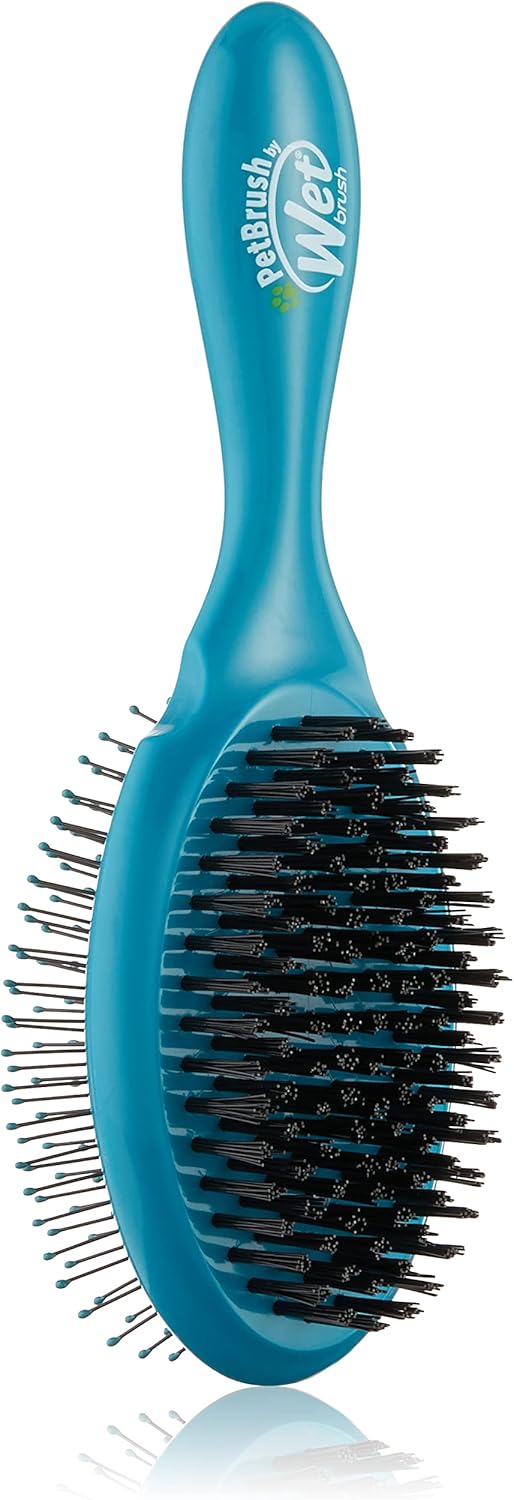
The Wet Brush Pet Detangler is a two-sided grooming brush built for gentle detangling and everyday coat maintenance on dogs, cats, and small animals. It uses ultra-soft IntelliFlex nylon bristles that flex through knots and mats to reduce pulling and breakage, and the dual sides let you choose firmer or softer brushing depending on coat condition. In practice it works well for fine, delicate coats where aggressive bristles can cause split hairs or skin discomfort; the flexible tips glide through dead hair and loosen debris while giving a light massage that many pets tolerate. The compact, plastic-handled design is easy to maneuver for quick touch-ups or longer brushing sessions, and the brush is simple to clean. It is not a heavy-shedding tool for deep undercoat removal, so owners needing to strip thick undercoats or handle very dense double coats may need a dedicated deshedding tool in addition to this brush.
Best for: Buyers with dogs that have fine, delicate coats who want a gentle everyday detangler that minimizes pulling and keeps tangles at bay.
Less Ideal for: Owners of thick double-coated or heavily shedding breeds who need a tool that removes large amounts of undercoat and loose hair quickly.
- Ultra-soft IntelliFlex nylon bristles reduce tugging and hair breakage
- Dual-sided design gives options for gentler or slightly firmer detangling
- Comfortable for pets with fine or sensitive coats due to flexible bristle tips
- Compact, lightweight plastic handle makes the brush easy to use and maneuver
- Simple to clean and suitable for daily maintenance to prevent mats
- Not designed for heavy undercoat removal or aggressive deshedding
- Plastic handle may feel less durable than higher-end groomer tools
Verdict: The best overall brush for fine hair balances gentle detangling with effective hair removal and comfortable grooming for most dogs with delicate coats.
Myselect Boar Bristle Palm Brush
Best Budget Brush for Fine Hair

| Ingredients | Boar Bristle |
|---|---|
| Manufacturer | Myselect |
This palm brush uses densely packed natural boar bristles on a beech wood pad with a cotton hand band to deliver a gentle, massaging groom without the stiffness of wire or plastic bristles. It is held in the palm for control and reduced wrist strain, making it easy to work over a nervous or sensitive dog for short sessions. The bristles help lift loose hair and distribute natural oils, leaving coats smoother and shinier while picking up light shedding from short, fine fur. Because the brush is soft, it is safe around the face and ears when used gently and is more calming than stiff rakes or slickers. The brush will shed a few bristles initially since they are natural boar, and it is best suited to short coats rather than the dense, double coat of a Siberian Husky where deeper undercoat removal is needed. For huskies with reactive skin or anxiety, this brush provides a soothing, low-irritation option for maintenance brushing between more aggressive de-shedding sessions.
Best for: Owners of sensitive or anxious Siberian Huskies who need a very gentle brush for short maintenance sessions and calming grooming interactions.
Less Ideal for: Owners looking for a primary tool to remove heavy undercoat or manage seasonal blowing coat should consider a de-shedding rake or undercoat tool instead.
- Natural boar bristles gently lift loose hair while conditioning the coat
- Palm-style design and cotton band reduce wrist strain and improve control
- Soft bristles safe to use around face and ears for sensitive or anxious dogs
- Dense bristle packing produces a smoothing, shiny finish to short coats
- Not designed to penetrate thick double coats or remove heavy undercoat
- Natural bristles may shed slightly during initial use
Verdict: The best budget brush for fine hair gives owners an affordable grooming tool that minimizes breakage while handling everyday shedding and light tangles.
MAEELOU Small Dog Brush
Best Gentle Brush

| Bristle Material | TPEE (Soft Plastic) |
|---|---|
| Handle Material | Plastic |
| Hair Type | Normal |
| Unit Count | 1 Count |
The MAEELOU Small Dog Brush is a compact, cloud-shaped grooming tool with soft TPEE bristles and a plastic handle that is intended for quick touch-ups and gentle daily brushing. It is used by holding the comfortable handle and stroking the coat in smooth motions to remove loose hair, dust, and minor tangles while providing a light massage that can soothe skin and stimulate circulation. The flexible soft-plastic bristles make it pleasant for short sessions on sensitive faces and bodies, and its small size and light weight make it easy to tuck into a bag or keep in a drawer for on-the-go maintenance between full grooming sessions. Because it is designed for normal hair types and small breeds, it excels at surface-level shedding control and keeping a pug's short coat tidy without overworking the skin. Limitations include its lack of firm pins for deep undercoat de-shedding and a plastic construction that is less durable than metal alternatives for heavy use.
Best for: Owners who want a small, gentle brush to keep a pug’s short coat tidy between baths and full groomings and who value portability for travel or quick touch-ups.
Less Ideal for: People looking for a heavy-duty de-shedding tool or a brush to remove deep undercoat on double-coated breeds should choose a firmer, specialist tool instead.
- Compact, lightweight shape easy to carry for quick touch-ups
- Soft TPEE bristles provide a gentle massage and are comfortable on sensitive skin
- Ergonomic plastic handle for easy one-handed brushing
- Effective at removing loose hair, dust, and small tangles from short coats
- Not designed for heavy de-shedding or removing dense undercoat
- All-plastic build is less robust than metal brush options for long-term durability
Verdict: The best gentle brush prioritizes soft bristles or cushioned heads to detangle fine fur with minimal tugging and less risk of skin irritation.
PetJoyHaven Comma-Shaped Small Dog Brush
Best Compact Brush

| Manufacturer | PetJoyHaven |
|---|---|
| ASIN | B0FBVHWDKT |
| Package Dimensions | 5.75 x 2.99 x 1.81 inches |
| Customer Reviews | 4.5 out of 5 stars (161) |
This comma-shaped small dog brush is a compact grooming tool aimed at quick touch-ups and gentle daily brushing for small breeds like Havanese. Its ergonomic curved shape gives a secure grip for short sessions, and the dense ultra-soft bristles move through fine hair without irritating sensitive skin while helping distribute natural oils. Because it is lightweight and pocketable it works well for travel, quick coat tidy-ups before outings, or brushing between full grooming appointments. The brush performs best removing loose fur and smoothing tangles rather than tackling heavy matting or deep undercoat work, so you will still need a slicker or comb for serious de-matting. Build quality appears adequate for frequent handling but the small size means sessions take longer on a very thick or long Havanese coat. For owners who want an easy, gentle tool for maintenance and quick grooming on the go, this brush is a handy, low-friction choice.
Best for: Owners who need a lightweight, easy-to-store brush for quick coat tidy-ups, travel, and gentle daily maintenance of a Havanese between full grooming sessions.
Less Ideal for: People who need a tool for heavy de-matting, deep undercoat removal, or full-length grooming sessions should choose a larger slicker or deshedding tool instead.
- Ergonomic comma shape provides a comfortable, secure grip for short grooming sessions
- Ultra-soft dense bristles are gentle on sensitive skin and good for smoothing fine hair
- Compact, lightweight design is easy to pack for travel or on-the-go touch-ups
- Effective at picking up loose hair and reducing surface shedding between full grooms
- Not suited for heavy de-matting or removing dense undercoat
- Small head means brushing long, thick coats takes more time
Verdict: The best compact brush is a space-saving grooming tool for quick at-home or travel touch-ups that still treats fine coats gently.
Hertzko Self Cleaning Slicker Brush
Best Easy-Clean Brush

| Item model number | FBA_881314705702 |
|---|---|
| Manufacturer | Hertzko |
| Suitable fur types | Long and short hair |
| Handle feature | Comfort grip |
| Cleaning mechanism | Push-button retractable bristles |
The Hertzko Self Cleaning Slicker Brush is a handheld grooming tool that removes loose fur, tangles, and debris from both long and short coats while providing a gentle massage. You groom by working the angled fine bristles through the coat to lift shedding hair and then push the button to retract the bristles so accumulated hair releases from the pad in seconds. The comfort grip handle reduces hand fatigue for longer sessions and the soft, fine pins are designed not to scratch skin, making it suitable for sensitive pets. Because the bristles retract into a flat surface, cleanup is faster and more hygienic than scraping hairs out by hand, though the tool itself is not a vacuum or wet-wash system so trapped oils or dirt still need an occasional wipe-down. It excels as a regular shedding control brush for routine at-home grooming, especially when you want minimal post-session maintenance and quick hair removal from the tool itself.
Best for: Buyers who prioritize quick, low-effort cleanup after grooming and want a brush that releases collected hair with a single button press for regular shedding maintenance.
Less Ideal for: Owners needing a tool for heavy de-shedding of very dense double coats or for cleaning heavy dirt and oils where a fully washable or wet-clean tool would be better.
- Push-button bristle retraction for fast, one-step hair release
- Angled fine bristles that detangle and remove loose fur from long and short coats
- Comfort grip handle that reduces hand fatigue during longer grooming sessions
- Soft pins that massage the skin while minimizing scratching on sensitive pets
- Not designed for deep undercoat removal on very dense double coats
- Brush head and pins require manual wiping for oils or dirt since it is not fully washable
Verdict: The best easy-clean brush makes removing collected fur and sanitizing the tool fast and simple so owners can maintain grooming routines without extra hassle.
Choosing the Right Dog Brush Fine Hair: Key Factors to Consider
Bristle Type and Softness
Bristle construction determines how a brush interacts with fine hair. Soft, natural or fine synthetic bristles glide through delicate coats without snapping hairs, while firmer pins can pinch and break fragile strands. Closely spaced bristles lift fine loose hair and surface debris more gently than wide-set, stiff pins.
Look for tapered or rounded bristle tips that reduce scalp irritation. In practice, a softer bristle pack will require slightly more passes to move all loose hair, but the tradeoff is less breakage and a shinier finish. Bristle length also matters: shorter bristles are better for smoothing and finishing, while slightly longer soft bristles reach through thin layers without catching.
Tool Head Design and Flexibility
The shape and flexibility of the brush head affect how evenly pressure is distributed across the coat. A flexible head conforms to body contours and prevents concentrated pressure points that can stress fine hair or irritate skin. Rigid heads risk tugging at thin areas and causing discomfort.
Rounded edges and a broad contact surface help smooth coats without aggressive pulling. For areas like the belly and behind the ears, a smaller, more flexible head can navigate curves gently. Consider whether the brush is single-purpose or combines surfaces for both detangling and finishing; combination tools can save time but must remain gentle enough for fine hair.
Shedding Control Vs. Gentleness
Fine-haired dogs still shed, but removing loose hair must be balanced against preserving the integrity of each strand. Tools that aggressively strip undercoat or use sharp edges will remove hair quickly but can create frayed ends and bald spots on delicate coats. Conversely, overly gentle brushes may not capture enough loose hair to reduce shedding around the house.
Choose tools that demonstrate gradual shedding reduction through repeated, gentle passes rather than single-force removal. Look for brushes that lift and trap loose hair rather than slice it. This approach reduces both loose-hair accumulation and the risk of hair damage.
Handle Comfort and Grooming Ergonomics
Grooming sessions for fine-haired dogs often take longer, so handle comfort matters. Non-slip grips and ergonomically shaped handles reduce hand fatigue and help you maintain a consistent angle and pressure, which is important to avoid accidental snagging. A balanced weight distribution makes it easier to control brush strokes and prevents repetitive strain.
Consider whether the handle allows two-handed control for stubborn tangles and whether it is suitable for wet or dry grooming. Handles that collect hair or are hard to clean can reduce hygiene and make regular use less pleasant.
Cleaning and Maintenance
Frequent grooming means the brush will accumulate hair, oils, and dirt. Brushes designed for easy cleaning save time and stay more hygienic. Look for features like quick-release mechanisms, washable heads, or materials that resist odor and mildew. Brushes with metal parts should use rust-resistant alloys or coatings to remain functional after repeated washing.
A brush that is easy to clean encourages consistent grooming, which is essential for managing fine hair. Maintenance also includes checking for wear that could expose sharp edges or break bristles; replace components or the whole tool when wear compromises gentleness.
Safety for Skin and Coat Health
Fine hair sits closer to the skin and often accompanies sensitive skin. A safe brush minimizes abrasion and prevents matting that can trap moisture and cause irritation. Rounded tips, cushioned backing, and adjustable pressure reduce the chance of scraping or scratching the skin.
Inspect tools for any exposed staples, rough edges, or pins that can bend into sharp angles. Regular grooming sessions using a safe brush can improve circulation and help you spot skin issues early without causing additional trauma to the coat.
How Often Should I Brush a Dog with Fine Hair?
For most dogs with fine hair, gentle daily or every-other-day brushing keeps loose hair under control and prevents light tangles. Short, frequent sessions are better than infrequent long ones because they reduce the need for forceful detangling.
Adjust frequency based on activity level and seasonal shedding. During light-shedding seasons, twice-weekly brushing may suffice; during higher-shed periods, increase to several short sessions per week to maintain coat condition and reduce household hair.
- Daily light brushing helps distribute natural oils and keeps the coat smooth.
- Long sessions only when necessary to address tangles rather than for routine maintenance.
What Grooming Technique Is Best for Preventing Breakage?
Use gentle, short strokes in the direction of hair growth and avoid yanking. Start with a soft finishing brush to smooth the surface, then if needed use a gentler detangling pass from the base outward. Supporting the skin with your free hand near sensitive areas reduces tension on the hair shaft.
Work in sections and be patient with tangles. For small mats, separate them with fingers or a wide-tooth tool before using a fine-toothed surface to avoid pulling at the root.
- Brush toward the tip after detangling to smooth the coat.
- Use minimal pressure and let the brush do the work rather than force.
Can I Use a Slicker Brush on Fine Hair?
Slicker brushes with very fine, flexible pins can be suitable if they are specifically designed for gentle use. However, many slicker styles are too stiff and can damage fine strands, so choose one with soft, closely spaced pins and rounded tips if you opt for this style.
Test the brush on a small area first and observe the skin for signs of irritation. If you see broken hairs or redness after one pass, switch to a softer alternative.
- Look for rounded pin tips and a cushioned backing to reduce pressure.
- Avoid heavy-pressure strokes; use multiple light passes instead.
How Do I Handle Seasonal Shedding Spikes?
Increase brushing frequency temporarily and focus on gentle removal of loose undercoats. Use a tool that lifts and traps hair rather than one that aggressively strips it. Keep sessions short but more frequent to avoid stressing the coat.
Combine grooming with regular bathing using a conditioner formulated for fine coats to loosen debris and make brushing more effective. Always ensure the coat is mostly dry before using metal-based tools to prevent rusting or pin damage.
- Short, frequent grooming reduces household hair without harming the coat.
- Conditioners can help reduce static and make hair easier to manage.
Which Finishing Tools Improve Coat Shine and Feel?
After detangling, a soft-bristle finishing brush or a microfiber grooming mitt can help distribute natural oils and create a smooth, glossy look. These tools are designed to be the final pass and should not be used forcefully over knots.
Use finishing tools sparingly to avoid overworking the coat. A gentle pass once or twice a week is often enough to maintain shine without stripping natural oils.
- Finish with long, light strokes in the direction of hair growth.
- Avoid over-brushing that can remove protective oils from the coat.
How We Chose the Best Dog Brush Fine Hair
We focused on features and performance traits that matter for dogs with fine coats. The primary evaluation criteria were bristle design and softness, effectiveness at removing loose hair without damaging the coat, handle ergonomics for longer sessions, material durability and rust resistance, and ease of cleaning. We also considered how each tool affects skin comfort and the risk of causing tangles or split ends. Products were included only if they showed clear suitability for fine hair in their design—soft or closely spaced bristles, flexible heads, or specialized grooming surfaces. Tools geared exclusively toward heavy undercoats or aggressive de-shedding were excluded, as those can be too harsh for delicate fine hair. We prioritized items that balanced gentle detangling with measurable shedding control and that offered practical cleaning and storage features. Filters applied: suitability for fine hair, user comfort features, and maintenance ease. Exclusions: heavy-duty de-shedding tools, slicker designs with overly stiff pins, and items without clear anti-corrosion materials or washable components. The resulting list emphasizes gentle effectiveness and user-friendly grooming.
Our full evaluation process is outlined in our review methodology.
FAQ
Will a soft brush remove tangles in fine hair?
Soft brushes can handle light tangles and surface mats, but stubborn knots often need a targeted detangling pass with a tool designed for gentle separation. Work gradually and use finger separation before applying any detangling tool.
Is brushing wet fine hair a good idea?
Wet hair is more fragile, so avoid aggressive brushing when the coat is wet. If you must brush, use a wide-tooth comb or a detangling tool designed for wet grooming and be extremely gentle to prevent breakage.
How do I know if a brush is too harsh?
Signs include visible broken hairs, redness on the skin after brushing, or repeated anxious behavior from your dog during grooming. If you notice these, switch to a softer tool and reduce pressure and session length.
Can grooming reduce household shedding?
Regular grooming with the right tools reduces the amount of loose hair in the home by catching and removing shed hairs before they fall out. It lowers shedding visibility but does not stop natural hair cycles.
What should I do about static and flyaway hairs?
Use a light, leave-in conditioner or a moisturizing wipe formulated for dogs to reduce static. Finishing brushes or microfiber mitts used in gentle passes can also help tame flyaways without overworking the coat.
Final Verdict
Prioritize gentleness and controlled shedding when choosing a brush for fine hair. Focus on soft bristles, flexible heads, and ergonomic handles to protect delicate strands while removing loose hair. Be prepared to trade a little time for gentler, repeated passes rather than aggressive single-session removal. Ultimately, select a tool that matches your dog's coat sensitivity and your grooming routine. With the right brush and consistent technique, you can reduce shedding, prevent breakage, and keep a fine coat healthy and glossy.

