

Finding the right brush for a Doberman matters more than many owners expect. Because Dobermans have a short, dense coat and sensitive skin, the wrong tool can irritate the coat, miss loose hairs, or make routine grooming take much longer. This guide shortlists seven brushes suited to the Doberman coat and walking-through how they perform for shedding control, comfort, and easy maintenance. Each pick was selected to address common owner priorities like reducing loose hair, being gentle on skin, and making brushing simple. Below you will find what to look for and why each type of brush can work with a Doberman's coat.
Top Picks at a Glance
| Best Overall Brush A well-rounded pick that suits most Doberman grooming needs | SleekEZ Deshedding Brush 5 Inch |  |
| Best Budget Brush A low-cost brush that still performs basic grooming tasks | Dipoo Self Cleaning Shedding Brush |  |
| Best Premium Brush A higher-end, longer-lasting tool with refined materials and features | Chris Christensen Boar Dog Brush |  |
| Best Deshedding Brush Designed to remove loose undercoat and reduce seasonal shedding noticeably | FURminator Undercoat deShedding Tool Large |  |
| Best Gentle Brush Softer bristles or pads to avoid irritating sensitive skin | Myselect Boar Bristle Palm Brush |  |
| Best Compact Brush A smaller, portable option for travel and quick touch-ups | menesia Soft Dog Brush |  |
| Best Heavy-Duty Brush Built for tough use with robust construction and firm grooming action | KIZO ESLO XL Undercoat Rake |  |
SleekEZ Deshedding Brush 5 Inch
Best Overall Brush

| Item model number | 4121411 |
|---|---|
| Manufacturer | SleekEZ |
| UPC | 731236552734 |
The SleekEZ Deshedding Brush uses a patented metal deshedding blade to grab loose fur at the tips and pull it out without cutting healthy hair, making it useful for routine grooming and heavy-shed seasons. You use it with smooth strokes from head to tail, applying light to moderate pressure depending on coat density; the same tool can also be used as a carpet or upholstery rake to lift embedded pet hair. Its compact 5 inch profile and lightweight construction make it easy to handle for quick touch-ups and weekly maintenance, and cleanup is straightforward since the lifted fur collects where you can remove it by hand. The brush performs well on short, medium, long, and double-coated breeds but is not recommended for curly or non-shedding coats. Expect to use it more frequently during seasonal blowouts, and be careful to follow the directions to avoid overworking sensitive areas around the face and belly.
Best for: Buyers who want a single, easy-to-use groomer that handles most shedding coat types and reduces the need for frequent professional deshedding.
Less Ideal for: Owners of dogs with curly or non-shedding coats or those who need a wide-head tool for very large breeds should consider specialized alternatives.
- Patented blade designed to lift and remove loose fur and undercoat without cutting healthy hair
- Works across short, medium, long, and double-coated breeds
- Also functions off-pet as a hair remover for carpets, upholstery, and car interiors
- Compact, lightweight design is easy to hold for short grooming sessions
- Not recommended for curly or non-shedding coat types
- Small 5 inch head may require more passes on very large dogs
Verdict: The best all-around brush that balances grooming effectiveness, comfort, durability, and ease of use for regular Doberman coat care.
Dipoo Self Cleaning Shedding Brush
Best Budget Brush

| Item model number | Dip-202401 |
|---|---|
| Manufacturer | Dipoo |
| Suitable coat types | Medium short and medium long hair |
This compact Dipoo deshedding brush is built for quick touch-ups and regular maintenance rather than heavy-duty dematting. It uses closely spaced stainless steel bristles with rounded plastic tips to lift loose undercoat and surface hair without scratching skin, and a one-button release pushes trapped fur off the head for fast cleanup. The lightweight TPR handle and small profile make it easy to hold for longer sessions and simple to pack for travel or storage in small homes. It performs best on medium-short and medium-long coats and can noticeably reduce shedding between deeper grooming sessions, but the bristles can bend if used on very thick or heavily matted coats and it is not intended for detangling. Expect efficient daily or weekly touch-ups and much easier cleanup compared with a non-self-cleaning brush, while owners of very short or very dense coats should consider a tool designed specifically for those coat types.
Best for: Buyers who need a small, travel-friendly brush for regular touch-ups and to reduce loose hair between deeper grooming sessions.
Less Ideal for: Owners who need a tool for heavy shedding, thick double coats, or dematting should choose a sturdier de-shedding or detangling tool instead.
- Compact, lightweight profile easy to store and pack for travel
- Self-cleaning button ejects collected fur for fast, hygienic cleanup
- Stainless steel bristles with rounded tips lift loose hair without irritating skin
- Ergonomic TPR handle provides a comfortable grip for short grooming sessions
- Not suitable for dematting or detangling heavily tangled fur
- Bristles may bend on very thick coats or when used aggressively
Verdict: The best budget brush for owners who want dependable de-shedding and daily grooming performance without spending much.
Chris Christensen Boar Dog Brush
Best Premium Brush

| Bristle Material | Boar |
|---|---|
| Handle Material | Wood |
| Rows of Bristles | 8 rows |
| Item model number | A710 |
The Chris Christensen Boar Dog Brush is a simple, traditional bristle brush built for regular finishing and gentle grooming. It uses eight rows of natural boar bristles set into a lightweight beech wood handle to redistribute skin oils, smooth coat fibers, and lightly stimulate follicles without aggressive tugging. For routine brushing on Labradors with sensitive skin or older dogs, it works as a low-friction option that reduces surface dust and adds shine rather than detangling deep mats. The brush is best used following a bath or on dry fur for short, directional strokes following hair growth; its wooden handle feels balanced for one-handed use. Limitations are its lack of long pins or a slicker surface, so it will not remove heavy undercoat or tight tangles effectively, and natural bristles can wear faster than synthetic alternatives. If you need a gentle finishing tool to maintain coat health and reduce irritation, this brush performs well, but you may still need a de-shedding or slicker brush for heavy shedding or matted areas.
Best for: Owners of Labradors with sensitive skin or older dogs who prioritize a low-irritation, finishing brush to maintain coat sheen and comfort during routine grooming.
Less Ideal for: People who need a tool to remove heavy undercoat, tackle mats, or significantly reduce seasonal shedding should choose a de-shedding or slicker brush instead.
- Natural boar bristles redistribute skin oils to improve coat shine and condition
- Lightweight beech wood handle provides a balanced, comfortable grip for regular use
- Gentle on skin and coat, suitable for sensitive or older dogs
- Simple construction is durable and easy to rinse or wipe clean
- Not designed to remove heavy undercoat or deep mats
- Natural bristles may wear faster than synthetic pin brushes
Verdict: The best premium brush for owners willing to pay more for superior build quality, ergonomic design, and long-term grooming results.
FURminator Undercoat deShedding Tool Large
Best Deshedding Brush

| Intended breed size | Large dogs (over 50 lbs) |
|---|---|
| Coat type | Short hair, double coat |
| Feature | FURejector hair release button |
| Handle | Ergonomic |
The FURminator Large Undercoat deShedding Tool is made to reach through a Labrador's topcoat and pull loose undercoat hair without cutting the topcoat when used as directed. In practice you hold the ergonomic handle and stroke the stainless steel teeth in the direction of hair growth, working from head to tail and using gentle, long passes; the curved edge helps the blade follow the dog's body contours for more comfortable grooming. The FURejector button makes removing accumulated hair from the tool quick and tidy. Regular weekly use is intended to cut the amount of shed hair left around the house and to help keep the coat cleaner between baths. Important limitations are that it targets undercoat rather than detangling or styling, and aggressive or repeated strokes can irritate skin so careful technique is required, especially around thin-skinned areas. For Labradors with heavy seasonal shedding, this tool delivers focused undercoat removal that reduces loose hair when used properly.
Best for: Owners of Labradors who want a focused tool to reduce loose undercoat hair in the home and are willing to groom regularly using gentle, correct technique.
Less Ideal for: People who need a multi-purpose grooming tool for detangling, finishing, or working on long matted coats should consider a different brush or add complementary tools.
- Stainless steel teeth designed to reach and remove loose undercoat hair without cutting the topcoat when used as directed
- Curved edge that conforms to the dog’s body for more comfortable grooming on large breeds
- Ergonomic handle reduces wrist fatigue during longer sessions
- FURejector button quickly releases collected hair for easy cleanup
- Not a detangling brush so it will not replace a comb or slicker for mats
- Can irritate skin if used with excessive pressure or repeated strokes in one area
Verdict: The best deshedding brush for Dobermans that efficiently removes loose hair from the undercoat to cut down on shedding around the house.
Myselect Boar Bristle Palm Brush
Best Gentle Brush

| Ingredients | Boar Bristle |
|---|---|
| Manufacturer | Myselect |
This palm brush uses densely packed natural boar bristles on a beech wood pad with a cotton hand band to deliver a gentle, massaging groom without the stiffness of wire or plastic bristles. It is held in the palm for control and reduced wrist strain, making it easy to work over a nervous or sensitive dog for short sessions. The bristles help lift loose hair and distribute natural oils, leaving coats smoother and shinier while picking up light shedding from short, fine fur. Because the brush is soft, it is safe around the face and ears when used gently and is more calming than stiff rakes or slickers. The brush will shed a few bristles initially since they are natural boar, and it is best suited to short coats rather than the dense, double coat of a Siberian Husky where deeper undercoat removal is needed. For huskies with reactive skin or anxiety, this brush provides a soothing, low-irritation option for maintenance brushing between more aggressive de-shedding sessions.
Best for: Owners of sensitive or anxious Siberian Huskies who need a very gentle brush for short maintenance sessions and calming grooming interactions.
Less Ideal for: Owners looking for a primary tool to remove heavy undercoat or manage seasonal blowing coat should consider a de-shedding rake or undercoat tool instead.
- Natural boar bristles gently lift loose hair while conditioning the coat
- Palm-style design and cotton band reduce wrist strain and improve control
- Soft bristles safe to use around face and ears for sensitive or anxious dogs
- Dense bristle packing produces a smoothing, shiny finish to short coats
- Not designed to penetrate thick double coats or remove heavy undercoat
- Natural bristles may shed slightly during initial use
Verdict: The best gentle brush for dogs with sensitive skin or low tolerance for firm grooming, prioritizing comfort while still removing loose hair.
menesia Soft Dog Brush
Best Compact Brush

| Material | Wood |
|---|---|
| Specific Uses for Product | Detangling |
| Item Weight | 4.2 ounces |
This compact palm brush uses soft boar-style bristles to mimic a petting motion, so it is meant for gentle, frequent touch-ups rather than heavy deshedding. You hold it in the palm for short sessions to remove loose hair, smooth the coat, and give a light massage that many pets find calming. Because it is lightweight and small it packs easily for travel or keeps on a countertop for quick maintenance between full grooming sessions. The wooden construction feels sturdy and the soft bristles are appropriate for short to medium coats and sensitive skin, but it will not replace a slicker or rake for dense undercoats or heavy shedding breeds. For Dobermans looking for a compact, soothing brush to keep coat shine and reduce surface hair on the go, this is a practical, easy-to-use option.
Best for: Owners who want a travel-ready, easy-to-hold brush for quick maintenance, coat shine, and gentle grooming between full grooming sessions.
Less Ideal for: People who need a tool for deep deshedding, heavy undercoat removal, or serious mat removal should choose a slicker, rake, or de-shedding tool instead.
- Small palm design is travel-friendly and easy to use for quick touch-ups
- Soft boar-style bristles provide a gentle, petting-like massage that calms animals
- Lightweight wooden body feels sturdy while remaining portable
- Helps reduce surface shedding and enhance natural coat shine with regular short sessions
- Not designed for heavy undercoat removal or detangling of dense fur
- Limited effectiveness on long, thick, or heavily shedding coats
Verdict: The best compact brush for owners who need a travel-friendly grooming tool that performs well for quick maintenance and touch-ups.
KIZO ESLO XL Undercoat Rake
Best Heavy-Duty Brush
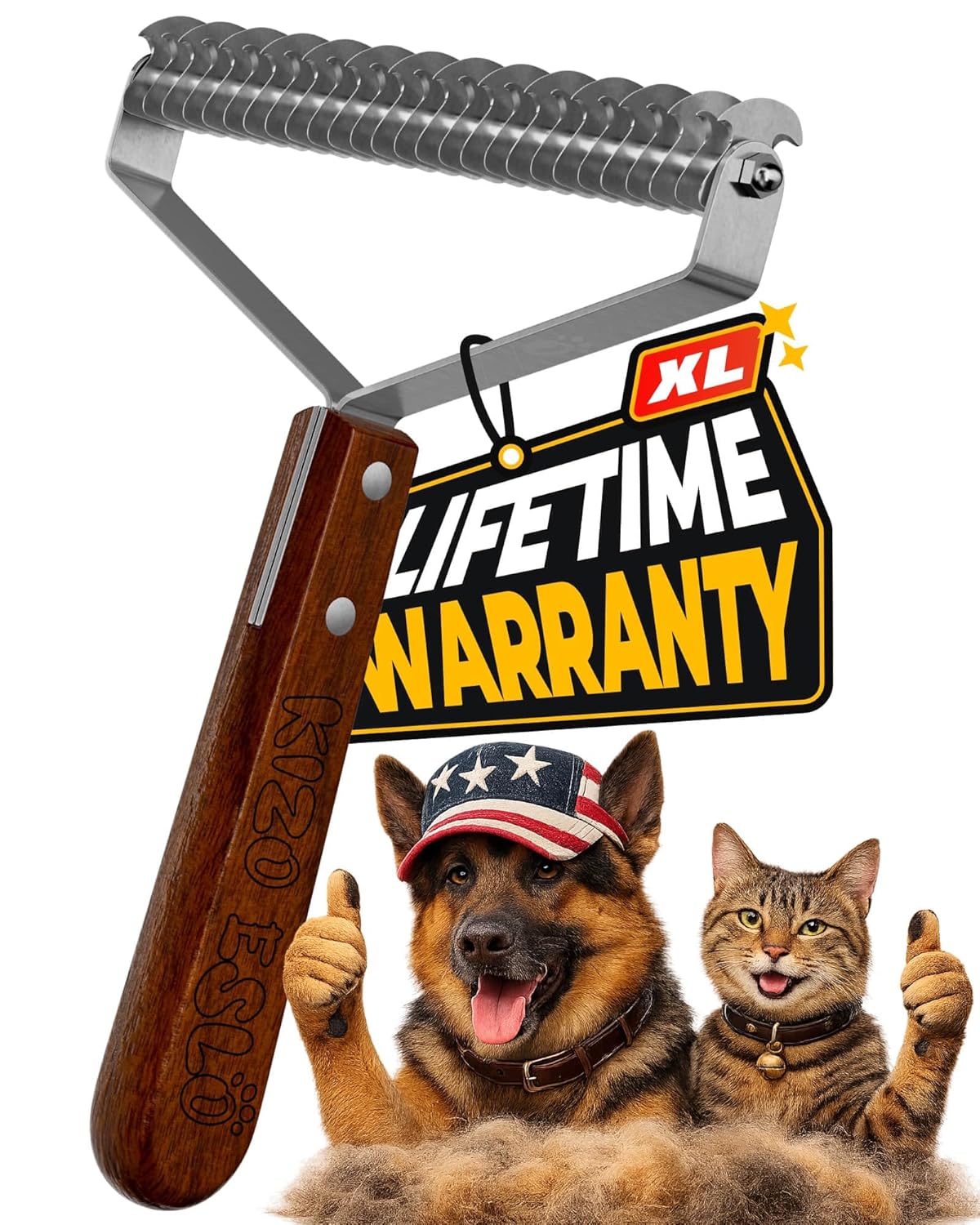
| Head type | Dual-sided 14/27 teeth |
|---|---|
| Intended coats | Long, thick, double coats |
| Handle | Solid wood |
| Blade material | Stainless steel (rounded edges) |
This XL two-sided undercoat rake pairs a wide-tooth side for detangling and a fine-tooth side for deshedding, making it a practical heavy-duty grooming tool for coarse, wiry coats. The extra-large head covers more fur per stroke so grooming goes faster on big dogs, while the rounded stainless-steel teeth are shaped to reduce pulling when used gently. It is intended for regular home use during shedding season and for breaking up mats after loosening them by hand or with scissors. The solid wood handle and metal frame give the tool a sturdy, durable feel that stands up to frequent use, though the aggressive blades mean you must follow the brand cautions to avoid sensitive areas and work carefully on tight mats. For short-coated dogs with minimal undercoat this rake is more than needed and it is not designed to be forced through severe tangles without pre-cutting. Used properly, it speeds up undercoat removal and leaves thicker coats looking neater with fewer passes.
Best for: Owners who groom frequently or manage coarse, resilient double coats and want a stout, efficient tool to remove undercoat, reduce shedding, and break up light mats at home.
Less Ideal for: People with short-haired, sensitive, or light-shedding dogs who need a softer, less aggressive brush or for users unwilling to work carefully around mats and skin.
- Dual-sided head combines wide teeth for dematting and fine teeth for deshedding in one tool
- Extra-large head covers more coat per stroke for faster grooming on large or thick-coated dogs
- Rounded stainless-steel teeth designed to glide with less pulling when used gently
- Solid wood handle and metal frame provide a durable, heavy-duty build suited to frequent use
- Aggressive blade teeth require careful technique and pre-loosening of severe mats to avoid discomfort
- Not ideal for short coats or very sensitive skin where a softer brush would be gentler
Verdict: The best heavy-duty brush for owners who want a durable tool that handles frequent grooming and thicker or coarser coat work with minimal wear.
Choosing the Right Dog Brush Doberman: Key Factors to Consider
Bristle and Pin Type
The bristle or pin material determines how the brush interacts with a Doberman's short, dense coat. Soft natural bristles smooth the topcoat and spread skin oils, which helps the coat look healthy without pulling. Nylon or rubber bristles can be effective for removing surface hair and stimulating circulation, while stainless steel pins reach a little deeper to gather loose undercoat. Avoid overly stiff pins that press sharply against the skin, because Dobermans have relatively thin skin that can easily be irritated.
Different pin shapes matter too. Rounded or ball-tipped pins are gentler and reduce the chance of scratching, while straight metal pins are more efficient at lifting trapped loose hairs. When choosing, balance removal power with softness to keep grooming comfortable.
Brush Head Size and Shape
Head size affects how quickly you can groom large areas and how well you can reach contours like the chest, hindquarters, and tail base. A wider head covers more surface area and speeds up brushing sessions on the torso, but a compact head is better for detailing around the face, ears, and paws. Curved or flexible heads conform to the dog's body shape, improving contact and reducing the need for repeated passes.
Consider the layout of the head relative to the handle. An offset head or a pivoting joint reduces wrist strain and makes it easier to maintain consistent pressure, which is important when brushing a dog that may fidget.
Handle Ergonomics and Weight
A comfortable handle reduces fatigue during routine grooming and helps you keep steady pressure. Look for non-slip grips and a balanced weight distribution so the brush does not feel top-heavy when moving across the coat. Lightweight brushes can lessen wrist strain during longer sessions, but they should still feel sturdy in hand.
If you groom frequently, consider a handle design that fits your hand size and grip style. Some handles include thumb rests or contoured shapes that improve control and reduce the chance of dropping the tool mid-session.
Maintenance and Cleaning
A brush that is easy to clean keeps grooming hygienic and extends the tool's usable life. Brushes that trap hair in dense gaps or have permanently glued components become less effective quickly. Removable pads, self-cleaning buttons, or open-pin designs allow you to clear collected hair with minimal effort.
Materials that tolerate occasional washing without rusting or breaking down are preferable. Also consider how the brush dries; tools with dense wooden components may warp if they remain wet. Low-maintenance brushes make it more likely owners will keep up with regular brushing.
Safety Features and Coat Comfort
Safety matters with any grooming tool. Features like rounded pin tips, rubberized ends, and flexible heads reduce the risk of nicks or chafing. For Dobermans, whose skin can be more exposed over bony areas, a gentler contact surface helps avoid pressure points during brushing.
Comfort also includes how the dog responds. Brushes that cause pulling or pinching will increase resistance and make grooming sessions longer and more stressful. Choose tools designed to minimize tugging while still collecting loose hair.
Intended Grooming Tasks
Different brushes are designed for distinct tasks: removing loose hair, polishing the coat, detangling, or massaging the skin. For a Doberman, prioritize tools that reduce loose hair and smooth the topcoat rather than heavy-duty dematting tools. A two-tool approach is common: one efficient brush for daily or weekly shedding control and a softer brush for finishing and shine.
Think about your routine and how often you will use each tool. A brush that is easy to use daily will prevent hair buildup and cut down on occasional long grooming sessions.
How Often Should You Brush a Doberman?
Most Dobermans benefit from a quick brushing several times a week to control loose hair and distribute skin oils. Regular short sessions are better than infrequent long ones because they keep the coat tidy without stressing the dog.
If your Doberman spends a lot of time outdoors or sheds seasonally, increase frequency to daily during heavy-shedding periods. Use a gentle brushing motion and pay attention to how the dog reacts; signs of discomfort mean you should switch to a softer tool or reduce pressure.
- Quick 5-10 minute sessions several times per week for maintenance
- Daily brushing during seasonal shed spikes
- Finish with a soft bristle brush to smooth the coat
Which Brush Types Work Best on Short, Dense Coats?
For short, dense coats like a Doberman's, de-shedding tools and rubber curry brushes are particularly useful for removing loose hair without excessive friction. Soft bristle brushes help finish the coat for a polished look, while pin brushes with rounded tips can be used sparingly for areas that need extra lifting.
Avoid heavy matting combs and aggressive dematting blades that are intended for long or matted coats; they are unnecessary for a Doberman and risk irritating the skin.
- De-shedding edges remove undercoat hair efficiently
- Rubber curry brushes are gentle and stimulate skin
- Soft bristle brushes add shine and smooth the topcoat
How to Introduce Grooming to a Nervous Doberman
Start slowly and make positive associations. Let the dog sniff the brush and reward calm behavior with treats or praise. Short, gentle sessions build tolerance better than long unfamiliar sessions.
Keep body language relaxed and avoid forcing contact. If the dog shows signs of stress, pause and try again later. Over time, consistent, low-pressure grooming will become part of their routine and decrease anxiety.
- Begin with 2-3 minute sessions, gradually increasing time
- Use treats and a calm voice to reward cooperation
- Stop before the dog becomes restless to keep sessions positive
Cleaning and Caring for Your Brushes
Remove hair after each session to keep the brush effective and sanitary. For pin and bristle brushes, use a comb or your fingers to pull trapped hair from the base. Tools with removable pads or open backs are quickest to clear.
Occasional washing with mild soap and thorough drying will prevent odors and bacteria buildup. Avoid soaking wooden-handled brushes and ensure any metal parts are dried promptly to prevent corrosion.
- Clear hair after every use to maintain efficiency
- Wash synthetic materials periodically and dry fully
- Store brushes in a dry place away from direct heat
When to Replace a Grooming Tool
Replace brushes when pins bend, bristles fray, or the cleaning mechanism stops working. Worn tools become less effective and can start to pull hair or irritate skin. Inspect brushes regularly for loose parts and signs of wear.
If a brush has accumulated broken pins or sharp edges, swap it out immediately to avoid injuring your dog. A well-maintained brush will last longer and provide consistently better grooming outcomes.
- Change tools when pins or bristles show visible wear
- Replace any brush with loose or broken components
- Consider replacement if cleaning becomes difficult
How We Chose the Best Dog Brush Doberman
We focused on criteria that directly affect grooming outcomes for Dobermans and similar short-coated breeds. Primary evaluation factors included brush head design and contact surface, since the shape and size determine how effectively a tool reaches undercoat without irritating the skin. We assessed bristle and pin materials for their balance of effectiveness and gentleness, favoring combinations that remove loose hair while minimizing scratchiness. Ergonomics and handling were evaluated for typical owner use—weight, grip, and maneuverability matter when brushing an active dog. Durability and ease of cleaning were considered because brushes that clog or fall apart reduce long-term value. Finally, safety features such as rounded pin tips or flexible heads were included to avoid accidental nicks. We excluded tools intended specifically for heavy mat removal, professional-salons only equipment, and any products that are unsuitable for short, dense coats. The final shortlist reflects tools that meet the above filters and deliver practical, repeatable grooming results for Dobermans.
Our full evaluation process is outlined in our review methodology.
FAQ
Can I use a human hairbrush on my Doberman?
Human hairbrushes are not optimized for a dog's coat and may not remove loose undercoat effectively. They are usually too soft or shaped differently, so it is better to use brushes designed for short, dense canine coats to get consistent results.
Will brushing reduce my Doberman's shedding entirely?
Brushing significantly reduces loose hairs in the home but will not stop natural shedding. Regular grooming helps collect shed hair before it disperses and can minimize seasonal shedding when done frequently.
How do I avoid irritating my dog's skin while brushing?
Use gentle pressure, choose rounded-pin or soft-bristle tools, and test on a small area first. Keep sessions short and stop if the dog shows signs of discomfort. Proper maintenance of the brush so there are no sharp or bent pins also reduces irritation.
Is a deshedding tool safe for a Doberman's skin?
Deshedding tools are safe when used correctly and gently, especially those designed for short coats. Avoid aggressive scraping motions and follow the tool's instructions to limit pressure and frequency.
Can brushing help with skin health?
Yes. Regular brushing removes dead hair and distributes natural skin oils, which can improve coat appearance and skin condition. It also provides an opportunity to check for irritations, parasites, or lumps during routine handling.
Final Verdict
Prioritize tools that balance effective removal of loose hair with a gentle contact surface for a Doberman's short, dense coat. Focus on bristle or pin types that collect undercoat without pulling, and choose a comfortable handle and easy-to-clean design so grooming becomes a regular, low-stress part of care. Tradeoffs are common: more aggressive tools remove hair faster but require careful, infrequent use to avoid irritation. Pick the brush that fits your grooming frequency and your dog's comfort level to get the best long-term results.

