

Finding the right brush for a shepherd makes routine grooming faster, less messy, and more comfortable for both you and your dog. Shepherd coats are dense, shed seasonally, and can mat if not regularly maintained, so choosing tools that remove loose undercoat without irritating skin matters. This guide highlights seven shortlisted brushes suited to shepherds, focusing on effectiveness on dense double coats, ease of use, and durability. We evaluated each option for shedding control, detangling, and handler comfort to help you pick the right brush for regular grooming and seasonal blowouts.
Top Picks at a Glance
| Best Overall Brush A reliable all-around brush that suits most shepherd coats | FURminator Undercoat deShedding Tool Large |  |
| Best Budget Brush A low-cost grooming option that still handles basic coat care | Dipoo Self Cleaning Shedding Brush |  |
| Best Premium Brush A higher-end brush with upgraded materials and superior performance | Chris Christensen Big G Slicker Brush Large |  |
| Best Deshedding Brush Designed specifically to remove loose undercoat and reduce shedding | SleekEZ Deshedding Brush 5 Inch |  |
| Best Gentle Brush Softer bristles and design for sensitive skin or anxious dogs | KONG Zoom Groom Brush |  |
| Best Compact Brush A small, portable brush ideal for travel and quick touch-ups | BOTH WINNERS Dual-Sided Shedding Blade |  |
| Best Heavy-Duty Brush Built for durability and frequent use on thick, coarse coats | Tsxurepaw Long-Tooth Undercoat Rake |  |
FURminator Undercoat deShedding Tool Large
Best Overall Brush

| Item model number | P-92926-5 |
|---|---|
| Manufacturer | SPECTRUM BRANDS PET LLC |
| Suitable for | Large dogs with long hair |
The FURminator Undercoat deShedding Tool for large long-haired dogs is built to reach through the topcoat and pull out loose undercoat hair without cutting the topcoat when used as directed. You use it weekly as part of a grooming routine to reduce household shedding and keep coats cleaner; the curved edge follows your dog's contours and the ergonomic handle makes longer sessions easier on your hands. The FURejector button is a practical convenience that releases collected hair with a single push, speeding cleanup between passes. In practice this tool removes noticeably more loose hair than a standard brush or comb, which can cut down on vacuuming and lint-rolling. It is intended for dogs over 50 pounds with long coats and works best when combined with regular brushing and periodic bathing. The blade is effective but requires care around sensitive skin and should be used only as directed to avoid overworking the coat; it is not a replacement for detangling mats or trimming severely matted fur.
Best for: Owners of large, long-haired dogs who want a tool that aggressively reduces loose undercoat hair and cuts down on household shedding through regular at-home use.
Less Ideal for: People who primarily need a detangling tool for mats, owners of small or short-coated breeds, or those seeking a gentler daily brush for frequent stroking.
- Designed to remove loose undercoat hair effectively, reducing visible shedding
- Curved edge conforms to the dog’s body for more comfortable grooming
- Ergonomic handle reduces hand fatigue during longer sessions
- FURejector button quickly releases collected hair for easy cleanup
- Not suitable for detangling or removing mats
- Requires careful use on sensitive skin and should be used as directed
Verdict: The best all-around brush for shepherds that balances effective shedding control, comfort, and durable construction for everyday grooming.
Dipoo Self Cleaning Shedding Brush
Best Budget Brush

| Item model number | Dip-202401 |
|---|---|
| Manufacturer | Dipoo |
| Suitable coat types | Medium short and medium long hair |
This compact Dipoo deshedding brush is built for quick touch-ups and regular maintenance rather than heavy-duty dematting. It uses closely spaced stainless steel bristles with rounded plastic tips to lift loose undercoat and surface hair without scratching skin, and a one-button release pushes trapped fur off the head for fast cleanup. The lightweight TPR handle and small profile make it easy to hold for longer sessions and simple to pack for travel or storage in small homes. It performs best on medium-short and medium-long coats and can noticeably reduce shedding between deeper grooming sessions, but the bristles can bend if used on very thick or heavily matted coats and it is not intended for detangling. Expect efficient daily or weekly touch-ups and much easier cleanup compared with a non-self-cleaning brush, while owners of very short or very dense coats should consider a tool designed specifically for those coat types.
Best for: Buyers who need a small, travel-friendly brush for regular touch-ups and to reduce loose hair between deeper grooming sessions.
Less Ideal for: Owners who need a tool for heavy shedding, thick double coats, or dematting should choose a sturdier de-shedding or detangling tool instead.
- Compact, lightweight profile easy to store and pack for travel
- Self-cleaning button ejects collected fur for fast, hygienic cleanup
- Stainless steel bristles with rounded tips lift loose hair without irritating skin
- Ergonomic TPR handle provides a comfortable grip for short grooming sessions
- Not suitable for dematting or detangling heavily tangled fur
- Bristles may bend on very thick coats or when used aggressively
Verdict: The best budget brush for owners who want decent performance for routine brushing without spending much money.
Chris Christensen Big G Slicker Brush Large
Best Premium Brush

| Bristle Material | Stainless Steel |
|---|---|
| Handle Material | Wood |
| Hair Type | thick, curly |
| Included Components | Brush |
The Chris Christensen Big G Slicker Brush is a salon-grade grooming tool built for heavy use on curly, cottony, and dense coats. Its densely packed, extra-long stainless steel pins reach deep into the coat to remove undercoat, loosen fine knots, and lift hair for a voluminous finish while the flexible cushioned pad lets the pins flex without irritating skin. An ergonomically curved wooden handle with a non-slip grip reduces hand and arm fatigue during long sessions and the curved body gives better control when shaping heads, toplines, and legs. Groomers praise it for cutting grooming time thanks to a 30 percent higher pin density than comparable slickers, and it pairs well with detangling sprays for easier mat removal. The brush is optimized for professional results on doodles and poodles but will perform well on many thick or curly-coated dogs; owners of long, straight-coated retrievers may find its styling benefits less relevant. It is a premium, durable tool with salon intent, so buyers should expect a higher upfront cost for long-term performance rather than a budget replacement.
Best for: Owners who prioritize salon-level performance and durability and are willing to invest in a premium tool for efficient detangling, deshedding, and coat shaping on thick or curly coats.
Less Ideal for: Buyers looking for a low-cost, general-purpose slicker for occasional brushing of short, straight-coated breeds should consider simpler, cheaper brushes instead.
- High pin density for faster deshedding and detangling
- Extra-long, angled stainless steel pins reach deep into curly and dense coats
- Ergonomic curved wooden handle with non-slip grip reduces fatigue
- Flexible cushioned pad and curved body allow gentle, controlled brushing and styling
- Designed primarily for curly and cottony coats so styling benefits are less useful on straight-coated retrievers
- Premium build and materials command a higher price than basic slickers
Verdict: The best premium brush for owners willing to invest in superior build quality, ergonomic design, and longer-lasting grooming results.
SleekEZ Deshedding Brush 5 Inch
Best Deshedding Brush

| Item model number | 4121411 |
|---|---|
| Manufacturer | SleekEZ |
| UPC | 731236552734 |
The SleekEZ Deshedding Brush uses a patented metal deshedding blade to grab loose fur at the tips and pull it out without cutting healthy hair, making it useful for routine grooming and heavy-shed seasons. You use it with smooth strokes from head to tail, applying light to moderate pressure depending on coat density; the same tool can also be used as a carpet or upholstery rake to lift embedded pet hair. Its compact 5 inch profile and lightweight construction make it easy to handle for quick touch-ups and weekly maintenance, and cleanup is straightforward since the lifted fur collects where you can remove it by hand. The brush performs well on short, medium, long, and double-coated breeds but is not recommended for curly or non-shedding coats. Expect to use it more frequently during seasonal blowouts, and be careful to follow the directions to avoid overworking sensitive areas around the face and belly.
Best for: Buyers who want a single, easy-to-use groomer that handles most shedding coat types and reduces the need for frequent professional deshedding.
Less Ideal for: Owners of dogs with curly or non-shedding coats or those who need a wide-head tool for very large breeds should consider specialized alternatives.
- Patented blade designed to lift and remove loose fur and undercoat without cutting healthy hair
- Works across short, medium, long, and double-coated breeds
- Also functions off-pet as a hair remover for carpets, upholstery, and car interiors
- Compact, lightweight design is easy to hold for short grooming sessions
- Not recommended for curly or non-shedding coat types
- Small 5 inch head may require more passes on very large dogs
Verdict: The best deshedding brush for shepherds that need aggressive but safe undercoat removal to cut down on loose hair and matting.
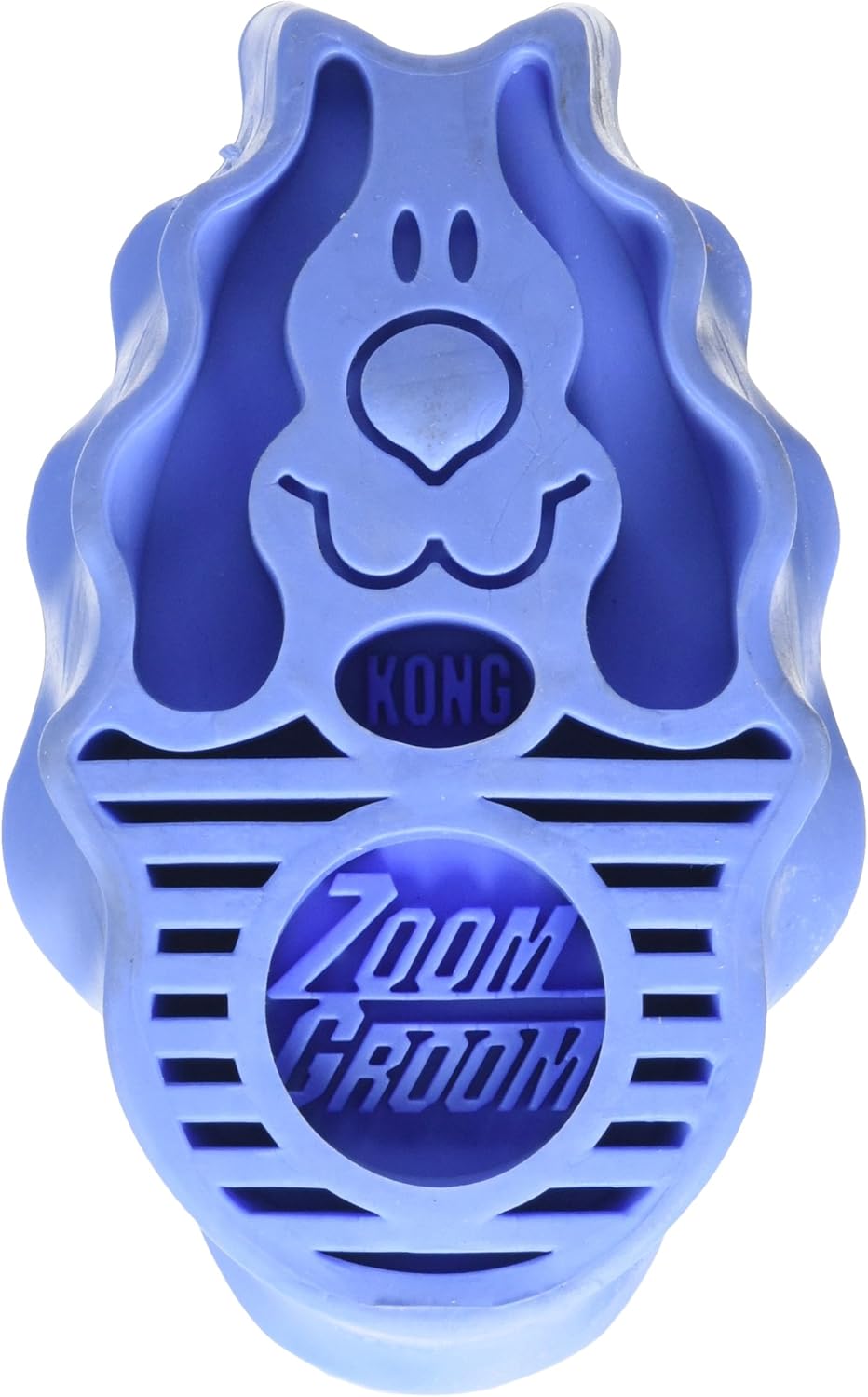
KONG Zoom Groom Brush
Best Gentle Brush
| Bristle Material | Nylon |
|---|---|
| Handle Material | Plastic |
| Unit Count | 1 Count |
| Hair Type | All |
The KONG Zoom Groom is a compact, rubberized grooming brush that works like a wearable mitt to remove loose hair and give a gentle massage. You use it by stroking the coat in the direction of hair growth; the soft nylon nodules lift and collect loose fur while the flexible rubber back conforms to the dog's body, which makes it easy to reach around shoulders and along the flanks. For travel it packs down small, is lightweight, and does not have long teeth or metal parts that could damage a travel bag. The brush also helps distribute skin oils and soothes dogs during grooming sessions, which can reduce shedding between full brushings. Limitations are that it does not detangle heavy mats and is not a substitute for a sturdy slicker or rake on very dense undercoats, so you will still need a larger tool for seasonal blowouts on a Great Pyrenees.
Best for: Owners who want a small, easy-to-pack brush to manage loose hair and provide quick grooming and soothing while away from home.
Less Ideal for: People who need a tool to detangle heavy mats, rapidly remove dense undercoat, or complete full grooming sessions on very large, thick-coated breeds.
- Compact and lightweight for travel
- Flexible rubber body conforms to the dog for comfortable stroking
- Soft nylon nodules lift loose hair while massaging skin
- Useful for calming dogs and promoting natural oil distribution
- Not effective for removing heavy mats or thick undercoat tangles
- Small size means more time required for full-body grooming on large dogs
Verdict: The best gentle brush for shepherds with sensitive skin or low tolerance for grooming, offering effective tangling control with minimal irritation.
BOTH WINNERS Dual-Sided Shedding Blade
Best Compact Brush

| Product Benefits | Undercoat Removal |
|---|---|
| Hair Type | All, Coarse |
| Additional Features | Non Slip |
| Material Type | Metal, Plastic |
This compact dual-sided shedding blade is a travel-friendly grooming tool that removes loose undercoat and surface fur from a wide range of coat types. It has two blade edges — a coarse side for longer coats and a finer side for short coats — so you can switch quickly between thicker and finer shedding without swapping tools. The soft, ergonomic non-slip handle gives good control for short touch-ups or quick de-shedding sessions, and the looped blade design traps loosened hair as you glide it along the coat. Typical use is simple: hold handles apart to cover larger areas or together for focused spots, and use light pressure to avoid irritating the skin. Limitations are that the metal edges can feel sharp if pressed too hard and it is not a substitute for a full brush or professional grooming on dense double coats like a Husky's when deeper undercoat removal is needed. For quick trips, travel, or keeping loose hair down between full groomings this tool is effective and easy to pack.
Best for: Owners who need a small, portable grooming tool for quick de-shedding and touch-ups while traveling or between full grooming sessions.
Less Ideal for: Homeowners seeking a primary grooming tool for heavy double-coated breeds that require deep undercoat removal and regular professional-level grooming.
- Two-sided stainless steel blade offers coarse and fine edges for different coat lengths
- Soft ergonomic non-slip handle provides secure grip for quick touch-ups
- Compact, lightweight design is easy to pack for travel or on-the-go grooming
- Looped blade traps and lifts loose fur for efficient shedding control
- Metal blade edges can irritate skin if too much pressure is applied
Verdict: The best compact brush for owners who need a travel-friendly grooming tool for quick coat maintenance between full sessions.
Tsxurepaw Long-Tooth Undercoat Rake
Best Heavy-Duty Brush

| Manufacturer | Tsxurepaw |
|---|---|
| Product Dimensions | 5.9 x 1 x 5.3 inches |
| Material | Stainless steel teeth |
| Intended use | Undercoat removal for large long-haired dogs |
This long-tooth undercoat rake is built for heavy-duty grooming of large, thick-coated dogs like Siberian Huskies. The 0.94-foot steel teeth penetrate deep into the undercoat to pull out loose hair, reduce mats and tangles, and limit airborne shedding when used regularly. An ergonomic rubberized, non-slip handle gives you control during longer sessions, and the rounded pin tips help the dog tolerate close brushing without irritating the skin. The steel construction is rust-resistant so the tool stands up to frequent use and occasional wet conditions. It is explicitly intended for large, long-haired dogs and is not recommended for short-haired breeds, puppies, or cats. Because the teeth are long and firm, it requires a careful hand on sensitive areas and is best used with short, deliberate strokes rather than aggressive scraping. For owners who groom an active, heavy-shedding Husky often, this rake covers the basics of durability and performance without extra bells and whistles.
Best for: Owners of large, active Huskies who groom frequently and prioritize a sturdy tool that reaches and removes deep undercoat efficiently.
Less Ideal for: People with short-coated dogs, first-time groomers unwilling to learn proper undercoat techniques, or those wanting a multi-pet brush for cats and puppies.
- Long 0.94-foot steel teeth reach deep into dense undercoats to remove loose fur and mats
- Rounded pin tips reduce skin irritation during close grooming
- Ergonomic non-slip rubber handle improves control during extended sessions
- Rust-resistant stainless steel construction designed to tolerate frequent use
- Not suitable for short-haired dogs, cats, or puppies
- Long, firm teeth require careful technique around sensitive areas
Verdict: The best heavy-duty brush for shepherds with thick or coarse coats and owners who require a rugged tool that holds up to regular, intensive grooming.
Choosing the Right Dog Brush Shepherd: Key Factors to Consider
Bristle or Tooth Design
Bristle and tooth design determines how a brush interacts with both the guard hairs and the dense undercoat. Longer, widely spaced metal teeth or curved stainless steel pins can reach through the topcoat to loosen and pull out undercoat without shredding guard hairs, while soft natural bristles sit on the surface to smooth and distribute oils.
Matching the tooth length and spacing to the coat thickness helps prevent pulling and reduces the chance of skin irritation. For shepherds you often need a combination approach: a tool that can penetrate the undercoat for shedding control and a finishing brush to polish the guard hairs.
Handle Ergonomics and Handedness
Grooming a shepherd can take time, so a comfortable handle reduces wrist fatigue and improves control. Look for handles with an ergonomic shape, non-slip texture, and a size that fits your hand; this is especially important when working through mats or holding steady against a wriggling dog.
Some designs include angled heads to maintain contact with the coat without over-flexing the wrist. If multiple family members will groom the dog, choose a neutral grip that works for left- and right-handed users to keep sessions consistent and comfortable.
Clogging and Cleaning Ease
Tools that trap hair in a compact clump or have an easy-release mechanism speed up grooming and reduce the mess. Brushes with self-clean buttons, slide-out combs, or wide gaps between teeth are typically faster to clear than dense bristle paddles that require manual combing.
Consider how often you plan to groom; if you brush daily during heavy shed, a design that clears quickly will save time. Also check for materials that tolerate water and moderate detergents so the tool can be cleaned and dried without rust or degradation.
Effectiveness on Mats and Tangles
Shepherd coats can develop mats behind the ears, under the armpits, and around the tail base. A brush that includes a dematting edge or pairs well with a dematting tool will make regular maintenance easier. Tools with tapered teeth and a gentle cutting action can loosen mats without pulling at the skin.
For stubborn tangles, a staged approach works best: loosen with a detangling tool or conditioner, then follow with a rake or slicker to remove the loosened hair. Choosing a brush that complements this workflow reduces stress for the dog and lowers the risk of creating larger mats.
Material Durability and Rust Resistance
Brushes used on thick coats are exposed to moisture, oils, and repeated stress. Corrosion-resistant metals and durable plastics prevent early failure and keep teeth from bending or breaking. Stainless steel pins or nickel-plated parts typically last longer in wet conditions and tolerate regular cleaning.
Durable materials also maintain consistent tooth spacing and stiffness, which keeps grooming performance predictable over time. For households that bathe dogs outdoors or in humid climates, prioritize rust resistance to avoid rough edges or weakened teeth.
Safety and Skin Contact
Because many brushes reach the skin to remove undercoat, safety features matter. Rounded tips on pins, flexible head mounts, and pressure-distributing designs reduce the risk of abrasions. Brushes that concentrate force into a small area can pinch or scratch when the coat is dense, so look for designs that spread pressure evenly.
If your dog has sensitive skin or prior irritation, choose gentler options and test in a small area before a full session. Regular short sessions are safer than infrequent long ones; this reduces contact stress and lets you monitor skin condition more closely.
How Often Should I Brush a Shepherd to Control Shedding?
Frequency depends on coat density and season. For most shepherds, brushing two to three times per week maintains coat health and prevents light matting, while daily brushing is helpful during peak shedding periods to remove loose undercoat before it accumulates.
Shorter, consistent sessions are better than infrequent long ones because they reduce stress and let you find and treat small tangles early. Combine a rake or de-shedding tool for undercoat removal with a finishing brush to smooth guard hairs and distribute natural oils.
- Daily brushing during seasonal blowouts
- Two to three times weekly in steady-state seasons
- Short 10–15 minute sessions to reduce stress
What Is the Safest Way to Remove Mats Without Hurting My Dog?
Begin by applying a detangling spray or conditioner to soften the knot, then gently tease the mat apart with fingers before using a dematting tool. Work from the edges of the mat inward and hold hair close to the skin to prevent pulling on the skin itself.
If a mat is close to the skin or very tight, trim it out carefully rather than pulling. For stubborn mats, multiple short sessions and patience are safer than forcing the mat out in a single attempt.
- Soften with conditioner or detangler first
- Loosen edges with fingers or a wide-tooth comb
- Trim only when necessary and with caution
Which Grooming Tools Pair Well with a Brush for Shepherds?
A de-shedding tool or rake helps extract the loose undercoat that many brushes cannot reach, while a slicker or bristle brush smooths the guard hairs and removes surface debris. Dematting tools are useful for problem areas, and a wide-tooth comb is handy for checking for missed tangles and for finishing.
Keep a small spray bottle of water or detangler on hand to ease stubborn tangles and reduce static. A grooming mat or towel under the dog can collect removed hair and make cleanup easier after a session.
- Rake or de-shedding tool for undercoat removal
- Slicker or bristle brush for finishing
- Dematting tool and wide-tooth comb for problem areas
How Can I Make Grooming a Calm Experience for a Shepherd?
Create a routine with positive reinforcement such as treats and praise to help your dog associate grooming with positive outcomes. Start with short sessions and gradually increase length as the dog becomes more comfortable.
Use slow, steady strokes and avoid abrupt moves. If your dog shows signs of stress, pause and give a break or switch to a less invasive tool. Consistency and a calm handler voice go a long way toward making grooming a cooperative activity.
- Short, consistent sessions build tolerance
- Use treats and praise as positive reinforcement
- Switch tools or pause if the dog shows stress
Should I Groom a Shepherd Before or After Bathing?
Brushing before a bath removes loose hair and tangles so shampoo can reach the coat more evenly and rinses are more effective. Post-bath grooming is useful after drying to realign guard hairs and remove any remaining loose undercoat that surfaced while wet.
If you bathe infrequently, a quick pre-bath detangle pass prevents mats from tightening when wet. After bathing, make sure the coat is mostly dry before using metal-tooth tools to avoid skin irritation and allow tools to work more predictably.
- Pre-bath brushing removes loose hair and tangles
- Post-bath grooming polishes the coat after drying
- Avoid heavy metal tool use on fully wet skin
How We Chose the Best Dog Brush Shepherd
We evaluated items that are widely recommended for dense double-coated dogs and filtered for options that balance effectiveness with gentleness. Our editorial filters prioritized tools that remove loose undercoat without damaging guard hairs, have ergonomic handles for extended sessions, and are designed to resist clogging so grooming stays quick. Concrete criteria included bristle or tooth design and spacing, suitability for dense double coats, build quality and corrosion resistance, user ergonomics and anti-slip handles, and ease of cleaning during and after grooming. We also considered whether the design reduced the risk of skin irritation and how well a tool handled mats and tangles. Excluded from consideration were tools intended exclusively for fine-haired breeds, single-use disposable grooming mitts, and any items lacking clear evidence of durability or that required specialized maintenance. The final shortlist reflects tools that meet practical grooming needs for shepherds while minimizing discomfort and maximizing coat health.
Our full evaluation process is outlined in our review methodology.
FAQ
Can I use a slicker brush on a shepherd every day?
Slicker brushes can be used often but daily use may irritate sensitive skin if strokes are too harsh. Use light pressure, focus on surface smoothing, and alternate with gentler tools when doing longer sessions.
Will a de-shedding tool damage my shepherd's guard hairs?
When used correctly, a de-shedding tool targets undercoat and should not strip healthy guard hairs. Use the tool at the correct angle and avoid excessive force to preserve the outer coat.
How do I know if a brush is causing skin irritation?
Look for redness, flaking, or your dog flinching when you brush; these signs suggest the tool may be too stiff or you are applying too much pressure. Switch to a gentler brush and check the skin closely for sores or hot spots.
Is it better to brush with or against the grain on a shepherd?
Brush primarily in the direction of hair growth to avoid stressing guard hairs, using short, targeted passes against the grain only on areas with loose undercoat. Work gently when going against the grain and test a small area first.
How can I reduce the amount of loose hair in the house?
Increase brushing frequency during shedding seasons, use a de-shedding tool to remove undercoat at the source, and vacuum or lint-roll common areas regularly. Regular grooming keeps loose hair from accumulating on furniture and clothing.
Final Verdict
Choosing the right brush for a shepherd is about balancing undercoat removal with gentle treatment of the guard hairs and skin. Prioritize tools with appropriate tooth length and spacing, comfortable handles, and durable, rust-resistant materials to make regular grooming efficient and safe. Accept that tradeoffs exist: the most aggressive tool removes undercoat fastest but may need gentler technique, while softer finishing brushes improve coat sheen but do less undercoat work. Pick a primary undercoat tool and a finishing brush, keep sessions short and consistent, and adjust technique based on your dog's comfort for the best long-term results.

