

If your dog has a dense undercoat, the right brush makes a big difference in managing shedding, preventing matting, and keeping skin healthy. You need tools that reach the dense layer beneath the topcoat without pulling or irritating the skin. This guide shortlists the top options for thick undercoat grooming and explains the features that matter for durability, comfort, and effectiveness. Below you'll find our top picks and clear guidance on what to prioritize when choosing a brush for heavy double coats.
Top Picks at a Glance
| Best Overall Brush A top all-around pick that suits most thick undercoats | FURminator Undercoat deShedding Tool Large |  |
| Best Budget Brush An affordable option that still handles thick undercoat reasonably well | DSKRUI Undercoat Rake |  |
| Best Premium Brush A higher-end tool with superior materials and grooming performance | Chris Christensen Slicker Brush Medium |  |
| Best Deshedding Brush Designed specifically to remove loose undercoat hair and reduce shedding | SleekEZ Deshedding Brush 5 Inch |  |
| Best Gentle Brush A softer option for sensitive skin or short grooming sessions | Pecute Self-Cleaning Slicker Brush |  |
| Best Compact Brush A smaller, travel-friendly brush that still manages dense coats | Maxpower Planet Grooming Rake |  |
| Best Ergonomic Brush Comfortable grip and smart design for longer grooming sessions | JW GripSoft Undercoat Rake Regular |  |
FURminator Undercoat deShedding Tool Large
Best Overall Brush

| Intended breed size | Large dogs (over 50 lbs) |
|---|---|
| Coat type | Short hair, double coat |
| Feature | FURejector hair release button |
| Handle | Ergonomic |
The FURminator Large Undercoat deShedding Tool is made to reach through a Labrador's topcoat and pull loose undercoat hair without cutting the topcoat when used as directed. In practice you hold the ergonomic handle and stroke the stainless steel teeth in the direction of hair growth, working from head to tail and using gentle, long passes; the curved edge helps the blade follow the dog's body contours for more comfortable grooming. The FURejector button makes removing accumulated hair from the tool quick and tidy. Regular weekly use is intended to cut the amount of shed hair left around the house and to help keep the coat cleaner between baths. Important limitations are that it targets undercoat rather than detangling or styling, and aggressive or repeated strokes can irritate skin so careful technique is required, especially around thin-skinned areas. For Labradors with heavy seasonal shedding, this tool delivers focused undercoat removal that reduces loose hair when used properly.
Best for: Owners of Labradors who want a focused tool to reduce loose undercoat hair in the home and are willing to groom regularly using gentle, correct technique.
Less Ideal for: People who need a multi-purpose grooming tool for detangling, finishing, or working on long matted coats should consider a different brush or add complementary tools.
- Stainless steel teeth designed to reach and remove loose undercoat hair without cutting the topcoat when used as directed
- Curved edge that conforms to the dog’s body for more comfortable grooming on large breeds
- Ergonomic handle reduces wrist fatigue during longer sessions
- FURejector button quickly releases collected hair for easy cleanup
- Not a detangling brush so it will not replace a comb or slicker for mats
- Can irritate skin if used with excessive pressure or repeated strokes in one area
Verdict: The best overall brush balances effective undercoat removal, comfort for the dog, ease of cleaning, and durable construction for everyday grooming.
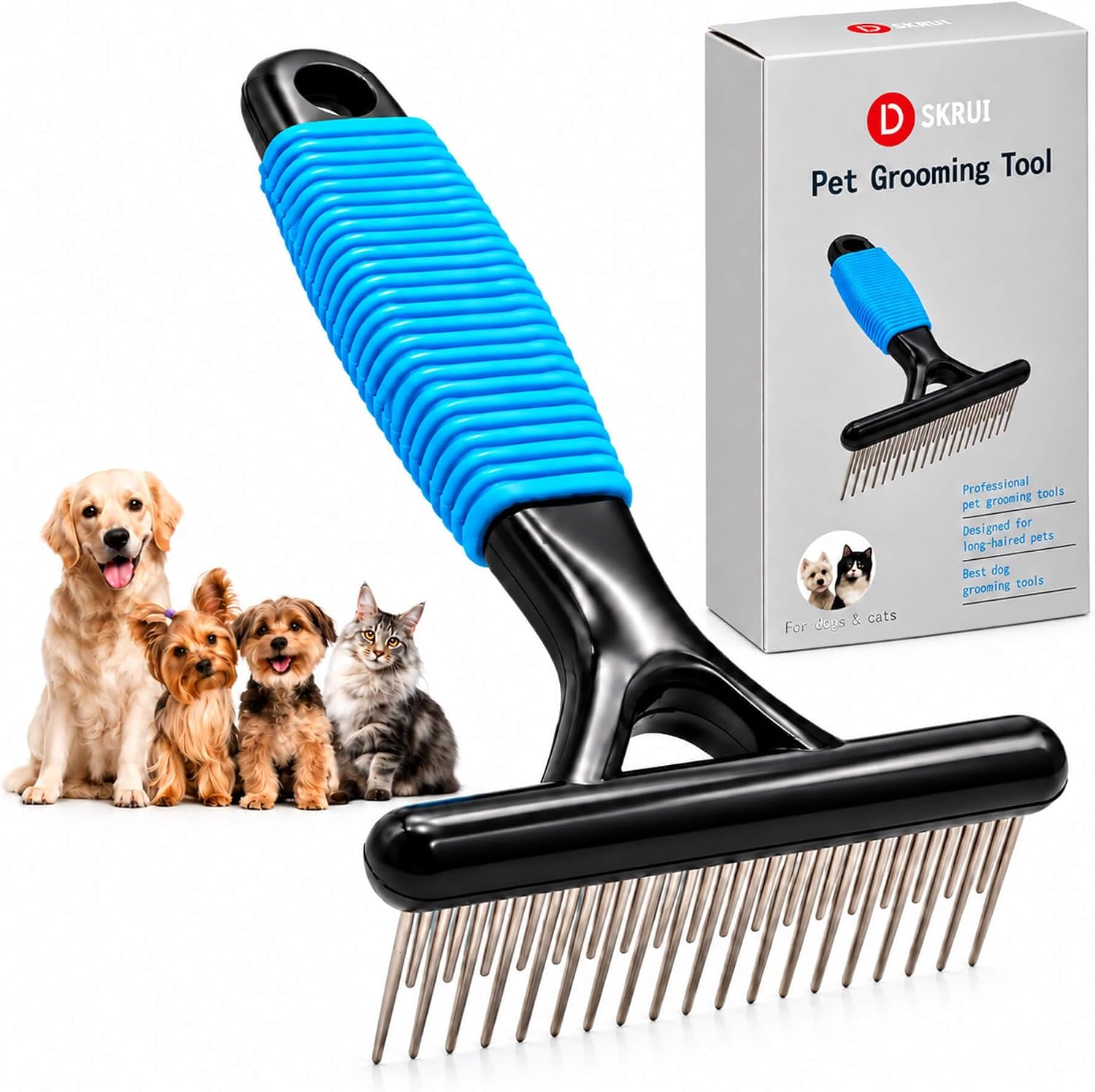
DSKRUI Undercoat Rake
Best Budget Brush
| Power Source | Manual |
|---|---|
| Hair Type | All |
| Material Type | Metal |
| Unit Count | 1 Count |
The DSKRUI undercoat rake pairs long and short stainless steel teeth to work through dense undercoats in a single pass, lifting mats with the long teeth and smoothing the top coat with the short teeth. It is used on dry coats with short, controlled strokes and is intended for breeds with medium to long undercoats; rounded stainless pins reduce the risk of scratching while providing a massaging action. The rubberized, non-slip handle helps maintain control during longer sessions and the manual design means no batteries or charging. At this price point the build is straightforward metal and plastic rather than premium materials, but it still delivers effective de-shedding for routine grooming and can cut brushing time when used correctly. Users should avoid forcing the rake through very tight mats and may need scissors or a dematting tool for severe tangles, and heavy users may find the tool shows wear sooner than higher-end groomer tools.
Best for: Buyers who want an affordable, practical tool for regular de-shedding of medium to long undercoats and prioritize straightforward, no-power grooming that still removes loose hair effectively.
Less Ideal for: Owners facing chronic, severe matting or professional groomers who need a heavier-duty, longer-lasting tool should consider more robust dematting equipment.
- Alternating long and short stainless steel teeth tackle undercoat and top coat in one pass
- Rounded steel pins minimize skin scratching while grooming
- Rubberized non-slip handle improves grip and reduces hand fatigue
- Manual design requires no power and is simple to use for routine sessions
- Not intended to force through very tight or cemented mats and may require additional dematting tools
- Basic metal and plastic construction may wear faster than premium groomer tools
Verdict: The best budget brush gives pet owners reliable de-shedding performance and acceptable durability at a lower price point for routine grooming.
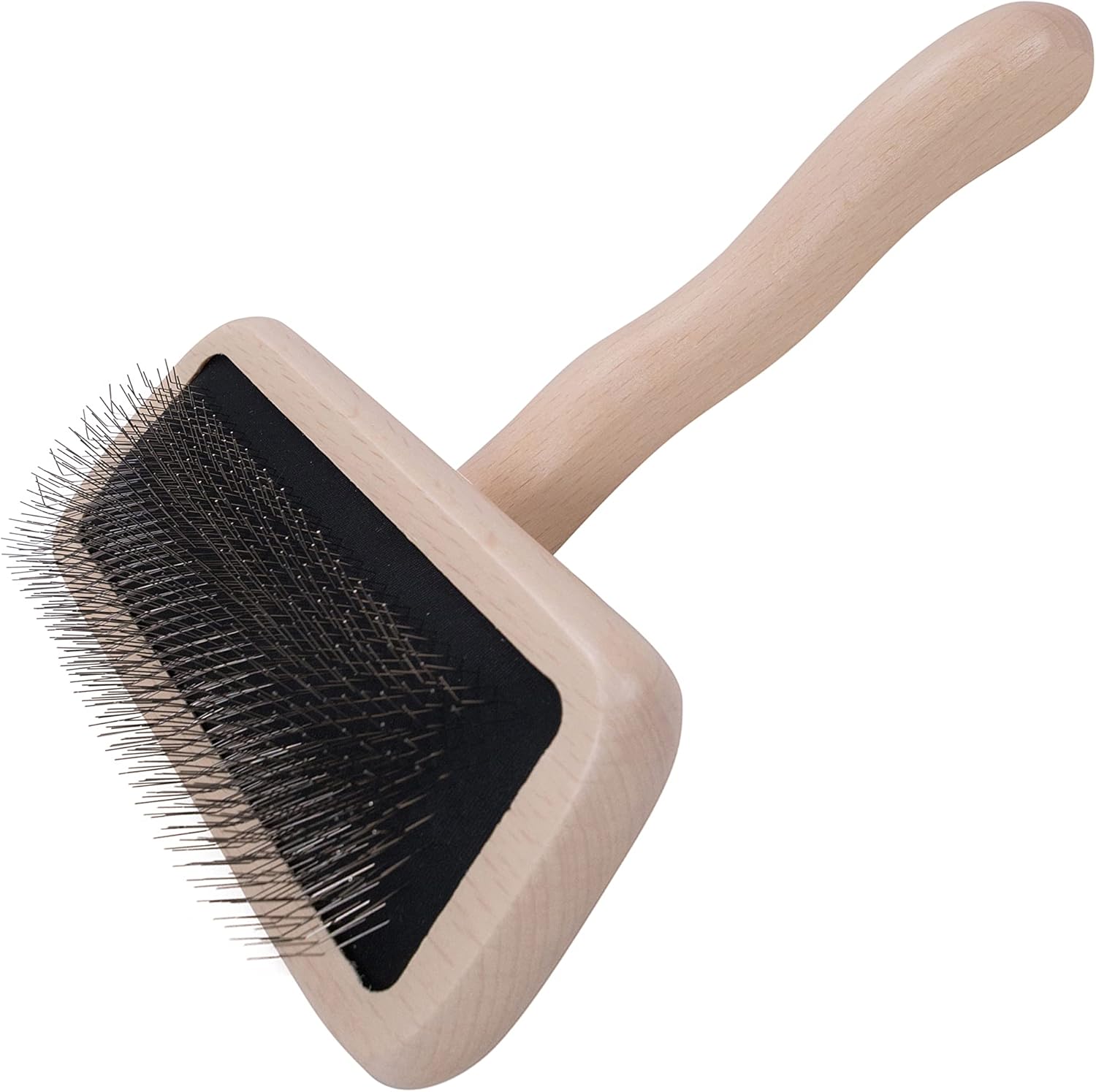
Chris Christensen Slicker Brush Medium
Best Premium Brush
| Bristle Material | Stainless Steel |
|---|---|
| Handle Material | Stainless Steel |
| Pin Length | 17 mm |
| Hair Type | All |
The Chris Christensen Slicker Brush is a professionally oriented grooming tool built to tackle tangles, matting, and heavy undercoat shedding. It uses 17 mm stainless steel pins set in a black pin pad and a non-slip ergonomic handle so you can work through dense coats without losing grip. In use it performs like a traditional slicker: short strokes and gentle lifting remove loose undercoat and surface debris while also helping to fluff and finish thicker coats. The metal pins and metal handle point to durability that should outlast cheaper plastic brushes, making it a reasonable investment for owners who brush frequently or prep dogs for shows. Expect to spend a little more time on sensitive areas and to adjust pressure for dogs with thin skin since the firm pins are effective but can feel sharp if pressed too hard. It is sized for medium use but the same design is offered in other sizes for larger or smaller breeds.
Best for: Owners who want a professional-grade brush for heavy undercoat maintenance and are willing to invest in a durable, long-lasting grooming tool.
Less Ideal for: People seeking a soft, massaging brush for daily light grooming or anyone who prefers fully cushioned, gentle pins for young puppies or very thin-skinned dogs.
- 17 mm stainless steel pins effectively lift and remove dense undercoat and loose hair
- Ergonomic, non-slip handle provides secure grip during longer grooming sessions
- Durable metal construction (pins and handle) built for frequent, professional use
- Works on all coat types and can also fluff and finish heavy or curly coats
- Firm stainless pins require careful pressure on sensitive skin and puppies
- Medium size may not be optimal for very large or very small breeds without choosing another size
Verdict: The best premium brush delivers top-tier undercoat removal, long-lasting materials, and ergonomic design for owners willing to invest in professional-level grooming.
SleekEZ Deshedding Brush 5 Inch
Best Deshedding Brush

| Item model number | 4121411 |
|---|---|
| Manufacturer | SleekEZ |
| UPC | 731236552734 |
The SleekEZ Deshedding Brush uses a patented metal deshedding blade to grab loose fur at the tips and pull it out without cutting healthy hair, making it useful for routine grooming and heavy-shed seasons. You use it with smooth strokes from head to tail, applying light to moderate pressure depending on coat density; the same tool can also be used as a carpet or upholstery rake to lift embedded pet hair. Its compact 5 inch profile and lightweight construction make it easy to handle for quick touch-ups and weekly maintenance, and cleanup is straightforward since the lifted fur collects where you can remove it by hand. The brush performs well on short, medium, long, and double-coated breeds but is not recommended for curly or non-shedding coats. Expect to use it more frequently during seasonal blowouts, and be careful to follow the directions to avoid overworking sensitive areas around the face and belly.
Best for: Buyers who want a single, easy-to-use groomer that handles most shedding coat types and reduces the need for frequent professional deshedding.
Less Ideal for: Owners of dogs with curly or non-shedding coats or those who need a wide-head tool for very large breeds should consider specialized alternatives.
- Patented blade designed to lift and remove loose fur and undercoat without cutting healthy hair
- Works across short, medium, long, and double-coated breeds
- Also functions off-pet as a hair remover for carpets, upholstery, and car interiors
- Compact, lightweight design is easy to hold for short grooming sessions
- Not recommended for curly or non-shedding coat types
- Small 5 inch head may require more passes on very large dogs
Verdict: The best deshedding brush is optimized to reach the undercoat, remove loose fur efficiently, and noticeably reduce shedding with regular use.
Pecute Self-Cleaning Slicker Brush
Best Gentle Brush

| Item model number | PGT-SB05 |
|---|---|
| Bristle Material | Stainless Steel |
| Handle Material | ABS+TPR+ Non-Slip Coating |
| Item Weight | 3.1 ounces |
The Pecute self-cleaning slicker brush is a compact grooming tool built to pull loose undercoat and dander from short-to-medium and double-coated pets. You use it like a standard slicker brush, working section by section along the direction of hair growth; the 135° stainless-steel bristles reach into the undercoat while capped tips give a gentle massage that most pets tolerate. A one-click hair ejection button clears accumulated fur quickly, which reduces cleanup and makes routine brushing faster. The non-slip TPR handle and 3.1-ounce weight keep sessions comfortable so you can groom multiple times a week without wrist fatigue. It is optimized for small to medium animals and performs well on heavy shedders with straight or double coats, but the bristle design and size mean it is not intended for very long, very curly, or fragile hair types. For owners of large, dense-coated breeds you may need a larger undercoat rake to move heavy mats more efficiently, but for regular deshedding on a budget this brush offers strong day-to-day value.
Best for: Siberian Husky caretakers looking for an inexpensive, easy-to-use deshedding tool to manage regular shedding sessions without salon-level expense.
Less Ideal for: Owners who need a heavy-duty, full-size undercoat rake for large-area de-shedding or for detangling significant mats should consider a larger, more aggressive tool.
- Self-cleaning button ejects collected fur for fast cleanup
- 135° stainless steel bristles reach the undercoat while capped tips reduce skin irritation
- Lightweight with a non-slip TPR handle for comfortable, frequent grooming
- Works well on double coats and short-to-medium hair types common to shedding breeds
- Brush head and bristle spacing are small so heavy matting on large breeds may require a separate rake
- Not recommended for very long, very curly, or fragile coats
Verdict: The best gentle brush is ideal for dogs with sensitive skin or those that dislike intense grooming, offering effective smoothing without irritation.
Maxpower Planet Grooming Rake
Best Compact Brush

| Item model number | PGT-002 |
|---|---|
| Manufacturer | Maxpower Planet |
| UPC | 850050643067 |
| ASIN | B07P2N8HQH |
The Maxpower Planet Grooming Rake is a two-sided deshedding tool that combines a nine-teeth side for breaking up mats and tangles with a 17-teeth side for thinning and removing loose undercoat. It is used on dry coats and is intended primarily for pets with dense or double fur; start with the coarser side to work through problem areas, then finish with the finer side for overall deshedding. The teeth are sharpened but rounded, which lets the rake lift loose hair and trapped dirt while minimizing irritation when used with light, short strokes. A rubber-coated, non-slip handle keeps the tool comfortable and controllable during longer sessions, and the design sheds fur cleanly instead of packing it into the teeth. Important limitations: the rake is not effective on very short, fine coats because the teeth will glide over the surface, and it requires gentle technique around sensitive areas to avoid catching skin. For heavy shedders with thicker coats this rake is an efficient, handheld solution that reduces loose undercoat when used regularly.
Best for: Buyers who need a handheld deshedding solution for dogs or cats with thick fur or dense double coats and who prioritize removing undercoat to cut down on loose hair around the home.
Less Ideal for: Owners of short-haired breeds with fine coats or people wanting a tool that works aggressively without careful technique should consider alternatives designed for short coats or softer contact.
- Dual-sided heads for dematting (9 teeth) and deshedding (17 teeth) provide a clear workflow for mats then undercoat
- Sharpened yet rounded teeth lift loose hair and dander while reducing surface irritation when used gently
- Non-slip rubber-coated handle makes longer grooming sessions easier to control
- Design sheds hair out of the teeth rather than packing it, simplifying cleanup
- Not effective on very short, fine coats where teeth cannot engage hair
- Requires careful, gentle technique near sensitive areas to avoid catching loose skin
Verdict: The best compact brush suits owners who need a portable grooming tool that fits in a bag while still handling thick undercoats adequately.
JW GripSoft Undercoat Rake Regular
Best Ergonomic Brush

| Hair Type | All |
|---|---|
| Power Source | Battery Powered |
| Material Type | Plastic |
| Size | One Size |
The JW GripSoft Undercoat Rake is a simple, manual tool for loosening light mats and removing dead undercoat hair. It is used by running the row of round-tipped teeth through the coat to lift and extract shedding hair from the underlayer, with the non-slip ergonomic handle designed to reduce hand fatigue during longer sessions. For dense double-coated breeds like Corgis the rake helps reduce loose underfur when used regularly and targets lightly matted areas without aggressive cutting. Its plastic construction keeps it lightweight and easy to maneuver, but it relies on user pressure and technique rather than mechanical power, so sessions for heavy shedding will take time. The tool is best suited to routine maintenance and spot dematting rather than heavy-duty, professional-level stripping. It is low-maintenance, easy to rinse, and comfortable to hold, though owners who need faster removal or motorized action may want a powered deshedding tool instead.
Best for: Corgi owners who groom at home and want a comfortable, reliable rake for regular undercoat maintenance and light dematting.
Less Ideal for: Owners who need fast, high-volume undercoat removal or professional-grade durability should consider a motorized deshedding tool or heavy-duty metal rake.
- Round-tipped teeth that lift undercoat hair without harsh scraping
- Ergonomic, non-slip GripSoft handle reduces hand fatigue
- Lightweight and easy to maneuver for targeted grooming
- Effective at loosening light mats and extracting dead undercoat fur
- Manual tool so removing heavy seasonal undercoat can be time consuming
- Plastic construction is less durable than all-metal pro rakes
Verdict: The best ergonomic brush reduces hand fatigue during longer sessions and improves control, making it easier to groom thick-coated dogs thoroughly.
Choosing the Right Dog Brush Thick Undercoat: Key Factors to Consider
Tooth or Blade Design
The shape, length, and spacing of teeth or blades determine how well a brush reaches the dense undercoat without damaging the topcoat. Longer, moderately spaced teeth or fine metal blades can penetrate a double coat to pull loose undercoat fibers up to the surface. Rounded tips and protective edges reduce the risk of scratching or irritating the skin during repeated passes.
Pay attention to whether the brush uses rigid metal teeth or softer rubber components; rigid designs usually remove more hair but require careful technique, while softer options can be gentler on sensitive dogs. For heavy shedding, teeth that prevent clogging and allow easy hair release will speed grooming sessions and improve results.
Comfort and Ergonomics
Grooming a thick-coated dog can take time, so handle comfort matters. Non-slip grips, balanced weight, and ergonomically shaped handles reduce wrist fatigue and help you maintain consistent pressure across long sessions. Some handles are contoured for different hand sizes or include shock-absorbing features to soften repeated strokes.
If you groom frequently, a lighter tool with a secure grip will make it easier to control speed and angle, which helps avoid pulling tangles. Consider whether the brush is suited for one-handed use, and whether it fits comfortably in your hand when you reach under the dog's belly or around the hindquarters.
Safety for Skin and Coat
A brush must remove undercoat without causing skin abrasions, follicle damage, or splitting the topcoat. Look for features like rounded tips, protective guards, or flexible heads that conform to the dog's body shape. Brushes that concentrate pressure on a small area risk causing discomfort; tools that distribute pressure help gather loose hair without digging into the skin.
For dogs with sensitive skin, choose brushes designed to minimize friction and avoid aggressive tooth profiles. Proper technique matters too: use light, consistent strokes and check the skin frequently for redness or irritation during the first few grooming sessions.
Hair Collection and Cleaning
How a brush manages collected hair affects grooming speed and maintenance. Brushes that trap hair in an easy-to-remove compartment or include a quick-release mechanism speed cleanup between passes. Others require manual plucking of hair from teeth, which can be time-consuming with dense undercoat.
Also consider how easy the tool is to sanitize; removable heads or simple designs that tolerate running water make it easier to remove oils and debris. If you share grooming duties across seasons, a low-maintenance design reduces the time spent cleaning the brush after heavy shedding periods.
Durability and Materials
Brushes that work through heavy seasonal shedding need sturdy construction. Metal teeth should resist bending, and handles should withstand repeated pressure without cracking. Corrosion-resistant materials and reinforced attachment points extend service life, especially if you rinse the brush often.
Warranty, replacement parts, and overall build quality matter because inferior materials can wear out quickly when used on thick double coats. Durable tools also provide more consistent performance over several seasons.
Suitability for Coat Type and Size
Not all undercoat brushes suit every dog with a heavy coat. The length and density of the undercoat, the thickness of the topcoat, and the dog's size affect which tool is best. Wide heads and longer teeth are efficient for large dogs with broad bodies, while smaller, more maneuverable brushes work better for compact breeds or hard-to-reach areas.
Consider whether the brush will be used on puppies or senior dogs with more delicate skin, and whether it will be applied to commonly matted zones like behind the ears and under the legs. Matching the brush size and aggressiveness to the animal prevents overworking small areas and ensures even grooming coverage.
How Often Should I Groom a Dog with a Thick Undercoat?
For dogs with a dense undercoat, frequency depends on season and activity. During peak shedding periods, many owners groom two to three times per week to remove loose hair and prevent mats. In non-shedding months, a weekly session often suffices to keep undercoat buildup under control.
Shorter, more frequent sessions are usually better than infrequent long sessions because they reduce tugging and make the dog more comfortable. Monitor for shedding spikes after changes in daylight or temperature and increase grooming temporarily when needed.
- Peak shedding: 2–3 times per week
- Off-season maintenance: once weekly
- Short sessions reduce stress and pulling
What Grooming Technique Reduces Pulling and Skin Irritation?
Use gentle, consistent strokes that follow hair growth; avoid aggressive back-and-forth scrubbing. Start with light pressure to assess how much loose undercoat comes up and only increase pressure where necessary. Work in sections and lift flaps of hair to reach the undercoat without compressing the topcoat.
If you encounter mats, stop and use a de-matting tool or fingers to loosen knots before continuing with undercoat removal. Always check the skin after the first few passes to ensure there is no redness or discomfort.
- Work in small sections
- Follow hair growth direction
- Loosen mats before brushing
Can a Brush Damage My Dog's Topcoat?
A properly chosen and used brush should not damage the topcoat. Damage typically occurs when teeth are too aggressive or when excessive force is applied repeatedly. Selecting a brush with rounded tips or protective edges and using correct technique prevents splitting or fraying of guard hairs.
If you notice dullness, breakage, or excessive shedding after brushing, switch to a gentler tool and reduce session length until the coat recovers.
- Use rounded tips for protection
- Avoid excessive force
- Switch to gentler tools if damage appears
How Do I Handle Mats and Tangles in a Heavy Undercoat?
Tackle mats by first loosening them with your fingers or a wide-tooth comb, then use targeted de-matting tools if needed. Work from the outer edges of a mat toward the center to reduce pulling on the skin. For stubborn mats, apply a detangler or a small amount of conditioner to ease separation.
Preventing mats is easier than removing them: regular grooming, attention to moist or dirty areas after exercise, and keeping hair trimmed in high-friction zones will reduce mat formation over time.
- Loosen mats by hand before brushing
- Work from edge to center
- Use detangler for stubborn tangles
When Should I See a Professional Groomer or Vet?
Seek professional help if mats are too tight to remove without causing pain, if you find skin sores or persistent redness, or if your dog resists grooming despite gradual desensitization. A groomer can safely remove severe matting and recommend long-term maintenance strategies.
Consult a veterinarian when you see signs of infection, irritated or bleeding skin, sudden coat loss, or if your dog shows strong behavioral distress during grooming that might indicate an underlying medical issue.
- Professional groomer for severe mats
- Vet for sores, infections, or sudden coat loss
- Ask professionals for long-term grooming plans
How We Chose the Best Dog Brush Thick Undercoat
We evaluated candidate brushes using criteria specific to thick undercoat grooming to identify tools that work reliably and safely. Our primary considerations were hair-removal efficiency, measured by how much loose undercoat a brush removes per pass; blade or tooth design, including length, spacing, and shape to reach the undercoat without harming the topcoat; handle ergonomics and grip for comfortable use during longer sessions; and materials and durability so the tool lasts through repeated seasonal shed cycles. We also prioritized brushes that minimize skin irritation, including those with rounded tips or protective edges, and those that include a mechanism to clear collected hair easily. Ease of cleaning and maintenance was another practical filter. We excluded tools intended primarily for styling or trimming rather than undercoat removal, and we did not include brushes unsuitable for medium or short single coats. The final list reflects balance among effectiveness, safety, user comfort, and build quality.
Our full evaluation process is outlined in our review methodology.
FAQ
Is a rake or a slicker brush better for thick undercoat?
It depends on the coat density and the dog's tolerance. Rakes or undercoat tools often penetrate deeper and remove more loose undercoat, while slicker brushes can smooth and finish the topcoat. Many owners use a combination: an undercoat tool for shedding and a slicker to tidy the surface.
Can I use a human brush or comb on my dog's thick undercoat?
Human brushes and combs are usually not designed for dense double coats and may not reach or remove the undercoat effectively. Using tools made for thick dog coats reduces grooming time and lowers the risk of skin irritation.
How long should a grooming session last for a large, thick-coated dog?
Session length varies with coat condition, but 15 to 45 minutes per session is common. Split longer sessions into shorter segments with breaks to keep the dog relaxed and reduce stress on the skin.
Will regular brushing reduce seasonal shedding?
Regular brushing reduces loose hairs that would otherwise shed around the home and can lessen the appearance of seasonal shedding. It does not eliminate the natural shedding cycle, but consistent grooming prevents heavy mats and distributes skin oils for a healthier coat.
What should I do if my dog pulls away or shows discomfort during brushing?
Stop and reassess technique: lighten pressure, shorten the session, and offer rewards to reduce anxiety. Gradually desensitize the dog by touching the grooming area and rewarding calm behavior before introducing the brush. If discomfort continues, check for skin issues and consult a vet.
Final Verdict
Choosing the right brush for a thick undercoat means balancing effectiveness with safety and comfort. Prioritize a tool with a tooth or blade design suited to penetrate the dense undercoat, an ergonomic handle for longer sessions, and safety features that protect the skin. Consider how easy the brush is to clean and whether its size matches your dog's body. Accept some tradeoffs: the most aggressive tools remove hair fastest but require careful technique and monitoring for skin irritation, while gentler tools are safer for sensitive dogs but may need more time. Focus on steady, regular grooming and choose a brush that fits your dog's coat density and your own handling preferences to get the best long-term results.

