

Finding the right buzz collar matters because stimulation tools can speed up training but must be used safely and effectively. If you want a reliable collar that helps reduce unwanted behaviors, you need one that fits well, delivers consistent stimulation, and offers straightforward controls. This guide shortlists the top buzz collars that meet those needs and explains the practical tradeoffs you should expect. Read on to see how the options compare on stimulation modes, fit, and ease of use before you pick the collar that works for your dog.
Top Picks at a Glance
| Best Overall Buzz Collar The best all-around pick for most dog owners and trainers | DogRook No-Shock Bark Collar Medium |  |
| Best Budget Buzz Collar A low-cost option that covers core features without extras | Svtrat Bark Collar |  |
| Best Premium Buzz Collar Higher-end materials, advanced features, and refined performance | Garmin Sport PRO Training Collar |  |
| Best Compact Buzz Collar A smaller, low-profile unit suited for small dogs or subtle use | FASHILEAD Vibrating Dog Collar Small |  |
| Best Rechargeable Buzz Collar Built-in rechargeable battery for frequent use and easy charging | SODOG No Shock Training Collar KT47 |  |
| Best Heavy-Duty Buzz Collar Rugged construction and stronger components for active or tough dogs | PaiPaitek PD 519V Vibrating Dog Collar |  |
| Best Adjustable Buzz Collar Wide sizing range and easy adjustments for a secure, custom fit | ABBIDOT Shock Collar AB-T70 |  |
DogRook No-Shock Bark Collar Medium
Best Overall Buzz Collar

| Power | USB rechargeable |
|---|---|
| Training modes | 2 vibration modes, 7 sound levels |
| Sensitivity levels | 5 levels |
| Fit | Adjusts up to 22 inches |
| Water resistance | Waterproof |
The DogRook No-Shock Bark Collar is a rechargeable anti-barking device that trains dogs using vibration and beep sound rather than shock. It mounts on an adjustable nylon strap and is typically used during supervised training sessions indoors or outdoors to reduce excessive barking. Key features include a microphone-based smart sensitivity adjustment, two vibration modes, seven sound levels, five sensitivity settings, and USB recharging that the brand says can deliver up to 14 days of use per charge. Practical benefits are simple controls, included prong covers to accommodate long-haired dogs, and waterproofing for outdoor use. Important limitations are that it is intended for training use only (no leash ring and should be repositioned every 2–4 hours and not worn over 12 hours a day), and some buyers may prefer collars with remote control or automatic logging features that this unit lacks. The collar is sized to fit necks up to 22 inches and targets dogs in the small-to-medium weight range, making it straightforward for owners who want a low-stress, rechargeable option for bark management.
Best for: Buyers who prioritize a rechargeable, low-stress training tool and want dependable run time between charges for regular supervised bark control sessions with puppies or small dogs.
Less Ideal for: Owners seeking a collar for unsupervised all-day wear, integrated remote training, or those who prefer shock-based deterrents should consider other options.
- Rechargeable via USB for repeated use without replacing batteries
- Multiple vibration modes and seven sound levels for progressive, non-shock correction
- Smart microphone sensitivity with adjustable levels to reduce false triggers
- Waterproof design suitable for indoor and outdoor training
- Includes prong covers for long-haired dogs to improve contact
- Not intended for continuous wear; requires repositioning every few hours and limited daily wear time
- No leash attachment or remote feature for off-collar control
Verdict: The best overall buzz collar that balances reliable stimulation modes, comfortable fit, battery life, and ease of use for everyday training and behavior correction.
Svtrat Bark Collar
Best Budget Buzz Collar

| Training modes | Beep, Vibration, Beep+Vibration, Beep+Vibration+Shock |
|---|---|
| Adjustable levels | 7 sensitivity and 7 intensity levels |
| Rechargeable | USB recharge, ~15 days run time |
| Water resistance | IP65 waterproof |
The Svtrat Bark Collar is a compact, rechargeable anti-bark device that automatically detects barking and applies one of several corrections to discourage the behavior. It offers four main modes (beep, vibration, beep+shock, beep+vibration+shock) with seven levels of intensity and seven sensitivity settings so you can match output to your dog's size and reactivity. The collar uses a smart sound-and-vibration sensor to reduce false triggers from other dogs and includes a built-in safety pause that temporarily disables stimulation if the unit triggers repeatedly. Charging is via USB and a full charge is said to last up to about two weeks in typical use, and the IP65 rating means the collar tolerates rain and splashes. Practical limitations are that shock levels are part of its feature set so it is not suitable for owners who want only non-corrective training, and some users report mixed reliability in detection on very small or very deep voices. For buyers prioritizing low cost but needing basic, adjustable shock and vibration control, this model covers the essentials without extra frills.
Best for: Owners who need a low-cost, no-frills bark control device that still provides adjustable shock and vibration intensity for measurable behavior correction.
Less Ideal for: People who want only non-corrective training tools or who need premium detection accuracy and advanced safety tuning should consider alternatives.
- Multiple correction modes including beep, vibration, and shock with seven intensity levels
- Adjustable sensitivity to help filter other dogs and reduce false triggers
- USB rechargeable with up to around 15 days of reported runtime
- IP65 water resistance suitable for rain, splashes, and outdoor use
- Includes shock modes which may be unacceptable to owners seeking only positive or humane-only methods
- Some users report inconsistent detection on very small or atypical barks
Verdict: The best budget buzz collar for owners who need basic stimulation and a safe, functional design at a minimal price without premium bells and whistles.
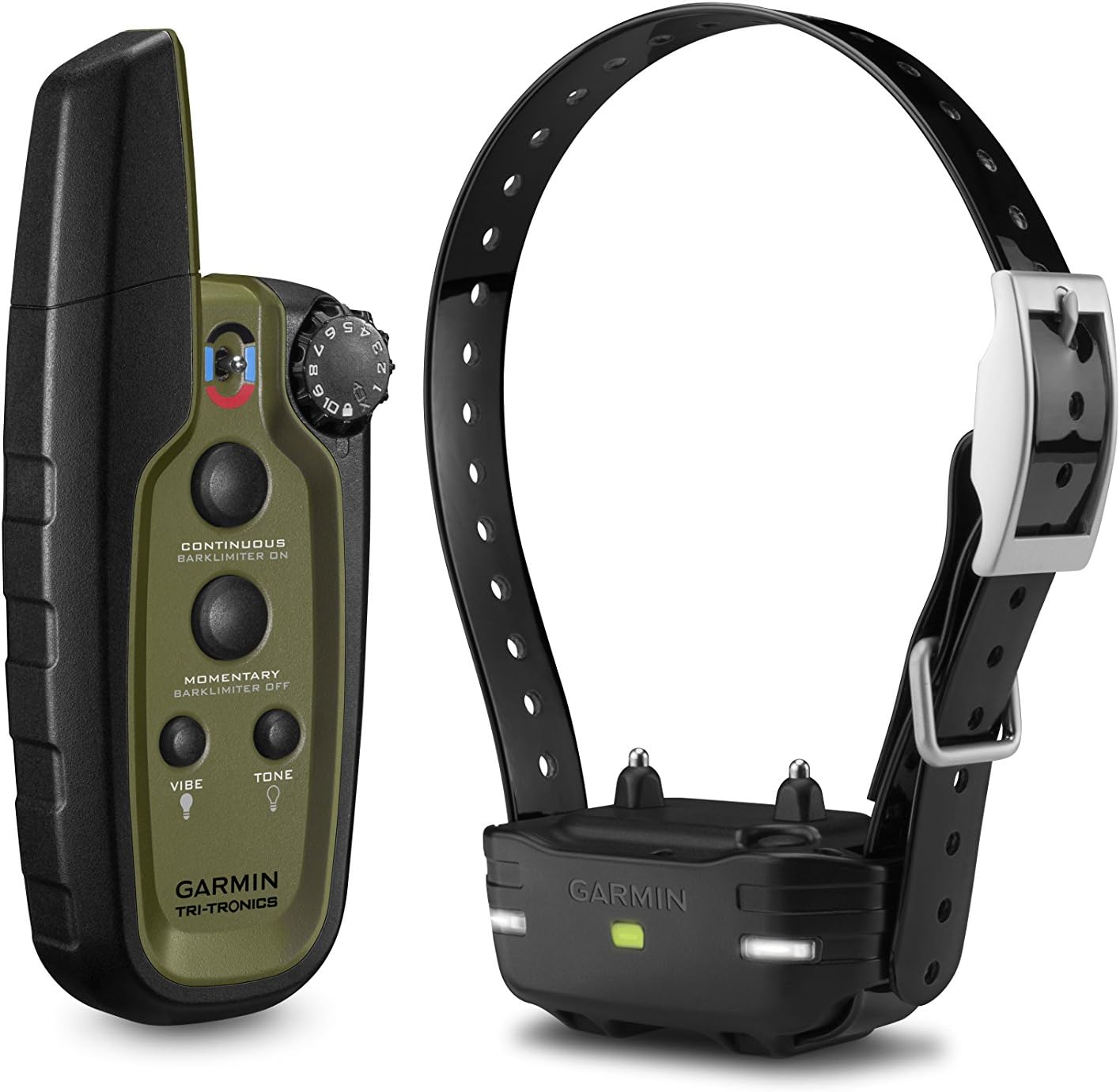
Garmin Sport PRO Training Collar
Best Premium Buzz Collar
| Range | 3/4 mile |
|---|---|
| Training modes | Tone, Vibration, 10 stimulation levels |
| Dog capacity | Up to 3 dogs |
| Handheld battery life | Up to 60 hours |
| Handheld water rating | IPX7 |
The Garmin Sport PRO bundle pairs a one-handed handheld transmitter with a rechargeable dog device to deliver tone, vibration and 10 levels of static stimulation for training at distances up to three quarters of a mile. The handheld is ergonomically shaped for one-handed, no-look operation and uses a quick-turn dial with positive clicks to step through stimulation levels and auxiliary functions, while four buttons provide momentary and continuous corrections plus vibration and tone. Built-in LED beacon lights help locate a dog in low light and a settable BarkLimiter offers automatic barking control. Both units use rechargeable lithium-ion batteries and the handheld floats, adding practical durability for field use. The dog device accepts long and short stainless steel contact points for wet conditions and the system is rated water-resistant for rugged outdoor use. Limitations include no GPS tracking or advanced smartphone integration and the dog device water rating is lower than the handheld, so fully submerged use is limited.
Best for: Buyers who need a rugged, easy-to-operate remote trainer for active outdoor work and want reliable controls and durable contact hardware for strong, energetic dogs.
Less Ideal for: If you require GPS tracking, smartphone integration, or full waterproofing for underwater use, consider alternatives with those specific features.
- One-handed ergonomic handheld with quick-turn dial for easy level changes
- Up to 3/4 mile range suitable for open-field training
- Rechargeable, user-replaceable lithium-ion batteries for long runtimes
- Interchangeable long and short stainless steel contact points for wet use and durability
- Built-in LED beacon lights and settable BarkLimiter for locating and barking control
- Dog device has lower water rating than the handheld, limiting submerged use
- No GPS location tracking or smartphone app integration
Verdict: The best premium buzz collar for buyers willing to pay more for superior build quality, precise intensity control, longer battery life, and extra comfort features.
FASHILEAD Vibrating Dog Collar Small
Best Compact Buzz Collar

| Included Components | Remote Control |
|---|---|
| Dog Breed Size | Small |
| Batteries | 1 C battery required (included) |
| Waterproof Rating | IPX7 (receiver) |
This compact vibrating collar is built specifically for small dogs and puppies who need a lightweight, non-shock training option. The slim receiver omits prongs and weighs very little, so it sits low-profile on a small neck while delivering adjustable vibration across multiple intensity levels plus an audible beep. Training is done with a handheld remote that supports two channels for controlling a second dog and claims up to a 2000 foot line-of-sight range, which is useful for recall or bark interruption in yards. The receiver is IPX7 waterproof and both receiver and remote use rechargeable batteries with long standby estimates, making the system convenient for regular use and outdoor activities. Practical limits include the fact that vibration-based cues may not deter every dog and effectiveness depends on consistent training, and the collar's small size and strap style are tuned for small-breed necks rather than larger dogs. The included safety lock and anti-lost lighting on the receiver are handy touches for evening walks.
Best for: Buyers prioritizing minimal bulk and comfort for very small dogs or puppies who want a humane, vibration-only training tool that stays unobtrusive during daily wear.
Less Ideal for: Owners seeking a collar that reliably stops high-drive behaviors without additional training support or those who need a solution sized for medium or large breeds.
- Exceptionally small and lightweight receiver designed for small dogs and puppies
- No-shock vibration with adjustable intensity plus audible beep for humane signaling
- Dual-channel remote allows training two dogs with one controller
- IPX7 waterproof receiver suitable for rain and outdoor use
- Long standby battery life and rechargeable batteries for remote and receiver
- Vibration cues may not be effective for all dogs and require consistent training to work well
- Range claims are line-of-sight and real-world distance can be shorter due to obstacles
Verdict: The best compact buzz collar for owners of small or sensitive dogs who want effective correction in a lightweight, discreet package that won’t overwhelm their pet.
SODOG No Shock Training Collar KT47
Best Rechargeable Buzz Collar

| Included Components | Collar, Remote Control, USB-C Charging Cable, Wrist Strap |
|---|---|
| Breed Recommendation | Medium to Large |
| Dog Breed Size | Large, Medium, Small |
| Batteries | 2 Nonstandard Battery batteries required. (included) |
| Closure Type | Buckle |
This SODOG KT47 is a no-shock training collar that uses vibration and beep signals controlled by a handheld remote to get a dog's attention and discourage unwanted behaviors. You use the remote to trigger beep, single-level or multi-level vibration from up to the stated line-of-sight range, which is handy for recall and bark interruption during walks or field training. Notable features include a safety lock on the remote to prevent accidental activation, adjustable collar length to fit most neck sizes, waterproof sealing for use in wet conditions, and USB-C charging for both collar and remote with claimed multi-day battery life. The broad vibration range (advertised 1–16 levels) makes it suitable for shy or stubborn dogs because you can raise intensity without using shock. Practical limitations are typical for vibration-only systems: they rely on the dog noticing and responding to vibration rather than delivering a stronger physical deterrent, and performance at maximum advertised range will vary with terrain and line of sight. The unit is a solid choice for owners who want humane, rechargeable remote training for everyday use with medium to large dogs.
Best for: Owners who prioritize a humane, rechargeable remote collar for daily training and recall work and who want an easy-to-use system with adjustable vibration intensity.
Less Ideal for: People seeking an aversive shock option or a device guaranteed to stop highly driven or deaf dogs should consider other training tools or professional guidance.
- No-shock vibration and beep modes provide humane, attention-getting corrections
- Long claimed remote range suitable for recall and off-leash work
- Waterproof collar construction allows use in rain and wet environments
- USB-C rechargeable for both collar and remote with multi-day battery life
- Safety lock and wrist-clip on remote reduce accidental activation and improve handling
- Vibration-only correction may not register on all dogs or deter very high-drive behaviors
- Real-world remote range can be shorter than the advertised maximum depending on terrain and obstacles
Verdict: The best rechargeable buzz collar for active owners who need frequent training sessions and want the convenience and lower long-term cost of a built-in battery.
PaiPaitek PD 519V Vibrating Dog Collar
Best Heavy-Duty Buzz Collar

| Channels | 3 |
|---|---|
| Range | 3300 ft |
| Signal types | Beep & vibration |
| Waterproof level | IPX7 |
| Battery life | 20 days |
The PaiPaitek PD 519V is a no-shock training collar package that pairs a handheld remote with two receiver collars and supports a third receiver on the same remote for multi-dog sessions. It provides nine vibration and beep levels so you can scale cues for stubborn or high-drive dogs, and the remote includes a safety lock to avoid accidental signals. The system is rated IPX7 waterproof and uses sealed charging ports and a dual charging cable to recharge the remote and receivers, which PaiPaitek says yields around 20 days between charges in typical use. The 3300-foot control range makes it suitable for large yards and working environments, and the nylon strap with buckle is adjustable to fit most neck sizes. Expect a rugged-feeling remote and receivers that tolerate wet conditions and regular outdoor use, but know this is a vibration/beep-only solution so it relies on consistent training methods rather than aversive correction. For strong, active dogs this model delivers durable construction, long range, and configurable intensity that work well for recall, boundary, and behavior cueing in outdoor settings.
Best for: Owners of strong, active, or working dogs who prioritize a durable, weatherproof vibration system and long remote range for outdoor training and off-leash recall work.
Less Ideal for: People seeking an aversive static/shock collar or those who need premium metal hardware and ultra-heavy-duty straps for extreme tugging dogs.
- Includes two receivers plus a third channel for simultaneous multi-dog training
- Long 3300 ft remote range suitable for large yards and outdoor work
- IPX7-rated waterproof receivers and sealed charging caps for use in rain or pools
- Nine adjustable vibration and beep levels to tailor intensity for different dogs
- Long battery life with dual charging cable for faster recharges
- No static/shock option so it may not deter some high-threshold behaviors
- Uses nylon buckle straps that may show wear faster than heavier-duty metal hardware
Verdict: The best heavy-duty buzz collar for owners of strong, active, or working dogs who need a durable unit that withstands rough use and outdoor conditions.
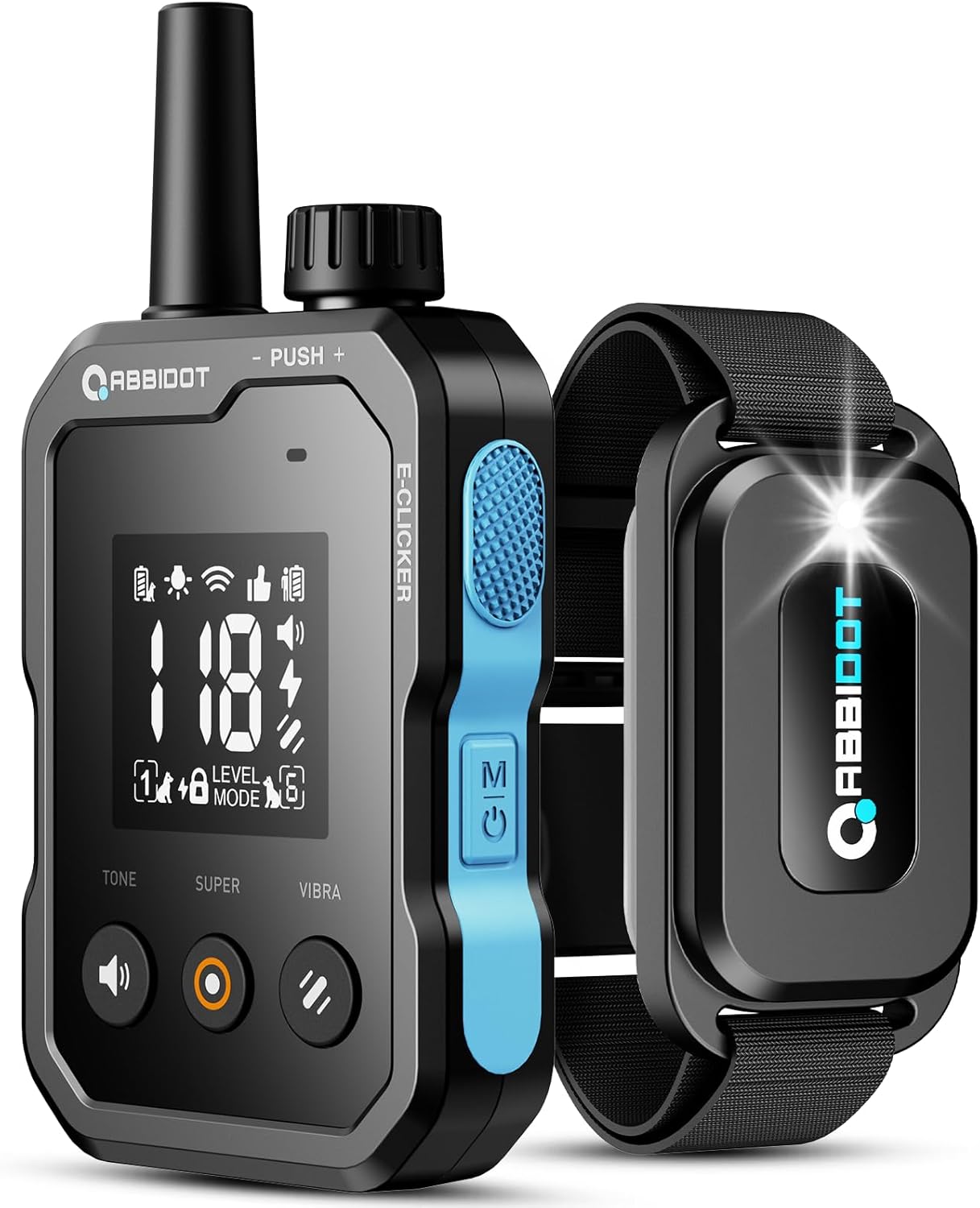
ABBIDOT Shock Collar AB-T70
Best Adjustable Buzz Collar
| Fit range | 6–27 inches neck |
|---|---|
| Dog weight | 5–120 lb |
| Range | 4500 ft |
| Waterproof rating | IPX7 |
| Channels | Up to 6 dogs |
The ABBIDOT AB-T70 is a multifunction remote training collar designed to be adjustable enough to fit a wide range of dogs and training needs. It pairs a handset with a receiver that clips to a nylon strap and provides audible tone, vibration and a wide span of static stimulation levels so you can dial responses to a timid puppy or an adult dog that needs firmer correction. The remote supports up to six collars and claims a long line-of-sight range for off-leash recall or field work, while the IPX7 receiver and an adjustable LED night light make it usable in wet conditions and low light. Practical benefits include a large, easy-to-read remote display, a safety lock to avoid accidental signals and very long battery life between charges. Trade-offs to consider are that the static mode requires careful introduction and sitter judgment to avoid misuse, and the collar's effectiveness depends on correct fit and good skin contact which may require different strap lengths or contact points for very thick or long coats.
Best for: Households that need one adjustable collar to fit multiple dogs or to fine-tune fit for comfort and consistent skin contact during training.
Less Ideal for: Owners who want a purely positive reinforcement tool without aversive correction or those who cannot ensure proper fit and skin contact for reliable function.
- Wide adjustment range to fit necks from 6 to 27 inches making it genuinely multi-dog friendly
- Multiple modes (tone, vibration, static) with many intensity levels for fine tuning responses
- Remote can control up to six collars which is convenient for multi-dog households
- IPX7 waterproof receiver and adjustable LED light for outdoor and low-light use
- Long battery life on both remote and receiver reduces charging interruptions
- Static stimulation has a very large number of levels which increases complexity for new users
- Effectiveness depends on firm skin contact which can be harder with thick or long coats
Verdict: The best adjustable buzz collar for households that need a single collar to fit different dogs or to fine-tune fit for comfort and consistent contact.
Choosing the Right Dog Buzz Collar: Key Factors to Consider
Stimulation Options and Intensity Levels
Different dogs respond to different types of stimulation, so look for collars that offer multiple modes such as buzz, vibration, and tone. Multiple intensity steps allow you to start low and increase only if needed, which reduces the risk of overstimulation. Consistent, repeatable output is important so that the same setting behaves similarly session to session.
Avoid collars that only offer a single fixed intensity because they force a one-size-fits-all approach. For sensitive dogs or small breeds, finer control over the lowest levels matters more. For large or highly distracted dogs, higher maximum intensity and distinct modes can be helpful, but the emphasis should remain on matching the smallest effective stimulus to the dog's response.
Contact Reliability and Electrode Design
A collar must maintain good contact with the skin for buzz signals to be effective. Electrode shape, spacing, and whether the device uses replaceable contacts all influence reliability, especially on thick or long coats. Consider whether the collar includes longer probes or options to trim fur to improve contact.
Poor contact leads to missed signals, which can confuse training and make the device seem unreliable. Look for designs that balance secure contact with minimal pressure and skin irritation. Removable or replaceable electrodes extend service life and let you adapt the collar to changing coat conditions.
Fit, Sizing Range, and Comfort
Proper fit keeps the electrodes positioned and prevents slipping or chafing. Check that the collar covers the neck circumference range you need and that adjustments are easy to make. Elastic or stretch features may improve comfort for active dogs but can degrade contact reliability if too stretchy.
Padding or rounded edges help avoid rubbing on longer wear sessions. Lightweight modules reduce neck load for small breeds. A collar that fits poorly either risks ineffective training or causes discomfort, so prioritize models with clear sizing guidance and simple adjustment mechanisms.
Battery Life and Charging Convenience
Consistent availability matters for maintaining training routines. Longer battery life reduces downtime and the temptation to skip sessions. Rechargeable batteries are common; weigh charge time and expected run time per charge when considering how often you train. Some units have replaceable batteries which can be useful if you prefer on-the-spot swaps.
Also consider whether the collar has an on-device battery indicator and whether charging requires removing the collar module. Waterproof charging ports or magnetic chargers simplify maintenance. Short battery life increases the chance a collar will be out of service at critical moments.
User Controls, Remote Range, and Ease of Use
Controls should let you apply signals quickly and adjust intensity without fumbling. Remotes with clear feedback, tactile buttons, and simple mode switching make training faster and more predictable. Range is relevant if you train at a distance; confirm the tested effective range and whether obstacles or interference affect performance.
Consider whether the collar supports single-button operation for simple corrections and whether more advanced features like timed stimulation or graduated feedback are easy to program. Complexity can be useful, but only if it is clearly explained and accessible to the average owner.
Water Resistance and Durability
Outdoor use exposes collars to rain, puddles, and mud, so water resistance protects electronics and helps maintain hygiene. Look for collars with a clear waterproof rating or descriptions of splash resistance. Durable construction around the housing and strap attachment points prevents failures from tugging, rough play, or leash use.
Materials that tolerate frequent cleaning are preferable because hygiene is important when electrodes contact skin. A collapsible or modular design that allows replacing worn straps or contacts extends the usable life of the device.
How Do I Match Buzz Intensity to My Dog Without Causing Stress?
Start at the lowest intensity and observe the dog's immediate reaction during short training pulses. You are looking for a quick acknowledgement such as a head turn or brief halt in the unwanted behavior, not a panicked or fearful response.
Increase in small steps only when you do not see any meaningful response at a lower level. Use vibration or tone modes first if they are available, and reserve higher-intensity buzz settings for situations where lower signals are ignored. Keep training sessions brief and pair signals with positive reinforcement so the dog learns what the cue means rather than associating the collar with fear.
- Begin with brief, controlled pulses rather than long continuous stimulation
- Watch body language for stress signs such as cowering, excessive yawning, or avoidance
- Combine signals with rewards to create clear cause-and-effect learning
Will a Buzz Collar Work on Thick or Long-coated Dogs?
Contact can be an issue with thicker or longer fur because electrodes may not touch skin reliably. Look for collars that advertise longer probes or include optional contact extensions. In many cases, trimming small areas under the contact points improves performance while avoiding a full haircut.
If repeated missed contacts are likely in your dog, prioritize collars with adjustable electrode lengths or replaceable contacts so you can maintain reliable stimulation without excessive grooming.
- Use contact extensions or longer probes when needed
- Trim a narrow patch under electrodes if practical and safe
- Test contact reliability before relying on the collar in uncontrolled situations
What Maintenance Does a Buzz Collar Need?
Regular maintenance keeps the collar working and reduces skin irritation. Clean electrodes after workouts or outdoor use with a damp cloth and mild soap, and inspect for corrosion or wear. Replace worn contacts according to the manufacturer's recommendations to keep contact reliability high.
Check straps and buckles for fraying or stress points and verify seals around charging ports if the collar is water resistant. Keep the device charged and store it dry to extend battery life and prevent moisture damage.
- Wipe electrodes and housing after heavy use
- Replace contacts and straps when they show wear
- Charge regularly and avoid storing with a depleted battery
Is Remote Range Important for Typical Training Sessions?
Range matters if you plan to work at distances such as in open fields or to recall from far away. For everyday urban or yard training, a modest range is often adequate. Check realistic range figures rather than peak numbers, and account for obstacles like trees or buildings that reduce effective distance.
If you commonly train across hills or through dense vegetation, choose a system with confirmed longer-range performance and reliable connection indicators on the remote.
- Match range expectations to where you train most often
- Test range in the actual training environment before relying on it
- Prefer remotes with clear feedback when a signal fails to transmit
How to Introduce a Buzz Collar so the Dog Accepts It
Introduce the collar gradually by letting the dog wear it unactivated for short periods so they get used to the weight and feel. Pair initial wearing with treats and calm interaction. Once the dog tolerates the collar, practice the low-intensity signals while immediately following with a reward to build a positive association.
Avoid applying stimulation when the dog is already fearful or stressed. Consistency and short training sessions help the dog learn that the collar is part of a predictable routine rather than a punishment device.
- Let the dog wear the collar without activation first
- Pair brief signals with rewards to teach meaning
- Keep sessions short and stop if the dog shows strong avoidance
Are There Alternatives to Buzz-only Modes I Should Consider?
Many collars offer tone or vibration modes that can be effective without direct stimulation. Tone offers a neutral auditory cue, while vibration provides a tactile option that some dogs find more acceptable than buzzing. If you prefer a gentler approach, look for devices that include multiple non-stimulation cues.
Even when a buzz mode is available, having tone or vibration as the primary tool often reduces reliance on higher-intensity signals and supports clearer training progression.
- Use tone for initial cueing and vibration for gentle tactile feedback
- Reserve buzz modes for situations where other cues fail
- Ensure you can switch modes quickly during training
How We Chose the Best Dog Buzz Collar
We prioritized features and performance that directly affect safety and outcomes when using buzz collars for dog training. Key evaluation criteria included stimulation variety and adjustability, which lets owners match intensity to a dog's size and sensitivity; contact reliability on different coat types to ensure consistent delivery of signals; fit and comfort, because a properly fitting collar reduces skin irritation and keeps electrodes in place; battery life and charging method, which affect how often the collar is out of service; user controls and range, focused on how intuitive settings are and whether remote or automatic modes meet common training distances; and waterproofing and durability to handle outdoor use and regular cleaning. We excluded items that rely solely on shock without variable stimulation modes or lack basic fit adjustments. We also filtered out devices with unclear electrode design or poor documentation about safety settings. The remaining selections reflect units that balance humane, adjustable stimulation with reliable contact and practical features owners need for consistent training sessions.
Our full evaluation process is outlined in our review methodology.
FAQ
How often should I use a buzz collar during training?
Use it consistently but sparingly. Short, focused sessions several times a week work better than long, frequent corrections. Rely on the collar to reinforce cues rather than as a constant control mechanism.
Can a buzz collar hurt my dog if used correctly?
When used with appropriate intensity and duration, buzz collars are designed to be noninjurious. The risk rises with excessive intensity, prolonged stimulation, or improper fit, so conservative settings and monitoring are essential.
Will a buzz collar stop barking immediately?
It depends. Some dogs respond quickly to a well-timed cue while others require consistent training to change the underlying cause of barking. Combine the collar with behavior modification strategies for the best results.
Is a waterproof collar necessary?
If you train outdoors or expect exposure to rain or puddles, water resistance protects electronics and simplifies cleaning. For indoor-only use, waterproofing is less critical but still useful for durability.
How do I know the collar fits correctly?
The collar should sit snugly so electrodes keep firm contact without pinching. You should be able to fit one or two fingers between the strap and the neck. Confirm electrodes touch skin in the contact area when the dog is in a natural head position.
Final Verdict
Prioritize collars that offer adjustable stimulation modes, reliable contact, and a comfortable, secure fit. Think about how you train — short sessions, distance needs, and coat type should all influence the features you value most. Expect tradeoffs between simplicity and advanced controls; choose the device that matches your experience level and training environment. With the right balance of humane stimulation, good fit, and dependable operation, a buzz collar can be an effective tool when used responsibly.

