

Dental health is one of the most overlooked parts of keeping a dog comfortable and active. The right chews can help reduce plaque and tartar buildup, support fresher breath, and give your dog a safe outlet for natural chewing instincts. This guide covers seven top picks for dog chews focused on improving oral health, shortlisted for texture, safety, and dental benefit. Below you will find practical buying guidance and the evaluation criteria we used to choose each chew so you can match the right option to your dog's size, chewing style, and dental needs.
Top Picks at a Glance
| Best Overall Chew A durable, effective chew that balances cleaning and palatability | Greenies Regular Dental Dog Treats 36 Count |  |
| Best Budget Chew An affordable chew that still offers decent tooth-cleaning and safety | Dingo Dental Sticks Chicken 48-Pack |  |
| Best Long-Lasting Chew Designed to withstand heavy chewers and extend chewing sessions | Good 'n' Fun Triple Flavor Roll |  |
| Best Dental-Cleaning Chew Formulated to reduce plaque and improve gum health through chewing | C.E.T. Enzymatic Oral Hygiene Chews Medium |  |
| Best Gentle Chew Softer option for puppies, seniors, or dogs with sensitive teeth | Whimzees Stix Extra-Small |  |
| Best Natural Chew Made from minimal, recognizable ingredients with fewer additives | Himalayan Dog Chew Happy Teeth Cheese 2 Count |  |
| Best Premium Chew A higher-end chew focused on superior materials and performance | OraVet Dental Chews Small Dogs |  |
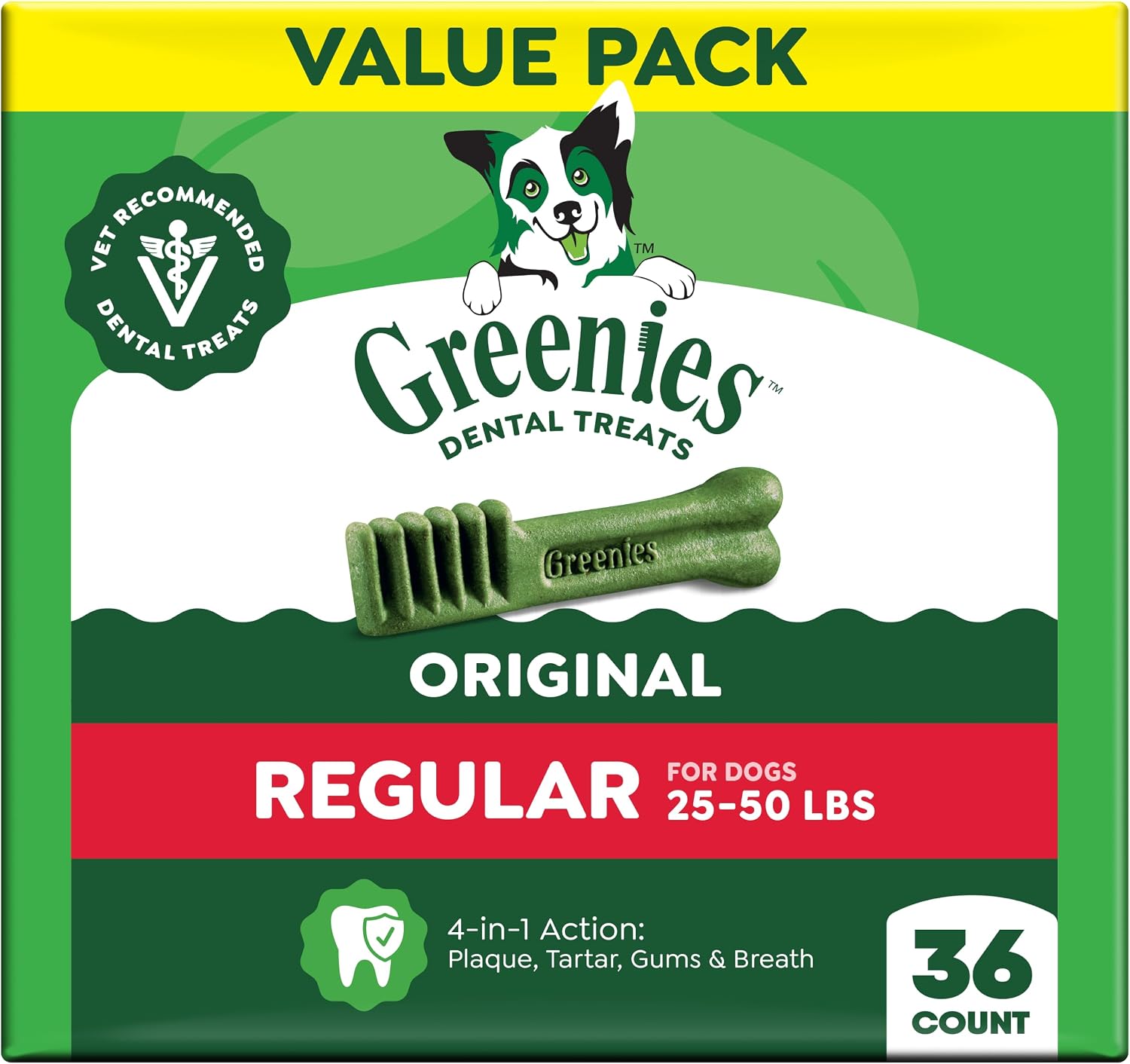
Greenies Regular Dental Dog Treats 36 Count
Best Overall Chew
| Flavor | Original |
|---|---|
| Item Form | Bone |
| Unit Count | 36 Count |
| Breed Recommendation | Medium Breeds |
| Allergen Information | Rawhide-Free |
Greenies Regular Dental Dog Treats are chewy dental chews made for dogs around 25–50 lb to support daily oral care. Designed with a toothbrush-like shape and flexible texture, the chews scrub down to the gumline while remaining bendable so they are less likely to snap; the manufacturer cites reductions in tartar and plaque when used daily. Owners typically give one chew per day as a treat or part of a dental routine, and the pouch packaging is convenient for storage. The treats are rawhide-free, made with common pantry ingredients plus added vitamins and minerals, and are veterinarian-recommended and VOHC-accepted as an option for plaque and tartar control. Expect good palatability — most dogs find the original chicken flavor tasty — but these are a daily edible product so supervision is recommended to ensure adequate chewing. They are sized for medium breeds, so buyers with very small or very large dogs should pick the appropriate size variant.
Best for: Dog owners who want a convenient, veterinarian-recommended daily chew that most medium-breed dogs will eat and that supports routine plaque and tartar control.
Less Ideal for: Owners of toy or giant breeds, or dogs with specific grain or ingredient sensitivities, should choose a size or formula made for those needs instead.
- Toothbrush-shaped chewy texture that helps clean to the gumline
- Vet-recommended formula accepted by VOHC for plaque and tartar control
- Rawhide-free and bendable texture reduces risk of snapping
- Formulated with added vitamins and minerals and common ingredients familiar to pet owners
- Single-daily-use and pouch packaging make them easy to include in a routine
- Sized specifically for medium dogs so this package is not ideal for very small or very large breeds
- Contains wheat and other common allergens that may not suit dogs with ingredient sensitivities
Verdict: The best overall chew for most dog owners that balances teeth-cleaning effectiveness, durability, and palatability for everyday use.
Dingo Dental Sticks Chicken 48-Pack
Best Budget Chew

| Flavor | Chicken |
|---|---|
| Item Form | Stick |
| Recommended Uses For Product | Dental Care, Daily Treat |
| Unit Count | 15.2 Ounce |
| Package Size Name | 48 Pack |
Dingo Dental Sticks are daily dental chews made with a real chicken center and a twisted rawhide exterior intended to clean teeth as dogs chew. You give one stick a day as a treat or after meals; the twist shape and firm texture help scrape plaque and massage gums while added baking soda and parsley seed aim to freshen breath. The product comes in a resealable 48-pack bag that keeps chews fresher between servings and is sized for all life stages and breed sizes. Ingredients include rawhide, chicken, rice and common preservatives and colorants, so they are broadly accepted by dogs that enjoy chewy rawhide treats. Limitations are that these are rawhide-based so they are not suitable for dogs that must avoid rawhide, and owners should supervise chewing to prevent large pieces breaking off. For pet owners wanting a low-cost, easy-to-use daily dental chew, these deliver practical oral benefits in a familiar format.
Best for: Budget-conscious dog owners who want a daily, easy-to-use chew that most dogs will eat and that contributes to routine oral care.
Less Ideal for: Owners seeking grain-free, rawhide-free, or veterinary-formulated dental treats for dogs with specific dietary restrictions or extreme chewers should look elsewhere.
- Real chicken center increases palatability for picky dogs
- Twist shape and firm texture help remove tartar and massage gums through chewing
- Resealable bag preserves freshness between servings
- Formulated with baking soda and parsley seed to help freshen breath
- Contains rawhide and common preservatives and food colorings which some owners avoid
- Not appropriate for dogs that must not consume rawhide or who are aggressive chewers prone to swallowing large pieces
Verdict: The best budget chew for cost-conscious owners who want a safe, reasonably effective option for maintaining dental health without spending much.
Good 'n' Fun Triple Flavor Roll
Best Long-Lasting Chew

| Flavor | Chicken |
|---|---|
| Item Form | Roll |
| Unit Count | 17.1 Ounce |
| Package Size Name | 6 Count |
Good 'n' Fun Triple Flavor Roll is a long-lasting rawhide chew that mixes beef hide with artificial pork flavor and a chicken wrap to keep dogs engaged while they chew. It is typically given as a supervised treat and positioned as a dental aid since the chewing action helps reduce plaque and tartar buildup. The 7-inch roll and dense hide construction mean it lasts longer than soft treats for dogs that like to gnaw, and the triple-flavor coating increases palatability so picky chewers stick with it. Practical benefits include extended chewing time, a protein-rich flavor profile, and simple storage in a resealable bag. Important limitations are that rawhide is not suitable for very young dogs under one year and owners must monitor chewing to prevent large pieces from being swallowed; ingredient list includes artificial flavors and dyes that some buyers avoid. For dental maintenance, this chew complements brushing and vet care rather than replacing them.
Best for: Buyers who need a durable, flavor-forward chew to occupy adult dogs for longer sessions and who prioritize chew longevity over completely natural ingredient lists.
Less Ideal for: Owners looking for fully natural, additive-free chews or treats for puppies and dogs that tend to gulp large pieces without supervision should consider alternatives.
- Designed for extended chew sessions with a dense beef hide core
- Triple-flavor coating (chicken plus artificial pork flavor) increases appeal to reluctant chewers
- 7-inch size provides substantial chewing surface for medium to large dogs
- Chewing action can help reduce plaque and tartar buildup
- Contains artificial flavors and colorants
- Not intended for puppies under one year and requires supervision to avoid swallowing large fragments
Verdict: The best long-lasting chew for dogs that need extended chewing time and high durability to resist quick destruction.
C.E.T. Enzymatic Oral Hygiene Chews Medium
Best Dental-Cleaning Chew

| Flavor | Poultry |
|---|---|
| Age Range Description | All Life Stages |
| Breed Recommendation | Medium Breeds |
| Unit Count | 12.8 Ounce |
| Item Form | Stick |
These C.E.T. Enzymatic Oral Hygiene Chews pair a textured rawhide stick with a dual-enzyme system to reduce plaque and tartar when given as a daily treat. Designed for medium breeds, the single-layer beef rawhide is intended to be easy to digest while the chew's surface and firmness provide mechanical scraping as the dog gnaws, and the enzymes work with saliva to break down biofilm. Typical use is one chew per day as an at-home supplement to brushing and veterinary cleanings; the poultry flavor makes them appealing as a regular reward. The product is compact and convenient in a bag, and ingredients list includes glucose oxidase and dried yeast as part of the enzymatic mix. Limitations are that results depend on chewing time and consistency, and rawhide may not suit dogs with rawhide sensitivities or strict ingredient restrictions, so owners should monitor for chewing safety and tolerance.
Best for: Buyers who prioritize daily at-home plaque and tartar control and want a chew that combines enzymatic action with a textured design to clean teeth while being an appealing treat.
Less Ideal for: Owners seeking grain-free or non-rawhide dental options or those with dogs that gulp treats or have a history of digestive sensitivity should consider alternatives.
- Dual-enzyme formulation works with saliva to target plaque and tartar chemically
- Textured rawhide surface provides mechanical scraping during chewing
- Poultry flavor increases acceptance for picky chewers
- Single-layer beef rawhide is marketed as easier to digest than multi-layer chews
- Contains rawhide and beef ingredients which may not be suitable for dogs with sensitivities or certain diets
- Effectiveness depends on daily, consistent use and individual chewing behavior
Verdict: The best dental-cleaning chew for owners prioritizing plaque and tartar reduction with a texture and design that helps scrape teeth and massage gums.
Whimzees Stix Extra-Small
Best Gentle Chew

| Flavor | Classic Stix |
|---|---|
| Item Form | Stick |
| Breed Recommendation | All Breed Sizes |
| Unit Count | 14.8 Ounce |
| Number of Items | 1 |
Whimzees Stix are daily dental chews shaped and textured to mechanically scrub teeth while dogs chew. Intended for dogs 5 to 15 lb, the firm-but-not-brittle vegetable formula and functional grooves reach between teeth and along the gumline to reduce plaque and tartar and freshen breath. The recipe uses a short ingredient list with no artificial colors, flavors, preservatives, gluten, or grain, which makes these suitable for dogs with common sensitivities. In practice you give one appropriately sized stick per day and supervise chewing; the design encourages longer chew time than many ordinary treats, which extends cleaning action. Limits to consider: these are sized for extra-small dogs and are not appropriate for puppies under 9 months or dogs under 5 lb, and any dog that gulps large pieces or has severe dental fragility should be monitored or given softer alternatives. For owners who want an easy daily dental aid that also serves as a chew, Whimzees offers a practical balance of cleaning geometry and simple ingredients.
Best for: Buyers seeking a daily dental chew for small or older dogs that need a gentler, short-ingredient treat to support at-home oral care.
Less Ideal for: Owners of very young puppies under nine months, dogs under five pounds, or pets with severely compromised teeth who need soft or veterinary-prescribed dental options.
- Designed to mechanically scrub teeth with grooves and ridges for better cleaning
- Vegetable-based recipe with no artificial colors, flavors, preservatives, gluten, or grain
- Longer chew time compared with many standard chews for extended cleaning action
- Sized and shaped for small dogs to be easy to hold and chew
- Not appropriate for dogs under 5 lb or puppies younger than 9 months
- Firm texture may still be too hard for dogs with very sensitive or damaged teeth
Verdict: The best gentle chew for puppies, senior dogs, or pets with sensitive teeth that need a softer texture while still satisfying chewing instincts.
Himalayan Dog Chew Happy Teeth Cheese 2 Count
Best Natural Chew

| Flavor | Cheese |
|---|---|
| Item Form | Stick |
| Specific Uses For Product | Allergy Relief, Teeth |
| Age Range Description | All Life Stages |
| Allergen Information | Gluten Free, Lactose Free, Soy Free, Wheat Free |
This Himalayan Dog Chew Happy Teeth Cheese is a long-lasting, natural dental chew made by boiling yak and cow milk, drying it into a hard stick that dogs must work at to soften and scrape off small bits. It is typically offered as an occasional treat or chewing activity to occupy dogs and promote oral hygiene; the loofah-like texture helps scrub teeth and gums while reducing tartar. The ingredient list is simple — milk, rice and coconut powders, glycerin, and vinegar — and the curing process removes lactose, which can help sensitive stomachs. Because the chew is very hard, it delivers extended chewing time and resists quick destruction, making it suited to dogs that enjoy persistent chewing. Buyers should supervise use and remove small pieces as they break off, and very aggressive chewers may still fragment the chew into smaller pieces that need disposal. Packaged by weight so size and shape vary between pieces.
Best for: Owners who prioritize single-ingredient style, minimally processed treats and want a chew that promotes dental activity during long chew sessions.
Less Ideal for: Owners seeking soft, easily portioned treats or households with dogs that swallow large chunks without chewing should consider softer or portion-controlled alternatives.
- Made from simple, minimally processed ingredients using traditional yak-cow milk curing
- Very long lasting for extended chew sessions
- Loofah-like surface that helps clean teeth and reduce tartar
- Lactose reduced and free of gluten and common allergens listed
- Very hard texture requires supervision and removal of small broken pieces to avoid choking
- Not uniform in size since pieces are packaged by weight
Verdict: The best natural chew for owners who prefer simple, minimally processed ingredients and fewer artificial additives while supporting dental activity.
OraVet Dental Chews Small Dogs
Best Premium Chew

| Flavor | Chicken |
|---|---|
| Special Ingredients | delmopinol |
| Unit Count | 30 Count |
| Breed Recommendation | Small Dogs |
OraVet Dental Chews are daily, individually wrapped sticks sized for small dogs (10–24 lb) that combine mechanical cleaning from chewing with the active ingredient delmopinol to help reduce plaque and tartar. You give one chew per day as part of an at-home oral care routine; the chew is designed to be highly dissolvable and palatable with a poultry flavor and vanilla aroma so most small dogs will accept it. The delmopinol coating forms a protective barrier on teeth to limit bacterial buildup, which complements the physical abrasion as the dog chews down to the gumline. Practical benefits include easy single-serve dosing, a month-long supply in a 30-count bag, and formulation choices targeted to breed sizes so the pieces are appropriately scaled. Important limitations are that this is an adjunct to professional dental care rather than a replacement, dogs with sensitivities to listed ingredients like pork, wheat, or soy may react, and owners should monitor consumption to avoid any choking risk even with small-breed sizing.
Best for: Owners of small-breed dogs who want a daily, vet-formulated chew that is sized and textured to clean teeth gently while fitting into an easy at-home oral care routine.
Less Ideal for: Pet owners seeking a complete dental treatment in place of veterinary cleanings or those whose dogs have allergies to pork, wheat, or soy should consider alternatives or consult a vet.
- Contains delmopinol, an ingredient that helps form a barrier against plaque-forming bacteria
- Sized and formulated specifically for small dogs with individually wrapped chews for easy daily dosing
- Clinically shown to reduce plaque and tartar when used as directed
- Palatable poultry flavor with vanilla aroma increases acceptance in picky eaters
- Contains common allergens such as pork protein, wheat, and soy which may not suit dogs with sensitivities
- Not a substitute for professional dental cleanings and veterinary care
Verdict: The best premium chew for owners willing to pay more for top-tier materials, enhanced durability, and improved dental benefits.
Choosing the Right Dog Chew Teeth: Key Factors to Consider
Material Safety and Digestibility
Material composition determines both safety and whether a chew is suitable for frequent use. Hard, non-digestible materials might control tartar well but can fracture or wear teeth if used excessively. Softer, edible formulations may be safer to swallow but should be made from ingredients with low risk of gastrointestinal upset.
Look for chews with clear ingredient lists and manufacturing standards. Consider whether the product is intended to be eaten in small pieces or should be destroyed and removed as it wears down. For dogs with sensitive stomachs or known food allergies, choose chews with minimal, recognizable ingredients and avoid those that leave persistent residues.
Abrasive Texture and Shape
The physical surface of a chew is what interacts with plaque and tartar. Textures that encourage scraping and flossing motions are most effective at removing buildup, while smooth surfaces offer little cleaning benefit. Grooves, ridges, and uneven surfaces can help clean different teeth as the dog chews.
Shape matters too: long, narrow pieces let a dog reach molars, while knotted or irregular shapes promote varied contact points. However, very aggressive abrasive surfaces can wear enamel over time, so match the texture to your dog's dental condition and chewing intensity.
Durability Matched to Chewing Strength
A chew that is too soft will be destroyed in minutes and pose a choking or intestinal blockage risk if large pieces are swallowed. One that is too hard can fracture and risk tooth damage. Assess your dog's chewing style—light, moderate, or heavy—and select a chew rated for that level.
Manufacturers sometimes provide size or strength recommendations; use those as a starting point and monitor first sessions. Durable does not mean indestructible: safe chews are those that wear down predictably rather than shatter unpredictably.
Size and Portion Control
Choosing the right physical size reduces choking risk and ensures effective chewing contact. A chew that is too small may be swallowed whole, while an oversized chew may be awkward and discourage use. For dental benefit, the chew should allow the dog to get firm contacts on molars and premolars without trapping the tongue or causing gagging.
For edible or consumable chews, portion guidelines control caloric intake and limit exposure to any single ingredient. Always supervise initial sessions to confirm your dog handles the chew safely and that wear patterns are as expected.
Supervision and Usage Instructions
No chew is risk-free. Proper use patterns and supervision reduce choking, ingestion of large fragments, and dental harm. Follow recommended session lengths and inspect chews frequently for cracks, sharp edges, or other signs of unsafe wear.
Many chews are intended for intermittent use rather than continuous, all-day access. Rotate chews and remove them once they reach a size or shape that poses swallowing or dental risks. Training your dog to take and leave a chew can also improve safety during use.
Palatability and Acceptance
A chew that your dog rejects does not help dental health. Flavoring, scent, and texture all influence acceptance. However, strong flavor agents can mask ingredient quality or add digestibility concerns, so balance palatability with safety.
If your dog has dietary restrictions, look for unflavored or single-ingredient options. When introducing a new chew, offer it during a calm time and monitor for eagerness and appropriate chewing technique rather than rapid gulping.
How Often Should I Give Dental Chews?
Frequency depends on the chew type, your dog's oral health, and caloric considerations. Many dental chews are designed for daily or every-other-day use, but edible chews contribute calories and should be accounted for in your dog's daily intake. Hard, non-edible chews may be used less frequently if they produce significant wear.
Start by offering a new chew under supervision and then adjust frequency based on how your dog responds, whether they swallow pieces, and whether you see improved breath and less visible plaque. When in doubt, discuss a schedule with your veterinarian during routine dental checks.
- Edible chews: consider daily or a few times per week depending on calories
- Non-edible durable chews: intermittent use to prevent tooth wear
- Always inspect after sessions and remove unsafe fragments
Which Chew Textures Work Best for Tartar Control?
Moderately abrasive textures with ridges and grooves usually provide the best balance between cleaning action and safety. These surfaces help dislodge plaque mechanically without requiring extreme biting force. Rubber-like materials with engineered ridges can mimic a brushing action without splintering.
Very hard, bone-like chews may remove heavy tartar in some cases but carry a higher risk of tooth trauma. Softer, pliable chews rely more on saliva and enzymes than mechanical abrasion, so they are helpful for breath but less effective against established tartar.
- Look for multi-surface designs that contact different teeth
- Avoid extremely rigid materials for heavy chewers
- Pliable ridged designs suit light to moderate chewers
What Size Chew Is Right for My Dog?
Measure your dog's mouth and consider bite strength more than weight alone. Small breeds with strong jaw pressure can sometimes require larger or tougher chews than their weight suggests. A chew should be large enough that it cannot be swallowed whole but manageable for the dog to maneuver while chewing.
If a chew is labeled by weight range, use that as a starting point and observe how your dog handles it during the first session. Replace chews once they become small enough to fit into the throat or start producing large fragments.
- Small dogs: choose chews that allow jaw contact without swallowing risk
- Medium dogs: aim for chews that reach molars comfortably
- Large dogs: use heavy-duty options designed to resist fast destruction
Can Chews Replace Toothbrushing?
Chews can supplement dental care but are not a full replacement for regular toothbrushing. Brushing directly removes plaque at the gumline and between teeth in ways that most chews cannot. Use chews as part of a broader dental routine that includes periodic brushing and professional dental checks.
For dogs that tolerate little handling, chews and water additives may be helpful temporary measures, but owners should still strive to introduce brushing gradually or schedule regular veterinary dental evaluations.
- Use chews to reduce plaque accumulation between brushings
- Brush key areas that chews may miss, like the gumline
- Combine chews with professional dental care for best results
How to Introduce a New Chew Safely
Introduce chews during a calm period and under close supervision. Offer the chew and let your dog investigate and bite gently at first. Limit initial sessions to short periods and watch for aggressive chomping, fragmentation, or rapid swallowing behavior.
If you notice pieces breaking off or the dog gulping large fragments, remove the chew immediately and consider a different texture or size. Reward calm chewing with praise or a brief play session to reinforce safe use.
- Supervise first few sessions
- Limit initial chew sessions to 10 to 15 minutes
- Inspect chews frequently and retire damaged ones
How We Chose the Best Dog Chew Teeth
We evaluated chews with a focus on how effectively they support everyday dental care and safe chewing habits. Key evaluation criteria included material safety and digestibility, abrasive texture for plaque and tartar control, durability relative to dog size and chew strength, and manufacturer guidance on recommended dog size and chewing style. We also considered ease of cleaning or disposal, whether the chew is suitable for frequent use, and how likely it is to leave fragments that could be swallowed. Products that relied on unproven ingredient claims, lacked clear safety guidance, or had high risks of splintering or breakage were excluded. We prioritized options that balance dental abrasion with safe wear patterns and that provide clear instructions for supervised use. The final list favors chews that are appropriate across common chewing intensities and that offer documented design features aimed specifically at improving oral health.
Our full evaluation process is outlined in our review methodology.
FAQ
Are edible dental chews safe every day?
Often they are safe, but it depends on caloric content and ingredients. Many edible dental chews are formulated for daily use but should be counted toward daily calories and introduced slowly to monitor digestion.
How can I tell if a chew is causing tooth wear?
Signs of excessive wear include increased tooth sensitivity, visible flattening of chewing surfaces, or chips and cracks. If you notice any of these, stop the chew and consult your veterinarian for a dental evaluation.
What should I do if my dog swallows a large chunk of a chew?
Monitor your dog closely for signs of distress, vomiting, or changes in appetite or bowel habits. Contact your veterinarian promptly for guidance, as large fragments can cause partial obstructions that need professional attention.
Can puppies use the same chews as adult dogs?
Puppies have developing teeth and softer jaws, so choose chews specifically rated for puppies or for lighter chewing. Avoid very hard chews that could damage emerging adult teeth and follow age and size recommendations.
Do flavored chews pose more allergy risk?
Flavored chews can include additional ingredients that increase the chance of a reaction in sensitive dogs. If your dog has known food sensitivities, opt for single-ingredient or unflavored options and introduce new flavors cautiously.
Final Verdict
Prioritize safety, appropriate texture, and size when choosing chews to support dental health. Match chew durability to your dog's chewing strength, and favor designs that use ridges and grooves to mechanically reduce plaque while avoiding materials likely to splinter. Use chews as part of a broader oral care routine that includes periodic brushing and veterinary checks. With careful selection and supervised use, dental chews can be a helpful, convenient tool for improving breath and reducing plaque over time.

