

Leash training with the right collar makes everyday walks safer and less stressful for you and your dog. A well-chosen collar gives you precise, predictable control during training sessions while staying comfortable enough for regular wear. This guide narrows the field to the top shortlisted collars suited to leash training, explaining the practical tradeoffs that matter to owners of dogs at different skill levels and sizes. We evaluate each pick against how well it supports leash cues, comfort during extended wear, and durability under real-world use. Read on to find the leash-training collar that matches your training style and your dog's needs.
Top Picks at a Glance
| Best Overall Collar The top all-around collar balancing comfort, control, and durability | Mighty Paw Martingale Collar Small |  |
| Best Budget Collar A low-cost collar that still performs for everyday training | PetSafe Martingale Collar Small |  |
| Best Training Collar Designed specifically for leash training and behavior shaping sessions | Starmark Pro-Training Collar Small |  |
| Best Heavy-Duty Collar Built for strong pullers and long-lasting wear under stress | Spark Paws Tactical Dog Collar Large |  |
| Best Reflective Collar High-visibility collar for safer walks in low-light conditions | ladoogo Reflective Padded Dog Collar Medium |  |
| Best Adjustable Collar Easy-to-fit collar with wide adjustment range for growing dogs | MOZETO Adjustable Stainless Steel Dog Collar |  |
| Best Premium Collar Higher-end materials and craftsmanship for long-term comfort and style | Herm Sprenger Ultra-Plus Prong Collar 16in Small |  |
Mighty Paw Martingale Collar Small
Best Overall Collar

| Breed Recommendation | Small Breeds |
|---|---|
| Material Type | Leather, Stainless Steel |
| Closure Type | Buckle |
| Size | Small |
This martingale collar combines a leather body with a stainless steel chain to give trainers a controlled, limited-cinch correction that reduces pulling without choking. It is used as a training and everyday collar for small adult dogs, fitted so the loop tightens slightly when the dog pulls and then relaxes when the dog responds. The leather construction and metal chain point to good durability and a solid feel on the dog, and the buckle closure makes sizing straightforward. Practical benefits include a humane correction method favored by trainers, an easy-to-clean surface for routine care, and a classic leather look that works for daily wear. Limitations are that martingales are not a full no-pull solution for very strong pullers and require proper fit and supervision to be effective, and leather needs occasional conditioning to stay supple. This collar suits owners who want a balance of gentle control, durability, and everyday comfort during leash training.
Best for: Buyers who want a single collar that works for both leash training and daily wear, preferring a humane, trainer-approved correction with durable materials.
Less Ideal for: People seeking a complete no-pull solution for very strong or reactive dogs or owners who prefer fully synthetic, low-maintenance collars.
- Limited-cinch design provides controlled, humane correction for pulling
- Genuine leather construction offers durability and a classic appearance
- Stainless steel chain adds strength at the cinch point and resists rust
- Buckle closure allows straightforward sizing and secure fit
- Recommended by trainers and suitable for regular use
- Requires correct sizing and supervision to be effective
- Leather needs periodic cleaning and conditioning to maintain suppleness
Verdict: The best overall collar for leash training that balances fit, gentle control, durability, and everyday comfort to suit most dogs and owners.
PetSafe Martingale Collar Small
Best Budget Collar

| Breed Recommendation | Small Breeds |
|---|---|
| Material Type | Nylon |
| Closure Type | slip_on |
| Size | Small (3/4" Width) |
The PetSafe Martingale Collar is a simple nylon training collar designed to give handlers better control during walks while reducing the chance of a dog slipping out. It works by tightening slightly when the dog pulls and then loosening when the dog stops, which makes it useful for leash training and for breeds with necks larger than their heads. The collar is lightweight, machine washable and built from durable nylon with two metal rings that create the limited closure. Practical benefits include a secure fit for escape-prone dogs, a gentler alternative to choke chains, and an easy, adjustable fit for growing puppies. Limitations are its basic feature set—there is no padding or quick-release buckle—so it is best for supervised training and everyday walking rather than tie-out or group-play situations. Sizing must be chosen correctly for the martingale action to work as intended, and tags are recommended to be attached to the metal rings rather than sewn onto the sliding loop.
Best for: Buyers who want an inexpensive, no-frills training collar that improves leash control and prevents escapes during supervised walks and basic training sessions.
Less Ideal for: Owners seeking a buckle-style everyday collar, a heavily padded option for long wear, or an unattended tie-out solution should look at other collar types.
- Martingale design tightens on pull to prevent dogs from backing out of the collar
- Durable nylon construction that is machine washable for easy cleaning
- Lightweight and adjustable fit suitable for growing puppies and small breeds
- Safer and less restrictive than choke chains for everyday leash training
- No quick-release buckle or padding, making it less convenient to remove and less comfortable for extended unsupervised wear
- Not recommended for tie-out or group play where constant restraint is required
Verdict: The best budget collar for leash training that provides reliable fit and basic control without sacrificing safety at a low price.
Starmark Pro-Training Collar Small
Best Training Collar

| Breed Recommendation | Small-medium Breeds |
|---|---|
| Item Type Name | dog training collar |
| Material Type | Polymer |
| Closure Type | Snap |
| Included Components | Safety Clip |
The Starmark Pro-Training Collar is a compact martingale-style training collar made for small dogs that uses high-strength links you add or remove to size the loop precisely. It is intended for supervised training and walking to discourage pulling and lunging by applying gentle, distributed pressure around the neck rather than a hard pinch. Rounded link tips and a humane patented design make corrections less abrupt, and the included safety clip and backup nylon slip collar increase security during sessions. In practice the collar is lightweight and unobtrusive for everyday walks and travel, and the link system makes fitting straightforward without bulky hardware. Limitations include that it is a training tool meant to be used under supervision and should not be left on an unattended dog, and it does not replace a secure everyday buckle collar or harness for dogs that pull strongly or for long off-leash use.
Best for: Owners of small or lightweight dogs who want a low-profile training collar for walks and short supervised training sessions and prioritize a compact, travel-friendly option.
Less Ideal for: People needing a primary everyday restraint for strong pullers, large breeds, or off-leash control should choose a sturdier buckle collar or harness instead.
- Adjustable link system for a precise, low-profile fit
- Patented humane martingale design provides gentler corrections than metal prongs
- Lightweight and compact for travel and everyday wear on small dogs
- Includes safety clip and backup nylon slip collar for added security
- Not intended to be left on an unattended dog and requires supervised use
- Not suitable as the sole restraint for dogs that pull heavily or escape-minded
Verdict: The best training collar when focused leash work and clear, consistent cues are the priority, offering reliable control and adjustability for trainers.
Spark Paws Tactical Dog Collar Large
Best Heavy-Duty Collar

| Size | L: 21"-26" [2" wide] |
|---|---|
| Material Type | Nylon, Neoprene, Metal Alloy |
| Breed Recommendation | For dogs over 35lbs |
| Closure Type | Metal Alloy Buckle |
The Spark Paws Tactical Large Dog Collar is built for control and durability on strong, active dogs. It pairs a wide, reinforced nylon webbing with a metal-alloy quick-release buckle and an integrated padded handle so you can grab and steady a dog quickly during training or in high-stress situations. The collar's neoprene-padded interior improves comfort and reduces chafing during long walks or when a dog pulls, and machine-washable materials make cleaning straightforward after muddy outings. Practical features include a sturdy D-ring for leash attachment and a 2-inch width that distributes pressure more evenly across the neck. This collar is designed to stand up to heavy use, but its robust hardware and thicker profile add bulk compared with slim everyday collars, and sizing must be measured carefully to avoid an overly tight fit. For owners of large, powerful breeds who need a durable, control-focused collar, this is a solid, well-constructed option.
Best for: Buyers who prioritize a tough, control-focused collar for large, strong dogs and need something that holds up under repeated use and training situations.
Less Ideal for: Owners who prefer lightweight, low-profile collars for small breeds or casual everyday walks should consider slimmer alternatives.
- Reinforced nylon webbing and metal-alloy buckle built for heavy-duty use
- Padded neoprene interior reduces chafing and increases comfort on long wear
- Integrated handle provides immediate control in training or emergency situations
- Machine-washable materials simplify cleaning after outdoor activities
- Thicker, heavy-duty construction is bulkier than minimalist collars
Verdict: The best heavy-duty collar for leash training strong or active dogs that need extra-strength materials and hardware to withstand force.
ladoogo Reflective Padded Dog Collar Medium
Best Reflective Collar

| Size | Medium |
|---|---|
| Material Type | Metal, Neoprene, Nylon |
| Closure Type | Buckle |
| Included Components | Dog Leash |
| Breed Recommendation | Medium Breeds |
This ladoogo collar pairs a soft neoprene padded lining with durable nylon webbing and a metal D-ring to serve as an everyday collar for medium dogs. It is intended for walks and general wear, offering reflective stitching that boosts visibility in low light and a quick-release buckle for fast on/off. The padding keeps the collar comfortable on longer walks and reduces rubbing on active breeds like Australian Shepherds, while the rust-resistant metal hardware stands up to outdoor use. The package also includes a 5 ft leash with a foam handle and tangle-resistant hook, so you get a ready-to-go walking setup. Limitations: the buckle-style closure and single-width design mean it functions as a basic collar rather than a training or no-pull solution, and sizing depends on the medium fit so measure your dog's neck for a secure fit. Machine-washable materials make cleaning easy after muddy outings but heavy chewers may wear the nylon faster than purpose-built chew-resistant collars.
Best for: Owners who walk their Australian Shepherds in early morning or evening and want a more comfortable, visible everyday collar for regular walks and outdoor play.
Less Ideal for: Owners seeking a training, no-pull, or heavy-duty chew-resistant collar should look at specialized training harnesses or reinforced collars instead.
- Soft neoprene padding for added comfort during long walks
- Reflective threads for improved low-light visibility
- Durable nylon webbing with rust-resistant metal D-ring
- Quick-release buckle for easy on and off
- Includes a 5 ft leash with foam handle for immediate use
- Basic buckle collar design is not suited for no-pull control or training
- Medium size requires checking measurements for a proper fit
Verdict: The best reflective collar for owners who walk in dawn, dusk, or nighttime conditions and need enhanced visibility for safety.
MOZETO Adjustable Stainless Steel Dog Collar
Best Adjustable Collar
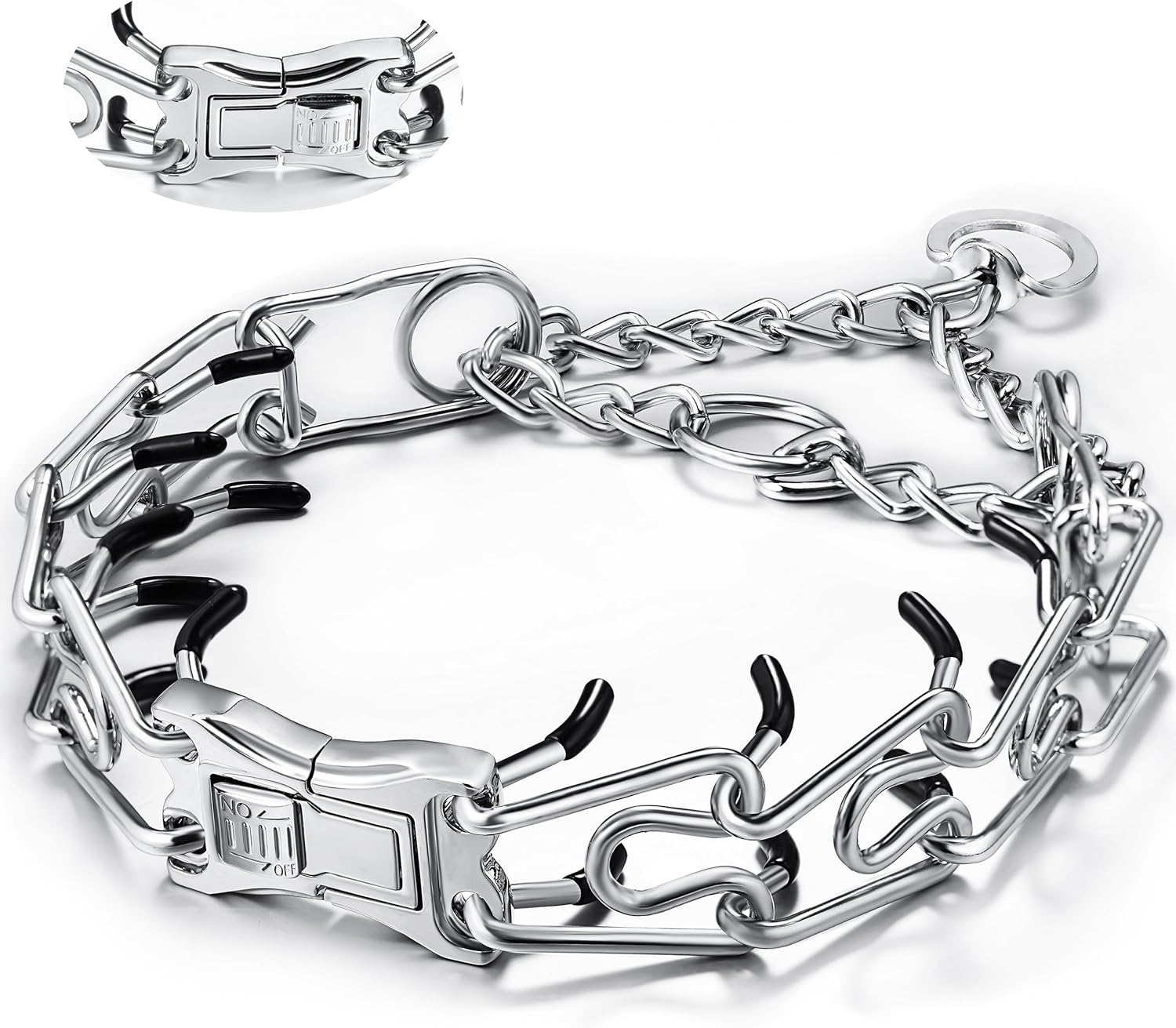
| Size | Neck Girth 16.9"-22.2" |
|---|---|
| Closure Type | Buckle |
| Material | Stainless steel (chrome-plated) |
This MOZETO adjustable pinch-style training collar is built from chrome-plated stainless steel links with rubber tips and a quick-release front buckle to apply a gentle corrective cue during walks and training sessions. It is typically used for leash training and correcting pulling or nuisance barking by imitating the natural correction mother dogs give puppies, and the included extra link lets you fine-tune fit as a puppy grows. The stainless construction and rubber covers make the collar rust-resistant and more comfortable against the skin than bare metal, while the rounded heads and smooth edges reduce the chance of pinching. The front quick-release buckle speeds leash attachment and removal compared with threaded pinch collars. Trade-offs are that this is a training-style pinch collar rather than a flat everyday collar, so it requires proper fitting and supervised use and may not be suitable for continuous wear or very young fragile puppies. Expect useful adjustability for growing necks but plan to transition to a regular flat collar once basic leash manners are established.
Best for: Buyers teaching leash manners who need a training collar that can be adjusted frequently as a puppy’s neck grows and that provides quick on-off access during supervised sessions.
Less Ideal for: Owners who want a daily-wear flat collar, very small or fragile puppies, or anyone uncomfortable with pinch-style correction should choose a different collar type.
- Adjustable metal link design lets you add or remove links for a closer fit as a puppy grows
- Quick-release front buckle simplifies attaching and removing the leash during training sessions
- Rubber-covered link heads and rounded edges reduce discomfort and lower the risk of pinching
- Chrome-plated stainless steel construction is rust-resistant and durable for outdoor use
- Not intended for constant wear; designed for training sessions under supervision
- Requires correct sizing and fitting knowledge to be safe and effective
Verdict: The best adjustable collar for dogs that need precise sizing—puppies, growing dogs, or breeds with unique neck shapes—during leash training.
Herm Sprenger Ultra-Plus Prong Collar 16in Small
Best Premium Collar
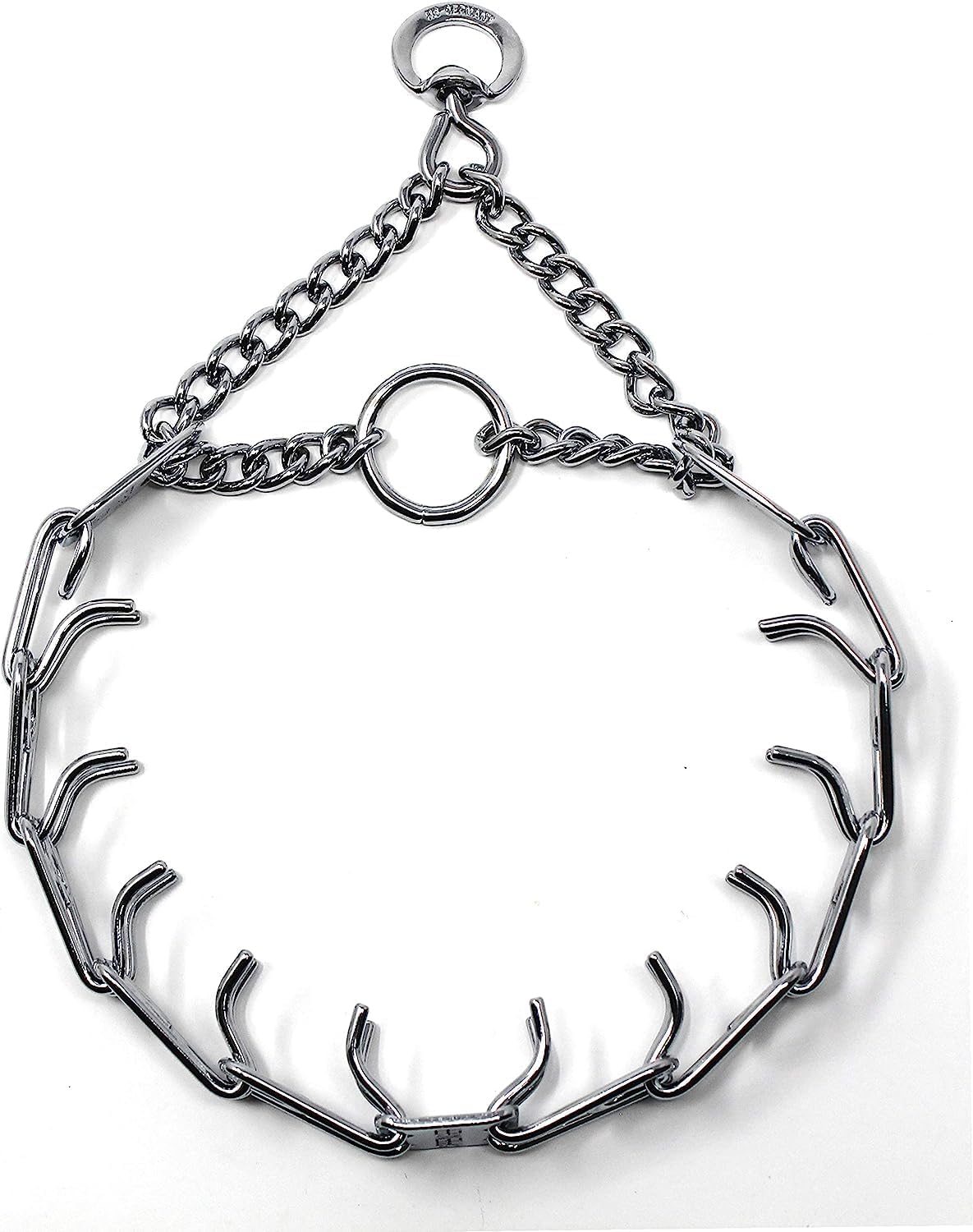
| Material Type | Alloy Steel |
|---|---|
| Item Length | 16 inches |
| Prong Gauge | 2.25mm |
| Fits Neck | 13 to 19 inches |
| Closure Type | Double Ring |
This Herm Sprenger Ultra-Plus prong collar is a factory-quality training chain made from chrome-plated alloy steel with the brand's specialty prong shape intended to distribute pressure evenly. It is sized as the 16-inch small variant and ships in a base configuration that fits roughly 13-inch necks out of the box and can be extended to about 19 inches by adding prong links. Typical use is as a high, snug training collar placed behind the ears for leash corrections during obedience work; the double-ring closure and included swivel make leash attachment straightforward. The Ultra-Plus center plate and precision links give a secure, consistent feel and the metal construction should resist bending or rusting under normal use. Limitations are that proper sizing and placement are essential for safe use, additional links are required for some neck sizes and those links are sold separately, and prong collars are a specialized tool that need knowledgeable handling to avoid misuse. For everyday obedience training where firm, repeatable control and durable materials matter, this collar performs well.
Best for: Buyers who want a dependable, well-made prong collar for regular obedience work and prioritize consistent control and build quality.
Less Ideal for: Owners who prefer gentler training tools, are inexperienced with corrective collars, or need a non-metal or decorative everyday collar.
- Chrome-plated alloy steel construction is durable and corrosion-resistant
- Ultra-Plus prong shape designed to distribute pressure more evenly
- Double-ring closure with swivel for reliable leash attachment and control
- Ships in a base size that fits many small dogs and can be extended with extra links
- Additional prong links required separately for larger neck sizes
- Requires correct placement and experienced handling to be used safely
Verdict: The best premium collar for owners willing to invest in superior materials, refined hardware, and lasting comfort during regular leash-training sessions.
Choosing the Right Dog Collar Leash Training: Key Factors to Consider
Fit and Sizing
A correct fit is fundamental to effective leash training. A collar that is too loose can slip off during distraction or pulling, reducing your control and risking escape. Too tight a collar can cause discomfort or breathing restriction and will teach the wrong associations. Adjustable range matters because some breeds have deep necks or narrow heads; look for collars with multiple adjustment points and a sizing system that maps clearly to your dog's neck measurement.
How the collar sits on the neck also affects signaling. A collar that rides too far forward or backward changes leash angle and the feel of cues. For puppies or dogs still growing, choose a collar with plenty of adjustment range to maintain proper fit as they change size.
Attachment Point and Leash Geometry
Where the leash clips to the collar determines leverage and the clarity of your cues. A single ring directly on the collar offers simple, direct control but can concentrate pressure on one point. A front-clip or dual-clip layout redistributes force and can encourage turning toward you, which is useful for pulling dogs; however, the added hardware changes how cues feel and may not suit all training methods.
Think about the leash style you plan to use. A short training leash and a collar with a predictable attachment point give clearer, quicker feedback than a long, stretchy lead. Matching attachment geometry to your handling approach will speed learning and reduce confusion.
Material and Construction Quality
Durable materials and solid construction reduce failures during training and lower long-term cost. High-denier webbing, solid metal rings, and reinforced stitching stand up to repeated tension and outdoor exposure. Low-quality plastics or thin hardware are prone to cracking or bending and can fail when the dog pulls in a tense moment.
Materials also influence weight and flexibility. Heavier hardware can offer robustness but may be awkward on small dogs. Conversely, very light materials may be comfortable but less durable. Inspecting how components are attached and whether stress points are reinforced gives a good sense of real-world longevity.
Comfort and Skin Safety
Comfort determines how willingly a dog accepts a collar during training. Soft liners, rounded edges, and breathable fabrics reduce rubbing and hot spots, particularly for dogs with sensitive skin or short fur. A collar that irritates will distract from training and can create negative associations with leash time.
Consider the collar's breathability for dogs that wear it for long periods, and whether materials trap moisture against the skin. If your dog has a history of skin reactions, prioritize hypoallergenic fabrics and avoid hardware that presses into the throat or windpipe.
Visibility and Passive Safety
Visibility features like reflective trim or high-contrast colors increase safety during low-light walks and reduce the chance of accidents. Passive safety elements do not replace active supervision but help others see you and your dog earlier, which is useful during night or dawn training.
Evaluate how reflective elements are integrated. Tape or stitching that is likely to peel reduces long-term visibility. Brightly colored base materials also help locate your dog quickly if they slip from view during off-leash practice in tall grass.
Ease of Cleaning and Maintenance
Training collars accumulate dirt, saliva, and sweat, so materials that resist odors and are easy to clean extend usable life and keep your dog comfortable. Machine-washable fabrics or wipeable surfaces are convenient for frequent washing. Metal components that resist rust and finishes that do not chip under exposure to water and grooming products reduce maintenance hassles.
Consider whether the collar's construction allows for full drying between sessions. A collar that stays damp can promote skin irritation and odors, which undermines regular use during training.
How Does a Collar Affect Leash-training Progress?
A collar shapes how leash cues are delivered and interpreted. Clear, consistent physical cues help a dog link pressure or directional changes to the desired behavior. If the collar transmits those cues in a predictable and comfortable way, the dog can focus on the lesson rather than the sensation.
Poorly chosen collars can mask cues or create confusing pressure points, slowing progress. Matching the collar's geometry and stiffness to your handling style makes cueing more intuitive and shortens the learning curve.
- Consistent pressure points make signals easier to associate with commands
- Stable attachment prevents slippage and loss of control during distractions
- Comfortable materials prevent negative associations with training
Which Collar Styles Work Well for Dogs That Pull?
Dogs that pull benefit from collars that change how force is distributed when they lunge. Front-clip or dual-clip layouts encourage turning toward the handler and reduce forward momentum, which can be more effective than a single back-clip when used alongside positive reinforcement.
That said, style alone is not a cure. Proper handling, leash length, and consistent cues are essential. Pair the collar choice with clear training steps to retrain the pulling behavior.
- Front-clip attachments redirect motion and can discourage sustained pulling
- Dual-clip setups offer versatility for progressive training stages
- Combine collar geometry with leash work for best results
How to Size a Collar for a Puppy or Growing Dog
Measure your puppy's neck circumference and add room for two fingers between the collar and the skin to ensure comfort. Because puppies grow quickly, pick a collar with a wide adjustment range and recheck fit weekly during rapid growth phases. Avoid collars that rely on a narrow adjustment range that will quickly become too small.
For growing dogs, consider lightweight, comfortable materials that will be tolerable during frequent changes. You may need to upgrade to a larger collar as the dog matures, so choose styles that maintain consistent attachment geometry across sizes.
- Measure snugly but allow two-finger clearance
- Choose wide-adjustment collars for extended use during growth
- Reassess fit regularly as the puppy gains weight and muscle
Managing Leash Training with a Shy or Reactive Dog
Shy or reactive dogs can be sensitive to abrupt pressure or unfamiliar sensations. Use collars that prioritize comfort and gradual cueing so you can pair physical signals with calm verbal praise and treats. Remove any elements that might startle the dog, such as tags that jingle close to the ears.
For reactive dogs, slower introductions to the collar itself are important. Let the dog wear it for short, positive sessions before introducing leash pressure. Small, predictable increments in tension and lots of reinforcement help build confidence.
- Start with short, positive collar-wearing sessions
- Avoid hardware that produces sudden noises or sharp pressure
- Use predictable, gentle cues paired with reinforcement
Keeping Training Consistent Across Handlers
If multiple people walk and train the dog, standardize on a single collar setup and leash length so cues feel the same regardless of the handler. Variations in clip position, leash slack, or hand placement can confuse a dog and slow progress.
Document basic handling rules—where the handler holds the leash, how much slack is allowed, and what verbal cues accompany physical signals—so everyone follows the same approach during practice.
- Agree on leash length and clip position before sessions
- Teach family members the same cueing pressure and timing
- Keep training sessions short and consistent to reinforce learning
When Should You Switch Collar Styles During Training?
Switching styles can make sense when the dog progresses through training stages. Early on, a more secure, instructive geometry might speed basic cue learning. As the dog becomes reliable, moving to a simpler, lower-profile collar for regular walks can reduce overreliance on mechanical cues.
Transition gradually and keep other variables constant. If you change collar style, reintroduce cues at low distraction levels so the dog can relearn how the new setup feels and what your signals mean.
- Use instructive geometries for early-stage correction and teaching
- Move to comfortable daily collars once cues are reliable
- Reintroduce training at low distraction after any collar change
How We Chose the Best Dog Collar Leash Training
We prioritized features and performance characteristics that directly affect leash-training outcomes. Key criteria included control effectiveness, measured by how reliably the collar transmits leash cues without surprising the dog; fit adjustability and sizing options to ensure a correct, secure fit across a range of neck shapes; material durability and hardware strength to withstand repeated daily use and the occasional pull; and comfort features such as padding, rounded edges, and breathability to prevent chafing during extended wear. We also evaluated leash attachment options and placement, since the geometry of where the leash clips influences leverage and cue clarity. Ease of cleaning and maintenance made the list because training collars are exposed to dirt and moisture. Finally, we considered visibility and passive safety features that matter for early-morning or evening practice. Items were excluded if they lacked basic adjustability, used fragile hardware, or were inappropriate for routine leash training. We focused on products whose specifications and construction clearly supported repeated training sessions rather than novelty or single-use designs.
Our full evaluation process is outlined in our review methodology.
FAQ
Can any collar be used for leash training?
Many collars can be used for basic leash training, but not all are equally effective. The best collars transmit clear, predictable cues and fit securely without causing discomfort. Avoid collars with poor adjustability or fragile hardware for consistent training outcomes.
How tight should a training collar be?
A training collar should sit snugly but allow two fingers between the collar and your dog's skin. This prevents slippage while avoiding restriction. Recheck fit regularly, especially for growing dogs.
Is a front-clip collar better for pulling dogs?
Front-clip collars can help reduce pulling by redirecting the dog's motion toward you, which often makes leash cues easier to manage. They work best when combined with consistent handling and reinforcement rather than used as a sole solution.
How often should I replace a leash-training collar?
Replace the collar when you see signs of wear that compromise fit or safety, such as frayed webbing, bent hardware, or weakened stitching. Regularly inspect the collar and replace it before a failure occurs.
Can puppies start leash training with the same collar as adults?
Puppies can begin leash training with lightweight collars that offer a wide adjustment range, but you should choose materials and hardware appropriate to their size. Reassess and replace the collar as the puppy grows to maintain correct fit and function.
Final Verdict
Choose a leash-training collar that balances clear, predictable control with comfort and durability. Prioritize fit and attachment geometry because those factors most directly influence how your dog perceives cues. Expect to trade off some durability or weight for comfort on very small dogs and to favor sturdier construction for strong pullers. Start training with a setup that gives consistent signals, standardize handling across caregivers, and transition collar styles gradually as the dog masters cues. By matching collar features to your training method and your dog's temperament, you can make steady progress and enjoy more reliable, pleasant walks.

