

When you want clear, consistent results during obedience training, the right dog collar matters. It affects how you communicate cues, how comfortable your dog stays while learning, and whether training sessions remain safe and productive. This guide shortlists seven top collars designed specifically for obedience training, focusing on ease of use, secure fit, and durability. We evaluated options that help you reinforce cues without causing stress, and the following picks highlight collars that work well for different training approaches and dog sizes. Read on to find the styles and features that match your training goals.
Top Picks at a Glance
| Best Overall Collar A well-rounded choice that suits most training and everyday needs | HapTop AC131 Dog Shock Collar |  |
| Best Budget Collar A low-cost, reliable option for owners on a tight budget | KOOLTAIL Martingale Collar Medium |  |
| Best Training Collar Designed specifically to aid obedience training and behavior correction | SportDOG FieldTrainer 425X |  |
| Best Premium Collar A higher-end pick with superior materials and refined features | BLACKDOG Military Dog Shock Collar OT9 |  |
| Best Durable Collar Built for heavy use and long-lasting performance with active dogs | Herm Sprenger Ultra-Plus Prong Collar 20 in |  |
| Best Reflective Collar Improves nighttime visibility for safer evening and early-morning walks | MAOWUWUJOZ Reflective Martingale Collar Large |  |
| Best Quick-Release Collar Features fast-release hardware for easy on/off and emergency removal | Freedom&Soul No Pull Collar S |  |
HapTop AC131 Dog Shock Collar
Best Overall Collar

| Training modes | Beep, Vibration, Safe Shock, Shock Boost |
|---|---|
| Range | 4500 ft |
| Fit neck | 7.8"-24.4" (10-120 lb) |
| Waterproof rating | IPX8 |
| Charging | USB-C |
The HapTop AC131 is a rechargeable e-collar kit designed for everyday obedience and distance work. It uses a 2-channel remote to control up to two dogs and offers four training modes: beep, vibration, safe shock (0–99 levels) and a shock boost, with the shock function optional for no-shock training. The remote's long 4500 foot range and memory for individual dog settings make it useful for off-leash recall, boundary training, and reinforcing commands across yards or trails. The receiver is IPX8 waterproof and the kit includes multiple prong lengths, silicone covers, a test light tool, and USB-C charging for practical field use. Safety-oriented features include an adjustable low-to-high stimulation range, a security lock to prevent accidental corrections, and a manufacturer guideline limiting continuous wear to 12 hours. Trade-offs are typical for this class: it relies on batteries and correct fitment to be effective, and some owners prefer vibration or beep-only methods before adding shock. The unit's feature set and range make it a strong daily trainer for owners willing to follow safe use guidelines.
Best for: Owners who want a versatile, safety-minded e-collar for regular obedience and distance work and who plan to use multiple training modes progressively.
Less Ideal for: People who want a purely non-aversive training tool or who are uncomfortable using shock-style corrections should choose vibration- or treat-based training alternatives.
- Very long 4500 ft remote range for off-leash training
- Multiple modes (beep, vibration, adjustable shock) for progressive training
- IPX8 waterproof receiver suitable for wet outdoor use
- Includes extra prongs, silicone covers, test light tool, and USB-C charging
- 2-channel remote controls two dogs and remembers individual settings
- Shock feature requires careful adjustment and responsible use to avoid misuse
- Not intended for continuous wear longer than 12 hours per day
Verdict: The best overall collar balances comfort, fit, control, and durability to work for the majority of owners training their dogs and handling daily walks.
KOOLTAIL Martingale Collar Medium
Best Budget Collar

| Material Type | Nylon |
|---|---|
| Closure Type | Buckle |
| Size | Medium |
| Breed Recommendation | Small, Medium, Large |
This KOOLTAIL martingale collar is a basic no-pull training collar built from heavy-duty nylon with a padded neoprene lining for added comfort. It works by tightening slightly when the dog pulls, giving gentle pressure to discourage lunging while the main buckle and martingale loop keep the collar from slipping off during walks. The neoprene padding and breathable construction reduce chafing for dogs with sensitive skin, and reinforced stitching plus a small ID ring make it suitable for daily use. Sizes are offered with a clear neck-girth range so you can match fit before buying, and the included bell and buckle closure keep the design simple and familiar. Expect a functional, low-cost collar that handles routine walks and basic leash training well, though it lacks advanced training features like front-clip control or reflective trim. Build and materials are fine for typical pet activity but may show wear faster under heavy chewers or intense outdoor use.
Best for: Buyers who need an affordable, everyday training collar that offers a safer alternative to choke chains and a comfortable fit for regular walks.
Less Ideal for: Owners seeking advanced control features like front-clip harness-style handling or those who need heavy-duty gear for strong chewers should look elsewhere.
- Padded neoprene lining reduces chafing for longer wear
- Martingale design discourages pulling without harsh correction
- Heavy-duty nylon and reinforced stitching for everyday durability
- Small ring for ID tags or accessories adds convenience
- Not suited for heavy chewers or extreme rough use
- No reflective elements for low-light visibility
Verdict: The best budget collar gives dependable fit and basic training functionality at a low price for owners who need an affordable, everyday solution.
SportDOG FieldTrainer 425X
Best Training Collar
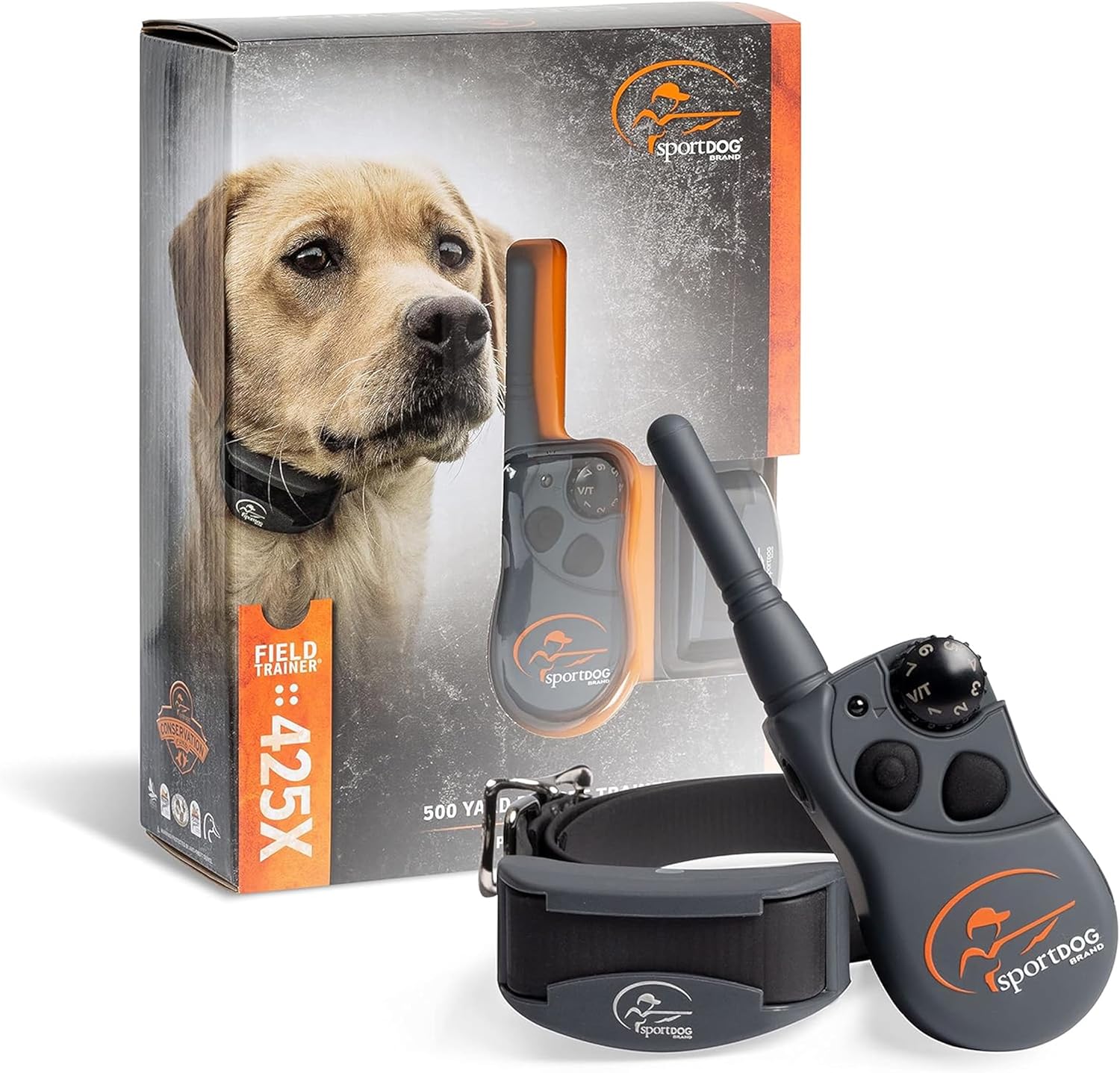
| Range | 500 yards |
|---|---|
| Stimulation levels | 21 levels |
| Modes | Tone, vibration, static |
| Waterproof rating | Submersible to 25 ft |
| Battery | Rechargeable lithium‑ion, 50–70 hours |
The SportDOG FieldTrainer 425X is a compact remote trainer built for off-leash control and field work where reliable, no-look operation matters. The handheld transmitter dials through 21 static-stimulation levels and can also deliver tone or vibration, letting you tailor corrections while you recall or reinforce obedience. Its 500-yard range and expandability to control up to three dogs make it suitable for working dogs in open spaces, and DryTek waterproofing makes both remote and receiver submersible to 25 feet for water training. Rechargeable lithium-ion batteries promise long runtime and a two-hour quick charge, and the included longer contact points help ensure skin contact on thick-coated dogs. On the flip side, the unit is SportDOG's smallest receiver so very large mastiff-type necks may find the housing compact, and advanced users who need half-mile-plus range or OLED-screen feedback might prefer larger models. For Cane Corso owners focused on rugged, repeatable off-leash recall and obedience work, the 425X provides a tough, field-ready baseline with proven durability and customizable stimulation.
Best for: Buyers who need a durable, field-ready e‑collar to reinforce off-leash control and recall for strong, active working dogs and who prioritize waterproofing and consistent, no-look operation.
Less Ideal for: Owners seeking the longest possible range, a larger receiver housing for very wide necks, or a display-equipped transmitter for fine-grained telemetry should consider larger SportDOG models.
- Multiple stimulus modes (tone, vibration, 21 levels of static) for flexible training.
- 500-yard range suitable for most yard and field training scenarios.
- Waterproof DryTek design submersible to 25 feet for wet conditions and water work.
- Rechargeable Li‑ion batteries with long 50–70 hour runtime and quick 2-hour charge.
- Expandable to control up to three dogs with add-on collars.
- Receiver is the brand’s smallest and may sit small on very large or thick-necked mastiff breeds.
- Range and feature set are less advanced than SportDOG’s higher-end half-mile models.
Verdict: The best training collar provides appropriate control features and safe correction options that help owners teach commands and reduce unwanted behaviors during training sessions.
BLACKDOG Military Dog Shock Collar OT9
Best Premium Collar

| Range | 4200 ft |
|---|---|
| Waterproof rating | IP67 |
| Dog size fit | 5-150 lbs |
| Battery life | 90-day (based on 1 hr/day) |
The BLACKDOG Military Dog Shock Collar OT9 is built for heavy outdoor training and multi-dog households, pairing a dual-channel remote with two removable receivers so you can control two dogs separately up to 4,200 feet away. In practice you get beep, vibration, and adjustable shock levels plus a strobe light mode, all shown on an LCD so you can pick precise intensity settings and monitor battery life. The units are engineered for rugged use with an IP67 rating and reinforced casing that resists crushing and biting, and the collar includes a removable-prong option so you can switch to no-shock use for sensitive or double-coated dogs. Battery life is a standout feature with an advertised 90-day runtime based on limited daily use and fast USB-C charging for quick top-ups. Trade-offs are that the system relies on shock-based training for some functions and proper fit and gradual level adjustment remain important for thicker-coated breeds where contact and response can be inconsistent. The extra flashlight and collar strobe are useful for nighttime visibility during off-leash work or search tasks.
Best for: Owners who prioritize rugged, feature-rich training gear with precise stimulation control, long battery life, and the ability to train two dogs in outdoor environments and low-light conditions.
Less Ideal for: People seeking purely reward-based or non-stimulation training tools or owners of very small toy-breed dogs where a bulky, heavy-duty collar is unnecessary.
- Very long 4,200 ft remote range suitable for parks and open areas
- Dual-channel remote supports training two dogs independently
- Rugged, IP67-rated casing and reinforced design for outdoor durability
- Adjustable LCD-controlled modes (beep, vibration, adjustable shock) and battery level readout
- Removable metal prongs and option to use no-shock mode for sensitive dogs plus integrated lighting for night visibility
- Shock stimulation can be less effective on very thick double coats without close contact
- Stimulation still requires careful gradual adjustment and responsible use for welfare
Verdict: The best premium collar is for owners willing to pay more for top-quality materials, refined hardware, and extra comfort that lasts through heavy use.
Herm Sprenger Ultra-Plus Prong Collar 20 in
Best Durable Collar

| Material Type | Steel Chrome Plated |
|---|---|
| Neck Size | up to 19 in |
| Wire Gauge | 3.2 mm |
| Chain Length | 22 in Chain Length |
The Herm Sprenger Ultra-Plus Prong Collar is a heavy-duty training collar built for hands-on obedience work with strong or active dogs. It uses chrome-plated steel links and a patented center plate with symmetrical prong placement to give consistent, evenly distributed contact when corrections are needed, and the solid fastener plate makes attaching and removing the chain more secure than simpler link designs. Size is adjusted by adding or removing individual links so you can fine-tune fit for higher placement on the neck as recommended for training. Practical benefits include durable metal construction that withstands frequent handling and easy cleaning with a damp cloth. Important limitations are inherent to prong collars: they require proper, experienced use to avoid causing discomfort, and they are not suitable where a gentler training tool is preferred or where prong-style restraints are restricted. For obedience trainers working with strong dogs who know how to apply them, this collar delivers consistent, factory-quality hardware and predictable performance.
Best for: Buyers seeking a rugged, factory-quality training collar for supervised obedience work with strong or very active dogs who prioritize durable hardware and precise fit.
Less Ideal for: Pet owners looking for a gentle everyday collar, inexperienced trainers, or households where prong-style devices are not allowed should consider alternative training tools.
- Chrome-plated steel construction for high durability
- Solid fastener plate for a secure, easy-to-use connection
- Adjustable by adding or removing links for a custom fit
- Symmetrical prong placement provides consistent contact during corrections
- Requires knowledgeable, careful use to avoid causing pain or misuse
- Not appropriate where non-aversive training tools are preferred
Verdict: The best durable collar suits active or strong dogs by offering robust construction and hardware that withstand repeated pulling and rough conditions.
MAOWUWUJOZ Reflective Martingale Collar Large
Best Reflective Collar
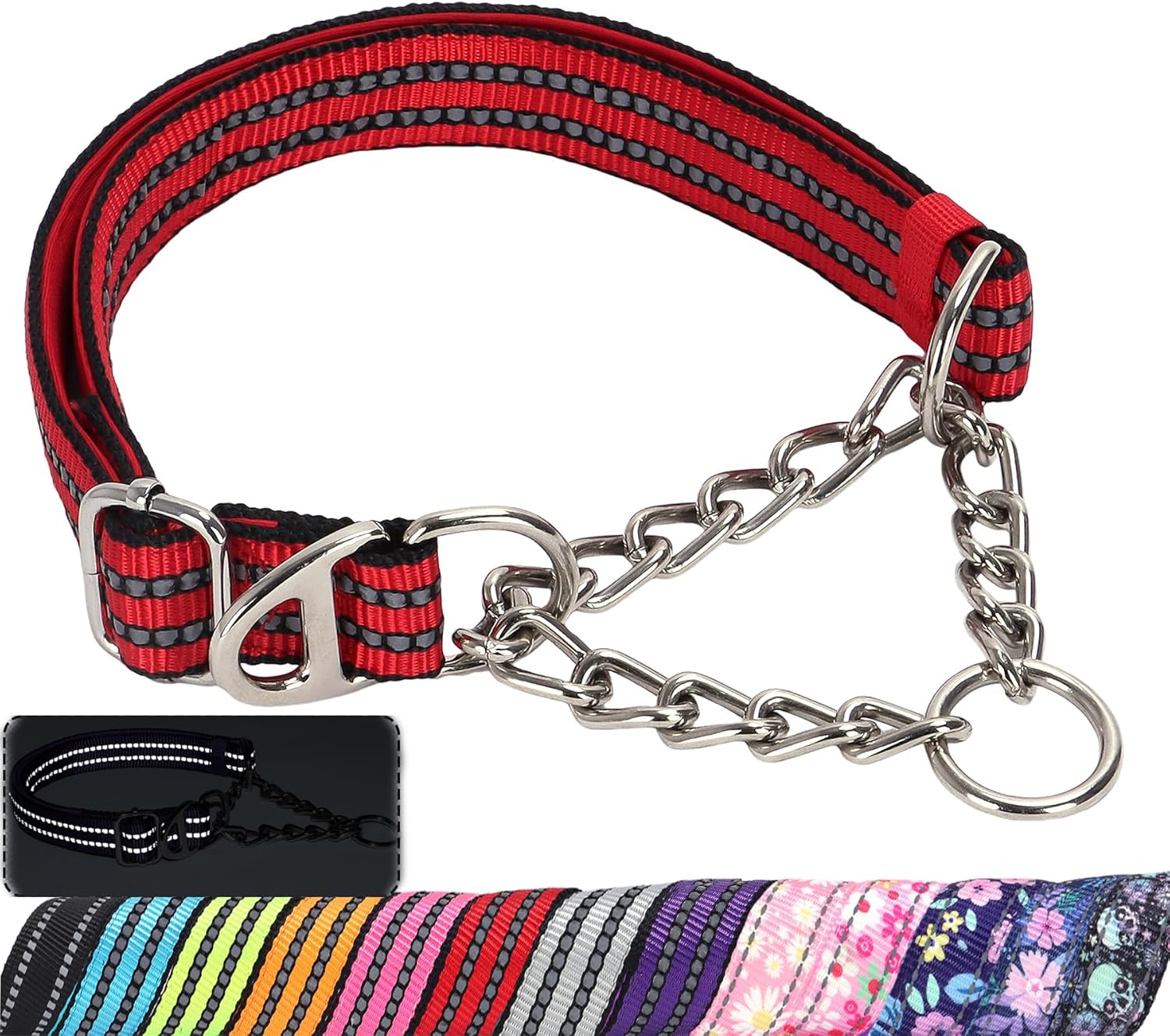
| Size | Large (Neck 15"-22") |
|---|---|
| Material Type | Nylon |
| Closure Type | Pull On |
| Breed Recommendation | All Breed Sizes |
| Animal Collar Type | Animal Martingale Collar |
This martingale collar is built for training walks where you need quick, controllable corrections and extra visibility in low light. It slips over the head and tightens gently when the dog pulls, giving handlers more control without a full choke, and the included stainless steel chain and dual D-rings let you switch between training and a non-cinch setup. Reflective nylon and a soft padded interior increase nighttime visibility and comfort on longer walks, and the nylon construction is hand-washable for easy cleaning. The collar is intended for walk-time use only since it has no buckle, and proper fit requires measuring the neck so it can slip on yet still constrict safely; it is not for unsupervised wear. Size runs to a Large that fits 15"–22" necks, so owners of smaller or much larger dogs will need a different size. For owners prioritizing visibility and better control during training walks, this is a practical, no-frills option.
Best for: Owners who prioritize safer low-light walks and need a training-style collar that improves control without a full choke.
Less Ideal for: People who want a buckle collar for everyday unsupervised wear or who cannot reliably measure their dog for a correct slip-on fit.
- Reflective nylon enhances visibility for dusk and nighttime walks
- Martingale slip design provides quick, controllable corrections without a full choke
- Padded interior improves comfort during use
- Stainless steel chain and dual D-rings allow switching between training and regular lead attachment
- Hand-washable nylon is easy to clean
- No buckle so collar should not be left on unsupervised dogs
- Only available as a slip-on style which can be tricky to fit if measurements are inaccurate
Verdict: The best reflective collar enhances low-light visibility so owners can keep their dogs safer on walks in dusk or darkness.
Freedom&Soul No Pull Collar S
Best Quick-Release Collar

| Material | 304 stainless steel |
|---|---|
| Closure Type | Buckle |
| Size (neck) | 14"-18" (S) |
| Chain Diameter | 0.08" (2.25mm) |
This Freedom&Soul no-pull training collar uses rounded, linked stainless steel sections with rubber-capped prongs to deliver distributed corrective pressure when a dog pulls, mimicking a mother dog's natural correction. It is typically used on walks and during obedience sessions to discourage pulling and reinforce leash manners; the 360° swivel ring helps prevent leash tangles and the quick-release front buckle makes putting the collar on or taking it off fast and straightforward. The 304 stainless steel construction with chrome plating and fully welded joints aims to resist bending or breaking in normal use, and the rubber sleeves protect fur and reduce sharpness of the prongs. You can size the collar by adding or removing links and two spare links are included for adjustments. Limitations: this is a corrective-style (pinch) collar that requires careful fitting and guided training to avoid misuse, and some owners prefer non-prong alternatives for sensitive or inexperienced dogs.
Best for: Buyers who prioritize fast, reliable buckle operation and want a durable corrective collar to speed leash training and reduce tangles during walks.
Less Ideal for: Owners seeking a gentler, non-correction training tool or those uncomfortable using pinch-style collars should consider alternative harness or flat-collar options.
- Quick-release front buckle for fast on/off operation
- 360 degree swivel ring reduces leash twisting during walks
- 304 stainless steel with chrome plating and welded joints for improved durability
- Rubber-capped prongs and smooth rounded links to lessen sharp contact with fur
- Adjustable by adding or removing links with spare links included
- Requires correct fit and training to use safely
- As a pinch-style corrective collar it may not suit very sensitive or inexperienced dogs
Verdict: The best quick-release collar offers easy, reliable buckle action that lets owners put on or remove the collar quickly and safely when needed.
Choosing the Right Dog Collar Obedience Training: Key Factors to Consider
Fit and Adjustability
A correct fit keeps the collar seated where it should during training and prevents slipping or rotation that can confuse cues. Adjustable collars let you fine-tune tension and accommodate growth or fluctuating weight, which is essential for puppies and adult dogs with changing body condition. Look for several adjustment increments and clear sizing guides to reduce trial-and-error.
Poor fit can create pressure points or allow a dog to back out of the collar during off-leash practice. For collars used during focused exercises, ensure the adjustment system locks reliably so the setting does not shift mid-session.
Control and Cue Clarity
How a collar transmits a handler's input affects how quickly a dog learns to respond. Collars that deliver precise, consistent feedback—whether through simple tension, a quick slip, or a targeted pressure point—help reinforce learning when used appropriately. Consider how the collar behaves during both short corrective cues and sustained guidance; inconsistent behavior makes it harder for a dog to link cue to outcome.
Training goals dictate the level of feedback you need. For basic obedience, smooth, predictable response is usually best. For advanced handling, a collar that supports subtle directional cues can be beneficial.
Material and Construction
The materials used determine durability, weight, and comfort. Heavy hardware or stiff webbing can be durable but add unnecessary weight that interferes with movement. Soft, pliable materials reduce chafing, while reinforced stitching and corrosion-resistant hardware increase lifespan for everyday training.
Consider weather exposure too. Materials that wick moisture and resist odor will stay fresher between cleanings, which is helpful when you train outdoors frequently. Avoid finishes that flake or coatings that trap dirt and degrade quickly.
Attachment Points and Hardware
Secure, well-placed attachment points let you connect leashes, training leads, or ID tags without changing how the collar sits on the neck. Hardware quality matters; weak buckles or thin rings can fail during sudden pulls or when dogs run, creating unsafe moments in training.
Think about whether the collar needs multiple rings for different lead placements, quick-release buckles for easy on/off, or fixed D-rings for consistent alignment during exercises.
Comfort and Wearability
A collar that causes rubbing or pinching will undermine training by making the dog avoid wearing it or become distracted. Padding, rounded edges, and lightweight designs increase tolerability for longer sessions. Consider how the collar feels against the fur and how it performs when the dog is running, sitting, or lying down.
Comfort also affects acceptance; collars that feel secure but unobtrusive help a dog remain focused on cues instead of trying to remove or scratch at the collar.
Ease of Care and Maintenance
Training collars are used frequently and often outdoors, so they need to be easy to clean and quick to dry. Materials that tolerate machine washing or simple spot-cleaning reduce the time you spend maintaining gear. Stain-resistant finishes and hardware that resists rust extend usable life.
Simple maintenance lowers the barrier to consistent use. If upkeep is cumbersome, owners are likelier to avoid or underutilize training sessions, slowing progress.
What Collar Style Is Best for Basic Obedience Exercises?
For routine sit, stay, heel, and recall work, choose a collar style that offers predictable, gentle feedback and stays in place. Flat buckle or quick-release collars often perform well because they are simple to adjust and do not surprise the dog with abrupt changes in pressure.
Prioritize a secure fit and a stable attachment point for the leash. If you train on loose leash walking or heel work, a collar that prevents rotation will keep your cues consistent session to session.
- Use lightweight, padded materials for long sessions
- Ensure the leash attachment sits at the center of the neck to avoid twisting
- Avoid overly slippery fabrics that allow rotation
How to Size a Collar for a Puppy Vs an Adult Dog
Measure the dog's neck at the broadest point and add a comfortable allowance for two fingers between collar and skin. For puppies, choose a collar with a wide range of adjustment and plan to move up sizes as they grow.
Check adjustment marks regularly and retighten as needed. A collar that is too loose risks slipping off; one that is too tight can cause chafing or restrict movement, which impedes learning.
- Measure monthly for growing puppies
- Mark the current adjustment so you can replicate the fit across collars
- Prefer collars with clear sizing guides
How to Attach Leads and Training Tools Safely
Place the leash on the collar attachment designed to handle the most force, typically the primary D-ring. If you need to swap between short training leads and longer walking leashes, use a second ring or connector rather than retying or repositioning the collar mid-session.
Avoid attaching heavy tags or accessories that shift the collar's balance. When using additional training tools, confirm the collar remains correctly positioned so signals are delivered predictably.
- Use swivel clips to reduce tangling
- Remove nonessential tags during active training
- Inspect attachment points before each session
When Should You Replace a Training Collar?
Replace a collar when hardware shows signs of failure, for example frayed webbing, bent rings, or cracked buckles. Even durable materials wear over time; replace any collar that no longer fastens securely or that shifts unpredictably during use.
Also replace collars if the dog develops irritation or hair loss under the contact area. Continued skin issues indicate the collar no longer meets the dog's comfort needs and can slow training progress.
- Check for wear after heavy use or exposure to water and dirt
- Replace immediately if a buckle or ring fails
- Rotate collars if you train daily to extend individual item life
How to Introduce a New Collar so Training Stays Consistent
Start by letting the dog wear the new collar for short, supervised periods before active training. Pair that time with positive experiences—treats, gentle petting, and low-stress handling—to build acceptance.
Once the dog is comfortable wearing it, use familiar cues and short, successful sessions to reinforce that the new collar does not change expected behaviors. Consistent fit and leash placement help preserve cue clarity when switching collars.
- Begin indoors for 5 to 10 minutes before moving outdoors
- Use reward-based reinforcement during the adjustment period
- Check fit after the first few outings and adjust if needed
How We Chose the Best Dog Collar Obedience Training
We screened collars with an emphasis on factors that directly affect training outcomes. Our review criteria prioritized secure fit and adjustability so collars stay correctly positioned during exercises; control and cue clarity to ensure handlers can deliver consistent, repeatable signals; and build quality to withstand repeated daily use without failure. Comfort and material choice were included to limit irritation and prevent early resistance to wearing a collar. We also considered attachment options for leashes and training tools, and how easily a collar can be maintained and cleaned. We excluded any collar types intended strictly for containment or electronic correction without clear manual control purpose. Items that lacked basic sizing information, poor fasteners, or minimal durability indicators were filtered out. The final shortlist reflects collars that balance humane handling, practical control, and real-world durability for obedience training sessions.
Our full evaluation process is outlined in our review methodology.
FAQ
Is a martingale or slip-style collar okay for obedience training?
Martingale and slip-style collars can be effective when used correctly because they discourage backing out. They require careful sizing and supervision because misuse can cause discomfort. For basic obedience, many owners prefer styles that offer control without sudden tightening unless the handler is trained in their use.
Can a collar alone replace regular leash training?
A collar is a communication tool, not a complete training program. It supports leash training but should be used alongside consistent handling, clear cues, and positive reinforcement to teach reliable behavior. Relying solely on equipment without structured training slows progress.
How tight should a training collar be during practice?
A training collar should allow two fingers between the collar and the dog's neck at rest. That fit prevents slipping while avoiding pressure that causes discomfort. Check fit again after vigorous activity since some materials stretch or shift.
Are padded collars better for dogs with sensitive skin?
Padded collars reduce rubbing and distribute pressure over a wider area, which often helps dogs with sensitive skin. Still, monitor the contact area for signs of irritation and choose breathable, quick-drying materials to reduce moisture buildup that can irritate skin.
Should I use the same collar for everyday walks and obedience practice?
Using the same collar for both can help maintain cue consistency, but some handlers prefer a dedicated training collar with features optimized for lessons. If you use one collar for both, keep fit and attachment placement consistent to avoid confusing the dog.
Final Verdict
Choose a collar that balances secure control, comfort, and durability for the type of obedience work you do. Prioritize correct sizing and predictable cue transmission over novelty features, and maintain hardware and materials so the collar performs reliably during practice. Remember that the collar supports your training technique; consistent handling and clear cues are the decisive factors in making progress.

