

When you need firmer, more reliable control during training and walks, the right dog control collar can make a big difference. You want a tool that improves recall, reduces problem behaviors, and stays safe and comfortable for daily use. This guide shortlists the top options and explains the decision points that matter for typical pet owners and trainers. We evaluated signal range, correction versatility, fit and comfort, and durability to surface practical picks for most households. Read on to see which control collars made the list and why they might fit your training plan.
Top Picks at a Glance
| Best Overall Control Collar A well-rounded pick that balances features, safety, and usability | Dogtra 280X 2-Dog E-Collar |  |
| Best Budget Control Collar A low-cost option that covers essential training needs affordably | HapTop AC131 Dog Shock Collar |  |
| Best Premium Control Collar Higher-end materials and advanced features for serious trainers | Dogtra 200iQ E-Collar |  |
| Best Compact Control Collar A smaller, lightweight unit suited to small breeds and travel | Educator ET-300 Mini Training Collar |  |
| Best Waterproof Control Collar Built to withstand wet conditions, baths, and outdoor play | MrSpark HQ01 Shock Training Collar |  |
| Best Long-Range Control Collar Extended remote distance for open-area training and recall work | PAWPRO Dog Shock Collar Ultimate |  |
| Best Multi-Mode Control Collar Multiple stimulation options for tailored, gradual training approaches | BLACKDOG Military Shock Collar OT9 |  |
Dogtra 280X 2-Dog E-Collar
Best Overall Control Collar
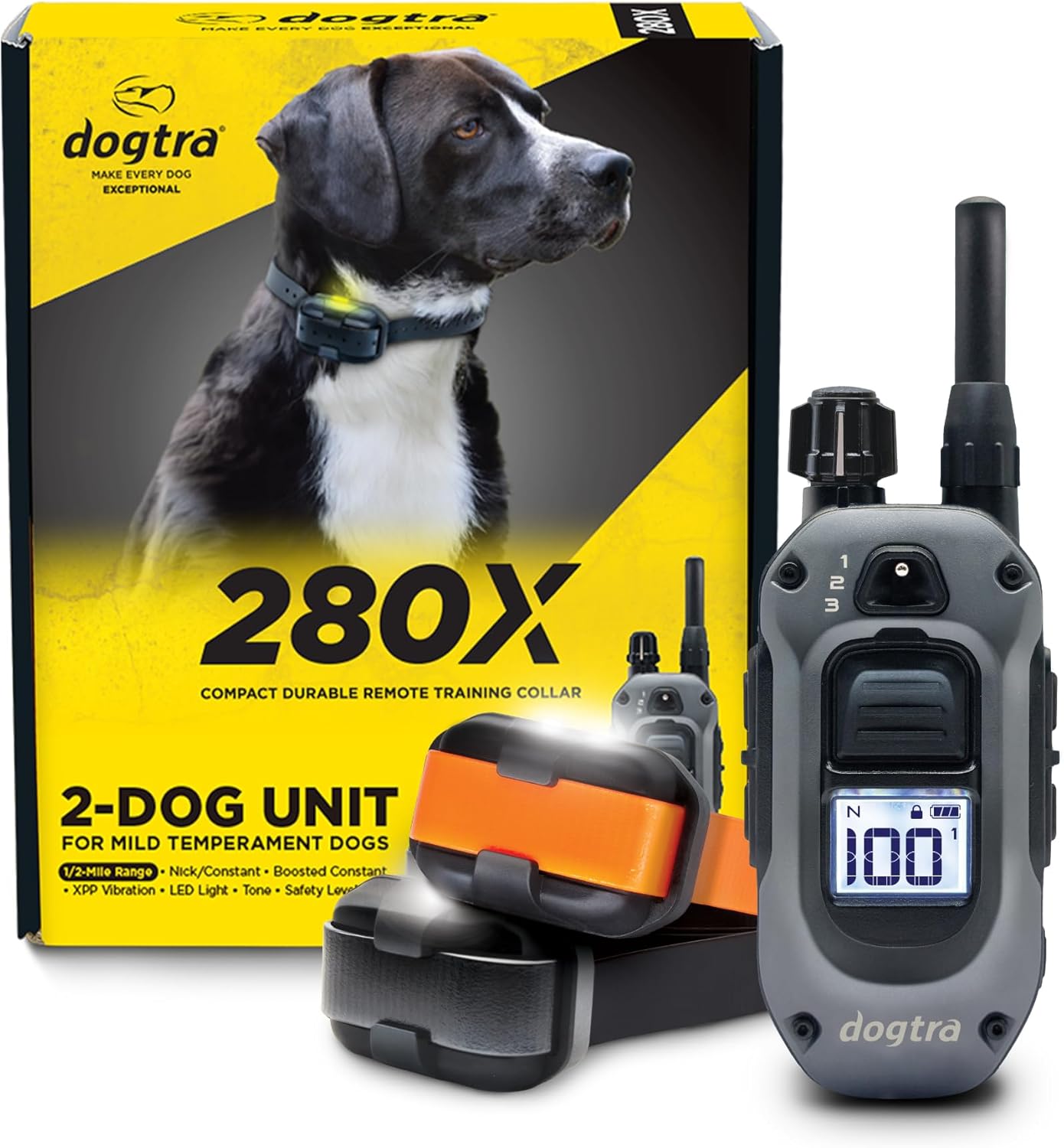
| Range | 1/2 Mile |
|---|---|
| Channels | 2-dog (expandable to 3) |
| Stimulation Levels | 100 levels |
| Modes | Static, Tone, XPP Vibration |
| Waterproof | Yes |
The Dogtra 280X is a rugged two-dog remote training system built for frequent outdoor use and progressive training plans. It pairs a single transmitter with two color-coded waterproof receivers and offers 100 discrete stimulation levels plus tone and XPP vibration so you can match corrections to a dog's sensitivity. The transmitter's large front button and BOOST feature let you deliver an instant higher-level correction for urgent recall without fumbling through menus, and the safety level lock reduces accidental activations. Expandability to a third receiver and a bright 1000-lux LED on the receiver make it practical for off-leash work and low-light sessions. Rechargeable receivers and removable contact points simplify maintenance and fit adjustments. Trade-offs are that the system is aimed at experienced trainers who can use fine-grained levels effectively and some buyers may prefer simpler single-button vibration/tone-only options for basic obedience; the unit also requires familiarization with settings before first use. For owners who plan regular off-leash training and need durable, precise control, the 280X delivers a professional-feel package.
Best for: Owners who want a durable, professional-grade two-dog system with long range and very fine control for regular off-leash or field training.
Less Ideal for: Casual pet owners seeking a minimal, entry-level trainer or those uncomfortable with learning detailed stimulation settings should consider simpler alternatives.
- Two-receiver kit lets you train two dogs from one transmitter
- Half-mile wireless range for wide-open or rural environments
- 100 stimulation levels plus tone and XPP vibration for precise, incremental corrections
- Waterproof, durable receivers with a 1000-lux LED for night visibility
- Front-mounted main button and BOOST provide fast access to corrections in urgent moments
- Complexity of 100 levels requires time to learn and dial in appropriate settings
- Designed for committed trainers rather than casual users preferring simple systems
Verdict: The best overall control collar that balances effective training modes, reliable build quality, comfortable fit, and straightforward controls for most dog owners.
HapTop AC131 Dog Shock Collar
Best Budget Control Collar

| Training modes | Beep, Vibration, Safe Shock, Shock Boost |
|---|---|
| Range | 4500 ft |
| Fit neck | 7.8"-24.4" (10-120 lb) |
| Waterproof rating | IPX8 |
| Charging | USB-C |
The HapTop AC131 is a rechargeable e-collar kit designed for everyday obedience and distance work. It uses a 2-channel remote to control up to two dogs and offers four training modes: beep, vibration, safe shock (0–99 levels) and a shock boost, with the shock function optional for no-shock training. The remote's long 4500 foot range and memory for individual dog settings make it useful for off-leash recall, boundary training, and reinforcing commands across yards or trails. The receiver is IPX8 waterproof and the kit includes multiple prong lengths, silicone covers, a test light tool, and USB-C charging for practical field use. Safety-oriented features include an adjustable low-to-high stimulation range, a security lock to prevent accidental corrections, and a manufacturer guideline limiting continuous wear to 12 hours. Trade-offs are typical for this class: it relies on batteries and correct fitment to be effective, and some owners prefer vibration or beep-only methods before adding shock. The unit's feature set and range make it a strong daily trainer for owners willing to follow safe use guidelines.
Best for: Owners who want a versatile, safety-minded e-collar for regular obedience and distance work and who plan to use multiple training modes progressively.
Less Ideal for: People who want a purely non-aversive training tool or who are uncomfortable using shock-style corrections should choose vibration- or treat-based training alternatives.
- Very long 4500 ft remote range for off-leash training
- Multiple modes (beep, vibration, adjustable shock) for progressive training
- IPX8 waterproof receiver suitable for wet outdoor use
- Includes extra prongs, silicone covers, test light tool, and USB-C charging
- 2-channel remote controls two dogs and remembers individual settings
- Shock feature requires careful adjustment and responsible use to avoid misuse
- Not intended for continuous wear longer than 12 hours per day
Verdict: The best budget control collar for owners who need basic training functionality and dependable performance without spending much.
Dogtra 200iQ E-Collar
Best Premium Control Collar
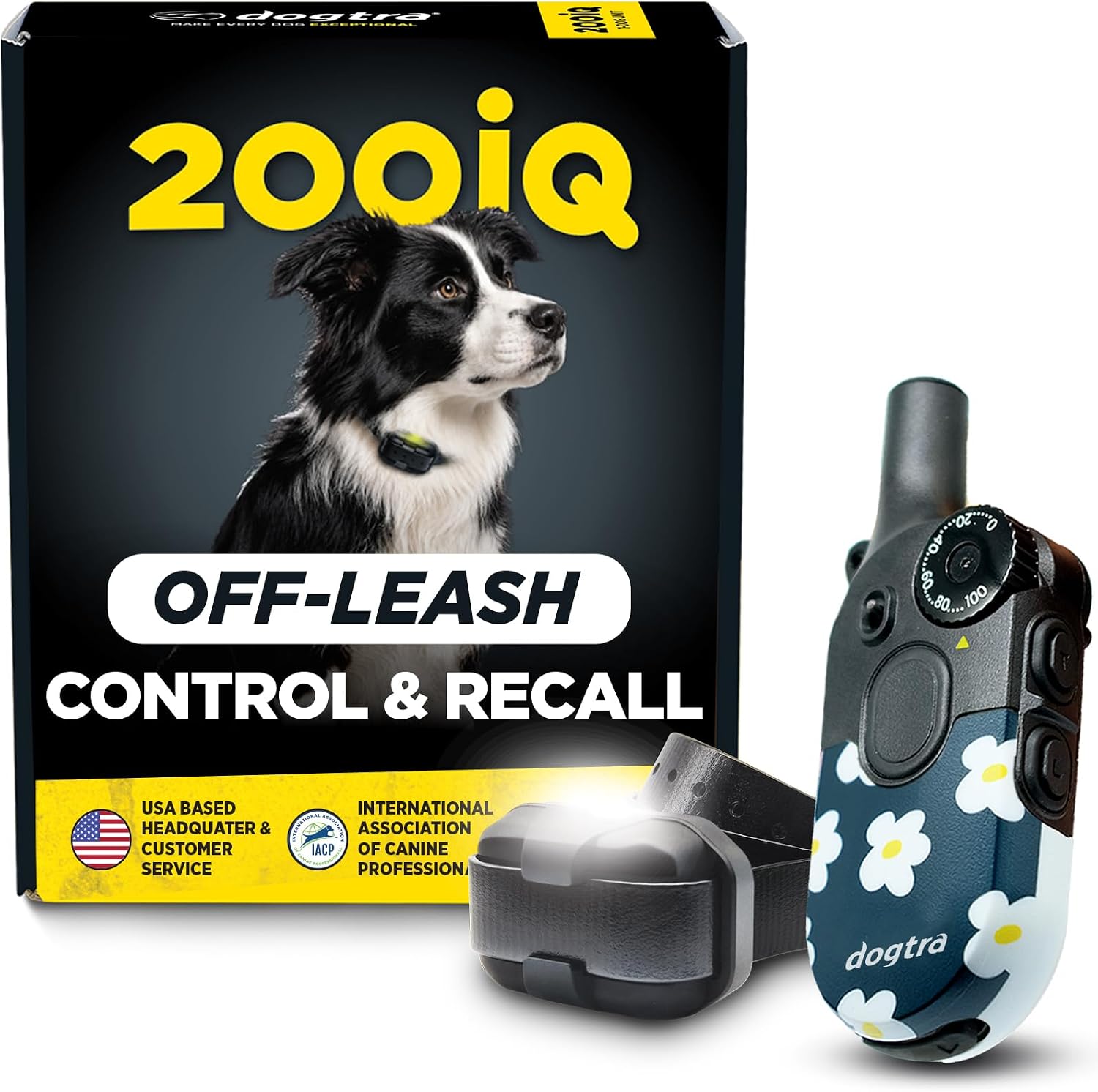
| Range | 1/2-Mile |
|---|---|
| Charging | USB-C |
| Waterproof Rating | IPX9K |
| Expandability | 2-Dog |
| LED Light | 1000 LUX |
The Dogtra 200iQ is a premium, compact remote training collar built for daily use in challenging conditions. It provides 100 adjustable levels of nick and continuous stimulation plus XPP vibration and an audible tone, all controlled with an easy one-handed dial that lets you switch intensity quickly or toggle between two dogs. The system includes a bright 1000 LUX LED on the receiver, removable contact points for comfort, and USB-C charging for convenient top-up between sessions. IPX9K waterproofing and a rugged nylon strap mean the unit survives rain, mud, and beach outings so you can train anywhere. Practical benefits include fine-grained control for sensitive or hard-to-train dogs, a compact lightweight form factor for smaller breeds, and expandability to add a second receiver. Limitations are typical of high-performance e-collars: effective use requires responsible training and gradual level-setting, and the array of advanced features has a learning curve for first-time users.
Best for: Buyers who prioritize durable, refined controls and advanced training options and are willing to invest in a high-end collar for reliable field performance.
Less Ideal for: Owners looking for a very simple novelty device or those unwilling to learn proper e-collar protocols should consider gentler training tools instead.
- 100 levels of nick and continuous stimulation for precise intensity control
- XPP vibration and audible tone provide non-static cues and quick redirection
- IPX9K waterproofing and USB-C charging for reliable use in wet conditions
- One-handed dial and 2-dog expandability simplify real-world training sessions
- Removable contact points and compact receiver suit dogs 10 lbs and up
- Advanced feature set has a learning curve for new users
- Requires careful, responsible use and level adjustment to avoid overcorrection
Verdict: The best premium control collar for owners willing to pay more for superior durability, refined controls, and advanced training features.
Educator ET-300 Mini Training Collar
Best Compact Control Collar

| Batteries | 2 Product Specific batteries required (included) |
|---|---|
| Breed Recommendation | Large Breeds |
| Material Type | Biothane |
| Size | 1 Dog |
The Educator ET-300 Mini is a premium remote training collar aimed at owners who want precise, durable tools for behavior work. It pairs a compact remote with a waterproof receiver and adjustable Biothane strap that fits dogs with 10–26 inch necks and is specified for dogs 15+ lbs, making it a practical choice for many small and medium dogs. The unit offers 100 blunt stimulation levels plus tone and vibration, which lets you fine tune corrections to a dog's sensitivity instead of relying on a one-size approach. Built-in LED tracking and a rechargeable battery add real-world convenience for evening walks and regular sessions, and the package includes two contact-point lengths and a training clicker to support different coat types and starter routines. The control layout and large level range favor experienced trainers or committed owners who intend to invest time learning appropriate settings. It is a higher-end option, so buyers should expect a learning curve to set levels correctly and to use it responsibly during training.
Best for: Owners seeking a long-lasting, well-built training collar with refined control and extra features, and who are willing to learn safe, effective use for regular training sessions with small to medium dogs.
Less Ideal for: Casual buyers who want a simple no-frills collar or owners of very small toy breeds under 15 pounds should consider lighter, simpler options instead.
- Very wide range of 100 stimulation levels for precise, tailored corrections
- Waterproof receiver and rechargeable battery suitable for outdoor use
- Durable Biothane strap and secure buckle designed for regular training
- Includes tone and vibration modes plus two contact point sizes for coat versatility
- Designed for dogs 15+ lbs so it is not suitable for very small or toy breeds
- Higher-end feature set requires time and experience to use effectively
Verdict: The best compact control collar for small dogs or owners who prioritize a lightweight, low-profile device that's easy to pack and wear.
MrSpark HQ01 Shock Training Collar
Best Waterproof Control Collar

| Training modes | Beep, Vibration, Shock (adjustable levels) |
|---|---|
| Waterproof rating | IP68 receiver |
| Remote range | 4500ft |
| Recharge time | 2 hours |
The MrSpark HQ01 is a rechargeable e-collar designed for remote obedience and bark control using three modes: beep, vibration and adjustable shock levels. You use the handheld remote to send instant corrections up to 4,500 feet away, which makes it practical for off-leash field work, recall training, and perimeter control. Notable features include an IP68 waterproof receiver that can be rinsed after swims or muddy sessions, a built-in LED collar light and a remote flashlight for night visibility, and a safety lock plus automotive-grade safety chip to reduce accidental stimulation. Battery life is strong: the receiver claims up to about 20 days between charges and the remote up to 90 days with a two-hour full charge time. The collar ships with short and long metal prongs and silicone covers to fit different coat types and has an adjustable buckle fit. Limitations to be aware of are that the remote is not waterproof and users must follow the daily-wear and skin-inspection guidance to avoid irritation from sustained contact; effective, humane use requires gradual level setting and monitoring during training.
Best for: Pet owners who prioritize a durable, moisture-resistant training collar for frequent outdoor use, night walks, and water activities and who want a long-range remote for off-leash correction.
Less Ideal for: Owners who need a fully waterproof remote or who prefer passive bark-only collars without user-controlled correction should consider other options.
- IP68-rated receiver that can be rinsed after swimming or muddy play
- Long 4,500 ft RF range with adaptive frequency hopping for stable response
- Multiple training modes with adjustable levels for gradual, precise corrections
- Long battery runtime and 2-hour fast recharge to minimize downtime
- Included hardware (short/long prongs and silicone covers) for fit across coat types
- Remote unit is not waterproof which limits use in wet conditions
- Requires careful daily-wear management and periodic skin checks to prevent irritation
Verdict: The best waterproof control collar for households with active pups that need reliable performance during rain, swimming, and messy play.
PAWPRO Dog Shock Collar Ultimate
Best Long-Range Control Collar

| Range | Up to 4 miles (open terrain) |
|---|---|
| Stimulation levels | Beep 1–8, Vibration 1–16, Static 1–99 |
| Waterproof rating | IPX7 |
| Battery life | Up to 15 days (per listing) |
The PAWPRO Dog Shock Collar is built for long-distance off-leash training, pairing a dual-channel remote with an advertised 4-mile open-terrain range. You use the remote to deliver beep, vibration, or adjustable static stimulation and to activate a built-in LED for low-light visibility; the unit supports two dogs with the dual-channel function. Practical features include an IPX7 waterproof receiver, hypoallergenic adjustable strap, multiple contact points for size tuning, and a 30-day step-by-step training guide to help beginners start gently. The controls offer fine-grained adjustment across beep, vibration and 99 static levels so you can find an appropriate response for different dogs and distractions. Battery life and fast charging are convenient for multi-day outings, and the collar is made to handle rain and trails. The main compromises are that real-world effective range depends on terrain and obstacles, and static stimulation requires careful, informed use so you can train safely and humanely. For owners who need extended remote control, this package gives versatile modes and practical outdoor readiness.
Best for: Owners who need dependable remote control across large open areas and want a feature-rich collar that balances long range with adjustable stimulation and outdoor durability.
Less Ideal for: People who only train indoors or in small fenced yards where extreme range is unnecessary, or those unwilling to learn responsible use of static stimulation methods.
- Very long advertised open-terrain range up to 4 miles for wide-area recall and off-leash training
- Multiple stimulation modes with wide adjustment (beep, vibration, 1–99 static) for precise responses
- IPX7 waterproof receiver and reflective adjustable strap for outdoor use in wet conditions
- Dual-channel remote supports training two dogs with a single transmitter
- Includes step-by-step 30-day training guide and multiple contact points for fit and beginner support
- Effective range will be reduced by trees, buildings, and terrain so 4-mile performance is situational
- Static stimulation requires careful, informed use and gradual introduction to avoid misuse
Verdict: The best long-range control collar for owners who train at greater distances and need consistent signal strength for reliable remote corrections.
BLACKDOG Military Shock Collar OT9
Best Multi-Mode Control Collar

| Training modes | Beep, Vibration, Safe Shock, Strobe Light |
|---|---|
| Range | 4200ft |
| Waterproof rating | IP67 |
| Power | USB-C fast charge; 90-day claimed runtime (1 hr/day) |
The BLACKDOG OT9 is a rechargeable training collar system aimed at regular use in outdoor conditions. The remote and collar provide four user-selectable modes—beep, vibration, safe shock, and a strobe light—with multiple intensity levels, an LCD on the transmitter for clear mode and battery readouts, and tool-free removable prongs so you can switch to no-shock operation. Its rechargeable design (USB-C fast charge) and claimed 90-day battery life based on one hour of daily use make it convenient for owners who train often and want low running costs compared with disposable batteries. The unit is built to a rugged spec with an IP67 rating and reinforced casing for heavy-duty outdoor use, while the remote flashlight and collar strobe improve night safety. Practical limits: the shock mode is present so careful, informed use is required, and real-world range and battery life will vary with terrain and usage intensity. The system suits hands-on, consistent trainers who need a weatherproof rechargeable collar with visible lighting features.
Best for: Owners who train regularly and prioritize a rechargeable collar that is rugged enough for outdoor use and includes visibility features for night or low-light sessions.
Less Ideal for: People who want a purely positive-reinforcement tool without any static stimulation or those who need a collar-free solution for noise-only behavior control.
- Rechargeable USB-C system with fast charging and long claimed runtime
- Multiple training modes including beep, vibration, and adjustable safe shock levels
- IP67 waterproof build and reinforced casing for rugged outdoor use
- Integrated remote flashlight and collar-mounted strobe for night visibility
- Tool-free removable prongs allow switching to no-shock configuration
- Shock feature requires responsible use and may not suit sensitive or inexperienced handlers
- Real-world range and battery life depend on terrain and usage and may be lower than claims
Verdict: The best multi-mode control collar for owners who want a variety of stimulation types and intensity levels to customize training to their dog's sensitivity.
Choosing the Right Dog Control Collar: Key Factors to Consider
Correction Modes and Adjustability
Different correction modes change how the collar communicates with the dog. Options typically include vibration, tone, and static pulse. Adjustable intensity matters because dogs vary in sensitivity; a setting that is too strong can cause stress, while one that is too weak may be ineffective. Having multiple stepped levels and quick access controls lets you tailor the response to the situation and the individual dog.
Consider collars that allow fine-grained control, such as many small intensity steps and separate switches for vibration or tone. Short, momentary pulses are usually preferable for training cueing, while continuous modes might be useful only in supervised situations. The ability to switch modes quickly helps when you need a non-physical signal before escalating to a stronger correction.
Range and Signal Reliability
Signal range determines how far apart you and your dog can be while still communicating. Practical range needs vary by use: municipal parks and fields often require longer reach, while backyard training can work with shorter ranges. More important than the raw maximum distance is real-world reliability through trees, around structures, and in areas with radio interference.
Look for collars with consistent transmission at usable distances rather than headline numbers achieved only in perfect open-field tests. Clear feedback on connection status and low-latency responses matter when timing is key for training. Fail-safe behaviors such as reconnect indicators and automatic shutdown when out of range are helpful additions.
Fit, Contact Quality, and Comfort
Proper fit directly affects both performance and safety. The contact points need to sit firmly against the dog's skin to deliver consistent signals, but they should not chafe or press uncomfortably. Different dogs have different neck shapes and coat types; adjustability and a range of contact lengths help accommodate these differences.
Soft, rounded contact surfaces and multiple strap sizes reduce the risk of irritation. For long-term wear, consider how breathable the strap material is and whether the collar is prone to trapping moisture. Removable contacts and washable straps are practical for easy maintenance.
Battery Life and Charging Convenience
Battery performance affects readiness and convenience. Longer battery life reduces interruptions during training and avoids frequent recharging before outings. Fast charging and clear battery indicators on both the remote and collar help you plan sessions without guesswork.
Rechargeable batteries are common and preferable for regular use, but consider how the system reports low charge and whether you can swap or temporarily bypass a depleted collar. A remote with long battery life matters too, since it is typically handled more often and may be exposed to colder conditions that shorten runtime.
Durability and Weather Resistance
A control collar should withstand everyday outdoor conditions including rain, mud, and rough play. Water resistance ratings and robust casing protect internal electronics. Corrosion-resistant contacts and sealed charging ports extend usable life.
Durability also covers strap hardware and buckles; metal or reinforced polymer components last longer than thin plastic. Consider how easy it is to clean the collar after exposure to dirt and moisture and whether replacement parts are readily available.
Ease of Use and Training Support
A collar that is hard to operate undermines training. Controls should be intuitive, with clearly labeled buttons and a straightforward method to switch modes or adjust intensity. Haptic or audible feedback from the remote and collar can confirm successful transmission.
Training support includes documentation, clear manufacturer guidance on safe starting intensities, and suggested progressions for increasing stimulus. Simple interface design helps both novice and experienced handlers maintain consistent timing and reduce accidental overcorrection.
How Much Range Do You Actually Need for Reliable Recall?
Think about where you will use the collar most. For open fields and large off-leash areas you will want more range to maintain communication at a distance. For neighborhood walks and backyard work, a shorter, more reliable range is often sufficient.
Remember that obstructed environments reduce effective distance. If you train near trees, buildings, or in hilly terrain, prioritize signal reliability over nominal maximum range. Reliable mid-range performance is generally more useful than a high maximum figure you rarely achieve in real situations.
- Open country and hunting practice typically require the longest practical range.
- Urban and suburban training benefits from stable short- to mid-range performance.
- Check for clear indicators of connection quality and latency.
What Correction Method Should You Start With?
Most trainers recommend beginning with the least invasive option and only escalating if needed. Vibration or tone signals are effective cues for many dogs and provide a non-physical way to get attention. Use these first and reserve static pulse options for cases where dogs do not respond to milder signals.
When you do introduce higher levels, do so in short, controlled bursts and observe the dog's reaction closely. The goal is communication, not punishment, so prioritize modes that allow clear, repeatable cues with minimal stress.
- Start with tone or vibration and only add pulse if necessary.
- Use momentary pulses for timing during training rather than continuous stimulation.
- Adjust intensity incrementally to find the minimal effective level.
How to Size and Fit a Control Collar for Different Coat Types
Dogs with thick undercoats may need longer contact points or contact clips that part the fur to reach skin. Short-haired dogs require less extension but still need snug contact to avoid slipping. Always measure the dog's neck and allow enough strap for secure adjustment without excess bulk.
For very dense or long coats, consider collars with removable or longer contacts and check fit during activity. Reassess fit after the dog's seasonal coat changes to maintain consistent contact quality.
- Measure neck circumference while the dog is relaxed.
- Leave room for two fingers under the strap for comfort.
- Re-check fit regularly, especially after growth or weight change.
Using a Control Collar Safely During Walks and Training
Use the collar only as part of a planned training session or supervised activity. Avoid leaving a correction-capable collar on an unattended dog for long periods unless it is specifically rated and recommended for continuous wear. Supervision helps prevent accidental activation and ensures corrections are paired with clear cues and rewards.
Combine collar use with consistent verbal cues and positive reinforcement. If the dog shows signs of distress, stop the session and reassess the chosen mode and intensity. Proper handling reduces the risk of creating negative associations with the tool or the trainer.
- Schedule short, focused sessions rather than long, continuous corrections.
- Pair cues with rewards to reinforce desired behavior.
- Stop and lower intensity if the dog shows aversion or fear.
Maintenance Tips to Keep a Collar Working Reliably
Regularly clean contact points to maintain good conductivity and inspect straps for wear and damage. Keep charging ports dry and avoid submerging collars not rated for that level of water resistance. Replace worn contacts and straps promptly to preserve performance.
Store remotes and collars in a dry, temperate place when not in use. Check battery status before heading out and keep charging cables accessible so you do not start a session with low power.
- Wipe contacts after muddy or wet outings.
- Inspect strap stitching and hardware monthly.
- Charge devices fully and calibrate any software indicators periodically.
How We Chose the Best Dog Control Collar
We focused on features that matter to owners who plan to use a control collar for training, behavior management, or improving off-leash recall. Primary evaluation criteria included signal range and reliability, variety and adjustability of correction modes, fit and comfort for different dog sizes, battery life and recharge convenience, and construction quality for everyday outdoor use. We also considered how intuitive the remote and controls are for typical handlers and whether safety safeguards such as adjustable intensity, short burst options, and clear user controls were available. Products were excluded if they lacked basic safety adjustments, offered only a single non-adjustable correction level, had unverified range claims, or used materials unlikely to hold up to regular wear. We prioritized collars that balance effective communication with the dog and sensible safety features. Our selection process emphasized practical utility, clear user controls, and consistent performance across common training scenarios rather than gimmicks or unsupported technical claims.
Our full evaluation process is outlined in our review methodology.
FAQ
Are control collars safe for regular use?
Control collars can be safe when used properly with appropriate settings and supervision. Start at the lowest effective level, use momentary corrections for training cues, and avoid prolonged continuous stimulation. Monitor your dog's behavior and stop if you see stress or avoidance.
Can puppies wear a control collar?
Puppies may be too sensitive for many correction types and their necks are still developing. For young dogs, focus on low-impact signals such as tone or vibration and ensure settings are set to the mildest levels. Consult a professional trainer if you plan to introduce correction tools early.
How often should I charge the collar and remote?
Charge frequency depends on usage intensity and battery capacity. For regular daily training, expect to recharge weekly or more often for heavy use. Check battery indicators before sessions and avoid starting outings with marginal charge.
Will a thick coat prevent contact signals from working?
Thick coats can reduce contact effectiveness unless the collar has longer contacts or contact clips designed to part the hair. Proper fit and periodic checks during activity help ensure consistent contact with the skin.
Is a longer range always better?
Longer range is useful in open areas but is not inherently better if it sacrifices reliability. Choose a system that offers dependable communication at the distances you actually use rather than a high maximum range with weak real-world performance.
Final Verdict
Pick a collar that balances clear communication with humane, adjustable corrections. Prioritize reliable signal performance, comfortable fit, and adequate safety controls so you can cue your dog consistently without causing unnecessary stress. Tradeoffs are inevitable: maximum range often reduces reliability in obstructed environments, and stronger correction capability requires careful handling. Focus on the minimal effective setting, predictable controls, and durability to get the most practical value from a dog control collar.

