

If you have a dog that likes to chew, choosing the right crate bed matters for safety, durability, and daily hygiene. A chewer-proof crate bed can prevent your dog from ingesting stuffing, reduce the need for constant replacements, and make crate time calmer for both of you. This guide covers the top shortlisted crate beds designed for chewers and explains the features that keep them standing up to heavy use. Below we summarize how each option fares on durability, cleanability, and comfort so you can pick the best fit for your dog and crate.
Top Picks at a Glance
| Best Overall Crate Bed for Chewers Top all-around pick that survives chewing while staying comfortable | Couzssyhi Chew Proof Dog Crate Pad Large |  |
| Best Budget Crate Bed for Chewers Low-cost option built to resist basic chewing and wear | BALAPET Chew Proof Crate Pad Large |  |
| Best Waterproof Crate Bed Moisture-resistant layers and covers for accidents and spills | EOBUSKOR Orthopedic Crate Pad X-Large |  |
| Best Easy-Clean Crate Bed Designed for fast cleanup with removable, machine-washable covers | KHONSU PET Durable Dog Bed XL |  |
| Best Premium Crate Bed Higher-end materials and construction for long-term durability | FXW TitanNest Padded Elevated Dog Bed Medium |  |
Couzssyhi Chew Proof Dog Crate Pad Large
Best Overall Crate Bed for Chewers

| Size | Large (28"x41") |
|---|---|
| Material Type | High-strength fabrics |
| Fill Material | Thickened felt and waterproof barrier |
| Care | Machine Wash |
| Special Features | Chew Resistant, Leakproof, Scratch Resistant, Stain Resistant |
This Couzssyhi crate pad is built for dogs that test beds: the outer layer uses high-strength, tightly woven fabric and a thickened felt plus waterproof barrier to resist tearing, chewing, stains, and scratches. It fits typical large crates and works well as a floor pad or travel mat thanks to its foldable design and machine-washable care instructions. In everyday use it keeps loose hair and light dirt easy to brush off and the waterproof inner layer protects against accidents and messes. The pad is thin (0.7 inches) so it offers more protection and durability than plush cushioning, but it will not provide the deep joint support of an orthopedic foam bed for older or large heavy dogs that need more padding. For aggressive chewers this model prioritizes longevity and easy cleaning over thick comfort, and the construction and materials do make it tougher to shred than standard fabric beds.
Best for: Buyers who need a durable, easy-to-clean crate pad that stands up to heavy chewing and frequent messes while still fitting standard crates and travel use.
Less Ideal for: Owners seeking a plush, supportive orthopedic bed for senior or large heavy dogs should choose a thicker foam mattress instead.
- High-strength, chew-resistant outer fabric reinforced against tearing and scratching
- Waterproof inner barrier protects crate floors and simplifies cleanup
- Machine-washable surface for routine cleaning
- Foldable design suitable for crates, patios, and travel
- Designed specifically for aggressive chewers and heavy use
- Relatively thin padding offers limited orthopedic support for senior or large heavy dogs
- Not fully indestructible; extremely determined chewers may eventually penetrate material
Verdict: The best overall crate bed for chewers, balancing chew-resistant construction, comfort, and ease of cleaning for everyday kennel use.
BALAPET Chew Proof Crate Pad Large
Best Budget Crate Bed for Chewers

| Size | L (41" L x 28" W) |
|---|---|
| Thickness | 3 inches |
| Material Type | Polyester / Fiberglass blend outer |
| Fill Material | Polyester Fiber |
| Care | Machine Washable |
This BALAPET chew-proof crate pad is a simple, low-cost dog bed made for crates and travel. It uses a fiberglass-blend, anti-chewing outer and reinforced metal rivet corners to help resist bites and scratching, while a polyester fiber fill provides modest cushioning. The pad is foldable and portable, so it packs easily for trips and tucks into most standard large crates. It is machine washable and described as waterproof, which makes cleaning straightforward after muddy or wet use. Expect basic comfort rather than plush support—the 3-inch thickness offers light padding suitable for short naps or crate training but not long-term orthopedic support for older dogs. Build quality appears durable for light to moderate chewers, though very aggressive or persistent chewers may still damage it over time. Size limits and a rectangular shape mean buyers should confirm crate dimensions before ordering.
Best for: Buyers who prioritize chew resistance and portability on a tight budget and need a practical crate pad for training, travel, or everyday crate use.
Less Ideal for: Owners seeking thick, orthopedic support for senior or large-breed dogs or those whose pets are determined, heavy-duty chewers should consider heavier-duty or memory foam alternatives.
- Engineered outer fabric with fiberglass blend and metal-rivet corners for improved chew resistance
- Machine washable for easy cleaning after messes
- Foldable and lightweight for travel and storage
- Waterproof and scratch resistant surface for active indoor/outdoor use
- Thin 3-inch padding provides only basic comfort not suited for dogs needing orthopedic support
- Maximum weight recommendation capped at 70 pounds limits use for very large or heavy dogs
Verdict: The best budget crate bed for chewers that offers reasonable chew resistance and durability at a lower price for cost-conscious pet owners.
EOBUSKOR Orthopedic Crate Pad X-Large
Best Waterproof Crate Bed

| Size | X- Large (41*27*3.5) |
|---|---|
| Material Type | 600D Oxford Fabric, HDPE, Nylon, Sherpa |
| Fill Material | Memory Foam |
| Wash Care | Machine Wash cover; foam spot-clean |
This EOBUSKOR crate pad is built as a practical waterproof, chew-resistant sleeping surface for dogs that need joint support in confined spaces. It uses an egg-crate memory foam core to spread weight and provide orthopedic relief while the dual-sided, 100% waterproof barrier keeps urine and muddy paws from reaching the foam. One side is heavy-duty 600D Oxford fabric that resists scratching and chewing, and the other is sherpa for warmth and anxiety relief, so you can flip it for seasonally different comfort. The removable cover unzips for machine washing while the foam should be spot-cleaned and allowed 24 to 48 hours to recover after being vacuum-packed. In real-world use it fits standard crates, is easy to wipe down for daily messes, and offers a substantial upgrade over thin crate pads, though aggressive chewers may eventually damage foam if they get through the cover and the inner pad is not washable. Sized for larger breeds, it works best as a portable, washable, and highly water-resistant option for crates, cars, and outdoor rest areas.
Best for: Owners who prioritize reliable liquid protection and an easy-to-clean crate pad that also offers orthopedic support and tougher-than-average cover fabric.
Less Ideal for: People who need a chew-proof solution for severe, goal-oriented chewers that destroy covers to reach foam or those who want a fully machine-washable foam insert.
- Dual-sided 100% waterproof barrier protects inner foam from urine and moisture
- Chew-resistant 600D Oxford fabric on one side for higher durability
- Egg-crate memory foam provides orthopedic support for joints
- Removable, machine-washable cover for easy deep cleaning
- Reversible sherpa side adds warmth and anxiety-relief comfort
- Inner foam is not machine washable and must be spot-cleaned
- Very determined chewers could still penetrate the cover and damage the foam
Verdict: The best waterproof crate bed for chewers in homes that need strong liquid protection without sacrificing comfort or crate fit.
KHONSU PET Durable Dog Bed XL
Best Easy-Clean Crate Bed
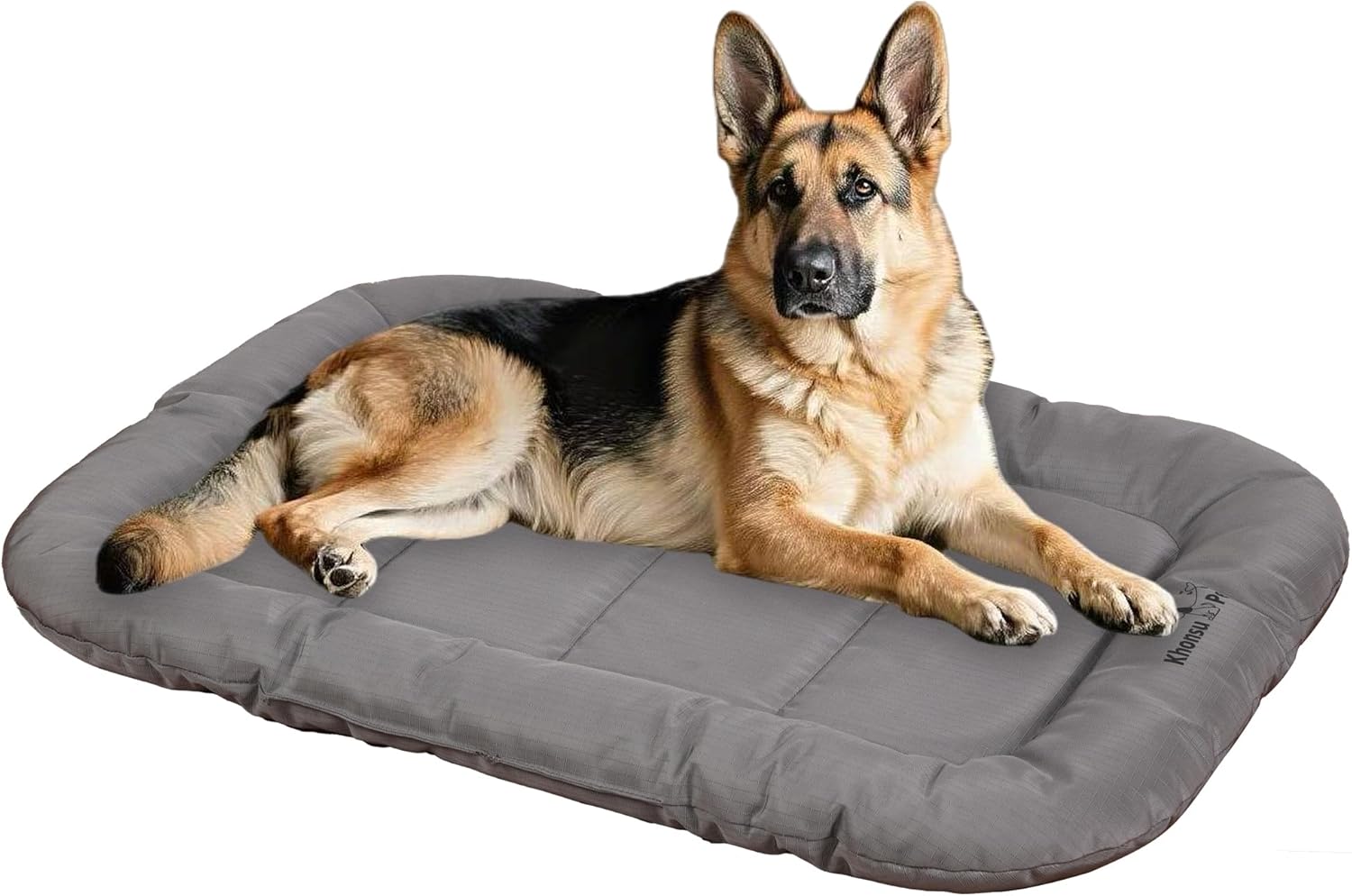
| Material Type | Polyester |
|---|---|
| Fill Material | Polyurethane Foam |
| Waterproof | Yes |
| Size | XL (42"x29"x3") |
This KHONSU PET dog bed is built for durability and moisture protection rather than plush luxury. The outer shell uses heavy-duty ripstop Oxford with a 2.5mm PVC backing and reinforced stitching to resist punctures and shed liquids, so mud, rain, and muddy paws bead up and wipe off easily. The no-zip, low-seam construction reduces weak points and the bolstered 3-inch raised edges give dogs a curled-up, nest-like place to rest. Polyurethane foam fill provides basic cushioning and the bed ships vacuum-packed and regains loft within a few days. Practical benefits include easy spot-cleaning, reliable waterproofing for indoor/outdoor transition, and a design meant to outlast standard plush beds by several times. Important limits are that it is not indestructible for highly determined chewers and the cover is not removable for machine washing, so heavy soiling requires surface cleaning rather than a full wash. Size and firmness lean toward large breeds and active dogs rather than those seeking memory-foam softness.
Best for: Buyers who need a durable, water-resistant bed for large or active dogs that spend time indoors and outdoors and prioritize cleanup ease and long-lasting construction.
Less Ideal for: Owners seeking plush orthopedic support or a fully machine-washable removable cover should consider other beds designed for cushion-first comfort and laundering convenience.
- Heavy-duty 1000D ripstop Oxford shell with reinforced seams for tear resistance
- PVC-backed waterproof surface that repels liquids and is hose-washable
- Reduced seams and no zipper design lower common failure points from chewing
- Raised bolsters provide a supportive border for curling and head rest
- Vacuum-packed for compact shipping and regains loft within 72 hours
- Cover is not removable so deep cleaning requires spot or hose cleaning rather than machine washing
- Not guaranteed indestructible for extremely determined or aggressive chewers
Verdict: The best easy-clean crate bed for chewers whose owners prioritize quick, frequent washing and simple maintenance after chewing-related messes.
FXW TitanNest Padded Elevated Dog Bed Medium
Best Premium Crate Bed

| Material Type | Aluminum, Polyester |
|---|---|
| Breed Recommendation | Medium Dogs |
| Maximum Weight Recommendation | 170 pounds |
| Recommended Uses For Product | Indoor, Outdoor |
The FXW TitanNest is an elevated dog bed built to survive heavy use and aggressive chewers while still offering joint-friendly support. It uses a reinforced aluminum frame and a tight, chew-resistant polyester surface so dogs cannot easily tear into the padding, and non-skid feet keep the platform stable during play. Setup is tool-free and fast, making it easy to move between indoor and outdoor spaces or to use inside a crate. The padded polyester top provides more comfort than bare mesh elevated beds and the aluminum frame supports large loads up to the stated recommendation, which helps the bed sit flat for heavier dogs. Care is primarily spot-clean or hand wash per the instructions, so it is not machine-washable and the cover care requires more attention than removable-zip covers. Buyers should expect a premium build and higher upfront cost in exchange for the stronger frame and longer lifespan, and occasional surface chewing could still eventually wear the fabric if a dog is extremely persistent.
Best for: Owners who prioritize long-lasting, high-quality construction and chew resistance and are willing to pay more for a durable, elevated crate bed that supports joint health.
Less Ideal for: Buyers looking for a fully machine-washable or fully bite-proof plastic solution should consider other styles, and those on a tight budget may prefer simpler, lower-cost beds.
- Reinforced aluminum frame resists bending and supports heavy dogs
- Tight, chew-resistant polyester surface reduces access to internal padding
- Elevated design eases joint pressure and makes entry/exit simpler
- Tool-free, quick setup for easy portability and storage
- Non-skid feet improve stability during active use
- Cover is hand-wash only rather than machine-washable
- Still uses a fabric surface that very determined chewers may eventually damage
Verdict: The best premium crate bed for chewers whose owners want top-tier materials, superior construction, and longer-lasting chew resistance despite a higher price.
Choosing the Right Dog Crate Bed Chewer: Key Factors to Consider
Material Durability
The outer fabric determines how well a bed resists active chewing and tooth scraping. Look for tightly woven textiles, ballistic-nylon-style weaves, or heavy-duty canvas that slow down punctures and tears. Materials that resist snagging help prevent dogs from getting a grip and ripping seams.
Durability also affects lifespan and safety. A fabric that holds up under repeated gnawing reduces exposure to inner fill and the risk of ingestion. Consider abrasion resistance and whether the fabric is designed to be chew-resistant rather than merely thicker; construction details like reinforced stitching at stress points make a meaningful difference.
Cover Design and Washability
Removable covers let you clean drool, dirt, and saliva without having to replace the whole bed. Zippers and closures should be reinforced and designed to resist being pulled apart by curious teeth. Machine-washable covers are convenient, but check that the fabric and stitching are rated for repeated laundering.
Some beds use wipe-clean or waterproof outer layers that avoid laundering altogether; those can be helpful for heavy chewers who also chew muddy paws. Prioritize covers that can be removed with minimal effort and have protective flaps over zippers or hidden seams to prevent chewing access to the inner fill.
Internal Fill and Structure
The fill needs to provide cushion while resisting rapid breakdown into small, ingestible pieces. Dense foam or shredded foam blends maintain shape longer than loose polyester batting. Beds with internal linings that separate the fill from the cover make it harder for dogs to reach stuffing even if the outer fabric is compromised.
Structural features, like bolster walls with reinforced cores or double-layered interiors, preserve the bed's shape and comfort under pressure. For chewers, a firmer, denser core usually outlasts fluffy fills and keeps the surface more stable for resting and crate movement.
Chew Mitigation Features
Design elements that deter chewing reduce the chance of destructive behavior. Look for models with reinforced seams, hidden zippers, or encased covers that remove easy access to stitching and closure points. Textural contrasts and firm surfaces can be less appealing to chew than plush, fluffy materials.
Some beds incorporate tougher panels on the undersides or along bolsters where dogs tend to bite. While no bed is truly chew-proof, these mitigation features slow down damage and give you time to address chewing behavior with training or supervision.
Fit and Crate Compatibility
A bed must fit the crate floor area without bunching or blocking doors. Measure the internal crate dimensions and choose a bed that provides coverage while allowing ventilation and door clearance. A snug, well-fitting bed reduces the chance of your dog tugging at corners and loosening fabric.
Consider whether bolsters or raised edges will interfere with the crate frame or door operation. Low-profile beds suit smaller crates or dogs that need more headroom, while bolstered designs offer neck support but require adequate internal height.
Safety and Chew Hazards
Chewing can expose pets to choking or digestive hazards if small parts or loose fill are swallowed. Prioritize beds with minimal decorative pieces, secure zippers, and internal barriers between the cover and fill. Materials should be free of toxic finishes and safe for pets to mouth for short periods.
Also consider fire safety and breathability. Dense, non-breathable materials can trap heat; choose constructions that balance chew resistance with airflow. Inspect beds regularly for wear and remove severely damaged bedding immediately to prevent ingestion risks.
How Do I Stop My Dog From Chewing the Crate Bed?
Start by addressing the root causes: boredom, teething, anxiety, or lack of exercise. Increase daily physical activity and mental stimulation with walks, play, and food puzzles so your dog has less excess energy to redirect into chewing. Supervised chew time with appropriate chew toys teaches what is acceptable to mouth.
Use the crate bed as part of a positive routine. Reserve the bed for calm rest and reward your dog when they settle on it. If chewing is driven by anxiety, work on crate desensitization and short, gradual departures to build confidence.
- Rotate durable chew toys and replace worn ones.
- Avoid leaving delicate toys in the crate that encourage destructive chewing.
- Consider a supervised trial with the durable bed and redirect chewing to acceptable alternatives.
What Cleaning Routine Works Best for Chewer-friendly Beds?
Adopt a regular cleaning schedule based on your dog's habits. Remove and wash covers weekly if your dog drools or drags debris into the crate. For wipe-clean outer layers, use a pet-safe cleaner and a soft brush to remove grime, then air-dry completely before returning it to the crate.
Inspect seams and zippers each time you clean so you can repair small tears before they worsen. For beds with dense foam cores, avoid saturating the fill; remove the cover first and follow manufacturer drying guidance to prevent mold or odor buildup.
- Pre-treat stains and odors promptly with enzyme cleaners.
- Air out beds regularly to reduce moisture buildup.
- Repair minor seam issues with heavy-duty thread to extend life.
Are Bolstered Beds a Good Choice for Chewers?
Bolstered beds offer neck and head support that many dogs appreciate, but raised edges present additional surfaces for chewing. If your dog targets bolsters, choose a design with reinforced bolsters or a tougher outer layer. Low-profile bolsters or a single raised edge can provide support while lowering the amount of exposed seam and fabric.
Alternatively, use a low-profile durable pad for the crate floor and a separate secure pillow outside the crate for head support during supervised rest times.
- Select bolsters with internal cores or double-layer construction.
- Monitor how your dog responds to bolsters in supervised sessions.
- Consider swapping bolstered designs for low-profile pads if chewing persists.
When Should I Replace a Crate Bed for a Chewer?
Replace the bed immediately if you see exposed foam, shredded fibers, or missing fabric that allows access to internal fill. Early signs of wear—small tears, frayed seams, or gaps around zippers—should be repaired or monitored closely because chewers can rapidly escalate minor damage.
Plan for shorter replacement cycles than you would for non-chewing dogs. Inspect the bed weekly during heavy chewing phases and prioritize safety over cosmetic wear; a visibly intact cover that still has compromised stitching should be removed until repaired.
- Remove beds with visible loose stuffing at once.
- Keep a backup durable pad while repairing or replacing the primary bed.
- Document early wear to choose more resilient designs in future purchases.
How We Chose the Best Dog Crate Bed Chewer
We evaluated options that specifically prioritize durability and cleanability for dogs that chew. Our selection focused on beds with robust construction, tightly woven or chew-resistant outer fabrics, and internal designs that reduce access to loose stuffing. We favored products that offered machine-washable covers or materials that can be wiped clean without compromising structure, and we looked for dense, supportive fill that resists quick breakdown. Key evaluation criteria included chew resistance of outer materials, internal fill resilience, how easy the cover or bed is to clean, overall construction and stitching, and whether the bed maintained shape after repeated use. We excluded beds that relied on thin foam layers or exposed loose batting that can be easily shredded. Low-quality novelty beds and those lacking clear cleaning instructions were also filtered out. The final list reflects a balance of practical durability, maintenance, and everyday comfort for crate use with chewers.
Our full evaluation process is outlined in our review methodology.
FAQ
Can any crate bed be made chew-resistant with covers or wraps?
Some beds can be made more resistant by adding a heavy-duty, chew-resistant cover or a protective sleeve, but this only delays access if your dog is determined. Reinforced wraps help with light to moderate chewing, but aggressive chewers often find seams or zipper edges to target.
Is it safer to use no bed at all with a heavy chewer?
Going without a bed avoids ingestible materials but can reduce comfort and increase stress for some dogs. If you remove bedding, provide a chew-safe, durable pad or floor covering and ensure the crate remains a comfortable, calming space with adequate padding alternatives when supervised.
Are foam cores safe if my dog chews through the cover?
Dense foam cores are safer than loose batting because they break into larger pieces, but they are still not safe to ingest. Any exposed foam requires immediate removal and replacement of the bed to prevent choking or digestive blockage.
Will waterproof covers stop my dog from chewing?
Waterproof covers protect against moisture and are easier to clean, but they are not inherently chew-proof. Tough, waterproof fabrics can slow chewing when combined with reinforced seams and hidden closures, but determined chewers may still damage them.
How can I tell if my dog is chewing out of anxiety rather than boredom?
Anxiety-driven chewing is often accompanied by other stress signs like pacing, whining, trembling, or destructive behavior in multiple locations. Boredom chewing tends to occur when the dog is left alone with less stimulation. A consistent routine, enrichment, and behavior observation help distinguish causes.
Final Verdict
Prioritize chew resistance, easy cleaning, and safe internal construction when picking a crate bed for chewers. Durable outer materials, removable or wipe-clean covers, and dense, encased fill reduce the immediate risks of ingestion and lengthen the bed's useful life. Expect to inspect and possibly replace bedding more often than with non-chewers, and balance bolstering and padding with the specific chewing tendencies of your dog. Choose the most durable option that still meets your dog's comfort needs and crate dimensions, and combine a resilient bed with behavior strategies and supervised use to get the best long-term results.

