

Finding the right crate for a Doberman matters for safety, training, and daily comfort. A crate that is too small will restrict movement and create stress, while a crate that is too large or poorly ventilated can undermine housetraining and containment. In this guide we shortlist the top crates suited to Dobermans, focusing on sizing, strength, ventilation, and ease of use. Each pick meets practical standards for adult Dobermans and addresses common needs like travel readiness, chew resistance, and simple cleaning. Read on for the criteria we used and the options that made the list.
Top Picks at a Glance
| Best Overall Crate for Doberman The best all-around crate choice for most Doberman owners | New World 48-Inch Single Door Crate |  |
| Best Budget Crate for Doberman A low-cost crate that still meets basic size and safety needs | BestPet 48 Inch Dog Crate |  |
| Best Heavy-Duty Crate Built tougher to resist chewing, bending, and rough use | KOKOTANGS 48-Inch Heavy Duty Dog Crate |  |
| Best Large-Capacity Crate Designed specifically to comfortably fit bigger breeds and extended lounging | Snimoy S-Crate64 Dog Crate |  |
| Best Easy-Clean Crate Designed for quick cleanup after accidents, shedding, and messes | Amazon Basics Foldable Metal Dog Crate 48" |  |
New World 48-Inch Single Door Crate
Best Overall Crate for Doberman

| Breed recommendation | Large |
|---|---|
| Number of Doors | 2 |
| Included Components | Removable Tray |
| Material Type | Metal |
The New World 48-inch single door crate is a full-size metal wire crate designed for large breeds and everyday home use. It provides a secure, well-ventilated space thanks to open wire construction and large openings that make entry and exit easier during crate training. Notable features include precision-welded metal construction with a black e-coat finish for rust resistance, a removable leak-proof pan for quick cleanup, rubber feet to protect floors, and a slide-bolt latch upgraded with a Paw Block to reduce escapes and accidental openings. The crate folds flat without tools and has a carry handle for transport or storage, which is useful for travel or intermittent use. Practical limitations are its sizable footprint that needs dedicated floor space and the metal wire form offers less privacy or insulation than solid-sided options, so bedding or covers may be needed for comfort in colder rooms. Assembly and daily maintenance are straightforward, and the durable build suits active large dogs that need a reliable, long-lasting containment option.
Best for: Buyers who want a durable, secure crate that balances strength, ventilation, and easy cleaning for everyday use with large-breed dogs.
Less Ideal for: People who need a compact travel-only solution or who prefer a solid-sided enclosure that blocks light and sound should consider other styles.
- Sized for large breeds with roomy interior and low threshold for easier entry
- Precision-welded metal wire with black e-coat finish resists rust and wears well
- Leak-proof removable tray simplifies cleaning
- Slide-bolt latch with Paw Block and locking tips improves security
- Folds flat without tools and includes a carry handle for transport and storage
- Large footprint requires dedicated floor space
- Open wire design provides less sound and thermal insulation than solid crates
Verdict: The best overall crate for Doberman owners that balances size, durability, ventilation, and everyday usability for large, active dogs.
BestPet 48 Inch Dog Crate
Best Budget Crate for Doberman

| Number of Doors | 2 |
|---|---|
| Included Components | dog crate |
| Material Type | Metal |
| Specific Uses For Product | Outdoor |
| Breed Recommendation | Large Breeds |
This BestPet 48-inch dog crate is a straightforward, budget-friendly metal kennel built for large dogs and everyday use. It folds flat for transport or storage and has two access points—a front and side door—each with secure slide-bolt latches that help keep strong dogs contained. The wire construction provides good ventilation and sight lines so a nervous or social pet can see its surroundings, while rounded corners and reinforced edges add durability for regular handling. A removable ABS tray catches accidents and simplifies cleanup, and the crate's rust-resistant finish makes it suitable for occasional outdoor use. Assembly and collapsing are quick, and the unit is light enough to move around a home or vehicle. Limitations include basic styling and a lack of padding or built-in comfort features, so you will need to add a bed or mat for long stays, and the metal tray can rattle without cushioning. For buyers prioritizing a reliable, no-frills containment solution for large dogs, this crate delivers core safety and function at a modest cost.
Best for: Buyers who need simple, reliable containment for large dogs and want a crate that is easy to move, store, and clean without paying for premium extras.
Less Ideal for: Owners seeking a plush, decorative, or sound-dampened crate solution or users who want an integrated bed or high-end finish should look at higher-end options.
- Foldable design for easy storage and transport
- Double-door layout gives flexible access and loading options
- Slide-bolt latches on both doors for secure containment
- Removable ABS tray makes cleaning accidents and spills simple
- Rust-resistant metal and reinforced edges improve durability
- No included bedding or padding so extra comfort accessories are required
- Basic appearance and some metal-on-metal noise without cushioning
Verdict: The best budget crate for Doberman owners seeking an affordable option that provides adequate space, secure latching, and dependable construction for everyday use.
KOKOTANGS 48-Inch Heavy Duty Dog Crate
Best Heavy-Duty Crate

| Item model number | 48DC-BLK |
|---|---|
| Material Type | Alloy Steel |
| Number of Doors | 2 |
| Gap Size | 0.6 inches |
| Included Components | Sturdy Locks, Lockable Caster Wheels, Removable Tray, Top Door Access, Wire Floor Grid |
This 48-inch KOKOTANGS heavy duty crate is built for strong, anxious, or escape-prone dogs and focuses on durability and easy maintenance. It uses 20-gauge steel and 0.6-inch reinforced tubes with a powder-coated hammertone finish that resists rust and corrosion, and four stainless locks that help keep determined dogs contained. The crate includes a removable floor grate and a full-width slide-out tray so waste and spills collect below the grate for quick cleanup, and the top door gives extra access for feeding or interaction. Four 360-degree lockable casters make it possible to move the otherwise heavy kennel for cleaning or repositioning, and the partially pre-assembled design speeds setup. Expect a very sturdy, weighty unit that trades portability for strength and takes some space, and note that while the coating is rust-resistant it is still metal so long-term outdoor exposure may require occasional care.
Best for: Buyers who want a maintenance-focused, heavy-duty kennel that simplifies cleanup and stands up to strong or anxious dogs without fussing over frequent upkeep.
Less Ideal for: People who need a lightweight, highly portable travel crate or a compact solution for small apartments should consider other options.
- Reinforced 20-gauge steel frame and 0.6-inch tubes for high structural strength
- Powder-coated hammertone finish that resists rust and corrosion
- Full-width removable slide-out tray plus floor grate for fast, hygienic cleaning
- Four 360-degree lockable casters for easier repositioning and cleaning access
- Double-door and top-door design for flexible access and handling
- Large and heavy, so not convenient for frequent transport or travel
- Requires some floor space and is a substantial visual presence indoors
Verdict: The best heavy-duty crate for owners who need extra-strength materials and reinforced construction to withstand strong, active dogs and frequent use.
Snimoy S-Crate64 Dog Crate
Best Large-Capacity Crate
| Material Type | Alloy Steel |
|---|---|
| Number of Doors | 2 |
| Number of Levels | 1 |
| Included Components | Lockable Caster Wheels, Removable Tray |
| Additional Features | Heavy Duty, Lockable, Removable, Top Access |
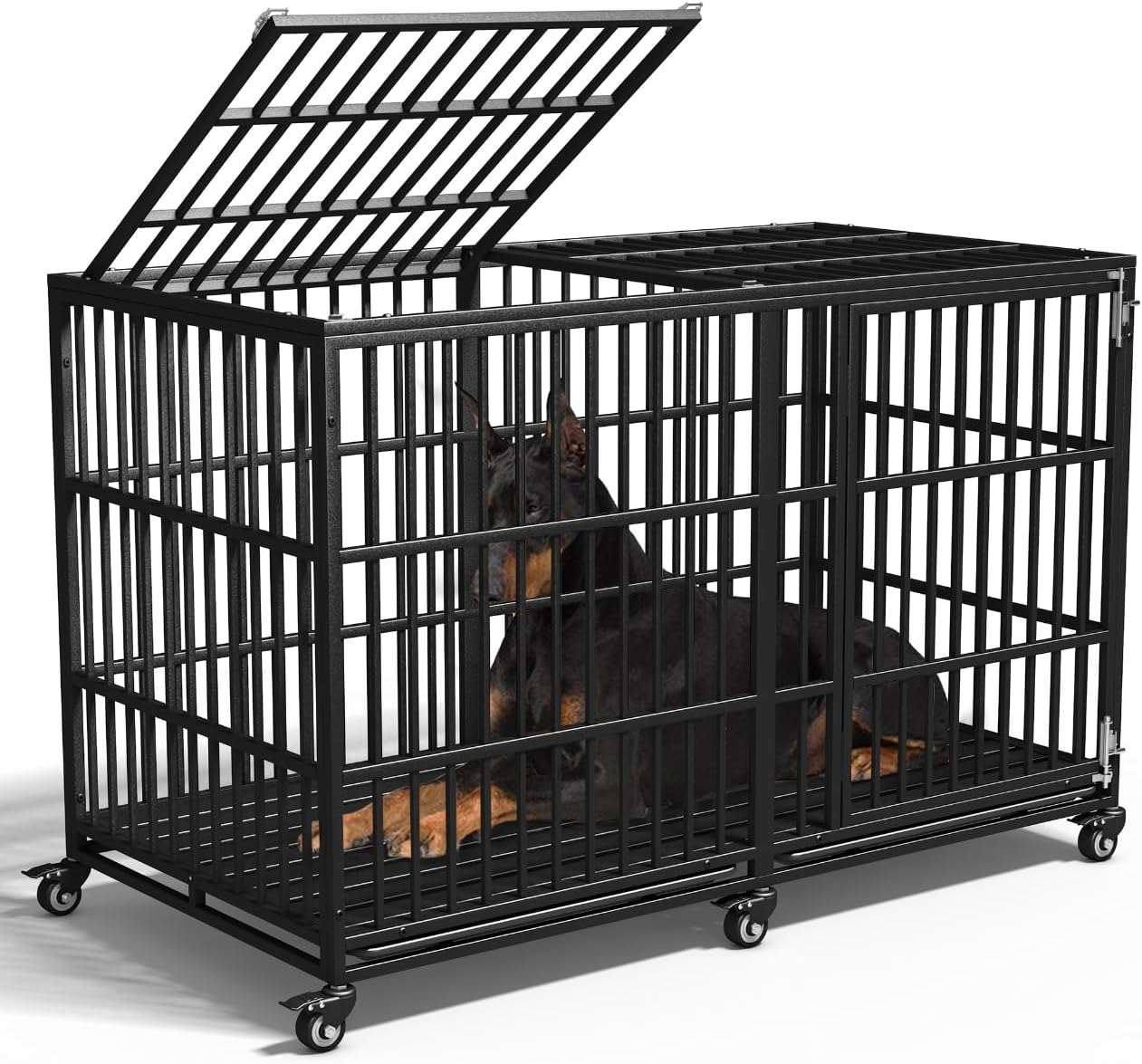
The Snimoy S-Crate64 is a large-capacity metal dog crate built to give big breeds room to stand, turn and lie comfortably. It is typically used as a primary indoor or outdoor kennel for giant dogs like Dobermans, Great Danes, and Mastiffs or for housing two smaller dogs. Notable features include a reinforced alloy steel frame, two access points (front and top) with four locks, a removable floor tray for easier cleaning, and lockable 360 degree caster wheels that can be raised slightly for stability on uneven floors. In practice the thicker metal tubing and redesigned baseplate reduce sagging and feel sturdier under heavy dogs, and the wide floor slats help prevent paw entrapment while allowing debris to fall to the tray. Trade-offs are size and weight: at this footprint the crate is heavy and needs space, and while wheels aid relocation they require adults to lift or maneuver during placement. Assembly and moving the assembled crate can be cumbersome but the construction suits dogs that need extra length and headroom.
Best for: Buyers who need a roomy, robust crate that gives Dobermans and other large breeds plenty of length and headroom for comfortable rest and a secure containment solution.
Less Ideal for: Owners with limited floor space, frequent travelers, or anyone who needs a lightweight, easily portable crate.
- Extra-long 64 inch interior gives generous length and headroom for large breeds
- Alloy steel construction with reinforced baseplate supports heavier dogs
- Two doors including top access and four locks improve handling and security
- Removable tray and raised, lockable caster wheels make cleaning and repositioning easier
- Large footprint and 84 pound item weight make it hard to move without disassembly
- Not a good fit for small homes or cars due to its extra length
Verdict: The best large-capacity crate for Dobermans and other big dogs that require extra length and headroom for comfortable resting and movement.
Amazon Basics Foldable Metal Dog Crate 48"
Best Easy-Clean Crate
| Number of Doors | 2 |
|---|---|
| Additional Features | Foldable, Durable |
| Gap Size | 15 millimeters |
| Included Components | Divider |
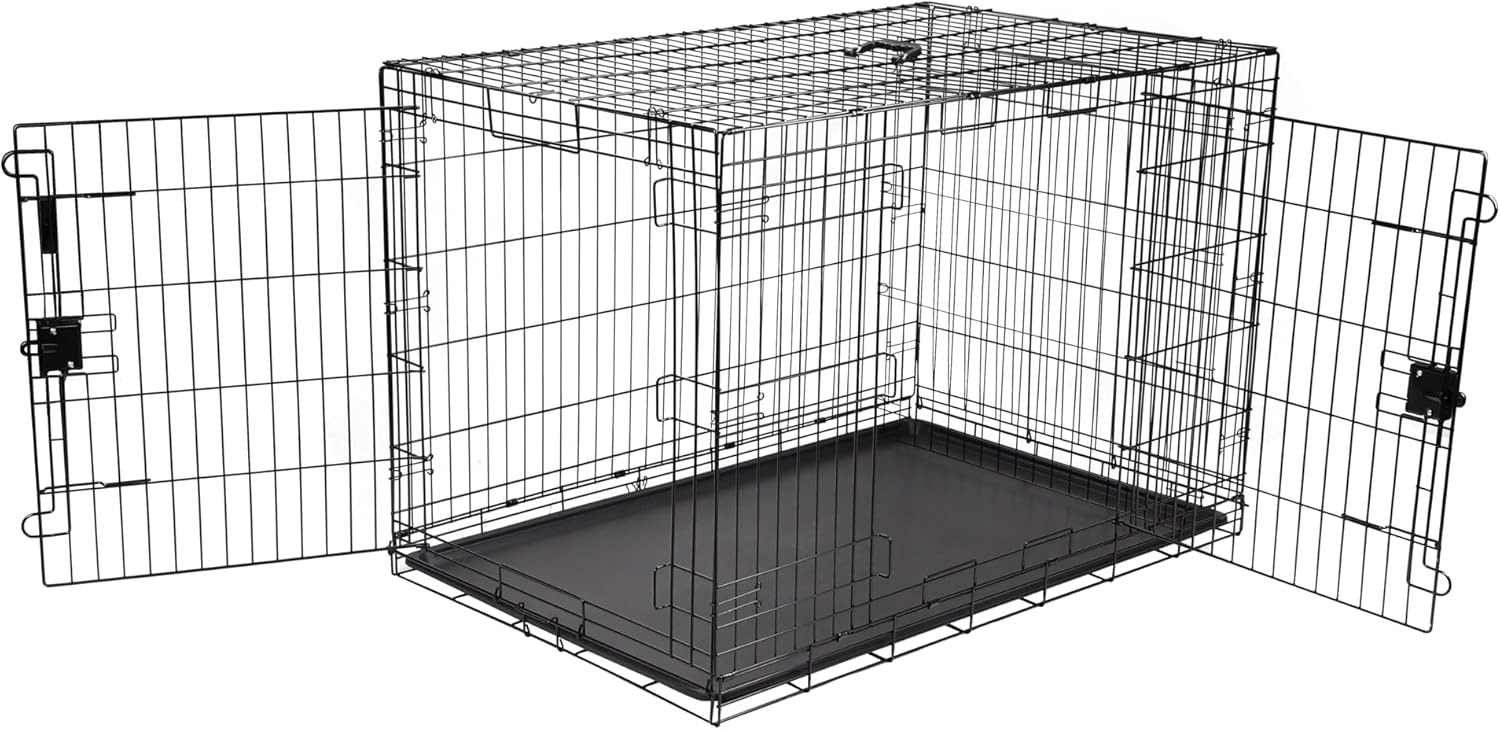
This Amazon Basics 48-inch foldable metal dog crate is a straightforward, transportable containment solution for large dogs. It assembles quickly and folds flat for moving or storing, with a top carry handle that makes short-distance transport easier. Two doors (front and side) and an included divider let you adapt interior space for growing dogs or to create easier access during travel. The removable plastic tray and a metal hook that secures the tray simplify cleaning and reduce shifting during transit. Manual door latches provide basic security but are not heavy-duty locks, so extra caution is needed if your dog is an escape artist. The crate is metal and described as durable, but at 43.3 pounds it is substantial to carry long distances without assistance. Gap spacing and overall construction are suitable for large breeds, though owners who need reinforced locking or weatherproofing for outdoor use should look for purpose-built heavy-duty options. For frequent movers who prioritize quick breakdown, predictable setup, and easy cleaning, this crate covers the essentials reliably.
Best for: Owners who move or travel frequently and need a crate that breaks down quickly, is easy to clean, and provides solid indoor containment for large dogs.
Less Ideal for: People who need a lightweight airline-approved carrier, weatherproof outdoor kennel, or a crate with reinforced security for escape-prone dogs.
- Folds flat and includes a top handle for easier transport and compact storage
- Double-door design and divider panel let you adjust space and access during travel
- Removable plastic tray with securing hook makes cleaning and keeps the tray from sliding
- Simple manual latches provide straightforward, easy-to-use containment
- Durable metal wire construction suitable for large indoor breeds
- Relatively heavy at over 40 pounds, making long-distance carrying awkward
- Manual latches are not reinforced locks and may not deter determined escape attempts
- Not designed or specified for outdoor weather exposure
Verdict: The best easy-clean crate for pet owners who prioritize removable trays, rust-resistant finishes, and simple access for fast sanitation and maintenance.
Choosing the Right Dog Crate Doberman: Key Factors to Consider
Correct Size and Interior Space
Size is the single most important factor when choosing a crate for a Doberman. The crate should allow the dog to stand with head upright, turn around, and lie down without the back or nose touching the walls. A crate that is too small will cause discomfort and stress, while one that is excessively large can interfere with housetraining because the dog may use one end as a bathroom.
Measure your dog from nose to tail and from floor to head when standing, then add a few inches to each dimension for comfort. Consider whether the dog is fully grown or still filling out; adjustable dividers can help if you plan to use the same crate during growth. Interior height is especially important for tall Dobermans because they need headroom to change positions easily.
Durability and Construction
Dobermans are strong, energetic dogs, so a crate's frame, panels, and latches must withstand force and repeated use. Look for robust materials and sturdy welds or reinforced corners rather than lightweight wire that may bend. Metal crates should have secure, well-designed latches; heavy-duty plastic or composite crates should offer reinforced ribs and stable walls.
Check how panels are joined and whether replacement parts are available for common failure points like hinges and latches. Durable construction also affects longevity outdoors or in high-traffic homes, so prioritize corrosion-resistant finishes and thick-gauge materials where possible.
Security and Latch Design
A reliable latch system reduces the risk of escape and protects household items and visitors from accidental access. Latches that can be manipulated by a clever or persistent dog are a common source of failures, so choose designs with double-latch options or secondary locking features. Doors should align precisely with the frame so that the latch engages cleanly every time.
Consider whether you need single- or double-door configurations for placement flexibility, and whether sliding-pin or spring-latch mechanisms are easier for you to operate daily. For homes with small children or guests, a more secure latch can prevent accidental openings.
Ventilation and Visibility
Good airflow and sight lines help keep a confined Doberman comfortable and calm. Crates with ample ventilation reduce overheating risk and help dissipate odors and humidity. Wire or barred panels provide the best visibility and cross-ventilation, while solid-sided crates should include multiple vents or mesh panels.
Visibility is also a behavioral consideration. Some dogs feel safer with partial visual barriers that reduce external stimuli, while others prefer seeing their surroundings. Choose a crate style that matches your dog's temperament and the typical room environment to limit stress during confinement.
Cleanability and Maintenance
Ease of cleaning matters for hygiene and long-term odor control. Crates with removable trays, washable liners, or smooth interior surfaces make daily maintenance quicker and reduce buildup of hair and grime. Metal crates with removable bottoms are often easy to wipe down; plastic crates may require gentle scrubbing to avoid damage to finishes.
Consider how often you plan to clean and whether the crate will be used inside where smells are more noticeable. Replaceable fabric components should be machine-washable when possible, and seams or crevices should be minimal to avoid trapping moisture.
Portability and Assembly
How often you will move or store the crate affects which design works best. Collapsible crates or those with quick-release panels are useful for owners who travel or who set up the crate in different rooms. Folding wire designs typically offer faster breakdown and lighter weight, while solid plastic crates may be bulkier but offer better containment for travel.
Assembly complexity also matters for owners who need to set up the crate quickly. Look for clear instructions, tool-free fastenings, and components that lock securely without repeated retightening. Portability should not sacrifice sturdiness; ensure folding mechanisms are robust and do not create weak points your Doberman could exploit.
How Big Should a Crate Be for an Adult Doberman?
An adult Doberman needs enough interior length and height to stand, turn, and lie down comfortably. A practical way to size a crate is to measure your dog standing from nose to tail and add 4 to 6 inches for length, and measure shoulder height and add a few inches for headroom. These adjustments leave enough space for the dog to change positions without feeling confined.
If your Doberman is still growing, consider a crate with an adjustable divider so you can section off space while retaining correct overall dimensions for later. Also factor in whether you will include a bed or mat, and ensure the crate retains sufficient usable interior floor area with bedding in place.
- Measure standing length and height then add clearance
- Use adjustable dividers for growing dogs
- Account for bedding thickness when checking interior space
Can a Crate Help with Housetraining and Separation Anxiety?
A properly sized crate can be an effective tool for housetraining because most dogs avoid soiling their sleeping area. Crate use should be gradual and paired with positive reinforcement, short confinement intervals, and consistent bathroom breaks to teach bladder control. Never use a crate as punishment; that undermines trust and increases stress.
For separation anxiety, a crate can create a safe den-like space if the dog accepts it willingly. Introduce the crate with treats, toys, and short, calm departures to build positive associations. If a Doberman shows extreme distress when confined, consult a trainer or behaviorist rather than relying solely on longer confinement periods.
- Introduce crate gradually with rewards
- Keep confinement durations appropriate to age and training level
- Seek professional help for severe separation anxiety
What Materials Work Best for Durability and Comfort?
Metal wire crates offer excellent ventilation and visibility and tend to be durable if made from thicker-gauge wire with secure welds. They also collapse for storage or travel. Heavy-duty plastic crates provide solid walls that can feel more den-like and block some external stimuli, which helps more nervous dogs. Composite or reinforced designs combine features for added strength and weather resistance.
Consider interior comfort in addition to raw durability. Hard surfaces can be softened with a washable pad or mat, but ensure bedding is secured so an active Doberman cannot shred or drag it, which could create hazards or messes.
- Wire crates: best ventilation and collapsibility
- Plastic crates: solid walls and den-like feel
- Reinforced composites: balanced strength and weather resistance
Are Travel-ready Crates Necessary for Dobermans?
If you anticipate moving the crate between locations, transporting your Doberman by car, or needing an approved carrier for vet visits, a travel-ready crate is a sensible option. Look for models with secure latches that resist vibrations in transit and with ventilation appropriate for the environment. If the crate will be in a vehicle, check how it fits in your car and whether it can be anchored or stabilized to prevent sliding.
Travel-oriented crates often trade some interior aesthetic for added structural reinforcement and secure fastenings. If travel is rare, a sturdy home crate may be sufficient, but owners who move frequently or attend shows will value the portability and attachment points of travel designs.
- Confirm door latches are secure under motion
- Check vehicle fit and anchoring options
- Balance portability with interior comfort
How to Make a Crate Comfortable While Keeping It Safe?
Comfort comes from appropriate bedding, ventilation, and a sense of security. Use a low-profile, chew-resistant pad that fits the crate's interior without obstructing doors or ventilation. Avoid bulky bedding that reduces usable floor area or creates places to trap moisture. Add a durable chew toy to occupy the dog, but avoid loose stuffing or items that can be ingested.
Safety also means regular inspections of latches, welds, and panels. Replace or repair frayed fabric liners and ensure any added accessories do not create pinch points. For dogs that chew, choose materials and attachments rated for heavy chewers and remove anything that can be torn off and swallowed.
- Use chew-resistant, low-profile bedding
- Inspect hardware and panels regularly
- Avoid loose stuffing or small detachable parts
Where Should You Place the Crate in Your Home?
Place the crate in a quiet, temperate area with good airflow and family presence. Dobermans are social and usually prefer being near household activity rather than isolated in a basement. Avoid direct sunlight or drafts and ensure the floor beneath is level and stable to prevent rocking.
If noise is a concern, position the crate away from loud appliances or high-traffic zones. An area that receives moderate foot traffic helps the dog feel included without constant interruption. For multi-crate households, maintain visual separation to avoid barking and overstimulation.
- Choose a level, temperate spot with family visibility
- Avoid direct drafts and intense sunlight
- Keep away from loud appliances and high traffic during sleep periods
How We Chose the Best Dog Crate Doberman
We evaluated crates with a focus on real-world needs for adult Dobermans and their owners. Our selection criteria prioritized structural strength and materials that resist wear from an active large-breed dog, plus interior dimensions that allow a Doberman to stand, turn, and lie comfortably. Ventilation and sight lines were weighted heavily to ensure adequate airflow and reduce anxiety during confinement. We also considered door configuration and latch reliability to prevent accidental escapes, and cleaning features such as removable pans or washable liners to simplify maintenance. Other factors included transport and portability for owners who need to move the crate, plus assembly complexity and whether the design supports crates inside the home without dominating living space. We excluded options designed only for very small breeds or temporary containment that lack robust construction. The resulting shortlist focuses on crates that combine durability, correct sizing for Dobermans, safety-focused features, and practical usability.
Our full evaluation process is outlined in our review methodology.
FAQ
Can I crate my Doberman all day while I am at work?
Crating for long stretches is not recommended. Adult Dobermans can handle several hours of containment, but daily exercise, bathroom breaks, and mental stimulation are essential. If you must be away for extended periods, arrange for breaks with a dog walker or a nearby caregiver.
Should the crate be open once my Doberman is housetrained?
Many owners leave the crate door open to give the dog a safe retreat while allowing freedom in the house. Keep the crate available as a den space, but monitor behavior to ensure it is used appropriately and does not become a place for destructive chewing or hoarding.
How do I prevent my Doberman from chewing the crate?
Choose a crate with heavy-duty construction and provide durable chew alternatives. Supervise initial confinement periods and remove items that encourage destructive chewing. If chewing persists, consult a trainer to address boredom, anxiety, or repetitive behavior.
Is padding necessary inside a crate for a Doberman?
Padding improves comfort but should be low-profile and chew-resistant. Thick, soft bedding can compress and reduce usable space, so measure with the pad in place. Use washable materials to manage cleanliness.
Can a Doberman escape a wire crate if the latch is weak?
Yes, weak or misaligned latches can allow escapes. Inspect the latch mechanism regularly and choose crates with secure, well-aligned doors. Consider secondary locking features if the dog is particularly persistent.
Final Verdict
Choose a crate that balances correct interior sizing, durable construction, and reliable latches to meet a Doberman's physical and behavioral needs. Prioritize ventilation and visibility based on your dog's temperament, and select bedding and accessories that improve comfort without introducing hazards. Understand the tradeoffs between portability and sturdiness so you can match the crate to how you will use it day to day. With the right combination of size, security, and maintenance features, you can provide a safe, comfortable den that supports training and wellbeing.

