

If your dog destroys soft carriers or quickly damages standard wire crates, choosing a chew-resistant option matters for safety and peace of mind. A crate built for chewers reduces the risk of escape, ingestion of dangerous fragments, and repeated replacements. This guide shortlists the top durable crates for chewers and explains the features that make some designs far more robust than others. We evaluated candidates for toughness, airflow, comfort, and owner usability to find options that work for aggressive chewers while still providing a secure den. Read on to see the top picks and the factors you should weigh before you buy.
Top Picks at a Glance
| Best Overall Crate for Chewers The best all-around chew-resistant crate for most dog owners | HIWOKK Heavy Duty Dog Crate 48 Inch |  |
| Best Budget Crate for Chewers A low-cost crate that still holds up to light chewing | BestPet 48 Inch Dog Crate |  |
| Best Heavy-Duty Crate Built with thicker metal and reinforced components for tough dogs | Oranland 48 Inch Heavy Duty Dog Crate |  |
| Best Portable Crate Lightweight, foldable, and easy to carry for travel or trips | MidWest iCrate Double Door 30-inch |  |
| Best Compact Crate A smaller footprint crate suited for tight spaces and apartments | IronovaPets Heavy Duty Dog Crate Small |  |
| Best Easy-Clean Crate Designed for quick cleanup after accidents and daily messes | Shintenchi 36 Inch Steel Dog Crate |  |
| Best Premium Crate Higher-end materials and features for durability and comfort | Reljofum Furniture-Style Dog Crate 47" |  |
HIWOKK Heavy Duty Dog Crate 48 Inch
Best Overall Crate for Chewers

| Included Components | Lockable Caster Wheels, Removable Tray |
|---|---|
| Breed Recommendation | Large |
| Number of Doors | 2 |
| Gap Size | 0.8 inches |
| Additional Features | Chewproof, Durable, Easy Assembly, Ventilated |
This 48-inch HIWOKK crate is designed as a tough, secure kennel for large, active dogs and puppies that chew or try to escape. It uses 0.8-inch square steel tubing with a multi-layer coating to resist deformation and biting, and heavy-duty safety latches aim to prevent clever dogs from opening doors. The dual-door layout includes a front entry and a top access panel for feeding or quick interaction, while a raised grate and slide-out leakproof plastic tray simplify cleaning and keep paws dry. Key convenience features are tool-free assembly with many parts preassembled and 360-degree swivel casters with two locking wheels for mobility and stability. Expect a very sturdy, indoor crate that prioritizes security and hygiene; however it is metal and not intended as a soft, portable playpen, and the crate's weight and size make it less suited for frequent vehicle transport. Buyers should also measure their puppy as recommended to ensure the 48-inch model gives enough room as the dog grows.
Best for: Owners who need an extra-durable indoor crate that holds up to heavy chewing and frequent use and who prioritize long-term security and easy cleaning.
Less Ideal for: People seeking a lightweight, foldable travel crate or a quiet, padded den for noise-sensitive or very small puppies.
- Thick 0.8-inch square steel tubing and multi-layer coating for chew resistance and durability
- Escape-proof heavy-duty latches and dual-door design including top access for feeding
- Slide-out leakproof plastic tray with raised grate for easier cleaning and drier bedding
- Tool-free, mostly pre-assembled setup and lockable swivel casters for mobility and stability
- Large, heavy metal construction is not convenient for travel or as a lightweight playpen
- Does not include soft bedding or sound insulation for anxious puppies
Verdict: The best overall crate for chewers, balancing durable construction, secure latches, comfortable interior space, and everyday usability for most dogs and homes.
BestPet 48 Inch Dog Crate
Best Budget Crate for Chewers

| Number of Doors | 2 |
|---|---|
| Included Components | dog crate |
| Material Type | Metal |
| Specific Uses For Product | Outdoor |
| Breed Recommendation | Large Breeds |
This BestPet 48-inch dog crate is a straightforward, budget-friendly metal kennel built for large dogs and everyday use. It folds flat for transport or storage and has two access points—a front and side door—each with secure slide-bolt latches that help keep strong dogs contained. The wire construction provides good ventilation and sight lines so a nervous or social pet can see its surroundings, while rounded corners and reinforced edges add durability for regular handling. A removable ABS tray catches accidents and simplifies cleanup, and the crate's rust-resistant finish makes it suitable for occasional outdoor use. Assembly and collapsing are quick, and the unit is light enough to move around a home or vehicle. Limitations include basic styling and a lack of padding or built-in comfort features, so you will need to add a bed or mat for long stays, and the metal tray can rattle without cushioning. For buyers prioritizing a reliable, no-frills containment solution for large dogs, this crate delivers core safety and function at a modest cost.
Best for: Buyers who need simple, reliable containment for large dogs and want a crate that is easy to move, store, and clean without paying for premium extras.
Less Ideal for: Owners seeking a plush, decorative, or sound-dampened crate solution or users who want an integrated bed or high-end finish should look at higher-end options.
- Foldable design for easy storage and transport
- Double-door layout gives flexible access and loading options
- Slide-bolt latches on both doors for secure containment
- Removable ABS tray makes cleaning accidents and spills simple
- Rust-resistant metal and reinforced edges improve durability
- No included bedding or padding so extra comfort accessories are required
- Basic appearance and some metal-on-metal noise without cushioning
Verdict: The best budget crate for chewers that offers acceptable durability and secure containment at a lower price for owners prioritizing savings.
Oranland 48 Inch Heavy Duty Dog Crate
Best Heavy-Duty Crate

| Included Components | Tray |
|---|---|
| Number of Doors | 2 |
| Specific Uses For Product | Indoor |
| Material Type | Metal |
| Max Load Capacity | 300lbs |
This 48-inch Oranland crate is built for very strong or destructive dogs, using thick 20-gauge steel panels, reinforced 1.2-inch steel tubing, and a heavy base panel that the manufacturer rates for up to 300 lb load capacity. It ships mostly pre-assembled so setup is fast—fit the wheels and a few bolts—and includes a double removable tray system (plastic plus an upgraded metal pallet) that makes cleaning straightforward. The crate has two doors, stainless-steel bolt-style locks, and 360-degree lockable wheels so you can relocate it without disassembly. The heavy weight and dense construction make it much more chew- and impact-resistant than typical wire crates, though the solid steel build can transmit noise when a dog moves and makes the unit bulky to reposition without the wheels. Practical benefits include stronger containment for powerful chewers, easy cleaning with removable trays, and a top/front access layout for interaction. If you need something built to withstand sustained abuse, this crate prioritizes strength and durability over lightness or ultra-quiet operation.
Best for: Buyers who need near-maximum reinforcement for powerful, destructive dogs and prioritize secure, long-lasting containment over portability or light weight.
Less Ideal for: People who want a lightweight, travel-friendly crate or who need a very quiet, minimalist enclosure for small or calm dogs.
- Reinforced construction with 20-gauge steel panels and 1.2-inch steel tubing for high impact resistance
- Heavy-duty base panel and dual removable trays (plastic and metal) for hygienic, easy cleaning
- Stainless steel bolt locks and anti-collision lock improve security for anxious or destructive dogs
- 360° lockable wheels allow the heavy crate to be moved and locked in place without full disassembly
- Most parts arrive pre-assembled for a fast, low-effort setup
- Heavy and bulky, making manual relocation difficult when wheels are not engaged
- Steel construction can transmit noise when a dog moves inside, so additional bedding is needed for quiet comfort
Verdict: The best heavy-duty crate for owners of strong or persistent chewers who need extra-robust materials and hardware to prevent escape or damage.
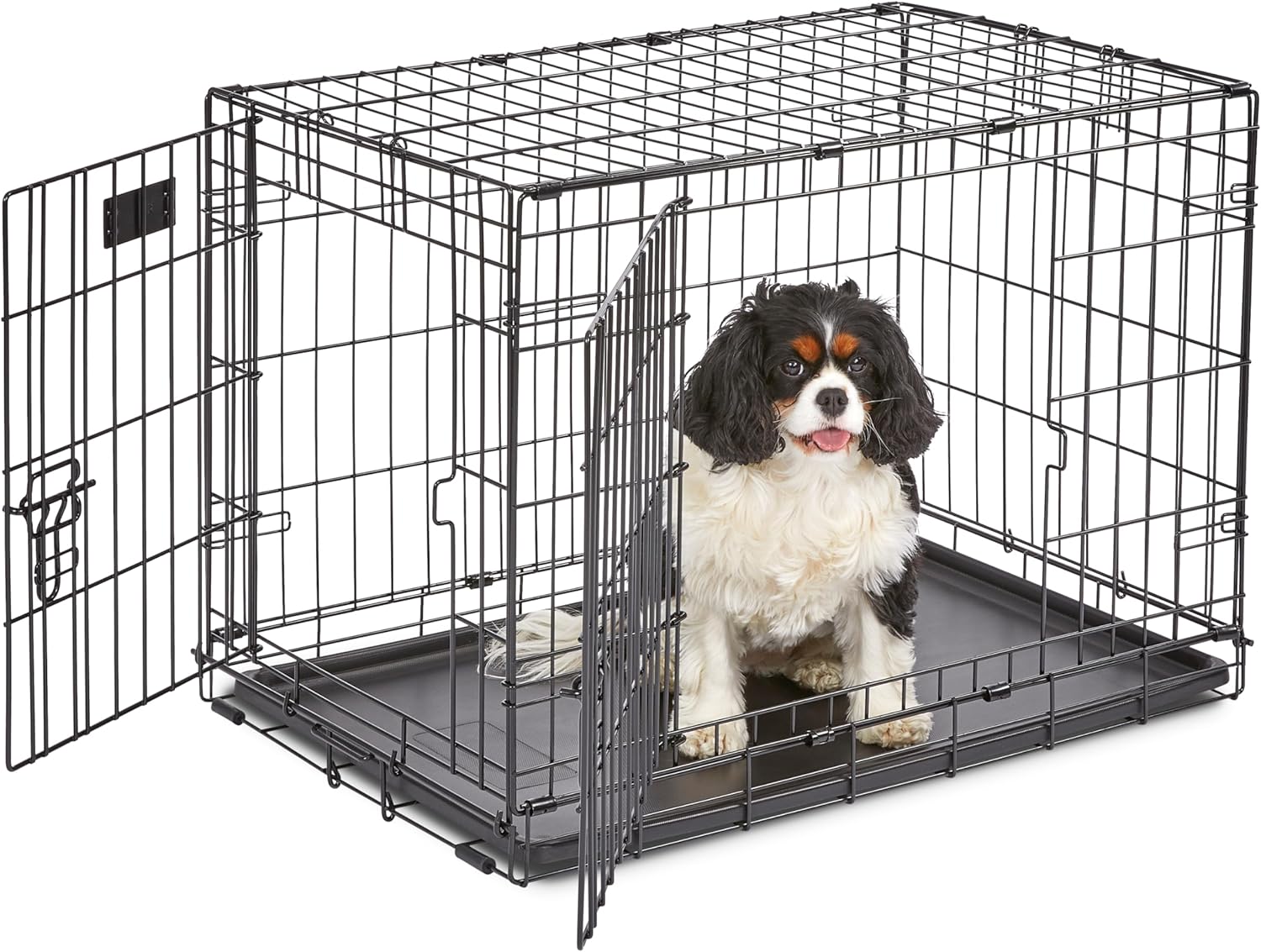
MidWest iCrate Double Door 30-inch
Best Portable Crate
| Breed recommendation | Medium (21-40 lb) |
|---|---|
| Number of doors | 2 |
| Included components | Divider, Removable Tray |
| Material type | Metal |
The MidWest iCrate is a traditional wire dog crate that gives medium dogs a secure, portable den for home and travel use. It folds flat without tools and includes a carrying handle, so it is easy to move between rooms or pack for trips, and the single-piece leak-proof tray makes clean-up straightforward after travel accidents. The crate ships with a divider panel to adapt for puppies and has front and side doors for flexible placement in a car or hotel room. Security features such as slide-bolt latches with a Paw Block and locking tips reduce escapes and chewing at the latch, which is valuable for anxious dogs that test boundaries. Built from precision-welded metal wire with a rust-resistant black e-coat, it balances durability with a relatively light, foldable design. Limitations are typical for wire crates: it is not soft-sided for airline cargo and offers less sound insulation than fabric options, so anxious dogs that need a darker, cozier den may prefer a covered or soft-sided travel crate instead.
Best for: Traveling owners who move their dog frequently and want a sturdy, easy-to-fold metal crate that sets up quickly and keeps the dog contained during trips.
Less Ideal for: Owners who need a dark, insulated den for severe separation anxiety or an airline-approved soft travel crate should consider covered or soft-sided alternatives.
- Folds flat for tool-free setup and easy transport
- Included divider panel lets the crate grow with a puppy
- Leak-proof removable tray simplifies cleaning during travel
- Slide-bolt latches with Paw Block and locking tips improve security
- Front and side doors provide flexible placement in cars or rooms
- Wire design provides less thermal and acoustic insulation than soft-sided travel crates
- Not suitable as an airline-approved soft crate for checked baggage
Verdict: The best portable crate for owners who need a chew-resistant solution that’s easy to collapse, transport, and set up away from home.
IronovaPets Heavy Duty Dog Crate Small
Best Compact Crate

| Specific Uses For Product | Indoor |
|---|---|
| Breed Recommendation | Small |
| Material Type | Iron, Wood |
| Additional Features | Durable, Easy to Clean, Easy to Use |
This IronovaPets crate is a furniture-style, heavy-duty indoor kennel designed for small dogs that chew or escape. It combines a reinforced iron frame and solid wood top to create a chew-resistant enclosure that looks like an end table and lets you use the top for lamps or decor. The crate uses multiple reinforced latches and anti-rust coatings on hardware to resist pawing and prying, and wide metal slats provide airflow while creating a den-like, calming space for anxious pets. Practical benefits include a solid wood floor instead of a pinch-prone metal grate, a smooth top that wipes clean, and non-slip feet to protect floors. Assembly and placement are typical for furniture-style crates and it is intended for indoor use only. Limitations are that the listing emphasizes this as a small-breed model and buyers in very tight spaces should still measure for fit since furniture-style crates take up more floor footprint than collapsible wire options, and its heavier construction reduces portability compared with lightweight travel crates.
Best for: Owners living in smaller homes or apartments who want a secure, chew-resistant indoor crate that also serves as a piece of furniture for small dogs and prioritize durability and appearance.
Less Ideal for: People who need a lightweight, collapsible travel crate or who frequently move the crate between locations should consider a more portable alternative.
- Reinforced iron frame and thick metal tubing for chew and escape resistance
- Solid wood floor and top provide a comfortable surface and usable furniture top
- Multiple reinforced latches with anti-rust finish for secure, long-lasting closure
- Wide slats for good ventilation and a den-like interior that calms anxious dogs
- Smooth, scratch-proof top wipes clean and protects floors with non-slip feet
- Heavier, less portable than collapsible wire crates
- Takes more floor space than basic foldable crates despite being for small dogs
Verdict: The best compact crate for owners with limited living space who still need a secure, chew-resistant shelter for smaller dogs.
Shintenchi 36 Inch Steel Dog Crate
Best Easy-Clean Crate

| Recommended breed size | Middle & Large |
|---|---|
| Number of doors | 2 |
| Material Type | Alloy Steel |
| Included components | Lockable Caster Wheels, Removable Tray |
| Number of levels | 1 |
This 36 inch Shintenchi steel crate is built for dogs that need a tougher confinement solution and for owners who want easier daily handling. Constructed from alloy steel with reinforced tubes and a rust-resistant finish, the crate is marketed as bite resistant and includes two door locks with safety buckles for escape prevention. The double-door layout and a top access point make entry, cleaning, and interaction straightforward, while the removable odor-proof tray and lockable caster wheels simplify maintenance and relocation around the house. Assembly is described as easy and the crate suits indoor, outdoor, and transport use. Expect a solid, utilitarian cage rather than a luxury bed — padding or a separate mattress is needed for long-term comfort, and the 36 x 23 x 28.5 inch interior is a firm fit for many large dogs. The steel construction adds weight, so moving the crate without the wheels is impractical, and the heavy build may feel bulky in smaller rooms.
Best for: Buyers who prioritize durability and chew resistance for strong or anxious medium-to-large dogs and who value easy cleaning and the ability to move a heavy crate around the home.
Less Ideal for: People seeking a lightweight travel crate, a soft-sided or heavily cushioned housing solution, or those with very limited floor space should consider other options.
- Durable alloy steel frame with reinforced tubes for chew resistance
- Double-door design plus top access for easier cleaning and interaction
- Removable odor-proof tray simplifies cleaning after accidents
- Lockable caster wheels allow safe, easy relocation of the assembled crate
- Two locks with safety buckles reduce escape risk for anxious dogs
- Steel construction is heavy and bulky compared with lightweight travel crates
- No included bedding or cushioning so a separate pad is required for comfort
- Specified as suitable for middle and large dogs but check measurements to ensure adequate space
Verdict: The best easy-clean crate for households that need quick-surface maintenance and removable trays or liners to manage drool, dirt, and accidents.
Reljofum Furniture-Style Dog Crate 47"
Best Premium Crate

| Included Components | Divider |
|---|---|
| Number of Doors | 2 |
| Number of Levels | 1 |
| Dog Breed Size | Large, Medium |
This Reljofum furniture-style crate is designed to blend into a living space while providing a sturdy, chew-resistant home for medium to large dogs. It functions as a dual-purpose piece of furniture and a dog enclosure, with a removable divider that lets you configure two smaller compartments or one larger space as your dog grows. The crate uses 0.6-inch particle board panels and 0.4-inch iron pipe framing, which improves resistance to chewing compared with thin wire crates, and it includes two access doors for easier entry from the front or side. Built-in storage drawers are convenient for stashing leashes, bedding, and supplies so the unit doubles as an end table or TV stand. Assembly and moving will take effort given the unit weight, and particle board is more durable than some cheap composites but still not indestructible against determined chewers. The design suits homes where aesthetics and longer-term durability matter more than ultra-robust metal-only kennels.
Best for: Buyers who prioritize a high-quality, home-friendly crate that looks like furniture and offers better chew resistance and long-term comfort over the cheapest options.
Less Ideal for: Owners who need a lightweight, portable travel crate or those whose dogs are extreme chewers that require full-metal, industrial-strength containment.
- Furniture-style design that fits living areas and doubles as an end table or TV stand
- Removable divider allows two-room configuration for puppies or a single large space for adult dogs
- Thicker particle board panels and iron pipe framing increase chew resistance versus lightweight wire crates
- Two access doors for flexible placement and easier dog handling
- Integrated storage drawers keep supplies organized and close at hand
- Heavy and bulky to move or assemble due to substantial panels and components
- Particle board construction is more chew-resistant than flimsy materials but can still be damaged by extreme chewers
Verdict: The best premium crate for owners willing to invest in superior build quality, advanced chew-resistant features, and enhanced comfort for long-term use.
Choosing the Right Dog Crate Chewer: Key Factors to Consider
Construction Material and Thickness
The base material and its thickness determine how long a crate will resist chewing and persistent gnawing. Heavy-gauge welded steel and reinforced polymer panels are far less likely to suffer progressive damage than thin wire or brittle plastics. Thicker panels also reduce flexing, which lowers the chance of latching points failing over time.
When evaluating materials, consider how the assembly is joined. Welded seams and bolted metal frames provide sturdier connections than clips or snap-fit joins. For polymer designs, look for engineered composites with impact additives rather than standard injection-molded plastic, as those blends resist cracking and chipping under canine stress.
Door and Latch Security
A chew-resistant crate is only as secure as its door hardware. Robust latches that lock in multiple planes and doors that sit inside a reinforced frame reduce leverage points a dog can exploit. Simple slide bolts or single-pin latches can be pried open by determined chewers; look for multi-latch systems or recessed locks that are harder to manipulate.
Also check the way the door is mounted. Hinges with reinforcement plates or integrated pins are less likely to be bent or forced. For crates with multiple doors, ensure each entry has equivalent reinforcement and that additional openings do not introduce weak spots in the structure.
Ventilation and Visibility
Even heavy-duty crates must provide adequate airflow and sightlines so the dog does not become stressed or overheat. Dense panels can increase chew resistance but may reduce ventilation if not designed with purpose-built vents. Balanced designs offer protected vent channels or raised perforations that prevent direct access to edges while allowing steady airflow.
Visibility matters for monitoring and calming the dog. A crate that feels secure but isolates the dog completely can raise anxiety for some animals. Look for designs that combine reinforced openings with protective bars or covered mesh that keep dogs visible without creating chewable edges.
Interior Comfort and Anchoring Options
A chew-resistant crate should still be a comfortable den. Interior padding, chew-proof mats, or removable liners improve rest quality but must be made from materials that do not present an ingestion hazard if damaged. Opt for mats with dense foam cores and reinforced covers, or secured linings that cannot be easily dragged out through a latch or vent.
Anchoring options are also important if the crate will be used in a vehicle or in areas where tipping is a concern. Integrated tie-down points or bolt points allow the crate to be secured without compromising structural integrity. Avoid add-on anchors that attach to flimsy panels.
Ease of Cleaning and Maintenance
Crates for chewers will still accumulate saliva, fur, and dirt, so materials that tolerate regular cleaning without degrading are preferable. Removable trays, smooth interior paneling, and corrosion-resistant finishes on metal frames speed maintenance and reduce long-term wear.
Pay attention to how seams and joints are finished. Deep crevices and exposed fasteners can trap moisture and debris and become failure points. Designs that allow disassembly with basic tools make repairs and part replacements simpler if a section is damaged.
Portability and Assembly
Durable crates tend to be heavier, so consider how often you will need to move or reconfigure the crate. Look for designs with folding frames, quick-release pins, or modular panels that break down without weakening the structure. However, folding mechanisms should not introduce weak joints that a chewer could exploit.
Assembly complexity matters for owners who move frequently or need to adjust the crate size as a dog grows. Clear instructions and minimal specialized hardware make setup easier, but beware of simplified fasteners that rely on plastic clips rather than metal connectors.
How Much Chew Resistance Do I Really Need?
Assessing chew risk starts with observing your dog's behavior. Puppies and adolescent dogs often mouth and gnaw as part of exploration while some adult dogs chew out of anxiety, boredom, or a history of confinement. If chewing is occasional, reinforced wire or thick polymer panels may suffice; for persistent or destructive chewers, prioritize welded steel or heavy composite shells built with tamper-resistant hardware.
- Match the crate to the dog's chewing intensity, not just size.
- Consider behavior modification and enrichment alongside a tougher crate.
- For high-risk chewers, choose designs that minimize exposed edges and gaps.
Can You Make a Standard Crate More Chew-resistant?
There are practical steps to improve an existing crate's resistance without replacing it. Adding metal reinforcement plates around latch areas, wrapping vulnerable bars with protective tubing, or fitting a chew-proof cover can reduce immediate risk. However, any modification should avoid creating sharp edges or loose parts that could be swallowed.
],
bullets
- Reinforce latches with metal plates or secondary locks.
- Use chew-proof sleeves on bars to hide exposed metal.
- Inspect modifications regularly for wear and potential hazards.
How to Keep a Chewer Mentally and Physically Satisfied
Chewing often signals unmet mental or physical needs. Increasing daily exercise, structured play sessions, and supervised chew-appropriate toys can reduce destructive behaviors. Rotate durable chew toys and use puzzle feeders to provide stimulation inside and outside the crate.
If separation anxiety drives chewing, short, supervised departures and gradual crate training help build tolerance. Pair these techniques with a secure, chew-resistant crate to reduce the chance of damage during unsupervised times.
- Provide safe, long-lasting chew toys made from dense rubber or reinforced materials.
- Schedule interactive play to tire the dog before crating.
- Use training techniques to build calm crate behavior over time.
Is Ventilation Safe in an Enclosed, Chew-resistant Design?
Ventilation remains critical for any crate regardless of durability. Designs that prioritize chew resistance sometimes use solid panels, but those should include protected vent channels or offset perforations to prevent direct access to openings. Ensure vents are sized and located to maintain airflow without creating bite points.
For dogs left in a crate for longer periods, monitor ambient temperature and avoid placing the crate in direct sun or near heat sources. If you use a heavily insulated or solid-sided crate, add more frequent checks and shorter confinement periods to reduce overheating risk.
- Look for protected vent systems rather than large exposed cutouts.
- Avoid placing crates in poorly ventilated rooms or hot areas.
- Check temperature and comfort more often with solid-panel crates.
How We Chose the Best Dog Crate Chewer
We focused on durability and safety as primary filters when building this list of crates for chewers. First, we prioritized construction materials and methods known to resist gnawing and blunt force, including heavy-gauge welded steel, reinforced plastic composites, and chew-tolerant alloys. Second, we evaluated ventilation and visibility to make sure tougher crates still provide adequate airflow and a comfortable environment for the dog. Other evaluation criteria included door and latch strength, ease of cleaning, and interior comfort options such as removable pads and secure attachment points for bowls or harness tethers. We also considered practical owner-focused features like portability, assembly complexity, and whether the crate offered multiple entry points without compromising security. We excluded crates that rely primarily on decorative plastics, thin wire mesh, or easily removable fittings that present ingestion hazards. Models intended only for travel or temporary containment were deprioritized unless their construction met chew-resistant standards. The final selections reflect items that balance toughness with everyday usability for dogs that are prone to chewing.
Our full evaluation process is outlined in our review methodology.
FAQ
What crate material is best for an aggressive chewer?
Materials like heavy-gauge welded steel or reinforced composite panels usually hold up best. The joining method and hardware strength matter as much as the panel material itself.
Can a chew-resistant crate still be comfortable for my dog?
Yes. Look for designs with proper ventilation, removable chew-tolerant bedding, and enough interior space so the dog can stand, turn, and lie down naturally.
Are there safety risks with modifying a crate to resist chewing?
Modifications can help but must be done safely. Avoid sharp edges, loose fasteners, or materials that can be ingested. Regularly inspect any reinforcement for wear or new hazards.
How do I prevent a dog from chewing the crate out of anxiety?
Address anxiety with training and enrichment: shorter departures, positive crate associations, exercise, and mental stimulation often reduce destructive chewing. Use a secure crate as part of a broader behavior plan.
Should I anchor a heavy chew-resistant crate in my home or vehicle?
Anchoring is a good idea if tipping or movement is possible. Use integrated tie-down or bolt points designed into the crate rather than ad hoc attachments to flimsy panels.
How often should I inspect a crate used by a chewer?
Inspect high-contact areas like latches, hinges, vents, and interior bedding weekly. Replace or repair worn parts immediately to prevent escalation of damage.
Final Verdict
Prioritize structural strength, hardware quality, and ventilation when choosing a crate for chewers. Strong materials and reinforced latches reduce escape and ingestion risks, but comfort and airflow remain essential for the dog's wellbeing. Balance chew resistance against usability: a crate that is overly heavy or poorly ventilated creates other problems. Focus on the tradeoffs that matter most for your dog's behavior and daily routine, and choose the most durable option that still supports safe, comfortable containment.

