

Choosing the right dog fence system affects your pet's safety, your yard's usability, and how peacefully everyone shares outdoor space. A good system keeps a dog contained without constant supervision, minimizes false corrections, and fits the layout and lifestyle of your home. This guide shortlists the top options in the category and explains the practical strengths each style offers. We'll evaluate range, correction and safety features, installation flexibility, and ongoing maintenance so you can pick a system that works for your yard and your dog.
Top Picks at a Glance
| Best Overall Dog Fence System A well-rounded system that balances range, reliability, and ease of use | PetSafe Wireless Dog Fence |  |
| Best Budget Dog Fence System An affordable containment option that covers core safety needs without extras | Fsitego T800 Wireless Dog Fence |  |
| Best Premium Dog Fence System Higher-end components, advanced features, and superior build quality for longevity | Halo Collar 5 |  |
| Best Wireless Dog Fence System Radio-based containment without digging or physical barriers for easy installation | Dogtra GPS Fence GF10UC |  |
| Best In-Ground Dog Fence System Buried-wire systems for precise boundaries and reliable long-term containment | eXtreme Dog Fence Underground Kit 500 Ft |  |
| Best Heavy-Duty Dog Fence System Rugged components and stronger correction options for powerful or determined dogs | SportDOG In-Ground Fence SDF-100C |  |
| Best Portable Dog Fence System Lightweight, easy-to-move options for travel, rentals, and temporary use | BrobiDerleta GPS Wireless Dog Fence |  |
PetSafe Wireless Dog Fence
Best Overall Dog Fence System

| Coverage | Up to 1/2 acre circular |
|---|---|
| Collar fit | Fits neck sizes 6-28 inches |
| Minimum pet weight | Suitable for dogs 8 lb and up |
| Correction modes | Tone, vibration, 5 static levels |
| Power | Plug-in transmitter, collar uses replaceable battery |
The PetSafe Wireless Dog Fence is a plug-in transmitter system that creates a circular containment area up to 1/2 acre without burying wire, making it quick to set up and easy to move between homes or travel sites. You place the transmitter at the center of the area, adjust the dial to change the radius, and train your dog using the included flags and a waterproof receiver collar that offers tone, vibration, and five adjustable static correction levels. Practical benefits include the no-dig installation, portable design for vacation or rental use, and the ability to add extra collars so multiple pets share the same system. The collar is battery powered with a low-battery indicator and fits dogs 8 lb and up with neck sizes listed in the product details. Limitations to consider are the fixed circular coverage, which can be reduced by nearby metal objects or buildings, and the system is less flexible than buried-wire solutions for oddly shaped yards or properties with strict boundary needs. For straightforward yards where a circular, no-install solution is acceptable, this system delivers reliable, user-friendly containment.
Best for: Owners who want a straightforward, portable containment solution that is quick to install and reliable for everyday backyard use without burying wire.
Less Ideal for: People with irregularly shaped yards, strict property-line constraints, or those who need a customizable perimeter that follows landscaping or fencing lines.
- No-dig, plug-in setup creates a circular boundary up to 1/2 acre for fast installation
- Waterproof receiver collar with tone, vibration, and five adjustable static correction levels
- Portable design suitable for travel, rentals, and vacation homes
- Expandable to contain unlimited additional pets by purchasing extra collars
- Circular coverage cannot be reshaped to fit irregular yards or avoid nearby property lines
- Boundary size and shape can be reduced by large metal objects or certain building layouts
Verdict: The best overall dog fence system for most owners, offering dependable containment, straightforward setup, and consistent performance across typical yards and pet behaviors.
Fsitego T800 Wireless Dog Fence
Best Budget Dog Fence System

| Model | T800 |
|---|---|
| Collar neck fit | 10–26 inches |
| Dog weight range | 10–130 lbs |
| Boundary range | 25–3500 ft |
| Power | Rechargeable Lithium Ion battery |
The Fsitego T800 is a budget-friendly wireless fence and training combo that creates an adjustable invisible boundary and doubles as a remote trainer. You set a circular safe zone anywhere from 25 to 3,500 feet from the transmitter and fit the included collar to dogs with 10–26 inch necks; the collar delivers correction via contact points supplied in two lengths and is waterproof for outdoor use. The remote has a clear TFT color display for mode selection and status monitoring, and the transmitter reports escape alerts so you can keep tabs while offsite. Practical benefits include straightforward boundary setup without trenching, a long adjustable range for yards and open fields, and a rechargeable Li-ion battery in the collar. Limitations to expect at this price are a simpler feature set compared with premium systems and the reliance on a circular coverage pattern that may not suit irregular property lines, plus mixed user feedback on long-term reliability and customer support responsiveness.
Best for: Buyers who prioritize affordable containment and basic remote training for medium or large dogs and need a straightforward, rechargeable system that works across yards and open areas.
Less Ideal for: Owners who require precise, noncircular boundaries, multi-zone mapping, or premium durability and advanced app integration should consider higher-end alternatives.
- Adjustable boundary range up to 3,500 ft for flexible placement
- Combined remote training and containment in one system
- Collar fits a wide neck range and includes long and short contact probes
- Waterproof receiver collar suitable for outdoor use
- Clear TFT display and status monitoring on the remote
- Circular boundary pattern may not fit irregular yards
- Simpler feature set and build compared with higher-end systems
- Customer reviews indicate some variability in long-term reliability
Verdict: The best budget dog fence system for cost-conscious owners who need reliable basic containment and simple features without premium bells and whistles.
Halo Collar 5
Best Premium Dog Fence System

| Batteries | 1 Lithium Ion (included) |
|---|---|
| Material Type | Waterproof Housing (IP67) |
| Included Components | Contact Tips, Magnetic Charger, Perfect Fit Kit, Pro Case + Strap |
| Breed Recommendation | Dogs over 10 lbs (various groups) |
The Halo Collar 5 is a premium GPS wireless containment and tracking collar that creates virtual fences without wires or installation. You set one or more fence perimeters in the Halo app and the collar delivers sound, vibration, or optional static feedback as your dog approaches the boundary while sending instant alerts to your phone. It uses dual-frequency Precision+ GPS, AI drift prevention, and real-time ground-station corrections to improve location accuracy and updates location frequently for near real-time tracking. The package includes contact tips, a magnetic charger, a fit kit, and a pro case and the device is rated IP67 for waterproofing. Expect daily charging for best performance and a required Halo subscription to enable GPS, unlimited cellular data, fence creation, training guidance, and live support. The system is strong where accurate, installation-free containment and built-in training matter, but buyers should plan for the ongoing subscription cost and nightly charging as part of ownership.
Best for: Owners who prioritize top-tier tracking accuracy, built-in training support, and a polished, durable collar experience and are willing to invest in ongoing subscription service and premium hardware.
Less Ideal for: Buyers who want a one-time purchase without recurring fees or who cannot commit to daily charging and app-based setup and training.
- Precision+ dual-frequency GPS with ground-station corrections for improved location accuracy
- Instant fence creation and wireless containment with no digging or hardware installation
- Multiple feedback modes (sound, vibration, optional static) plus built-in training guidance
- IP67 waterproof housing and included accessories for fit and charging
- Requires a subscription to activate GPS, fence, and tracking features
- Needs nightly charging for best performance
Verdict: The best premium dog fence system for owners willing to invest in advanced range, more customization, and durable components for long-term, worry-free containment.
Dogtra GPS Fence GF10UC
Best Wireless Dog Fence System

| Model | GF10UC |
|---|---|
| Recommended dog weight | 15 lbs and up |
| Waterproof rating | IPX9K |
| Fence capacity | Up to 30 fences |
| Multi-dog support | Up to 3 dogs per fence profile |
The Dogtra GPS Fence GF10UC uses dual-band GPS and a companion app to create custom virtual boundaries on properties 3/4 acre or larger so dogs can roam without buried wires or subscriptions. You set up fences in the free app (circular or custom shapes) and the collar enforces up to 30 unique fences with layered protection including a warning zone, primary fence, and two backup fences. Each boundary can trigger tone, vibration, or one of 100 stimulation levels, and a return reminder tone helps guide a dog back without correction while smart detection reduces unwanted corrections during return. The collar is rechargeable, IPX9K waterproof, and supports up to three dogs sharing the same fence profile via the app, while the unit runs independently after setup. Practical limits include the recommended minimum property size and outdoor-only use since GPS accuracy degrades indoors and in tight, obstructed areas, and there is no live real-time tracking or push notifications. For buyers who value robust hardware, flexible boundary control, and no ongoing fees, this is a premium portable option; those on very small lots or needing live tracking should look elsewhere.
Best for: Owners who prioritize top-tier hardware, app-driven boundary customization, and subscription-free operation for larger outdoor properties and want a reliable, long-term containment solution.
Less Ideal for: People with small yards, indoor containment needs, or those who need continuous live tracking and location alerts.
- Creates custom virtual fences quickly via the app with support for up to 30 fences
- Layered safety zones plus return reminder tone reduce accidental escapes
- Dual-band GPS and smart detection improve boundary reliability and reduce false corrections
- Rechargeable battery and IPX9K waterproofing make it durable for outdoor use
- Supports multiple dogs sharing the same fence profile through the app
- Requires at least 3/4 acre and performs poorly in small or heavily obstructed properties
- Does not provide live real-time tracking or push notifications
Verdict: The best wireless dog fence system for owners who want a no-trench setup that delivers flexible boundary placement and minimal yard alteration.
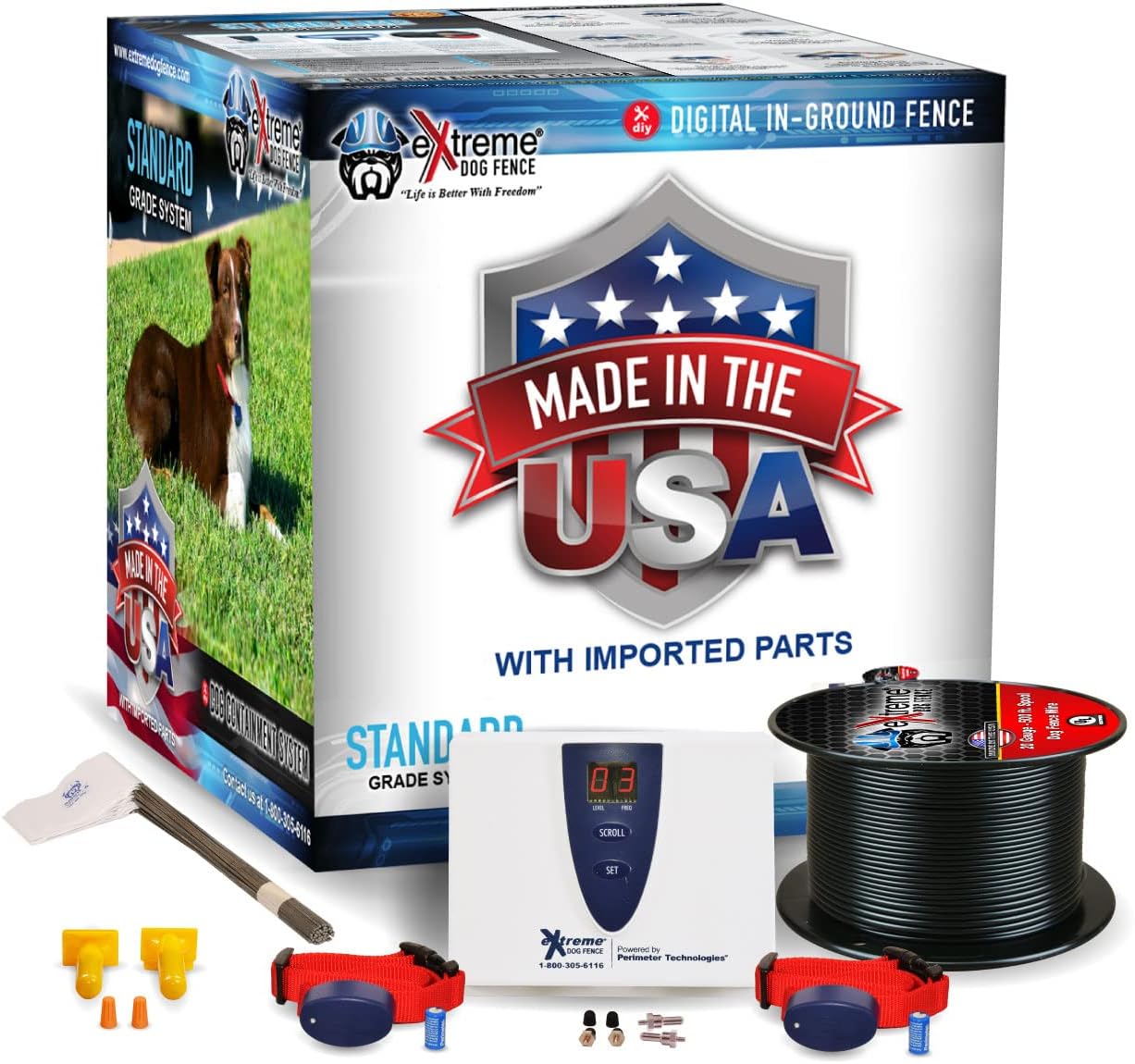
eXtreme Dog Fence Underground Kit 500 Ft
Best In-Ground Dog Fence System
| Size | 500 Ft |
|---|---|
| Dogs | 2 Dog |
| Batteries | 2 AA (included) |
This underground electric dog fence kit provides a permanent perimeter solution by burying high-tensile boundary wire and using a digital transmitter plus waterproof collar receivers to keep dogs contained and aid training. Typical setup involves running the supplied 20 gauge jacketed wire around the property, connecting it to the transmitter, and fitting each dog with the receiver collar which offers adjustable correction levels and is fully submersible so dogs can swim without removing it. The package includes splice kits and training flags to mark the boundary during the learning period, and batteries for the collars are included for immediate use. Practical benefits include a low-visibility installation that does not rely on physical barriers, good waterproofing for active or water-loving dogs, and a system designed for reliability with decades of manufacturer experience. Limitations are the need for time and some DIY skill to install and bury wire, and permanence of the solution makes adjustments to the perimeter more involved than wireless plug-and-play units.
Best for: Owners who want a discreet, permanent perimeter and are willing to invest the time to install buried wire for precise boundary control and long-term containment.
Less Ideal for: Renters, people who need a temporary or easily movable boundary, or owners who prefer a no-install wireless solution should consider alternatives.
- Completely waterproof collar receiver that can be submerged up to 10 feet
- Includes 20 gauge jacketed boundary wire and splice kits for a durable buried perimeter
- Digital transmitter with antennas for stable signal and perimeter control
- Supplied training flags and included batteries let you start training right away
- Designed and supported by a brand with decades of professional installation experience
- Requires trenching or burying wire which takes time and basic DIY skill
- Permanent underground wiring makes layout changes more difficult than wireless systems
Verdict: The best in-ground dog fence system for owners seeking exact perimeter control and a permanent solution that stays out of sight once installed.
SportDOG In-Ground Fence SDF-100C
Best Heavy-Duty Dog Fence System

| Coverage | Up to 1 1/3 acres (with 1,000 ft wire) |
|---|---|
| Collar battery | Rechargeable Li-Ion |
| Correction modes | Tone, vibration, 7 static levels |
| Water resistance | Submersible to 25 ft |
The SportDOG SDF-100C is an in-ground fence kit designed to contain dogs across a yard using buried boundary wire, a waterproof rechargeable collar, and selectable warnings and static levels. It ships with 1,000 feet of wire and 100 flags to set up a 1 1/3 acre boundary and supports expansion with additional wire and add-on collars for more dogs. The collar offers tone and vibration warnings plus seven levels of static stimulation so you can train a large, determined dog with graduated corrections, and its Lithium-Ion battery charges in about two hours for roughly one to two months of typical use. The receiver is submersible to 25 feet, which helps in wet conditions, and the system is built to be expanded for larger properties. Key practical limits are that installation requires burying wire and planning the loop, and very persistent escape artists may need careful training and boundary reinforcement despite the strong correction range. For owners who want a durable, expandable containment solution with multiple correction options, the SDF-100C is a capable choice.
Best for: Buyers who need a robust, expandable containment system for large, active dogs and who plan to invest time in installation and training to secure their yard.
Less Ideal for: People who want a plug-and-play, non-install solution or who prefer no-static alternatives for containment.
- Includes 1,000 ft of boundary wire and 100 flags to cover up to 1 1/3 acres out of the box
- Rechargeable Li-Ion collar that charges in about two hours with 1–2 months runtime per charge
- Collar offers tone, vibration, plus seven levels of static stimulation for graduated training
- Waterproof, submersible collar (up to 25 ft) suitable for wet conditions and active dogs
- Expandable system that accepts additional wire and extra collars for larger properties or multiple dogs
- Requires in-ground wire installation and planning which can be time consuming
- Static stimulation may require careful adjustment and training for large, strong-willed dogs
Verdict: The best heavy-duty dog fence system for owners of strong, escape-prone, or highly motivated dogs who need tougher hardware and stricter containment settings.
BrobiDerleta GPS Wireless Dog Fence
Best Portable Dog Fence System

| Coverage radius | 49–6,561 ft |
|---|---|
| Training modes | Tone, vibration, static |
| Intensity levels | 9 levels |
| Waterproof rating | IPX7 |
| Battery life | Up to 52 hours |
This GPS wireless dog fence provides a no-buried-wires containment option that sets a customizable circular boundary from about 49 ft up to 6,561 ft radius and uses a collar to keep dogs inside the zone. It pairs AI-enhanced GPS positioning and dual-frequency satellite tech to cut down on false corrections and claims submeter accuracy, so you can set the boundary without trenching or markers. The collar offers three training signals—tone, vibration, and static—with nine intensity settings and progressive warnings plus an auto shutoff for safety, which suits a range of temperaments. The unit is built for outdoor use with an IPX7 waterproof collar and a battery life the listing puts at up to 52 hours per full charge, making it practical for day trips and multi-day use. Setup and portability are strengths since the system is lightweight and meant for renters or temporary containment, but buyers should expect simpler functionality than premium systems that include geofencing via apps or multi-zone mapping. The nylon strap and reinforced buckle fit medium to large dogs but very small breeds may not be ideal because of strap and collar bulk.
Best for: Cost-conscious dog owners who want a simple, portable invisible-fence solution for basic containment without installing wires or buying premium mapping features.
Less Ideal for: Owners who need detailed multi-zone mapping, smartphone integration, or who have very small toy breeds that require a lightweight, low-profile collar.
- Adjustable coverage from about 49 ft to 6,561 ft radius for flexible yard sizes
- AI-enhanced dual-frequency GPS positioning to reduce false corrections
- Three training modes with nine intensity levels and progressive warnings for humane training
- IPX7 waterproof collar and up to 52 hours of battery life for outdoor, multi-day use
- Portable design requires no buried wire so it is quick to set up and move between locations
- Does not provide app-based mapping or multi-zone geofencing found on higher-end systems
- Collar and strap are sized toward medium-large dogs so fit may be bulky on very small breeds
Verdict: The best portable dog fence system for owners who need fast setup, compact storage, and reliable containment when traveling or using temporary spaces.
Choosing the Right Dog Fence System: Key Factors to Consider
Containment Range and Adjustable Boundaries
Range determines how much of your property the system can cover and directly affects whether it can protect common yard layouts. Consider both maximum radius and how precisely you can shape the containment area. Some systems use circular radii from a transmitter, while others let you create custom perimeters with buried wire. Adjustable boundaries let you expand or reduce the coverage as your needs change.
When a system lacks fine-grain adjustment, you may get unwanted exclusion zones or need physical barriers to patch gaps. For multi-zone yards or irregular shapes, look for options that offer overlapping zones or multiple transmitters to avoid dead spots. Accurate boundary customization reduces false activations and keeps the containment reliably where you want it.
Correction Type and Safety Controls
Different systems use auditory alerts, vibration, or static stimulation to deter a dog from crossing the boundary. The type and intensity of correction should match your dog's temperament and training level. Humane safety features, such as progressive correction, automatic shutoff after repeated activations, and adjustable stimulation levels, help prevent overcorrection and reduce stress.
Look for clear documentation on how settings translate to physical sensation and for collars that allow multiple intensity steps. Systems that combine an audible pre-warning with a subsequent deterrent are generally easier to train with and reduce accidental corrections. Safety controls that limit continuous stimulation and that require deliberate owner setup are valuable for preventing misuse.
Collar Fit, Receiver Size, and Pet Comfort
A collar must fit securely and not cause chafing or discomfort during normal activity. Receiver size matters for small dogs and puppies; oversized units can be heavy or awkward. Look for lightweight receivers with low-profile contacts and strap options that accommodate different neck sizes.
Consider contact type and whether conductive contacts are adjustable or have alternative plates for sensitive skin. Battery weight and placement also affect balance on the collar. Comfortable fit increases compliance during training and reduces the chance the dog will rub off the unit or be distracted by it.
Installation Flexibility and Yard Impact
Some systems require burying wire around the perimeter, others rely on a central transmitter, and a few use GPS-based geofencing. Your tolerance for digging, the presence of landscaping or irrigation lines, and the need to preserve lawn aesthetics will influence which installation approach is practical. Wire-based systems typically offer precise boundaries but involve physical installation work. Transmitter-based options can be faster to deploy but often create circular coverage that may not match property lines.
Also consider the ability to move or modify the system seasonally or when you relocate. Removable stakes, simple wire splicing, and modular transmitters make adjustments easier. If rental restrictions or preservation of the yard are a concern, prioritize noninvasive installation methods.
Power, Battery Life, and Maintenance
Transmitter power reliability and collar battery life directly affect continuous containment. Wired transmitters require a stable outlet and surge protection considerations. Collar units may use replaceable or rechargeable batteries; each has tradeoffs. Replaceable batteries offer predictable swap intervals, while rechargeable collars require periodic charging and may leave a dog uncontained if forgotten.
Check expected battery life under typical use, whether low-battery alerts are provided, and how easy it is to replace or recharge cells. Also evaluate weather sealing and how often contact points and straps need cleaning. Systems that simplify routine maintenance reduce the chance of downtime and increase long-term satisfaction.
Training Support and User Documentation
Even the best hardware requires consistent, humane training to teach a dog the boundaries. Look for systems that include clear training plans, visual boundary markers, and support materials for stepwise introduction. Training aids like flags or audible pre-warnings built into collars can accelerate learning.
Quality user documentation reduces installation errors and helps owners set appropriate correction levels. Access to responsive customer support channels and community troubleshooting resources can be important when unique yard layouts or behavioral issues arise.
How Do Invisible Fences Differ and Which Yards Suit Each Type?
Invisible containment systems use either buried wire, a central transmitter, or GPS to define a safe area. Wire-based setups let you shape boundaries precisely around beds, sheds, and driveways. Central transmitter systems create circular zones and are easiest when your yard is an open circle or rectangular area where a centered radius works. GPS-based systems offer the least invasive installation and work well for variable boundaries but can be sensitive to satellite reception and nearby structures.
Pick a wire system if you need exact boundaries around landscaping or irregular shapes. Choose a transmitter-based system for quick setup on open properties. Use GPS-based systems when you need mobility or cannot alter the yard surface, but expect to verify boundary accuracy in the actual environment.
- Wire systems: high precision, requires digging or surface installation.
- Transmitter radii: quick setup, best for simple layouts.
- GPS geofencing: no digging, may be less precise in obstructed areas.
What Training Approach Helps Pets Accept a Perimeter?
Start with audible warnings or flags at the edge so your dog associates the spot with a cue rather than a correction. Gradually increase the area where the dog can roam, using positive reinforcement when they respect the boundary. Introduce the collar and let the dog wear it without correction at first so they habituate to its presence.
Pair boundary training with short supervised sessions and consistent cues. Avoid immediate high-intensity corrections; progressive training reduces anxiety and teaches the dog to respond to the warning phase before any deterrent is applied.
- Use flags or markers during early training.
- Begin with low correction settings and increase only if needed.
- Reinforce calm behavior near the boundary with treats or praise.
How to Troubleshoot Common Installation and Signal Issues
Signal gaps and interference are often due to transmitters placed near large metal objects, buried cable crossings, or nearby electrical wiring. Verify transmitter placement away from major metal structures and follow the manufacturer's suggested clearances. For wire-based systems, inspect connections, splices, and the perimeter wire for breaks if zones become inconsistent.
If collars trigger unexpectedly inside the yard, reduce the correction level and reassess boundary placement. For GPS systems, test the fence in different weather and at different times of day to confirm consistency. Routine checks of collar contacts, strap tension, and battery level prevent many false activations.
- Check transmitter placement and avoid large metal obstructions.
- Inspect wire continuity for physical systems and reseal splices.
- Test GPS boundaries multiple times and under varying conditions.
What Safety Features Should You Expect From a Modern System?
Look for progressive correction that delivers a tone or vibration before any stronger deterrent. Automatic shutoff after repeated triggers and low-battery warnings for both collars and transmitters reduce accidental continuous stimulation. Waterproofing and secure contact design prevent skin irritation and malfunction in wet conditions.
Systems should allow precise adjustment of stimulation intensity and offer multiple levels tailored to different dog temperaments. Audible alerts and visual boundary markers help the dog recognize limits before physical correction is applied.
- Progressive alerts: tone, then vibration, then deterrent.
- Automatic shutoff after repeated activations.
- Low-battery alerts and waterproof collar design.
Can a System Handle Multiple Dogs and Different Sizes?
Many systems support multiple collars, but collars should be sized for each dog. Smaller dogs need lightweight receivers and low-contact profiles, while larger dogs can handle heavier units and wider contact spacing. When adding multiple dogs, ensure each collar has independent adjustment and that the transmitter supports the number of receivers you plan to use.
Consider how training progression differs by dog. Nervous or highly motivated dogs may need lower correction settings and more gradual training, while confident dogs may respond quickly. Balance containment settings so no dog experiences undue stress and so that one dog's activity does not compromise boundary integrity for the others.
- Verify transmitter capacity for multiple collars.
- Choose collar receivers appropriate to each dog's size.
- Adjust training pace and correction levels per dog.
Maintaining Your System for Long-term Reliability
Regular maintenance includes checking collar straps and contacts for wear, verifying battery condition, and inspecting any buried wire or transmitter placement after seasonal yard work. Clean contacts as recommended to prevent skin irritation and intermittent signal problems.
Keep a simple checklist for routine checks and note when batteries were last changed or charged. For wire systems, mark splices and keep documentation of the perimeter layout to simplify repairs or modifications later.
- Clean and inspect collar contacts weekly during heavy use seasons.
- Record battery changes and charging intervals.
- Label and map wire runs to ease future repairs.
How We Chose the Best Dog Fence System
We evaluated systems that deliver reliable containment, sensible safety features, and straightforward installation and maintenance. Our selection criteria focused on devices that provide consistent range performance across typical yard layouts, clear and adjustable correction or deterrent settings, and strong durability against weather and regular outdoor use. We prioritized systems with multiple receiver size options or adjustable containment zones to accommodate different dog sizes and household configurations. Ease of setup and clear user instructions were important, as were battery options and long-term power considerations for both transmitters and collars. We excluded experimental or prototype designs and products lacking robust safety specifications. Systems that require invasive yard work or permanent landscaping changes without alternative installation options were also deprioritized. In short, the list favors dependable, well-documented systems that balance containment effectiveness with humane safety controls and practical upkeep.
Our full evaluation process is outlined in our review methodology.
FAQ
Will my dog learn the boundary without harsh corrections?
Often yes. Most dogs learn boundaries using audible warnings, flags, and progressive correction. Start with the lowest effective settings and pair the boundary with positive reinforcement so the dog learns to respect the edge without needing harsh or repeated corrections.
How long does it take to train a dog to an invisible fence system?
It depends on the dog and consistency of training, but many dogs show reliable understanding within one to four weeks of short, daily sessions. Puppies and anxious dogs may take longer and benefit from slower progression and more positive reinforcement.
Are GPS-based systems as reliable as buried wire?
GPS systems are convenient and avoid digging, but they can be less precise near tall structures, heavy tree cover, or in areas with limited satellite reception. For highly irregular boundaries or tight containment needs, buried wire generally offers more consistent precision.
What should I do if the collar keeps activating inside the yard?
First check collar fit and battery level, then reduce the correction intensity and confirm the boundary placement. Inspect for nearby sources of interference or misplaced transmitter positioning. If using buried wire, check for breaks or damaged splices in the perimeter.
Can I use the system for multiple dogs of different sizes?
Usually yes. Many systems support several collars, but choose appropriately sized receivers and set correction levels for each dog. Verify the transmitter supports the number of collars you plan to use and adjust training to each pet's temperament.
Final Verdict
Prioritize containment accuracy, humane safety controls, and the installation style that fits your yard when choosing a dog fence system. Think about how boundary shape, correction type, collar fit, and battery maintenance will affect daily use and long-term reliability. Balance precision and convenience: wire systems offer the most exact boundaries while transmitter or GPS options reduce installation work. Pick the system that best matches your property layout and your dog's temperament, and follow a gentle, consistent training plan to ensure safe, stress-free containment.

