

Feeding a 3 month old German Shepherd is one of the most important steps toward a healthy adult dog. At this age you are supporting rapid bone and muscle development, establishing digestion patterns, and shaping long-term eating habits. Choosing the right puppy food helps ensure steady growth without overloading calories or upsetting a sensitive stomach. This guide shortlists seven top options suitable for three-month-old German Shepherd puppies. We focus on nutrient balance, protein quality, kibble size, and digestibility so you can pick a formula that supports healthy development. Read on to see which types made the list and why they fit common puppy-care priorities.
Top Picks at a Glance
| Best Overall Food for 3-Month-Old German Shepherds A balanced puppy formula tuned for growth and daily nutrition | Royal Canin German Shepherd Puppy Dry Food 2.5 lb |  |
| Best Budget Food for 3-Month-Old German Shepherds A cost-conscious puppy option that still meets basic growth needs | Nutrish Puppy Chicken & Brown Rice 5 lb |  |
| Best High-Protein Food Formulas with higher animal-protein content to support muscle development | Purina Pro Plan Sport Puppy 35 lb |  |
| Best Sensitive-Stomach Food Easier-to-digest recipes for puppies with upset stomachs or sensitivities | Hill's Science Diet Puppy Sensitive Stomach & Skin |  |
| Best Small-Kibble Food Smaller kibble shapes sized for young puppies' mouths and teeth | Royal Canin Small Puppy Dry Dog Food 4 lb |  |
| Best Grain-Inclusive Food Puppy formulas that include wholesome grains for balanced energy | Blue Buffalo Baby BLUE Large Breed Puppy |  |
| Best Premium Food Higher-end puppy diets focused on superior ingredients and sourcing | ORIJEN Puppy Large Dry Dog Food 23.5 lb |  |
Royal Canin German Shepherd Puppy Dry Food 2.5 lb
Best Overall Food for 3-Month-Old German Shepherds

| Flavor | Chicken |
|---|---|
| Age Range Description | Puppy |
| Breed Recommendation | German Shepherd |
| Unit Count | 40 Ounce |
This Royal Canin German Shepherd Puppy formula is a breed-targeted dry kibble designed for purebred German Shepherds aged about 8 weeks to 15 months. The recipe pairs a specialized kibble shape for a strong muzzle with highly digestible proteins and specific fibers to promote consistent stool quality and easier digestion during rapid growth. It includes antioxidants and vitamin E to support immune development and adds glucosamine and chondroitin to aid bone and joint formation as puppies grow and stay active. Marine microalgae oil and fish oil supply omega sources relevant to brain and eye development, and the formula is intended to be fed as the sole dry diet or mixed with Royal Canin wet options. The practical benefits are straightforward: targeted nutrition that simplifies feeding decisions for owners of German Shepherd puppies and kibble shaped for easier chewing. Limitations are the single breed focus and the small 2.5 pound pack size, which may require frequent repurchasing for larger or very active puppies and does not suit mixed-breed puppies with different size needs.
Best for: Buyers who want a straightforward, breed-tailored dry food that covers immune, digestive, and joint support for a mid-stage German Shepherd puppy and prefer a formula matched to the breed's chewing style.
Less Ideal for: Owners of mixed-breed puppies or those seeking a larger bag size for high-consumption puppies should consider alternatives better matched to different growth patterns or bulk feeding.
- Formulated specifically for German Shepherd puppies with kibble shaped for their muzzle and chewing
- Contains glucosamine and chondroitin to support developing bones and joints
- Includes antioxidants and vitamin E to support immune system development
- Highly digestible proteins and fibers to promote good stool quality and digestive tolerance
- Contains marine microalgae oil and fish oil as sources of omega nutrients for development
- Small 2.5 lb package may be impractical for a fast-growing 5-month-old and needs more frequent replacement
- Breed-specific focus may not match nutritional needs of mixed-breed or non-German Shepherd puppies
Verdict: The best overall food for a 3-month-old German Shepherd that balances protein, essential fats, vitamins, and calorie density to support healthy puppy growth and development.
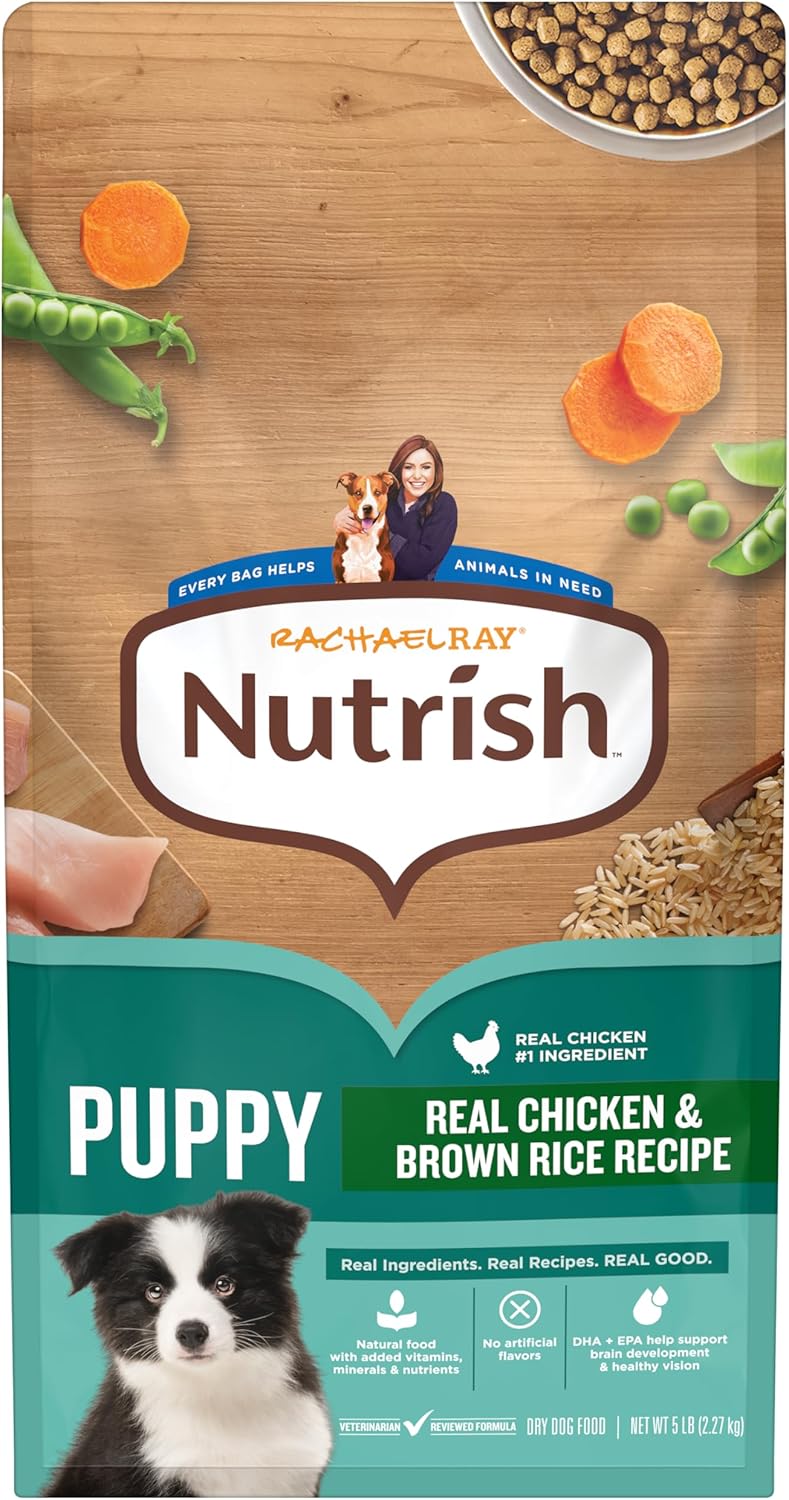
Nutrish Puppy Chicken & Brown Rice 5 lb
Best Budget Food for 3-Month-Old German Shepherds
| Flavor | Chicken |
|---|---|
| Age Range Description | Puppy |
| Item Form | Chunk |
| Unit Count | 80 Ounce |
This 5 lb bag of Rachael Ray Nutrish Puppy Chicken & Brown Rice is a straightforward, budget-minded dry food formulated for growing puppies. It uses real chicken as the number one ingredient, plus chicken meal and brown rice to provide a familiar protein-and-grain base, and includes DHA and EPA from fish oil for brain and vision support. The kibble is intended for daily feeding and can be moistened for younger pups; feeding charts on the bag guide portion sizes by age and weight. The recipe is free of added artificial colors and flavors and is made in the USA with globally sourced ingredients, which helps reassure buyers focused on basic ingredient standards. On the downside the formula contains common fillers like corn and soybean meal and includes multiple grain ingredients, so it is not suited to owners seeking grain-free or hyper-premium limited-ingredient diets. For budget-conscious puppy owners who want a complete, vet-reviewed staple with developmental nutrients, this delivers reliable nutrition without specialty pricing.
Best for: Puppy owners on a tight budget who still want a complete, vet-reviewed dry food with developmental nutrients and recognizable primary ingredients.
Less Ideal for: Owners seeking grain-free, limited-ingredient, or premium boutique puppy formulas should consider alternatives with different ingredient profiles.
- Real chicken listed as the first ingredient for primary animal protein
- Includes DHA and EPA (menhaden fish oil) to support brain and vision development
- Veterinarian-reviewed formula and feeding guide tailored for growing puppies
- No added artificial colors or flavors and made in the USA
- Contains grain and common plant-based fillers such as corn and soybean meal
- Smaller 5 lb bag requires more frequent repurchasing for multi-puppy households
Verdict: The best budget food for a 3-month-old German Shepherd that delivers necessary nutrients and acceptable quality while keeping cost per feeding low for growing litters.
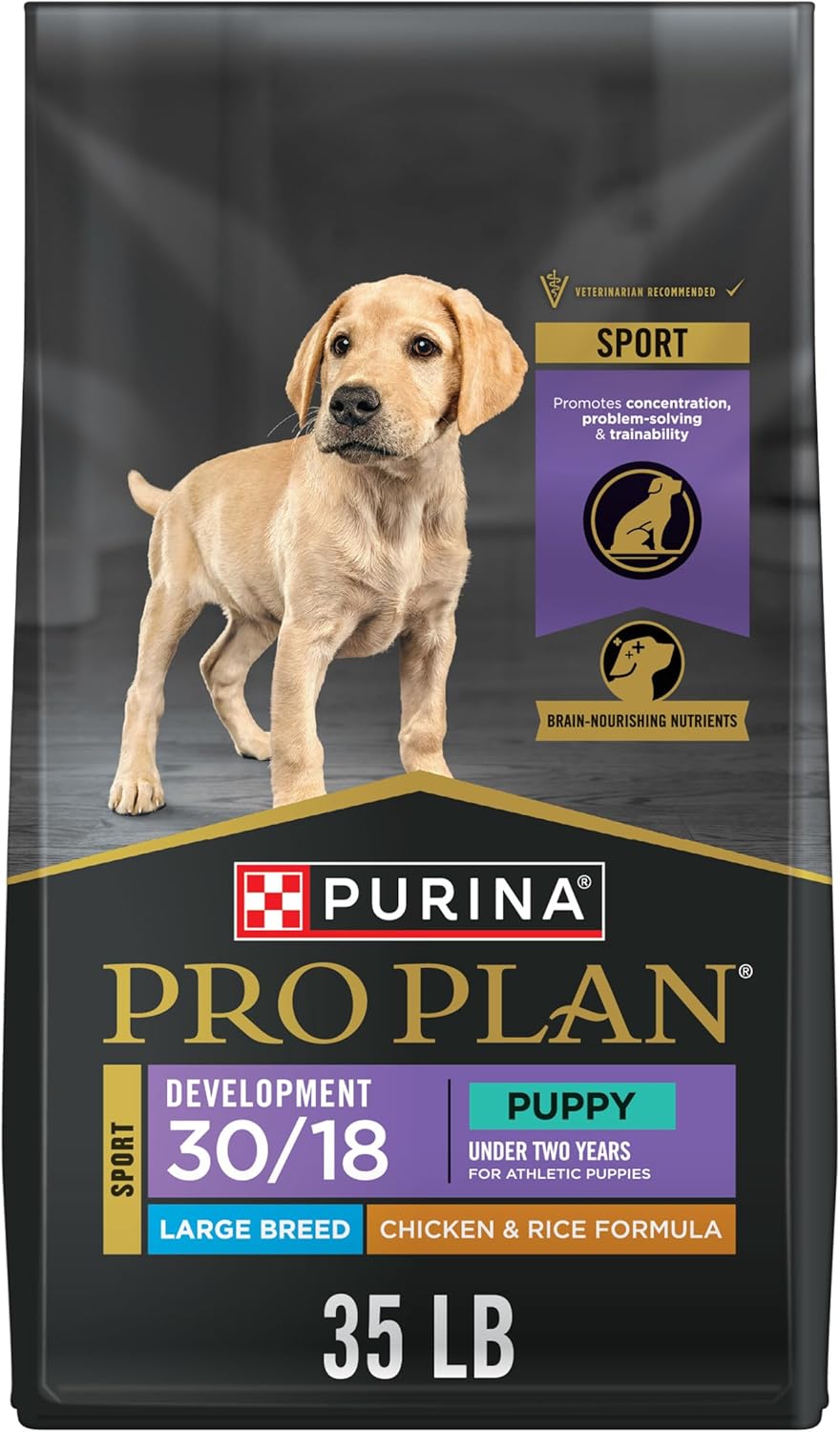
Purina Pro Plan Sport Puppy 35 lb
Best High-Protein Food
| Intended use | Large breed puppy growth and development |
|---|---|
| Primary protein | Chicken |
| Crude protein | 30% |
| Bag size | 35 lb |
| Manufacturer | Nestlé Purina PetCare Company |
Purina Pro Plan Sport Large Breed Puppy Development 30/18 Chicken and Rice is a high-protein kibble made for growing, athletic large-breed puppies. It uses real chicken as the first ingredient and a 30% protein formulation to support lean muscle and the higher energy needs of active pups, while added glucosamine and bone-supporting levels of calcium and phosphorus help developing joints and bones. Typical use is daily feeding during growth and training phases, with guidance to transition gradually over 7 to 10 days and to follow portioning recommendations as puppies mature. The formula also includes antioxidants and essential vitamins to support immune and cognitive development, and Purina notes production in company-owned U.S. facilities. Buyers should expect a traditional grain-containing kibble with poultry by-product meal and corn protein meal in the ingredient list, so it is not grain-free and contains some rendered meals and corn. For owners prioritizing concentrated animal protein and joint support for highly active large-breed youngsters, this delivers practical performance, but those seeking grain-free, novel-protein, or limited-ingredient options will need to look elsewhere.
Best for: Owners of growing, active puppies that need extra animal-based protein and joint support to fuel training, play, and development.
Less Ideal for: Owners seeking grain-free, limited-ingredient, or novel-protein diets, or those feeding small-breed puppies with lower caloric needs.
- High protein level (30%) to support muscle development and high energy needs
- Real chicken listed as the number one ingredient
- Contains glucosamine plus calcium and phosphorus for joint and bone support
- Includes antioxidants and vitamins to support immune and cognitive development
- Contains poultry by-product meal and grain ingredients rather than being grain-free
- Formulation is aimed at large-breed puppies and may be richer than required for small-breed or less active pups
Verdict: The best high-protein food for puppies that need extra protein for active growth and lean muscle development while maintaining proper calorie balance.
Hill's Science Diet Puppy Sensitive Stomach & Skin
Best Sensitive-Stomach Food

| Flavor | Salmon & Brown Rice |
|---|---|
| Age Range Description | Puppy |
| Item Form | Dry Food |
| Unit Count | 64 Ounce |
| Animal Food Diet Type | Limited Ingredient |
Hill's Science Diet Puppy Sensitive Stomach & Skin is a dry puppy formula designed to reduce digestive upsets while supporting skin and coat during growth. It is used as an everyday puppy food or as a transitional diet when pups have mild stomach sensitivity; feeding instructions on the bag guide gradual switching. The recipe lists salmon as the first ingredient and includes prebiotic fiber to support a balanced gut microbiome, plus DHA from fish oil for brain and eye development and vitamin E and omega fatty acids for skin health. Practical benefits include easier digestion for sensitive puppies, nutrients targeted at immune and cognitive development, and a single-source fish protein focus that can simplify ingredient tracking. Limitations are that it is a dry kibble so dogs that require wet food or very limited-ingredient veterinary prescriptions may need other options, and the formula still contains multiple grains and added ingredients that some owners avoiding certain grains or novel-protein approaches might not prefer.
Best for: Buyers who prioritize a vet-recommended, digestive-friendly everyday puppy food that also supports skin and coat health for growing dogs.
Less Ideal for: Owners seeking a strict novel-protein, grain-free, or veterinary-prescription elimination diet should consider specialized formulas instead.
- Prebiotic fiber to support gut microbiome and help reduce occasional digestive upset
- Salmon is the first ingredient, providing a high-quality fish protein and DHA for development
- Added vitamin E and omega fatty acids to nourish skin and promote a healthy coat
- Clinically proven antioxidants including vitamins C and E to support immune health
- Contains multiple grains and shared protein sources, so not a novel-protein or grain-free prescription option
- Dry kibble format may not suit puppies needing canned diets or strict veterinary therapeutic feeds
Verdict: The best sensitive-stomach food for puppies prone to digestive upset, formulated with gentle proteins, limited ingredients, or added probiotics to promote stool consistency and gut health.
Royal Canin Small Puppy Dry Dog Food 4 lb
Best Small-Kibble Food

| Flavor | Chicken |
|---|---|
| Age Range Description | Puppy |
| Specific Uses For Product | Brain Health, Digestive Health, Immune Support |
| Item Form | Pellet |
| Package Size Name | 4 lb |
Royal Canin Small Breed Puppy Dry Dog Food is a targeted kibble made for 2-to-10-month-old puppies expected to reach about 9–22 pounds as adults. The formula combines small, crunchy kibble with nutrients sized and balanced for small mouths and higher energy needs, delivering DHA and omega-3s for brain development plus antioxidants for immune support. It also includes prebiotics and highly digestible proteins to promote steady digestion during rapid growth. Owners typically feed this as a primary dry diet or mix with the brand's wet thin-slices for variety during transition periods. Practical benefits include thoughtfully portioned kibble texture that encourages chewing and a nutrient profile tuned for small-breed metabolism. Limitations are that the formula contains ingredients like chicken by-product meal, grains, and fish, so buyers seeking grain-free or single-protein limited-ingredient diets will need alternatives, and puppies with specific allergies to listed allergens should avoid it. Packaging is a standard bag so expect typical storage needs to maintain freshness.
Best for: Buyers with small-breed puppies who need a nutrient-dense dry food with appropriately sized kibble and focused support for growth and digestion.
Less Ideal for: Owners seeking grain-free, single-source protein, or hypoallergenic limited-ingredient formulas should consider other options.
- Small, crunchy kibble sized for puppies with small mouths
- Includes DHA and omega-3s to support brain development
- Prebiotics and highly digestible proteins help support digestion
- Antioxidants such as vitamins E and C for immune support
- Contains multiple common allergens and grain ingredients, not grain-free
- Uses chicken by-product meal rather than single whole-protein labeling
Verdict: The best small-kibble food for young puppies that makes eating easier and encourages proper chewing while supporting dental development and portion control.
Blue Buffalo Baby BLUE Large Breed Puppy
Best Grain-Inclusive Food

| Flavor | Chicken & Brown Rice |
|---|---|
| Age Range Description | Puppy |
| Breed Recommendation | Giant Breeds, Large Breeds |
| Crude Protein | 26.0% min. |
| Crude Fat | 15.0% min. |
Blue Buffalo Baby BLUE Large Breed Puppy is a dry kibble formulated to support steady growth in large-breed puppies. It uses real deboned chicken and chicken meal as top ingredients and delivers a higher protein level to support muscle development while including balanced calcium and phosphorus to help guide bone growth. The formula contains DHA and ARA for cognitive and retinal development and antioxidant-rich LifeSource Bits to support immune health. Practical benefits include a calorie and nutrient profile aimed at large-breed growth, added omega fatty acids for skin and coat, and included joint-supportive nutrients such as L‑Carnitine and fish-derived omega‑3s. The kibble is intended to be fed according to the age-and-weight feeding chart to avoid overfeeding; owners should monitor body condition and adjust portions to encourage steady, controlled weight gain. Limitations to note are that this is a standard commercial puppy diet rather than a veterinary prescription formula for specific orthopedic conditions, and puppies with ingredient sensitivities may need a limited-ingredient or hydrolyzed option.
Best for: Owners of large-breed puppies who want a commercially available diet designed to encourage steady, controlled growth while supporting brain development and overall health.
Less Ideal for: Puppy owners who need a veterinary prescription diet for severe joint or growth disorders or who require a single-protein, limited-ingredient formula.
- Real deboned chicken is the first ingredient for high-quality animal protein
- Formulated with DHA and ARA to support brain and eye development
- Includes LifeSource Bits with vitamins, minerals, and antioxidants for immune support
- Balanced calcium and phosphorus levels targeted for large-breed puppy bone development
- Contains omega‑3 and omega‑6 sources to support skin and coat health
- Not a prescription or targeted therapeutic diet for puppies with orthopedic disorders
- Contains multiple grains and legumes so not suited for dogs needing a limited-ingredient diet
Verdict: The best grain-inclusive food for puppies whose diets benefit from digestible grains as energy sources and fiber for steady growth and development.
ORIJEN Puppy Large Dry Dog Food 23.5 lb
Best Premium Food

| Flavor | Puppy Recipe |
|---|---|
| Item Form | Pellet |
| Dog Breed Size | Large |
| Unit Count | 376 Ounce |
| Animal Food Diet Type | Veterinary Diet |
This 23.5 lb ORIJEN Puppy Large formula is a high-protein, grain-free dry kibble designed to support rapid growth and development in large-breed puppies. It uses a WholePrey philosophy, listing fresh or raw animal ingredients first and including organs and bone-derived nutrients to supply naturally occurring vitamins and minerals. The recipe delivers concentrated animal protein sources such as chicken, turkey, salmon and herring and includes a freeze-dried coating to boost palatability. In practice it is fed twice daily with portion adjustments based on your puppy's weight, and the brand advises a 10- to 14-day transition from previous food. Practical benefits include a formula tailored for brain, skin and coat health and an emphasis on fewer synthetic additives due to nutrient-dense whole ingredients. Limitations to consider are the grain-free composition and high protein density, which may not suit puppies with certain veterinary-prescribed diets or owners seeking lower-protein, grain-included options, and the large wholesale bag size may be more than needed for small households or short feeding windows.
Best for: Owners who prioritize premium, biologically oriented ingredients and want a nutrient-dense puppy formula to support optimal growth and development in large-breed dogs.
Less Ideal for: Owners looking for grain-inclusive, lower-protein puppy diets or who need a veterinary-prescribed formula for specific health issues should consider alternatives.
- High animal-ingredient content with first five ingredients listed as fresh or raw meats and fish
- WholePrey inclusion of organs and bones provides a range of naturally occurring nutrients
- Formulated specifically for large-breed puppies to support growth and development
- Freeze-dried coating increases palatability to encourage eating during training or transitions
- Grain-free, high-protein formula may not be appropriate for puppies on certain veterinary diets
- Large 23.5 lb bag can be bulky and may be excessive for multi-bag turnover households
Verdict: The best premium food for owners who prioritize higher-quality ingredients, rigorous sourcing, and advanced formulations to support optimal growth and long-term health.
Choosing the Right Dog Food 3 Month Old German Shepherd: Key Factors to Consider
Protein Quality and Percentage
Protein supplies the amino acids a growing German Shepherd puppy needs for muscle, organ and immune system development. For three-month-old puppies, look for a formula that lists a specific animal protein source, such as chicken, lamb, or fish, near the top of the ingredient list rather than vague terms. The crude protein percentage should be appropriate for a large-breed puppy; too low and the pup may not build lean mass efficiently, too high without balanced calories can stress immature kidneys.
Quality matters more than absolute numbers. Animal-based proteins are usually higher in the essential amino acids puppies need. Also consider whether the formula includes multiple complementary protein sources to provide a broader amino acid profile. If your puppy has shown food sensitivity, a single-source novel protein or limited-ingredient option can reduce exposure while still meeting growth requirements.
Calcium, Phosphorus and Controlled Growth
Bone development in large-breed puppies is sensitive to mineral balance. The ratio of calcium to phosphorus and the absolute levels of both minerals influence how quickly a puppy's skeleton grows. For a 3 month old German Shepherd you want a formula designed for large-breed growth that moderates calcium levels to avoid overly rapid bone formation that can lead to joint problems later.
Controlled-growth formulations balance calorie density and mineral content so that puppies gain weight at an appropriate pace. Check that the product follows established guidelines for large-breed puppies and avoid formulas that are excessively calorie-dense or fortified with extra calcium intended for adult maintenance rather than growth management.
Kibble Size and Texture
A three-month-old German Shepherd still has relatively small jaws and developing teeth, so kibble that is too large or too hard can make eating difficult and encourage gulping. Kibble designed for puppy mouths will be smaller and often softer or more compressible, making it easier to chew and digest.
Texture also affects how quickly the puppy eats. Very hard, large pieces can increase the risk of swallowing big chunks that may cause digestive upset. Conversely, extremely tiny kibble can encourage rapid consumption. Choose a size and texture that lets you control portions easily and monitor chewing behavior during feeding.
Digestive Support and Stool Quality
Many German Shepherd puppies experience sensitive digestion in early life. Ingredients that support healthy gut flora and gentle digestion can make a big difference in stool consistency and nutrient absorption. Look for formulas that include prebiotics, probiotics, or fermentable fibers, as well as easily digested carbohydrate sources like rice or cooked grains if your puppy tolerates them.
Stable stool quality is a sign the food is being well tolerated and nutrients are being absorbed. Avoid foods with a long list of unknown fillers that can ferment in the gut and lead to gas or loose stools. If your puppy has historically loose stools or frequent changes, prioritize options labeled for sensitive digestion or gastrointestinal support.
Fat Content and Energy Density
Fat provides concentrated calories and essential fatty acids that are important for brain development and coat condition. For three-month-old puppies, the fat percentage should supply sufficient energy for play and growth without promoting excessive weight gain. Large-breed pups need a balance because too many calories can accelerate growth beyond what their bones and joints can safely handle.
Also consider the source of fats. Omega-3 and omega-6 fatty acids from fish oil or flaxseed support cognitive development and skin health. If your puppy is very active or underweight, a slightly higher fat content helps maintain healthy growth, while less active puppies may do better on moderate-fat formulas.
Allergen Considerations and Ingredient Transparency
Food sensitivities are common in some puppies and can appear as itchy skin, ear infections, or digestive upset. Choosing a formula with clear, transparent ingredient sourcing helps you identify and avoid potential allergens. Limited-ingredient diets or single-protein formulas make troubleshooting easier when you need to pinpoint a trigger.
Avoid products that rely heavily on vague 'meat' terms or a long list of artificial additives. Whole-food ingredients and explicit labeling make it simpler to tailor a diet if you must transition to a novel-protein or elimination diet later.
How Much Should I Feed a 3 Month Old German Shepherd Puppy?
Feeding amounts depend on the food's calorie density, your puppy's current weight, and activity level. Most puppy formulas provide a feeding chart based on weight and age; use that as a starting point but be prepared to adjust according to body condition and growth.
Check your puppy's rib coverage and overall silhouette regularly. A growing German Shepherd should show a visible waist and easily felt ribs with a light covering of fat. If the puppy looks too thin or too round, change portion sizes gradually and monitor weight weekly rather than making abrupt changes.
- Start with the manufacturer's puppy feeding guideline scaled to your pup's weight.
- Divide daily calories into three to four meals at three months to stabilize digestion and energy.
- Weigh your puppy every one to two weeks to track steady gain rather than rapid spikes.
When Should I Switch From Milk or Transition Foods to Standard Puppy Food?
By three months most puppies are fully transitioned off milk replacer and are eating solid puppy formula. If you are still transitioning, do it gradually over 7 to 10 days by mixing increasing proportions of the new food with the old. This reduces digestive upset and lets you monitor stool quality during the change.
If your puppy experiences diarrhea or refuses the new food, slow the transition and consider a formula marketed for sensitive digestion until the gut stabilizes. Consistency and patience during transitions are essential for long-term acceptance of a healthy diet.
- Use gradual mixing increments of roughly 25 percent per two to three days.
- Keep meal frequency consistent during transition to reduce appetite confusion.
- Observe stool consistency and energy levels as primary indicators of success.
What Ingredients Help Support Joint Health in Large-breed Puppies?
Large-breed puppies benefit from nutrients that support joint formation and cartilage health. Look for controlled levels of calcium and phosphorus balanced for growth alongside ingredients like glucosamine and chondroitin which can support cartilage development. Omega-3 fatty acids from marine sources also reduce inflammation and support joint comfort as the puppy becomes more active.
Remember that supplementation is not always necessary if the food is formulated for large-breed puppies and provides the correct mineral balance. Over-supplementing minerals like calcium can be harmful; evaluate joint-support ingredients as part of the overall formula rather than relying solely on add-ons.
- Prefer foods with large-breed growth guidance rather than added high-dose calcium.
- Glucosamine and chondroitin can be beneficial but should complement a balanced diet.
- Omega-3s support joint health and skin condition.
How to Handle Picky Eating at Three Months
Picky eating can be normal during the teething and socialization phase. Try establishing a consistent feeding routine with set mealtimes and short windows for eating. Avoid leaving food down all day; instead, present meals for 15 to 20 minutes and then remove the bowl to reinforce regular appetite cues.
If a puppy refuses food consistently, rule out dental pain or illness with a veterinary check. Rotating flavors frequently can encourage selective behavior, so keep flavor changes minimal until feeding patterns stabilize. Warming wet food slightly or adding a small amount of warm water to dry kibble can make meals more aromatic and appealing.
- Set regular meal times and remove uneaten food after 15 to 20 minutes.
- Limit flavor rotations during the critical socialization window.
- Inspect teeth and gums if refusal persists and consult a veterinarian when necessary.
What Signs Indicate a Food Is Not Agreeing with My Puppy?
Watch stool consistency, frequency, and color as primary indicators. Persistent loose stools, excessive gas, or sudden changes in stool appearance often mean the current diet is poorly tolerated. Other signs include itchy skin, hair loss, chronic ear infections, reduced energy, or vomiting that recurs after feeding.
Minor changes during a diet transition are normal, but ongoing symptoms that last more than a few days warrant a diet review and veterinary consultation. If you suspect an ingredient sensitivity, switch to a simple, easily digestible formula and monitor for improvement before introducing new components.
- Loose or watery stools lasting more than 48 hours require attention.
- Chronic itching or recurring ear issues can signal food sensitivity.
- Sudden loss of appetite combined with gastrointestinal signs should prompt veterinary evaluation.
How Important Is Feeding Frequency and Routine?
At three months, feeding three to four small meals per day helps stabilize blood sugar, supports digestion, and reduces the chance of gulping or overeating. Consistent meal times also make portion control and monitoring easier and help with house-training schedules.
As your puppy matures, you can gradually reduce meals to two per day. Use routine to manage expectations and to make it simpler to spot sudden appetite changes that might indicate health issues.
- Three to four meals daily is appropriate at this age.
- Keep feeding times regular to support digestion and training.
- Move to twice-daily feeding gradually as the puppy grows.
How We Chose the Best Dog Food 3 Month Old German Shepherd
We applied strict, puppy-focused criteria to narrow a long list down to seven Foods suitable for three-month-old German Shepherds. First, we required formulas formulated specifically for puppies with guaranteed minimums for crude protein and fat that match the needs of large-breed, fast-growing pups. Second, we prioritized protein quality from named animal sources rather than vague meat meals to support muscle development. Digestibility and gastrointestinal tolerance were treated as high priorities because many young German Shepherds have sensitive stomachs. We looked for formulas with prebiotics, probiotics, or easily digestible carbohydrate sources. Kibble size and texture were evaluated to ensure pieces are manageable for three-month-old mouths and developing teeth. We also assessed calcium-to-phosphorus ratios and whether the formula addresses large-breed growth rates to reduce the risk of overly rapid growth. We excluded adult formulas, foods lacking clear nutrient analyses, and products intended for small or toy breeds. Formulas that relied primarily on unspecified byproducts or omitted clear sourcing information were not considered. The final list reflects a balance of growth-appropriate nutrient profiles, digestibility, and practical feeding considerations for German Shepherd puppies at three months.
Our full evaluation process is outlined in our review methodology.
FAQ
Can I feed adult dog food to a 3 month old German Shepherd?
Generally no. Adult formulas do not provide the higher protein, fat, and vitamin levels that puppies need for rapid growth. Feeding an adult diet can risk nutrient shortfalls during critical development.
How quickly should I change brands or formulas?
Change formulas gradually over 7 to 10 days by increasing the new food's proportion slowly. Rapid changes can cause digestive upset; if problems persist, extend the transition period and consult your veterinarian.
Are grain-free diets necessary for German Shepherd puppies?
Not usually. Grain-free diets are only necessary if your puppy has a diagnosed grain sensitivity. Many puppies do well on diets with digestible grains that provide energy and fiber for stool quality.
Should I give supplements for joints and growth at three months?
If the food is formulated for large-breed puppies and meets recommended mineral ratios, additional joint supplements are usually unnecessary. Consult a veterinarian before adding supplements to avoid imbalances or excessive nutrient intake.
How do I know if my puppy is gaining weight too fast?
Monitor weight gain weekly and check body condition visually and by touch. Excessive rounding, rapid increases in weight beyond breed growth charts, or difficulty feeling the ribs can indicate overly fast growth and mean you should reduce portion sizes or switch to a controlled-growth formula.
Final Verdict
Prioritize a puppy formula designed for large-breed development when feeding a three-month-old German Shepherd. Focus on high-quality animal protein, appropriate mineral balance, digestibility, and a kibble size your puppy can manage. Balance calories to support steady, not accelerated, growth and watch stool quality and body condition as the clearest indicators of success. When in doubt, choose a growth-appropriate formula with transparent ingredients and consult your veterinarian about portioning and any supplements. That approach will help you make a confident feeding choice that supports healthy development.

