

Feeding a 4 month old golden retriever correctly sets the foundation for healthy growth, joint development, and lifelong habits. At this stage puppies have higher protein and energy needs than adult dogs, but their digestive systems are still maturing. Choosing the right food helps you maintain steady weight gain, support bone and joint formation, and reduce digestive upsets. This guide shortlists seven top food options for a 4 month old golden retriever and explains the evaluation criteria we used, including nutrient profile and digestibility. Read on to find foods that match your puppy's growth stage, activity level, and feeding routine.
Top Picks at a Glance
| Best Overall Food for 4-Month-Old Golden Retriever The best all-around puppy food that meets growth needs | Royal Canin Golden Retriever Puppy 30 lb |  |
| Best Budget Food for 4-Month-Old Golden Retriever A lower-cost puppy formula that still covers essential nutrition | Blue Buffalo Baby BLUE Chicken & Rice Puppy Food 4 lb |  |
| Best Puppy Formula Food Formulated specifically for puppies with growth-support nutrients | Hill's Science Diet Puppy Chicken & Brown Rice |  |
| Best High-Protein Food Higher-protein recipes to support muscle development and activity | Diamond Naturals Large Breed Puppy Lamb & Rice 40 lb |  |
| Best Grain-Free Food A grain-free recipe for owners avoiding grains in diets | The Honest Kitchen Clusters Puppy 4 lb |  |
| Best Small-Kibble Food Smaller kibble shapes made for puppy mouths and chewing | Hill's Science Diet Puppy Small Bites |  |
| Best Premium Food A higher-end puppy formula with superior ingredients and sourcing | Solid Gold Large Breed Bison Puppy Food 22 lb |  |
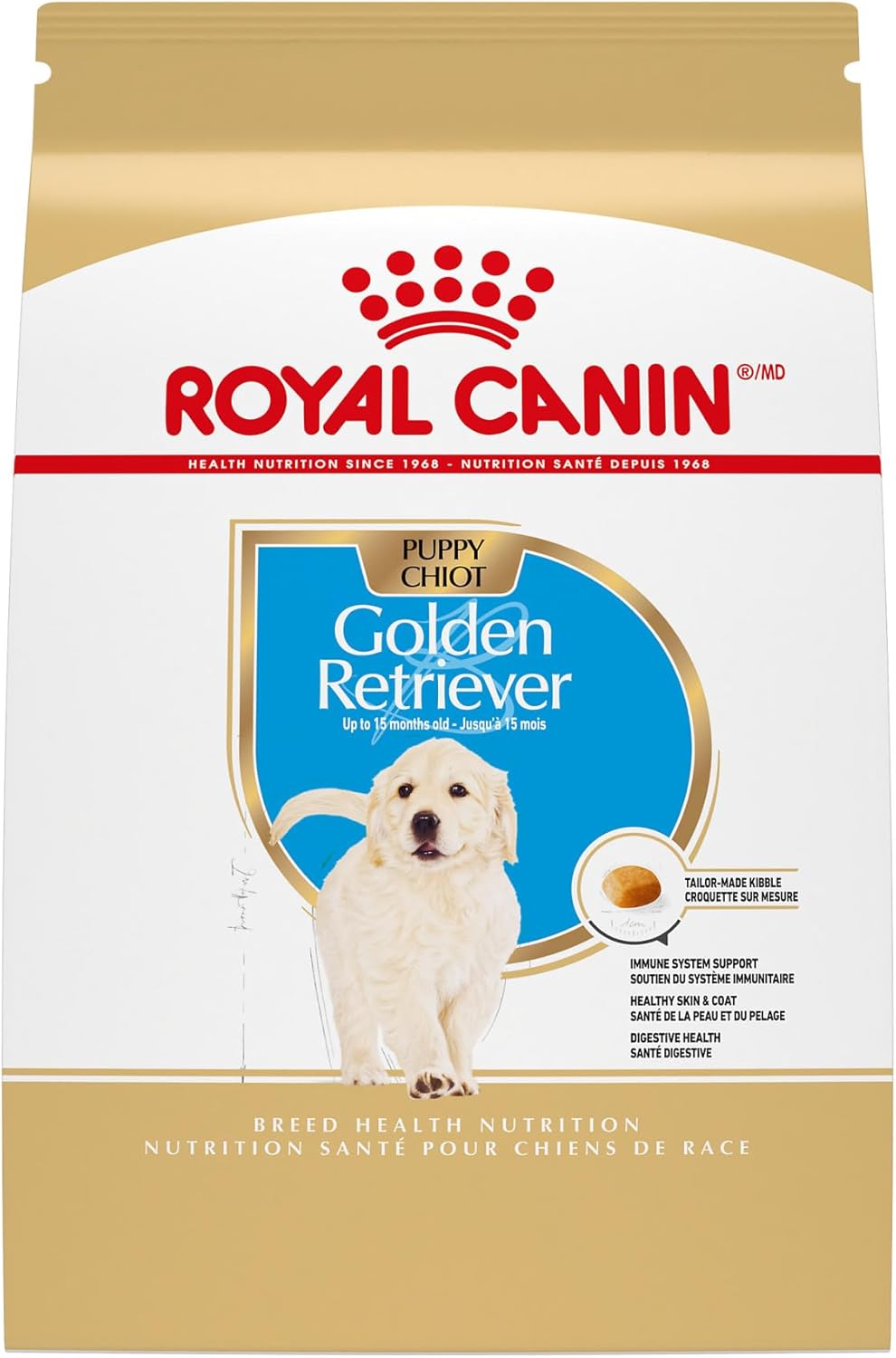
Royal Canin Golden Retriever Puppy 30 lb
Best Overall Food for 4-Month-Old Golden Retriever
| Flavor | Chicken |
|---|---|
| Age Range Description | Puppy |
| Breed Recommendation | Golden Retriever |
| Dog Breed Size | Large |
| Item Form | Pellet |
Royal Canin Golden Retriever Puppy is a breed-specific dry kibble designed for Golden Retriever puppies from 8 weeks to 15 months. The formula uses a specialized kibble shape made to fit a Golden Retriever puppy's straight muzzle and scissor bite, encouraging chewing and easing intake, while protein, prebiotics, and added antioxidants support digestion and immune development. Omega fatty acids including EPA and DHA plus targeted nutrients like glucosamine and chondroitin support skin, coat condition and joint development in a large-breed growth phase. In daily use it functions as a complete feeding solution for breeders and owners who want a tailored, science-backed diet rather than a generic puppy food. Practical benefits include consistent stool quality from prebiotics and high-quality proteins and easier feeding thanks to the breed-tailored kibble geometry. Limitations to note are the inclusion of some common cereal ingredients and chicken by-product meal in the ingredient list, which may concern owners preferring grain-free or novel-protein formulas, and that this is a large 30 lb bag intended for multi-month feeding rather than trial-sized sampling.
Best for: Owners who want a puppy food specifically formulated for Golden Retrievers and prioritize tailored nutrition to support growth, digestion, immune health, and coat condition.
Less Ideal for: People seeking grain-free diets, novel-protein recipes for food sensitivities, or those who prefer to trial a small bag before committing to a large quantity.
- Breed-specific kibble shape and texture tailored for Golden Retriever puppy bite
- Formulated to support immune development with antioxidants and vitamin E
- Contains prebiotics and high-quality proteins to promote digestive health and stool quality
- Includes EPA and DHA plus skin-and-coat nutrients to support coat condition
- Large 30 lb bag suitable for ongoing feeding of a growing large-breed puppy
- Contains grain ingredients and chicken by-product meal that some buyers avoid
- Large bag size is not convenient for first-time testing or small households
Verdict: The best overall food for a 4-month-old Golden Retriever that balances appropriate puppy nutrition, digestibility, calorie density, and ingredient quality for healthy growth.
Blue Buffalo Baby BLUE Chicken & Rice Puppy Food 4 lb
Best Budget Food for 4-Month-Old Golden Retriever

| Flavor | Chicken & Brown Rice |
|---|---|
| Age Range Description | Puppy |
| Crude Protein | 27.0% min. |
| Crude Fat | 16.0% min. |
| Unit Count | 64 Ounce |
Blue Buffalo Baby BLUE Chicken & Rice Puppy Food is a 4 lb dry kibble made to support healthy growth in puppies with real chicken listed as the first ingredient. It is typically fed as a complete daily diet following the package feeding chart and is suitable for all breeds including large-breed puppies when portioned appropriately. Notable features include DHA and ARA to support brain and eye development, LifeSource Bits—an antioxidant blend chosen by the brand's nutrition team—and a formulation that excludes corn, wheat, soy, and poultry by-product meals. In practice the formula provides a higher protein and fat profile suited to active, growing pups and contains added omega fatty acids for skin and coat health. The main limitations are that this is a standard commercial kibble rather than a specialty limited-ingredient or grain-free diet, and some owners seeking ultra-simple ingredient lists or novel-protein formulas may prefer alternatives. For a budget-conscious buyer wanting a veterinarian-backed, widely available puppy kibble, this offers dependable nutrition in a reasonable package size.
Best for: Owners looking for an affordable, complete puppy kibble that supports growth and development and who prioritize established nutrition standards over specialty ingredient constraints.
Less Ideal for: Families seeking single-protein, limited-ingredient, or prescription puppy diets for food-sensitive pups should consider other options.
- Real deboned chicken is the first ingredient providing quality animal protein
- Includes DHA and ARA to support cognitive and retinal development
- LifeSource Bits supply added vitamins, minerals, and antioxidants
- Formulated without corn, wheat, soy, or poultry by-product meals
- 4 lb bag size may require more frequent repurchasing for large-breed puppies
- Not a limited-ingredient or novel-protein formula for dogs with specific food sensitivities
Verdict: The best budget food for a 4-month-old Golden Retriever that provides complete, safe puppy nutrition and reasonable ingredient quality at a lower price point.
Hill's Science Diet Puppy Chicken & Brown Rice
Best Puppy Formula Food

| Flavor | Chicken & Brown Rice |
|---|---|
| Age Range Description | Puppy |
| Item Form | Pellet |
| Unit Count | 72 Ounce |
| Breed Recommendation | All Breed Sizes |
Hill's Science Diet Puppy Chicken & Brown Rice is a veterinary-formulated dry puppy food designed to support early growth and development. It is typically used as a daily diet for puppies and features a higher protein blend and added DHA from fish oil to support brain and eye development, plus an antioxidant mix for immune support. The formula includes prebiotic fibers and ActivBiome+ ingredients to help digestive health and stool quality, and the kibble is sized for medium-breed mouths. Practical benefits include vet-backed nutrient ratios for growth, recognizable ingredients such as chicken and whole grains, and guidance on feeding amounts printed on the bag. Limitations for value-focused buyers are that this is a premium vet-recommended brand where ingredient lists include grains and some plant proteins rather than limited-ingredient or novel proteins, and larger bags are limited in the provided data which may affect per-pound cost planning for budget-conscious owners. For an English Springer Spaniel puppy needing balanced, AAFCO-appropriate nutrition on a tighter budget, this delivers dependable, growth-focused nutrition without specialty ingredients that drive higher cost.
Best for: Buyers who prioritize complete, vet-supported puppy nutrition and want a reliable formula for a medium-breed pup while keeping ingredient quality reasonable for the price.
Less Ideal for: Owners seeking grain-free, single-protein, or specialty elimination diets for food-sensitive puppies should consider alternative formulas.
- Veterinarian-formulated recipe supporting growth and development
- Includes DHA and fish oil for brain and eye development
- Prebiotic fibers and ActivBiome+ blend to support digestive health
- Antioxidant blend for developing immune system
- Contains common grains and multiple plant proteins rather than limited or novel proteins
- Only one bag size (4.5 lb) is shown in the data which may increase cost per feeding for larger litters
Verdict: The best puppy formula food that contains the right balance of calories, DHA, calcium, and protein to support healthy growth and brain development in young dogs.
Diamond Naturals Large Breed Puppy Lamb & Rice 40 lb
Best High-Protein Food

| Flavor | Lamb & Rice – Puppy |
|---|---|
| Age Range Description | Puppy |
| Breed Recommendation | Large Breeds |
| Special Ingredients | grain-free |
| Unit Count | 640 Ounce |
Diamond Naturals Large Breed Puppy Lamb & Rice is a large-bag dry kibble formulated to support growth in large-breed puppies. It uses real lamb and lamb meal as primary protein sources and includes DHA from salmon oil for brain and vision development, plus added probiotics for digestive and immune support. The formula lists a mix of whole grains, vegetables, fruits, and a suite of vitamins and minerals intended to balance puppy growth while L-carnitine helps support healthy body condition. In practical use the 40 pound bag reduces repurchase frequency for multi-puppy households or owners who prefer buying in bulk, and the inclusion of probiotics and omega fatty acids addresses common puppy digestive and skin/coat needs. Buyers should note this product is breed-size specific for large puppies and is not grain-free despite a “special ingredients” note; also ingredient lists include multiple meals and grains which some owners may avoid for specific dietary plans. The bag format is standard for dry food and will require appropriate storage to maintain freshness once opened.
Best for: Buyers who need a cost-effective, large package of nutritionally complete food for growing large-breed puppies and who prioritize fewer repurchases and digestive support.
Less Ideal for: Owners feeding small-breed puppies, dogs on grain-free or very limited-ingredient diets, or those who prefer single-protein or novel-protein recipes should look elsewhere.
- Real lamb is the first ingredient for a named animal protein source
- Contains DHA (salmon oil) to support brain and vision development
- Added probiotics to support digestive health and immune function
- Large 40 lb bag reduces repurchase frequency for multi-puppy households
- Not grain-free despite some marketing terms
- Formulated specifically for large-breed puppies so not appropriate for small-breed growth needs
Verdict: The best high-protein food for active growing puppies that need extra amino acids and calories to build lean muscle while supporting healthy development.
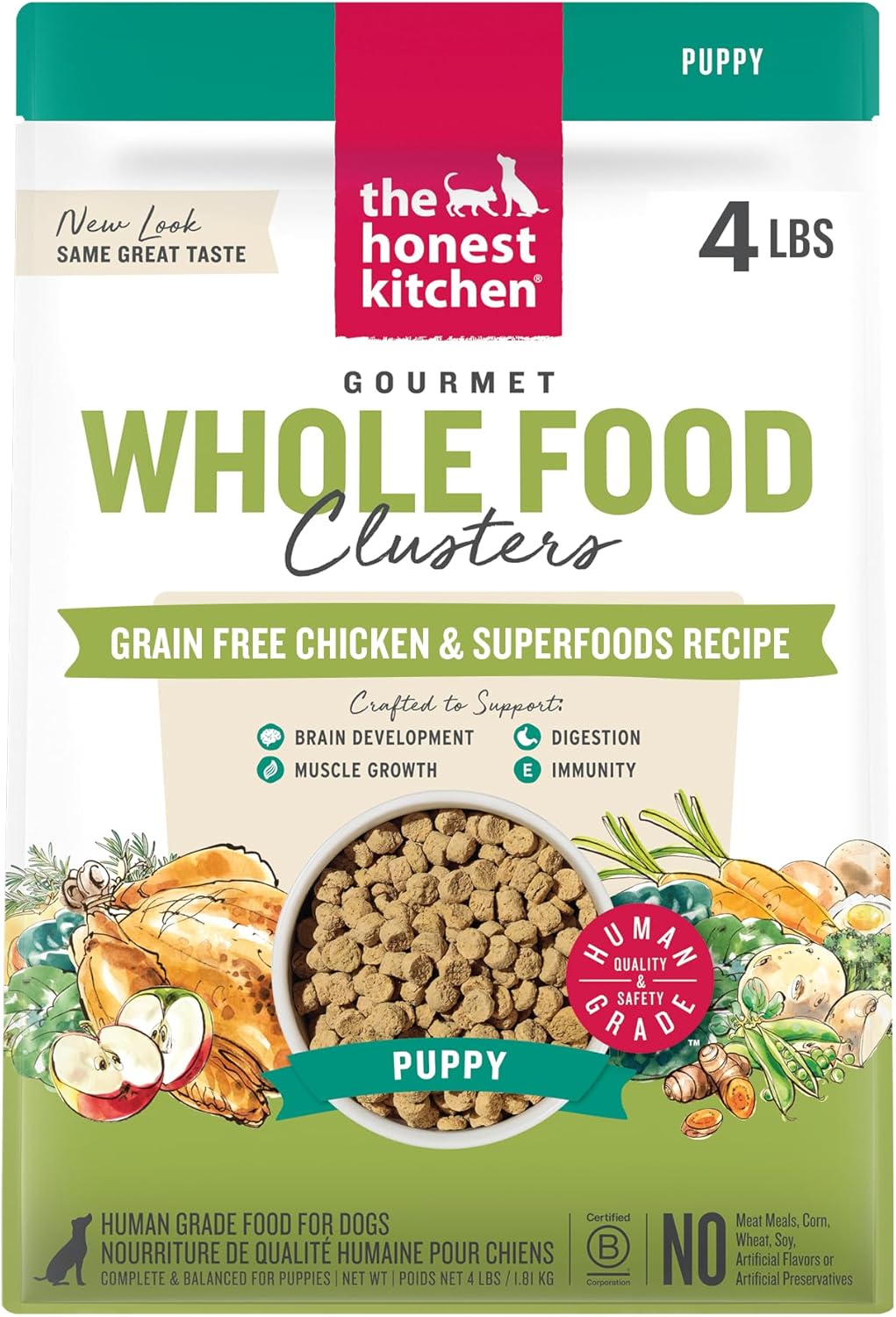
The Honest Kitchen Clusters Puppy 4 lb
Best Grain-Free Food
| Flavor | Chicken & Superfoods |
|---|---|
| Age Range Description | Puppy |
| Item Form | Dry |
| Unit Count | 64 Ounce |
The Honest Kitchen Clusters Puppy is a human-grade, grain-free dry puppy food made from cage-free chicken and whole-food ingredients that are cold-pressed, roasted and gently dehydrated into small clusters. It is typically used as a complete daily meal for puppies, a topper to add fresh-food texture to wet food, or as high-value training rewards thanks to the bite-sized pieces. Notable features include a first-ingredient real protein (cage-free chicken), added probiotics and salmon oil for digestive and brain support, and a production process aimed at preserving nutrients without high-heat extrusion. In practice this delivers a recognizable-ingredient recipe that most puppies find palatable and that supports digestion, skin and coat when fed according to the provided guidelines. Limitations to consider are that the formula is grain-free with many whole-food inclusions rather than a strictly short, minimal-ingredient list, and the product comes in 4 lb packaging which may be more than needed for very small dogs or single-puppy households expecting longer storage; storage and gradual transitions are advised to avoid stomach upset.
Best for: Buyers who prioritize human-grade, recognizable ingredients and want a puppy formula that doubles as tasty training treats and a digestive-supporting main meal for sensitive puppies.
Less Ideal for: Owners who need a very short, single-protein elimination diet or who require tiny trial-size packaging for repeated rotation between formulas.
- Human-grade ingredients with cage-free chicken as the first ingredient
- Cold-pressed and gently dehydrated clusters that preserve flavor and nutrients
- Includes probiotics and salmon oil to support digestion and brain development
- Bite-sized clusters suitable as a complete meal, topper, or training treat
- Not a single-source or extremely short ingredient list despite being clean-label
- 4 lb bag may be large for very small breeds or single-puppy households
Verdict: The best grain-free food for puppies whose caregivers prefer diets without grains while still delivering balanced nutrition and digestible whole-food alternatives.
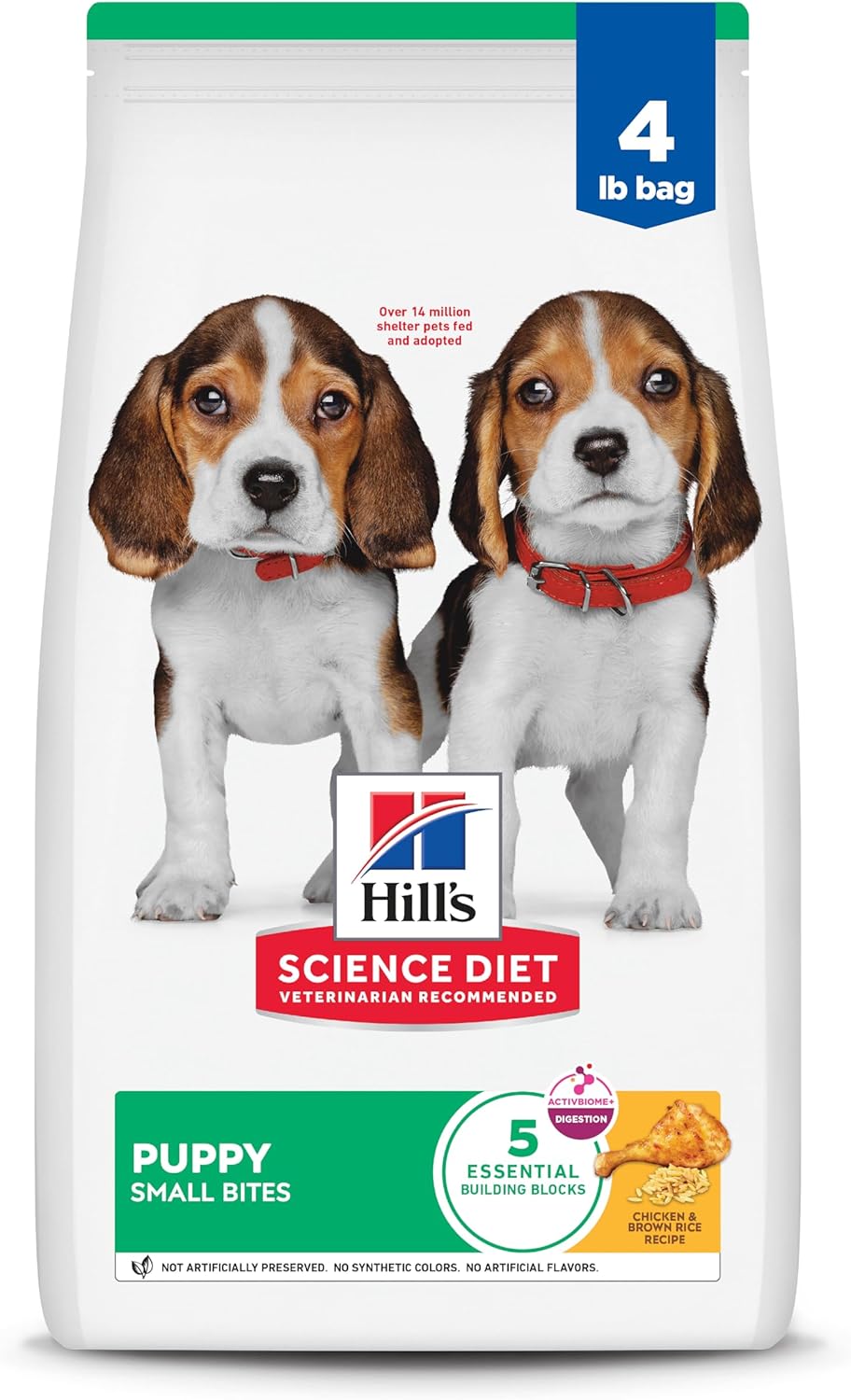
Hill's Science Diet Puppy Small Bites
Best Small-Kibble Food
| Flavor | Chicken & Brown Rice |
|---|---|
| Age Range | Puppy |
| Dog Breed Size | Small |
| Unit Count | 72 Ounce |
Hill's Science Diet Puppy Small Bites is a dry puppy food made with small kibble sized for puppies and small-breed mouths and formulated to support growth, digestion, and developing systems. It is typically fed as a daily diet for puppies and can be introduced gradually over a week when switching foods. Notable features include chicken as the primary ingredient, brown rice and whole grains for energy, a blend of vitamins and minerals to support muscle, bone, brain and eye development, and ActivBiome+ prebiotic fibers to support gut microbiome health. Practical benefits are easy chewing for small mouths, nutrient balance targeted at growing puppies, and guidance from feeding charts on the package. Limitations are that the ingredient list includes common allergens like chicken and whole grains, so it may not suit puppies with specific protein or grain sensitivities, and the formula is a standard puppy recipe rather than a limited-ingredient or hypoallergenic prescription diet for pronounced skin sensitivities. The kibble size and nutrient focus make it a convenient everyday option for small-breed puppies that tolerate chicken and grain ingredients.
Best for: Buyers looking for an everyday growth-focused puppy kibble sized for small mouths and aimed at supporting development and digestive health.
Less Ideal for: Puppies with diagnosed food allergies, persistent skin reactions, or owners seeking a veterinary hypoallergenic or grain-free prescription diet should consider specialized alternatives.
- Small, bite-sized kibble designed for puppies and small breeds
- Formulated with DHA and fish oil to support brain and eye development
- Includes prebiotic fiber blend (ActivBiome+) to support digestion
- Balanced vitamins and minerals to support bone, muscle and immune development
- Contains common protein and grain ingredients that can trigger sensitivities in some puppies
- Not a limited-ingredient or veterinary hypoallergenic prescription formula
Verdict: The best small-kibble food for a 4-month-old Golden Retriever that makes chewing easier, reduces choking risk, and helps with comfortable eating for growing teeth.
Solid Gold Large Breed Bison Puppy Food 22 lb
Best Premium Food

| Flavor | Large Breed Puppy Bison |
|---|---|
| Item Form | Kibble |
| Special Ingredients | bison, superfoods, probiotics, DHA |
| Age Range Description | Puppy |
| Allergen Information | Wheat Free |
Solid Gold Large Breed Bison Puppy Food is a dry kibble aimed at supporting growth, digestion, and development in large-breed puppies. The formula lists pasture-raised bison as the first ingredient and includes added蛋 DHA, omega-rich oils, and calcium for bone and brain development, while whole grains and fiber sources plus probiotics help stool quality and gut health. In practice you would feed measured portions from the bag as a complete meal for active puppies such as golden retrievers, pairing it with fresh water and adjusting serving size as they grow. Notable practical benefits include a protein-forward recipe to support muscle growth, probiotics for sensitive stomachs, and whole-food additions like blueberries and pumpkin for micronutrients. Limitations are that the kibble is a large-breed-specific formula so it may not suit small-breed puppies or adult maintenance diets, and some dogs with grain-free preferences might avoid the brown rice and barley. Packaging is a standard bag format that requires dry, cool storage to keep probiotics viable.
Best for: Buyers of large-breed puppies who want a protein-dense dry food that supports robust muscle and bone development while prioritizing digestive health.
Less Ideal for: Owners seeking a grain-free formula, small-breed puppy recipes, or a long-term adult maintenance diet should consider other options.
- Real pasture-raised bison as first ingredient for high-quality protein
- Includes DHA and calcium targeted to large-breed puppy development
- Contains probiotics and prebiotic fiber for digestive support
- Whole grains and superfoods provide additional vitamins and antioxidants
- Contains grains so not suitable for grain-free feeding plans
- Formulated specifically for large-breed puppies, not for small breeds or adult dogs
Verdict: The best premium food for owners willing to pay more for higher-quality protein sources, rigorous safety standards, and more appetizing ingredient lists for their puppy.
Choosing the Right Dog Food 4 Month Old Golden Retriever: Key Factors to Consider
Protein Quality and Amount
Protein supplies the amino acids needed for muscle growth and tissue repair during a rapid growth phase. For a 4 month old golden retriever, prioritize foods that list a named animal protein source high in essential amino acids rather than vague "meat" or unspecified by-products.
The percentage of crude protein matters, but digestibility is equally important because highly digestible proteins provide usable amino acids without overburdening the digestive tract. Look for formulations that balance adequate protein to support lean mass with moderating levels that avoid excessive growth velocity, which can stress developing joints.
Calcium, Phosphorus, and Mineral Balance
Bone growth during the puppy months is rapid and sensitive to mineral balance. The calcium-to-phosphorus ratio is critical; a ratio close to the recommended range supports proper bone mineralization.
Too much calcium or an improper ratio can contribute to abnormal bone development in large-breed puppies. Choose foods formulated for growing large-breed puppies where the mineral balance is specifically controlled, and follow the feeding guidelines to avoid overfeeding minerals through supplemental sources.
Energy Density and Fat
Puppies need more calories per pound of body weight than adult dogs, but energy density should be matched to activity level and growth goals. Foods with moderate to high fat provide concentrated energy and help support skin and coat health, but excessively rich diets can promote overly rapid weight gain.
Consider your puppy's activity level and adjust portion sizes rather than choosing an overly calorie-dense formula. A food that balances energy with controlled growth support is the best approach for a 4 month old golden retriever.
Digestibility and Gastrointestinal Tolerance
A puppy's digestive system is still developing at four months, so highly digestible ingredients help minimize stool volume and reduce the risk of loose stools or vomiting. Look for formulas with easily digestible proteins and carbohydrates, probiotics or prebiotic fibers, and minimal hard-to-digest fillers.
Consistent stool quality is a sign the diet suits your puppy. When switching foods, do so gradually over a week to help the digestive system adapt and monitor stool consistency as an early indicator of tolerance.
Essential Fatty Acids and Cognitive Support
Docosahexaenoic acid (DHA) and other omega-3 fatty acids contribute to brain and vision development in young puppies. Adequate omega-6 fatty acids also support skin and coat condition.
Ensure the food includes sources of these fatty acids or is formulated with added DHA. While not the sole determinant of cognitive outcomes, including these nutrients during the growth phase supports developmental processes when neural connections are forming rapidly.
Kibble Size, Texture, and Feeding Practicality
Kibble size and texture matter for a large-breed puppy learning to chew and manage food. Appropriately sized kibble reduces choking risk and encourages efficient chewing. Larger kibble can slow intake and help prevent gulping, while smaller pieces may be easier for very young puppies still mastering chewing.
Also consider packaging, recommended daily feeding amounts for the 4 month life stage, and whether the food is easy to mix with water or wet toppers if your puppy needs a softer texture during teething or transitional periods.
How Much Should I Feed a 4 Month Old Golden Retriever Each Day?
Daily feeding amounts depend on your puppy's current weight, activity level, and the food's calorie density. Use the feeding chart on the food label as a starting point, then monitor body condition and growth. Ideally you should be able to feel but not see the ribs and your puppy should have a noticeable waist when viewed from above.
Split the daily ration into multiple meals—typically three at this age—to maintain steady blood sugar and avoid overeating in a single sitting. Adjust portions every few weeks as your puppy grows and consult your veterinarian if growth seems too rapid or too slow.
- Start with label guidelines adjusted for activity
- Feed three meals per day at four months
- Weigh and body-condition check every 2–4 weeks
When Should I Transition to a Large-breed Puppy Formula Versus a Regular Puppy Food?
Large-breed puppy formulas are designed with controlled calcium levels and energy densities to slow the pace of skeletal growth and reduce the risk of developmental orthopedic issues. If your golden retriever is expected to be a large adult, a formula formulated for large-breed puppies is usually appropriate from weaning through the growth phase.
If you are unsure about your puppy's adult size or have special health concerns, consult your veterinarian before choosing a formula. The decision is most important during the early months of rapid growth, so prioritize a nutritionally balanced option tailored to large-breed needs when possible.
- Large-breed formulas control mineral levels
- Choose large-breed formulation if adult size will be large
- Consult a vet for uncertain growth projections
How to Switch Foods Without Upsetting Your Puppy's Stomach
Introduce a new food gradually over 7 to 10 days by mixing increasing amounts of the new food with the current food. Start with about 25% new food for the first two days, then 50%, then 75%, and finally 100% if your puppy tolerates each step. Watch for changes in appetite, stool consistency, and energy levels.
If loose stools or vomiting occur, slow the transition or revert to the previous diet and consult your veterinarian. Some puppies may need an even slower ramp-up, while others adapt quickly. A steady, staged transition minimizes digestive stress and helps you detect intolerance early.
- Mix new food gradually over 7–10 days
- Monitor stool and appetite during the transition
- Slow down or stop if gastrointestinal signs appear
Are Wet Foods or Toppers Useful for Picky 4 Month Old Puppies?
Wet foods and toppers can increase palatability and encourage intake in picky puppies or those with reduced appetite. Use them sparingly to avoid masking the flavors of the primary diet and to keep calorie counts manageable. A small amount of warm water or a spoonful of wet food can make kibble more appealing during teething or temporary appetite dips.
Be cautious with feeding frequency and portion control when adding toppers, and choose options formulated for puppies to avoid unbalanced nutrient intake. If pickiness continues, investigate underlying causes such as dental discomfort, parasites, or illness with your veterinarian.
- Use toppers briefly to encourage eating
- Keep portion control in mind to avoid excess calories
- Consult a vet if pickiness persists
Signs the Food Is Working Well for Your Puppy
Healthy indicators include steady, proportional weight gain, consistent energy levels appropriate for a puppy, and formed stools of moderate volume. A shiny coat, healthy skin, and normal play behavior are additional signs the diet is meeting nutritional needs.
If your puppy shows persistent loose stools, vomiting, excessive gas, poor weight gain, or lethargy, reassess the diet and consult your veterinarian. Minor adjustments to portion sizes or switching to a more digestible formulation are common solutions.
- Look for steady growth and normal activity
- Monitor stool consistency and coat condition
- Seek veterinary advice for persistent problems
How We Chose the Best Dog Food 4 Month Old Golden Retriever
We selected foods that meet the specific growth and developmental needs of a 4 month old golden retriever using a consistent, puppy-focused set of editorial filters. First, we required formulations designed for large-breed puppies or clearly labeled for the growth phase so nutrient ratios support controlled bone growth. Second, we prioritized protein sources with complete amino acid profiles and moderate fat levels to fuel activity without promoting excessive weight gain. Third, digestibility and ingredient quality were key: easily digested protein and carbohydrate sources help reduce stool volume and gastrointestinal upset during the rapid growth window. Fourth, we evaluated calcium and phosphorus levels as well as the calcium-to-phosphorus ratio to align with healthy skeletal development. Fifth, practical considerations such as kibble size, available feeding guidelines for the 4 month life stage, and the presence of essential micronutrients like DHA for brain and vision development were factored in. We excluded diets intended for small breeds, adult maintenance, weight loss, or therapeutic medical conditions since those do not match the nutritional goals of a growing large-breed puppy. The list focuses on complete and balanced puppy foods appropriate for steady, healthy development.
Our full evaluation process is outlined in our review methodology.
FAQ
Can I give adult dog food to a 4 month old golden retriever?
Adult dog food usually lacks the higher protein, fat, and micronutrient levels needed for growth. Feeding an adult maintenance diet to a growing puppy can impair optimal development, so choose a formula labeled for growth or large-breed puppies until your veterinarian advises transitioning.
Is it necessary to avoid all treats while my puppy is four months old?
Treats are fine in moderation but should be counted toward daily calorie intake. Use small training treats and choose options appropriate for puppies to avoid disrupting balanced nutrition. Reserve high-calorie extras for occasional rewards rather than frequent snacks.
How often should I weigh my 4 month old puppy?
Weigh your puppy every 2 to 4 weeks to monitor growth trends. Regular weight checks help you adjust portions to maintain steady gains and detect potential growth problems early. Your veterinarian can help interpret the numbers and offer tailored feeding advice.
Does my puppy need supplements like glucosamine or calcium?
Most complete puppy foods formulated for large-breed growth already balance calcium and other minerals and include ingredients to support joint health. Unsupervised supplementation can unbalance nutrients, so only add supplements on your veterinarian's recommendation based on specific health concerns.
When is it appropriate to switch from three meals to two meals a day?
Many puppies can shift from three meals to two meals between four and six months, depending on appetite, behavior, and digestive stability. Observe your puppy's comfort with larger meals and consult your veterinarian before making a permanent change to ensure caloric needs remain met.
Final Verdict
Prioritize a complete, large-breed puppy formulation that balances protein, controlled mineral levels, and digestibility to support steady growth in a 4 month old golden retriever. Monitor weight, stool quality, and coat condition, and adjust portions rather than changing to a richer formula if growth appears too rapid. Ultimately, focus on nutrient balance and feeding consistency. If you are uncertain about growth rate or specific nutrient needs, consult your veterinarian to refine the feeding plan and make confident choices for long-term joint and overall health.

