

Feeding a 4-month-old puppy the right food matters more than convenience. At this age puppies are growing rapidly, developing bones and muscles, and refining digestive tolerance, so food choices can affect energy, stool quality, and long-term health. This guide focuses on top-formula puppy foods appropriate for a 4-month-old puppy and explains why each type made the shortlist. You will find options that prioritize complete nutrition, protein sources, and gentle digestibility. We evaluated nutrient balance, ingredient quality, and feeding practicality to produce a concise set of top picks and to help you choose the right food for your puppy's growth stage.
Top Picks at a Glance
| Best Overall Food for 4-Month-Old Puppies A well-balanced puppy formula that covers growth, digestibility, and taste | Hill's Science Diet Puppy Small Bites |  |
| Best Budget Food for 4-Month-Old Puppies A low-cost puppy formula that still meets basic growth and nutrition needs | Pedigree Puppy Dry Dog Food 3.5 lb |  |
| Best Premium Food A higher-end puppy formula with upgraded ingredients and manufacturing standards | ORIJEN Small Breed Puppy 4 lb |  |
| Best High-Protein Food A formula with elevated protein to support muscle growth and active puppies | Taste of the Wild High Prairie Puppy 5 lb |  |
| Best Food for Sensitive Stomachs Gentler recipes with simple or limited ingredients to reduce digestive upset | Hill's Science Diet Puppy Sensitive Stomach & Skin |  |
| Best Small-Breed Food Smaller kibble and nutrient profile tailored to tiny puppy metabolisms | Royal Canin X-Small Puppy Dry Food 3 lb |  |
| Best Wet Food Canned or pouched puppy food for added moisture and palatability | Cesar Puppy Classic Loaf 3.5 oz |  |
Hill's Science Diet Puppy Small Bites
Best Overall Food for 4-Month-Old Puppies
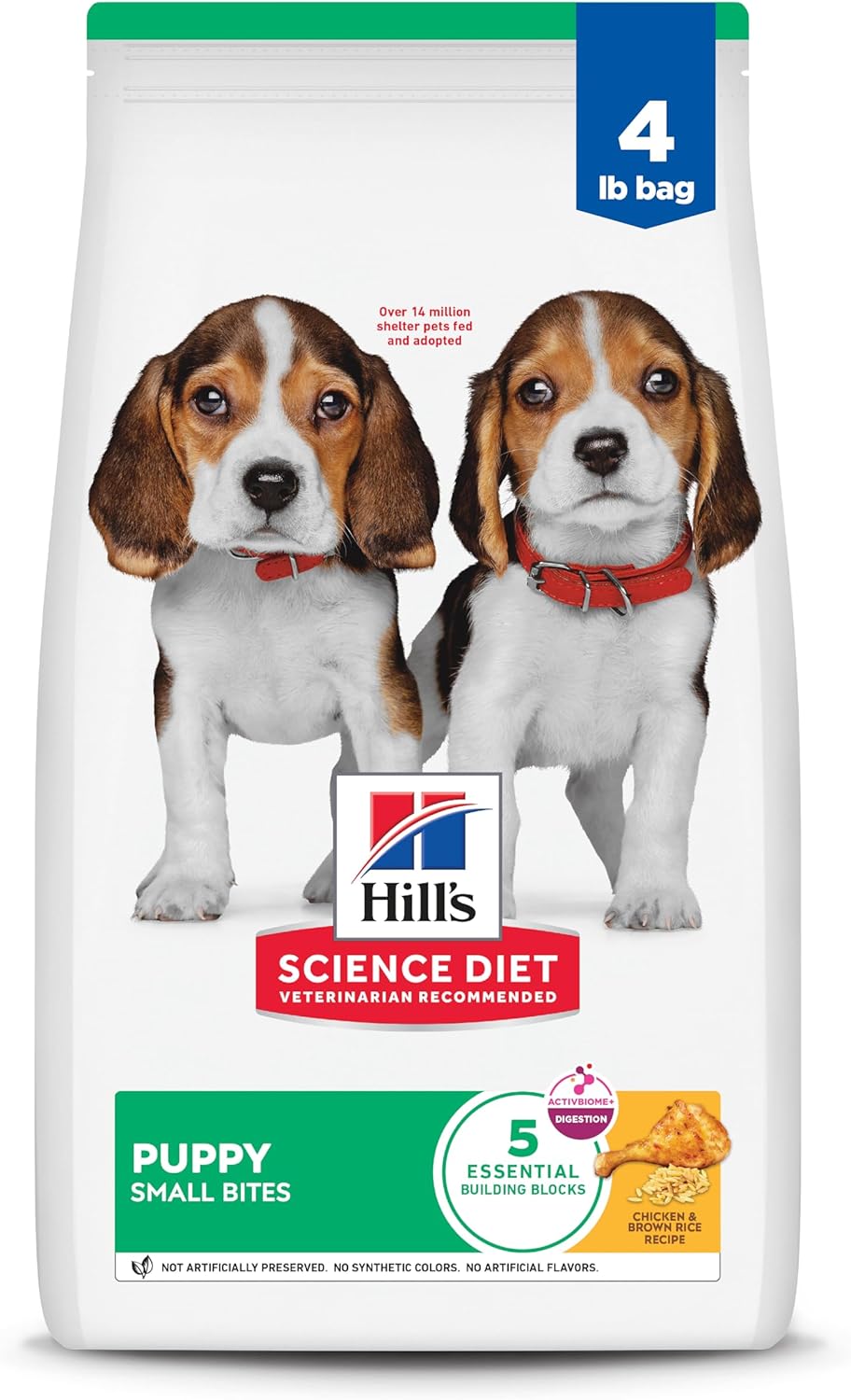
| Flavor | Chicken & Brown Rice |
|---|---|
| Age Range | Puppy |
| Dog Breed Size | Small |
| Unit Count | 72 Ounce |
Hill's Science Diet Puppy Small Bites is a dry puppy food made with small kibble sized for puppies and small-breed mouths and formulated to support growth, digestion, and developing systems. It is typically fed as a daily diet for puppies and can be introduced gradually over a week when switching foods. Notable features include chicken as the primary ingredient, brown rice and whole grains for energy, a blend of vitamins and minerals to support muscle, bone, brain and eye development, and ActivBiome+ prebiotic fibers to support gut microbiome health. Practical benefits are easy chewing for small mouths, nutrient balance targeted at growing puppies, and guidance from feeding charts on the package. Limitations are that the ingredient list includes common allergens like chicken and whole grains, so it may not suit puppies with specific protein or grain sensitivities, and the formula is a standard puppy recipe rather than a limited-ingredient or hypoallergenic prescription diet for pronounced skin sensitivities. The kibble size and nutrient focus make it a convenient everyday option for small-breed puppies that tolerate chicken and grain ingredients.
Best for: Buyers looking for an everyday growth-focused puppy kibble sized for small mouths and aimed at supporting development and digestive health.
Less Ideal for: Puppies with diagnosed food allergies, persistent skin reactions, or owners seeking a veterinary hypoallergenic or grain-free prescription diet should consider specialized alternatives.
- Small, bite-sized kibble designed for puppies and small breeds
- Formulated with DHA and fish oil to support brain and eye development
- Includes prebiotic fiber blend (ActivBiome+) to support digestion
- Balanced vitamins and minerals to support bone, muscle and immune development
- Contains common protein and grain ingredients that can trigger sensitivities in some puppies
- Not a limited-ingredient or veterinary hypoallergenic prescription formula
Verdict: The best overall food for 4-month-old puppies balances appropriate calories, protein, vitamins, and digestibility to support healthy growth and everyday energy.
Pedigree Puppy Dry Dog Food 3.5 lb
Best Budget Food for 4-Month-Old Puppies

| Flavor | Steak & Vegetable |
|---|---|
| Age Range Description | Puppy |
| Item Form | Dry Kibble |
| Unit Count | 56 Ounce |
| Target Species | Dog |
Pedigree Puppy Dry Dog Food is a traditional, affordable puppy kibble formulated to support growth and basic developmental needs. It is designed for daily feeding and includes high protein sources, DHA, calcium and phosphorus to support muscle, brain and bone development, plus a mix of vitamins and minerals to support immune health. The bag works well for routine feeding at home and can be served dry or softened with water for younger puppies. Ingredients include animal meals, chicken by-product meal and grains, so digestibility and ingredient quality are typical for value-focused formulas rather than premium grain-free or limited-ingredient diets. Practical benefits are straightforward: widely available, familiar feeding guidelines for different puppy weights, and added micronutrients like DHA. Important limitations are that the formula contains multiple common allergens and colored additives, and it is not aimed at owners seeking grain-free, single-protein, or specialty ingredient lists for sensitive pups.
Best for: Buyers prioritizing low-cost, complete puppy nutrition who want a straightforward, easy-to-feed formula for routine daily meals.
Less Ideal for: Owners of puppies with food sensitivities, those who need grain-free or single-protein diets, or buyers seeking premium ingredient lists and novel proteins.
- Formulated with DHA and minerals to support brain and bone development
- Complete and balanced for daily puppy feeding with established feeding guidelines
- Includes high-protein sources to support muscle growth
- Versatile serving—can be fed dry or softened with water for younger puppies
- Contains multiple common allergens and artificial color additives
- Uses by-product meals and grains rather than premium single-source proteins
Verdict: The best budget food for 4-month-old puppies provides essential nutrients and adequate calories at a lower price while maintaining acceptable digestibility and safety.
ORIJEN Small Breed Puppy 4 lb
Best Premium Food

| Weight | 4 Pound |
|---|---|
| Flavor | Grain Free Small Breed Puppy Recipe |
| Item Form | Dry Kibble |
| Unit Count | 64 Ounce |
| Target Species | Dog |
ORIJEN Small Breed Puppy is a 4 lb bag of grain-free dry kibble designed to meet the nutritional needs of small breed puppies using a WholePrey approach. The formula delivers a high proportion of animal ingredients including fresh chicken, turkey, wild-caught fish and organs, which provide concentrated protein, natural vitamins and minerals to support muscle and bone development. Kibble is small and nutrient-dense for easy chewing by tiny mouths, and the recipe includes EPA and DHA from fish to support brain development. Added fiber, prebiotics and probiotics target digestive health, while a mix of fruits and vegetables supplies antioxidants and micronutrients. Because it is grain free and high in animal content, this food is well suited for owners prioritizing premium sourcing and nutrient density, but it may be richer than needed for less active puppies or those requiring a grain-inclusive diet for specific sensitivities. Expect to follow the transition guidelines on the package to avoid stomach upset when switching foods.
Best for: Owners seeking a top-tier, nutrient-dense puppy diet with carefully sourced animal ingredients and a focus on long-term development for small-breed puppies.
Less Ideal for: Owners who prefer grain-inclusive diets, have puppies with specific carbohydrate tolerances, or want the lowest-calorie option for very sedentary pups should consider alternatives.
- High ratio of fresh and raw animal ingredients for concentrated protein and natural nutrients
- Small, nutrient-dense kibble sized for small breed puppy mouths
- Includes EPA and DHA from multiple fish sources to support brain development
- Formulated with prebiotics, probiotics and fiber to aid digestive health
- Made with a variety of whole fruits, vegetables and functional botanicals for antioxidant support
- Grain-free, very high animal-protein formula may be excessive for lower-activity puppies or those needing grain-inclusive diets
- Higher nutrient density can require careful portion control to avoid overfeeding
Verdict: The best premium food is for owners willing to pay more for superior ingredient quality, targeted nutrition, and often added functional benefits like joint support or novel proteins.
Taste of the Wild High Prairie Puppy 5 lb
Best High-Protein Food
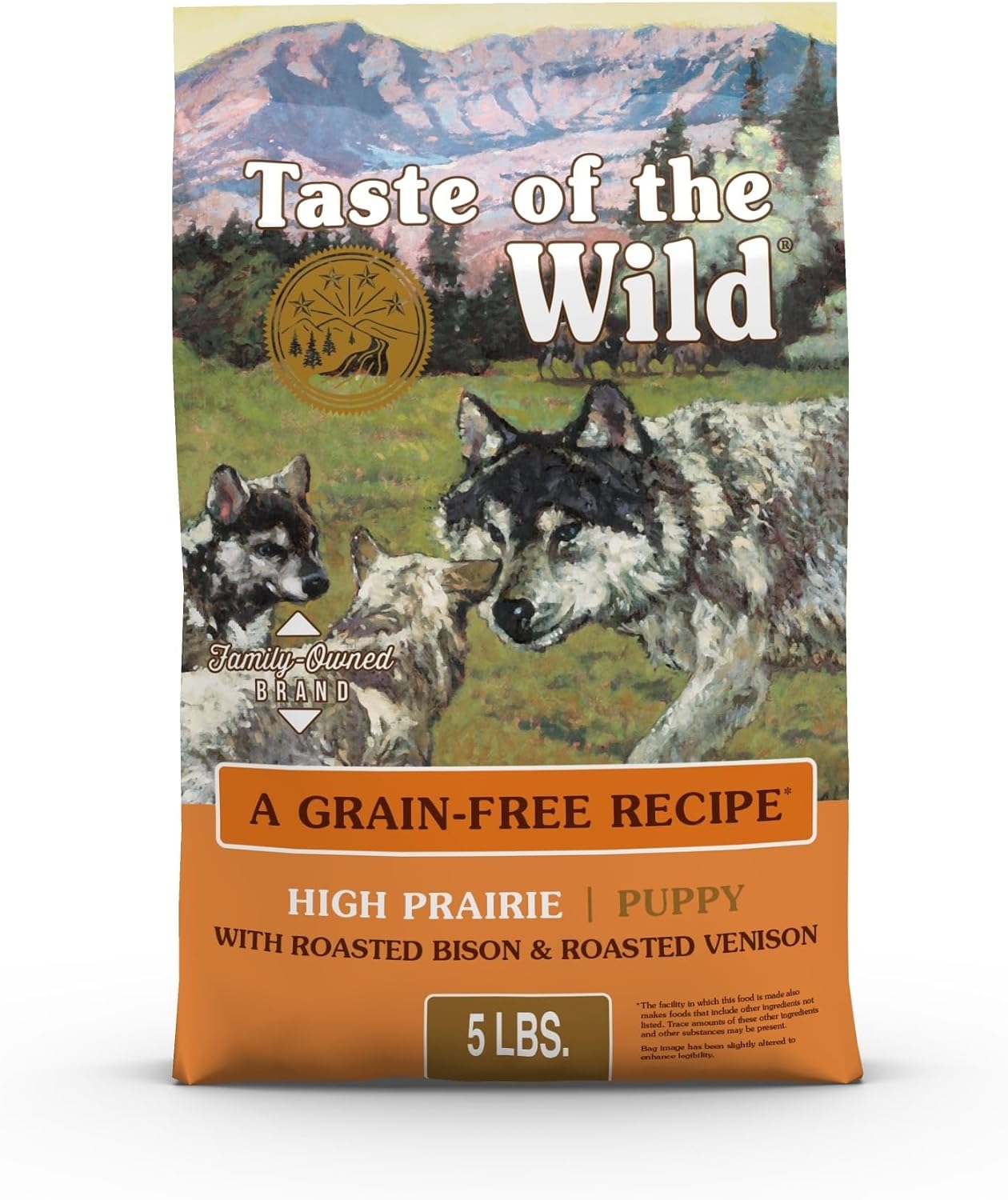
| Flavor | Roasted Bison & Roasted Venison |
|---|---|
| Crude Protein | 28.0% minimum |
| Crude Fat | 17.0% minimum |
| Unit Count | 80 Ounce |
Taste of the Wild High Prairie Puppy is a grain-free dry kibble built around real roasted meats (bison and venison) and a 28% minimum crude protein level to support muscle development in growing dogs. It is typically fed as a complete diet for puppies, pregnant or nursing mothers, and active young dogs that need concentrated calories and higher protein. The formula includes salmon oil for DHA, omega fatty acids for skin and coat, and a proprietary probiotic blend to support digestion. Practical benefits include high protein from multiple animal sources, added fatty acids for energy and development, and fruits and vegetables for antioxidant support. Because it is grain-free and relatively rich in protein and fat, it suits puppies with high energy needs but may be more calorically dense than required for sedentary or less active pups. Also, the use of multiple legumes and novel proteins may not be appropriate for dogs with specific sensitivities. Feed amounts should be adjusted by age and activity and offered with fresh water.
Best for: Puppy owners who need a nutrient-dense, high-protein kibble for active growth, performance or for nursing mothers seeking extra calories and muscle support.
Less Ideal for: Owners of low-activity puppies, dogs on restricted-calorie plans, or pups with known sensitivities to legumes or novel proteins should consider other diets.
- High protein (28% minimum) to support muscle growth
- Real roasted meats listed first for species-appropriate protein
- Proprietary probiotic blend to aid digestion and gut health
- Includes DHA and omega fatty acids for brain and coat development
- Grain-free formula with fruits and vegetables for antioxidants
- Calorie-dense formulation may be excessive for low-activity puppies
- Contains legumes and multiple novel ingredients that can trigger sensitivities in some dogs
Verdict: The best high-protein food is designed for growing or active puppies that need extra amino acids and caloric density to support healthy muscle and development.
Hill's Science Diet Puppy Sensitive Stomach & Skin
Best Food for Sensitive Stomachs

| Flavor | Salmon & Brown Rice |
|---|---|
| Age Range Description | Puppy |
| Item Form | Dry Food |
| Unit Count | 64 Ounce |
| Animal Food Diet Type | Limited Ingredient |
Hill's Science Diet Puppy Sensitive Stomach & Skin is a dry puppy formula designed to reduce digestive upsets while supporting skin and coat during growth. It is used as an everyday puppy food or as a transitional diet when pups have mild stomach sensitivity; feeding instructions on the bag guide gradual switching. The recipe lists salmon as the first ingredient and includes prebiotic fiber to support a balanced gut microbiome, plus DHA from fish oil for brain and eye development and vitamin E and omega fatty acids for skin health. Practical benefits include easier digestion for sensitive puppies, nutrients targeted at immune and cognitive development, and a single-source fish protein focus that can simplify ingredient tracking. Limitations are that it is a dry kibble so dogs that require wet food or very limited-ingredient veterinary prescriptions may need other options, and the formula still contains multiple grains and added ingredients that some owners avoiding certain grains or novel-protein approaches might not prefer.
Best for: Buyers who prioritize a vet-recommended, digestive-friendly everyday puppy food that also supports skin and coat health for growing dogs.
Less Ideal for: Owners seeking a strict novel-protein, grain-free, or veterinary-prescription elimination diet should consider specialized formulas instead.
- Prebiotic fiber to support gut microbiome and help reduce occasional digestive upset
- Salmon is the first ingredient, providing a high-quality fish protein and DHA for development
- Added vitamin E and omega fatty acids to nourish skin and promote a healthy coat
- Clinically proven antioxidants including vitamins C and E to support immune health
- Contains multiple grains and shared protein sources, so not a novel-protein or grain-free prescription option
- Dry kibble format may not suit puppies needing canned diets or strict veterinary therapeutic feeds
Verdict: The best food for sensitive stomachs uses easy-to-digest proteins, limited or novel ingredients, and a gentle formulation to minimize vomiting, gas, and loose stools.
Royal Canin X-Small Puppy Dry Food 3 lb
Best Small-Breed Food

| Age Range | Puppy 2 to 10 months |
|---|---|
| Breed Size Recommendation | X-Small / Small breeds |
| Item Form | Kibble |
| Flavor | Chicken & Vegetable |
| Unit Count | 48 Ounce |
Royal Canin X-Small Puppy is a dry kibble made specifically for extra-small breed puppies, with a crunchy, tiny kibble designed to be easy for very small mouths to pick up and chew. It is intended for puppies 2 to 10 months with an expected adult weight under about 8 pounds and is used as a daily complete diet or mixed with Royal Canin wet puppy formulas for texture variety. The formula highlights DHA and omega-3s for brain development, antioxidants for immune support, and a blend of prebiotics and digestible proteins to promote gut health. Practical benefits include portion-sized nutrition tailored to high energy needs during growth and a kibble texture that can help dental health by encouraging chewing. Limitations are that it is sized and balanced for extra-small breeds only, so growing puppies expected to exceed the target adult weight will need a different formula, and the ingredient list includes grains and by-product meal which some buyers may avoid. The 3 lb bag is convenient for trialing a Westie puppy but may require more frequent repurchase than larger bags for multi-puppy households.
Best for: Owners of West Highland Terrier puppies and other very small-mouthed breeds who prioritize kibble size and targeted growth-stage nutrition to make feeding and chewing comfortable.
Less Ideal for: Owners whose puppies are expected to exceed the formula's target adult weight or buyers seeking grain-free or novel-protein ingredient lists should consider alternative formulations.
- Kibble sized and shaped for very small mouths to make eating easier for Westie puppies
- Contains DHA and omega-3 fatty acids to support brain development
- Includes prebiotics and highly digestible proteins to promote healthy digestion
- Antioxidants like vitamins E and C to support immune system development
- Available in a 3 lb bag that is practical for testing or small-breed households
- Formulation uses poultry by-product meal and grains, which some owners prefer to avoid
- Sized specifically for extra-small breeds so not suitable if the puppy will grow beyond the target adult weight
Verdict: The best small-breed food features appropriately sized kibble, concentrated nutrition, and calorie control for small puppies with faster metabolisms and smaller mouths.
Cesar Puppy Classic Loaf 3.5 oz
Best Wet Food
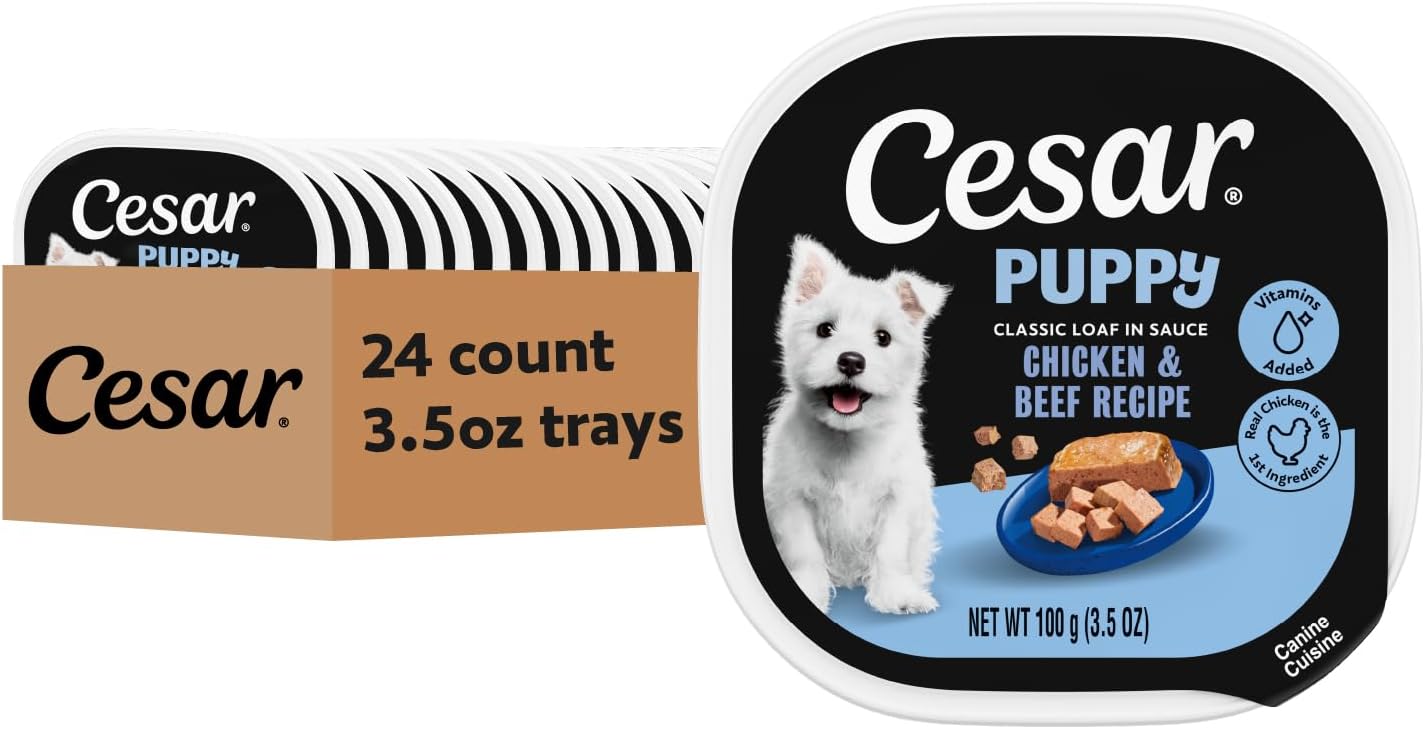
| Flavor | Chicken & Beef |
|---|---|
| Age Range Description | Puppy |
| Item Form | Wet |
| Unit Count | 24 Count |
Cesar Puppy Classic Loaf in Sauce comes in single-serve 3.5 oz trays designed for easy portioning and everyday puppy feeding. Each tray is slow-cooked with chicken as the first ingredient and includes added nutrients like calcium and potassium to support growth and digestive health. The peel-away trays make serving and cleanup simple, and the loaf-in-sauce texture is soft and palatable for small mouths and picky eaters. Because these are single-serve portions, they help reduce waste and make it easy to follow the feeding guidelines by weight and age. Limitations include that small 3.5 oz trays may require multiple portions per feeding for larger or fast-growing puppies, and the ingredient list contains meat by-products and some common thickeners and preservatives, which some owners may want to avoid. Overall, this format suits owners who want convenience and controlled single meals while feeding a puppy a wet, chicken-forward diet.
Best for: Puppy owners who prioritize fresh single-serve portions and simple portion control for everyday wet feeding.
Less Ideal for: Owners of larger or very fast-growing puppies who need larger single servings or those seeking a limited-ingredient or grain-free wet formula.
- Single-serve peel-away trays for easy serving and minimal waste
- Real chicken listed as the #1 ingredient for protein-focused feeding
- Formulated to be complete and balanced for puppies with added essential nutrients
- Soft loaf texture in sauce is easy for small puppies to eat
- Small 3.5 oz portions may require multiple trays per meal for larger puppies
- Contains meat by-products and some added thickeners and preservatives
Verdict: The best wet food delivers higher moisture and strong palatability, making it ideal for picky eaters, mixing with dry rations, or boosting hydration safely.
Choosing the Right Dog Food 4 Month Old Puppy: Key Factors to Consider
Guaranteed Nutrient Profile and Calorie Density
Puppies at four months need higher calorie and nutrient density than adult dogs because they are still building muscle and bone. Check the guaranteed analysis for crude protein, fat, and caloric content per cup or per kilogram. Adequate protein supports lean tissue growth while appropriate calorie density prevents underfeeding or excessive weight gain.
Too-low calorie density can force you to feed large volumes that stress digestion and create nutrient imbalances. Conversely, overly calorie-dense formulas can cause too-rapid weight gain if portions are not adjusted. Choose a food that clearly states it is formulated for growth and provides feeding guidelines tied to your puppy's current and expected adult weight.
Protein Quality and Source
The type and quality of protein affect muscle development and digestibility. Look for named animal proteins, as single-source or first-listed meats are generally more bioavailable than vague labels. Quality protein supplies essential amino acids in proportions that support tissue repair and immune development.
Lower-quality protein or excessive plant-protein concentrates can increase stool volume and reduce nutrient absorption. For puppies, moderate-to-high animal-based protein paired with digestible carbohydrates helps meet amino acid needs without overtaxing the immature digestive system.
Digestibility and Gastrointestinal Tolerance
A young puppy's digestive tract is still maturing, so highly digestible recipes reduce the risk of loose stools and nutrient losses. Ingredients such as cooked grains, easily fermentable fibers, or formulated hydrolyzed proteins improve tolerance. Prebiotics and probiotics can support microbiome development and steady stool quality.
Avoid formulas with long ingredient lists of low-quality fillers or heavy use of unfamiliar carbohydrates, which can cause gas and inconsistent digestion. Consistent stool quality helps you track health and adjust feeding amounts appropriately.
Appropriate Calcium-to-phosphorus Ratio
Bone growth is active at four months, and mineral balance is critical. The calcium-to-phosphorus ratio affects skeletal development; diets formulated for growth maintain that ratio within recommended ranges to avoid developmental orthopedic problems. Excessive calcium can be just as harmful as deficiency, particularly in medium and large-breed puppies.
Make sure the food states it is complete for growth and meets recognized nutritional standards. If your puppy is a large-breed puppy, consider how mineral concentration and growth-rate guidance affect long-term joint health and follow portion recommendations closely.
Kibble Size and Texture
Mouth size and chewing ability at four months vary by breed, so kibble size and texture matter. Kibble that is too large can frustrate small breeds and lead to gulping, while overly small kibble may encourage rapid eating. Texture also influences palatability and how easily the puppy breaks food into swallowable pieces.
Choose a formula designed for puppies with a kibble shape that matches your puppy's breed size. Ease of chewing supports proper feeding pace, reduces choking risk, and helps your puppy learn to eat appropriately sized bites.
Essential Functional Nutrients
Beyond basic macro- and micronutrients, look for functional ingredients that support development. Long-chain omega-3 fatty acids support cognitive development and healthy skin and coat. Antioxidants and vitamins support immune maturation. Soluble fibers, prebiotics, or probiotics help stabilize digestion.
These functional nutrients are not mandatory in every formula but contribute positively when present at reasonable levels. Evaluate labels for clear inclusion of these elements rather than vague marketing claims.
How Much Should I Feed a 4-Month-old Puppy Each Day?
Feeding amounts depend on your puppy's current weight, expected adult weight, and the food's calorie density. Start with the manufacturer's guideline as a baseline, then monitor body condition and stool quality to fine-tune portions. A growing puppy typically needs several small meals per day rather than one large meal to maintain steady energy and reduce digestive upset.
- Divide daily portions into three to four feedings to stabilize blood sugar and reduce bloating risk.
- Adjust portions biweekly based on weight gain: aim for gradual steady increases rather than rapid jumps.
- Use body condition scoring: you should feel ribs under a light fat cover, with a visible waist from above.
What Protein Sources Are Easiest on a Puppy's Stomach?
Named, single-source animal proteins such as cooked poultry, fish, or lamb tend to be easier to digest and better accepted by many puppies than complex blends of unnamed meats and high levels of plant proteins. Hydrolyzed proteins or formulas designed for sensitive stomachs can help puppies that show signs of intolerance like repeated loose stools or excessive gas.
If your puppy shows digestive sensitivity, choose a formulation with a simple ingredient list and one or two protein sources to simplify identification of food triggers.
- Consider gentle proteins like whitefish or chicken for first introductions.
- For sensitive puppies, try limited-ingredient recipes with added digestive enzymes or probiotics.
When Should You Switch Formulas During Puppyhood?
Major formula transitions should align with developmental milestones and growth needs. Continue feeding a growth-formula until the puppy reaches the stage recommended by the food's guidelines, typically labeled for growth or all life stages. Transition to an adult maintenance formula only after skeletal growth slows and your veterinarian confirms readiness, usually several months to a year depending on breed size.
Transition gradually over 7 to 10 days by mixing increasing amounts of the new food with the old to minimize digestive upset. Watch appetite, stool, and energy during the change.
- Smaller breeds often finish growth sooner and can move to maintenance earlier than large breeds.
- Always make changes slowly and monitor stool consistency for signs of intolerance.
How to Manage Picky Eating at Four Months
Puppies can be fickle eaters for several reasons including teething, distraction, or novel flavors. Keep meal times consistent and avoid free-feeding so the puppy learns regular hunger cues. Make food palatable by serving at room temperature and offering consistent high-value options when introducing new formulas.
Avoid constantly switching brands to chase appetite increases. If a puppy refuses food persistently or shows weight loss, consult a veterinarian to rule out medical causes.
- Establish a 15- to 20-minute meal window and remove uneaten food afterward.
- Limit treats to preserve appetite for balanced meals.
Are Wet and Dry Foods Equally Suitable for Four-month-old Puppies?
Both wet and dry foods can meet a puppy's nutritional needs when labeled for growth. Dry kibble supports dental movement and is convenient for portion control, while wet food increases palatability and moisture intake, which can help some puppies with a low appetite. Combining both can provide variety and added moisture without sacrificing nutritional balance if portions are adjusted.
If you mix wet and dry, calculate combined calorie intake to avoid overfeeding and ensure the overall nutrient profile remains appropriate for growth.
- Use wet food as an occasional appetite booster or mixed topper, not as the sole source unless it is a complete growth formula.
- Measure combined portions to maintain appropriate calorie and nutrient intake.
How We Chose the Best Dog Food 4 Month Old Puppy
To assemble this list we applied clear, breed-agnostic editorial filters focused on nutritional suitability and real-world feeding outcomes for 4-month-old puppies. First, we prioritized formulas specifically formulated for growth that meet or exceed established nutrient profiles for puppies, with adequate calories, essential amino acids, calcium, and phosphorus for healthy skeletal development. Second, we judged protein quality and source, favoring named animal proteins and reasonable inclusion rates that support lean mass gain. Digestibility and gut tolerance were key screening criteria; we looked for formulations with easily digestible carbohydrate sources, moderate fat levels, and limited use of hard-to-digest fillers. We also considered ingredient transparency and the presence of key functional nutrients such as omega-3 fatty acids, probiotics or prebiotic fibers, and essential vitamins and minerals. Practical feeding factors like kibble size appropriate for puppy mouths and clear feeding guidelines were included. We excluded adult-only formulations, foods without growth-stage labeling, and diets relying heavily on unspecified by-products or excessive unnamed fillers. The final selection balances nutrient completeness, digestibility, and practical feeding features suitable for most 4-month-old puppies.
Our full evaluation process is outlined in our review methodology.
FAQ
Can I feed a 4-month-old puppy adult dog food temporarily?
Occasional feeding of adult food for a single meal is unlikely to cause harm, but adult formulas usually lack the higher calories, protein, and calcium balance required for growth. Prolonged feeding of adult food can lead to nutrient shortfalls or improper growth rates.
How many times a day should a 4-month-old puppy eat?
Most puppies do best with three meals per day at four months. Smaller breeds may benefit from four meals to maintain energy, while larger breeds can often transition from four to three meals based on appetite and veterinary advice.
What signs indicate a food is not agreeing with my puppy?
Watch for repeated loose stools, increased gas, vomiting, lethargy, or sudden changes in appetite. Occasional soft stools can occur during transitions, but persistent digestive issues warrant a dietary reassessment or veterinary check.
Should I add supplements like fish oil or probiotics to puppy food?
Many complete growth formulas already include omega-3s and digestive support. Adding supplements can be helpful in specific cases but should follow a veterinarian's recommendation to avoid nutrient imbalances or overdosing.
When should I consult a veterinarian about my puppy's diet?
Consult a veterinarian if your puppy shows poor weight gain, persistent digestive problems, severe picky eating, or signs of allergic reaction such as itchy skin. A vet can recommend targeted dietary adjustments or diagnostic steps.
Final Verdict
Choose a puppy food that balances calorie density, high-quality animal protein, and digestibility to support steady growth at four months. Prioritize formulas labeled for growth that provide appropriate mineral ratios and practical feeding guidance to avoid over- or underfeeding. Tradeoffs typically involve caloric concentration versus meal volume and protein source versus digestibility. Focus on the factors that matter most for your puppy: reliable growth metrics, consistent stool quality, and easy portioning. With those priorities in mind, you can select a food that supports healthy development and simplifies daily feeding.

