

At six months your golden retriever is finishing the rapid puppy growth phase and moving toward adolescent size. Choosing the right food now helps support steady skeletal development, mature muscle growth, and digestive stability while avoiding excess calories that can stress developing joints. This guide shortlists the top options for a 6 month old golden retriever and explains the nutrition points that matter, including protein quality, calcium and phosphorus balance, and calorie density. Below you will find our top picks and concise explanations of why each nutrient choice matters. Use the evaluation criteria to match a food to your dog's activity level, growth pattern, and feeding routine.
Top Picks at a Glance
| Best Overall Food The best all-around formula that fits most healthy puppies' needs | Royal Canin Golden Retriever Puppy 30 lb |  |
| Best Budget Food A low-cost option that still meets basic puppy nutritional requirements | Pedigree Puppy Dry Dog Food 3.5 lb |  |
| Best Puppy Food Formulated specifically for growing puppies with appropriate nutrient ratios | Hill's Science Diet Puppy Large Breed |  |
| Best High-Protein Food Higher-protein formulas to support muscle development and active growth | Purina ONE Large Breed Puppy Food 16.5 lb |  |
| Best Grain-Free Food Recipes without common grains for owners avoiding grain ingredients | Nulo Freestyle Large Breed Puppy 26 lb |  |
| Best Large-Breed Food Controlled-calorie formulas to support slower, safer large-breed growth | Blue Buffalo Baby BLUE Large Breed Puppy |  |
| Best Premium Food A higher-end formula focused on superior ingredients and sourcing | Fromm Puppy Gold Chicken 15 lb |  |
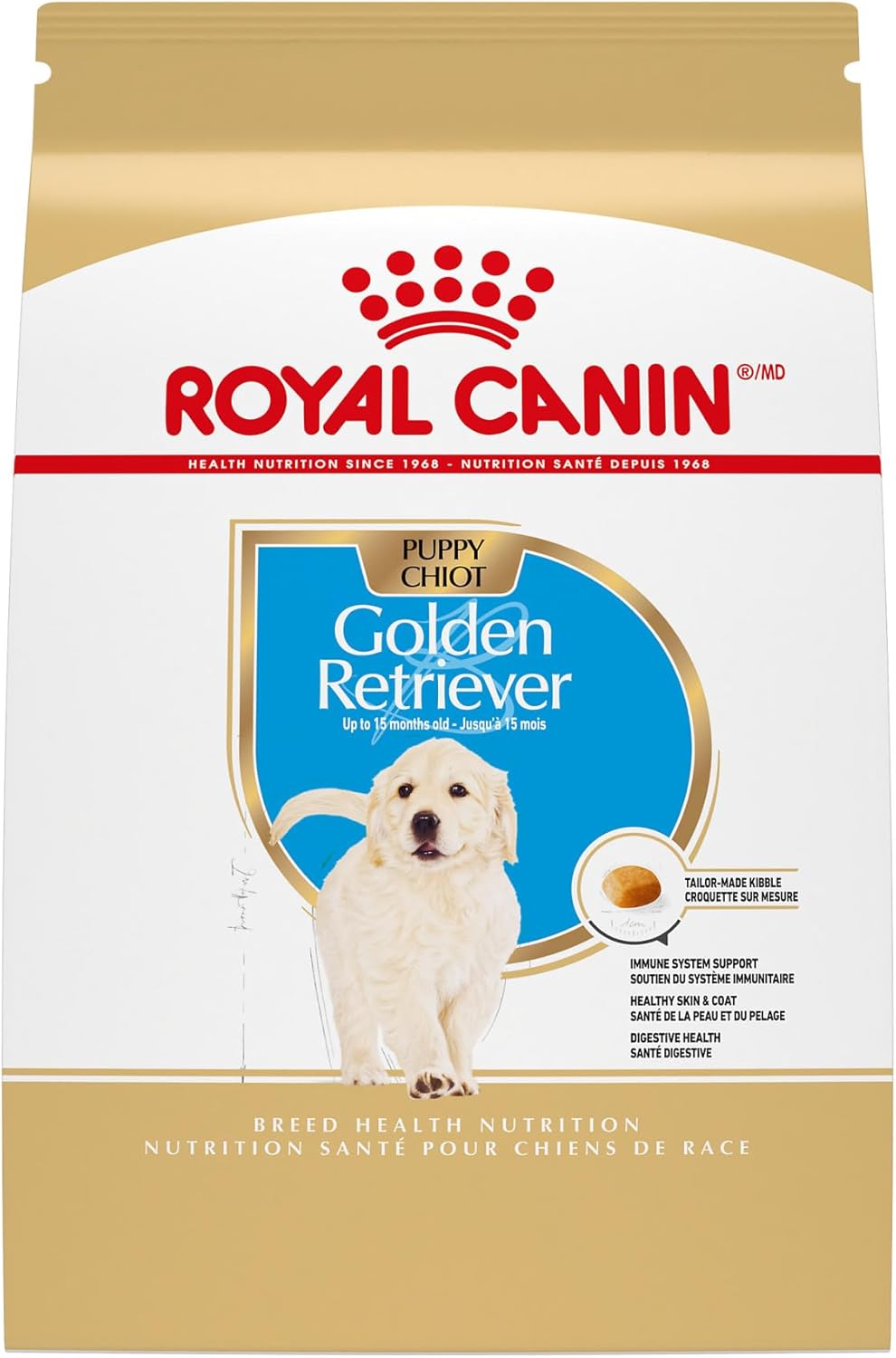
Royal Canin Golden Retriever Puppy 30 lb
Best Overall Food
| Flavor | Chicken |
|---|---|
| Age Range Description | Puppy |
| Breed Recommendation | Golden Retriever |
| Dog Breed Size | Large |
| Item Form | Pellet |
Royal Canin Golden Retriever Puppy is a breed-specific dry kibble designed for Golden Retriever puppies from 8 weeks to 15 months. The formula uses a specialized kibble shape made to fit a Golden Retriever puppy's straight muzzle and scissor bite, encouraging chewing and easing intake, while protein, prebiotics, and added antioxidants support digestion and immune development. Omega fatty acids including EPA and DHA plus targeted nutrients like glucosamine and chondroitin support skin, coat condition and joint development in a large-breed growth phase. In daily use it functions as a complete feeding solution for breeders and owners who want a tailored, science-backed diet rather than a generic puppy food. Practical benefits include consistent stool quality from prebiotics and high-quality proteins and easier feeding thanks to the breed-tailored kibble geometry. Limitations to note are the inclusion of some common cereal ingredients and chicken by-product meal in the ingredient list, which may concern owners preferring grain-free or novel-protein formulas, and that this is a large 30 lb bag intended for multi-month feeding rather than trial-sized sampling.
Best for: Owners who want a puppy food specifically formulated for Golden Retrievers and prioritize tailored nutrition to support growth, digestion, immune health, and coat condition.
Less Ideal for: People seeking grain-free diets, novel-protein recipes for food sensitivities, or those who prefer to trial a small bag before committing to a large quantity.
- Breed-specific kibble shape and texture tailored for Golden Retriever puppy bite
- Formulated to support immune development with antioxidants and vitamin E
- Contains prebiotics and high-quality proteins to promote digestive health and stool quality
- Includes EPA and DHA plus skin-and-coat nutrients to support coat condition
- Large 30 lb bag suitable for ongoing feeding of a growing large-breed puppy
- Contains grain ingredients and chicken by-product meal that some buyers avoid
- Large bag size is not convenient for first-time testing or small households
Verdict: The best overall food balances growth-focused nutrition, digestibility, and palatability to suit most 6-month-old golden retriever puppies transitioning to mature feeding.
Pedigree Puppy Dry Dog Food 3.5 lb
Best Budget Food

| Flavor | Steak & Vegetable |
|---|---|
| Age Range Description | Puppy |
| Item Form | Dry Kibble |
| Unit Count | 56 Ounce |
| Target Species | Dog |
Pedigree Puppy Dry Dog Food is a traditional, affordable puppy kibble formulated to support growth and basic developmental needs. It is designed for daily feeding and includes high protein sources, DHA, calcium and phosphorus to support muscle, brain and bone development, plus a mix of vitamins and minerals to support immune health. The bag works well for routine feeding at home and can be served dry or softened with water for younger puppies. Ingredients include animal meals, chicken by-product meal and grains, so digestibility and ingredient quality are typical for value-focused formulas rather than premium grain-free or limited-ingredient diets. Practical benefits are straightforward: widely available, familiar feeding guidelines for different puppy weights, and added micronutrients like DHA. Important limitations are that the formula contains multiple common allergens and colored additives, and it is not aimed at owners seeking grain-free, single-protein, or specialty ingredient lists for sensitive pups.
Best for: Buyers prioritizing low-cost, complete puppy nutrition who want a straightforward, easy-to-feed formula for routine daily meals.
Less Ideal for: Owners of puppies with food sensitivities, those who need grain-free or single-protein diets, or buyers seeking premium ingredient lists and novel proteins.
- Formulated with DHA and minerals to support brain and bone development
- Complete and balanced for daily puppy feeding with established feeding guidelines
- Includes high-protein sources to support muscle growth
- Versatile serving—can be fed dry or softened with water for younger puppies
- Contains multiple common allergens and artificial color additives
- Uses by-product meals and grains rather than premium single-source proteins
Verdict: The best budget food provides the essential calories, protein, and vitamins for healthy growth while keeping cost per serving low for value-conscious owners.
Hill's Science Diet Puppy Large Breed
Best Puppy Food

| Flavor | Chicken & Brown Rice |
|---|---|
| Age Range Description | Puppy |
| Breed Recommendation | Large Breeds |
| Item Form | Dry Food |
| Unit Count | 440 Ounce |
Hill's Science Diet Puppy Large Breed Chicken & Brown Rice is a dry formula designed to meet the nutritional needs of growing large-breed puppies. It is typically fed as the main daily kibble and is formulated with controlled levels of minerals for bone support, DHA and fish oil for brain and eye development, high-quality protein for muscle growth, and a prebiotic fiber blend for digestive health. In practice, this means you can follow the package feeding guide or your vet's recommendation to promote steady growth while monitoring body condition and adjusting portions. Notable features include a nutrient profile aimed at balanced bone development and an antioxidant blend to support the developing immune system. The recipe is made with recognizable ingredients such as chicken and brown rice, and comes in a large bag size suitable for multi-puppy households or extended feeding. Limitations are that owners should measure portions carefully to manage calorie intake and consult their veterinarian about specific calcium-to-phosphorus needs for breeds prone to rapid growth or joint issues, since individual puppies vary in growth rate and activity level.
Best for: Owners of large-breed puppies who prioritize steady, vet-aligned growth and want a nutrient-balanced, vet-recommended kibble to support bone, muscle, and brain development.
Less Ideal for: Breeders or owners seeking a breed-specific prescription formula for medically managed growth or puppies with confirmed ingredient allergies should consider alternatives.
- Controlled mineral balance to support steady bone growth in large-breed puppies
- Includes DHA and fish oil for brain and eye development
- High-quality protein to support developing muscles
- Prebiotic fiber blend to support digestion and gut microbiome
- Available in large bag sizes suitable for extended feeding
- Not tailored to a specific breed so veterinary guidance is recommended for individual calcium and calorie needs
- Contains grains and plant proteins, which may not suit puppies with specific ingredient sensitivities
Verdict: The best puppy food is tailored to support rapid growth and development with higher calorie and DHA levels appropriate for a 6-month-old puppy.
Purina ONE Large Breed Puppy Food 16.5 lb
Best High-Protein Food

| Brand Name | Purina ONE |
|---|---|
| Flavor | Chicken |
| Age Range Description | Puppy |
| Breed Recommendation | Large Breeds |
| Item Form | Kibble |
Purina ONE +Plus Large Breed Puppy is a dry kibble designed to give growing large-breed puppies the protein and joint support they need without a lot of extras. It uses real chicken as the number one ingredient and includes DHA for brain and vision development, naturally occurring glucosamine sources for joint support, and a blend of antioxidants for immune health. The formula pairs protein-rich kibble and meaty morsels to support muscle growth and a healthy heart while calcium and other minerals help with teeth and bone development. In practice this is an everyday feeding option aimed at steady growth rates typical for large-breed pups and it is made in Purina-owned U.S. facilities. Limitations to note are the inclusion of common grains and some by-product meals rather than a grain-free or single-protein formula, which may not suit puppies with specific sensitivities or owners seeking limited-ingredient diets. For buyers prioritizing complete, budget-conscious nutrition for a large puppy, this delivers core nutrients and safety at a modest cost.
Best for: Buyers seeking an affordable, nutritionally complete large-breed puppy food that supports growth and joint development without premium specialty ingredients.
Less Ideal for: Owners who need grain-free, single-protein, or veterinary-prescribed limited-ingredient diets for food-sensitive puppies should look elsewhere.
- Real chicken as the first ingredient for lean protein
- Formulated with DHA to support brain and vision development
- Includes natural sources of glucosamine to help support growing joints
- Made in Purina-owned U.S. facilities with added vitamins and antioxidants
- Contains grain ingredients and some by-product meals which may not suit dogs with ingredient sensitivities
- Not a limited-ingredient or single-protein formula for strict elimination diets
Verdict: The best high-protein food is ideal for active, rapidly growing puppies that need extra amino acids and calories to build lean muscle.
Nulo Freestyle Large Breed Puppy 26 lb
Best Grain-Free Food

| Flavor | Salmon & Turkey |
|---|---|
| Age Range Description | Puppy |
| Breed Recommendation | Large Breeds |
| Item Form | Dry |
| Additional Features | Grain-free, Advanced Probiotics |
Nulo Freestyle Large Breed Puppy is a 26 lb grain-free kibble designed to support growth, bone development, and digestive health in large-breed puppies. The formula uses deboned salmon as the first ingredient and provides a high proportion of animal-sourced protein to promote lean muscle, while DHA from fish supports brain and vision development. Larger kibble pieces encourage proper chewing for big mouths and the recipe includes balanced calcium and phosphorus for bone and joint support. Gut health is addressed with prebiotic fibers and BC30 probiotics, and omega fatty acids help skin and coat condition. The bag size and stable dry formula make it convenient for owners who prefer less-frequent shopping, though buyers should note it is grain-free and excludes common grains and some starches, which may not suit every puppy or dietary recommendation. Packaging and the 26 lb format help with shelf-life and frequent feeding routines, but consult your veterinarian for puppies with specific sensitivities or special dietary needs.
Best for: Owners of growing large-breed puppies who want a high-protein, grain-free kibble in a large bag to minimize shopping trips and support sustained energy, bone development, and digestive health.
Less Ideal for: Puppies with veterinary-prescribed grain-inclusive diets, dogs with known sensitivities to legumes or specific protein sources, or owners unable to store a large bag properly between feedings.
- High animal-based protein with deboned salmon first to support lean muscle development
- Formulated DHA and balanced calcium/phosphorus for cognitive development and bone growth in large-breed puppies
- Includes BC30 probiotics and prebiotic fibers to support digestive health and nutrient absorption
- 26 lb bag size and dry, shelf-stable formula reduce shopping frequency and suit frequent feeding schedules
- No grains, chicken or egg protein, or artificial flavors, which simplifies ingredient concerns for many owners
- Grain-free formulation may not be recommended for all puppies or by all veterinarians
- Large bag size requires proper storage to maintain freshness after opening
- Contains legumes and other non-grain starches that some dogs may be sensitive to
Verdict: The best grain-free food suits owners preferring formulas that replace grains with alternative carbohydrate sources while still meeting growth nutrient targets.
Blue Buffalo Baby BLUE Large Breed Puppy
Best Large-Breed Food

| Flavor | Chicken & Brown Rice |
|---|---|
| Age Range Description | Puppy |
| Breed Recommendation | Giant Breeds, Large Breeds |
| Crude Protein | 26.0% min. |
| Crude Fat | 15.0% min. |
Blue Buffalo Baby BLUE Large Breed Puppy is a dry kibble formulated to support steady growth in large-breed puppies. It uses real deboned chicken and chicken meal as top ingredients and delivers a higher protein level to support muscle development while including balanced calcium and phosphorus to help guide bone growth. The formula contains DHA and ARA for cognitive and retinal development and antioxidant-rich LifeSource Bits to support immune health. Practical benefits include a calorie and nutrient profile aimed at large-breed growth, added omega fatty acids for skin and coat, and included joint-supportive nutrients such as L‑Carnitine and fish-derived omega‑3s. The kibble is intended to be fed according to the age-and-weight feeding chart to avoid overfeeding; owners should monitor body condition and adjust portions to encourage steady, controlled weight gain. Limitations to note are that this is a standard commercial puppy diet rather than a veterinary prescription formula for specific orthopedic conditions, and puppies with ingredient sensitivities may need a limited-ingredient or hydrolyzed option.
Best for: Owners of large-breed puppies who want a commercially available diet designed to encourage steady, controlled growth while supporting brain development and overall health.
Less Ideal for: Puppy owners who need a veterinary prescription diet for severe joint or growth disorders or who require a single-protein, limited-ingredient formula.
- Real deboned chicken is the first ingredient for high-quality animal protein
- Formulated with DHA and ARA to support brain and eye development
- Includes LifeSource Bits with vitamins, minerals, and antioxidants for immune support
- Balanced calcium and phosphorus levels targeted for large-breed puppy bone development
- Contains omega‑3 and omega‑6 sources to support skin and coat health
- Not a prescription or targeted therapeutic diet for puppies with orthopedic disorders
- Contains multiple grains and legumes so not suited for dogs needing a limited-ingredient diet
Verdict: The best large-breed food helps regulate growth rate and joint health with moderated calories and balanced calcium-to-phosphorus for bigger breeds like golden retrievers.
Fromm Puppy Gold Chicken 15 lb
Best Premium Food

| Flavor | Chicken |
|---|---|
| Age Range Description | Puppy |
| Unit Count | 240 Ounce |
| Breed Recommendation | Medium Breeds, Small Breeds |
| Special Ingredients | Proteins |
Fromm Puppy Gold Chicken is a dry puppy formula designed to support growth, reproduction, and digestive health in small and medium breed puppies. It is typically fed to puppies and to pregnant or nursing mothers following AAFCO growth and gestation/lactation guidelines. The recipe lists real chicken, chicken meal and chicken broth near the top plus additional animal proteins such as duck, lamb and menhaden fish meal, which raise the total protein and amino acid content useful for active, lean-mass developing pups. Whole grains and added probiotics provide digestible energy and gut support, while salmon oil and eggs add omega fatty acids and extra protein sources. Practical benefits include a nutrient-dense profile for puppies with higher activity needs and family-farm sourcing that may appeal to buyers preferring artisanal brands. Limitations are that the bag targets small and medium breeds so feeding amounts must be adjusted for beagles specifically, and the formula includes grains so it is not suitable for owners seeking grain-free diets or those managing grain-sensitive pups.
Best for: Buyers seeking a protein-forward, multi-source animal protein puppy food for active small to medium breed puppies who need support for lean-mass growth and digestive health.
Less Ideal for: Owners who require grain-free formulas or who want a product formulated specifically to a single breed or unique caloric needs should look elsewhere.
- Real animal proteins listed high in the ingredient panel including chicken, chicken meal, and fish meal.
- Multiple protein sources (chicken, duck, lamb, fish) that support amino acid variety for muscle development.
- Enhanced with probiotics to aid digestion during growth and dietary transitions.
- Includes salmon oil and dried egg product for additional omega fats and protein.
- Not a grain-free recipe, so unsuitable for grain-elimination diets.
- Formulated broadly for small and medium breeds rather than being tailored specifically to beagles' caloric curve.
Verdict: The best premium food is for owners willing to pay more for higher-quality proteins, advanced formulations, and stricter ingredient sourcing for optimal puppy health.
Choosing the Right Dog Food 6 Month Old Golden Retriever: Key Factors to Consider
Protein Quality and Level
Protein provides the amino acids needed for muscle growth and tissue repair during this rapid development stage. Look for named animal protein sources near the top of the ingredient list and a guaranteed analysis that delivers moderate to high protein appropriate for growing medium-large breeds.
Excessive protein alone will not harm a healthy puppy, but low-quality protein or unclear sources can reduce digestibility and nutrient availability. Quality protein supports lean mass gain without encouraging excessive calorie intake when paired with proper overall energy density.
Calorie Density and Growth Pace
Calorie density determines how much energy your puppy consumes per cup and affects growth speed. For a six-month-old golden retriever you generally want controlled energy density so the puppy gains steadily without rapid weight spikes that stress developing joints.
Consider your pup's activity level when choosing calorie density: more active youngsters need more calories, while calmer puppies benefit from slightly lower density to avoid excess fat. Feeding guidelines are starting points; monitor body condition and adjust portions rather than relying solely on label portions.
Calcium and Phosphorus Balance
Calcium and phosphorus are critical for bone and joint development. The ratio between them matters as much as absolute amounts because imbalanced levels can impair proper bone mineralization.
For medium-large breed puppies, formulas with life-stage appropriate calcium-to-phosphorus ratios and controlled mineral levels help reduce the risk of developmental orthopedic issues. Avoid foods with excessive mineral fortification intended for adult maintenance or for giant-breed growth acceleration.
Fatty Acids for Skin, Coat, and Brain
Essential fatty acids, including omega-3 and omega-6, support a healthy coat and skin barrier and contribute to cognitive development. Ingredients such as fish oil or named marine sources supply DHA, which is especially valuable during early development.
Balanced fat levels also affect calorie density. Choose formulas that list quality fat sources and specify DHA or omega-3 content for developmental support rather than relying on generic 'animal fat' listings.
Digestibility and Gastrointestinal Tolerance
Digestible diets reduce stool volume, ease feeding transitions, and minimize tummy upsets as the puppy grows. High-quality single-source proteins, digestible carbohydrates, and added digestive supports such as probiotics or prebiotic fibers can improve tolerance.
Puppies often have sensitive stomachs when switching foods or experiencing environmental stress. A formula with a track record for mild stools and minimal digestive upset can make daily care easier and reduce feeding-related absenteeism from training or socialization.
Kibble Size and Feeding Practicality
Kibble size and texture affect how comfortably your puppy eats and whether a food is practical for regular feeding. Medium-large kibble that is easy to pick up and chew encourages proper mastication and helps avoid gulping.
Also consider how easy the food is to measure, store, and serve. Moist or toppers can improve palatability for picky eaters, but dry kibble is convenient for portion control and dental abrasion. Evaluate form factor based on your routine and your puppy's chewing behavior.
How Many Calories Should a 6 Month Old Golden Retriever Eat Each Day?
Calorie needs vary with current weight, activity level, and growth pattern. A general approach is to start with the feeding guideline on the life-stage label and then adjust based on body condition and weight trends.
Monitor your puppy's rib feel and waistline: you should be able to feel the ribs easily without seeing them, and the waist should be visible behind the ribs. Increase portions slightly for highly active dogs and decrease if the puppy appears to be gaining too quickly or carrying extra fat.
- Use the label only as a starting point; tailor amounts by observation.
- Adjust portions every few weeks as growth slows and activity changes.
When Should You Switch From Puppy to Adult Food?
For many golden retrievers the switch to adult maintenance occurs around 12 to 18 months, once growth has slowed and the dog reaches most of its adult height. Premature switching can leave a still-growing skeleton without adequate support, while delaying too long may deliver excess calories.
Plan the transition based on size, weight trend, and your veterinarian's guidance. If your puppy is lean, active, and still filling out at 12 months, you may wait longer before changing to adult formulas.
- Consult your veterinarian before switching if your dog has orthopedic concerns.
- Make any transition gradually over 7 to 10 days to reduce digestive upset.
Can Supplements Help Joint Development at Six Months?
Joint supplements often include glucosamine, chondroitin, and omega-3s. While they can support joint comfort, most growing puppies benefit first from appropriate nutrition and controlled growth pace rather than routine supplementation.
If you have concerns about hip or elbow development, discuss targeted supplementation with your veterinarian. In some cases of documented joint risk, a vet-recommended supplement may be appropriate as part of a broader management plan.
- Supplements are adjuncts, not replacements for balanced nutrition.
- Vet guidance is important before starting any long-term joint supplement.
How to Recognize and Manage Picky Eating
Picky eating at six months can stem from teething discomfort, social feeding influences, or palate development. Start by offering consistent mealtimes and avoid free-feeding to encourage appetite at scheduled meals.
If a puppy rejects a new food, try a brief mix-in of the previous formula and increase the new food proportion over several days. Warmed food or a small spoonful of plain cooked protein can improve acceptance without altering nutrition substantially.
- Keep meal windows short—15 to 30 minutes—to maintain appetite.
- Rule out health issues with a vet if appetite change is sudden or prolonged.
Hydration and Wet Food Options
Hydration supports digestion and overall health, and some puppies naturally drink less than they should. Including a wet option or a moist topper increases water intake and can aid palatability for picky eaters.
Balance wet and dry feeding to maintain portion control. If you use wet food regularly, account for its calorie content when measuring daily intake to avoid unintended weight gain.
- Provide fresh water at all times and check bowls during activity-heavy days.
- Use wet toppers sparingly and measure total daily calories across both forms.
Reading Labels: What to Prioritize on the Bag
Look for clear life-stage labeling indicating suitability for growing puppies and a named first ingredient that is an animal protein. Check the guaranteed analysis for crude protein and fat percentages and compare calorie density where available.
Also review feeding recommendations, stated calcium and phosphorus levels if provided, and any indicated sources of omega-3s. Ingredient transparency and life-stage formulation are stronger decision signals than marketing buzzwords.
- Prioritize named animal proteins and explicit life-stage formulation.
- Use guaranteed analysis and calorie info to compare formulations on an equal basis.
How We Chose the Best Dog Food 6 Month Old Golden Retriever
We prioritized formulas that support controlled growth, joint development, and healthy digestion specifically for six-month-old golden retrievers. Selection emphasized nutrient profiles and ingredient quality shown to matter for medium-large breed puppies: appropriate protein sources and levels, controlled calorie density to avoid too-rapid growth, and calcium-to-phosphorus ratios suited to growing bones. Additional selection filters included digestibility evidence from ingredient composition, presence of essential fatty acids for skin and coat, and inclusion of vitamins and minerals at life-stage levels. We also considered formulation forms that aid feeding consistency, such as kibble size appropriate for medium-large mouths and wet options that assist picky eaters or hydration. Excluded from consideration were adult maintenance formulas, foods intended for small breeds, and diets lacking life-stage labeling for growing dogs. We focused on measurable nutrition characteristics rather than marketing claims, and we prioritized formulas that balance energy needs with joint-sparing growth management.
Our full evaluation process is outlined in our review methodology.
FAQ
How often should I feed my 6 month old golden retriever?
Most six-month-old golden retrievers do well with two meals per day. Splitting daily calories into two consistent feedings helps steady energy levels and reduces the chance of overeating at a single meal.
Is grain-free food better for puppies?
Grain-free is not inherently better for puppies and depends on individual tolerance. Unless your puppy has a diagnosed grain sensitivity, prioritize overall nutrient balance and digestibility rather than eliminating grains by default.
Should I choose a puppy formula labeled for large breeds?
Yes, choose a life-stage formula designed for medium to large breed puppies because those formulas manage growth rate and mineral balance in ways that help protect developing joints and bones.
What signs indicate a food is not agreeing with my puppy?
Watch for loose stools, frequent gas, reduced appetite, or changes in coat quality. If these signs persist after a gradual transition, consult your veterinarian to rule out food intolerance or other health issues.
Can I mix adult and puppy food during transition?
Mixing is an effective gradual transition method. Increase the proportion of the new food over about 7 to 10 days to allow the digestive system to adapt and reduce the likelihood of gastrointestinal upset.
Final Verdict
Focus on formulas that deliver high-quality protein, controlled calorie density, and appropriate mineral balance to support steady growth and protect developing joints. Match the food's calorie level to your puppy's activity and adjust portions based on body condition rather than label recommendations alone. Prioritize digestibility and essential fatty acids for coat and cognitive support, and consult your veterinarian about timing the switch to adult maintenance or adding any supplements. With attention to these priorities you can choose confidently for long-term health and a balanced growth trajectory.

