

At eight months your German shepherd is finishing rapid growth but still needs nutrition tuned for large-breed development. Choosing the right food now helps support steady bone growth, healthy muscle development, and hip and joint resilience during this critical window. The shortlist below collects the top picks for nutritionally balanced options appropriate for an 8 month old German shepherd. Each choice was evaluated for protein quality, calorie density, and nutrients that matter for large-breed puppies. Read on for the practical factors that should guide your selection and for clear tradeoffs to consider when feeding a growing shepherd.
Top Picks at a Glance
| Best Overall Food for 8 Month Old German Shepherd Balanced nutrition formulated for growth, energy, and joint support | ROYAL CANIN German Shepherd Puppy Dry Dog Food 30 lb |  |
| Best Budget Food for 8 Month Old German Shepherd Affordable option that still meets growth and basic nutrient needs | Diamond Puppy Dry Dog Food 40 lb |  |
| Best High-Protein Food Formulas with elevated animal protein to support muscle development | ORIJEN Puppy Large Dry Dog Food 23.5 lb |  |
| Best Large-Breed Food Formulated for bigger breeds with controlled calories and joint nutrients | Hill's Science Diet Puppy Large Breed Lamb |  |
| Best Grain-Free Food No grains for dogs with grain sensitivities or owner preference | Taste of the Wild Sierra Mountain Lamb 28 lb |  |
| Best Limited-Ingredient Food Short ingredient lists to help pinpoint and avoid allergens | CANIDAE All Life Stages Large Breed 40 lb |  |
| Best Premium Food Higher-end formulas with superior ingredients and advanced nutrient profiles | ORIJEN Amazing Grains Dog Food 22.5 lb |  |
ROYAL CANIN German Shepherd Puppy Dry Dog Food 30 lb
Best Overall Food for 8 Month Old German Shepherd

| Flavor | Chicken |
|---|---|
| Age Range Description | Puppy |
| Breed Recommendation | German Shepherd |
| Package Size | 30 lb Bag |
| Item Form | Pellet |
Royal Canin German Shepherd Puppy is a breed-targeted dry kibble designed for purebred German Shepherd puppies from 8 weeks to 15 months. The formula uses a specialized kibble shape sized for a German Shepherd puppy's jaw and encourages chewing while delivering highly digestible proteins and specific fibers to support stool quality and digestive health. The recipe includes an antioxidant complex with vitamin E for immune development and adds glucosamine and chondroitin to help bone and joint support during rapid growth. Ingredients list shows protein sources like chicken meal and chicken by-product meal and includes functional additives such as fish oil, fructooligosaccharides, and marine microalgae oil. Practical benefits are steady, targeted nutrition that simplifies feeding a growing German Shepherd puppy and helps address breed tendencies for joint and digestive concerns. Limitations are that the ingredient mix includes some by-product meals and cereals rather than only whole-muscle proteins, so buyers prioritizing novel or grain-free formulas may prefer other options.
Best for: Buyers who want a science-backed, breed-specific complete dry food that balances growth needs, joint support, and digestive health for German Shepherd puppies.
Less Ideal for: Owners seeking a novel-protein, grain-free, or limited-ingredient puppy diet for food-sensitive dogs should consider alternative formulas.
- Breed-specific kibble shape and texture sized for German Shepherd puppy jaws
- Contains glucosamine and chondroitin to support bone and joint development
- Antioxidant complex with vitamin E to help immune system development
- Highly digestible proteins and fibers to promote digestive health and stool quality
- Includes chicken by-product meal and cereal grains rather than only whole-muscle proteins
- Not a grain-free or limited-ingredient formula for puppies with specific sensitivities
Verdict: The best overall food for an 8-month-old German Shepherd, balancing high-quality protein, controlled calories, joint-supporting nutrients, and digestibility for steady growth and activity.
Diamond Puppy Dry Dog Food 40 lb
Best Budget Food for 8 Month Old German Shepherd
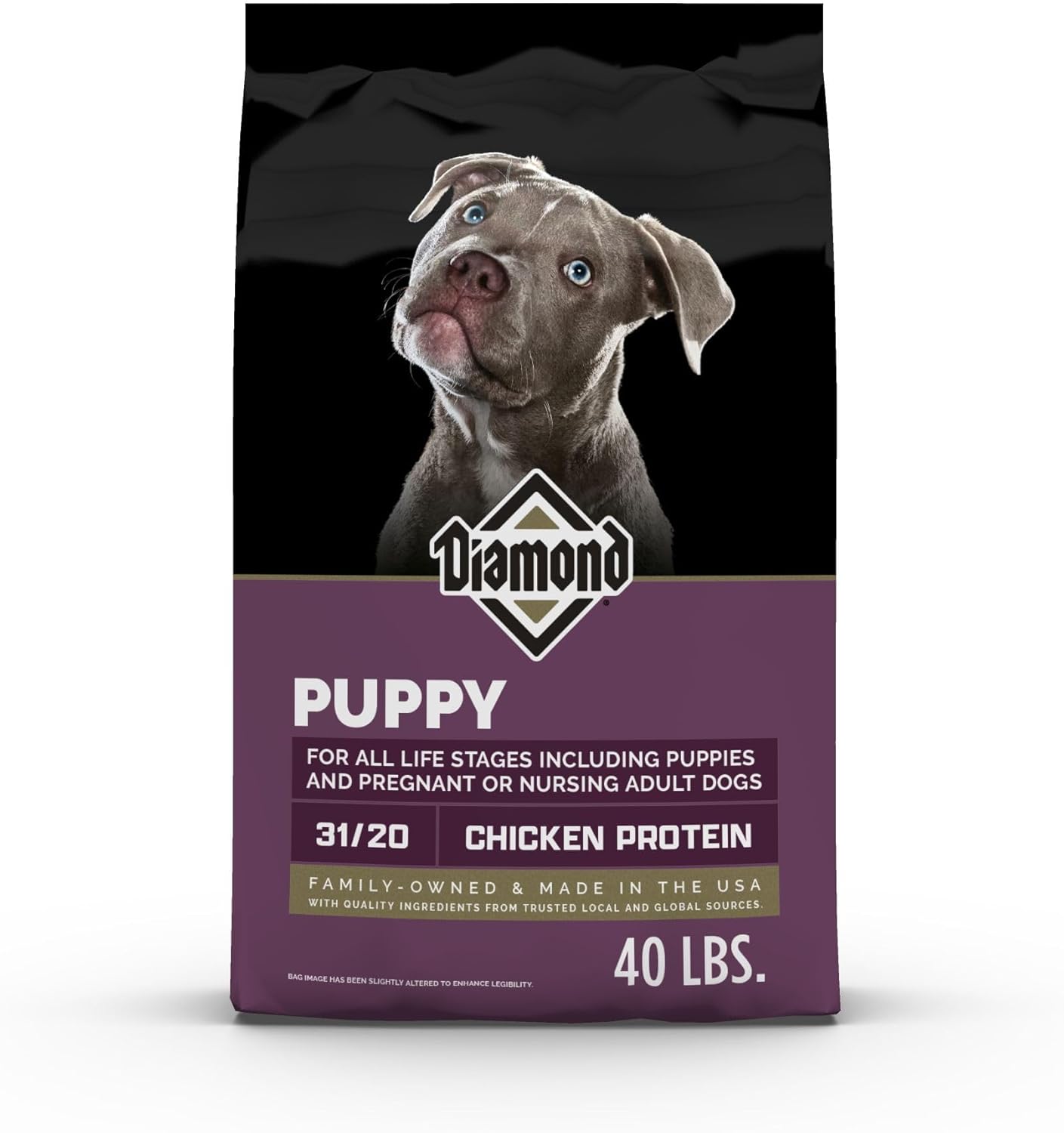
| Flavor | Puppy |
|---|---|
| Item Form | Pellet |
| Breed Recommendation | Large Breeds |
| Animal Food Diet Type | Veterinary Diet |
| Unit Count | 640 Ounce |
Diamond Puppy is a 40-pound dry dog food designed for growing puppies and pregnant or nursing dogs, with chicken protein listed first and added DHA from salmon oil for brain and vision support. It is typically used as a staple daily diet during a puppy's first year and can be portioned according to the feeding guide and adjusted with a veterinarian. Notable features include high protein to support muscle development, calcium for bone and tooth growth, a probiotic blend and antioxidants for digestive and immune health, and smaller kibble that is easier for young mouths to chew. In real-world use the large bag delivers cost-per-pound value, making it attractive for owners feeding big-breed puppies that consume a lot of food, and the formula's nutrient focus suits rapid growth phases. Buyers should note the ingredient list includes chicken by-product meal and grain ingredients rather than premium single-protein or grain-free sources, so it is a budget-conscious choice rather than a boutique or limited-ingredient diet.
Best for: Buyers raising large-breed or fast-growing puppies who prioritize complete growth nutrition and need an economical, nutrient-dense bag to feed a hungry dog affordably.
Less Ideal for: Owners seeking limited-ingredient, novel-protein, or grain-free diets for allergy management or buyers who want only whole-meat first ingredients should consider alternative formulas.
- High protein with chicken as first ingredient to support muscle growth
- Includes DHA from salmon oil for brain and vision development
- Calcium and nutrient profile targeted for growth and bone support
- Added probiotics and antioxidants to support digestion and immune health
- Large 40 lb bag provides lower cost per feeding for large-breed puppies
- Contains chicken by-product meal and grain ingredients rather than single whole-muscle protein
- Not formulated as a limited-ingredient or grain-free recipe for dogs with specific sensitivities
Verdict: The best budget food for an 8-month-old German Shepherd that provides adequate protein, essential vitamins and minerals, and reasonable digestibility while keeping cost low.
ORIJEN Puppy Large Dry Dog Food 23.5 lb
Best High-Protein Food

| Flavor | Puppy Recipe |
|---|---|
| Item Form | Pellet |
| Dog Breed Size | Large |
| Unit Count | 376 Ounce |
| Animal Food Diet Type | Veterinary Diet |
This 23.5 lb ORIJEN Puppy Large formula is a high-protein, grain-free dry kibble designed to support rapid growth and development in large-breed puppies. It uses a WholePrey philosophy, listing fresh or raw animal ingredients first and including organs and bone-derived nutrients to supply naturally occurring vitamins and minerals. The recipe delivers concentrated animal protein sources such as chicken, turkey, salmon and herring and includes a freeze-dried coating to boost palatability. In practice it is fed twice daily with portion adjustments based on your puppy's weight, and the brand advises a 10- to 14-day transition from previous food. Practical benefits include a formula tailored for brain, skin and coat health and an emphasis on fewer synthetic additives due to nutrient-dense whole ingredients. Limitations to consider are the grain-free composition and high protein density, which may not suit puppies with certain veterinary-prescribed diets or owners seeking lower-protein, grain-included options, and the large wholesale bag size may be more than needed for small households or short feeding windows.
Best for: Owners who prioritize premium, biologically oriented ingredients and want a nutrient-dense puppy formula to support optimal growth and development in large-breed dogs.
Less Ideal for: Owners looking for grain-inclusive, lower-protein puppy diets or who need a veterinary-prescribed formula for specific health issues should consider alternatives.
- High animal-ingredient content with first five ingredients listed as fresh or raw meats and fish
- WholePrey inclusion of organs and bones provides a range of naturally occurring nutrients
- Formulated specifically for large-breed puppies to support growth and development
- Freeze-dried coating increases palatability to encourage eating during training or transitions
- Grain-free, high-protein formula may not be appropriate for puppies on certain veterinary diets
- Large 23.5 lb bag can be bulky and may be excessive for multi-bag turnover households
Verdict: The best high-protein food for owners prioritizing muscle growth and sustained energy in an active, growing German Shepherd.
Hill's Science Diet Puppy Large Breed Lamb
Best Large-Breed Food

| Flavor | Lamb & Brown Rice |
|---|---|
| Age Range | Puppy |
| Breed Recommendation | Large Breeds |
| Unit Count | 480 Ounce |
| Item Form | Dry Food |
Hill's Science Diet Puppy Large Breed Lamb & Brown Rice is a dry formula made specifically for growing large-breed puppies and is used as a daily feed to support controlled bone growth and overall development. The recipe highlights lamb meal and brown rice as primary ingredients and includes DHA and fish oil for brain and eye development, an antioxidant blend for immune support, and higher-quality proteins to support muscle growth. It also contains a targeted level of minerals for balanced bone development and a blend of prebiotic fibers intended to support digestive health. Practical benefits include a formulation tailored to the unique growth needs of large breeds and familiar feeding guidance on the bag to help manage portioning. Limitations to consider are the ingredient list, which contains grains and several plant proteins and flavors that some owners avoid, and that specific joint-targeted additives beyond balanced minerals and general support (for example, high levels of glucosamine or chondroitin) are not highlighted, so severely at-risk puppies may need a more specialized veterinary plan.
Best for: Buyers who want a vet-recommended, growth-focused daily food for large-breed puppies that supports bone development and overall early-life health.
Less Ideal for: Owners seeking a grain-free formula or a therapeutic diet with elevated, explicit joint supplements for puppies with diagnosed joint disorders should look elsewhere or consult a veterinarian.
- Formulated for large-breed puppy growth with controlled calcium for bone development
- Includes DHA and fish oil to support brain and eye development
- Prebiotic fiber blend to support digestive health and gut microbiome
- High quality proteins to support lean muscle growth and overall development
- Does not prominently list joint-specific supplements like glucosamine or chondroitin
- Contains grains and multiple plant-based proteins which some owners may wish to avoid
Verdict: The best large-breed food for owners who need calorie control, appropriate calcium-to-phosphorus ratios, and added joint-support ingredients for a growing German Shepherd.
Taste of the Wild Sierra Mountain Lamb 28 lb
Best Grain-Free Food

| Flavor | Roasted Lamb |
|---|---|
| Age Range Description | All Life Stages |
| Item Form | Pellet |
| Allergen Information | Grain-Free |
| Unit Count | 448 Ounce |
Taste of the Wild Sierra Mountain Roasted Lamb is a grain-free kibble built around real lamb and lamb meal to deliver a high-protein diet with complementary fruits, vegetables, and added probiotics. It is typically served as a daily maintenance diet and can be portioned using the feeding guide to match activity and weight goals. Notable features include a 25% protein level, species-specific probiotics for digestion, added omega sources for skin and coat, and a mix of fruits and vegetables that provide antioxidants. For large, active breeds like Bernese Mountain Dogs, the higher protein supports muscle mass while joint-support nutrients and fortified vitamins help overall health. Limitations to consider are the grain-free formulation, which some vets advise monitoring in large breeds, and the recipe includes legumes and potatoes that may not suit dogs with certain sensitivities. Also the product comes only in bagged kibble form, so owners that prefer fresh or wet diets will need to transition or supplement separately.
Best for: Owners seeking a high-protein, grain-free kibble that supports digestion, skin and coat health, and overall conditioning for a large, active breed.
Less Ideal for: Owners who prefer grain-inclusive or fresh/wet diets, or dogs with known sensitivities to legumes, potatoes, or grain-free formulations should consider alternatives.
- Real roasted lamb and lamb meal as primary protein sources to support muscle maintenance
- 25% crude protein suitable for large active dogs
- Includes proprietary K9-strain probiotics and prebiotics to support digestion
- Added omega sources and antioxidants for skin, coat, and immune support
- Grain-free formulation and inclusion of legumes may not be appropriate for all large-breed dogs per some veterinary guidance
- Available only as dry kibble with no wet or fresh food option in the same product
Verdict: The best grain-free food for German Shepherds whose owners prefer or require grain-free ingredients to address sensitivities or dietary choices.
CANIDAE All Life Stages Large Breed 40 lb
Best Limited-Ingredient Food

| Flavor | Large Breed: Multi-Protein |
|---|---|
| Age Range Description | All Life Stages |
| Item Form | Dry Kibble |
| Allergen Information | Corn-Free, Soy Free, Wheat Free |
| Unit Count | 640 Ounce |
Canidae All Life Stages Large Breed is a large-bag dry kibble designed to feed dogs across life stages while prioritizing high-quality protein sources and joint support for big dogs. It is typically used as a single-bag solution for multi-dog households or for owners who want one formula that meets AAFCO all-life-stages profiles, and it lists real chicken first with turkey, lamb, and fish meals included. The recipe includes added glucosamine and chondroitin sources to help large-breed joint health and omega fatty acids for skin and coat support, plus a probiotic and vitamin blend intended for digestion and immune support. Practical benefits are fewer shopping decisions and simplified meal planning for mixed-age large dogs, plus a protein-forward formula likely to satisfy appetites. Important limitations for your use case are that this is a multi-protein formula rather than a limited-ingredient diet, so it may still trigger sensitivities in puppies with ingredient-specific allergies, and the large 40 lb bag is intended for steady consumption or storage space. As a puppy feed for an 8-month-old German Shepherd, it delivers growth-focused nutrition and joint-supporting ingredients but is not tailored to single-ingredient elimination feeding.
Best for: Buyers who want a single, nutrient-complete kibble to feed large-breed dogs through puppyhood into adulthood and who prioritize joint support and broad nutritional coverage over ingredient restriction.
Less Ideal for: Puppies with known single-ingredient sensitivities or dogs requiring an elimination or novel-protein diet should choose a dedicated limited-ingredient or single-protein formula instead.
- Formulated for all life stages so it meets AAFCO growth and maintenance needs
- Real chicken listed as the first ingredient with multiple animal protein meals for high protein density
- Includes glucosamine and chondroitin sources to support large-breed joint health
- Fortified with probiotics, vitamins, minerals, and antioxidants for digestive and immune support
- Multi-protein formula is not a limited-ingredient or single-protein diet for elimination feeding
- Large 40 lb bag may be bulky for small households or short-term trials
Verdict: The best limited-ingredient food for puppies showing food sensitivities, offering a simpler formula to reduce triggers while still supporting growth.
ORIJEN Amazing Grains Dog Food 22.5 lb
Best Premium Food

| Flavor | Amazing Grains Original Recipe |
|---|---|
| Item Form | Dry Kibble |
| Age Range Description | All Life Stages |
| Animal Food Ingredient Claim | No Added Antibiotics, No Artificial Flavors, Non-GMO |
| Unit Count | 360 Ounce |
ORIJEN Amazing Grains is a grain-inclusive, high-protein kibble built around fresh or raw poultry and fish plus WholePrey components like organs and fish oils. It is typically fed as a daily diet for adult dogs and puppies (with the exception of growth for very large breed adults), and the bag includes feeding guidance and a recommended 10–14 day transition if switching from another food. Notable features include approximately 90% animal-sourced ingredients, a freeze-dried coating for extra palatability, probiotic and fiber sources for digestive support, and added DHA/EPA from fish oils for skin and coat benefits. Practically, that means a nutrient-dense formula that can support active breeds needing sustained protein and calories, and it should appeal to dogs that prefer meaty flavors. Limitations to consider are that this is a premium product aimed at owners seeking higher-quality ingredients and it may be richer than some dogs require, so portion control and monitoring during a transition are important; it is also not formulated for growth of very large breed puppies over 70 lb adult size.
Best for: Owners who prioritize ingredient quality and nutrient density and are willing to pay for a high-protein, WholePrey-style diet for an active or working breed.
Less Ideal for: Owners seeking the most budget-friendly option or those feeding very large-breed puppies that require a specific growth formula.
- High animal-ingredient content (~90%) with fresh or raw poultry and fish as primary ingredients
- Includes WholePrey components (organs and fish oils) for broad nutrient density
- Freeze-dried coating increases palatability for picky eaters
- Contains probiotics and soluble/insoluble fibers to support digestive health
- Added DHA and EPA from fish oil to support skin, coat, and immune function
- Not formulated for growth of very large breed puppies (70 lb adult and up)
- Premium ingredient profile may be richer and more calorie-dense than some dogs need
Verdict: The best premium food for owners willing to invest in top-tier ingredients, tailored nutrient blends, and extra functional additives for overall health and development.
Choosing the Right Dog Food 8 Month Old German Shepherd: Key Factors to Consider
Calorie Density and Growth Rate Control
Puppies of large breeds add bone mass and length at different rates than small breeds, so calorie density matters to avoid overly rapid growth. A formula with moderate calorie content helps you control weekly weight gains and reduces the risk of skeletal stress.
Look for feeds that allow portion control without forcing overfeeding to meet energy needs. If calorie density is high, you will need smaller portions and careful monitoring; if it is low, the puppy may require more frequent feedings. Either way, track weight and body condition monthly and adjust portions rather than switching formulas frequently.
Protein Quality and Amino Acid Balance
High-quality animal proteins supply essential amino acids needed for muscle development and immune function. For an 8 month old German shepherd, the goal is sufficient protein to build lean mass without excess that drives too-rapid growth.
Consider named meat or fish sources near the top of the ingredient list, and ensure the formula provides a balanced amino acid profile, particularly lysine and methionine. Protein digestibility also matters; more digestible proteins mean better nutrient uptake and less digestive workload for a growing pup.
Calcium, Phosphorus, and Mineral Ratios
Bone growth depends on correct amounts and ratios of calcium and phosphorus. Excessive calcium for a large-breed puppy can contribute to joint problems, while too little can impair bone development.
Choose diets formulated for large-breed puppies that list guaranteed mineral levels and that follow recommended calcium-to-phosphorus ratios. Avoid adult-formula mineralizations and homemade diets unless a veterinary professional has confirmed the balance.
Joint-support Nutrients and Fatty Acids
German shepherds are predisposed to hip and elbow concerns, so ingredients that support cartilage and joint health are valuable during growth. Glucosamine and chondroitin can help support cartilage formation and maintenance.
Omega-3 fatty acids, particularly EPA and DHA, support inflammation control and cognitive development. Assess whether the formula includes marine or other reliable omega sources and whether the levels are appropriate for a growing large-breed puppy.
Digestibility and Gastrointestinal Tolerance
A digestible diet reduces stool volume and supports nutrient absorption, which is important for steady growth and for minimizing digestive upset. Digestibility is influenced by ingredient quality, fiber sources, and processing.
If your puppy has a sensitive stomach, look for formulas with defined protein sources, moderate fiber, and probiotics or prebiotics to support gut flora. Transition slowly when changing foods and monitor stool quality as a key indicator of tolerance.
Kibble Size, Texture, and Feeding Practicality
Kibble shape and size affect how easily your puppy can pick up and chew food as adult teeth continue to come in. For a large-breed pup at eight months, kibble that is too small may encourage gulping while very large pieces might be awkward for some dogs.
Also consider how the food fits your routine: is it suitable for free feeding, measured meals, or use in food-dispensing toys? Practical aspects like resealable packaging and consistent portion guidance make daily feeding simpler and reduce storage issues.
How Many Calories Should My 8 Month Old German Shepherd Eat Each Day?
Daily calorie needs vary with activity level, sex, neuter status, and individual metabolism. Use the feeding guidelines on a large-breed puppy formula as a starting point, then track body condition and weight weekly. A gently rising weight curve is normal, but steady rapid gains signal too many calories.
Adjust portions in small increments and split daily food into two or three meals to avoid spikes in hunger and to support even energy availability throughout the day.
- Start with manufacturer guidance for large-breed puppies then fine-tune
- Weigh food for accuracy rather than relying on volume measures
- Split daily allowance into multiple feedings to manage energy and digestion
When Should I Switch From Puppy to Adult Formula?
Large-breed dogs typically transition later than small breeds because their skeletal system continues to mature. Many owners begin the transition around 12 to 18 months, but the right time depends on your dog's growth rate and veterinarian advice. For an 8 month old, stick with a large-breed puppy or growth-stage formula until a vet confirms that growth plates are near closure or the dog has reached appropriate physical maturity.
If your puppy shows excessive weight gain or slowed mobility, consult your veterinarian who may recommend adjusting caloric intake or switching formula earlier.
- Transition based on growth and veterinary guidance, not strictly by age
- Monitor weight and body condition score to time the switch
How to Introduce a New Food Without Upsetting Digestion
Make changes gradually over 7 to 10 days by mixing increasing proportions of the new food into the old. Start with about 10 percent new food and raise the share every couple of days while watching stool consistency and appetite. Abrupt changes can cause loose stools or vomiting, especially in sensitive pups.
If gastrointestinal signs persist after a gradual transition, pause and consult your veterinarian to rule out intolerance, parasites, or underlying illness.
- 7 to 10 day transition schedule: 10%, 25%, 50%, 75%, then 100%
- Observe stool firmness and appetite as transition indicators
Do I Need a Formula with Joint Supplements Now or Can I Add Them Later?
Many large-breed puppy formulas include joint-support ingredients tailored for developing cartilage. Including these nutrients in a complete diet ensures consistent intake without extra supplementation. However, not every puppy requires supplemental levels beyond what a balanced formula provides.
If you have a family history of hip or elbow issues, or if a veterinarian identifies early joint concerns, targeted supplementation alongside a proper diet can be useful. Always discuss supplemental additions with your vet to avoid imbalanced nutrient intake.
- Complete diets with joint support simplify daily dosing
- Supplement only under veterinary guidance, especially if other medical conditions exist
What to Do if Your Puppy Is a Picky Eater or Loses Interest
Fluctuations in appetite are common in adolescent dogs. Try consistent meal times and avoid free-feeding, which can reduce interest in provided meals. Slightly warming wet food or adding a small amount of a palatable topper can encourage eating for short periods, but avoid making high-value additions a daily habit that creates expectations.
Rule out medical causes with a veterinarian if appetite loss is prolonged, accompanied by lethargy, vomiting, or changes in bathroom habits.
- Maintain scheduled meals and remove uneaten portions after 20 to 30 minutes
- Use toppers sparingly and for short-term appetite stimulation only
How We Chose the Best Dog Food 8 Month Old German Shepherd
We assessed options using criteria that matter for large-breed puppies and for an 8 month old German shepherd specifically. First, we prioritized calorie density and controlled energy so growth remains steady rather than accelerated. Second, protein quality and amino acid profile were weighted to support lean muscle growth without excessive calcium-driven bone stress. Third, we evaluated fat sources and omega ratios for healthy coat and anti-inflammatory support. Fourth, joint-support nutrients such as glucosamine, chondroitin, and adequate vitamin and mineral balance were considered because hip development is a key concern in German shepherds. Fifth, kibble size and texture were checked to match typical adult jaw strength progression and reduce choking risk. Finally, digestibility and ingredient transparency were used to favor formulas that are complete, readily absorbed, and use identifiable protein sources. We excluded formulas aimed solely at small breeds, adult maintenance only diets, and any novelty treats or supplemental mixes that cannot serve as a primary daily diet. The final list focuses on complete diets formulated to meet the developmental needs of large-breed puppies around eight months old.
Our full evaluation process is outlined in our review methodology.
FAQ
How much protein does an 8 month old German shepherd need?
An 8 month old large-breed puppy benefits from moderate to high-quality protein to support muscle growth. Exact grams vary by formula and weight, but focus on named animal proteins and digestibility rather than a single numeric target.
Can I feed adult food for a short time if puppy food runs out?
Occasional short-term use of adult maintenance food is unlikely to cause harm, but adult formulas may have higher calorie or mineral levels not ideal for growth. Return to a large-breed puppy diet as soon as possible and consult your vet if you must feed adult food for an extended period.
Should I feed wet, dry, or a mix for an 8 month old?
Dry kibble is convenient and supports dental abrasion, while wet food can increase palatability and hydration. Many owners use a mix of both to balance texture and interest. Whichever you choose, ensure the combined daily intake meets growth nutrient targets.
Are grain-free diets appropriate for large-breed puppies?
Grain-free diets can be appropriate if the formula provides complete nutrition and named protein sources. For most puppies, whole grains are a valid carbohydrate option. Discuss special diets with your veterinarian, especially if there are concerns about allergies or specific health issues.
How often should I weigh and measure my puppy during this stage?
Weigh your puppy every two to four weeks to monitor growth trends, and perform a quick body condition check weekly. Consistent tracking helps you spot rapid gains or losses early and adjust feeding portions.
Final Verdict
Feed decisions for an 8 month old German shepherd should prioritize steady growth, joint support, and digestible, high-quality protein sources. Focus on calorie control, correct mineral ratios, and appropriate nutrient levels for large-breed development rather than short-term weight increases. Monitor weight and body condition regularly and consult your veterinarian when in doubt about switching formulas or adding supplements. In short, choose a complete large-breed puppy formula that balances energy and joint-supporting nutrients, adjust portions based on real growth measurements, and make changes gradually with veterinary input to keep development on a healthy track.

