

Feeding an 8 month old golden retriever is about more than filling a bowl. At this age your dog is finishing its rapid growth phase, building muscle, and refining adult eating patterns, so the right food helps support healthy joints, steady weight gain, and reliable digestion. This guide collects seven top options shortlisted for puppies in this exact life stage and explains the key nutritional and practical differences buyers should weigh. We evaluate each choice for growth-stage nutrition, protein quality, digestibility, and joint support to help you pick the right formula for your growing retriever.
Top Picks at a Glance
| Best Overall Food A balanced, well-rounded formula suited to most growing Golden Retrievers | Royal Canin Golden Retriever Puppy 30 lb |  |
| Best Budget Food Affordable nutrition that covers essential needs without extra frills | Wag Dry Puppy Food Chicken Brown Rice 15 lb |  |
| Best High-Protein Food Higher protein ratios to support muscle development and active puppies | Purina Pro Plan Puppy Chicken & Rice 6 lb |  |
| Best Large-Breed Food Formulated calorie and nutrient balance for bigger-boned, growing dogs | Hill's Science Diet Puppy Large Breed |  |
| Best Limited-Ingredient Food Simpler recipes with fewer ingredients to reduce reaction risk | Nulo Freestyle Large Breed Puppy 26 lb |  |
| Best Wet Food Higher-moisture option for added palatability and hydration support | Blue Buffalo Homestyle Recipe Wet Dog Food 12.5 oz |  |
| Best Premium Food Higher-end formulas with premium ingredients and added health features | Diamond Naturals Large Breed Puppy Lamb & Rice 40 lb |  |
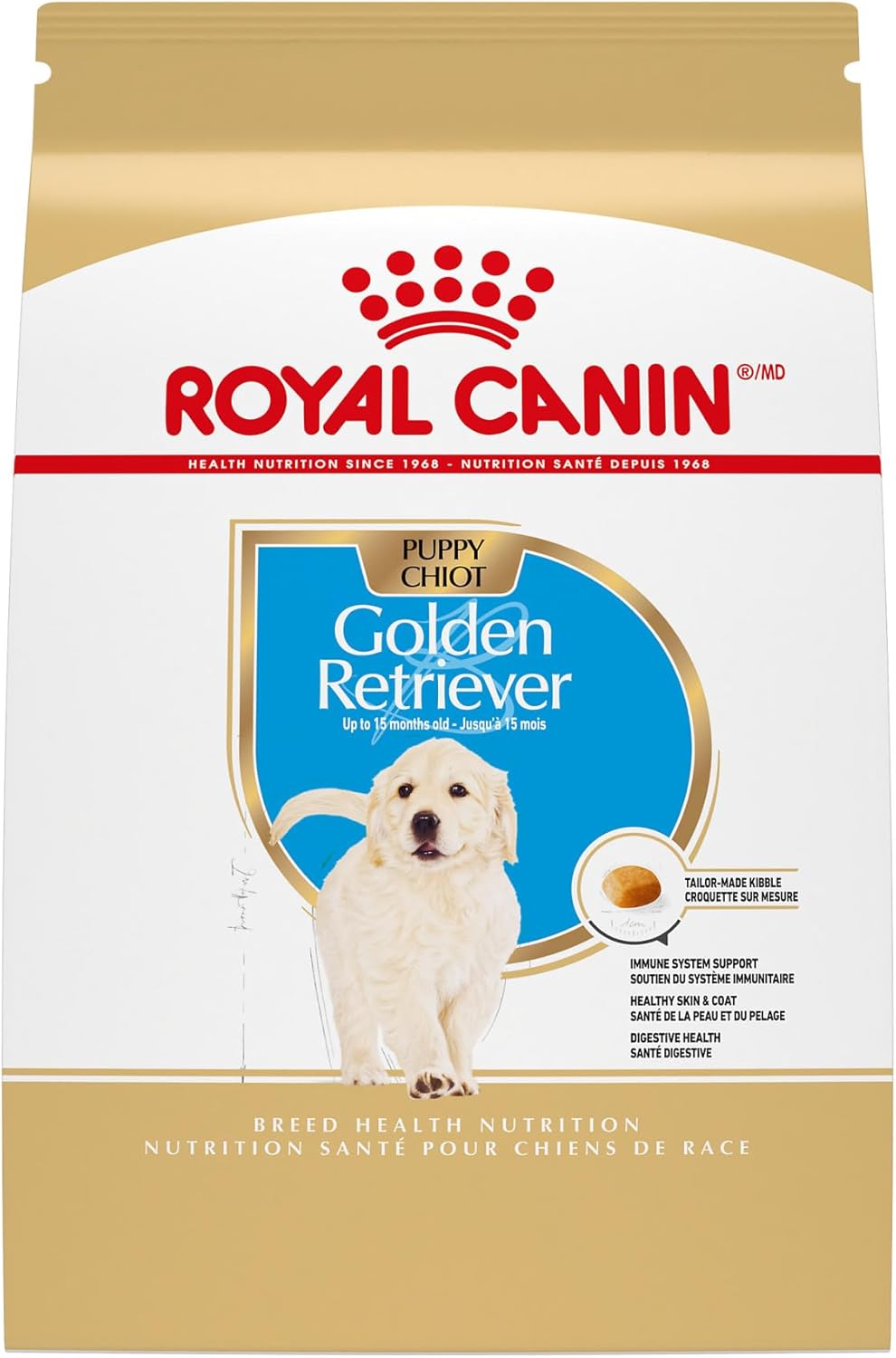
Royal Canin Golden Retriever Puppy 30 lb
Best Overall Food
| Flavor | Chicken |
|---|---|
| Age Range Description | Puppy |
| Breed Recommendation | Golden Retriever |
| Dog Breed Size | Large |
| Item Form | Pellet |
Royal Canin Golden Retriever Puppy is a breed-specific dry kibble designed for Golden Retriever puppies from 8 weeks to 15 months. The formula uses a specialized kibble shape made to fit a Golden Retriever puppy's straight muzzle and scissor bite, encouraging chewing and easing intake, while protein, prebiotics, and added antioxidants support digestion and immune development. Omega fatty acids including EPA and DHA plus targeted nutrients like glucosamine and chondroitin support skin, coat condition and joint development in a large-breed growth phase. In daily use it functions as a complete feeding solution for breeders and owners who want a tailored, science-backed diet rather than a generic puppy food. Practical benefits include consistent stool quality from prebiotics and high-quality proteins and easier feeding thanks to the breed-tailored kibble geometry. Limitations to note are the inclusion of some common cereal ingredients and chicken by-product meal in the ingredient list, which may concern owners preferring grain-free or novel-protein formulas, and that this is a large 30 lb bag intended for multi-month feeding rather than trial-sized sampling.
Best for: Owners who want a puppy food specifically formulated for Golden Retrievers and prioritize tailored nutrition to support growth, digestion, immune health, and coat condition.
Less Ideal for: People seeking grain-free diets, novel-protein recipes for food sensitivities, or those who prefer to trial a small bag before committing to a large quantity.
- Breed-specific kibble shape and texture tailored for Golden Retriever puppy bite
- Formulated to support immune development with antioxidants and vitamin E
- Contains prebiotics and high-quality proteins to promote digestive health and stool quality
- Includes EPA and DHA plus skin-and-coat nutrients to support coat condition
- Large 30 lb bag suitable for ongoing feeding of a growing large-breed puppy
- Contains grain ingredients and chicken by-product meal that some buyers avoid
- Large bag size is not convenient for first-time testing or small households
Verdict: The best overall food provides a balanced mix of protein, fats, and nutrients to support steady growth, healthy weight, and energetic development in an 8-month-old Golden Retriever.
Wag Dry Puppy Food Chicken Brown Rice 15 lb
Best Budget Food

| Unit Count | 240 Ounce |
|---|---|
| Item Form | Pellet |
| Flavor | Chicken |
| Target Species | Dog |
| Breed Recommendation | Small Breeds |
Wag Dry Puppy Food is a grain-including kibble with chicken as the first ingredient and added probiotics and fiber to support digestion and immune health. It is intended as a complete diet for growing dogs and is typically used as a daily feed; the formulation lists chicken, chicken meal, brown rice and oatmeal plus salmon oil for DHA and several probiotic strains. For value-focused owners the practical benefits are straightforward: a large 15 lb bag delivers standard puppy nutrition, high protein and added flavors and supplements that target digestion and energy needs. The recipe excludes corn, wheat and soy and notes formulation input from veterinarians and a nutritionist, which helps at this price point. Limitations to consider are that this variant is labeled for small breeds and the calorie and kibble size are tuned for smaller mouths, so larger puppies will need different portioning and a diet scaled to their growth; also the ingredient list contains multiple grains and by-products like chicken meal rather than single-source novel proteins, which some owners avoid for allergy concerns. Packaging instructions recommend gradual transition and dry storage.
Best for: Budget-minded owners who want an affordable, complete puppy diet with added digestive support and higher protein for active growth.
Less Ideal for: Owners of large-breed puppies that need breed-specific calorie and joint support or dogs with known grain or protein sensitivities.
- Chicken is the first ingredient and includes supplemental chicken meal for protein
- Contains probiotics and fiber aimed at supporting digestion and immune health
- Includes salmon oil as a source of DHA for developing puppies
- Large 15 lb bag offers cost-effective supply for regular feeding
- Formulation and package target small breeds so calorie density and kibble size may not suit large-breed puppies
- Contains multiple grains and ingredient blends rather than a single novel protein for sensitive dogs
Verdict: The best budget food gives reliable, complete nutrition and appropriate calorie levels for a growing dog while keeping costs low for value-conscious owners.
Purina Pro Plan Puppy Chicken & Rice 6 lb
Best High-Protein Food

| Flavor | Chicken & Rice |
|---|---|
| Age Range Description | Puppy |
| Item Form | Dry |
| Specific Uses For Product | Hip and Joint Support |
| Animal Food Nutrient Content Claim | High Protein |
Purina Pro Plan High Protein Dry Puppy Food Chicken & Rice is a puppy formula designed to support active growth with real chicken as the primary protein source. It is typically fed as a daily dry kibble for puppies and can be offered moistened during weaning or fed dry as puppies mature. Notable features include DHA from fish oil to support brain and vision development, added calcium and phosphorus for bone and tooth growth, live probiotics for digestive health, and antioxidants to support immune development. In practice this formula helps build lean muscle and provides concentrated nutrients for puppies that need higher protein intake, and its digestible recipe reduces the chance of stomach upset during diet transitions. Limitations include the presence of some by-product meals and grain ingredients, which may be less suitable for owners seeking grain-free or novel-protein diets, and the ingredient list includes salts and common additives that some sensitive puppies may not tolerate. Feeding amounts should be adjusted as puppies grow and you may want to consult your veterinarian for breed-specific needs.
Best for: Buyers looking to support active, growing puppies with a higher-protein, vet-backed kibble that emphasizes muscle development and digestive support.
Less Ideal for: Owners seeking a grain-free, novel-protein, or limited-ingredient puppy diet for allergy-prone dogs should consider specialized formulas instead.
- Real chicken listed as the first ingredient for bioavailable animal protein
- Includes DHA from fish oil to support brain and vision development
- Live probiotics and highly digestible formula to ease digestion and stool quality
- Added calcium, phosphorus and minerals to support bone and tooth growth
- Contains poultry by-product meal and common grains rather than novel or grain-free sources
- Includes multiple added ingredients and preservatives that some owners may avoid
Verdict: The best high-protein food suits active or muscular young dogs by supplying elevated protein levels to support healthy growth and lean muscle development.
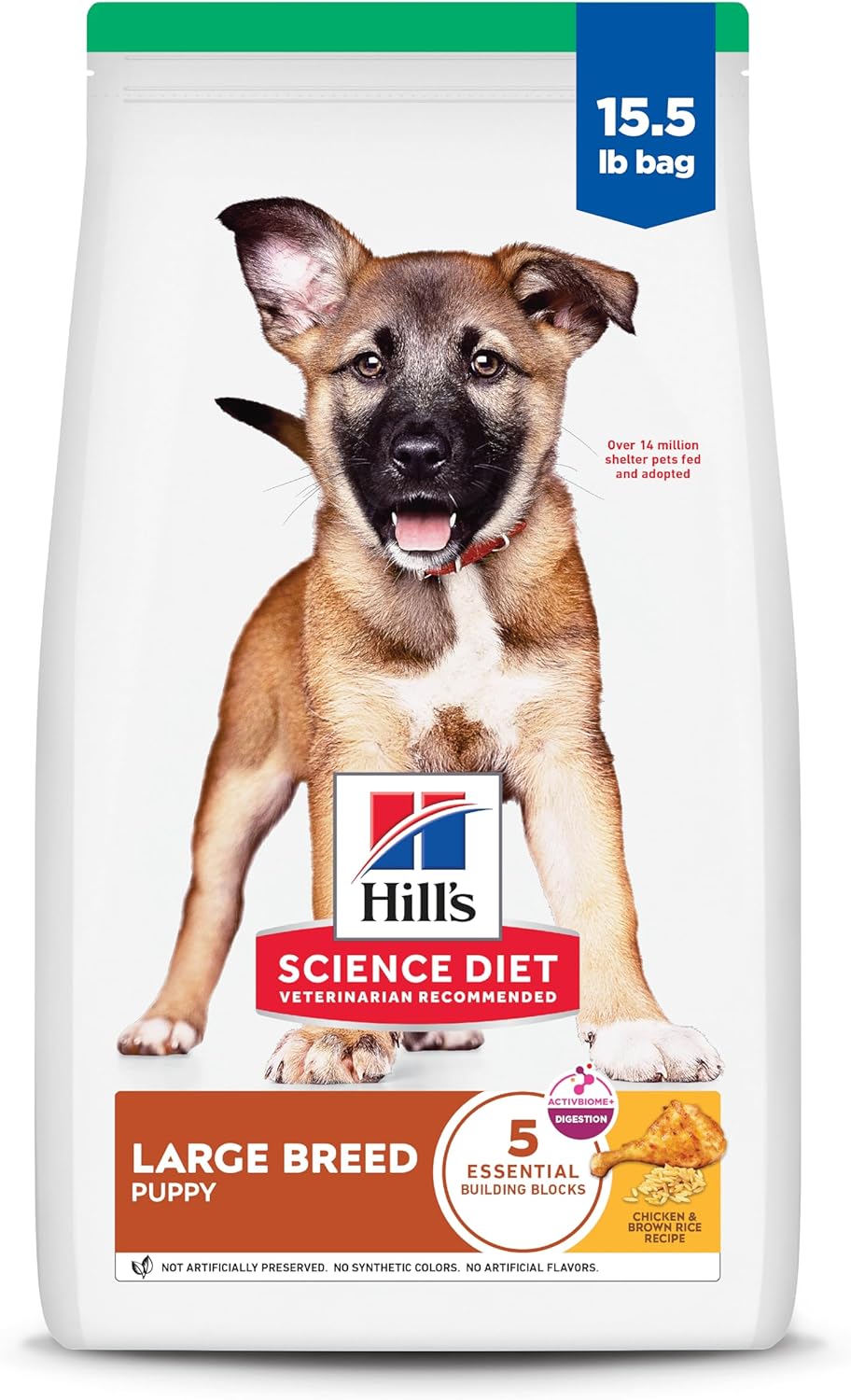
Hill's Science Diet Puppy Large Breed
Best Large-Breed Food
| Flavor | Chicken & Brown Rice |
|---|---|
| Age Range Description | Puppy |
| Breed Recommendation | Large Breeds |
| Item Form | Dry Food |
| Special Ingredients | all-natural |
Hill's Science Diet Puppy Large Breed Chicken & Brown Rice is a dry formula designed to support the specific growth needs of large-breed puppies. It is used as an everyday maintenance diet during the rapid growth phase, providing controlled calcium levels for measured bone development and high-quality protein to support muscle growth. The formula includes marine algae oil as a DHA source for brain and eye development, a blend of prebiotic fibers to support digestive health, and antioxidants to bolster the developing immune system. In practice the kibble is intended to be fed following the package feeding guide and gradually introduced over a 7-day transition when switching foods. This product focuses on growth-stage nutrition rather than therapeutic joint repair so it does not list added glucosamine or chondroitin explicitly, and buyers should monitor weight to avoid excess calories during growth. For owners of very large breeds like Great Danes, the controlled calcium and balanced nutrient profile make this a sensible foundational diet to help promote appropriate skeletal development and overall puppy health.
Best for: Buyers raising very large-breed puppies who prioritize controlled skeletal development and foundational, vet-recommended growth nutrition for long-term joint health.
Less Ideal for: Owners seeking a therapeutic formula specifically concentrated on joint repair with added glucosamine or chondroitin should consider veterinary prescription joint-support diets instead.
- Formulated with controlled calcium to support appropriate bone growth in large-breed puppies
- Includes marine algae oil providing DHA for brain and eye development
- Prebiotic fiber blend supports digestive health and nutrient absorption
- Antioxidant blend helps strengthen the developing immune system
- Does not explicitly list glucosamine or chondroitin for targeted joint repair
- Higher calorie density may require careful portion control to prevent excess weight gain
Verdict: The best large-breed food delivers controlled calories, appropriate calcium-to-phosphorus ratios, and joint-supporting nutrients tailored to the growth needs of larger retriever-type puppies.
Nulo Freestyle Large Breed Puppy 26 lb
Best Limited-Ingredient Food

| Flavor | Salmon & Turkey |
|---|---|
| Age Range Description | Puppy |
| Breed Recommendation | Large Breeds |
| Item Form | Dry |
| Additional Features | Grain-free, Advanced Probiotics |
Nulo Freestyle Large Breed Puppy is a 26 lb grain-free kibble designed to support growth, bone development, and digestive health in large-breed puppies. The formula uses deboned salmon as the first ingredient and provides a high proportion of animal-sourced protein to promote lean muscle, while DHA from fish supports brain and vision development. Larger kibble pieces encourage proper chewing for big mouths and the recipe includes balanced calcium and phosphorus for bone and joint support. Gut health is addressed with prebiotic fibers and BC30 probiotics, and omega fatty acids help skin and coat condition. The bag size and stable dry formula make it convenient for owners who prefer less-frequent shopping, though buyers should note it is grain-free and excludes common grains and some starches, which may not suit every puppy or dietary recommendation. Packaging and the 26 lb format help with shelf-life and frequent feeding routines, but consult your veterinarian for puppies with specific sensitivities or special dietary needs.
Best for: Owners of growing large-breed puppies who want a high-protein, grain-free kibble in a large bag to minimize shopping trips and support sustained energy, bone development, and digestive health.
Less Ideal for: Puppies with veterinary-prescribed grain-inclusive diets, dogs with known sensitivities to legumes or specific protein sources, or owners unable to store a large bag properly between feedings.
- High animal-based protein with deboned salmon first to support lean muscle development
- Formulated DHA and balanced calcium/phosphorus for cognitive development and bone growth in large-breed puppies
- Includes BC30 probiotics and prebiotic fibers to support digestive health and nutrient absorption
- 26 lb bag size and dry, shelf-stable formula reduce shopping frequency and suit frequent feeding schedules
- No grains, chicken or egg protein, or artificial flavors, which simplifies ingredient concerns for many owners
- Grain-free formulation may not be recommended for all puppies or by all veterinarians
- Large bag size requires proper storage to maintain freshness after opening
- Contains legumes and other non-grain starches that some dogs may be sensitive to
Verdict: The best limited-ingredient food is ideal for pets with suspected food sensitivities because it minimizes potential triggers while still covering essential nutritional needs.
Blue Buffalo Homestyle Recipe Wet Dog Food 12.5 oz
Best Wet Food

| Unit Count | 75 Ounce |
|---|---|
| Number of Items | 6 |
| Item Form | Pate |
| Manufacturer recommended age | 1 month and up |
Blue Buffalo Homestyle Recipe is a canned wet dog food sold as a six-pack of 12.5-ounce pate-style dinners with three chicken and three beef cans. It is formulated for adult dogs and can be fed as a complete meal, mixed with dry food, or used as a topper to add moisture and flavor. The recipes list real chicken or beef first, include garden vegetables and whole grains like brown rice, barley, and oatmeal, and avoid corn, wheat, soy, poultry by-product meals, artificial flavors, and artificial preservatives. That ingredient set supports palatability for picky eaters while providing protein, fiber, and added antioxidants from fruits and vegetables. Directions make portioning simple by weight, and unused portions can be refrigerated. Limitations are typical for wet food: cans must be refrigerated after opening and are heavier to store and transport than dry kibble, and feeding exclusively can be more expensive than dry diets. For dog owners prioritizing ingredient quality, taste, and everyday nutrition in a convenient ready-to-serve format, this variety pack is an easy, reliable choice.
Best for: Buyers who want a nutrient-focused everyday wet food that is palatable for picky eaters and works as a complete meal or topper to boost hydration and flavor.
Less Ideal for: Shoppers strictly seeking the lowest-cost per serving or those who need long-term unrefrigerated portions for travel should consider other formats.
- Real meat listed as the first ingredient for higher-quality protein and flavor
- Includes fruits and vegetables for antioxidants and fiber
- Free of corn, wheat, soy, poultry by-product meals, artificial flavors, and artificial preservatives
- Versatile use as a complete meal, mix-in, or topper
- Requires refrigeration after opening and has limited shelf convenience compared with dry food
- Canned wet food is typically more expensive per serving than dry kibble
Verdict: The best wet food provides tempting texture and extra moisture to encourage eating and help with hydration, useful for picky or less-hydrated puppies.
Diamond Naturals Large Breed Puppy Lamb & Rice 40 lb
Best Premium Food

| Flavor | Lamb & Rice – Puppy |
|---|---|
| Age Range Description | Puppy |
| Breed Recommendation | Large Breeds |
| Special Ingredients | grain-free |
| Unit Count | 640 Ounce |
Diamond Naturals Large Breed Puppy Lamb & Rice is a large-bag dry kibble formulated to support growth in large-breed puppies. It uses real lamb and lamb meal as primary protein sources and includes DHA from salmon oil for brain and vision development, plus added probiotics for digestive and immune support. The formula lists a mix of whole grains, vegetables, fruits, and a suite of vitamins and minerals intended to balance puppy growth while L-carnitine helps support healthy body condition. In practical use the 40 pound bag reduces repurchase frequency for multi-puppy households or owners who prefer buying in bulk, and the inclusion of probiotics and omega fatty acids addresses common puppy digestive and skin/coat needs. Buyers should note this product is breed-size specific for large puppies and is not grain-free despite a “special ingredients” note; also ingredient lists include multiple meals and grains which some owners may avoid for specific dietary plans. The bag format is standard for dry food and will require appropriate storage to maintain freshness once opened.
Best for: Buyers who need a cost-effective, large package of nutritionally complete food for growing large-breed puppies and who prioritize fewer repurchases and digestive support.
Less Ideal for: Owners feeding small-breed puppies, dogs on grain-free or very limited-ingredient diets, or those who prefer single-protein or novel-protein recipes should look elsewhere.
- Real lamb is the first ingredient for a named animal protein source
- Contains DHA (salmon oil) to support brain and vision development
- Added probiotics to support digestive health and immune function
- Large 40 lb bag reduces repurchase frequency for multi-puppy households
- Not grain-free despite some marketing terms
- Formulated specifically for large-breed puppies so not appropriate for small-breed growth needs
Verdict: The best premium food is for owners willing to invest more for superior ingredient quality, additional functional nutrients, and more specialized formulations for optimal puppy development.
Choosing the Right Dog Food 8 Month Old Golden Retriever: Key Factors to Consider
Protein Quality and Amount
Protein provides the amino acids necessary for muscle development and tissue repair during a golden retriever's final growth months. Look for named animal proteins early in the ingredient list rather than vague terms, and ensure the formula supplies a protein percentage appropriate for a large-breed puppy. Too little protein can slow muscle development; too much in an imbalanced formula can stress immature kidneys in susceptible dogs.
Beyond percentage, consider protein digestibility. Highly digestible proteins deliver usable amino acids without excessive waste, which helps maintain steady weight and energy. A mix of whole-meat sources and concentrated protein meals can offer both bioavailable amino acids and stable nutrient density.
Calorie Density and Controlled Growth
Eight-month-old golden retrievers still need adequate calories for activity and development, but the goal is steady, controlled growth rather than rapid weight gain. Choose formulas designed for large-breed puppies that moderate calorie density so your dog gains muscle without excessive fat. Feeding guidelines should be used as a starting point and adjusted based on body condition and activity level.
Calorie balance also affects joint health: excess weight increases stress on developing hips and elbows. A thoughtfully formulated food helps you maintain an ideal body condition score while meeting energy needs for play and learning.
Joint and Bone Support
Large-breed puppies are at higher risk for developmental orthopedic issues if growth is too rapid or mineral balance is off. Look for appropriate calcium and phosphorus ratios tailored for growing large breeds and ingredients that support joint tissues, such as glucosamine and chondroitin. These components do not prevent every issue, but they help provide the building blocks for healthy cartilage maintenance.
Also consider vitamin and mineral balance overall, including vitamin D for calcium metabolism. The right nutrient profile helps support healthy bone mineralization while avoiding excess mineral levels that could disrupt normal development.
Digestibility and Stool Quality
Digestibility affects how well an 8 month old puppy extracts nutrients from food and influences stool quality. Highly digestible formulas reduce the volume of waste and help ensure consistent energy and nutrient uptake. Ingredients such as specific fiber blends, prebiotics, and moderate fat levels can promote healthy digestion.
Poor digestibility can lead to loose stools, inconsistent appetite, and nutrient shortfalls. For growing retrievers, aim for a formula with a history of producing firm, regular stools and predictable portion sizes so feeding is easier to manage.
Kibble Size and Texture
Kibble shape and size matter for chewing comfort and dental development. At eight months a golden retriever has a larger jaw than earlier puppy stages but is still transitioning toward adult chewing. Choose kibble sized for large-breed puppies to encourage proper chewing without posing a choking risk. Texture also affects palatability; a balance between biteable and sturdy helps maintain interest while cleaning teeth during chewing.
If you plan to switch between dry and wet formats or mix in toppers, consider how kibble holds up to moisture and whether it will remain palatable and safe when softened.
Ingredient Transparency and Food Safety
Knowing what is in the formula helps you assess quality and reduce the chance of surprising sensitivities. Prefer lists that name primary protein sources and avoid ambiguous filler-heavy formulations. Clear nutritional analysis panels help you verify that the food meets growth-stage nutrient targets for large-breed puppies.
Food safety and manufacturing transparency matter too. Look for manufacturers that publish feeding trials or nutrient analyses rather than relying solely on generic nutrient guarantees. This information helps you evaluate consistency and long-term suitability for your retriever.
How Much Should I Be Feeding My 8 Month Old Golden Retriever Each Day?
Daily portions depend on calorie density of the selected formula, your dog's current weight, activity level, and body condition. Start with the feeding guideline on the package for a large-breed puppy and use it as a baseline rather than a strict rule.
Monitor body condition with the hands-on method: you should be able to feel the ribs under a light layer of fat and see a visible waist from above. Adjust portions up or down by 10 to 15 percent and reassess over a two-week period rather than making abrupt changes.
- Feed multiple smaller meals if recommended to avoid overeating and aid digestion.
- Weigh portions using a kitchen scale for accuracy rather than relying on measuring cups.
- Reassess feeding amounts monthly during this growth phase.
When Is It Appropriate to Transition to Adult Food?
Many golden retrievers remain on puppy-formulated diets until 12 to 18 months due to continued musculoskeletal maturation. For large-breed dogs, delaying the switch to adult maintenance helps ensure controlled growth and supports joint development.
Watch for signs that your dog is approaching skeletal maturity: slower rates of weight gain, stabilization of shoulder height, and a mature body condition. Consult your veterinarian before transitioning to determine the best timing based on your dog's growth curve.
- Transition gradually over 7 to 10 days to minimize digestive upset.
- Choose an adult formula specifically designed for large breeds when the time comes.
How Can I Manage Allergies or Food Sensitivities at This Age?
Food sensitivities often show up as chronic ear infections, itchy skin, or recurrent gastrointestinal upset. If you suspect a sensitivity, work with your veterinarian to rule out non-dietary causes first and consider an elimination diet guided by a professional.
Limited-ingredient or single-protein formulas can help identify offending ingredients, and switching to a novel protein may resolve symptoms. Make changes one at a time and allow several weeks for improvement before deciding if the new formula is effective.
- Document symptoms, timeline, and any other environmental changes when troubleshooting.
- Avoid rotating multiple new foods at once during an elimination trial.
Should I Add Supplements Like Fish Oil or Glucosamine?
Some owners add supplements to support joint health or skin and coat during growth, but supplements should not replace a complete, balanced formula. If the chosen food already contains joint-support ingredients and omega fatty acids at meaningful levels, additional supplementation may be unnecessary.
Discuss supplementation with your veterinarian, who can advise on dosages and interactions. Over-supplementing certain vitamins or minerals can be harmful, so targeted additions based on bloodwork or clinical need are safer than blanket supplementation.
- Use fish oil sources verified for purity to avoid contaminants.
- Select glucosamine products formulated for large-breed dogs and confirm proper dosing with your vet.
How to Handle Picky Eating Without Compromising Nutrition
Picky behavior can be a natural phase, but at eight months you should avoid encouraging refusal by offering frequent treats or table scraps. Maintain a consistent feeding schedule and remove uneaten food after 15 to 20 minutes to reinforce regular meals.
If appetite drops suddenly, rule out medical causes before assuming picky eating. Brief appetitive dips can sometimes be managed by warming food slightly to enhance aroma or adding a small amount of a palatable topper, but avoid turning this into a permanent habit that undermines balanced nutrition.
- Offer a consistent routine and minimize free-feeding.
- Limit high-calorie toppers that can unbalance daily nutrient intake.
How We Chose the Best Dog Food 8 Month Old Golden Retriever
We selected products that match the nutritional needs of an 8 month old golden retriever and meet practical feeding requirements for large-breed puppies. Our evaluation emphasized formulas formulated for large-breed puppy development, high-quality animal protein content, appropriate calorie density to support steady growth, and joint-support ingredients such as appropriate calcium-to-phosphorus ratios and sources of glucosamine or chondroitin. Digestibility and ingredient transparency were weighed to favor options likely to produce firm stools and reliable nutrient absorption. We also considered kibble size and texture for comfortable chewing at this growth stage, plus availability of both dry and wet format options when relevant. We excluded any foods labeled exclusively for adult maintenance or for unrelated life stages, and we did not consider therapeutic prescription diets unless they matched the standard growth and health needs of large-breed puppies. Products with insufficient nutrient analysis, unclear sourcing, or formulas lacking essential amino acids and minerals for growth were removed from consideration. The final shortlist reflects a balance of growth-appropriate nutrition, digestibility, joint health support, and practical feeding features.
Our full evaluation process is outlined in our review methodology.
FAQ
Is a large-breed puppy formula necessary for an 8 month old golden retriever?
Often yes. Large-breed puppy formulas are formulated with controlled calorie density and calcium-to-phosphorus ratios suited for slower, steady growth, which reduces the risk of developmental orthopedic problems. Consult your veterinarian to confirm if your dog should remain on a large-breed puppy formula.
How often should I weigh my puppy to track growth?
Weighing every two to four weeks during this growth stage gives a useful trend without causing stress. Track weight alongside body condition and growth in height to ensure your retriever is gaining appropriately rather than relying on weight alone.
Can I feed a combination of wet and dry food to my 8 month old retriever?
Yes. Mixing wet and dry formats can improve palatability and increase moisture intake, but be mindful of overall calorie and nutrient balance. Ensure combined portions still meet daily nutrient targets and adjust dry portions to account for added calories from wet food.
What signs indicate my retriever is gaining weight too quickly?
Look for reduced waist definition, difficulty feeling ribs under a light layer of fat, and decreased mobility during play. Rapid increases in body condition, rather than steady proportional growth, suggest adjusting portions or exercise routines to slow weight gain.
Are grain-free diets recommended for puppies?
Grain-free diets are not inherently better for growth and are only necessary if your dog has a diagnosed grain sensitivity. Whole grains can provide digestible energy and fiber. Base the decision on veterinary advice and observed tolerance rather than marketing claims.
Final Verdict
Prioritize a formula that supports steady, controlled growth with high-quality protein, appropriate calorie density, and joint-supporting nutrients tailored for large-breed puppies. Monitor body condition and stool quality closely and adjust portions or formulations based on measurable changes rather than short-term preferences. When in doubt, consult your veterinarian to align feeding choices with your retriever's growth curve and activity level so you can confidently choose an option that balances development, joint health, and digestibility.

