

At nine months your German Shepherd is transitioning from rapid puppy growth to adolescent development, when nutrition still has outsized influence on size, bone formation, and activity levels. Choosing the right food now affects lean muscle, joint health, and how well your dog handles growth-plate stresses. This guide shortlists seven top food options for nine month old German Shepherds chosen for nutrient profiles that support large-breed development. We evaluate protein quality, calcium-to-phosphorus balance, fat and calorie density, and joint-support ingredients to help you pick the best fit for your dog and feeding routine. Read on for focused guidance and practical feeding notes.
Top Picks at a Glance
| Best Overall Food for 9-Month-Old German Shepherd The best all-around formula for growing German Shepherd puppies | ROYAL CANIN German Shepherd Puppy Dry Dog Food 30 lb |  |
| Best Budget Food for 9-Month-Old German Shepherd Affordable puppy nutrition that covers essential needs without extras | IAMS Proactive Health Large Breed Puppy 30.6 lb |  |
| Best Puppy-Formulated Food Specifically formulated for puppy growth, DHA, and developmental needs | Hill's Science Diet Puppy Large Breed |  |
| Best High-Protein Food Higher protein ratios to support active growth and muscle development | Nutro Ultra Large Breed Puppy 30 lb |  |
| Best Large-Breed Food Nutrition tailored for large-breed puppies' growth and joint health | Purina Pro Plan Large Breed Puppy |  |
| Best Sensitive-Stomach Food Gentle formulas for dogs with digestion or food-sensitivity issues | Purina Pro Plan Sensitive Skin & Stomach Puppy Large |  |
| Best Premium Food Higher-end formulas emphasizing quality ingredients and advanced nutrition | ORIJEN Puppy Large Dry Dog Food 23.5 lb |  |
ROYAL CANIN German Shepherd Puppy Dry Dog Food 30 lb
Best Overall Food for 9-Month-Old German Shepherd

| Flavor | Chicken |
|---|---|
| Age Range Description | Puppy |
| Breed Recommendation | German Shepherd |
| Package Size | 30 lb Bag |
| Item Form | Pellet |
Royal Canin German Shepherd Puppy is a breed-targeted dry kibble designed for purebred German Shepherd puppies from 8 weeks to 15 months. The formula uses a specialized kibble shape sized for a German Shepherd puppy's jaw and encourages chewing while delivering highly digestible proteins and specific fibers to support stool quality and digestive health. The recipe includes an antioxidant complex with vitamin E for immune development and adds glucosamine and chondroitin to help bone and joint support during rapid growth. Ingredients list shows protein sources like chicken meal and chicken by-product meal and includes functional additives such as fish oil, fructooligosaccharides, and marine microalgae oil. Practical benefits are steady, targeted nutrition that simplifies feeding a growing German Shepherd puppy and helps address breed tendencies for joint and digestive concerns. Limitations are that the ingredient mix includes some by-product meals and cereals rather than only whole-muscle proteins, so buyers prioritizing novel or grain-free formulas may prefer other options.
Best for: Buyers who want a science-backed, breed-specific complete dry food that balances growth needs, joint support, and digestive health for German Shepherd puppies.
Less Ideal for: Owners seeking a novel-protein, grain-free, or limited-ingredient puppy diet for food-sensitive dogs should consider alternative formulas.
- Breed-specific kibble shape and texture sized for German Shepherd puppy jaws
- Contains glucosamine and chondroitin to support bone and joint development
- Antioxidant complex with vitamin E to help immune system development
- Highly digestible proteins and fibers to promote digestive health and stool quality
- Includes chicken by-product meal and cereal grains rather than only whole-muscle proteins
- Not a grain-free or limited-ingredient formula for puppies with specific sensitivities
Verdict: The best overall food for a 9-month-old German Shepherd, balancing growth-stage nutrition, appropriate calories, joint support, and ingredient quality for healthy development.
IAMS Proactive Health Large Breed Puppy 30.6 lb
Best Budget Food for 9-Month-Old German Shepherd

| Flavor | Chicken |
|---|---|
| Age Range Description | Puppy |
| Breed Recommendation | Large Breeds |
| Item Form | Dry Kibble |
| Container Type | Bag |
IAMS Proactive Health Large Breed Puppy is a chicken-first dry kibble designed specifically for growing large-breed puppies. It is used as a daily feed to support bone and joint development, cognitive growth, immune function, skin and coat, and muscle development. The formula includes omega-3 DHA for brain development, glucosamine and chondroitin sources for joint support, antioxidants like vitamin E and selenium for immune health, and a higher-protein profile from chicken and egg to build lean muscle. Practical benefits include breed-tailored kibble size for easier chewing, clear feeding guidelines for staged growth, and a formulation that avoids fillers and artificial flavors. Limitations are that the recipe contains common grains and by-product meal, which some owners avoid, and it is formulated for large-breed growth so calorie and calcium targets may require monitoring if your veterinarian recommends a different plan for a specific Doberman pup. For owners focused on steady, supported large-breed development this is a straightforward, widely available option; dogs with special sensitivities or those on a vet-prescribed diet should consult their veterinarian first.
Best for: Buyers who want a practical, vet-recommended large-breed puppy kibble that balances growth nutrients, joint support, and digestibility for steady development of active Doberman puppies.
Less Ideal for: Owners seeking grain-free recipes, those with known ingredient intolerances, or dogs under a veterinarian's special medical diet plan should consider other options.
- Formulated specifically for large-breed puppies with nutrients to support bones and joints
- Includes omega-3 DHA to support cognitive development and training
- Chicken is the first ingredient providing animal-based protein for muscle growth
- Contains antioxidants (vitamin E, selenium) to help immune system development
- Clear feeding guidelines for staged growth and transition timing to adult large-breed formula
- Contains grain ingredients and chicken by-product meal which some owners prefer to avoid
- Not suitable as a veterinary-prescribed diet for medical conditions without professional approval
Verdict: The best budget food for a 9-month-old German Shepherd that provides complete growth nutrition and good value while keeping costs low.
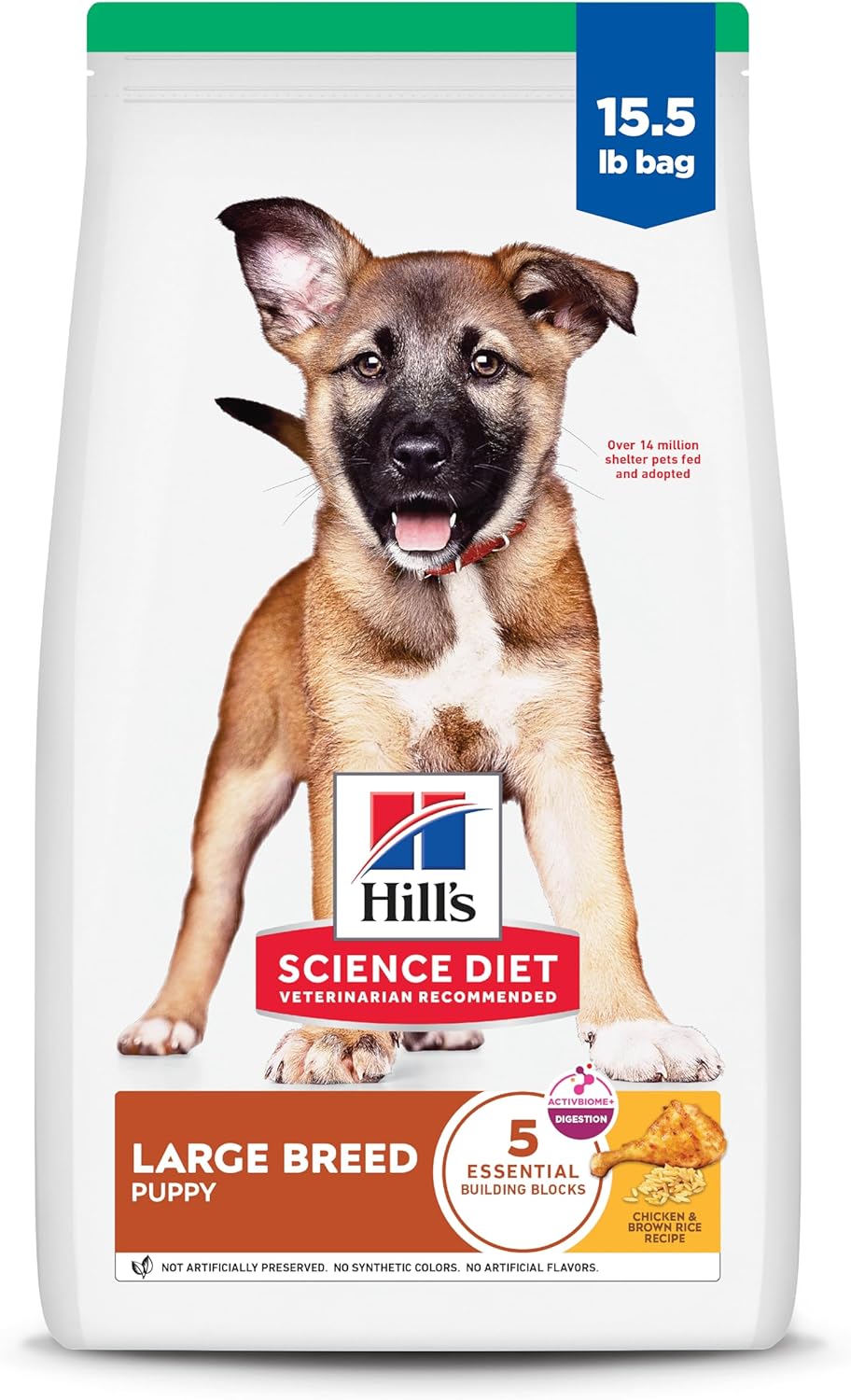
Hill's Science Diet Puppy Large Breed
Best Puppy-Formulated Food
| Flavor | Chicken & Brown Rice |
|---|---|
| Age Range Description | Puppy |
| Breed Recommendation | Large Breeds |
| Item Form | Dry Food |
| Special Ingredients | all-natural |
Hill's Science Diet Puppy Large Breed Chicken & Brown Rice is a dry formula designed to support the specific growth needs of large-breed puppies. It is used as an everyday maintenance diet during the rapid growth phase, providing controlled calcium levels for measured bone development and high-quality protein to support muscle growth. The formula includes marine algae oil as a DHA source for brain and eye development, a blend of prebiotic fibers to support digestive health, and antioxidants to bolster the developing immune system. In practice the kibble is intended to be fed following the package feeding guide and gradually introduced over a 7-day transition when switching foods. This product focuses on growth-stage nutrition rather than therapeutic joint repair so it does not list added glucosamine or chondroitin explicitly, and buyers should monitor weight to avoid excess calories during growth. For owners of very large breeds like Great Danes, the controlled calcium and balanced nutrient profile make this a sensible foundational diet to help promote appropriate skeletal development and overall puppy health.
Best for: Buyers raising very large-breed puppies who prioritize controlled skeletal development and foundational, vet-recommended growth nutrition for long-term joint health.
Less Ideal for: Owners seeking a therapeutic formula specifically concentrated on joint repair with added glucosamine or chondroitin should consider veterinary prescription joint-support diets instead.
- Formulated with controlled calcium to support appropriate bone growth in large-breed puppies
- Includes marine algae oil providing DHA for brain and eye development
- Prebiotic fiber blend supports digestive health and nutrient absorption
- Antioxidant blend helps strengthen the developing immune system
- Does not explicitly list glucosamine or chondroitin for targeted joint repair
- Higher calorie density may require careful portion control to prevent excess weight gain
Verdict: The best puppy-formulated food that delivers growth-phase nutrients, DHA for brain development, and balanced calcium-to-phosphorus for safe skeletal growth.
Nutro Ultra Large Breed Puppy 30 lb
Best High-Protein Food

| Flavor | Chicken, Lamb & Salmon |
|---|---|
| Age Range Description | Puppy |
| Breed Recommendation | Large Breeds |
| Item Form | Pellet |
| Unit Count | 480 Ounce |
Nutro Ultra Large Breed Puppy is a dry kibble aimed at growing large-breed pups, using chicken as the first ingredient plus lamb and salmon to raise the protein level and provide varied amino acids. It is typically fed as a daily complete diet for puppies during growth stages; the package includes feeding guidelines by weight and age to help support steady development. Notable features include the trio of proteins, inclusion of fish oil and flaxseed for omega fatty acids, and a blend of 15 fruits and vegetables intended to support skin and coat health. The recipe excludes common fillers like corn, wheat, and soy protein and avoids artificial colors, flavors, and preservatives. For an active 9-month-old German Shepherd this kibble delivers concentrated protein sources and added joint-support ingredients like chicken meal that can help muscle and skeletal development when paired with appropriate portioning. Limitations are that specific protein and fat percentages are not listed on the package details here and calorie density should be checked versus the puppy's activity level to avoid overfeeding large-breed pups nearing adulthood.
Best for: Buyers raising an active large-breed puppy who prioritize higher-quality animal protein sources and ingredients aimed at supporting growth, coat health, and joint development.
Less Ideal for: Owners who need precise macronutrient targets or calorie counts for a medically managed diet or puppies with specific food sensitivities should consider veterinary-formulated or limited-ingredient alternatives.
- Multiple animal proteins (chicken, lamb, salmon) for varied amino acids
- Formulated specifically for large breed puppies with feeding guidelines by age and weight
- Includes omega sources (fish oil, flaxseed) to support skin, coat, and joint health
- Made without corn, wheat, soy protein, artificial colors, flavors, or preservatives
- Contains added fruits and vegetables and 15 superfoods for extra micronutrients
- Package information here does not list guaranteed analysis for crude protein and fat percentages
- High caloric density for large-breed growth phases may require careful portion control as puppy matures
Verdict: The best high-protein food to support an active 9-month-old German Shepherd’s muscle development and energy needs while using quality protein sources.
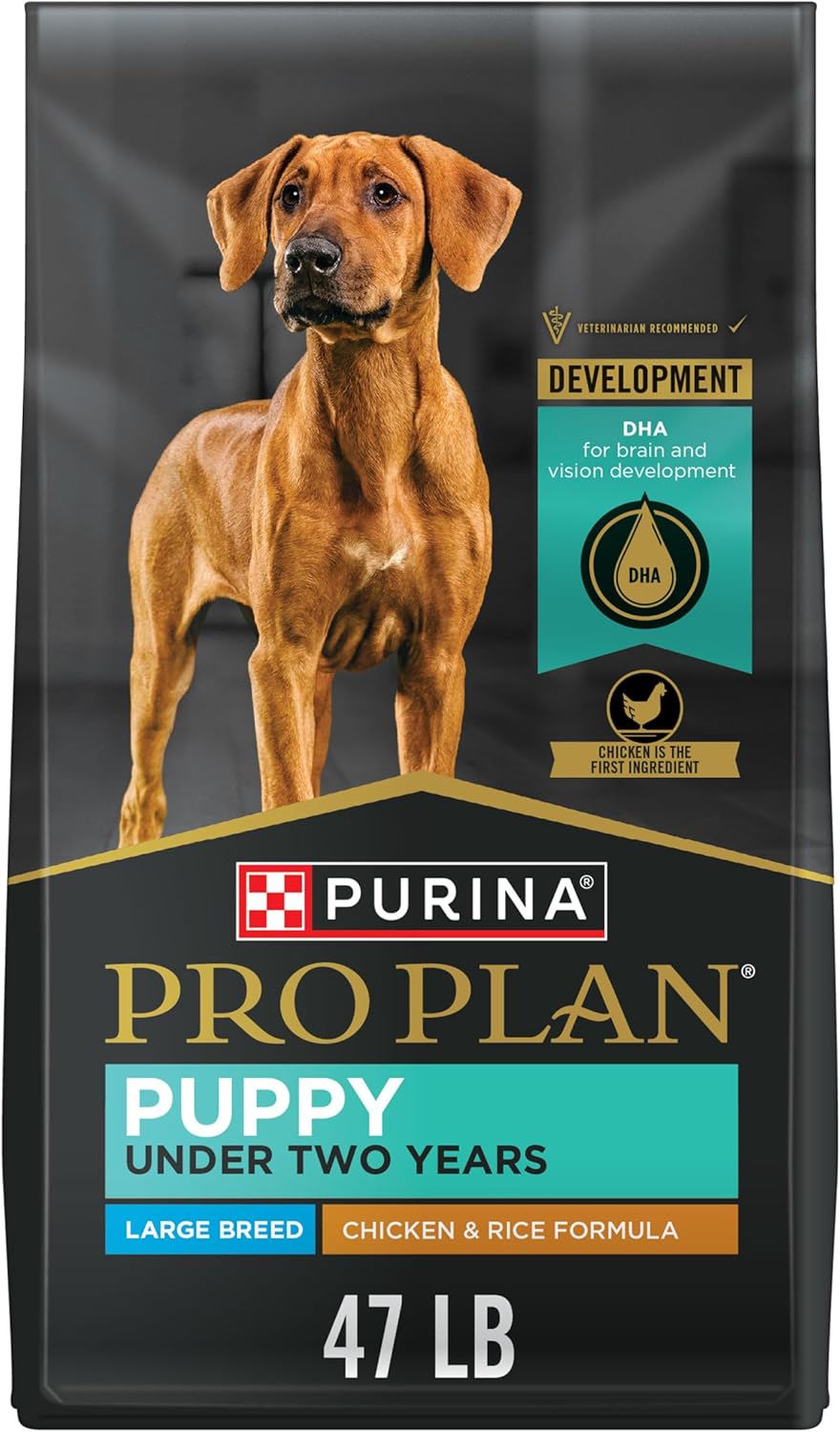
Purina Pro Plan Large Breed Puppy
Best Large-Breed Food
| Flavor | Chicken & Rice |
|---|---|
| Age Range Description | Puppy – Large Breed |
| Item Form | Dry |
| Unit Count | 752 Ounce |
Purina Pro Plan Large Breed Chicken & Rice dry puppy food is designed to support the specific needs of large-breed puppies during growth with a crunchy kibble built around real chicken as the primary ingredient. In everyday use it is fed as a complete diet following the bag feeding chart and can be offered moistened for young pups then switched to dry as they age. Notable features include DHA from fish oil for brain and vision support, added glucosamine for joint development, omega-6 fatty acids and vitamin A for skin and coat, and antioxidants plus minerals to support immune and bone development. The 47 lb bulk bag suits owners who want fewer shopping trips and consistent formula availability, and the high-protein, high-calorie formulation helps fuel active growing puppies. Limitations to consider are that the ingredient list includes grains and poultry by-product meals so it is not strictly grain-free or limited-ingredient by some definitions, and the large bulk size may be inconvenient for small households once opened if storage or freshness are concerns.
Best for: Buyers who want a veterinarian-backed, high-protein puppy formula in a large package to minimize shopping trips and support steady growth in large-breed puppies.
Less Ideal for: Owners specifically seeking a grain-free or novel-protein limited-ingredient formula, or those who cannot store or use a large bulk bag before freshness declines.
- Formulated for large-breed puppies with added glucosamine to support joint development
- Real chicken listed as the first ingredient for high-quality protein
- Includes DHA from fish oil to support brain and vision development
- Available in a 47 lb bulk bag to reduce shopping frequency
- Contains grains and poultry by-product meals, so it is not grain-free
- Large 47 lb bag may present freshness and storage challenges for some households
Verdict: The best large-breed food designed to manage growth rate, support joint health with controlled calcium and added joint-support nutrients for big, fast-growing breeds.
Purina Pro Plan Sensitive Skin & Stomach Puppy Large
Best Sensitive-Stomach Food

| Flavor | Salmon & Rice |
|---|---|
| Age Range Description | Puppy – Large Breed |
| Item Form | Dry |
| Specific Uses For Product | Digestive Health, Immune Support, Sensitive Skin, Sensitive Stomach |
| Special Ingredients | Salmon |
Purina Pro Plan Sensitive Skin and Stomach Large Breed Puppy Salmon & Rice is a dry formula built for puppies that need gentler nutrition during growth. It uses salmon as the primary protein and rice and oatmeal as easily digested carbohydrate sources, and it is fortified with guaranteed live probiotics plus natural prebiotic fiber to support gut bacteria. The recipe also includes DHA from fish oil for brain and vision development and sunflower oil for omega-6 fatty acids to help skin and coat health. In practice this bag works as a daily feeding option for large-breed pups, delivering concentrated nutrition and a feeding schedule that scales down as the puppy ages. Notable limitations are typical of concentrated puppy formulas: you should follow the feeding guidelines closely to avoid overfeeding large-breed puppies and allow a gradual transition over 7 to 10 days to minimize upset. The formula avoids corn, wheat, soy, artificial colors, and flavors, which can simplify ingredient sensitivities for some pups, but individual tolerances vary so monitor stool quality and consult your veterinarian if problems persist.
Best for: Owners of large-breed puppies seeking a puppy formula formulated to be easy on the stomach and skin while still supporting growth and development.
Less Ideal for: Owners who need a novel-protein or grain-free prescription diet for diagnosed food allergies should consult their veterinarian and consider alternatives tailored to that condition.
- Salmon is first ingredient providing a gentle, high-quality protein source
- Guaranteed live probiotics plus prebiotic fiber to support digestion and immune health
- Easily digestible grains like rice and oatmeal suitable for sensitive stomachs
- Includes DHA from fish oil for brain and vision development in growing pups
- High-calorie, concentrated puppy formula requires careful portion control for large breeds
- Contains peas and pea protein which some dogs may not tolerate
Verdict: The best sensitive-stomach food for 9-month-old German Shepherds that need gentle, easily digestible ingredients and limited irritants to reduce gastrointestinal upset.
ORIJEN Puppy Large Dry Dog Food 23.5 lb
Best Premium Food

| Flavor | Puppy Recipe |
|---|---|
| Item Form | Pellet |
| Dog Breed Size | Large |
| Unit Count | 376 Ounce |
| Animal Food Diet Type | Veterinary Diet |
This 23.5 lb ORIJEN Puppy Large formula is a high-protein, grain-free dry kibble designed to support rapid growth and development in large-breed puppies. It uses a WholePrey philosophy, listing fresh or raw animal ingredients first and including organs and bone-derived nutrients to supply naturally occurring vitamins and minerals. The recipe delivers concentrated animal protein sources such as chicken, turkey, salmon and herring and includes a freeze-dried coating to boost palatability. In practice it is fed twice daily with portion adjustments based on your puppy's weight, and the brand advises a 10- to 14-day transition from previous food. Practical benefits include a formula tailored for brain, skin and coat health and an emphasis on fewer synthetic additives due to nutrient-dense whole ingredients. Limitations to consider are the grain-free composition and high protein density, which may not suit puppies with certain veterinary-prescribed diets or owners seeking lower-protein, grain-included options, and the large wholesale bag size may be more than needed for small households or short feeding windows.
Best for: Owners who prioritize premium, biologically oriented ingredients and want a nutrient-dense puppy formula to support optimal growth and development in large-breed dogs.
Less Ideal for: Owners looking for grain-inclusive, lower-protein puppy diets or who need a veterinary-prescribed formula for specific health issues should consider alternatives.
- High animal-ingredient content with first five ingredients listed as fresh or raw meats and fish
- WholePrey inclusion of organs and bones provides a range of naturally occurring nutrients
- Formulated specifically for large-breed puppies to support growth and development
- Freeze-dried coating increases palatability to encourage eating during training or transitions
- Grain-free, high-protein formula may not be appropriate for puppies on certain veterinary diets
- Large 23.5 lb bag can be bulky and may be excessive for multi-bag turnover households
Verdict: The best premium food for owners who prioritize top-quality ingredients, novel proteins, and comprehensive nutrient profiles for optimal growth and long-term health.
Choosing the Right Dog Food 9 Month Old German Shepherd: Key Factors to Consider
Protein Quality and Amount
Protein is the building block for muscle and tissue, so both the source and the amount matter for a nine month old German Shepherd. Look for named animal proteins high on the ingredient list and avoid vague "meat meals" without source detail. Digestible proteins reduce stool volume and ensure the amino acids are available for lean-muscle growth and recovery.
Too little protein can limit muscle development during this active growth phase. Conversely, extremely high protein is not inherently harmful for healthy dogs but should be paired with appropriate calories and mineral balance. For large-breed adolescents, aim for a formula that supports steady muscle accretion without promoting accelerated growth plate stress.
Calcium-to-phosphorus Balance
The ratio of calcium to phosphorus directly affects bone mineralization. For nine month old large-breed puppies, an appropriate balance helps bones strengthen at a rate consistent with safe skeletal maturation. Excess calcium or an imbalanced ratio can contribute to developmental orthopedic problems, especially in fast-growing breeds.
Manufacturers formulate large-breed growth diets with controlled mineral levels; when choosing food, check that calcium and phosphorus fall within recommended ranges for large-breed growth. If your dog receives supplemental minerals or chews fortified treats, factor those into the total daily intake.
Calorie Density and Fat Profile
Caloric density determines portion sizes and how easy it is to manage steady, controlled growth. A nine month old German Shepherd still needs substantial energy for activity and muscle development, but you want to avoid excessive calories that accelerate weight gain and stress joints.
Fat provides concentrated energy and carries essential fatty acids. Look for balanced levels of omega-3 and omega-6 fatty acids to support brain development, skin, and coat. If your dog is highly active or working, choose a slightly higher calorie formula; for more sedentary dogs, prefer a moderate calorie density to reduce the need for portion restraint.
Joint-support Ingredients
Large-breed dogs are predisposed to joint issues, and early nutritional support can help long-term joint health. Ingredients commonly used for joint support include glucosamine, chondroitin, and fish oil, as well as naturally collagen-rich components. These ingredients do not prevent all orthopedic problems but can support cartilage maintenance and reduce inflammation risk as your dog matures.
When evaluating a formula, consider the presence and levels of these supplements and whether the overall diet provides antioxidants and adequate vitamin and mineral support that work together with joint-specific nutrients.
Digestibility and Stool Quality
Highly digestible diets make better use of nutrients and tend to produce firmer, smaller stools. Digestibility matters because efficient nutrient absorption supports growth while reducing waste and digestive upset. Ingredients such as named protein sources, prebiotic fibers, and moderate fat levels contribute to predictable stool quality.
If your dog has a sensitive stomach or frequent loose stools, prioritize formulas with simpler ingredient lists and supportive fibers. Transition slowly when changing foods to monitor tolerance and stool changes.
Kibble Size, Texture, and Palatability
Kibble size and texture influence chewing, dental wear, and how comfortably a nine month old German Shepherd eats. Larger kibbles can encourage chewing for bigger jaws and help reduce gulping, while overly small kibbles may be swallowed quickly. Texture also affects palatability and can make it easier to mix in toppers or supplements.
Palatability is important because even high-quality formulas are ineffective if the dog refuses them. Consider trialing a small bag or look for formulas with flavor profiles your dog prefers, and adjust based on acceptance and any signs of gagging or difficulty chewing.
How Many Calories Should a Nine Month Old German Shepherd Eat Each Day?
Daily calorie needs vary by activity level, neuter status, and individual metabolism. At nine months many German Shepherds are still growing rapidly and often have higher calorie needs than adults, but you should aim to provide enough energy for steady growth without excess weight gain.
Use the diet's calorie-per-cup information and your dog's current weight to calculate portion sizes, then monitor body condition and adjust. Look for moderate energy formulas designed for large-breed growth; if your dog is exceptionally active or working, increase portions cautiously and track weight and body condition weekly.
- Start with feeding guidelines on the label and adjust based on body condition
- Aim to maintain a visible waist and palpable ribs without excess fat
- Divide daily calories into at least two meals to reduce overeating and support digestion
When Should You Transition From Puppy to Adult Large-breed Food?
Large-breed dogs often reach skeletal maturity later than small breeds, commonly between 12 and 24 months. For German Shepherds, many veterinarians recommend staying on a large-breed growth formula until about 12 to 18 months, depending on growth rate and body condition.
Watch for signs such as slowed growth in height, stable body condition, and recommendations from your veterinarian. Transition gradually over 7 to 10 days to avoid digestive upset.
- Consult your veterinarian before switching, especially if your dog is on supplements
- Monitor weight and activity when you begin the transition
Can Diet Help Prevent Joint Problems Later in Life?
Nutrition can play a supportive role in joint health but is not a guaranteed prevention for hereditary conditions. Providing balanced nutrition with appropriate minerals, controlled calories, and joint-support ingredients can reduce unnecessary stress on developing joints and supply the nutrients needed for cartilage maintenance.
Early attention to body condition and avoiding excess weight are among the most effective dietary strategies to reduce lifetime joint stress. Combine a thoughtful diet with age-appropriate exercise to support musculoskeletal health.
- Maintain lean muscle through adequate protein and exercise
- Avoid overfeeding during growth to reduce joint load
- Consider formulas with added omega-3s and joint supplements if advised by your vet
How to Switch Foods Without Upsetting Digestion
A slow, staged transition helps your nine month old German Shepherd adjust to a new formula. Start by mixing a small proportion of the new food into the current diet and increase the new-food ratio every few days over about one week. Watch for changes in appetite, stool consistency, and energy.
If your dog experiences loose stools or vomiting, slow the transition and consult your veterinarian if problems persist. For dogs with sensitive stomachs, consider mixing in a digestive-friendly topper or choosing a simpler ingredient profile.
- Day 1-2: 75% old food, 25% new food
- Day 3-4: 50% old, 50% new
- Day 5-7: 25% old, 75% new, then full switch if tolerated
What to Expect in Stool, Coat, and Energy when Switching Diets
A well-tolerated diet results in firm, regular stools, a shiny coat, and consistent energy levels. Changes in stool frequency, looseness, or odor can indicate intolerance or a need for a different nutrient balance.
Coat improvements may take several weeks if a new formula provides better fatty acid balance. Monitor your dog for changes in activity and mood as an indirect measure of how well the new food meets energy needs.
- Allow several weeks to evaluate coat and long-term effects
- Short-term stool changes are normal during transitions; persistent issues need veterinary attention
Supplements and Treats: What to Add and What to Avoid
Supplements can complement a complete diet but are usually unnecessary if the food already includes balanced vitamins, minerals, and joint nutrients. If you choose supplements, prioritize omega-3 fish oil for anti-inflammatory support and measured glucosamine or chondroitin for joint backing.
Avoid adding excess calcium supplements or high-calorie treats that upset the diet's mineral and caloric balance. Treats should be accounted for in the daily calorie budget to prevent unwanted weight gain during growth.
- Check for overlapping active ingredients to avoid excessive dosing
- Use low-calorie training treats and subtract their calories from meal portions
- Discuss any supplement plan with your veterinarian before starting
How We Chose the Best Dog Food 9 Month Old German Shepherd
We selected foods that meet the nutritional needs of large-breed puppies entering adolescence and filtered out formulas intended solely for very young puppies or adult maintenance. Our process prioritized complete and balanced diets formulated to support continued growth without accelerating bone maturation. Evaluation criteria included protein source and digestibility, because amino acids drive muscle development and recovery; calcium-to-phosphorus ratio and controlled caloric density, since excessive minerals or calories can stress growth plates; fat content and omega fatty acid profile to support energy needs and skin and coat health; inclusion of joint-support ingredients such as glucosamine and chondroitin or naturally rich sources of glycosaminoglycans; kibble size and texture suited for larger jaws and to encourage chewing; and ingredient transparency and digestibility indicators, such as named meat sources and limited filler content. We excluded specialty therapeutic formulas that address disease states rather than routine growth. We also filtered out products lacking clear large-breed growth guidance or that did not publish complete nutrient profiles. The resulting shortlist emphasizes balanced growth support, joint care, and calories appropriate for a nine month old German Shepherd still completing skeletal maturity.
Our full evaluation process is outlined in our review methodology.
FAQ
Is grain-free food better for a nine month old German Shepherd?
Grain-free diets are not inherently better and are usually unnecessary unless your dog has a documented grain intolerance. Whole grains can provide digestible energy and fiber; focus on overall nutrient balance and digestibility rather than excluding grains by default.
How often should I feed my nine month old German Shepherd each day?
Feed at least two meals per day to support digestion and steady energy. Some owners prefer three smaller meals for very active adolescents or dogs that gulp food; adjust portion sizes so total daily calories match your dog's needs.
Should I use a large-breed growth formula or a regular puppy food?
Choose a large-breed growth formula designed to moderate calorie and mineral levels for slower, safer skeletal maturation. Regular puppy foods formulated for all sizes can have higher calcium and calorie levels that may not be ideal for large breeds.
Can I mix wet food into dry kibble for a picky eater?
Mixing a small amount of wet food or a healthy topper can improve palatability and increase moisture intake. Keep added wet food minimal relative to total calories and maintain the overall nutrient balance of the daily ration.
When should I consult my veterinarian about diet or growth concerns?
Consult your veterinarian if you notice rapid weight gain, persistent loose stools, limping, or if you are unsure about transitioning off a growth formula. Your vet can assess body condition, growth rate, and advise on tailored nutrition or diagnostic steps.
Final Verdict
Prioritize balanced, large-breed growth nutrition that supports steady muscle development, controlled skeletal maturation, and joint health. Focus on digestible protein, calibrated calcium and phosphorus, appropriate calorie density, and joint-support ingredients when choosing food for a nine month old German Shepherd. Tradeoffs are normal: higher-calorie formulas suit very active dogs but require careful portion control, while lower-calorie options reduce joint stress but may need supplemental protein for muscle maintenance. Use consistent body condition checks and veterinary guidance to make the final choice with confidence.

