

At nine months your puppy is moving from rapid growth toward young-adult maturity, but their nutritional needs remain specific. Picking the right food now supports finishing bone growth, steady muscle development, and stable digestion as activity and appetite change. This guide gathers seven top-rated food options for 9-month-old puppies and explains the key factors that matter for this stage. We evaluated each option for nutrient balance, protein quality, and digestibility, plus practical considerations like feeding frequency and portion control. Use the summaries below to narrow choices quickly, then check the detailed product sections for features that match your puppy's size and lifestyle.
Top Picks at a Glance
| Best Overall Food for 9-Month-Old Puppies A balanced, age-appropriate formula suited to most growing puppies | Blue Buffalo Life Protection Puppy 5 lb |  |
| Best Budget Food for 9-Month-Old Puppies Affordable puppy formula that covers basic growth needs without extras | Pedigree Puppy Dry Dog Food 3.5 lb |  |
| Best Premium Food Higher-end formulas with elevated ingredient quality and added benefits | ORIJEN Amazing Grains Puppy Large |  |
| Best High-Protein Food Formulas focused on higher animal-protein levels for energetic growth | Nutro Ultra High Protein Puppy Food 3.5 lb |  |
| Best Limited-Ingredient Food Simpler recipes with fewer ingredients to minimize sensitivities | Open Farm Grain Free Puppy Food Salmon |  |
| Best Wet Food Canned or pouched meals that boost moisture and palatability | Cesar Puppy Classic Loaf 3.5 oz |  |
| Best Gentle/Digestive Food Formulas formulated for sensitive stomachs and easier digestion | Hill's Science Diet Puppy Sensitive Stomach & Skin |  |
Blue Buffalo Life Protection Puppy 5 lb
Best Overall Food for 9-Month-Old Puppies

| Flavor | Chicken & Brown Rice |
|---|---|
| Age Range Description | Puppy |
| Crude Protein | 27% min |
| Crude Fat | 16% min |
| DHA | 0.1% min |
Blue Buffalo Life Protection Formula Chicken & Brown Rice Puppy is a grain-inclusive dry kibble designed to support healthy growth and development in puppies. It uses real deboned chicken as the first ingredient and adds chicken meal, fish meal, and fish oil to boost protein and omega-3 content, while brown rice, oatmeal, and barley provide digestible carbs for steady energy. The formula includes DHA and ARA to support brain and eye development and LifeSource Bits, a blend of antioxidants, vitamins, and minerals processed at lower temperatures to preserve potency. Practical benefits include joint support from glucosamine and chondroitin, natural prebiotic fiber for digestion, and a recipe free of corn, wheat, soy, and artificial preservatives. As a typical everyday puppy food it balances nutrition and palatability for most breeds, though it is a grain-containing option so it is not suited to owners specifically seeking grain-free diets or limited-ingredient recipes for dogs with complex food sensitivities.
Best for: Puppy owners who want a complete, veterinarian-formulated everyday food that balances growth nutrients, digestibility, and ingredient quality for most breeds.
Less Ideal for: Owners seeking a grain-free formula, a minimal-ingredient diet for diagnosed food allergies, or therapeutic veterinary prescriptions should look elsewhere.
- Real deboned chicken listed first for high-quality animal protein
- Includes DHA and ARA plus choline to support brain and eye development
- LifeSource Bits provide a targeted mix of antioxidants, vitamins, and minerals
- Contains natural prebiotic fiber to support digestion and stool quality
- Formulated without corn, wheat, soy, or artificial flavors and preservatives
- Contains multiple grains so not appropriate for grain-free or strict elimination diets
- Includes a long ingredient list that may be unsuitable for puppies with specific single-ingredient sensitivities
Verdict: The best overall food for 9-month-old puppies that balances growth-stage nutrition, digestibility, and quality ingredients for everyday feeding.
Pedigree Puppy Dry Dog Food 3.5 lb
Best Budget Food for 9-Month-Old Puppies

| Flavor | Steak & Vegetable |
|---|---|
| Age Range Description | Puppy |
| Item Form | Dry Kibble |
| Unit Count | 56 Ounce |
| Target Species | Dog |
Pedigree Puppy Dry Dog Food is a traditional, affordable puppy kibble formulated to support growth and basic developmental needs. It is designed for daily feeding and includes high protein sources, DHA, calcium and phosphorus to support muscle, brain and bone development, plus a mix of vitamins and minerals to support immune health. The bag works well for routine feeding at home and can be served dry or softened with water for younger puppies. Ingredients include animal meals, chicken by-product meal and grains, so digestibility and ingredient quality are typical for value-focused formulas rather than premium grain-free or limited-ingredient diets. Practical benefits are straightforward: widely available, familiar feeding guidelines for different puppy weights, and added micronutrients like DHA. Important limitations are that the formula contains multiple common allergens and colored additives, and it is not aimed at owners seeking grain-free, single-protein, or specialty ingredient lists for sensitive pups.
Best for: Buyers prioritizing low-cost, complete puppy nutrition who want a straightforward, easy-to-feed formula for routine daily meals.
Less Ideal for: Owners of puppies with food sensitivities, those who need grain-free or single-protein diets, or buyers seeking premium ingredient lists and novel proteins.
- Formulated with DHA and minerals to support brain and bone development
- Complete and balanced for daily puppy feeding with established feeding guidelines
- Includes high-protein sources to support muscle growth
- Versatile serving—can be fed dry or softened with water for younger puppies
- Contains multiple common allergens and artificial color additives
- Uses by-product meals and grains rather than premium single-source proteins
Verdict: The best budget food for 9-month-old puppies that provides necessary calories and nutrients at a lower price while remaining safe and nutritionally complete.
ORIJEN Amazing Grains Puppy Large
Best Premium Food

| Package size | 22.5 lb |
|---|---|
| Item form | Dry Kibble |
| Breed recommendation | Large breed puppy |
| Key ingredients | Chicken, herring, whiting, chicken liver, salmon |
| Special ingredients | Oats, quinoa, chia, pollock oil |
ORIJEN Amazing Grains Puppy Large is a grain-containing, high-protein dry kibble designed to support rapid growth and development in large-breed puppies. It is typically fed twice daily as a complete diet and emphasizes animal ingredients by listing fresh or raw chicken, whole herring, whole whiting, chicken liver and salmon among the first components, plus a freeze-dried coating for added palatability. The formula combines animal proteins with selected grains like oats, quinoa and chia to provide a balanced fiber profile intended to support digestive health, and includes pollock oil for omega-3s to help skin, coat and immune function. Notable practical benefits are the WholePrey ingredient approach that increases natural sources of vitamins and minerals and added prebiotics and probiotics to aid digestion during transitions. Trade-offs are that it is a premium, veterinary-diet style product aimed at growth so buyers should follow the feeding guide and transition gradually, and the high-protein, nutrient-dense formula may be more than needed for less-active puppies or those already on veterinarian-prescribed diets.
Best for: Buyers who prioritize top-tier ingredient sourcing and nutrient-dense, growth-focused nutrition for large-breed puppies and are comfortable investing in a premium diet.
Less Ideal for: Owners looking for budget-focused dog food or those whose puppy requires a veterinary-prescribed or lower-calorie maintenance diet should consider other options.
- High proportion of animal ingredients including fresh or raw meats and organs for nutrient density
- Formulated specifically for large-breed puppy growth and development
- Includes omega-3 source (pollock oil) for skin, coat and immune support
- Prebiotics, probiotics and whole grains blend to support digestive health during growth
- Freeze-dried coating improves palatability for picky eaters
- Premium formulation may be more expensive than standard puppy foods
- Rich, high-protein formula requires careful portioning to avoid overfeeding less active puppies
Verdict: The best premium food for owners who want top-quality ingredients, thoughtful sourcing, and extra nutritional features for optimal puppy development.
Nutro Ultra High Protein Puppy Food 3.5 lb
Best High-Protein Food

| Flavor | Chicken, Lamb & Salmon |
|---|---|
| Age Range Description | Puppy |
| Item Form | Dry Kibble |
| Unit Count | 56 Ounce |
| Special Ingredients | Chicken, Lamb, Salmon |
Nutro Ultra High Protein Puppy Food is a kibble-style puppy diet built around chicken as the first ingredient plus lamb and salmon meals to boost protein and flavor. It is intended for daily feeding of growing puppies and includes DHA for brain and eye development, omega fatty acids for skin and coat support, and a 14-superfood medley of whole grains, seeds, and fruits. Typical use is straightforward: follow the provided feeding chart for age and weight, offer measured meals to support growth, and monitor body condition as activity levels change. The higher protein and trio of animal proteins deliver calorie density and amino acids useful for active breeds, while added antioxidants and vitamins support immune and developmental needs. Limitations include a relatively small 3.5 lb bag size that may require frequent repurchasing for medium or large litters, and the formula contains grains which some owners avoid on elimination diets. Ingredient transparency and an emphasis on real proteins make this a sensible choice for owners prioritizing protein-rich, nutritionally-complete puppy food.
Best for: Owners of active, fast-growing puppies who want a protein-forward, nutritionally complete kibble to support lean mass and developmental needs.
Less Ideal for: Owners who require grain-free or strict limited-ingredient diets, or those who need larger bulk bag sizes to feed multiple puppies without frequent repurchasing.
- Real animal proteins listed first with a protein trio (chicken, lamb, salmon) for amino acid variety
- Formulated with DHA to support brain and eye development in puppies
- Includes omega 3 and 6 sources to help skin and coat condition
- Contains a blend of 14 superfoods and added antioxidants for immune and overall health
- Small 3.5 lb bag may not be practical for larger or multi-dog households
- Contains grains, so it is not suitable for owners seeking grain-free or limited-ingredient diets
Verdict: The best high-protein food for puppies needing extra lean muscle support and sustained energy during growth and higher activity.
Open Farm Grain Free Puppy Food Salmon
Best Limited-Ingredient Food

| Flavor | Salmon |
|---|---|
| Age Range Description | Puppy |
| Item Form | Pellet |
| Special Ingredients | Wild-caught salmon, non-GMO fruits and vegetables, coconut oil, pumpkin |
| Additional Features | Ocean Wise Certified, Grain-Free |
This Open Farm grain-free puppy formula uses wild-caught salmon as the first ingredient and packs a protein-forward, nutrient-dense kibble aimed at supporting growth, brain and vision development, and healthy skin and coat. You would use it as a daily complete diet for puppies, spooning measured portions from the bag according to feeding guidelines and transitioning slowly if switching from another food. Notable features include omega-3 rich salmon and fish meals, non-GMO fruits and vegetables like sweet potato and pumpkin, and added vitamins and minerals to create a balanced puppy profile. The grain-free recipe avoids corn, wheat, and soy and includes ingredients intended to support digestive health. Practical benefits are a high-protein, palatable formula that can help picky or sensitive puppies accept meals and that emphasizes traceable ingredients for owners who prioritize sourcing. Important limitations are that grain-free diets are not necessary for all puppies and some veterinarians advise caution for certain breeds or cardiac risk factors, so consult your vet before long-term feeding; also the bag is a 4 lb size which may require more frequent repurchasing for larger litters or fast-growing pups.
Best for: Owners seeking a grain-free, high-protein puppy kibble with traceable ingredients for puppies that show grain sensitivity or when they prefer a grain-free diet.
Less Ideal for: Owners who prefer grain-inclusive diets or are feeding puppies with specific cardiac concerns without veterinary guidance should consider other options.
- Wild-caught salmon first ingredient provides omega-3s for brain, vision, and coat support
- Grain-free formula excludes corn, wheat, and soy which may help puppies with grain sensitivities
- Includes non-GMO fruits and vegetables like sweet potato and pumpkin for added nutrients and fiber
- Formulated with vitamins, minerals, and protein sources to be complete and balanced for puppies
- Small 4 lb bag size may require frequent repurchasing for larger or rapidly growing puppies
- Grain-free approach may not be necessary for every puppy and should be discussed with a veterinarian
Verdict: The best limited-ingredient food for puppies with suspected food sensitivities or owners who prefer minimal, easy-to-track formulations.
Cesar Puppy Classic Loaf 3.5 oz
Best Wet Food
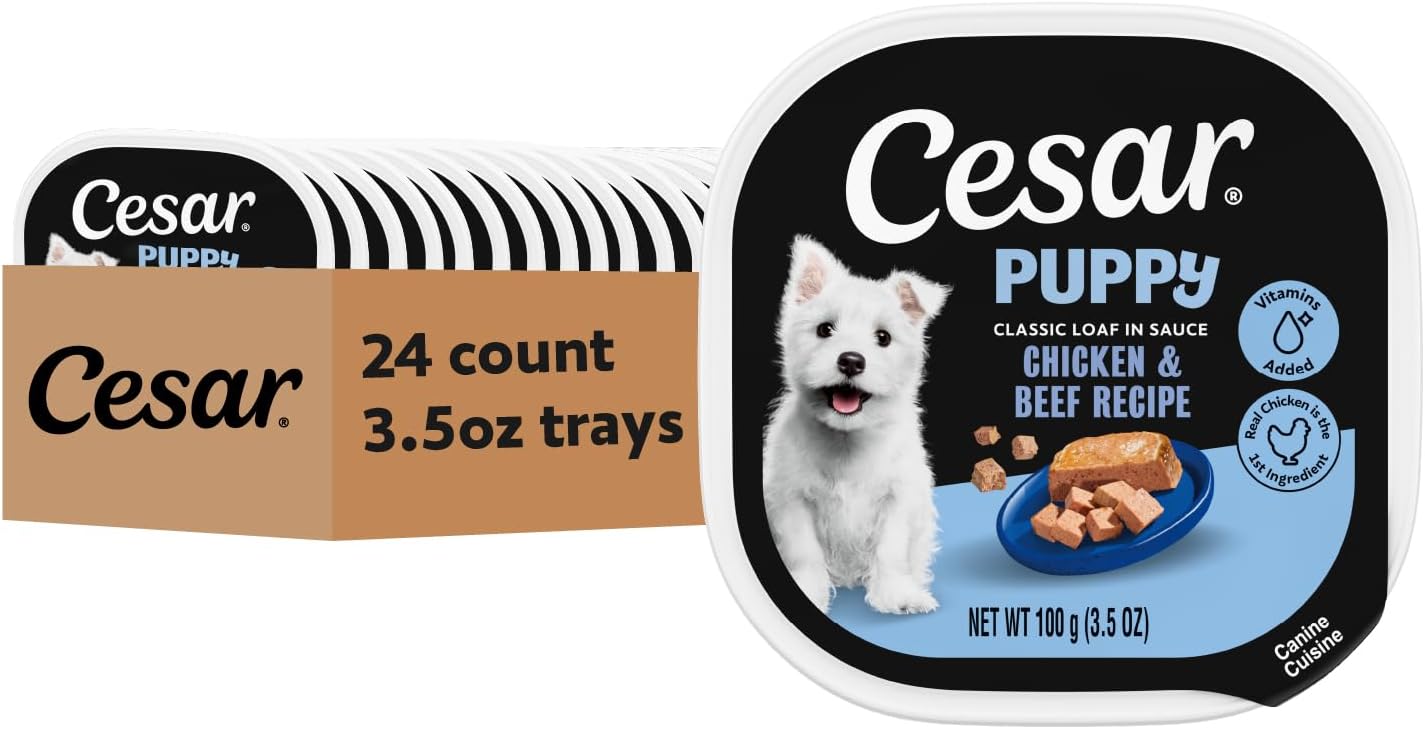
| Flavor | Chicken & Beef |
|---|---|
| Age Range Description | Puppy |
| Item Form | Wet |
| Unit Count | 24 Count |
Cesar Puppy Classic Loaf in Sauce comes in single-serve 3.5 oz trays designed for easy portioning and everyday puppy feeding. Each tray is slow-cooked with chicken as the first ingredient and includes added nutrients like calcium and potassium to support growth and digestive health. The peel-away trays make serving and cleanup simple, and the loaf-in-sauce texture is soft and palatable for small mouths and picky eaters. Because these are single-serve portions, they help reduce waste and make it easy to follow the feeding guidelines by weight and age. Limitations include that small 3.5 oz trays may require multiple portions per feeding for larger or fast-growing puppies, and the ingredient list contains meat by-products and some common thickeners and preservatives, which some owners may want to avoid. Overall, this format suits owners who want convenience and controlled single meals while feeding a puppy a wet, chicken-forward diet.
Best for: Puppy owners who prioritize fresh single-serve portions and simple portion control for everyday wet feeding.
Less Ideal for: Owners of larger or very fast-growing puppies who need larger single servings or those seeking a limited-ingredient or grain-free wet formula.
- Single-serve peel-away trays for easy serving and minimal waste
- Real chicken listed as the #1 ingredient for protein-focused feeding
- Formulated to be complete and balanced for puppies with added essential nutrients
- Soft loaf texture in sauce is easy for small puppies to eat
- Small 3.5 oz portions may require multiple trays per meal for larger puppies
- Contains meat by-products and some added thickeners and preservatives
Verdict: The best wet food to increase hydration and palatability for puppies, useful as a meal option or mixed with dry kibble.
Hill's Science Diet Puppy Sensitive Stomach & Skin
Best Gentle/Digestive Food

| Flavor | Salmon & Brown Rice |
|---|---|
| Age Range Description | Puppy |
| Item Form | Dry Food |
| Unit Count | 64 Ounce |
| Animal Food Diet Type | Limited Ingredient |
Hill's Science Diet Puppy Sensitive Stomach & Skin is a dry puppy formula designed to reduce digestive upsets while supporting skin and coat during growth. It is used as an everyday puppy food or as a transitional diet when pups have mild stomach sensitivity; feeding instructions on the bag guide gradual switching. The recipe lists salmon as the first ingredient and includes prebiotic fiber to support a balanced gut microbiome, plus DHA from fish oil for brain and eye development and vitamin E and omega fatty acids for skin health. Practical benefits include easier digestion for sensitive puppies, nutrients targeted at immune and cognitive development, and a single-source fish protein focus that can simplify ingredient tracking. Limitations are that it is a dry kibble so dogs that require wet food or very limited-ingredient veterinary prescriptions may need other options, and the formula still contains multiple grains and added ingredients that some owners avoiding certain grains or novel-protein approaches might not prefer.
Best for: Buyers who prioritize a vet-recommended, digestive-friendly everyday puppy food that also supports skin and coat health for growing dogs.
Less Ideal for: Owners seeking a strict novel-protein, grain-free, or veterinary-prescription elimination diet should consider specialized formulas instead.
- Prebiotic fiber to support gut microbiome and help reduce occasional digestive upset
- Salmon is the first ingredient, providing a high-quality fish protein and DHA for development
- Added vitamin E and omega fatty acids to nourish skin and promote a healthy coat
- Clinically proven antioxidants including vitamins C and E to support immune health
- Contains multiple grains and shared protein sources, so not a novel-protein or grain-free prescription option
- Dry kibble format may not suit puppies needing canned diets or strict veterinary therapeutic feeds
Verdict: The best gentle/digestive food for puppies prone to stomach upset, offering easier-to-digest proteins and supportive fiber blends.
Choosing the Right Dog Food 9 Month Old Puppy: Key Factors to Consider
Protein Quality and Amount
Protein supplies the amino acids puppies need for lean muscle growth, organ development, and tissue repair. At nine months, many breeds still require a relatively high-protein diet compared with adult maintenance feeding, but the source matters as much as the percentage. Choose foods with named animal proteins near the top of the ingredient list and avoid vague "meat" or "meat byproducts" listings.
Higher-quality proteins are typically more digestible and supply essential amino acids like taurine and arginine efficiently, which supports energy and recovery after play. For mixed-breed and large-breed puppies, balance protein percentage with calorie density to prevent overly rapid weight gain. Also consider single-protein formulas if your puppy has shown sensitivities; these make isolation of problematic ingredients easier during an elimination trial.
Fat and Calorie Density
Fat is a concentrated energy source and provides essential fatty acids that support brain development and a healthy coat. At nine months, caloric needs can vary widely based on breed, activity, and whether the puppy is nearing adult size. Foods with higher calorie density reduce serving volume, which can be beneficial for working or highly active puppies but may lead to excess weight gain in more sedentary pets.
Look for clear calorie-per-cup guidance and feeding charts that account for expected adult weight. Also check the types of fats used; omega-3 sources such as fish oil provide DHA, which aids neural development. Managing fat and calorie intake alongside regular weight checks helps maintain steady growth without stressing developing joints.
Mineral Balance and Bone Support
Calcium and phosphorus are essential for healthy skeletal development, but the balance between them is critical. At nine months, puppies—especially large-breed ones—are still completing bone growth and are vulnerable to problems from excess or poorly balanced minerals.
Choose formulas that disclose calcium and phosphorus levels and follow recommended ratios appropriate for growing dogs. Avoid diets formulated for adult maintenance since they may not provide the levels needed for continued growth. Proper mineral balance helps reduce the risk of developmental orthopedic issues and supports normal bone mineralization as the puppy matures.
Digestibility and Gastrointestinal Tolerance
A highly digestible diet results in better nutrient absorption, smaller stools, and fewer gastrointestinal upsets, which is particularly important during the transitional nine-month stage. Ingredients that are gentle on the gut and the inclusion of fermentable fibers or prebiotics can promote healthy stool quality and a balanced microbiome.
If your puppy has a history of loose stools or food sensitivity, prioritize diets labeled for sensitive digestion or those with limited, recognizable ingredients. Consistent feeding routines, gradual diet transitions over several days, and monitoring stool output are practical steps owners should use alongside diet selection to maintain digestive health.
Life-stage Labeling and Feeding Guidance
Foods labeled specifically for puppy or for growth phases include nutrient profiles designed to meet developmental needs. At nine months, some breeds may be ready to transition to adult maintenance formulas soon, while others still need growth-level nutrition. Clear life-stage labeling and manufacturer feeding guidelines help you time that transition appropriately.
Look for packaging or literature that provides feeding amounts by current weight and expected adult weight, as well as instructions for when to move to an adult diet. Feeding guidance that factors in activity level reduces guesswork and helps you adjust portions as your puppy slows down or becomes more active.
Kibble Size and Texture
Kibble shape and size affect how comfortably a puppy can pick up and chew food, which influences eating speed and dental wear. At nine months many puppies have a full set of adult teeth or are close to that milestone, but smaller breeds may still benefit from smaller, easy-to-chew pieces.
Consider the physical ability of your puppy to handle the kibble, any tendencies to gulp food, and whether a crunchy texture is desired for light dental abrasion. Some formulas also offer softer textures or coated kibbles that can improve palatability for picky eaters. Matching kibble size to mouth size improves feeding efficiency and reduces the risk of choking or rapid ingestion.
When Should I Switch From Puppy to Adult Food
Timing the transition depends on breed size and physical maturity rather than strict age. Small and medium breeds often reach adult size earlier and may be ready to move to adult maintenance between nine and twelve months. Large and giant breeds usually need growth-level nutrition longer to support prolonged bone development.
Monitor your puppy's body condition, growth rate, and activity. If growth plates are closing and the dog's activity has stabilized, a gradual transition to adult food can begin following the manufacturer's guidance. Always switch gradually over 7 to 10 days to minimize digestive upset.
- Check expected adult weight rather than age alone
- Use body condition scoring to guide portion adjustments
- Transition slowly to avoid diarrhea or appetite loss
How to Adjust Portion Sizes as Activity Changes
As puppies become less hyperactive, their calorie needs often decline. Adjust portions based on body condition rather than sticking rigidly to charted amounts. Increase or decrease feeding amounts in 10 to 15 percent steps and reassess weight and energy over two weeks.
For highly active young dogs, adding a small increase in portion or choosing a higher-calorie formula may be appropriate. For less active puppies, choose a moderate-calorie growth formula and reduce treats to prevent excess weight gain.
- Weigh your puppy monthly to track growth
- Reduce treats if body condition score rises
- Consult a veterinarian if weight changes are rapid or unclear
Addressing Picky Eating at Nine Months
Picky eating can emerge due to teething, changing activity, or simple preference development. Start by ruling out medical causes if appetite loss is sudden or severe. For mild pickiness, try small feeding routine adjustments like fixed meal times rather than free feeding to restore appetite signals.
Enhance palatability without undermining nutrition by mixing a small amount of warm water, plain cooked protein, or a recommended topper into the meal. Avoid high-calorie human food additions that can unbalance the diet and use any flavor enhancers sparingly.
- Keep mealtimes consistent and limited to 10-20 minutes
- Try texture changes before switching formulas completely
- Avoid setting a pattern of rewarding refusal with special treats
Managing Growth in Large-breed Puppies
Large-breed puppies require careful balance of calories, protein, and minerals to encourage steady, controlled growth. Rapid weight gain increases stress on developing joints and can predispose dogs to orthopedic issues. Use growth-stage formulas designed for larger breeds or those that provide clear guidance based on expected adult weight.
Limit high-calorie extras and monitor body condition closely. If you have concerns about bone development or joint health, consult with a veterinarian for tailored feeding and activity plans rather than making abrupt dietary changes on your own.
- Follow puppy feeding charts matched to expected adult size
- Avoid over-supplementing calcium or other minerals
- Control portion size and high-calorie treats
What to Watch for During Diet Transitions
Common signs of a poor transition include loose stools, decreased appetite, vomiting, or noticeable lethargy. These issues are often temporary when transitions are gradual. Monitor stool quality, energy level, and coat condition closely for the first two weeks after changing foods.
If gastrointestinal signs persist beyond a short adjustment period, revert to the previous diet and consult with a veterinarian. Keep a simple feeding log to track how changes in brand, formula, or portion size affect your puppy.
- Phase in new food over 7 to 10 days
- Watch stool consistency and mealtime behavior
- Seek veterinary advice for persistent digestive changes
How We Chose the Best Dog Food 9 Month Old Puppy
We focused on criteria that directly affect growth, development, and everyday feeding for nine-month-old puppies. First, we prioritized complete and balanced nutrient profiles aligned with recognized puppy growth needs, including appropriate protein, fat, DHA, calcium, and phosphorus ratios. Second, protein quality and digestibility were weighed heavily because lean, bioavailable proteins support muscle development and reduce gastrointestinal upset. Third, we looked at caloric density and portion recommendations to help owners manage healthy weight as activity levels shift. Fourth, ingredient transparency and absence of common fillers or excessive byproducts were considered to minimize allergy risk and support consistent digestion. Fifth, formulation suitability for breed size or expected adult weight was used to ensure kibble size and calorie concentration match feeding practicality. We excluded products meant only for adult or senior dogs, veterinary-prescription-only diets, and options lacking clear nutrient analysis. Our final shortlist balances growth support, digestibility, and practical feeding guidance to help owners choose a suitable option for nine-month-old puppies.
Our full evaluation process is outlined in our review methodology.
FAQ
Can my nine-month-old puppy eat adult food?
It depends on breed size and physical maturity. Some small breeds may be ready between nine and twelve months, but many medium and large breeds need growth-level nutrition longer. Make the change gradually and monitor weight and energy.
How often should I feed a nine-month-old puppy?
Most nine-month-old puppies do well on two meals per day, though very active or small-breed puppies may still benefit from three smaller meals. Feeding frequency should match appetite, digestive tolerance, and daily routine.
What if my puppy has sensitive stomachs or food allergies?
Choose formulas formulated for sensitive digestion or limited-ingredient recipes to help identify triggers. Introduce changes slowly and consider working with a veterinarian if symptoms persist or are severe.
Is wet food appropriate for a nine-month-old puppy?
Wet food can be used to increase palatability, add moisture, or ease eating for picky puppies. Ensure it is formulated for growth and balance meals appropriately if mixing wet and dry to avoid overfeeding calories.
Should I supplement with calcium or vitamins at this age?
Most complete puppy foods already provide appropriate vitamins and minerals. Extra supplementation without veterinary guidance can unbalance the diet and risk developmental issues, so consult a veterinarian before adding supplements.
Final Verdict
Prioritize a balanced growth formula that matches your puppy's current activity level and expected adult size. Focus on protein quality, appropriate calorie density, and correct mineral ratios to support finishing growth without encouraging excess weight. Monitor body condition, stool quality, and energy during any change and transition diets gradually. Using these criteria will help you choose a safe, effective food for a nine-month-old puppy and make the eventual move to adult maintenance at the right time.

