

If your Australian shepherd shows signs of skin irritation, ear infections, or chronic itching, choosing the right dog food can materially reduce flare-ups and improve coat health. Dogs with breed-specific activity levels and a double coat need options that support energy while avoiding common allergens. This guide shortlists seven top choices designed for Australian shepherds with allergies and explains the practical criteria behind each pick. You will find options focused on limited ingredients, novel proteins, and digestibility testing, plus notes on suitability for active dogs. Read on to understand the evaluation factors we used and how to match a formula to your dog's symptoms and lifestyle.
Top Picks at a Glance
| Best Overall Food for Australian Shepherds with Allergies The top all-around formula for allergic Australian Shepherds | Hill's Science Diet Sensitive Stomach Small Bites |  |
| Best Budget Food for Australian Shepherds with Allergies A low-cost formula that still addresses common allergy needs | Purina ONE Lamb & Rice Dog Food 8 lb |  |
| Best Grain-Free Food A formula without grains for dogs sensitive to grain ingredients | ORIJEN Small Breed Dry Dog Food 4 lb |  |
| Best Limited-Ingredient Food Simpler recipes with fewer ingredients to reduce allergy triggers | Zignature Kangaroo Formula Dog Food 25-lb |  |
| Best High-Protein Food A protein-focused formula for active Aussies needing muscle support | VICTOR Yukon River Canine 5 lb |  |
| Best Sensitive-Stomach Food Gentler formulas designed to minimize digestive upset and intolerance | VICTOR Sensitive Skin & Stomach 5 lb |  |
| Best Premium Food A higher-end, carefully sourced formula for owners who want the best | Open Farm Goodbowl Salmon 22 lb |  |
Hill's Science Diet Sensitive Stomach Small Bites
Best Overall Food for Australian Shepherds with Allergies

| Flavor | Chicken |
|---|---|
| Age Range Description | Adult 1-6 |
| Item Form | Pellet |
| Specific Uses For Product | Stomach & Skin Sensitivity support Small Kibble |
| Unit Count | 64 Ounce |
Hill's Science Diet Sensitive Stomach & Skin Small Bites is a dry adult formula designed for dogs that have occasional digestive upset and skin sensitivity. The recipe uses high-quality chicken as the first ingredient along with prebiotic fiber to support a balanced gut microbiome and improve nutrient absorption, and it includes vitamin E and omega fatty acids to help maintain skin and coat health. The small kibble size makes it easy for brachycephalic breeds like French Bulldogs to pick up and chew, and the formula emphasizes gentle carbohydrates such as barley and rice rather than heavy legumes. Practical benefits include predictable digestibility, a complete nutrient profile with clinically proven antioxidants, and guidance for transitioning pets to the food. Limitations are that it is not an elimination diet with a novel protein, so dogs with specific protein allergies may need a more restricted formula, and the bag sizes and ingredient list include grains, which some owners prefer to avoid entirely. For many dogs prone to mild-to-moderate stomach sensitivity, this offers a veterinary-backed, easy-to-feed option.
Best for: Owners seeking a veterinarian-recommended, highly digestible daily food for adult dogs that commonly have mild digestive upset and skin sensitivity, especially for breeds that benefit from small kibble.
Less Ideal for: Owners whose dogs require a novel protein or strict limited-ingredient elimination diet for confirmed food allergies should choose a dedicated hypoallergenic formula instead.
- First ingredient is high-quality chicken for consistent protein
- Prebiotic fiber to support gut microbiome and digestibility
- Includes vitamin E and omega fatty acids to support skin and coat
- Small kibble size suited to dogs with short muzzles or picky chewers
- Clinically backed antioxidants to support immune health
- Contains common grains and chicken, so not suitable as a novel-protein elimination diet
- Not marketed as a limited-ingredient formula for dogs with multiple food sensitivities
Verdict: The best overall food for Australian Shepherds with allergies that balances effective ingredient choices, complete nutrition, palatability, and vet-friendly formulations for typical allergy management.
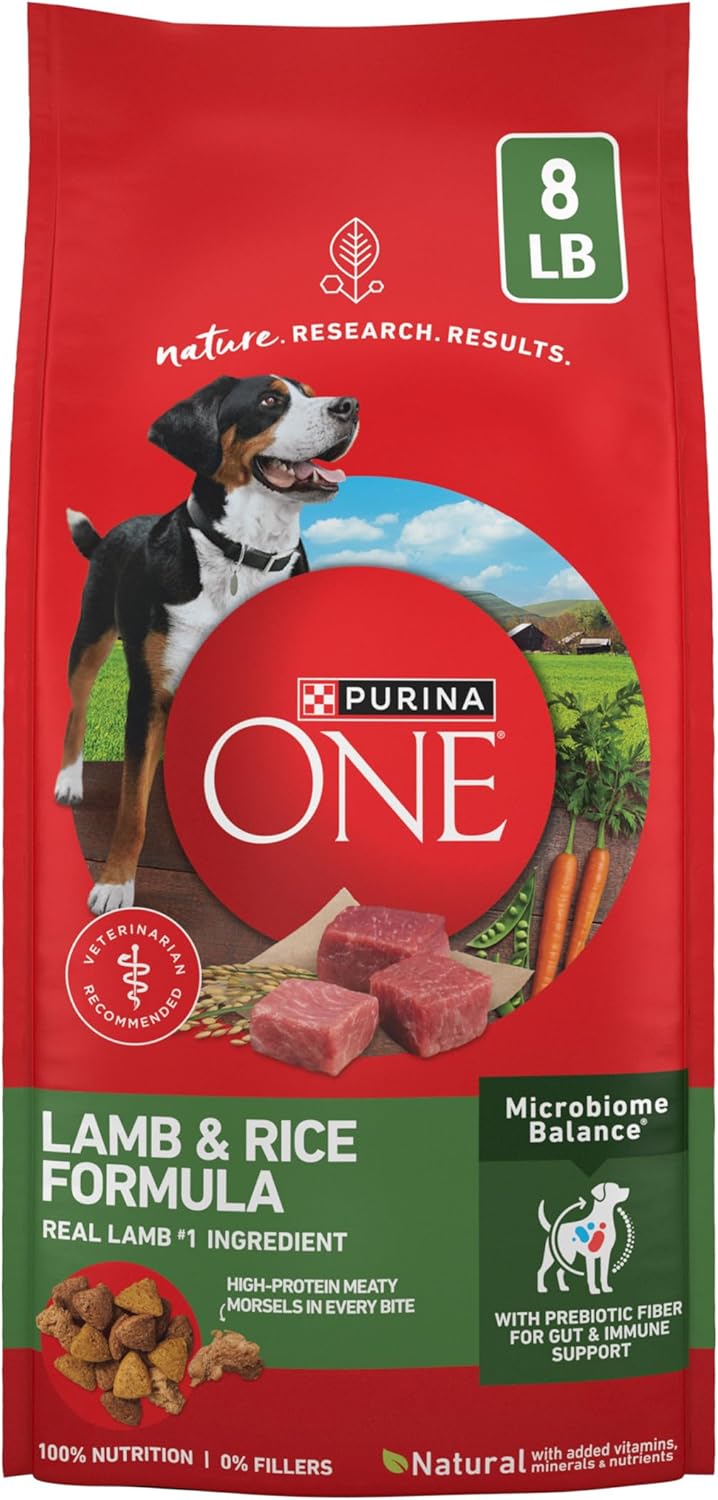
Purina ONE Lamb & Rice Dog Food 8 lb
Best Budget Food for Australian Shepherds with Allergies
| Flavor | Lamb & Rice |
|---|---|
| Age Range Description | Adult |
| Unit Count | 128 Ounce |
| Item Form | Kibble |
Purina ONE Lamb & Rice is a conventional dry adult dog food that uses real lamb as its primary ingredient and a SmartBlend of nutrients aimed at supporting muscle, heart, gut and coat health. It is fed as a complete daily diet in measured portions using the feeding chart on the bag, providing crunchy kibble plus occasional softer morsels that many dogs find palatable. Notable features include prebiotic fiber for microbiome balance, sources of glucosamine from lamb and chicken by-product meal for joint support, and added vitamins and minerals for eye and immune support. For budget-minded owners this formula delivers a high protein profile and broad targeted benefits without specialty ingredients or premium novel proteins, so it covers routine nutrition needs reliably. Limitations are typical of mainstream formulas: it contains common grains and by-product meal rather than single-source novel protein, so dogs with specific allergies or those needing a limited-ingredient or grain-free diet should look elsewhere.
Best for: Owners seeking an affordable, everyday adult dog food that provides complete nutrition and multiple targeted health supports without premium specialty ingredients.
Less Ideal for: Owners who need a limited-ingredient, novel-protein, or grain-free diet for diagnosed food sensitivities should choose a specialized formula instead.
- Real lamb listed as the first ingredient for a recognizable protein source
- Includes prebiotic fiber to support gut microbiome and digestion
- Added vitamins and minerals for eye, immune and overall maintenance
- Contains sources of glucosamine to help support joint health
- Widely available standard kibble that many dogs accept readily
- Contains common grains and chicken by-product meal which may not suit dogs with ingredient sensitivities
- Not a limited-ingredient or grain-free formula for elimination-diet needs
Verdict: The best budget food for Australian Shepherds with allergies that prioritizes hypoallergenic or limited-ingredient formulations at a lower price while maintaining basic nutritional completeness.
ORIJEN Small Breed Dry Dog Food 4 lb
Best Grain-Free Food

| Flavor | Grain Free Small Breed Dog Recipe |
|---|---|
| Item Form | Dry Kibble |
| Age Range Description | All Life Stages |
| Unit Count | 64 Ounce |
ORIJEN Small Breed is a premium, grain-free dry dog food designed specifically for small dogs and all life stages. It delivers a very high proportion of animal ingredients, with the first five components listed as fresh or raw poultry and fish and an overall WholePrey approach that includes meats, organs, and bones to supply naturally occurring nutrients. The kibble is shaped for small mouths and is coated with freeze-dried bits for added flavor, making it suitable for picky eaters. Typical use is twice-daily feeding adjusted to activity and body condition, and the formulation emphasizes protein density to support lean muscle, skin and coat health, and digestive balance. Practical benefits include limited reliance on synthetic additives, a broad spectrum of animal-sourced nutrients, and ingredient sourcing from reputable regions. Important limitations are that it is grain-free which may not be necessary for every dog, and the richer formula can require careful portion control during transitions to avoid digestive upset or excess calories in less active pets.
Best for: Owners who prioritize premium animal proteins, carefully sourced ingredients, and advanced nutrition to support long-term health and coat condition in small-breed dogs.
Less Ideal for: Owners looking for a low-calorie, grain-inclusive diet or those whose dogs have no specific need for a high-protein, grain-free formula.
- Very high animal-ingredient content with whole meats and organs for nutrient density
- Kibble shape and size tailored for small-breed mouths
- Includes freeze-dried coating to boost palatability for picky eaters
- Formulated for all life stages supporting skin, coat, and digestive health
- Grain-free, protein-rich formula may be more than some small dogs need calorie- and digestion-wise
Verdict: The best grain-free food for dogs whose allergy testing or history suggests adverse reactions to common grains, offering alternative carbohydrate sources and clear labeling.
Zignature Kangaroo Formula Dog Food 25-lb
Best Limited-Ingredient Food

| Flavor | Kangaroo |
|---|---|
| Item Form | Dry |
| Age Range Description | All Life Stages |
| Special Ingredients | gluten-free, grain-free, limited-ingredients |
| Unit Count | 400 Ounce |
Zignature Kangaroo is a grain-free, limited-ingredient kibble that uses kangaroo as the primary protein and swaps common grains for chickpeas and peas, with added probiotics to support digestion. It is typically used as a rotational or specialty diet for dogs with suspected food allergies or sensitive stomachs and can serve as a staple for owners avoiding corn, wheat, and soy. The formula highlights a novel protein low in fat and richer in Omega-3s and vitamin B12, which can help coat and heart health while offering an alternative to chicken or beef-based diets. Practical benefits include high protein from a single novel source, a short ingredient profile for easier allergy tracing, and probiotics for gut support. Limitations are that peas and chickpeas are still present and may not suit every elimination plan, and the bag weight and kibble size may require portion adjustments for very large breeds like German Shepherds. Expect a focused, hypoallergenic option rather than a grain-free formula designed specifically for extremely high-calorie working-dog needs.
Best for: Buyers who need a grain-free, limited-ingredient dry food to manage food sensitivities or rotate proteins while keeping overall nutrition balanced.
Less Ideal for: Owners seeking a very high-calorie performance diet for intense working or sport German Shepherds should consider a specialized formula instead.
- Uses kangaroo as the first ingredient offering a novel single protein source
- Limited-ingredient, grain-free recipe simplifies allergy elimination
- Fortified with probiotics to support gut health
- Includes Omega-3 rich ingredients for coat and heart support
- Contains legumes (peas, chickpeas) which some elimination diets avoid
- Not formulated specifically for very high energy or working-dog calorie needs
Verdict: The best limited-ingredient food for owners wanting a short, controlled ingredient list to more easily identify and avoid specific allergens.
VICTOR Yukon River Canine 5 lb
Best High-Protein Food

| Flavor | Seafood |
|---|---|
| Age Range Description | All Life Stages |
| Item Form | Dry Kibble |
| Special Ingredients | grain-free |
| Protein | 33% |
VICTOR Grain Free Yukon River Canine is a fish-forward dry kibble designed to deliver a protein-heavy diet for normally active dogs across life stages. It is typically used as a main daily ration for puppies through adults, particularly dogs that are sensitive to other meat proteins or need higher protein for activity and muscle maintenance. The formula lists menhaden fish meal and dehydrated salmon as primary animal proteins, includes sweet potato for fiber, and touts a proprietary VPRO blend of vitamins, minerals, and supplements to support digestion, immune health, and skin and coat. Nutritionally it is dense at about 33% protein and 16% fat, making it well suited for working or active dogs needing calories and amino acids. Practical benefits include being grain-free and produced in a U.S. facility with locally sourced ingredients. Limitations are that the fish-first ingredient profile may not suit dogs with fish allergies and the 5 lb bag size can be less economical for large or very active dogs that go through food quickly compared with larger bulk options.
Best for: Buyers seeking an affordable, protein-forward grain-free kibble to support active dogs, working breeds, or muscle maintenance who prefer fish as the primary protein source.
Less Ideal for: Owners who need large bulk quantities for frequent feeders or who have dogs with known fish allergies should consider other options.
- High protein content (33%) suitable for active or working dogs
- Fish-based primary protein sources for dogs with sensitivities to common meats
- Grain-free formula with added fiber from sweet potato to support digestion
- Includes a vitamin and supplement blend aimed at immune, skin, and coat support
- Small 5 lb bag may be less cost-efficient for large or high-energy dogs
- Fish-forward recipe unsuitable for dogs with fish allergies
Verdict: The best high-protein food for Australian Shepherds that need extra protein for activity or lean-muscle maintenance while still using allergy-conscious protein sources.
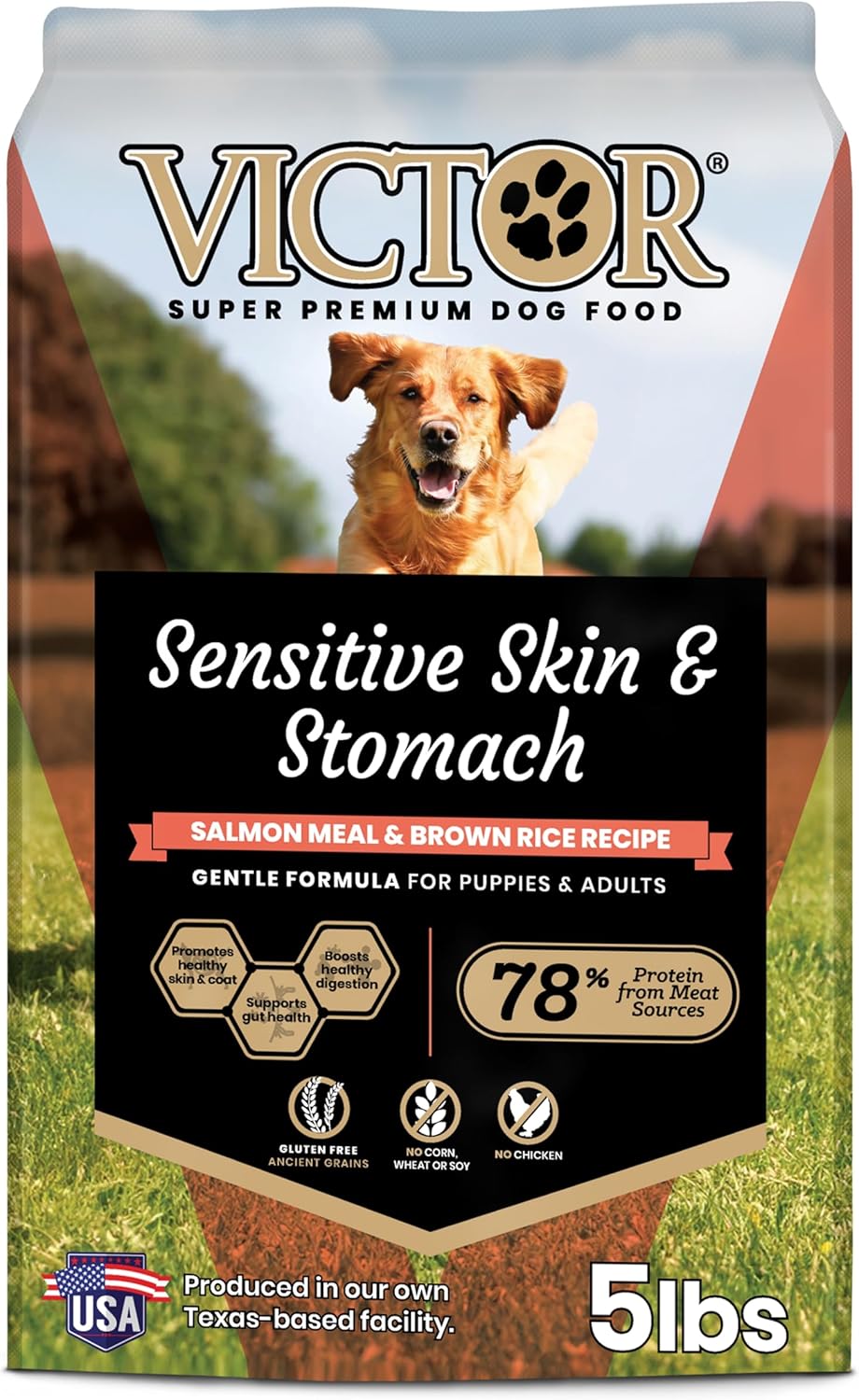
VICTOR Sensitive Skin & Stomach 5 lb
Best Sensitive-Stomach Food
| Flavor | Salmon |
|---|---|
| Item Form | Pellet |
| Age Range Description | All Life Stages |
| Unit Count | 80 Ounce |
VICTOR Sensitive Skin & Stomach uses salmon meal as the primary protein and a limited set of gluten free grains to create a digestible kibble for dogs with sensitivities. It is typically fed as a complete daily diet and includes directions for puppies, adults, pregnant and nursing dogs, and a straightforward feeding chart. Notable features are the focus on salmon-based protein, exclusion of common allergens like chicken, corn, wheat and soy, and the inclusion of prebiotics and probiotics plus omega 3 and 6 and vitamin E to support digestion and coat health. The formula is made in a US facility and highlights a proprietary VPRO supplement blend intended to support digestion and immune function. Practical benefits include easier elimination diet testing thanks to a narrower ingredient profile and nutrients aimed at skin and gut health, but the recipe still contains multiple grain sources and added supplements rather than being a single-protein, single-carbohydrate formula, so owners seeking the absolute minimum ingredient count for strict elimination trials may prefer a simpler recipe.
Best for: Buyers looking for a thoughtfully formulated limited-ingredient style kibble for small-breed dogs with skin or digestive sensitivities who want a salmon-forward recipe and supportive digestive supplements.
Less Ideal for: Owners running a strict elimination trial who need a single-protein, single-carbohydrate or home-cooked rotation diet should consider a simpler formula or veterinary guidance.
- Salmon meal is the first ingredient, providing a high proportion of animal protein
- Formulated without chicken, corn, wheat, soy, peas or pea protein to reduce common allergens
- Includes prebiotics and probiotics to support gut health and digestion
- Contains omega 3 and 6 plus vitamin E to support skin and coat condition
- Made in a US facility with locally sourced ingredients
- Not a single-source protein or single-carbohydrate formula, which limits strict elimination use
- Contains multiple grain ingredients rather than being grain-free or ultra-minimal
Verdict: The best sensitive-stomach food for dogs prone to gastrointestinal reactions, featuring easily digestible ingredients and nutrients that calm digestion without obvious allergens.
Open Farm Goodbowl Salmon 22 lb
Best Premium Food

| Flavor | Salmon |
|---|---|
| Age Range Description | All Life Stages |
| Item Form | Chunk |
| Animal Food Diet Type | Limited Ingredient |
| Package Size Name | 22 lb |
This Goodbowl Salmon recipe centers wild-caught salmon as the sole animal protein and is oven-baked in small batches rather than mass-extruded, which promotes consistent kibble texture and easier digestibility for dogs with sensitive stomachs. Typical use is as a complete daily diet for puppies through seniors or as the primary food in multi-dog households; its ingredient list omits corn, wheat, soy, artificial flavors, and artificial preservatives and includes brown rice and other wholesome grains for steady energy. Key practical benefits for skin and coat health are the salmon-derived omega-3s and added taurine, plus a higher crude protein and fat profile that supports skin repair. The product also offers traceability via a QR code so owners can check sourcing and safety data, aligning with buyers who prioritize ingredient provenance. Limitations to consider are that it is grain-inclusive rather than grain-free, so it may not suit dogs whose dermatitis is triggered specifically by grains, and the medium kibble is sized toward small and medium breeds which may be less ideal for very large mouths.
Best for: Owners who prioritize elevated ingredient quality, transparent sourcing, and concentrated omega-rich nutrition to support skin and coat health in dogs prone to allergic dermatitis.
Less Ideal for: Owners whose dog has proven grain-triggered allergies or who need a very large-breed specific kibble shape and size should consider alternatives.
- Wild-caught salmon as the single animal protein promotes omega-3 intake for skin and coat support
- Oven-baked small-batch production for gentler processing and consistent digestibility
- Traceable sourcing with QR code to review ingredient origin and safety testing
- Free from corn, wheat, soy, artificial flavors, and artificial preservatives
- AAFCO-certified for all life stages, simplifying feeding across ages
- Grain-inclusive formula may not help dogs whose skin allergies are triggered by grains
- Kibble described as medium size which may not be optimal for very large breed mouths
Verdict: The best premium food for allergy-prone Australian Shepherds for owners willing to pay more for superior ingredient sourcing, novel proteins, and comprehensive nutritional support.
Choosing the Right Dog Food Australian Shepherd Allergy: Key Factors to Consider
Protein Source and Novelty
Protein is often the trigger in food-related allergies, so the choice of protein source matters. Novel proteins or single-source formulas reduce the chance of cross-reactivity and simplify elimination trials.
When evaluating options, look for clear labeling of the primary animal protein. Hydrolyzed proteins are another option because the protein is broken into smaller components that are less likely to provoke an immune response. For active breeds like Australian shepherds, ensure the selected protein still supplies adequate amino acids for muscle maintenance and energy.
Ingredient Simplicity and Limited-ingredient Formulations
A shorter, simpler ingredient list makes it easier to identify the likely allergen and run an effective elimination diet. Limited-ingredient formulas remove common culprits such as beef, chicken, dairy, and wheat, which helps isolate the problem.
Avoid foods that include multiple animal proteins, unnamed meat meals, or proprietary blends that obscure the exact components. Simpler recipes also reduce the chance of accidental exposure to cross-reactive ingredients during manufacturing.
Digestibility and Gastrointestinal Tolerance
Dogs with allergic reactions often also show digestive upset, so highly digestible diets can reduce loose stools and intestinal inflammation. Look for quality carbohydrate sources like easily digestible grains or single-source grain-free alternatives, and soluble fiber levels that support healthy stools.
Formulas touting digestive enzymes, probiotics, or prebiotic fibers can help reestablish gut balance during or after an elimination trial. Pay attention to stool quality and feeding response in the first weeks after switching foods to judge tolerance.
Skin and Coat Support Nutrients
Nutrients that strengthen the skin barrier and support coat condition can reduce the frequency and severity of allergy symptoms. Key components include omega-3 and omega-6 fatty acids, adequate zinc, vitamin A, and a balanced antioxidant profile.
Because coat and skin signs are common allergy indicators in Australian shepherds, prioritize diets that explicitly include these nutrients at meaningful levels rather than listing them generically near the end of an ingredient panel.
Manufacturing and Cross-contamination Risk
Even small traces of an offending ingredient can trigger a reaction, so manufacturing practices matter. Foods made on dedicated lines or with strict allergen controls lower the risk of cross-contamination compared with brands that run multiple protein formulas on shared equipment.
Look for labeling or company transparency about cross-contact prevention. If that information is unavailable, be prepared to use stricter elimination protocols and monitor closely for recurring symptoms after a diet change.
Caloric Density and Activity-level Matching
Australian shepherds are high-energy dogs, so any hypoallergenic diet must also meet their caloric and nutrient demands. Calories per cup and the balance of fat and protein determine whether an active dog will maintain weight and muscle mass on a lower-allergen formula.
Consider life stage and activity when selecting a feeding plan; a diet that controls allergy symptoms but leaves your dog underweight or lethargic is not a good long-term choice. Adjust portion sizes under veterinary guidance if switching to a less calorie-dense option.
How Do I Run an Elimination Diet for My Australian Shepherd Safely?
An elimination diet is the most reliable way to identify a food-related allergy. Select a single-source or hydrolyzed formula and feed it exclusively for 8 to 12 weeks while avoiding all treats, flavored medications, and table scraps. Keep a symptom diary tracking skin, ear, and stool changes to detect improvement.
If symptoms improve, reintroduce one suspected ingredient at a time over two weeks while watching for recurrence. If no improvement occurs during the elimination period, revisit other allergy causes with your veterinarian such as environmental allergens or parasites.
- Feed only the test food and water—no other food items for the trial period
- Record baseline symptoms before starting and monitor weekly
- Rechallenge with single ingredients slowly to confirm the culprit
Which Signs Indicate a Food Allergy Versus Environmental Allergy?
Food allergies often present as chronic gastrointestinal issues and skin problems such as persistent itching, recurrent ear infections, or hotspots. Symptoms generally develop over weeks or months and do not follow a seasonal pattern.
Environmental allergies tend to be seasonal or related to specific locations or activities and more frequently cause paw licking, sneezing, or itchy eyes. However, symptoms can overlap, and many dogs have both food and environmental sensitizations, making veterinary testing and careful observation important.
- Food allergy: chronic digestive upset, year-round skin problems
- Environmental allergy: seasonal flare-ups, respiratory signs possible
- Both can coexist; tracking timing and triggers helps differentiate
Are Grain-free Diets Necessary for Australian Shepherds with Allergies?
Grain-free is not automatically better for allergy management. Some dogs react to specific proteins rather than grains. If grain is suspected, a single-grain option may help isolate the trigger, but removing grain without a clear reason may not relieve symptoms and can complicate achieving balanced nutrition.
Work with your veterinarian to determine whether a grain-free or single-grain formula is appropriate for your dog. Focus on the overall ingredient profile and nutrient balance rather than relying on the grain-free label alone.
- Do not assume grain-free equals hypoallergenic
- Consider single-grain or novel carbohydrate sources if grain is suspected
- Ensure nutritional adequacy when removing whole ingredient groups
How to Transition Your Shepherd to a New Allergy-friendly Formula
Transition gradually over 7 to 10 days to reduce the risk of gastrointestinal upset. Start with mostly the old food and slowly increase the proportion of the new formula until the switch is complete. Monitor stool firmness, energy levels, and skin condition during the transition.
If your dog has severe sensitivity, a faster transition over a few days may be acceptable under veterinary guidance, but watch closely for adverse reactions. Keep feeding amounts consistent and avoid mixing multiple new products simultaneously.
- 7- to 10-day gradual swap: increase new food by 10% to 25% daily
- Watch for changes in stool, appetite, and skin during the change
- Consult a veterinarian for rapid transitions or severe sensitivities
What Role Do Supplements Play when Managing Food Allergies?
Supplements cannot replace an exclusion diet but can support skin health and gut function during treatment. Omega-3 supplements, zinc, and certain probiotics help strengthen the skin barrier and modulate inflammation, reducing symptom severity for some dogs.
Introduce supplements only after discussing them with your veterinarian to avoid interactions and to ensure dosing is appropriate for your dog's size and condition. Supplements are best used as part of an overall management plan that includes dietary control and environmental measures.
- Omega-3 fatty acids often reduce inflammation and improve coat condition
- Probiotics may help with stool consistency and gut microbial balance
- Always check dosage and purity with your veterinarian
How to Read an Ingredient Label when Choosing a Hypoallergenic Food
Start with the first five ingredients because they make up most of the formula. Look for clearly named animal proteins and avoid vague terms like unspecified meat by-products. Check for added skin-support nutrients and minimal filler ingredients that offer little nutritional value.
Also review the guaranteed analysis for crude protein, fat, and fiber to ensure the diet meets your dog's energy needs. Transparency in labeling and clear supplier sourcing are useful signals of a brand that takes allergy management seriously.
- Prioritize clarity in protein naming and limited ingredient counts
- Compare guaranteed analysis to match energy needs for an active shepherd
- Watch for beneficial inclusions such as omega fatty acids and probiotics
How We Chose the Best Dog Food Australian Shepherd Allergy
We selected formulas that address allergy management through ingredient simplicity, digestibility, and support for skin and coat health. Our evaluation prioritized sources of protein that are less commonly associated with adverse reactions, carbohydrate choices that are gentle on digestion, and the presence of nutrients that help skin barrier function and coat condition. We also considered consistency in ingredient lists to minimize cross-contamination risk, transparent labeling, and the availability of veterinary-formulated or elimination-diet-friendly recipes. Specific filters excluded foods with long, vague ingredient chains or repeatedly changing primary proteins. We deprioritized formulas that rely heavily on common allergens without offering a clear limited-ingredient alternative. Final considerations included demonstrated digestibility (as indicated by ingredient quality and fiber balance), inclusion of omega fatty acids or zinc for skin support, and practical feeding formats for active medium-to-large herding dogs. The result is a focused list that balances symptom management with the energy needs of Australian shepherds.
Our full evaluation process is outlined in our review methodology.
FAQ
How long before I should expect to see improvement after switching foods?
You can often see some improvement in skin or stool within 4 to 8 weeks, but a full elimination trial is usually 8 to 12 weeks. Consistent feeding of the test formula without outside exposures is essential to evaluate progress accurately.
Can treats cause my Australian shepherd to fail an elimination diet?
Yes. Even small amounts of treats containing the offending ingredient will confound results. Use veterinarian-approved treats that match the elimination diet or avoid treats entirely during the trial period.
Should I choose a hydrolyzed or novel-protein diet first?
Either can be appropriate. Novel-protein diets are good when you want to identify a new protein source, while hydrolyzed diets are useful for dogs with strong immune reactions because the proteins are broken down to reduce antigenicity. Consult your veterinarian to decide based on symptom severity.
Do food allergies in Australian shepherds usually develop later in life?
Food allergies can develop at any age, although many dogs show signs as young adults. New sensitivities can appear later in life, so do not rule out food as a cause if symptoms start after several years of tolerance.
Are there signs that suggest the allergy is not food-related?
Seasonal flares, respiratory signs like sneezing, or symptoms linked to outdoor activity suggest environmental triggers. If dietary changes do not improve symptoms after a proper trial, environmental evaluations or allergy testing may be warranted.
Final Verdict
When managing allergies in Australian shepherds, prioritize a diet that simplifies ingredient exposure while meeting the breed's high energy and nutrient needs. Focus on clear protein sources, digestibility, and skin-support nutrients, and use a structured elimination process to identify triggers. Balance the need to control allergic reactions with maintaining condition and activity. Work with your veterinarian when choosing and transitioning diets, and favor solutions that provide both symptom relief and nutritional completeness for an active herding dog.

