

Australian shepherds are active, intelligent dogs with above-average energy needs and a tendency toward digestive sensitivity. Choosing the right dog food for an Australian shepherd affects daily energy, muscle maintenance, coat condition, and stool consistency. This guide shortlists the top options for this breed and explains how we evaluated protein sources, calorie density, digestibility, and ingredient clarity. Use the checklist below to match a food to your dog's age, weight, and activity level before narrowing to a shortlist.
Top Picks at a Glance
| Best Overall Dog Food A balanced, all-around formula that suits most active dogs' needs | Purina Pro Plan Complete Essentials Chicken & Rice 35 lb |  |
| Best Budget Dog Food An affordable formula that covers basics without breaking the bank | Purina ONE Lamb & Rice Dog Food 8 lb |  |
| Best Premium Dog Food Higher-end recipes with superior ingredients and focused nutrition profiles | ORIJEN Original Dry Dog Food 4.5 lb |  |
| Best High-Protein Dog Food Protein-forward recipes for active dogs and muscle maintenance | Taste of the Wild High Prairie 28 lb |  |
| Best Large-Breed Dog Food Formulated for bigger dogs' joint health and controlled growth | Nutro Natural Choice Large Breed Lamb |  |
| Best Sensitive-Stomach Dog Food Gentle, easily digestible formulas for dogs with tummy issues | Natural Balance Limited Ingredient Lamb Large |  |
Purina Pro Plan Complete Essentials Chicken & Rice 35 lb
Best Overall Dog Food

| Flavor | Chicken & Rice Shredded Blend |
|---|---|
| Age Range Description | Adult |
| Item Form | Dry |
| Package Size Name | 35 lb |
Purina Pro Plan Complete Essentials Chicken & Rice is a high-protein adult dry dog food that combines hard kibble with tender shredded pieces and real chicken as the first ingredient. It is typically fed as an everyday maintenance diet and is designed to support digestion with guaranteed live probiotics while delivering energy from rice and balanced vitamins and minerals for skin, coat, muscle, and joint support. Practical benefits include concentrated protein to help maintain lean muscle, added prebiotic and probiotic support for gut health, and a texture mix that many dogs find palatable. The formula lists sources of glucosamine-friendly ingredients such as poultry by-product meal and fish meal, which can help joint support when paired with overall nutrition and activity. Limitations include that the ingredient list contains grains and poultry by-product meal, which some owners avoid in favor of novel-protein or grain-free diets, and that feeding amounts must be adjusted for highly active dogs to meet increased calorie needs. For Australian Shepherds and other active medium-to-large breeds this formula provides a solid balance of protein and digestion support, but owners with special allergy or novel-protein requirements should consult their veterinarian.
Best for: Active owners seeking a balanced, high-protein everyday adult formula that supports digestion and coat health for medium-to-large herding breeds.
Less Ideal for: Owners who require grain-free, novel-protein, or limited-ingredient diets for diagnosed food allergies should consider alternative formulas or veterinary guidance.
- Real chicken is the first ingredient for a clear animal-protein source
- High-protein formulation supports maintenance of lean muscle
- Guaranteed live probiotics and prebiotics to support digestive and immune health
- Blend of kibble and shredded pieces improves palatability for picky eaters
- Includes vitamins and omega-6 fatty acids to promote healthy skin and coat
- Contains grains and poultry by-product meal, which some buyers avoid
- Not a novel-protein or grain-free option for dogs with specific food sensitivities
Verdict: The best overall dog food that balances protein, fats, carbs, and essential nutrients for most Australian Shepherds and active medium-to-large breeds.
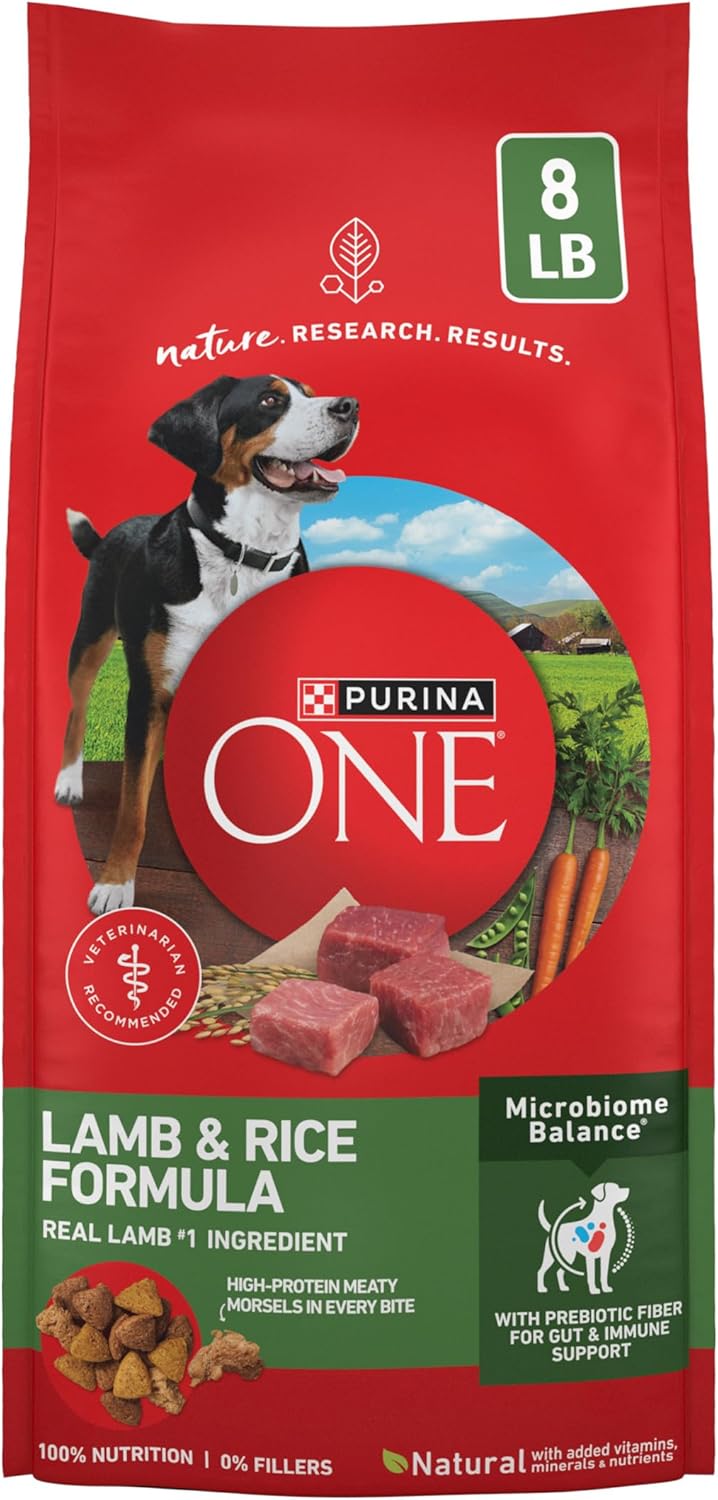
Purina ONE Lamb & Rice Dog Food 8 lb
Best Budget Dog Food
| Flavor | Lamb & Rice |
|---|---|
| Age Range Description | Adult |
| Unit Count | 128 Ounce |
| Item Form | Kibble |
Purina ONE Lamb & Rice is a conventional dry adult dog food that uses real lamb as its primary ingredient and a SmartBlend of nutrients aimed at supporting muscle, heart, gut and coat health. It is fed as a complete daily diet in measured portions using the feeding chart on the bag, providing crunchy kibble plus occasional softer morsels that many dogs find palatable. Notable features include prebiotic fiber for microbiome balance, sources of glucosamine from lamb and chicken by-product meal for joint support, and added vitamins and minerals for eye and immune support. For budget-minded owners this formula delivers a high protein profile and broad targeted benefits without specialty ingredients or premium novel proteins, so it covers routine nutrition needs reliably. Limitations are typical of mainstream formulas: it contains common grains and by-product meal rather than single-source novel protein, so dogs with specific allergies or those needing a limited-ingredient or grain-free diet should look elsewhere.
Best for: Owners seeking an affordable, everyday adult dog food that provides complete nutrition and multiple targeted health supports without premium specialty ingredients.
Less Ideal for: Owners who need a limited-ingredient, novel-protein, or grain-free diet for diagnosed food sensitivities should choose a specialized formula instead.
- Real lamb listed as the first ingredient for a recognizable protein source
- Includes prebiotic fiber to support gut microbiome and digestion
- Added vitamins and minerals for eye, immune and overall maintenance
- Contains sources of glucosamine to help support joint health
- Widely available standard kibble that many dogs accept readily
- Contains common grains and chicken by-product meal which may not suit dogs with ingredient sensitivities
- Not a limited-ingredient or grain-free formula for elimination-diet needs
Verdict: The best budget dog food for owners prioritizing price while still getting complete nutrition and acceptable ingredient quality for regular feeding.
ORIJEN Original Dry Dog Food 4.5 lb
Best Premium Dog Food

| Flavor | Original Recipe |
|---|---|
| Age Range Description | All Life Stages |
| Item Form | Granule |
| Unit Count | 72 Ounce |
ORIJEN Original is a protein-forward, grain-free kibble designed to mirror ancestral diets by using fresh or raw meats, organs, and whole fish as primary ingredients. It is typically used as a main diet for dogs of all life stages and is especially suited to active breeds that benefit from higher protein and fat. Notable features include a reported 85 percent fresh or raw animal ingredient content, WholePrey components (organs and bones) for naturally occurring nutrients, and a blend of fruits, vegetables, and botanicals for added micronutrients. In practice this yields a dense, nutrient-rich food that can support lean muscle maintenance, skin and coat health, and digestive function when transitioned gradually. Limitations include its grain-free formulation, which some owners may avoid based on current veterinary guidance, and the richer nutrient profile that may require careful portion control for less active or weight-sensitive dogs. The bag size is modest, so frequent repurchase or multi-bag storage may be necessary for larger or multi-dog households.
Best for: Owners who prioritize premium, meat-rich formulas and want a biologically appropriate, nutrient-dense diet for active or working breeds like Australian Shepherds.
Less Ideal for: Owners seeking a grain-inclusive or lower-protein maintenance diet for sedentary or weight-prone dogs should consider other options.
- Very high proportion of fresh or raw animal ingredients listed as primary components
- WholePrey approach includes organs and bones to supply naturally occurring vitamins and minerals
- Formulated for all life stages with added omega fatty acids to support skin and coat
- Contains fruits, vegetables, and botanicals for additional micronutrients and digestive support
- Grain-free formulation may not align with some recent veterinary recommendations
- Rich, high-protein recipe can lead to overfeeding if portions are not adjusted for lower activity dogs
Verdict: The best premium dog food for owners willing to pay more for higher-quality ingredients, targeted nutrient ratios, and enhanced digestibility.
Taste of the Wild High Prairie 28 lb
Best High-Protein Dog Food

| Flavor | Roasted Bison & Roasted Venison |
|---|---|
| Age Range Description | Adult |
| Item Form | Kibble |
| Allergen Information | Grain-Free |
| Unit Count | 448 Ounce |
Taste of the Wild High Prairie is a grain-free kibble built around real roasted meat as the first ingredient and a declared 32% protein level, aimed at supporting active adult dogs. It is typically used as a daily maintenance or performance food for energetic breeds and working dogs, providing concentrated calories and protein for muscle maintenance and recovery. The formula includes roasted bison and venison plus supplementary meats and fish meal, and it lists species-specific probiotic strains and a mix of fruits and vegetables for antioxidants and digestive support. Practical benefits include dense, meat-forward nutrition suitable for dogs with high energy needs and added probiotics to help digestion during heavy workloads. Limitations are that it is grain-free, which some owners avoid due to regulatory questions about cardiac health in certain dogs, and the rich recipe may be too calorie-dense for less active or weight-sensitive pets, requiring careful portion control. Also, ingredient sources include some novel proteins that could trigger sensitivities in dogs with specific allergies.
Best for: Active, high-energy owners and handlers who need a meat-forward, high-protein kibble to support muscle maintenance and sustained activity in working or sport-focused dogs.
Less Ideal for: Owners of low-activity, easily overweight dogs or dogs with grain sensitivities that specifically require grain-inclusive diets should consider other options.
- Real roasted meat listed first for strong animal-protein profile
- High declared protein level (around 32%) to support muscle maintenance
- Includes proprietary K9 probiotic strains for digestive and immune support
- Supplemented with fruits and vegetables for antioxidants and omega fatty acids for skin and coat health
- Grain-free formulation may not be recommended for all dogs due to ongoing concerns about heart health links
- Calorie-dense recipe can cause weight gain if portions are not adjusted for less active dogs
Verdict: The best high-protein dog food for energetic or working dogs that need extra protein to support muscle maintenance and sustained activity.
Nutro Natural Choice Large Breed Lamb
Best Large-Breed Dog Food

| Flavor | Lamb |
|---|---|
| Item Form | Dry Kibble |
| Breed Recommendation | Large Breeds |
| Unit Count | 480 Ounce |
| Special Ingredients | limited-ingredients |
Nutro Natural Choice Large Breed Lamb is a 30 lb bag of dry kibble made for adult large dogs, formulated with real deboned lamb as the first ingredient and added vitamins and minerals. It is intended for daily feeding to support large-breed needs like joint health, digestion, skin and coat, and immune support, and includes chicken meal as a source of glucosamine and chondroitin for joint support. The recipe avoids chicken by-product meal, corn, wheat, soy, and artificial flavors, colors, or preservatives and uses whole grains and seeds such as brown rice, chia, and flaxseed for added fiber and omega fatty acids. In practice the kibble provides calorie-dense meals suitable for bigger dogs and includes feeding guidelines to help maintain ideal body condition; the bag should be stored sealed in a cool, dry place to preserve freshness. Limitations include that it is a general adult large-breed formula rather than a veterinary therapeutic diet and it contains multiple grains and plant proteins, so it is not a grain-free or novel-protein option for dogs with specific intolerances.
Best for: Buyers who need a calorie-dense, joint-supporting adult kibble for larger or rapidly growing dogs and want recognizable animal protein plus supportive nutrients for daily feeding.
Less Ideal for: Owners who need a grain-free, single-novel-protein, or veterinary-prescribed therapeutic formula should look elsewhere.
- Real deboned lamb is listed as the #1 ingredient for a recognizable protein source
- Includes chicken meal as a source of glucosamine and chondroitin to support large-breed joint health
- Formulated without chicken by-product meal, corn, wheat, soy, or artificial flavors and colors
- Contains whole grains, chia, and flaxseed to provide fiber and omega fatty acids for skin and coat
- Not a grain-free or novel-protein formula, so may not suit dogs with grain or specific protein sensitivities
- Positioned as a general adult large-breed food rather than a targeted veterinary diet for medical conditions
Verdict: The best large-breed dog food for bigger or rapidly growing dogs that need adjusted calories, joint-support nutrients, and appropriate kibble size.
Natural Balance Limited Ingredient Lamb Large
Best Sensitive-Stomach Dog Food

| Flavor | Lamb |
|---|---|
| Age Range Description | Adult |
| Breed Recommendation | Large Breeds |
| Item Form | Pellet |
| Animal Food Diet Type | Limited Ingredient |
This Natural Balance Limited Ingredient Lamb recipe is a simplified dry formula aimed at large adult dogs with sensitive stomachs or ingredient sensitivities. It uses lamb and lamb meal as the primary protein sources and brown rice as a digestible carbohydrate, which helps reduce exposure to common allergens like corn, wheat and soy. The bag lists omega fatty acids and vitamins to support skin, coat, muscle and joint health, and the limited-ingredient approach makes it easy to pair with vet guidance during an elimination or transition phase. In practice the kibble provides steady energy for active large breeds and can be mixed with wet food or used alone for daily feeding. Important limitations are that it is formulated for large breeds only and includes grains (brown rice, brewers rice, oatmeal), so it is not a grain-free novel-protein for dogs that require strict grain elimination or a rotation to a different single novel protein. Also, any dog with diagnosed food allergies should be evaluated by a veterinarian before switching diets.
Best for: Owners seeking a limited-ingredient, lamb-based dry diet to reduce GI upset in adult large dogs and who prioritize a straightforward ingredient profile over grain-free options.
Less Ideal for: Owners who need a grain-free or puppy formula, or those looking for a novel protein completely free of common grains should consider alternative recipes.
- Single animal protein focus with lamb as the primary ingredient
- Formulated to support digestion and sensitive stomachs with limited ingredients
- Includes omega 3 and 6 sources for skin and coat support
- Balanced vitamins and minerals to support large-breed muscle and bone health
- Contains grains (brown rice, brewers rice, oatmeal) so not suitable for grain-free elimination diets
- Formulated specifically for large adult breeds, so feeding guidelines may not match small or junior dogs
Verdict: The best sensitive-stomach dog food for pets that need limited-ingredient or novel-protein recipes to reduce GI upset and improve nutrient absorption.
Choosing the Right Dog Food Australian Shepherd: Key Factors to Consider
Protein Quality and Source
Protein supplies the amino acids Australian shepherds need for muscle maintenance and tissue repair. Look for named whole-meat sources high on the ingredient list rather than generic meat meals or byproducts. Animal-based proteins vary in digestibility and amino acid balance; higher-quality sources support lean mass and recovery after high activity.
For dogs with sensitivities, single-source proteins or novel proteins can reduce dietary reactions. Also consider the balance of protein to calories: very high protein without adequate calories can leave active dogs underfueled, while excessive protein with low digestibility can cause loose stools.
Calorie Density and Activity Match
Australian shepherds are typically active and need more calories per pound than low-activity breeds. Calorie density determines how much food you must feed to meet an individual dog's energy needs. Higher-calorie formulas let you feed smaller volumes, which can help avoid digestive upset in dogs that eat quickly.
Match the food's calorie density to your dog's age and lifestyle. Puppies and working adults usually need calorie-richer formulas, while mature, less active dogs benefit from moderate-calorie options to prevent weight gain. Check feeding guidelines but plan to adjust based on body condition.
Digestibility and Fiber Balance
Digestibility affects how much nutrition a dog actually absorbs and influences stool quality. Highly digestible diets reduce stool volume and support nutrient uptake; look for identifiable carbohydrate sources and moderate fiber levels tailored to the dog's digestive sensitivity.
Fiber type matters: soluble fibers and prebiotic sources can support gut flora and regularity, while excessive insoluble fiber may bulk stools unnecessarily. For dogs prone to loose stools, gradual diet changes and formulas with probiotics or beet pulp can be helpful.
Fatty Acids and Coat Health
Omega-3 and omega-6 fatty acids support a healthy coat and skin, which is important for Australian shepherds that may develop dryness or shedding issues. EPA and DHA from marine sources have anti-inflammatory benefits that can help active dogs recover and maintain joint comfort.
Check for named oil sources and balanced omega ratios. Too much fat can lead to weight gain in moderately active dogs, so consider fat percentage relative to calorie needs and adjust portions accordingly.
Kibble Size, Texture, and Palatability
Kibble form affects how comfortably a dog chews and how much it salivates or inhales food. Australian shepherds often prefer medium-sized kibbles that accommodate adult jaw size and encourage chewing. Texture and coating influence palatability; highly palatable coatings help picky eaters but can mask poor ingredient quality.
If you use puzzle feeders or slow-feed bowls for fast eaters, choose kibble shapes and sizes that fit those devices. For puppies or seniors, softer textures or partially moistened food can ease consumption.
Life-stage Formulation and Special Needs
Choose a formula that matches your dog's life stage: puppy, adult, or senior. Puppies require higher protein and calorie levels plus minerals for bone growth, while seniors may need lower calories and joint-support nutrients. Reproductive status and medical conditions also influence nutrient needs.
Opt for breed-appropriate life-stage nutrition when possible, and consult your veterinarian before switching to a therapeutic or restricted diet if your dog has medical issues such as pancreatitis, food allergies, or kidney disease.
How to Read a Dog Food Label
Labels reveal important information beyond the marketing copy. Check the ingredient list for named protein sources, an obvious carbohydrate source, and recognizable whole-food ingredients rather than vague fillers.
The guaranteed analysis shows crude protein, fat, fiber, and moisture percentages. Use those numbers with calorie density to understand how nutrient-rich the food is on a per-calorie basis. Serving guidelines are only starting points; adjust based on body condition.
- Ingredients are listed by weight before cooking, so concentration can be misleading for fresh meat items.
- Guaranteed analysis lacks digestibility information, so look for AAFCO statement or third-party feeding trial details when available.
Feeding Plans for Different Activity Levels
Estimate daily calorie needs based on age, weight, and activity. For highly active or working Australian shepherds, offer calorie-dense meals split into two or three feedings to maintain steady energy and reduce digestive load.
Less active adults benefit from controlled portions and possibly a lower-fat formula to prevent gradual weight gain. Monitor body condition and adjust portions rather than changing formulas frequently.
- Puppies and adolescents: frequent small meals and higher calorie/protein density.
- Active adults: calorie-rich options with balanced electrolytes and amino acids.
- Seniors: lower calories, joint-support nutrients, and easily chewed textures.
Transitioning Foods Without Upsetting Digestion
Switch diets gradually over 7 to 10 days, increasing the new food proportion slowly while decreasing the old. Rapid changes often trigger loose stools or vomiting.
If your dog has a known sensitive stomach, extend the transition to two weeks and consider mixing in digestive aids like probiotics under veterinary guidance.
- Start with 10 percent new food and 90 percent old for the first two days.
- Increase to 25, 50, then 75 percent over the following days, watching stool and appetite.
Addressing Common Feeding Issues
Picky eating can sometimes be solved by trying a different protein source, warming food slightly, or using a topper that adds aroma without excessive fat. Avoid frequent flavoring that conditions fussy behavior.
Loose stools or flatulence often point to digestibility or abrupt diet changes. Evaluate fiber type and amount, and consider a short trial of a digestible formula with soluble fiber or added probiotics.
- If a dog eats too fast, use a slow-feeder bowl or portion into multiple small meals.
- For haircoat or skin issues, review fatty acid content and consider marine-sourced omega supplementation after consulting your veterinarian.
Special Diet Considerations for Health Conditions
Dogs with pancreatitis, kidney disease, or food allergies need tailored nutrition. For many of these conditions, veterinary supervision is essential because standard commercial formulas may be inappropriate.
Common adaptations include lower fat for pancreatitis, reduced phosphorus for kidney disease, and novel or hydrolyzed proteins for allergies. Always follow a veterinarian's guidance when choosing or changing therapeutic diets.
- Discuss blood work and clinical signs with your veterinarian before changing to a therapeutic formula.
- Elimination trials for suspected food allergy require strict adherence and patience, often 8 to 12 weeks.
How We Chose the Best Dog Food Australian Shepherd
We focused on criteria that matter most for Australian shepherds: nutrient density, protein quality, digestibility, kibble size and texture for chew comfort, and formulation options for different life stages. We prioritized foods that deliver higher calorie-per-cup values from appropriate sources to support active dogs without forcing excessive portion increases. Digestive tolerance was a key filter, so we favored recipes with clear ingredient lists, appropriate fiber levels, and proven sources of prebiotics or probiotics where present. We also looked at joint-support nutrients for athletic dogs, such as omega fatty acids and glucosamine precursors, and examined sodium and fat levels to avoid excessive strain on less active individuals. Safety and formulation transparency mattered: we excluded foods with vague meat-byproduct-heavy ingredient statements or missing guaranteed analysis. We filtered out novelty single-batch snacks and prescription-only therapeutic diets that are not practical for general feeding. The remaining selections represent well-formulated, broadly available options suitable for Australian shepherds across common life stages and activity profiles.
Our full evaluation process is outlined in our review methodology.
FAQ
How many calories should an Australian shepherd eat per day?
Calories vary by age, weight, and activity. Active adults often need more calories per pound than sedentary dogs. Use the food's calorie density and body condition scoring to set portions, and adjust weekly based on weight and energy.
Is grain-free food better for Australian shepherds?
Grain-free is not inherently better and depends on individual tolerances. Grains can provide digestible carbohydrates and fiber, while true grain intolerance is uncommon. Discuss suspected sensitivities with your veterinarian before restricting entire ingredient groups.
Can I feed a homemade diet to my Australian shepherd?
Homemade diets can meet needs but require careful formulation to avoid nutrient gaps. Work with a veterinary nutritionist to create a balanced plan and consider commercial supplements to ensure appropriate vitamin and mineral levels.
What protein percentage is appropriate for an active Australian shepherd?
Active adult dogs typically do well on diets with moderate to high protein percentages to support muscle mass. Exact needs depend on calorie intake and life stage; consult your veterinarian to align protein percentage with your dog's activity and health status.
How do I know if a food causes digestive upset?
Signs include loose stools, increased gas, vomiting, reduced appetite, or changes in stool frequency. Introduce new foods slowly and track symptoms; if problems persist after a full transition, switch back and consult your veterinarian.
Final Verdict
Choose a dog food that matches your Australian shepherd's life stage and activity level, emphasizing digestible, named protein sources and appropriate calorie density. Pay attention to fiber type, fatty acid content, and kibble form to support digestion, coat health, and feeding comfort. Balance tradeoffs between calorie density and portion volume so you can meet energy needs without overfeeding. Prioritize gradual transitions and veterinary guidance for special health concerns to select the best long-term feeding strategy.