

If your dog's breath makes close moments unpleasant, choosing the right food can help address the underlying causes rather than masking odors. The right formulation can reduce bacterial growth in the mouth, support healthy gums, and limit ingredients that contribute to foul breath. This guide covers six top shortlisted dog foods for bad breath and explains the features to look for, from ingredient quality to texture and digestibility. Use the evaluation criteria to match a pick to your dog's size, chewing habits, and any digestive sensitivities before trying a new option.
Top Picks at a Glance
| Best Overall Food for Bad Breath A balanced pick that most owners will find effective for breath | Hill's Science Diet Adult Oral Care |  |
| Best Budget Food for Bad Breath An affordable formula that helps manage odor without breaking the bank | Blue Buffalo Life Protection Formula Chicken 5 lb |  |
| Best Dental-Formulated Food Kibble or blends designed specifically to reduce plaque and mouth odor | Hill's Prescription Diet t/d Dry Dog Food 5 lb |  |
| Best Digestive-Health Food Formulas focused on gut health to address odor from digestion issues | IAMS Advanced Health Healthy Digestion 36 lb |  |
| Best Limited-Ingredient Food Simpler recipes to reduce food-related sensitivities that cause halitosis | Nutro Limited Ingredient Diet Salmon & Lentils |  |
| Best High-Protein Food Higher-protein diets that support lean mass while addressing oral bacteria | Badlands Ranch Air-Dried Beef 24 oz |  |
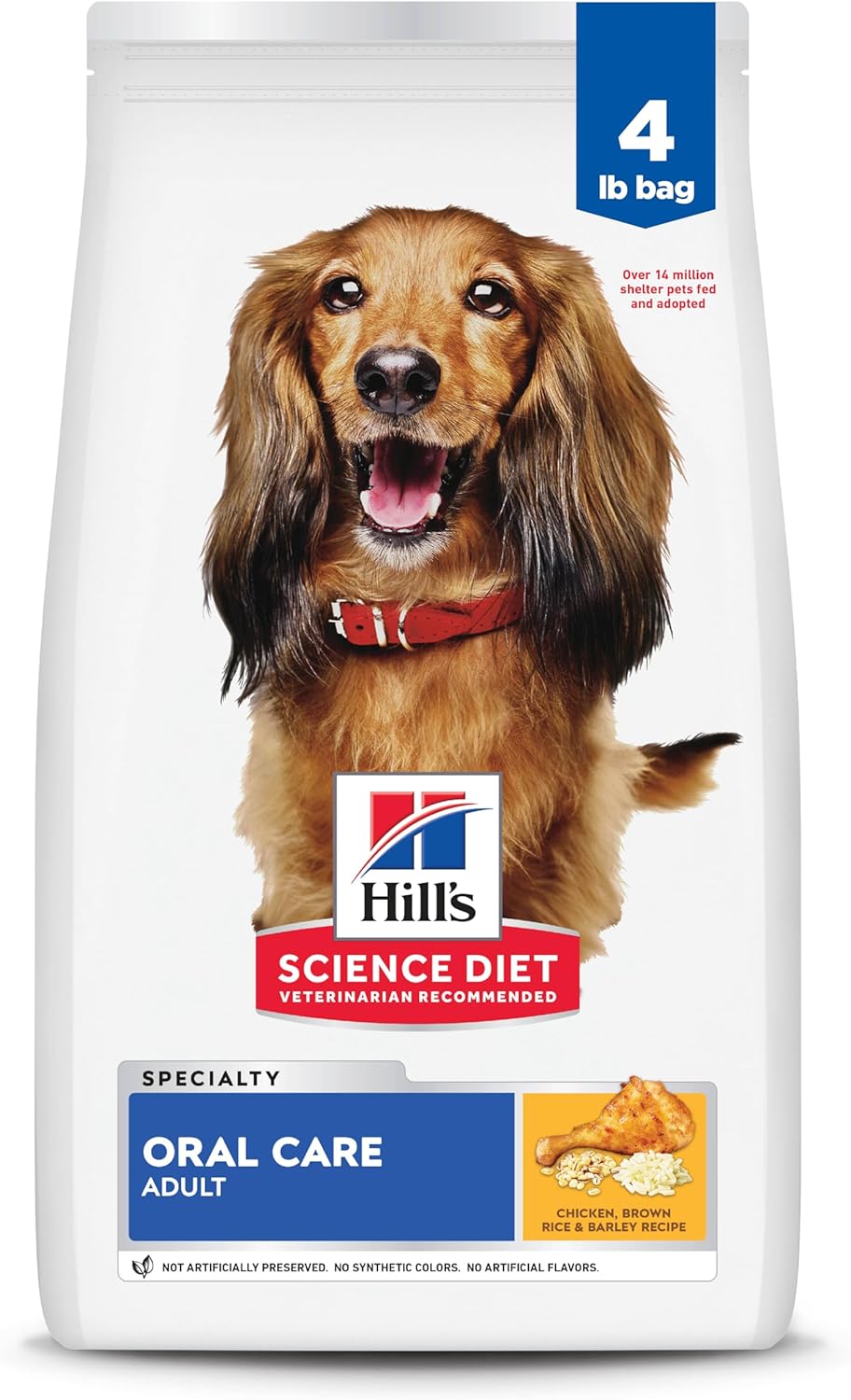
Hill's Science Diet Adult Oral Care
Best Overall Food for Bad Breath
| Flavor | Chicken, Rice, & Barley |
|---|---|
| Age Range Description | Adult 1-6 |
| Specific Uses For Product | Dental Care |
| Unit Count | 64 Ounce |
Hill's Science Diet Adult Oral Care is a dry kibble designed to support dental health as part of a daily feeding routine. The distinguishing feature is a clinically proven interlocking fiber technology in the kibble that mechanically scrubs teeth to reduce plaque and tartar buildup and help freshen breath with each bite. The recipe centers on real chicken with whole grains plus added omega-6 fatty acids and vitamin E to support skin and coat, and it is made with natural ingredients without artificial colors or flavors. In practice this works like a regular maintenance food you feed daily rather than a short-term breath fix, so you should expect gradual improvements in plaque control rather than instant results. It is vet-developed and aimed at adult dogs 1 to 6 years, and the bagged format is convenient for everyday use and predictable feeding. The product does not replace routine dental care like brushing or professional cleanings, and dogs that are picky may need a transition period to accept the texture and formula.
Best for: Buyers who want an everyday complete dog food that actively helps reduce plaque and improve breath while providing balanced nutrition and vet-formulated ingredients.
Less Ideal for: Owners seeking an immediate breath-freshening treatment or those who prefer grain-free or prescription-only dental products should consider alternatives.
- Interlocking fiber kibble clinically proven to reduce plaque and tartar
- Formulated to freshen breath with every bite as part of daily feeding
- Made with real chicken and natural ingredients without artificial colors or flavors
- Includes omega-6 fatty acids and vitamin E to support skin and coat
- Developed by veterinarians and formulated for adult dogs
- Not a substitute for tooth brushing or professional dental cleanings
- May require a transition period for dogs sensitive to kibble texture
Verdict: The best all-around dog food for bad breath that balances breath-targeting ingredients, palatability, and overall nutrition for everyday feeding.
Blue Buffalo Life Protection Formula Chicken 5 lb
Best Budget Food for Bad Breath

| Flavor | Chicken & Brown Rice |
|---|---|
| Item Form | Dry Kibble |
| Recommended Age | Adult |
| Crude Protein | 24% min |
| Crude Fat | 14% min |
Blue Buffalo Life Protection Formula Chicken & Brown Rice is a 5 lb adult dry kibble built around real chicken as the first ingredient and whole grains like brown rice, oatmeal, and barley for energy and digestion. It is used as a daily maintenance diet and includes Blue's LifeSource Bits, which are a blend of antioxidants, vitamins, and minerals intended to support immune health, plus natural prebiotic fiber for stool quality and glucoseamine for joint support. Typical feeding is by weight-based cup measures, so it fits standard home feeding routines and switching between bag sizes is straightforward. Practical benefits include recognizable meat-first ingredients, grain-based carbohydrates for steady energy, and added nutrients for skin, coat, and joint care. Limitations are that it is a conventional grain-inclusive formula rather than grain-free or limited-ingredient for dogs with specific intolerances, and some sensitive dogs may do better on specialized veterinary diets. For owners seeking a reliable everyday adult formula that balances ingredient quality and cost, this is a sensible choice.
Best for: Owners who need an economical, everyday adult dog food that still prioritizes real meat first and basic functional extras like immune and joint support.
Less Ideal for: Avoid this if your dog requires a veterinary-prescribed therapeutic diet or has confirmed grain or multiple ingredient allergies that need an elimination formula.
- Real deboned chicken listed as the first ingredient for meat-forward protein
- Includes LifeSource Bits with added antioxidants, vitamins, and minerals for immune support
- Contains natural prebiotic fiber to help digestion and stool quality
- Added glucosamine to support joint health and mobility
- Contains grains so it is not suited for owners specifically seeking grain-free diets
- Not formulated as a veterinary or elimination diet for dogs with diagnosed food allergies
Verdict: The best budget dog food for bad breath that delivers breath-improving benefits and acceptable nutrition at a lower price point.
Hill's Prescription Diet t/d Dry Dog Food 5 lb
Best Dental-Formulated Food

| Flavor | Chicken |
|---|---|
| Age Range Description | Adult |
| Item Form | Dry Food |
| Specific Uses For Product | Dental Care |
| Unit Count | 5 Pounds |
Hill's Prescription Diet t/d is a veterinary therapeutic dry food formulated specifically for dental care. It uses a unique kibble size, shape, and texture plus a triple-action fiber matrix to mechanically scrub teeth, help remove plaque and tartar up to the gum line, and freshen breath while delivering complete daily nutrition. Typical use is exclusive feeding for adult dogs as part of a long-term dental health plan recommended by your veterinarian, with guidance on feeding amounts printed on the bag. Practical benefits include clinically proven reduction of plaque and tartar and VOHC acceptance for dental claims, plus added antioxidants for daily health and a urinary environment designed to reduce crystal risk. Trade-offs are that this is a veterinary diet intended for lifelong prescription feeding so you should consult your vet before switching, and the formula focuses on oral health rather than being grain-free or marketed as a super-premium ingredient list.
Best for: Owners who want a food that combines mechanical kibble action and ingredient-level dental technology to reduce plaque and improve breath and who plan to follow veterinary guidance for long-term feeding.
Less Ideal for: Owners seeking grain-free, boutique ingredient lists or a non-prescription maintenance kibble should consider alternative formulas geared to those priorities.
- Kibble geometry and texture designed to mechanically clean teeth during chewing
- Clinically proven triple-action fiber matrix to reduce plaque and tartar
- VOHC-accepted for proven dental benefits
- Complete and balanced daily nutrition with added antioxidants
- Formulated to help maintain a urinary environment that reduces crystal risk
- Requires veterinary recommendation and is intended as a therapeutic diet rather than a general maintenance formula
- Not targeted at grain-free or limited-ingredient shoppers
Verdict: The best dental-formulated dog food for owners prioritizing mechanical and ingredient-based support for oral hygiene and fresher breath.
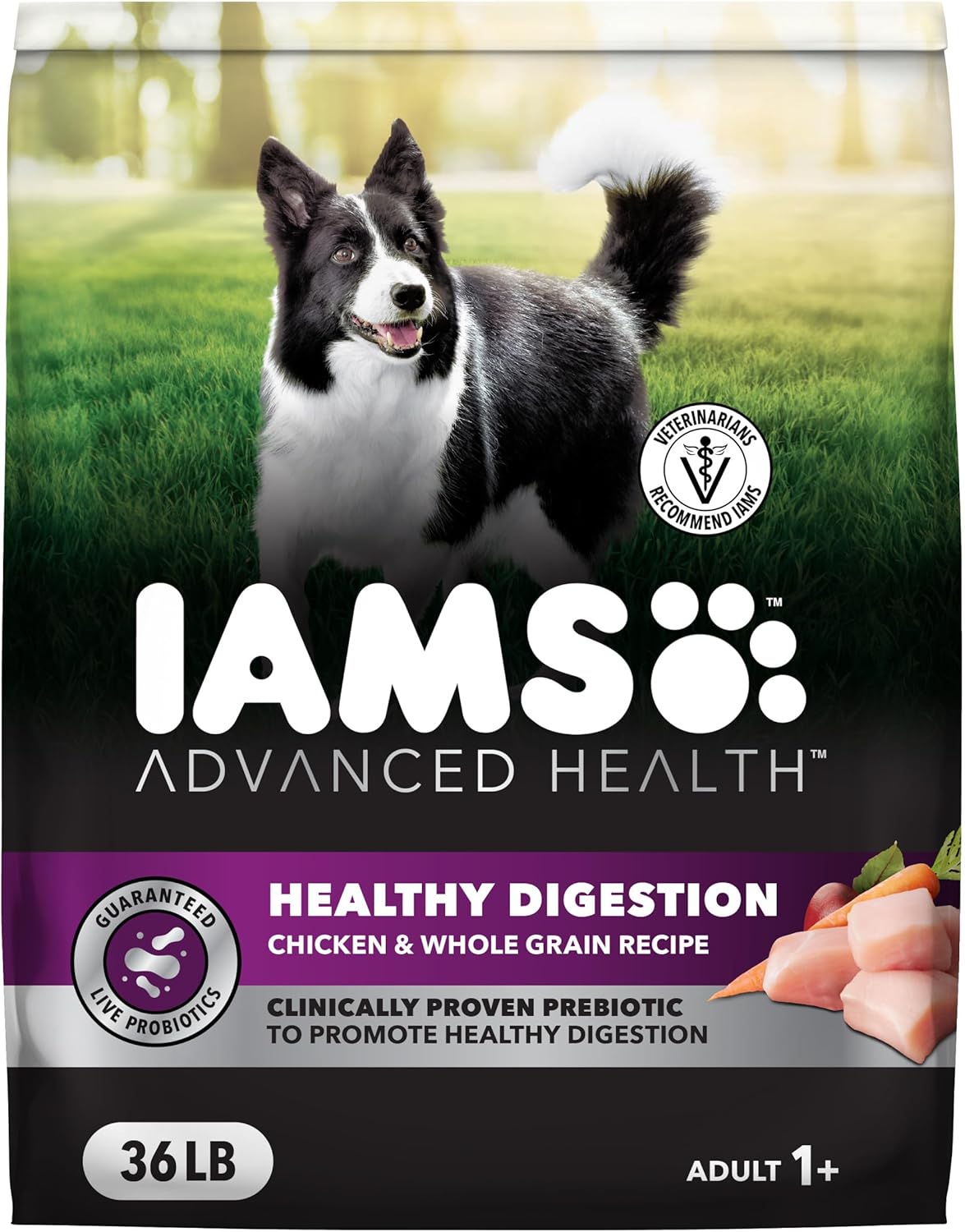
IAMS Advanced Health Healthy Digestion 36 lb
Best Digestive-Health Food
| Flavor | Chicken |
|---|---|
| Life Stage | Adult |
| Item Form | Dry Kibble |
| Specific Uses For Product | Digestive Health |
| Unit Count | 576 Ounce |
IAMS Advanced Health Healthy Digestion is a 36 lb dry kibble made for adult dogs with recipes that prioritize gut comfort. It combines real chicken as the first ingredient with a blend of natural fibers, prebiotics, and guaranteed live probiotics to support regularity and nutrient absorption, which can reduce loose stools and digestive upset when introduced gradually. Typical use is daily feeding as a complete and balanced adult formula; the package includes a feeding guide to tailor portions by weight and activity. Practical benefits include higher digestibility to promote firmer stools and ingredients intended to support the gut microbiome, plus widely available larger bag sizes for households with multiple dogs. Limitations are that the formula contains common allergens like barley and egg and includes by-product meal and grain ingredients, so it may not suit dogs on novel-protein or grain-free elimination diets. Also the large bag size is less convenient for small households unless transferred to smaller storage containers to maintain freshness.
Best for: Owners whose dog’s bad breath appears linked to stomach or gut sensitivity and who want a gentler, probiotic-forward adult kibble to support digestion as part of daily feeding.
Less Ideal for: Owners seeking a novel-protein, limited-ingredient, or grain-free prescription for food allergies should consider specialist veterinary diets or single-protein formulas instead.
- Formulated with prebiotics and guaranteed live probiotics to support gut health
- Real chicken listed as the primary ingredient for protein and palatability
- Blend of natural fibers and beet pulp to promote regularity and firmer stools
- Complete and balanced for adult maintenance with clear feeding guidance
- Available in large 36 lb bag for less frequent repurchasing
- Contains common allergens such as barley and egg, which may trigger sensitivities
- Includes chicken by-product meal and whole grain ingredients, not a novel-protein or grain-free formula
Verdict: The best digestive-health dog food when bad breath is linked to stomach or gut sensitivity and you need gentler, gut-friendly nutrition.
Nutro Limited Ingredient Diet Salmon & Lentils
Best Limited-Ingredient Food

| Flavor | Salmon |
|---|---|
| Item Form | Dry Kibble |
| Age Range Description | Adult |
| Animal Food Diet Type | Limited Ingredient |
| Allergen Information | Corn-Free, Non-GMO, Soy Free, Wheat Free |
This Nutro Limited Ingredient Diet uses salmon as a single animal protein and a short ingredient list intended to reduce dietary triggers for dogs with food sensitivities. It is fed as a daily dry kibble and is meant to be transitioned over several days; the recipe advertises 10 key ingredients or less and omits chicken, beef, dairy protein, corn, wheat, and soy. Practical benefits include added omega 3 and 6 fatty acids for skin and coat, natural fiber for digestion, and antioxidants like vitamin E and selenium for immune support. The salmon-and-lentils formula can work well for dogs that react to common proteins because it relies on a novel protein plus legumes and potatoes for carbohydrate and fiber. Limitations are that lentils and chickpeas are present, which some sensitive dogs cannot tolerate, and the bagged kibble format still requires monitoring for portion control and weight management. For a French bulldog with a sensitive stomach, this provides a straightforward novel-protein option but owners should confirm individual tolerances and consult their veterinarian for chronic issues.
Best for: Owners looking for a novel-protein dry food to help a French bulldog with suspected reactions to common proteins and who prefer a limited-ingredient, everyday diet.
Less Ideal for: Dogs with legume-specific allergies or owners who need a grain-inclusive formula tailored for grain-tolerant dogs seeking alternative carbohydrate sources.
- Uses salmon as a single primary animal protein to reduce exposure to common triggers
- Short ingredient philosophy with 10 key ingredients or less
- Includes omega 3 and 6 fatty acids to support skin and coat health
- Provides natural fiber and added antioxidants to aid digestion and immunity
- Contains legumes (lentils, chickpeas) which some dogs with sensitivities may not tolerate
- Kibble form requires careful portioning for dogs prone to weight gain
Verdict: The best limited-ingredient dog food for owners who suspect food sensitivities contribute to bad breath and want a simpler formula.
Badlands Ranch Air-Dried Beef 24 oz
Best High-Protein Food

| Flavor | Beef |
|---|---|
| Item Form | Chunk |
| Unit Count | 24 Ounce |
| Age Range Description | Adult |
| Animal Food Diet Type | Raw |
Badlands Ranch Air-Dried Beef is a ready-to-serve adult dog food that uses low-and-slow air drying to concentrate real meat and preserve nutrients while avoiding high-heat processing. The formula lists 87% meat components including beef, beef heart and beef liver plus salmon, with the remaining 13% coming from seeds, vegetables, fruits, vitamins and minerals, so it reads like a meat-forward, high-protein whole-food option. You can feed it as the sole meal or sprinkle it over kibble to boost palatability and nutrition for picky eaters, and the bagged chunks require no refrigeration or rehydration. Notable practical benefits are the single-ingredient-forward sourcing, inclusion of functional ingredients like chia, flaxseed, blueberries and probiotics, and support claims for digestion, skin and joint health. Limitations are typical for premium air-dried foods: it is denser and richer than standard kibble so portions must be adjusted to avoid overfeeding, and long-term cost will be higher than many dry foods. For everyday use it simplifies feeding but buyers should follow the bag guidelines and transition gradually for dogs new to rich, concentrated diets.
Best for: Buyers who want a practical everyday non-kibble option that prioritizes real meat and nutrient density and who plan feeding around a concentrated, high-protein diet.
Less Ideal for: Owners looking for the lowest-cost staple or very large-breed dogs fed on tight calorie budgets should consider other lower-cost or specifically portioned alternatives.
- Air-dried processing preserves nutrients and concentrates real meat flavor.
- High meat content (beef, heart, liver plus salmon) for a protein-forward recipe.
- Can be served as a complete meal or used as a nutrient-dense topper for picky dogs.
- Includes functional superfoods and probiotics aimed at digestion, skin, coat and joint support.
- No refrigeration or rehydration needed, ready straight from the bag.
- Denser, calorie- and nutrient-rich formula requires careful portioning to prevent weight gain.
- Premium ingredient profile makes it more expensive than standard dry kibble.
Verdict: The best high-protein dog food for pet owners seeking a nutrient-dense diet that can support overall health while helping control breath issues.
Choosing the Right Dog Food Bad Breath: Key Factors to Consider
Ingredient Quality and Protein Sources
High-quality animal proteins and clearly named whole-food ingredients matter because they influence both digestion and oral bacteria. Poor-quality fillers and vague meat derivatives can increase stool odor, alter gut flora, and indirectly contribute to bad breath.
Look for single-source or limited-source proteins if your dog has sensitivities, as food intolerances and chronic digestive upset often show up as persistent mouth odor. Ingredients that are easy to digest reduce the amount of protein that reaches the colon for bacterial fermentation, which can otherwise cause unpleasant breath.
Kibble Texture and Mechanical Cleaning
The size, hardness, and shape of kibble affect how much mechanical action it provides against plaque and tartar. Foods designed with a textured or crunchy profile can help scrape soft plaque from teeth during chewing, which reduces the bacterial load that causes bad breath.
For dogs that gulp or prefer soft diets, consider formulas that include dental-friendly additives such as enzymes or dry coating technology that still support oral hygiene. Puppies and small breeds need appropriately sized bites so they actually chew rather than swallow whole.
Digestive Support and Probiotic Content
Gut health and oral odor are connected. Formulas that include prebiotic fiber, probiotics, or highly digestible carbohydrate sources help maintain balanced gut flora, which can reduce halitosis that originates in the digestive tract.
Regular bowel-healthy nutrition lowers fermentative bacteria in the gut and reduces the chance of systemic contributors to bad breath. If your dog has chronic digestive symptoms, prioritize easily digestible diets and consider veterinary guidance before changing diets.
Dental-focused Nutrients and Additives
Certain nutrients and additives relate directly to oral health. Omega-3 fatty acids and antioxidants support healthy gums and help reduce inflammation that can worsen breath. Enzymes and natural chelators can limit odor-causing bacteria when included in a complete formula.
Some foods are fortified with specific agents that bind sulfur compounds or promote a healthier oral microbiome. Evaluate labels for clinically supported ingredients and avoid products that rely solely on strong flavors to mask odor.
Food Sensitivity and Allergy Considerations
Food sensitivities can manifest as chronic bad breath due to ongoing inflammation or digestive upset. Selecting limited-ingredient or novel-protein formulas helps identify and eliminate triggers that may be contributing to halitosis.
If you suspect an intolerance, trial a single-protein, limited-ingredient diet for several weeks and track changes in breath and digestion. Work with a veterinarian for persistent or severe symptoms to rule out non-dietary causes.
Palatability and Feeding Habits
Even the best-formulated food will not help if your dog refuses to eat it. Palatability matters because consistent intake is necessary for any nutritional strategy to affect breath over time. Some dogs will eat only wet or soft diets, which changes how you approach mechanical dental benefits.
Consider feeding frequency and portion control as well. Overfeeding or free-feeding can increase fermentation and odor, while scheduled feeding supports regular digestive cycles and cleaner breath when combined with proper nutrition.
How Quickly Can a Diet Change Improve My Dog's Breath?
Changes in breath can appear within a few days to a few weeks depending on the cause. If bad breath comes mainly from diet-related digestive issues, you may notice improvement within one to two weeks after switching to a more digestible formula with probiotic support.
If odor stems from dental plaque or gum disease, improvements from a different food alone may be slower, because reducing plaque also requires mechanical cleaning or veterinary dental care. Combine a better-suited food with routine toothbrushing or approved dental chews for faster results.
- Digestive-origin breath: often improves in 7 to 14 days.
- Oral-origin breath: may need weeks and concurrent dental hygiene.
- If no change after a month, consult a veterinarian to rule out medical causes.
What Ingredients Are Most Likely to Worsen Mouth Odor?
Ingredients that commonly worsen breath include low-quality meat meals and excessive fillers that are hard to digest. Highly processed by-products and generic vague protein sources can increase digestive workload and promote bacterial byproducts that smell.
Also watch for excess garlic or onion derivatives which are harmful to dogs and can affect breath. Artificial flavors and heavy saltiness might mask odor temporarily but do not address the root causes and can cause other health issues over time.
- Hard-to-digest fillers and unnamed meat by-products.
- Artificial flavorings and excessive sodium.
- Potentially toxic alliums like garlic and onion.
Can Wet Food Be Good for Dogs with Bad Breath?
Wet food can be nutritious and highly palatable, but it generally provides less mechanical cleaning than dry kibble. For dogs that require wet food due to dental sensitivity, age, or preference, prioritize formulas with probiotic support, high-quality proteins, and ingredients that reduce inflammation.
If feeding wet food, augment with regular toothbrushing or veterinary-recommended oral care products to manage plaque. Some wet formulas include dental-friendly additives; check labels and consult your veterinarian for options suited to your dog's health.
- Wet food lacks abrasive action but can be formulated for oral health.
- Combine wet feeding with active dental care for best results.
Should I Look for Added Enzymes or Probiotics?
Yes. Enzymes can help break down odor-causing compounds in the mouth, while probiotics and prebiotics support a balanced gut microbiome that often reduces systemic contributors to halitosis. Look for strains and enzyme types commonly used in canine nutrition and included at effective doses.
Keep in mind that labeling of probiotic content varies. Choose formulas that list probiotic strains or note guaranteed live cultures, and consider a vet-backed supplement if you need higher therapeutic doses.
- Enzymes target oral odor directly.
- Probiotics aid gut-related breath issues.
- Check for specified strains or guaranteed counts when possible.
How to Transition Your Dog to a New Breath-focused Food
Make gradual changes over 7 to 10 days to minimize digestive upset. Start with a small proportion of the new food mixed into the current diet, slowly increasing the new food each day. Monitor your dog's stool quality and appetite during the transition.
For dogs with known sensitivities, extend the transition and consider a veterinary-supervised elimination trial. Keep feeding amounts consistent and maintain regular brushing or oral care throughout the change to help isolate the diet's effect on breath.
- 7 to 10 day gradual transition is typical.
- Watch stool and appetite for signs of intolerance.
- Extend transition for sensitive dogs and consult a vet if needed.
When Should I See a Veterinarian About Bad Breath?
If breath remains strong after a month on an appropriate diet and routine dental care, or if your dog shows other signs such as drooling, loss of appetite, pawing at the mouth, or inflamed gums, seek veterinary evaluation. Persistent halitosis can indicate periodontal disease, systemic illness, or metabolic conditions that require professional diagnosis.
Routine dental exams and cleanings are an important complement to diet-based strategies. A veterinarian can also recommend diagnostic tests if an underlying medical cause is suspected.
- No improvement after one month of diet and oral care.
- Signs of oral pain, inflamed gums, or systemic illness.
- Regular professional dental checks are recommended for long-term oral health.
How We Chose the Best Dog Food Bad Breath
We prioritized nutritional and oral-health features that directly affect mouth odor and everyday dental hygiene. Primary evaluation criteria included ingredient composition with emphasis on whole-protein sources and limited fillers; presence of nutrients that support oral health such as omega fatty acids and antioxidants; kibble texture or formulation designed to reduce plaque build-up; digestibility markers including fiber sources and probiotic support; and safety checks like AAFCO-compliant nutrient profiles and clear sourcing information. We also considered how formulas perform across life stages and common sensitivities to ensure practical options for many dogs. Excluded from consideration were foods that rely solely on strong flavors or masking agents to cover bad breath, products with unclear ingredient sourcing, and items lacking complete nutrient profiles. We filtered for products with transparent labeling and ingredient lists that address breath at the source rather than temporarily masking it. Where possible we favored formulas with supporting evidence for oral benefits such as texture and proven digestive support.
Our full evaluation process is outlined in our review methodology.
FAQ
Will changing my dog's food completely stop bad breath?
It depends on the cause. If breath is driven by diet-related digestive issues or ingredients, switching to a higher-quality, digestible formula often helps. If the odor comes from dental disease or another medical condition, food changes alone may not be sufficient.
How long should I wait after switching foods before expecting breath improvement?
For diet-related causes, you may see improvement in one to two weeks. If odor stems from dental plaque or gum disease, results will likely be slower and require concurrent dental care.
Are dental treats enough to fix bad breath?
Dental treats can help reduce plaque and freshen breath temporarily, but they are most effective when combined with a diet that supports oral and digestive health. Relying on treats alone may not address underlying issues.
Can probiotics help reduce my dog's bad breath?
Often yes. Probiotics and prebiotics can improve gut balance and reduce digestive contributions to bad breath. Choose products with specified strains and consider discussing options with your veterinarian for the best results.
Should I avoid certain proteins to help with breath?
Avoiding problematic proteins can help if your dog has a known sensitivity that causes digestive upset and associated odor. A limited-ingredient or novel-protein trial can isolate triggers, but always consult a veterinarian for persistent issues.
Does kibble texture really make a difference for breath?
Yes. Kibble that encourages thorough chewing can provide mechanical cleaning that reduces plaque accumulation. However, texture is only one part of a comprehensive oral health plan that includes brushing and regular exams.
Final Verdict
When addressing bad breath with food, prioritize formulas that combine high-quality, digestible proteins with nutrients and textures that support oral hygiene. Balance mechanical cleaning benefits with ingredients that reduce inflammation and support a healthy gut microbiome. Remember that diet is only one piece of the puzzle. Pair a targeted feeding strategy with routine toothbrushing, dental exams, and veterinary checks when necessary. Choose the option that matches your dog's size, chewing style, and digestive needs to achieve the best long-term improvement in breath.

