

Feeding a bichon frise puppy the right diet matters for steady growth, a healthy coat, and predictable stool quality. Small-breed puppies like bichon frise often need nutrient-dense recipes with appropriately sized kibble and gentler carbohydrate sources to avoid digestive upset and excessive weight gain. This guide highlights seven top puppy food options shortlisted for their fit with bichon frise needs. We evaluated nutrient balance, kibble size, protein quality, and digestibility to help you find a daily formula that supports growth, skin and coat, and easy feeding. Read on to see the criteria we used and practical tips for switching diets and portioning meals.
Top Picks at a Glance
| Best Overall Food for Bichon Frise Puppy A balanced, vet-friendly puppy formula that suits most Bichon needs | Royal Canin Small Puppy Dry Dog Food 4 lb |  |
| Best Budget Food for Bichon Frise Puppy A lower-cost puppy formula that covers essential nutrition affordably | Pedigree Puppy Dry Dog Food 3.5 lb |  |
| Best Premium Food Higher-end formulas with superior ingredients and targeted nutrition | Nulo Freestyle Puppy Dry Dog Food 26 lb |  |
| Best Grain-Free Food A formula without grains for dogs with suspected grain sensitivities | Instinct FreshDried Puppy Chicken 25 oz |  |
| Best High-Protein Food Formulas with elevated protein to support muscle and growth | Purina Pro Plan Puppy Chicken & Rice 6 lb |  |
| Best Sensitive-Stomach Food Gentle, limited-ingredient options for easy digestion and fewer reactions | Purina Pro Plan Puppy Sensitive Salmon 4 lb |  |
| Best Small-Breed Food Kibble and nutrient profiles tailored specifically for small puppy mouths | Hill's Science Diet Puppy Small & Mini |  |
Royal Canin Small Puppy Dry Dog Food 4 lb
Best Overall Food for Bichon Frise Puppy

| Flavor | Chicken |
|---|---|
| Age Range Description | Puppy |
| Specific Uses For Product | Brain Health, Digestive Health, Immune Support |
| Item Form | Pellet |
| Package Size Name | 4 lb |
Royal Canin Small Breed Puppy Dry Dog Food is a targeted kibble made for 2-to-10-month-old puppies expected to reach about 9–22 pounds as adults. The formula combines small, crunchy kibble with nutrients sized and balanced for small mouths and higher energy needs, delivering DHA and omega-3s for brain development plus antioxidants for immune support. It also includes prebiotics and highly digestible proteins to promote steady digestion during rapid growth. Owners typically feed this as a primary dry diet or mix with the brand's wet thin-slices for variety during transition periods. Practical benefits include thoughtfully portioned kibble texture that encourages chewing and a nutrient profile tuned for small-breed metabolism. Limitations are that the formula contains ingredients like chicken by-product meal, grains, and fish, so buyers seeking grain-free or single-protein limited-ingredient diets will need alternatives, and puppies with specific allergies to listed allergens should avoid it. Packaging is a standard bag so expect typical storage needs to maintain freshness.
Best for: Buyers with small-breed puppies who need a nutrient-dense dry food with appropriately sized kibble and focused support for growth and digestion.
Less Ideal for: Owners seeking grain-free, single-source protein, or hypoallergenic limited-ingredient formulas should consider other options.
- Small, crunchy kibble sized for puppies with small mouths
- Includes DHA and omega-3s to support brain development
- Prebiotics and highly digestible proteins help support digestion
- Antioxidants such as vitamins E and C for immune support
- Contains multiple common allergens and grain ingredients, not grain-free
- Uses chicken by-product meal rather than single whole-protein labeling
Verdict: The best overall food for a Bichon Frise puppy that balances growth nutrients, kibble size, digestibility, and palatability for everyday feeding.
Pedigree Puppy Dry Dog Food 3.5 lb
Best Budget Food for Bichon Frise Puppy

| Flavor | Chicken & Vegetable |
|---|---|
| Age Range Description | Puppy |
| Item Form | Dry Kibble |
| Unit Count | 56 Ounce |
| Animal Food Nutrient Content Claim | High Protein, No Added Sugar |
Pedigree Puppy Dry Dog Food is a straightforward, budget-friendly puppy kibble made from chicken-based protein, grains, and added vitamins and minerals to support growth. You would typically use it as a daily staple while transitioning a young dog from weaning to adult food, following the feeding guide on the package to match your puppy's weight and age. The formula emphasizes high-quality protein sources for muscle development and includes 36 vitamins, minerals, and amino acids intended to support immune health, brain development, and bone strength. In practice this means an owner gets a complete and balanced commercial diet that is easy to portion and serve dry or softened with water for very young pups. Ingredient-wise it contains common commodity grains and by-product meals rather than premium single-source meats, so it delivers required calories and nutrients at a lower cost but not the cleanest ingredient panel. Expect good availability and consistent kibble size, but owners seeking grain-free, novel proteins, or limited-ingredient formulas will need to look elsewhere.
Best for: Value-conscious puppy owners who need an affordable, complete puppy kibble that supports growth and daily feeding routines.
Less Ideal for: Owners who require grain-free, novel-protein, or limited-ingredient veterinary diets for food sensitivities should consider specialty formulas instead.
- Formulated specifically for puppies with nutrients to support growth and immune health
- Contains high-protein sources to support muscle development
- Includes 36 vitamins, minerals, and amino acids for complete and balanced nutrition
- Easy-to-follow feeding guide for age and weight makes portioning simple
- Uses ingredient list with grains and by-product meals rather than single-source premium proteins
- Not suitable for owners seeking grain-free or limited-ingredient diets
Verdict: The best budget food for a Bichon Frise puppy that provides necessary proteins, vitamins, and calories at a wallet-friendly price without compromising basic growth needs.
Nulo Freestyle Puppy Dry Dog Food 26 lb
Best Premium Food

| Flavor | Salmon & Peas |
|---|---|
| Age Range Description | Puppy |
| Item Form | Dry |
| Container Type | Bag |
| Unit Count | 416 Ounce |
Nulo Freestyle Puppy Salmon & Peas is a premium, grain-free dry food formulated to support growing puppies with an athlete-style nutrient profile. The recipe uses real deboned salmon as the first ingredient and reports about 80% of protein from animal sources, which helps support lean muscle development and steady energy during active play. It includes DHA from fish and added taurine to support brain and vision development, plus omega fatty acids for skin and coat health and balanced calcium and phosphorus for bone growth. Digestive health is addressed with prebiotic fibers and BC30 probiotics, and the smaller kibble size is intended for puppies. The formula avoids common fillers and many allergens by excluding grains, chicken and eggs, artificial colors, flavors, and preservatives, which can help sensitive pups adapt. Limitations to consider: it is grain-free and fish-forward, so puppies with specific protein or allergy needs may need alternative proteins, and feeding amounts should be checked against packaging for appropriate calorie intake. For owners focused on higher-animal-protein, nutrient-dense puppy nutrition, this is a strong option.
Best for: Owners who prioritize top-tier ingredients and a high animal-protein, nutrient-dense diet to support optimal puppy development and active growth.
Less Ideal for: Owners looking specifically for non-fish first recipes or those whose veterinarians recommend grain-inclusive diets for their puppy should consider alternatives.
- Real deboned salmon as first ingredient for high-quality animal protein
- About 80% of protein from animal sources to support lean muscle growth
- Includes DHA and taurine for brain and vision development
- Prebiotic fibers plus BC30 probiotics to support digestion and gut health
- Grain-free formula without artificial colors, flavors, or preservatives
- Fish-forward recipe may not suit puppies with fish sensitivity or owners seeking non-fish first ingredients
- Grain-free formulation may not align with veterinary recommendations for all puppies
Verdict: The best premium food for owners who prioritize top-quality ingredients, advanced nutrient profiles, and stricter sourcing for optimal puppy development.
Instinct FreshDried Puppy Chicken 25 oz
Best Grain-Free Food

| Flavor | Chicken |
|---|---|
| Item Form | Raw |
| Unit Count | 25 Ounce |
| Breed Recommendation | Medium Breeds, Small Breeds |
| Allergen Information | Gluten Free, Wheat Free |
Instinct FreshDried Puppy Chicken is a freeze-dried raw-style puppy formula that aims to give growing puppies concentrated animal protein and nutrient-dense organs in a convenient, pantry-stable format. You feed it like a dry food or topper depending on preference, following transition guidance to move puppies off their previous diet over about a week. Notable features include a high proportion of real meat and organs, added DHA for brain and eye development, and a grain-free recipe that excludes corn, wheat, soy, legumes, artificial colors, and preservatives. Practical benefits are strong protein for lean muscle development, nutrients for bone growth, and a flavor profile many puppies accept readily; the freeze-drying process preserves nutrients without cooking. Important limitations are that freeze-dried raw diets are calorie-dense so portioning matters for small breeds, and owners should provide fresh water and follow the recommended transition to avoid digestive upset. This is a pantry-friendly way to feed a grain-free, raw-leaning diet without refrigeration but may be more expensive per serving than standard kibble.
Best for: Puppy owners seeking a grain-free, raw-style diet that delivers concentrated animal protein and growth nutrients for sensitive or grain-avoidant puppies.
Less Ideal for: Owners on a tight budget or those needing a low-calorie, bulk-feeding kibble solution for very small toy breeds with fast metabolisms.
- High real meat and organ content for concentrated animal-based nutrition
- Freeze-dried processing preserves nutrients and flavor without cooking
- Formulated for puppies with added DHA and bone-supporting minerals
- Grain-free recipe without corn, wheat, soy, legumes, artificial colors, or preservatives
- Calorie-dense format requires careful portion control for small-breed puppies
- Generally higher cost per serving than traditional kibble
Verdict: The best grain-free food for puppies that need a grain-free diet due to sensitivities or owner preference while still providing complete growth nutrition.
Purina Pro Plan Puppy Chicken & Rice 6 lb
Best High-Protein Food

| Flavor | Chicken & Rice |
|---|---|
| Age Range Description | Puppy |
| Item Form | Dry |
| Specific Uses For Product | Hip and Joint Support |
| Animal Food Nutrient Content Claim | High Protein |
Purina Pro Plan High Protein Dry Puppy Food Chicken & Rice is a puppy formula designed to support active growth with real chicken as the primary protein source. It is typically fed as a daily dry kibble for puppies and can be offered moistened during weaning or fed dry as puppies mature. Notable features include DHA from fish oil to support brain and vision development, added calcium and phosphorus for bone and tooth growth, live probiotics for digestive health, and antioxidants to support immune development. In practice this formula helps build lean muscle and provides concentrated nutrients for puppies that need higher protein intake, and its digestible recipe reduces the chance of stomach upset during diet transitions. Limitations include the presence of some by-product meals and grain ingredients, which may be less suitable for owners seeking grain-free or novel-protein diets, and the ingredient list includes salts and common additives that some sensitive puppies may not tolerate. Feeding amounts should be adjusted as puppies grow and you may want to consult your veterinarian for breed-specific needs.
Best for: Buyers looking to support active, growing puppies with a higher-protein, vet-backed kibble that emphasizes muscle development and digestive support.
Less Ideal for: Owners seeking a grain-free, novel-protein, or limited-ingredient puppy diet for allergy-prone dogs should consider specialized formulas instead.
- Real chicken listed as the first ingredient for bioavailable animal protein
- Includes DHA from fish oil to support brain and vision development
- Live probiotics and highly digestible formula to ease digestion and stool quality
- Added calcium, phosphorus and minerals to support bone and tooth growth
- Contains poultry by-product meal and common grains rather than novel or grain-free sources
- Includes multiple added ingredients and preservatives that some owners may avoid
Verdict: The best high-protein food for active or fast-growing puppies that benefit from increased animal-based protein to support lean muscle development.
Purina Pro Plan Puppy Sensitive Salmon 4 lb
Best Sensitive-Stomach Food

| Flavor | Salmon & Rice |
|---|---|
| Item Form | Dry |
| Manufacturer recommended age | 1 month and up |
| Unit Count | 64 Ounce |
Purina Pro Plan Sensitive Skin & Stomach Puppy Salmon & Rice is a dry puppy formula designed to support digestive health and skin development in young dogs. It uses real salmon as the first ingredient and includes rice and other easily digestible carbohydrates to help maintain stool quality, while added live probiotics and natural prebiotic fiber promote healthy gut bacteria. The formula also supplies DHA from fish oil for brain and vision development, omega-6 fatty acids and vitamin A for skin and coat, and a blend of vitamins and minerals for overall growth. In everyday use you would feed smaller, frequent meals for young puppies and follow the gradual transition guidance to avoid upset tummies. Practical strengths are the focus on digestive tolerance and targeted nutrients for growth, but the 4 lb bag size means more frequent repurchase for multi-puppy households and the recipe is not grain-free. For buyers prioritizing a high-fiber, probiotic-supported puppy diet that still delivers complete growth nutrition, this is a reliable option.
Best for: Pet owners who want a balanced, growth-focused puppy food that emphasizes digestive tolerance and gut support for everyday feeding.
Less Ideal for: Owners specifically seeking grain-free or limited-ingredient elimination diets should consider alternative formulas designed for those needs.
- Real salmon as the first ingredient for animal protein and omega fatty acids
- Guaranteed live probiotics plus natural prebiotic fiber to support digestion
- Includes DHA from fish oil to support brain and vision development
- Formulated to nourish skin and coat with omega-6s and vitamin A
- 4 lb bag may require frequent replacement for larger or multiple puppies
- Contains grains so not suitable for owners seeking grain-free recipes
Verdict: The best sensitive-stomach food for puppies prone to digestive upset, formulated with easily digestible ingredients and a simplified recipe to reduce irritation.
Hill's Science Diet Puppy Small & Mini
Best Small-Breed Food
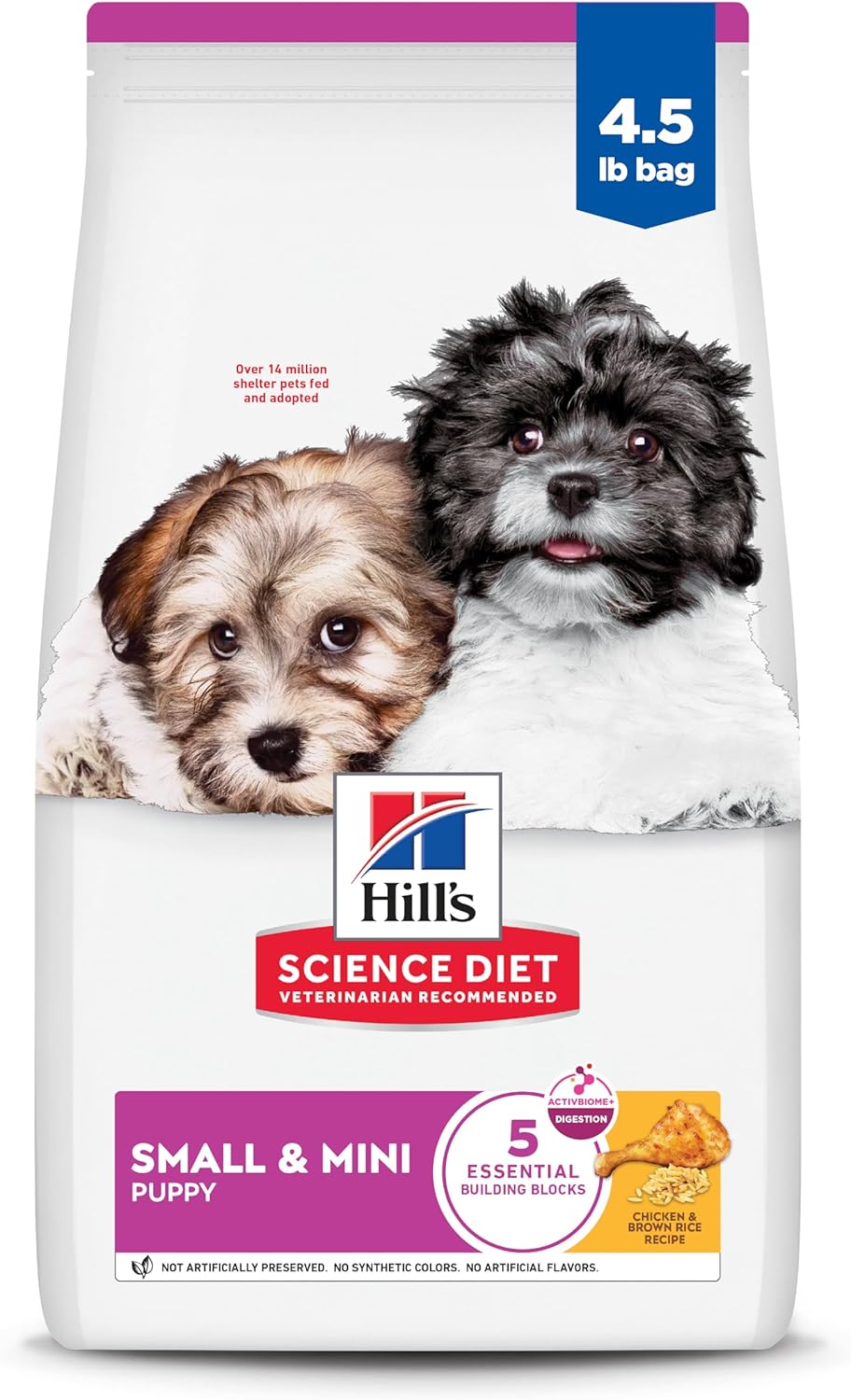
| Flavor | Chicken & Brown Rice |
|---|---|
| Age Range Description | Puppy |
| Specific Uses For Product | Small & Mini Breeds Puppy Premium Nutrition |
| Unit Count | 72 Ounce |
Hill's Science Diet Puppy Small & Mini is a dry kibble formulated specifically for toy and small-breed puppies, combining concentrated calories, high-quality proteins, and nutrients aimed at early development. The small nibble size and calorie density make it convenient for frequent small meals and help meet the higher metabolic needs of little puppies. Notable features include DHA and fish oil for brain and eye development, balanced minerals to support growing bones and teeth, a special antioxidant blend for immune support, and prebiotic fibers to aid digestion. In practice the food is used as a complete diet from weaning through the puppy stage with feeding amounts adjusted to body condition; the bag includes feeding guidelines and the manufacturer recommends transitioning over seven days. Limitations are that the ingredient list includes grains and several plant proteins, so owners preferring grain-free or novel-protein formulas for allergy management may need alternatives, and the 4.5 lb bag size may require frequent repurchasing for multi-puppy households. For most small-breed puppies this provides a vet-focused, nutrient-dense base for growth.
Best for: Buyers seeking a veterinary-recommended, nutrient-dense puppy formula tailored to toy and small breeds who prioritize brain, bone, and immune development in early life.
Less Ideal for: Owners who need a grain-free, limited-ingredient, or novel-protein diet for food sensitivities should look at specialized alternatives.
- Kibble sized for small and toy breed mouths
- Contains DHA and fish oil to support brain and eye development
- Antioxidant blend and vitamins to support immune health
- Prebiotic fibers to support digestion and gut microbiome
- Formulated with concentrated calories and high quality proteins for growth
- Contains grains and common plant proteins that may not suit dogs with specific food sensitivities
- Smaller 4.5 lb bag may require frequent repurchase for multiple puppies
Verdict: The best small-breed food for puppies with small mouths and fast metabolisms, offering appropriately sized kibble and concentrated nutrition for healthy growth.
Choosing the Right Dog Food Bichon Frise Puppy: Key Factors to Consider
Protein Quality and Amount
Protein supplies the amino acids puppies need for muscle development and tissue repair. For bichon frise puppies, choose formulas where a named animal protein appears near the top of the ingredient list and the guaranteed analysis shows an appropriate protein percentage for puppy growth. Too little protein can slow development; too much is unnecessary when bone and calorie balance are off.
Protein source also affects digestibility and allergy risk. Lean, well-digested proteins from common sources tend to support healthy growth without stressing immature digestive systems. When evaluating labels, consider whether proteins are whole-muscle meat or more processed meat meals, because the former often offer better digestible amino acids per serving.
Kibble Size and Texture
Bichon frise puppies have small mouths and developing teeth, so kibble size and shape affect how easily they can pick up and break food. Small, shallow kibble or soft-moist options reduce choking risk and prevent frustration at mealtimes. Texture also influences chewing behavior and saliva production, which helps digestion.
For very young puppies or those with dental sensitivity, consider starter textures like soft bites or moistened kibble. As teeth mature, transitioning to firmer kibble can promote chewing and dental wear, but initial acceptability and ease of eating should guide the first months of feeding.
Caloric Density and Feeding Portions
Small-breed puppies burn energy quickly but have limited stomach capacity. Caloric density determines how much food is required to meet daily energy needs without overfeeding. A calorie-dense puppy food lets you provide sufficient energy in smaller volumes, which is useful for tiny bichon frise puppies.
Check the feeding guidelines for calories per cup and use body-condition scoring to adjust portions. Puppies grow rapidly, so frequent short meals are preferable to two large meals. Monitor weight and body condition to avoid excess weight gain that stresses developing joints.
Digestibility and Stool Quality
Digestibility affects nutrient uptake and the consistency of stools, which is an easy way to tell if a diet suits a puppy. Ingredients like moderately fermentable fiber, prebiotic sources, and high-quality proteins contribute to easier digestion and firmer stools. Sudden ingredient switches or diets high in unfamiliar carbohydrates can cause loose stools or gas.
When choosing a food, look for formulas that list easily identified fiber sources and avoid recipes dominated by indigestible fillers. Consistent stool quality is especially important for monitoring overall health in young puppies.
Fatty Acids for Skin and Coat
Bichon frise are prized for their coat, so dietary omega-3 and omega-6 fatty acids help maintain skin health and fur luster. Adequate dietary fat also provides concentrated energy for growing puppies and supports absorption of fat-soluble vitamins.
Choose formulas with named sources of EPA, DHA, or omega-rich oils. Balance matters: too much fat can promote rapid weight gain, while too little can leave the coat dull. Look for an explicit fatty-acid profile or ingredient list that includes sources like fish oil or flaxseed.
Life-stage Formulation and Micronutrients
Puppy formulas are tailored for growth with higher levels of certain vitamins, minerals, and amino acids than adult maintenance diets. Correct calcium-to-phosphorus ratios and adequate vitamin D are crucial for healthy bone development, while antioxidants and zinc support immune function.
Always choose a diet labeled for puppies or growth stages. Verify the guaranteed analysis and nutrient guarantees to ensure the formula meets recognized standards for a complete and balanced puppy diet.
How to Transition Your Bichon Frise Puppy to a New Food
Switch diets gradually over 7 to 10 days to reduce the risk of digestive upset. Start by mixing 25 percent of the new food with 75 percent of the old for two to three days, then move to a 50/50 mix for another two to three days, followed by 75 percent new food before completing the switch.
Monitor stool consistency and appetite during the transition. If your puppy develops loose stools, slow the transition and allow an extra day or two at the current ratio. For puppies with sensitive stomachs, consult your veterinarian before major diet changes.
- Start slow: 7 to 10 day transition schedule
- Watch stools and energy level
- Moisten kibble briefly for very young puppies to ease chewing
How Many Meals a Day Should a Bichon Frise Puppy Eat?
Young puppies do best with frequent, small meals. From weaning to about four months, offer 3 to 4 meals daily to maintain steady energy and prevent hypoglycemia. Between four and six months you can typically reduce to three meals, and by about six months many owners transition to two meals a day.
Portion each meal based on the calorie density on the feeding guide and your puppy's current weight and activity level. Adjust portions every few weeks as the puppy grows and consult body-condition scoring rather than relying solely on package guidelines.
- Weaning to 4 months: 3 to 4 meals/day
- 4 to 6 months: 3 meals/day
- 6+ months: often 2 meals/day, adjusted to growth
What if My Puppy Has Food Sensitivities or Allergies?
Food sensitivities often show up as chronic itching, recurrent ear issues, or gastrointestinal disturbances like soft stools. If you suspect a sensitivity, try an elimination approach using a limited-ingredient or single-protein formula for several weeks while monitoring symptoms.
For persistent or severe signs, seek veterinary guidance. Your veterinarian can recommend diagnostic steps or prescribe a therapeutic diet. Many sensitive puppies do well on novel-protein or hydrolyzed formulas, but these should be used under professional supervision.
- Try limited-ingredient diets for mild issues
- Use an elimination trial of 8 to 12 weeks to assess improvement
- Consult a veterinarian for severe or persistent problems
Portioning and Adjusting as Your Puppy Grows
Track weight and body condition weekly during rapid growth. Use the feeding chart as a starting point, then reduce or increase portions in small increments to maintain a healthy, slightly tucked waist and palpable ribs without heavy covering.
Expect to change calorie intake as activity, neuter status, and growth rate shift. Small-breed puppies can go from lean to overweight quickly if portions are not monitored, so frequent checks and gradual adjustments keep development on track.
- Weigh weekly during early months
- Use body condition score rather than visual guesswork
- Adjust by 5 to 10 percent when needed
Supplements and Extras: when They Help and when They Don't
A complete puppy formula typically covers vitamin, mineral, and essential fatty-acid needs, so routine supplementation is often unnecessary. Supplements like fish oil for extra omega-3 can help coat and skin in some cases, but use them carefully to avoid unbalancing calories or fat content.
Only add joint, probiotic, or vitamin supplements when recommended by a veterinarian for a specific issue. Over-supplementing can hide underlying diet problems or create nutrient imbalances, so prioritize a balanced puppy diet first.
- Avoid routine supplements unless a vet recommends them
- Consider omega-3 supplements only for specific skin or coat needs
- Use probiotics short-term for digestive upsets when advised
How We Chose the Best Dog Food Bichon Frise Puppy
We used a set of breed- and life-stage-specific editorial filters to narrow options suitable for bichon frise puppies. Core evaluation criteria included guaranteed nutrient analysis, protein quality and sourcing, kibble or texture appropriate for small mouths, and digestibility indicators such as fiber type and limited novel carbohydrates. We also prioritized formulas with omega-3 and omega-6 sources for skin and coat support and looked for appropriate calcium-to-phosphorus ratios for healthy bone development. Other important filters covered caloric density and feeding guidelines tailored to small-breed growth pace, plus inclusion of sources of essential vitamins and minerals for immune support. We excluded adult formulas, maintenance-only recipes, and any products lacking clear nutrient breakdowns or feeding instructions. We also discounted items with excessively long ingredient lists dominated by unnamed by-products or indistinct carbohydrate sources. Final selections balanced nutritional completeness with practical feeding traits for bichon frise puppies: bite-sized kibble or soft-texture options, predictable digestibility, and explicit puppy-life-stage formulation.
Our full evaluation process is outlined in our review methodology.
FAQ
How quickly should I switch puppy food if my bichon frise is finicky?
Switch gradually even for picky eaters. Begin with a 25 percent new food mix and increase slowly over a week to ten days. If appetite drops, try slightly warming the food or adding a small amount of moist topper to encourage eating while continuing a slow transition.
Can I feed an adult small-breed formula to my bichon frise puppy?
Adult small-breed formulas usually lack the higher protein, calorie density, and bone-support nutrients puppies need. For healthy growth, choose a diet specifically formulated for puppies unless instructed otherwise by a veterinarian.
Is wet food better than dry food for a bichon frise puppy?
Both wet and dry can work effectively. Wet food is easier for very young puppies to eat and can increase palatability, while dry kibble helps with dental abrasion and is convenient for portioning. Mixing textures can be useful during transition or for picky puppies.
How do I know if the kibble size is right for my puppy?
Kibble should be small enough for the puppy to pick up and break with minimal effort. If your puppy struggles to chew or leaves pieces whole, choose a smaller or softer texture. Monitor feeding ease and adjust if you see gagging or long, inefficient chewing.
When should I switch from puppy food to adult food for a bichon frise?
Many small-breed dogs can transition to adult food around nine to twelve months, depending on individual growth and veterinary advice. Evaluate body condition and skeletal maturity before switching and consult your veterinarian for timing tailored to your puppy.
Final Verdict
Prioritize a complete puppy formula that combines appropriate protein quality, small-breed kibble size, and balanced calories for steady growth and a healthy coat. Focus on digestibility and explicit puppy-life-stage nutrient guarantees rather than trends or extras. Watch portion sizes and stool quality as practical indicators that a diet suits your bichon frise puppy, and be ready to adjust feeding frequency and calories as the puppy grows. When in doubt about sensitivities or developmental concerns, consult your veterinarian to choose the best path forward.

