

Feeding a bloodhound the right food matters more than you might expect. these large, deep-chested dogs have specific energy and digestive needs that affect weight management, stamina on tracking outings, and skin and coat condition. choosing the right food helps support healthy joints, steady energy, and resilient digestion. this guide shortlists seven top-performing foods for bloodhounds and explains the nutritional tradeoffs that matter. we evaluated options by nutrient profile, protein quality, digestive support, and suitability for large-breed adult and senior bloodhounds. read on to find the practical criteria that should guide your choice.
Top Picks at a Glance
| Best Overall Food for Bloodhound A balanced all-around formula tailored to typical Bloodhound needs | Taste of the Wild High Prairie 28 lb |  |
| Best Budget Food for Bloodhound A lower-cost option that still meets core nutritional needs | Nutrish Beef Dry Dog Food 5 lb |  |
| Best Premium Food A higher-end formula with superior ingredients and targeted nutrients | ORIJEN Regional Red Dry Dog Food 23.5 lb |  |
| Best High-Protein Food Formulas focused on higher protein levels for active or muscular dogs | VICTOR Hi-Pro Plus Dry Dog Food 40 lb |  |
| Best Grain-Free Food A grain-free recipe for owners avoiding cereals or fillers | Blue Buffalo Wilderness Salmon 24 lb |  |
| Best Limited-Ingredient Food Simpler recipes to reduce ingredients linked to sensitivities | Natural Balance Limited Ingredient Dry Dog Food |  |
| Best Large-Breed Food Formulas sized and balanced for big dogs' growth and joints | Hill's Science Diet Large Breed |  |
Taste of the Wild High Prairie 28 lb
Best Overall Food for Bloodhound

| Flavor | Roasted Bison & Roasted Venison |
|---|---|
| Age Range Description | Adult |
| Item Form | Kibble |
| Allergen Information | Grain-Free |
| Unit Count | 448 Ounce |
Taste of the Wild High Prairie is a grain-free kibble built around real roasted meat as the first ingredient and a declared 32% protein level, aimed at supporting active adult dogs. It is typically used as a daily maintenance or performance food for energetic breeds and working dogs, providing concentrated calories and protein for muscle maintenance and recovery. The formula includes roasted bison and venison plus supplementary meats and fish meal, and it lists species-specific probiotic strains and a mix of fruits and vegetables for antioxidants and digestive support. Practical benefits include dense, meat-forward nutrition suitable for dogs with high energy needs and added probiotics to help digestion during heavy workloads. Limitations are that it is grain-free, which some owners avoid due to regulatory questions about cardiac health in certain dogs, and the rich recipe may be too calorie-dense for less active or weight-sensitive pets, requiring careful portion control. Also, ingredient sources include some novel proteins that could trigger sensitivities in dogs with specific allergies.
Best for: Active, high-energy owners and handlers who need a meat-forward, high-protein kibble to support muscle maintenance and sustained activity in working or sport-focused dogs.
Less Ideal for: Owners of low-activity, easily overweight dogs or dogs with grain sensitivities that specifically require grain-inclusive diets should consider other options.
- Real roasted meat listed first for strong animal-protein profile
- High declared protein level (around 32%) to support muscle maintenance
- Includes proprietary K9 probiotic strains for digestive and immune support
- Supplemented with fruits and vegetables for antioxidants and omega fatty acids for skin and coat health
- Grain-free formulation may not be recommended for all dogs due to ongoing concerns about heart health links
- Calorie-dense recipe can cause weight gain if portions are not adjusted for less active dogs
Verdict: The best overall food for a Bloodhound balances mature-large-breed nutrition, digestibility, and palatability to support energy, skin and coat, and healthy weight for most owners.
Nutrish Beef Dry Dog Food 5 lb
Best Budget Food for Bloodhound

| Flavor | Beef |
|---|---|
| Age Range Description | Adult |
| Item Form | Chunk |
| Unit Count | 80 Ounce |
Nutrish Real Beef, Pea & Brown Rice is a 5 lb adult dry dog food that uses beef as the primary ingredient and adds vitamins, minerals and fish oil for rounded daily nutrition. It is typically served as the main daily kibble for adult dogs and follows standard feeding guidelines by weight. The formula emphasizes natural ingredients without added artificial flavors and includes plant sources such as peas and brown rice for carbohydrate and fiber. Practical benefits include a veterinarian-reviewed recipe and an ingredient list designed to appeal to picky eaters thanks to beef-first flavoring, while the smaller 5 lb bag makes it convenient for owners who want to test a new formula or need more frequent rotation. Limitations are that the recipe contains common allergens like soy and barley and includes grain ingredients, so it is not a grain-free or limited-ingredient option for dogs with specific sensitivities. Buyers should also plan on storing the smaller bag properly to maintain freshness between openings.
Best for: Owners looking to feed a cost-conscious, nutritionally complete dry food that still uses real beef as the lead ingredient and is suitable for everyday meals.
Less Ideal for: Owners whose Basset Hound has grain or ingredient sensitivities, or who require a limited-ingredient or grain-free therapeutic diet should consider specialized formulas instead.
- Beef listed as the first ingredient for strong flavor appeal
- Formulated for complete and balanced adult nutrition with added vitamins and minerals
- Veterinarian-reviewed recipe for added confidence in formulation
- No added artificial flavors noted in product information
- Contains common allergens such as barley and soy which may not suit sensitive dogs
- Includes grains so it is not suitable for owners seeking grain-free or limited-ingredient diets
Verdict: The best budget food for a Bloodhound provides complete, AAFCO-compliant nutrition with sensible ingredient quality and calories per dollar for owners prioritizing affordability.
ORIJEN Regional Red Dry Dog Food 23.5 lb
Best Premium Food

| Flavor | Regional Red Recipe |
|---|---|
| Age Range Description | All Life Stages |
| Item Form | Dry Kibble |
| Allergen Information | Grain-Free, Corn-Free, Soy Free, Wheat Free |
| Unit Count | 400 Ounce |
ORIJEN Regional Red is a premium, poultry-free dry kibble built around varied red meats and WholePrey components to deliver dense animal protein and natural nutrients. It is typically fed as a daily adult diet and is labeled for all life stages except growth of large-breed dogs, with feeding guidance to adjust portions based on your dog's condition. The formula lists fresh or raw beef, wild boar, lamb, pork and beef liver among the top ingredients and contains freeze-dried coating for extra palatability. Practical benefits include a very high proportion of animal ingredients for muscle maintenance, natural organ ingredients that supply vitamins and minerals, and Omega-3/6 sources aimed at skin and coat health. It is grain-free and excludes common allergens like corn, soy and wheat, which helps sensitive dogs. Important trade-offs are cost and density: this is a nutrient-dense premium kibble that may be pricier per pound and requires careful portion control for dogs prone to weight gain, and it is not formulated for growing large-breed puppies.
Best for: Owners who prioritize premium, meat-forward nutrition and ingredient sourcing and are willing to pay more for high animal-protein diets and extra skin and coat support.
Less Ideal for: Families feeding large-breed growing puppies or buyers seeking a budget-focused everyday kibble should consider alternatives better matched to those needs.
- Very high fresh or raw animal-ingredient content for strong protein profile
- WholePrey organs and meats provide broad natural nutrient sources without synthetic additives
- Grain-free and free of common allergens like corn, soy and wheat
- Includes freeze-dried coating to boost flavor and palatability
- Formulated to support skin, coat and immune health with Omega fatty acids and antioxidants
- Not formulated for growth of large-breed (70 lb+) puppies
- Higher-cost, nutrient-dense formula requires careful portioning to avoid excess calories
- Poultry-free focus may be limiting for dogs that respond best to poultry-based diets
Verdict: The best premium food is for owners willing to pay more for elevated protein sources, thoughtful ingredient sourcing, and extra joint or skin-and-coat support.
VICTOR Hi-Pro Plus Dry Dog Food 40 lb
Best High-Protein Food

| Protein | 30% (approx) |
|---|---|
| Fat | 20% (approx) |
| Life Stage | All Life Stages |
| Special Ingredients | gluten-free |
VICTOR Hi-Pro Plus is a dense, high-protein kibble designed for active dogs, growing puppies, and reproductive females that need extra calories and muscle support. The formula uses multiple meat meals—beef, chicken, pork, and fish—as primary protein sources and delivers about 30% protein and 20% fat, which supports sustained energy and muscle maintenance during heavy activity. It includes the brand's VPRO blend of supplements, vitamins, minerals, prebiotics and probiotics aimed at digestive and immune support, plus sources of DHA for developing pups. The food is gluten-free but not grain-free; about 10% of protein comes from grain sources, so it is more inclusive for dogs that tolerate grains. Practical benefits are straightforward: high caloric density for working or very active large-breed dogs and a formula intended for all life stages that simplifies feeding transitions. Important limitations are that the calorie and protein density may be excessive for sedentary dogs or older Great Danes needing lower calorie intake, and large-breed growth-stage feeding should still be monitored because very rapid growth can stress joints.
Best for: Buyers seeking a high-protein, calorie-dense kibble to support muscle mass and sustained energy in large active dogs or working breeds, and who prefer a formula usable across life stages.
Less Ideal for: Owners of largely sedentary large-breed dogs, dogs prone to obesity, or those specifically requiring grain-free diets should consider lower-calorie or grain-free alternatives.
- High protein content (~30%) from multiple meat meals for muscle support
- High fat (20%) and caloric density for sustained energy during heavy activity
- Formulated for all life stages including puppies and reproductive females
- Includes prebiotics, probiotics and a vitamin/mineral blend for digestion and immune support
- Made in the USA with an emphasis on animal-sourced proteins
- Not grain-free; contains gluten-free grains and about 10% grain-derived protein
- May be too calorie- and protein-dense for less active or weight-sensitive dogs
Verdict: The best high-protein food suits Bloodhounds with higher activity or muscle-maintenance needs by delivering above-average protein from quality sources without excess fillers.
Blue Buffalo Wilderness Salmon 24 lb
Best Grain-Free Food

| Flavor | Salmon |
|---|---|
| Age Range Description | Adult |
| Item Form | Dry |
| Special Ingredients | grain free |
| Crude Protein | 34.0% min |
Blue Buffalo Wilderness Salmon is a grain-free adult dry formula built around real salmon as the first ingredient and a 34% minimum crude protein guarantee to support lean muscle. It is typically fed as a daily maintenance diet for adult dogs that need higher animal-protein content without common grains; the bag includes feeding guidelines by weight so you can transition and portion accurately. Notable features include added Omega-3 and Omega-6 sources for skin and coat support, LifeSource Bits that provide a targeted mix of vitamins and antioxidants, and supplemental glucosamine for joint support. Ingredient-wise the recipe replaces grains with peas, tapioca, and sweet potatoes while including fish meal, flaxseed, and fruits and vegetables for micronutrients. Practical benefits are higher protein for active or muscular dogs and a formulation that avoids corn, wheat, soy, and poultry by-product meals. Important limitations are that grain-free formulas are not necessary for all dogs and some pets with specific sensitivities may still react to legumes or fish proteins, so a vet consultation is advised for dogs with digestive or allergy concerns.
Best for: Owners seeking a grain-free adult diet that prioritizes high animal-protein from fish and complementary nutrients for coat and muscle support.
Less Ideal for: Owners who prefer grain-inclusive diets or who have dogs with known pea or fish allergies should consider other formulas tailored to those needs.
- Real salmon is the first ingredient providing a high-quality animal protein source
- Grain-free carbohydrate mix (peas, tapioca, sweet potatoes) for owners avoiding corn, wheat, and soy
- 34% crude protein and added glucosamine to support lean muscle and joint health
- Includes Omega-3 and Omega-6 sources plus LifeSource Bits for antioxidant and skin/coat support
- Uses legumes and fish meal which can be problematic for dogs with sensitivities to those ingredients
- Grain-free diets are not necessary for every dog and may require veterinary guidance for long-term feeding
Verdict: The best grain-free food fits Bloodhounds that do better without grains by offering alternative carbohydrate sources and balanced nutrition without sacrificing digestibility.
Natural Balance Limited Ingredient Dry Dog Food
Best Limited-Ingredient Food
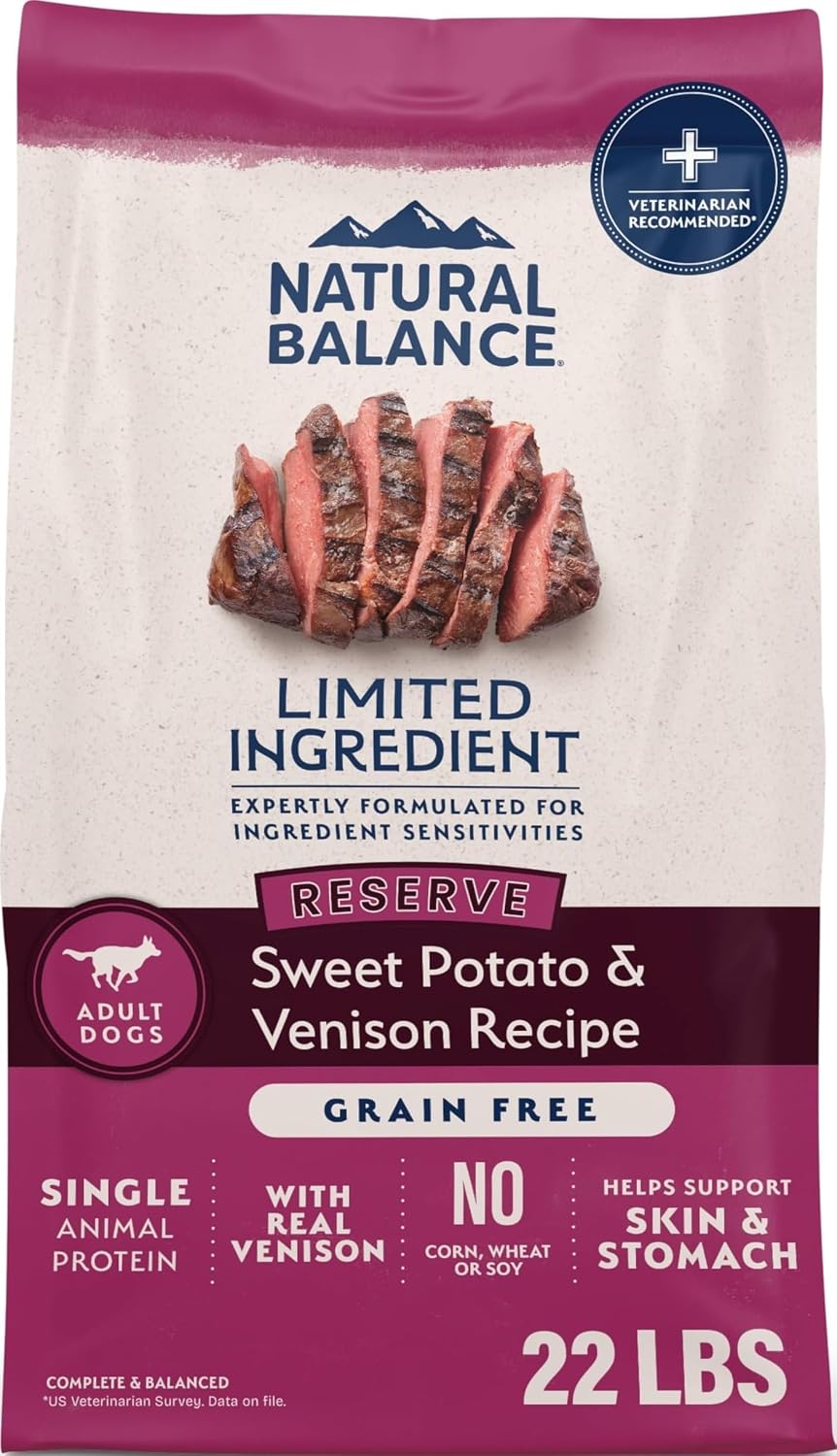
| Flavor | Sweet Potato & Venison |
|---|---|
| Age Range Description | Adult |
| Item Form | Pellet |
| Animal Food Diet Type | Limited Ingredient |
| Allergen Information | Corn-Free, Grain-Free, Soy Free |
This limited-ingredient dry formula uses reserve venison as the primary animal protein and a short ingredient profile intended to reduce exposure to common irritants. It is typically fed as an everyday dry kibble for adult dogs that need simplified nutrition or have digestive or skin sensitivities. Notable features include single animal protein focus, grain-free formulation, and added vitamins, minerals, and omega sources like salmon oil and flaxseed to support skin and coat. Practical benefits include easier elimination diet trials because of the simplified recipe, potentially gentler digestion thanks to digestible carbohydrate sources like sweet potato, and a complete nutrient profile for regular feeding. Limitations to consider are that it is grain-free and contains ingredients like pea protein and potato protein that some elimination protocols exclude, and dogs with specific diagnosed allergies should still be guided by a veterinarian. Bagged packaging makes it convenient for daily service but introduces the usual shelf-life and freshness considerations once opened.
Best for: Buyers seeking a shorter, single-protein dry food to trial for dogs with suspected ingredient sensitivities or sensitive digestion who want a complete, everyday kibble.
Less Ideal for: Owners who need a strictly hydrolyzed or veterinarian-prescribed hypoallergenic diet, or who require a formula without any pulse or potato-derived ingredients.
- Single primary animal protein (venison) simplifies elimination diets
- Grain-free and formulated without corn, wheat, or soy
- Includes added vitamins, minerals, and omega sources for skin and coat support
- Designed for dogs with sensitive stomachs and ingredient sensitivities
- Contains plant proteins (pea protein, potato protein) that some elimination plans avoid
- Grain-free formulation may not be necessary for all dogs and can be higher in certain carbs
Verdict: The best limited-ingredient food is ideal for Bloodhounds with suspected food sensitivities, using a short ingredient list and single protein or novel carbohydrate to simplify diagnosis and feeding.
Hill's Science Diet Large Breed
Best Large-Breed Food

| Flavor | Chicken & Barley |
|---|---|
| Age range | Adult 1-5 |
| Item form | Pellet |
| Unit count | 240 Ounce |
Hill's Science Diet Large Breed is a dry kibble designed for adult large dogs and formulated to support joint health, lean muscle, skin and digestive function. It is typically used as an everyday maintenance diet for large-breed adults and contains high-quality protein, glucosamine and chondroitin for joint support, plus omega-6 fatty acids and vitamin E for coat health. The formula also includes prebiotic fibers and antioxidants (ActivBiome+) to promote digestion and immune health. Practical benefits include a nutrient profile aimed at supporting the higher calorie and musculoskeletal needs of big dogs and a kibble profile intended for large muzzles and chewing. Trade-offs are that this is a maintenance diet rather than a therapeutic prescription food, so dogs with advanced joint disease, weight-management needs, or food sensitivities may require a veterinarian-recommended alternative, and feeding should be adjusted by monitoring body condition.
Best for: Buyers seeking a vet-recommended everyday dry food that supports joint health, digestion, and coat condition in active large-breed adult dogs, especially when choosing a reliable maintenance diet.
Less Ideal for: Owners whose dogs need a prescription therapeutic diet for medical conditions, strict grain-free formulas, or novel-protein elimination diets should consider other specialized options.
- Formulated specifically for large-breed adults with nutrient balance for size-related needs
- Includes glucosamine and chondroitin to help support joint health and mobility
- High-quality protein to help build and maintain lean muscle
- Added prebiotic fibers and antioxidants to support digestion and immune health
- Omega-6 and vitamin E blend to promote healthy skin and a shiny coat
- Not a veterinary prescription formula for dogs with diagnosed orthopedic disease or special medical needs
- Contains common grains and animal-derived ingredients that may not suit dogs with specific food sensitivities
Verdict: The best large-breed food is formulated to meet a Bloodhound's specific caloric density, controlled calcium/phosphorus ratios, and joint-support nutrients to promote healthy growth and long-term mobility.
Choosing the Right Dog Food Bloodhound: Key Factors to Consider
Protein Quality and Amount
Protein is the foundation for maintaining muscle mass and supporting the high scent-work activity common in bloodhounds. look for named meat sources early in the ingredient list rather than vague meat by-products. the absolute percentage of crude protein matters, but digestibility and amino acid completeness are equally important because poorly digestible protein can stress the digestive system and lead to loose stools.
for adult bloodhounds, moderate to high protein helps preserve lean mass without promoting excess weight. puppies and nursing dogs need higher levels and a different balance of amino acids to support growth. if your dog has a known protein sensitivity, single-protein or novel-protein formulations can reduce reactions while still meeting essential amino acid needs.
Calorie Density and Fat for Steady Energy
Bloodhounds are a large-breed with a propensity for long tracking sessions, so food should provide steady energy without making it easy to overfeed. calorie density determines portion sizes and how much energy the food supplies per cup. higher fat increases energy density and palatability but can also lead to weight gain if feeding amounts are not adjusted.
look for moderate fat levels and clear feeding guidelines tied to activity level. foods with quality fat sources, such as fish or poultry fat, supply essential fatty acids that support coat health and inflammation control. if your bloodhound is less active or prone to weight gain, choose lower-calorie formulas or ones designed for large-breed weight management.
Joint Support and Large-breed Considerations
Large-breed dogs place more stress on hips and elbows over time, and bloodhounds are no exception. diets that include clinically reasonable levels of joint-supporting nutrients like glucosamine and chondroitin can help maintain joint health when combined with proper weight control and exercise. calcium and phosphorus ratios should be appropriate for large-breed adults; excessive calcium in growing large-breed puppies can cause developmental orthopedic issues.
also consider kibble size and texture. larger kibble can slow intake and reduce gulping, which helps prevent bloat risk and encourages slower chewing. however, individual preference and dental condition can affect what kibble size works best for your dog.
Digestive Tolerance and Stool Quality
Bloodhounds can be prone to sensitive digestion in some lines, so foods formulated for digestive tolerance are valuable. look for prebiotic fibers, moderately fermentable carbohydrates, and probiotics or species-stable cultures that support a balanced gut microbiome. highly processed fillers can increase stool volume and reduce nutrient absorption, so diets emphasizing digestible whole-food carbohydrates tend to produce firmer stools and better nutrient uptake.
if your dog has chronic loose stools, an elimination trial with a limited-ingredient diet or a novel protein source may identify triggers. incremental diet changes and measuring stool quality and energy levels over several weeks will show whether a food truly improves digestion.
Essential Fatty Acids and Skin Coat Health
A glossy, healthy coat and resilient skin depend on a mix of omega-3 and omega-6 fatty acids. these fats also play a role in managing inflammation after long tracking sessions. look for explicit sources of omega-3s, such as fish oil, and adequate linoleic acid from vegetable oils for skin barrier function.
insufficient essential fatty acids can lead to dull coat, flaky skin, and increased scratching. when choosing a food, check for named oil sources and an omega profile appropriate for skin health. supplements can help in some cases, but the base food should contribute substantially to daily needs.
Life Stage and Activity-specific Formulations
Bloodhounds' nutritional needs change through life. puppies require higher proteins, calories, and precise mineral ratios to support growth without risking skeletal issues. adult maintenance formulas focus on balanced nutrients and controlled calories to avoid excess weight. senior formulations commonly reduce calories, add joint-supporting nutrients, and include antioxidants for healthy aging.
select a life-stage-appropriate formula and follow feeding guidelines adjusted for your dog's actual activity level and body condition rather than the chart alone. working or highly active bloodhounds may need higher-calorie options, while couch-bound pets benefit from maintenance or weight-control variants.
How Do I Switch My Bloodhound to a New Food Without Upset Stomach?
Switching foods gradually over 7 to 10 days reduces the risk of digestive upset. start by mixing 10 to 25 percent of the new food with the old food and increase the new portion every two to three days while monitoring stool quality and appetite.
If your bloodhound shows loose stools or reduced appetite, slow the transition and give more time at the last comfortable mix ratio. for dogs with very sensitive digestion, a longer, two- to three-week transition can be safer. keep fresh water available and avoid adding new treats or supplements during the changeover to isolate variables.
- Start with 10–25% new food
- Increase gradually over 7–10 days
- Extend transition for sensitive dogs
- Monitor stool and appetite daily
Should I Feed a Grain-free Diet to a Bloodhound?
Grain-free is not inherently better for bloodhounds. many dogs do fine with grains, which can provide digestible carbohydrates and fiber. only consider grain-free if your dog has a confirmed sensitivity to specific grains or ingredients after veterinary evaluation.
If you choose a grain-free formula, ensure it still provides balanced amino acids, taurine where relevant, and a clear nutrient profile. monitor cardiac and overall health with regular veterinary checkups, as diet changes can have systemic effects over time.
- Grains can be a good carbohydrate source
- Reserve grain-free for confirmed sensitivities
- Ensure balanced nutrition in any formulation
How Much Should I Feed My Bloodhound Each Day?
Daily feeding amounts depend on calorie density of the food, your dog's age, weight, body condition, and activity level. use the feeding chart on the package as a starting point but adjust portions based on body condition: a visible waist and ribs that can be felt with light pressure indicate healthy weight.
Split meals into two feedings to help control hunger and reduce gulping. weigh portions with a kitchen scale when possible to avoid under- or overfeeding. re-evaluate portions seasonally or whenever activity changes, and consult your veterinarian for personalized guidance.
- Start with package feeding guide
- Adjust by body condition and activity
- Feed twice daily and measure portions
- Reassess with seasonal activity changes
What Ingredients Help Support Scent-work Stamina and Recovery?
Scent-work stamina relies on steady energy release and efficient muscle recovery. quality animal proteins supply essential amino acids for muscle repair, while complex carbohydrates and moderate fat provide sustained fuel. look for whole-food carbohydrate sources like sweet potato or whole grains that promote gradual energy release rather than quick sugar spikes.
Antioxidants from fruits and vegetables, plus omega-3 fatty acids, can help control exercise-related inflammation and support recovery. electrolytes and hydration strategies are also important for long sessions; consider providing access to water and salty snacks suited for dogs when exercising in hot conditions.
- Complete animal proteins for muscle repair
- Complex carbs for sustained energy
- Omega-3s and antioxidants for reduced inflammation
- Hydration and electrolyte attention during long work
When Should I Consider Feeding a Limited-ingredient or Novel-protein Diet?
Consider a limited-ingredient or novel-protein diet if your bloodhound shows chronic digestive upset, recurring ear infections, or skin reactions that do not respond to environmental management. these diets reduce the number of exposures to potential allergens and make elimination trials more straightforward.
Work with your veterinarian to run an elimination trial and reintroduce ingredients systematically to identify triggers. do not switch to an elimination diet casually; it should be used methodically to yield useful diagnostic information.
- Use for chronic unexplained GI or skin issues
- Conduct elimination trials under veterinary guidance
- Avoid casual or frequent ingredient switching
How to Read Guaranteed Analysis and Ingredient Lists Effectively
Guaranteed analysis provides crude protein, fat, fiber, and moisture percentages, but it does not tell the whole story. consider guaranteed analysis alongside the ingredient list to understand nutrient sources and digestibility. ingredients are listed by weight before cooking, so concentrate on named meats and identifiable carbohydrate sources.
Also consider the order of ingredients and look for added functional components such as prebiotics, probiotics, or specified joint-support nutrients. labels that list vague terms without source details make it harder to judge quality, so prefer transparency.
- Use guaranteed analysis with ingredient context
- Prioritize named meat sources and digestible carbs
- Look for functional additives that support digestion or joints
- Avoid vague, nontransparent ingredient listings
How We Chose the Best Dog Food Bloodhound
We prioritized factors that directly affect bloodhound health and daily function. first, nutrient balance was required: appropriate levels of high-quality protein, controlled fat for sustained energy, and a calcium-to-phosphorus ratio suitable for large-breed dogs. second, protein source and digestibility: we favored diets using named animal proteins and ingredients that support efficient nutrient absorption to help maintain muscle mass without excess calories. third, joint and mobility support: because bloodhounds are large and active, we looked for sensible levels of glucosamine and chondroitin or ingredient choices that support healthy cartilage. fourth, gastrointestinal tolerance: options aimed at sensitive stomachs, with prebiotic fibers, limited novel proteins, or gentle carbohydrates, were considered. fifth, life-stage and caloric density: formulations aligned with adult, active, or senior needs were weighed so feeding amounts match typical bloodhound metabolism. we excluded diets with unclear ingredient sourcing, unbalanced large-breed mineral profiles, or formulations lacking basic digestibility information. final picks scored well across these practical measures rather than novelty claims.
Our full evaluation process is outlined in our review methodology.
FAQ
Can bloodhounds eat the same food as smaller breeds?
They can eat the same formula if it meets their nutritional needs, but portion sizes and kibble size should be adjusted. large-breed formulations better address joint health and controlled calorie density for bloodhounds.
How often should a bloodhound be weighed and body condition checked?
Check body condition monthly at home and weigh your dog every one to three months depending on life stage and activity. more frequent checks are helpful during weight-loss or gain programs and when switching foods.
Are supplements necessary for bloodhounds on a complete diet?
Most complete diets provide essential vitamins and minerals, so routine supplements are not necessary. supplements can be useful for specific issues like joint support or fatty acid gaps, but discuss them with your veterinarian before adding them.
What signs suggest my bloodhound's food is not agreeing with it?
Look for persistent loose stools, increased gas, reduced appetite, excessive scratching, or coat changes. changes in energy level or repeated ear infections can also indicate a food-related issue and warrant a vet check or an elimination trial.
Should working bloodhounds get performance diets?
Working dogs often need higher-calorie formulas or more frequent feeding to meet energy demands. choose a nutrient-dense diet with quality protein and fats, and adjust portions for workload. always monitor body condition to avoid overfeeding when activity declines.
Final Verdict
Focus on a life-stage-appropriate food that balances high-quality protein, moderate fat, and digestive tolerance for steady energy and healthy weight in a bloodhound. prioritize digestibility, sensible calorie density, and joint-supporting nutrients to match the breed's size and activity level. weigh the tradeoffs between calorie density and portion control, and use feeding adjustments rather than switching formulas frequently. with attention to nutrient balance and stool quality, you can choose a food that supports long-term mobility, scent-work stamina, and skin and coat health.

