

Finding the right food matters more for Boston terriers prone to digestive upset than for many other breeds. A formula that supports gentle digestion while still delivering complete nutrition helps your dog maintain stable energy, consistent stools, and better tolerance during seasonal or life-stage changes. This guide covers seven shortlisted dog foods selected specifically for Boston terriers with sensitive stomachs and explains the factors that make a recipe easier to digest or better tolerated. We evaluated ingredients, protein sources, fiber and fat balance, and formulation features that reduce common triggers. Read on for practical guidance to help you pick the best option for your dog's digestion and overall health.
Top Picks at a Glance
| Best Overall Food for Boston Terriers with Sensitive Stomachs The best all‑around choice balancing digestion, nutrition, and palatability | Hill's Science Diet Sensitive Stomach Small Bites |  |
| Best Budget Food for Boston Terriers with Sensitive Stomachs A low‑cost option that prioritizes gentle digestion on a tight budget | IAMS Proactive Health Sensitive Skin & Stomach 4.5 lb |  |
| Best Limited-Ingredient Food Simpler recipes with fewer ingredients to reduce allergy and upset risks | Natural Balance Limited Ingredient Salmon & Sweet Potato |  |
| Best Small-Kibble Food Smaller kibble shapes sized for small jaws and easier chewing | Purina Pro Plan AdvantEDGE Small Breed Digestive |  |
| Best Wet Food Higher-moisture recipes that are easier to digest and more palatable | Hill's Science Diet Sensitive Stomach & Skin |  |
| Best High-Protein Food Protein-forward formulas for active or higher-energy small dogs | Wellness CORE Digestive Health Small Breed |  |
| Best Premium Food A higher-end formula focused on superior ingredients and digestion support | Open Farm GoodGut Salmon 3.5lb |  |
Hill's Science Diet Sensitive Stomach Small Bites
Best Overall Food for Boston Terriers with Sensitive Stomachs

| Flavor | Chicken |
|---|---|
| Age Range Description | Adult 1-6 |
| Item Form | Pellet |
| Specific Uses For Product | Stomach & Skin Sensitivity support Small Kibble |
| Unit Count | 64 Ounce |
Hill's Science Diet Sensitive Stomach & Skin Small Bites is a dry adult formula designed for dogs that have occasional digestive upset and skin sensitivity. The recipe uses high-quality chicken as the first ingredient along with prebiotic fiber to support a balanced gut microbiome and improve nutrient absorption, and it includes vitamin E and omega fatty acids to help maintain skin and coat health. The small kibble size makes it easy for brachycephalic breeds like French Bulldogs to pick up and chew, and the formula emphasizes gentle carbohydrates such as barley and rice rather than heavy legumes. Practical benefits include predictable digestibility, a complete nutrient profile with clinically proven antioxidants, and guidance for transitioning pets to the food. Limitations are that it is not an elimination diet with a novel protein, so dogs with specific protein allergies may need a more restricted formula, and the bag sizes and ingredient list include grains, which some owners prefer to avoid entirely. For many dogs prone to mild-to-moderate stomach sensitivity, this offers a veterinary-backed, easy-to-feed option.
Best for: Owners seeking a veterinarian-recommended, highly digestible daily food for adult dogs that commonly have mild digestive upset and skin sensitivity, especially for breeds that benefit from small kibble.
Less Ideal for: Owners whose dogs require a novel protein or strict limited-ingredient elimination diet for confirmed food allergies should choose a dedicated hypoallergenic formula instead.
- First ingredient is high-quality chicken for consistent protein
- Prebiotic fiber to support gut microbiome and digestibility
- Includes vitamin E and omega fatty acids to support skin and coat
- Small kibble size suited to dogs with short muzzles or picky chewers
- Clinically backed antioxidants to support immune health
- Contains common grains and chicken, so not suitable as a novel-protein elimination diet
- Not marketed as a limited-ingredient formula for dogs with multiple food sensitivities
Verdict: The best overall food for Boston Terriers with sensitive stomachs, offering a balanced recipe that soothes digestion while meeting small-breed nutrient needs and taste preferences.
IAMS Proactive Health Sensitive Skin & Stomach 4.5 lb
Best Budget Food for Boston Terriers with Sensitive Stomachs

| Flavor | Salmon |
|---|---|
| Age Range Description | Adult |
| Item Form | Dry Kibble |
| Specific Uses For Product | Digestive Health, Sensitive Skin, Sensitive Stomach |
| Unit Count | 72 Ounce |
IAMS Proactive Health Sensitive Skin & Stomach is a salmon-forward dry kibble aimed at adult dogs with sensitive skin or stomachs. You feed it like any everyday dry food and the bag is designed for standard portioning using the package feeding guidelines; the label also recommends a gradual four-day transition. Notable features include real salmon as the number one ingredient, a chicken-free formulation to reduce common protein triggers, added prebiotic fiber and highly digestible components for digestive support, and a clinically balanced omega-6 to omega-3 ratio to help skin and coat. The recipe is complete and balanced for adults and includes vitamins, minerals, and antioxidants for overall vitality. On the practical side this is an affordable, vet-recommended brand offering a straightforward sensitive-care formula without specialty proteins or prescription-only claims. Limitations are that the formula still lists barley and egg as allergens, and trace cross-contact with chicken is possible, so it is not suitable for dogs with strict single-protein elimination needs or confirmed allergies to listed ingredients.
Best for: Owners looking for an affordable, everyday dry formula that improves digestive comfort and skin condition for adult dogs with mild food sensitivities and no need for single-protein prescriptions.
Less Ideal for: Families whose dogs require strict single-protein elimination, have confirmed allergies to listed ingredients, or need veterinary-prescribed therapeutic diets should choose alternatives.
- Real salmon listed as the first ingredient for animal protein focus
- Chicken-free primary recipe to reduce common sensitivity triggers
- Formulated with prebiotic fiber and highly digestible ingredients to support digestion
- Balanced omega-6 and omega-3 ratio to help skin and coat condition
- Complete and balanced for adult dogs with added antioxidants for immune support
- Contains barley, egg, and other potential allergens that may affect some sensitive dogs
- Manufacturer notes possible trace cross-contact with chicken, so not suitable for strict elimination diets
Verdict: The best budget food for Boston Terriers with sensitive stomachs that provides basic digestive support and adequate nutrition without a high price tag.
Natural Balance Limited Ingredient Salmon & Sweet Potato
Best Limited-Ingredient Food

| Flavor | Salmon & Sweet Potato |
|---|---|
| Item Form | Pellet |
| Animal Food Diet Type | Limited Ingredient |
| Unit Count | 64 Ounce |
| Breed Recommendation | Small Breeds |
This Natural Balance Limited Ingredient Salmon & Sweet Potato recipe is a grain-free dry food designed for small-breed adult dogs and dogs with simplified dietary needs. It uses salmon and salmon meal as the primary animal proteins and a short ingredient list intended to reduce exposure to common irritants like corn, wheat, and soy. In everyday use it serves as a complete daily feed for small dogs and can also be used during an elimination trial because the formula focuses on a single animal protein and limited carbohydrate sources such as sweet potato and potato. Practical benefits include ingredients chosen to support digestion and skin and coat health, added vitamins and minerals for balanced nutrition, and convenient bagged packaging for daily feeding. Limitations to note are that this is a small-breed formula so kibble size and nutrient balance are aimed at smaller dogs, and while the ingredient list is simplified it still contains items like yeast, canola oil, and mixed tocopherols that some owners may avoid during strict elimination diets.
Best for: Owners of Miniature Schnauzers who suspect ingredient sensitivities and want a short, single-protein diet tailored to small-breed needs and easy use during an elimination trial.
Less Ideal for: Families needing a truly novel-protein or prescription hypoallergenic formula for medically diagnosed food allergies, or owners of medium and large breeds seeking a different nutrient profile.
- Single primary animal protein (salmon) which simplifies ingredient exposure during elimination trials.
- Grain-free formula with no corn, wheat, or soy listed to reduce common dietary irritants.
- Formulated for small breeds with nutrients to support skin, coat, and digestive health.
- Includes added vitamins, minerals, and salmon meal for balanced daily nutrition.
- Formulated specifically for small breeds, so nutrient profile and kibble size may not suit larger dogs.
- Contains multiple non-protein ingredients (dried yeast, canola oil, mixed tocopherols) that could still trigger sensitivities in highly reactive dogs.
Verdict: The best limited-ingredient food for owners who want minimal components to help pinpoint and avoid common triggers for digestive upset.
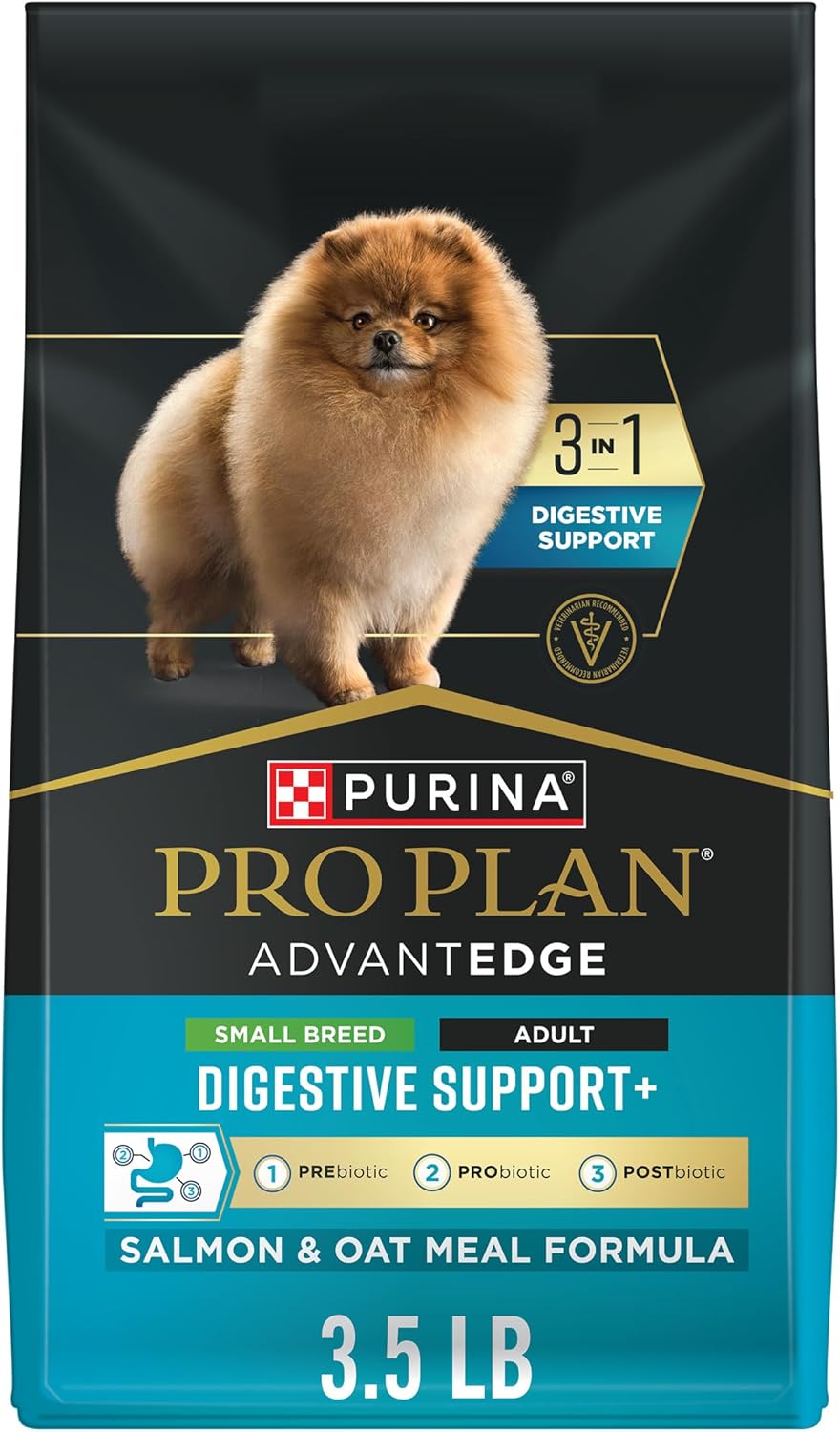
Purina Pro Plan AdvantEDGE Small Breed Digestive
Best Small-Kibble Food
| Flavor | Salmon & Oat Meal |
|---|---|
| Age Range Description | Adult |
| Specific Uses For Product | Digestive Health, Sensitive Stomach |
| Special Ingredients | Probiotics |
| Unit Count | 56 Ounce |
Purina Pro Plan AdvantEDGE Small Breed Digestive is a salmon-and-oat kibble aimed at small adult dogs with sensitive stomachs. It is used as a daily complete diet and is formulated to be highly digestible with real salmon as the first ingredient plus a 3-in-1 approach of prebiotics, probiotics, and postbiotics to support gut function. The formula also includes antioxidants for immune support and excludes corn, wheat, and soy, which can help dogs with common intolerances. Practical benefits include easier stool quality and reduced digestive upsets for many small-breed dogs during a standard feeding transition period of 7 to 10 days. On the budget-focused high-fiber front, this product offers targeted digestive ingredients rather than an emphasis on very high crude fiber numbers, so it balances digestibility with added supportive microbes rather than using inexpensive bulk fibers alone. Limitations are that it is positioned as a digestive-support formula rather than an explicitly formulated high-fiber prescription, so owners wanting maximum fiber percentages or clinical-fiber dosing should compare labels or consult a vet.
Best for: Owners of small adult dogs who need reliable digestive support on a budget and prefer a formula focused on microbiome-friendly ingredients rather than maximal fiber percentages.
Less Ideal for: Buyers specifically seeking a high-crude-fiber or clinical prescription fiber diet for weight loss or severe constipation should consider specialist formulas or veterinary guidance instead.
- Real salmon listed as the first ingredient for palatability and protein digestibility
- Includes prebiotics, probiotics, and postbiotics to support gut microbiome health
- Formulated for small breeds with kibble and nutrient profile tuned to smaller dogs
- No corn, wheat, or soy in the recipe which may reduce common dietary triggers
- Contains antioxidants to support immune health in addition to digestive benefits
- Not marketed as a high-fiber specialist so fiber percentage may be lower than dedicated high-fiber formulas
- Sold in a smaller 3.5 lb bag which can be less economical per pound for households with multiple dogs
Verdict: The best small-kibble food for Boston Terriers that need bite-sized pieces to encourage comfortable chewing and reduce gulping that can worsen stomach issues.
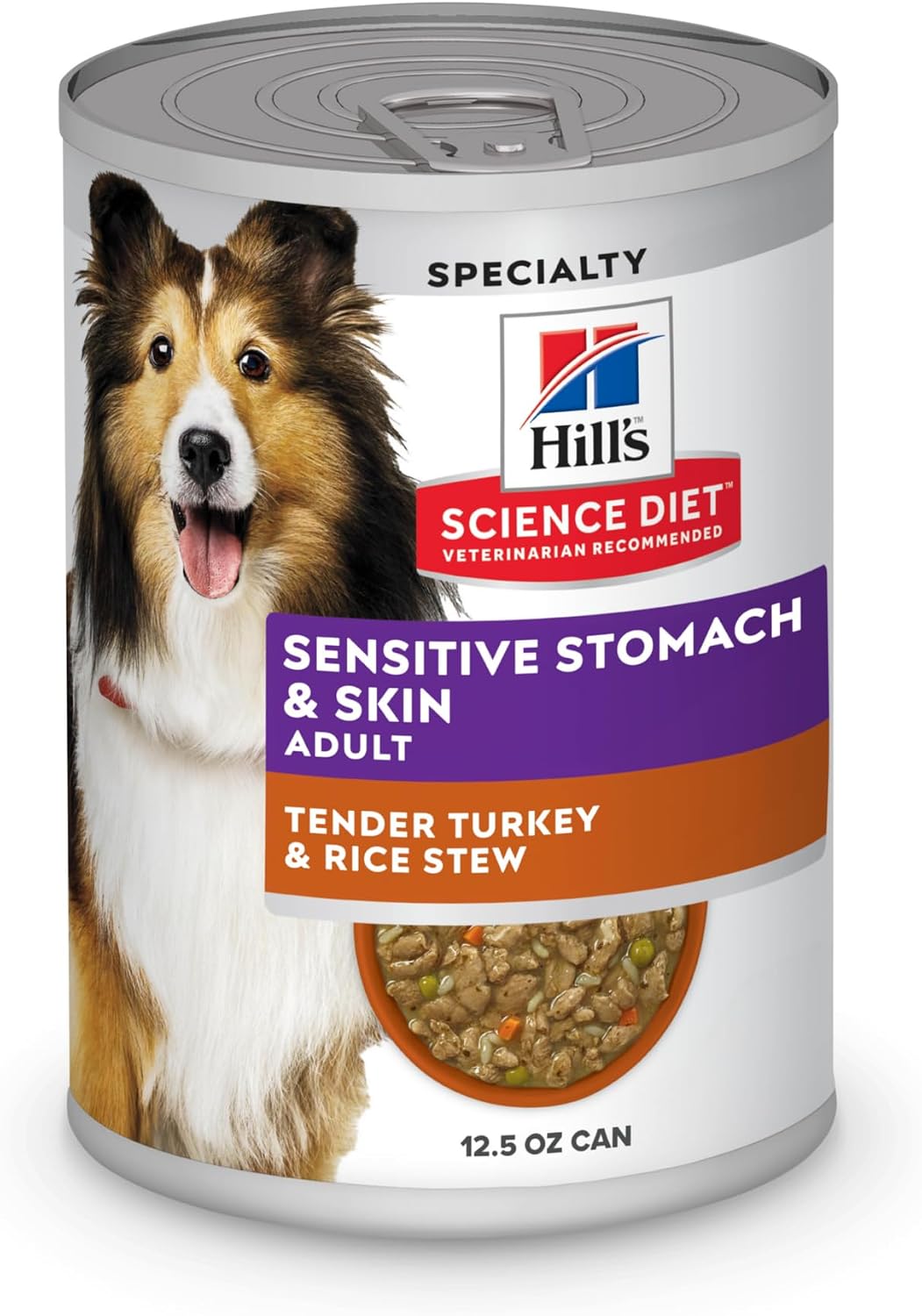
Hill's Science Diet Sensitive Stomach & Skin
Best Wet Food
| Flavor | Turkey & Rice Stew |
|---|---|
| Item Form | Wet Food |
| Age Range Description | Adult 1-6 |
| Unit Count | 150 Ounce |
| Number of Items | 12 |
Hill's Science Diet Sensitive Stomach & Skin is a wet turkey and rice stew designed to be gentle on digestion while supporting skin and coat health. You would typically serve it as a complete meal or mixed with dry food for extra moisture; the formula uses prebiotic fiber to support a balanced gut microbiome and includes omega-6s and vitamin E to help maintain a healthy coat. Practical benefits include high digestibility for dogs prone to occasional upset, familiar whole-food ingredients such as turkey and rice, and added antioxidants to support immune health. The product comes in a multi-can case that simplifies feeding schedules and rotation. Limitations to consider are that it is formulated for adult maintenance rather than for therapeutic prescription needs, and if your Boston Terrier has a diagnosed food allergy you should check the ingredient list carefully since it contains several animal-derived components and chicken broth. For owners seeking an easy-to-feed, palatable wet food to soothe mild digestive sensitivity and improve hydration, this formula is a solid choice.
Best for: Buyers who need a palatable, easily digested wet food to soothe occasional stomach upset and boost hydration and skin health in adult Boston Terriers.
Less Ideal for: Dogs requiring a veterinary prescription diet for chronic gastrointestinal disorders or owners seeking a single-protein limited-ingredient formula to manage confirmed meat allergies.
- Formulated for sensitive stomachs with prebiotic fiber to support digestion
- Includes omega-6 fatty acids and vitamin E to help skin and coat health
- Wet texture adds moisture to support hydration and easier eating
- Made with recognizable ingredients like turkey and rice and no artificial flavors
- Contains clinically proven antioxidants for immune support
- Not a veterinary prescription diet for severe or chronic gastrointestinal disease
- Contains multiple animal-derived ingredients and broths that may trigger specific allergies
Verdict: The best wet food for sensitive-stomach Boston Terriers that delivers gentle, highly palatable meals with extra moisture to aid digestion and hydration.
Wellness CORE Digestive Health Small Breed
Best High-Protein Food

| Flavor | Chicken Small Breed |
|---|---|
| Age Range Description | Adult |
| Item Form | Dry |
| Special Ingredients | Probiotic |
| Unit Count | 64 Ounce |
Wellness CORE Digestive Health Small Breed is a dry dog food designed to support sensitive stomachs and overall wellbeing through digestive-focused ingredients. The kibble uses deboned chicken and chicken meal as primary protein sources and is coated with guaranteed levels of probiotics plus digestive enzymes and prebiotic fibers to promote a healthy microbiome. Practical benefits include improved nutrient absorption from digestible proteins and grains, plus added omega fatty acids and glucosamine for skin, coat, joint, and heart support. Typical use is as a daily adult maintenance diet for small-breed dogs that need gut support while staying active, fed according to the weight-based portion guide. Important limitations are that it contains grains (brown rice, oatmeal, barley), so it is not a grain-free option, and it lists potential wheat cross-contact which matters for dogs with confirmed wheat allergies. The recipe also includes several fermentation-derived probiotic strains and stronger functional ingredients, which can help dogs transitioning off bland diets but may require a gradual switch if your dog has a very sensitive system.
Best for: Small-breed adult dogs that need higher-quality protein for muscle support while also requiring fiber and probiotic support for digestion and overall wellbeing.
Less Ideal for: Owners seeking a grain-free formula or who have dogs with confirmed wheat allergy should consider alternative recipes.
- High-quality animal protein first (deboned chicken and chicken meal) to support muscle maintenance
- Probiotic-coated kibble with guaranteed probiotic strains plus digestive enzymes for gut support
- Blend of prebiotic fibers to promote a healthy microbiome and improved nutrient absorption
- Includes omega fatty acids and antioxidants to support skin, coat, and overall wellbeing
- Formulated specifically for small-breed adult dogs with portion guidance for weight ranges
- Contains grains and may include wheat cross-contact, so not suitable for grain-free or wheat-allergic dogs
- Includes multiple functional ingredients that may require a gradual diet transition for very sensitive dogs
Verdict: The best high-protein food for Boston Terriers that need extra lean protein to support muscle and energy while still formulated for sensitive digestion.
Open Farm GoodGut Salmon 3.5lb
Best Premium Food

| Flavor | Salmon |
|---|---|
| Age Range Description | All Life Stages |
| Item Form | Dry Kibble |
| Special Ingredients | Barley, Flaxseed, Probiotic |
| Unit Count | 56 Ounce |
Open Farm GoodGut combines kibble with freeze-dried raw morsels and centers its formula on wild-caught salmon plus a multi-part digestive support system. It is used as a complete everyday diet for dogs of all life stages and sizes, and is particularly aimed at supporting gut health with 12 probiotic strains and 2 billion CFUs per pound sourced in partnership with a kefir-culture provider. The salmon-first recipe delivers omega fatty acids for skin and coat benefits while the inclusion of fiber sources like psyllium, pumpkin and chicory root helps digestion. Practical benefits include transparent traceability of ingredients, added freeze-dried pieces for texture that may entice picky eaters, and feeding guidance across activity levels to simplify portioning. Important limitations are the relatively small 3.5 lb bag size for households with larger dogs and that the premium ingredient set means this is positioned as a higher-cost option compared with standard kibble. Dogs with severe allergies to fish or specific plant ingredients will need to check the full ingredient list before switching.
Best for: Owners of Boston Terriers who prioritize digestive support and high-quality, traceable ingredients and are prepared to pay more for a tailored, premium diet for a sensitive stomach.
Less Ideal for: Those seeking the lowest-cost everyday kibble or strict single-ingredient elimination diets should consider alternatives better suited to tight budgets or severe food sensitivities.
- Vet-formulated recipe with a 3-part pre, pro, and postbiotic system for digestive support
- Wild-caught salmon as primary protein with Ocean Wise certification for responsible sourcing
- Freeze-dried raw cubes mixed with kibble add texture and palatability without refrigeration
- Transparent, traceable ingredient sourcing and inclusion of functional ingredients for skin, coat, and joint support
- Premium formulation comes in a small 3.5 lb bag which may require frequent repurchasing for medium or large dogs
- Contains multiple plant and protein ingredients so it is not suitable for dogs with single-ingredient fish-only elimination needs
Verdict: The best premium food for owners willing to invest in higher-quality ingredients, targeted digestive aids, and more specialized nutrient profiles for sensitive Boston Terriers.
Choosing the Right Dog Food Boston Terrier Sensitive Stomach: Key Factors to Consider
Protein Source and Digestibility
The type of protein influences how easily a dog digests its meal and whether the food will trigger sensitivities. Single, high-quality protein sources reduce the number of potential allergens and make elimination easier if you need to trial a novel-protein diet.
Also consider the form of the protein: whole-muscle proteins are generally more digestible than unspecified meat meals, and hydrolyzed proteins are useful in confirmed allergy cases. For Boston terriers, moderately lean proteins support muscle maintenance without overloading the digestive system.
Carbohydrates and Starch Quality
Carbohydrate choice affects stool quality and fermentation in the gut. Easily digestible starches such as cooked rice, sweet potato, or rolled oats tend to produce more predictable stools than high amounts of rapidly fermenting ingredients.
Avoid recipes with large amounts of poorly described grain byproducts or an overreliance on legumes in dogs that show sensitivity to those ingredients. Balanced carbohydrate levels help manage blood glucose and provide steady energy for an active small-breed dog.
Fat Content and Fatty Acid Balance
Fat provides concentrated calories and essential fatty acids but can also aggravate digestive upset if included at very high levels. Look for moderate fat content and a healthy balance of omega-3 and omega-6 fatty acids to support skin, coat, and inflammatory balance.
Too much fat in a single meal can lead to loose stools, especially in dogs with sensitive digestion, so choose formulas that moderate total fat and distribute calories across digestible macronutrients.
Fiber Type and Amount
Fiber regulates transit time and stool consistency. Soluble fibers such as beet pulp, psyllium, or certain prebiotic fibers slow digestion and can firm stools, while insoluble fibers add bulk and speed transit.
A mix of soluble and insoluble fibers in moderate amounts helps promote consistent bowel movements and supports beneficial gut bacteria. Excessive fiber, however, can reduce nutrient absorption or cause gas, so look for balanced formulations.
Probiotics, Prebiotics, and Digestive Aids
Live probiotics and prebiotic fibers can stabilize the gut microbiome and reduce the frequency of minor digestive upsets. Ingredients such as specific probiotic strains, fructooligosaccharides, and mannan-oligosaccharides are commonly used to support intestinal health.
Digestive enzymes or botanical digestive supports may also aid dogs with borderline enzyme insufficiency or episodic intolerance. These features are not a cure-all but can reduce flare-ups when combined with a hypoallergenic feeding strategy.
Ingredient Transparency and Labeling
Clear labeling lets you identify potential triggers and compare recipes during an elimination trial. Look for foods that list specific meat sources and named carbohydrate ingredients rather than ambiguous terms.
Guaranteed analysis and feeding guidelines help you scale portions accurately for a Boston terrier's small-frame calorie needs. Transparent sourcing information and absence of unnecessary additives make it easier to manage sensitivities over time.
How Do I Know if My Boston Terrier Has a Food-related Sensitivity?
Signs that food plays a role include chronic loose stools, frequent gassiness, recurrent vomiting without other causes, fluctuating appetite tied to specific meals, or skin issues like itching that coincide with diet changes. Keep a simple diary noting new foods, treats, or table scraps and the timing of any digestive symptoms.
Because many issues mimic each other, rule out common non-diet causes like sudden diet changes, environmental allergies, or intestinal parasites by working with your veterinarian. If symptoms persist after standard checks, a structured diet trial or temporary switch to a limited-ingredient formula can clarify whether the problem is food related.
- Track stool consistency, frequency, and any vomiting episodes
- Note timing relative to new foods or treats
- Consult a veterinarian before starting elimination or novel protein trials
What Should I Feed During an Elimination Diet?
An elimination diet uses a single novel protein and a simple carbohydrate to isolate triggers. Choose a formula that clearly lists one protein source and one or two carbohydrate sources, and feed that exclusively for 6 to 12 weeks while monitoring symptoms.
Do not give treats, flavored supplements, or table scraps during the trial. If symptoms improve, you can reintroduce excluded ingredients one at a time to identify the culprit. If no improvement occurs, follow up with your veterinarian to investigate other causes.
- Use a single, novel protein not previously fed to your dog
- Stick to the prescribed feeding period and avoid other foods
- Reintroduce ingredients slowly and one at a time
How to Transition Foods Safely for a Sensitive Stomach
Transition gradually over 7 to 10 days to reduce the risk of digestive upset. Start with mostly the old food and a small portion of the new food, then progressively increase the new formula each day while decreasing the old.
If your Boston terrier shows signs of stress during the switch, slow the transition and consider mixing in a veterinary-recommended digestive support for a few days. Rapid swaps or fasting often make symptoms worse for dogs with sensitive digestion.
- Day 1–3: 75% old food, 25% new food
- Day 4–6: 50% old food, 50% new food
- Day 7–9: 25% old food, 75% new food
Managing Portion Sizes and Feeding Frequency
Boston terriers do well on smaller, more frequent meals rather than one large feeding because it reduces gastric load and stabilizes digestion. Split daily calories into two to three meals to minimize the chance of post-meal vomiting or loose stools.
Measure portions carefully and adjust based on body condition and activity. Overfeeding stresses the digestive system and can exacerbate sensitivity, while steady, appropriate portions support consistent stool quality and energy levels.
- Feed two to three measured meals per day
- Adjust portions based on body condition score and activity
- Avoid free-feeding, which can hide feeding-related issues
When to Call the Veterinarian About Digestive Issues
Contact your veterinarian if symptoms are severe, sudden, or accompanied by lethargy, persistent vomiting, bloody stools, or significant weight loss. These signs can indicate conditions that require urgent care rather than dietary adjustment.
For recurrent but mild symptoms, schedule a visit to rule out parasites, organ dysfunction, or inflammatory bowel disease. Your veterinarian can recommend diagnostic tests and guide a therapeutic diet plan if needed.
- Seek immediate care for bloody stools, repeated vomiting, or collapse
- For chronic symptoms, arrange a veterinary evaluation with stool tests and bloodwork
- Bring a list of everything the dog has eaten recently to the appointment
How We Chose the Best Dog Food Boston Terrier Sensitive Stomach
We focused on attributes that matter when feeding Boston terriers with sensitive stomachs. Our selection criteria emphasized digestibility, ingredient transparency, protein and carbohydrate sources, fat and fiber balance, and clinical or formulation features aimed at reducing digestive upset. We prioritized recipes with limited or clearly stated ingredient lists, hypoallergenic or novel protein options when appropriate, probiotics or prebiotics to support gut flora, and controlled fat levels to minimize greasy stools. We excluded items that lacked clear ingredient sourcing, formulas that primarily rely on vague "meat meal" or unspecified carbohydrate blends, and products with a history of inconsistent formulation statements. We also filtered out novelty diets that do not provide complete and balanced nutrition for adult dogs unless they were specifically labeled for the right life stage. Final picks balanced real-world feeding practicality with nutrition science that reduces common gastrointestinal triggers for small brachycephalic breeds.
Our full evaluation process is outlined in our review methodology.
FAQ
Can probiotics fix my Boston terrier's sensitive stomach?
Probiotics often help stabilize gut flora and reduce minor digestive upsets, but they are rarely a sole solution. They work best alongside a suitable diet and proper portioning, and their effectiveness depends on strain quality and consistency of use.
Are grain-free diets better for sensitive stomachs?
Grain-free diets can help if a dog reacts specifically to a grain, but they are not inherently gentler. Many dogs with sensitivities do well on diets with easily digestible grains. The key is ingredient quality and overall macronutrient balance rather than simply removing grains.
How long should I try a new food before deciding it works?
Allow six to twelve weeks for a proper trial when evaluating digestive response, especially during an elimination trial. Some improvements appear within a few days, but full gut stability and clearer patterns usually require several weeks.
Is homemade food a good option for a sensitive Boston terrier?
Homemade diets can be effective but must be balanced to meet nutritional needs. Work with a veterinary nutritionist to ensure appropriate protein, fat, vitamin, and mineral levels and to prevent unintended deficiencies or excesses that can harm long-term health.
What treats can I give during a sensitivity trial?
Stick to single-ingredient treats that match the trial diet or use vet-approved training treats made from the same protein source. Avoid flavored chews, dental treats, or table scraps that could reintroduce trigger ingredients.
Final Verdict
Prioritize digestibility, clear ingredient lists, and appropriate nutrient balance when choosing food for a Boston terrier with a sensitive stomach. Focus first on a single high-quality protein, moderate fat, and a measured fiber blend, then add probiotics or digestive supports if needed. Accept tradeoffs between novelty proteins and long-term convenience: elimination trials can identify triggers but require discipline. Use portion control and gradual transitions to minimize setbacks, and consult your veterinarian when symptoms persist or worsen to develop a long-term feeding strategy.

