

If your dog inhales meals, choosing the right food bowl can make a big difference for safety and digestion. Fast eaters are at higher risk of choking, bloat, and vomiting, and the right bowl helps slow intake while fitting your daily routine. This guide shortlists the top options designed specifically for dogs that eat too quickly, focusing on proven slow-feeding features, durable materials, and easy cleaning. Below you will find carefully selected bowls that address common fast-eating problems, with notes on how each design manages portion pacing and maintenance. Read on to see which styles and features match your household needs.
Top Picks at a Glance
| Best Overall Food Bowl for Fast Eaters Top all-around slow-feed design that balances function and value | Outward Hound Fun Feeder Medium |  |
| Best Budget Food Bowl for Fast Eaters Low-cost slow-feed option that still slows rapid eating | YINEYA Slow Feeder Dog Bowl |  |
| Best Slow-Feed Food Bowl Specialized multi-obstacle or maze-style bowl to slow intake | GORILLA GRIP Slow Feeder Bowl 2 Cup |  |
| Best Large-Capacity Food Bowl Bigger bowl for large dogs or multi-meal portions | Oiwliur Slow Feeder Stainless Steel Bowl 5 Cups |  |
| Best Stainless-Steel Food Bowl Durable, hygienic metal bowl that resists odors and wear | Neater Pet Stainless Steel Slow Feed Bowl 1.5 Cup |  |
| Best Portable Food Bowl Collapsible or travel-ready bowl for feeding on the go | KILIN Lick and Roll Bowl |  |
| Best Easy-Clean Food Bowl Designed for quick cleanup with dishwasher-safe or removable parts | kactoily 304 Stainless Steel Slow Feeder Bowl 2.5 cups |  |
Outward Hound Fun Feeder Medium
Best Overall Food Bowl for Fast Eaters

| Capacity | 2 cups |
|---|---|
| Material Type | Plastic |
| Product Care Instructions | Dishwasher Safe |
| Recommended Uses For Product | Boredom Buster, Brain Game, Dry Food, Mental Stimulation, Wet Food |
| Dog Breed Size | Medium |
The Outward Hound Fun Feeder Medium is a maze-style slow bowl that intentionally stretches mealtime by forcing dogs to work around raised ridges and deep grooves, which can reduce gulping and digestion issues. You fill it with dry or wet food and let your dog forage through the channels; the manufacturer says it can extend eating time up to 10x compared with a standard bowl. It is made of dishwasher-safe plastic, is non-slip, and is available in a SLOWEST difficulty level for very fast eaters and flat-faced breeds. Practical benefits include easy cleaning on the top rack, a compact shape that holds a typical medium meal, and construction free of BPA, PVC, lead, and phthalates. Limitations are that the plastic can retain grease or odors over time and highly determined chewers should not be left unattended since it is not a chew toy, and very large breeds may need a larger capacity option. For most medium dogs who inhale their food, this model is a simple, low-effort way to slow feeding without complicated setup.
Best for: Buyers who want a practical, low-effort slow feeder that reliably reduces gulping for medium dogs and makes mealtime more engaging without extra accessories.
Less Ideal for: Owners looking for an indestructible bowl for aggressive chewers or those who need a much larger capacity for very large breeds should consider other options.
- Maze design and deep grooves meaningfully slow rapid eaters
- Dishwasher-safe top rack for easy cleaning
- Made without BPA, PVC, lead, or phthalates
- Non-slip base reduces sliding and spills during feeding
- Plastic material can retain grease or odors with heavy use
- Not suitable as a chew toy and can be damaged by determined chewers
Verdict: The best overall food bowl for fast eaters, offering an effective slow-feed design that reduces gulping while remaining practical, safe, and easy to use for most dogs.
YINEYA Slow Feeder Dog Bowl
Best Budget Food Bowl for Fast Eaters

| Material Type | Polypropylene |
|---|---|
| Capacity | 10 ounces |
| Recommended Uses For Product | Dry Food |
| Dog Breed Size | Medium, Small |
| Additional Features | Durable, Easy to Clean, Nonslip |
This YINEYA slow feeder is a low-cost puzzle bowl that uses a raised maze pattern to make dogs eat more slowly and reduce gulping. It holds roughly 1 to 2 cups of dry kibble depending on size and works with dry or wet food, so it can be used as a daily feeding bowl for small and medium breeds or as a supplemental slower-feeding option. Made from food-grade polypropylene with non-slip rubber pads, it is lightweight, durable, and resists breaking compared with ceramic alternatives. The shallow maze channels are wide enough to rinse clean by hand and the bowl is dishwasher-safe for easy maintenance. Expect a simple manual design with no removable inserts or adjustable resistance, so very determined fast eaters may still extract food quicker than from more elaborate puzzle feeders. For most owners looking for an inexpensive, easy-to-clean way to slow a dog's speed at mealtime, this bowl delivers practical performance without complexity.
Best for: Budget-minded owners who want a straightforward, easy-to-clean slow feeder for small or medium dogs to reduce gulping and minor digestive issues.
Less Ideal for: Owners seeking an adjustable or highly engaging puzzle feeder for very fast, food-motivated dogs should consider more complex interactive bowls instead.
- Maze design slows eating for small to medium dogs
- Food-grade polypropylene is lightweight and less breakable than ceramic
- Dishwasher-safe and easy to rinse for quick cleaning
- Non-slip rubber pads help keep the bowl stable during meals
- Shallow, fixed maze pattern offers limited challenge for highly determined fast eaters
- Single-piece manual design has no adjustable difficulty or interactive elements
Verdict: The best budget food bowl for fast eaters that slows down feeding affordably without sacrificing basic durability, safety, or ease of cleaning.
GORILLA GRIP Slow Feeder Bowl 2 Cup
Best Slow-Feed Food Bowl

| Capacity | 2 cups |
|---|---|
| Material Type | Plastic, Rubber |
| Dishwasher Safe | Top rack, low heat |
| Target Species | Dog |
The Gorilla Grip Slow Feeder Bowl uses raised ridges and spiral paths molded into the bowl to force dogs and cats to work for bites, which slows intake and promotes steadier pacing during meals. It is designed for everyday feeding with a 2-cup capacity that fits dry or wet food and can even hold frozen treats or ice for enrichment. The full-wrap rubber bottom helps keep the bowl from sliding and scratching floors, and the plastic construction is lightweight and top-rack dishwasher safe for routine cleaning. Practical benefits include reduced gulping for pets prone to eating too fast and a simple way to portion meals consistently. Limitations are that the plastic maze can be harder to scrub in deep crevices if food dries, and very determined chewers should not use it since it is not a chew toy. The shallow 2-cup depth also means larger breeds or multi-pet households may need a larger capacity or multiple bowls for proper portion control.
Best for: Pet owners who need stronger portion control and want to slow rapid eating with a simple, engaging feeder that doubles as a puzzle for meals.
Less Ideal for: Households needing very large single-meal capacity or owners of heavy chewer dogs who require chew-proof feeding hardware.
- Internal maze and ridges slow down gulping and encourage longer, more controlled meals
- Nonslip rubber base reduces sliding and protects floors during feeding
- Dishwasher-safe on the top rack for easy cleaning
- Works with wet, dry, and frozen treats for enrichment and portion control
- Plastic maze areas can trap dried food and require extra scrubbing to fully clean
- Not intended as a chew-resistant bowl for heavy chewers
Verdict: The best slow-feed food bowl for pet owners who need stronger portion control and pacing, using internal ridges, mazes, or compartments to reduce gulping and aid digestion.
Oiwliur Slow Feeder Stainless Steel Bowl 5 Cups
Best Large-Capacity Food Bowl

| Material Type | Stainless Steel |
|---|---|
| Capacity | 5 cups |
| Additional Features | Nonslip |
| Product Care Instructions | Hand Wash Only |
| Power Source | Battery Powered |
The Oiwliur slow feeder is a stainless steel bowl shaped with internal ridges to slow a dog's eating and a rubberized non-slip base to keep it steady during mealtimes. It is intended for use with dry or wet food and water and holds up to 5 cups, so it works for single-meal portions for small to medium dogs or combined feeding for multiple smaller pets. The 304 stainless steel construction resists rust and is easy to clean by hand or in the dishwasher, which helps prevent lingering odors and staining over time. The manual operation and simple shape make it durable against chewing and rough use compared with plastic slow feeders, and the low profile helps dogs reach food while slowing their pace. Limitations are the flat, compact footprint that may not suit very large breeds that need raised feeders and the fixed internal pattern that cannot be adjusted for different slowdown levels.
Best for: Buyers who prioritize a durable, hygienic metal bowl that slows eating and is simple to clean will appreciate this product for everyday feeding of small to medium dogs or multi-pet setups.
Less Ideal for: Owners seeking an elevated feeder or an adjustable slow-feed solution for very large breeds should consider other formats designed for height or variable resistance.
- 304 stainless steel resists rust and is food-safe
- Non-slip rubber base keeps bowl stable during feeding
- 5-cup capacity handles typical single meals for small to medium dogs
- Dishwasher-safe finish makes cleaning and odor control easy
- Low, compact profile may be awkward for very large or tall dogs
- Fixed slow-feeder pattern cannot be changed to alter eating resistance
Verdict: The best large-capacity food bowl for owners of bigger dogs or pets that eat larger portions, providing ample volume while still offering slow-feeding features when needed.
Neater Pet Stainless Steel Slow Feed Bowl 1.5 Cup
Best Stainless-Steel Food Bowl

| Capacity | 1.5 cups |
|---|---|
| Material Type | Stainless Steel |
| Has Non-Skid Bottom | Yes |
| Dishwasher Safe | Yes |
| Recommended Animal Weight | Up to 25 Pounds |
This stainless steel slow-feed bowl uses raised ridges and a shallow maze to make dogs work a bit for each bite, reducing gulping, vomiting, and indigestion. It holds about 1.5 cups of wet or dry food and is intended for small to medium dogs; the wide stainless surface is dishwasher-safe so cleaning after messy meals is straightforward. A removable rubber ring on the base keeps the bowl from sliding on tile or hardwood and the non-tip design prevents flips when determined pets push or paw at it. Because it is all-metal, the bowl resists odors and staining better than plastic and stands up to daily use without warping. The pattern slows eating without being so complex that dogs give up, but very aggressive chewers or dogs that paw excessively may still dislodge the ring over time. Also the built-in slow-feed pattern means it is not suitable if you need a deep, high-sided bowl for bowls for tall breeds or for serving large portions.
Best for: Buyers who want a rust-resistant, easy-to-sanitize slow-feed bowl that stands up to daily use and helps reduce gulping for small to medium dogs.
Less Ideal for: Owners of large or tall-breed dogs needing higher-sided or larger-capacity bowls, or households where bowls are frequently chewed or heavily abused.
- Durable stainless steel construction resists rust, odor, and staining
- Dishwasher-safe for easy, hygienic cleaning
- Integrated slow-feed ridges reduce rapid eating and related digestive issues
- Removable rubber non-skid ring keeps the bowl stable on smooth floors
- Non-tip design stays in place when dogs push or paw at the bowl
- Not deep or large enough for big breeds or large meal portions
- Rubber ring can wear or come loose with heavy pawing or rough handling
Verdict: The best stainless-steel food bowl for buyers prioritizing durability and hygiene, delivering a rust-resistant, easy-to-sanitize option that stands up to heavy daily use.
KILIN Lick and Roll Bowl
Best Portable Food Bowl

| Capacity | 1 cups |
|---|---|
| Material Type | Acrylonitrile Butadiene Styrene, Silicone |
| Recommended Uses For Product | Reduce Boredom, Release Anxiety, Wet Food |
| Dog Breed Size | Medium, Small |
The KILIN Lick and Roll Bowl combines a slow-feeder surface with a rolling ball to slow a dog's eating and provide licking enrichment on the go. You fill the bowl with thin liquids or spreadable treats on the lid and the ball rotates as the dog licks, which cuts eating speed and encourages calmer, longer feeding sessions; the product is especially useful for senior or anxious dogs that benefit from gentle, paced feeding. It is made from ABS with a silicone anti-slip base and four pads to keep it steady on floors or in a travel bag, and the detachable parts twist-lock for easier filling and cleaning—dishwasher-safe components make cleanup straightforward. Practical limits: it only accepts pourable or well-diluted foods for reliable ball rotation and should not be used as a chew toy, so very determined chewers or dogs needing solid-food slow-feeding will need something else. For short outings, car rides, or trips where a compact, easy-to-clean slow feeder is needed, this bowl is a useful, travel-friendly option.
Best for: Owners who need a compact, packable slow-feeding bowl for trips and walks and prioritize easy cleaning and calming lick enrichment for small to medium dogs.
Less Ideal for: People who need a slow feeder for solid kibble or heavy-chewing dogs, or those who want a bowl that accepts thick pastes without thinning.
- Combines slow-feeder function and lick-mat stimulation in one compact design
- Twist-lock detachable parts and dishwasher-safe surfaces simplify cleaning
- Silicone non-slip base and four pads keep the bowl stable during use
- Rolling ball and anti-spill edge reduce splashing and slow drinking pace
- Requires thin, pourable fillings only; thick or sticky foods can jam the rolling ball
- Not intended as a chew toy and may not suit heavy chewers
Verdict: The best portable food bowl for owners who need a compact, packable option for trips and walks that still controls eating speed and is simple to clean.
kactoily 304 Stainless Steel Slow Feeder Bowl 2.5 cups
Best Easy-Clean Food Bowl
| Material Type | Stainless Steel |
|---|---|
| Capacity | 2.5 cups |
| Recommended Uses For Product | Dry Food, Indoor, Wet Food |
| Additional Features | Durable, Easy to Clean, Nonslip, Slow |
| Product Care Instructions | Dishwasher Safe |
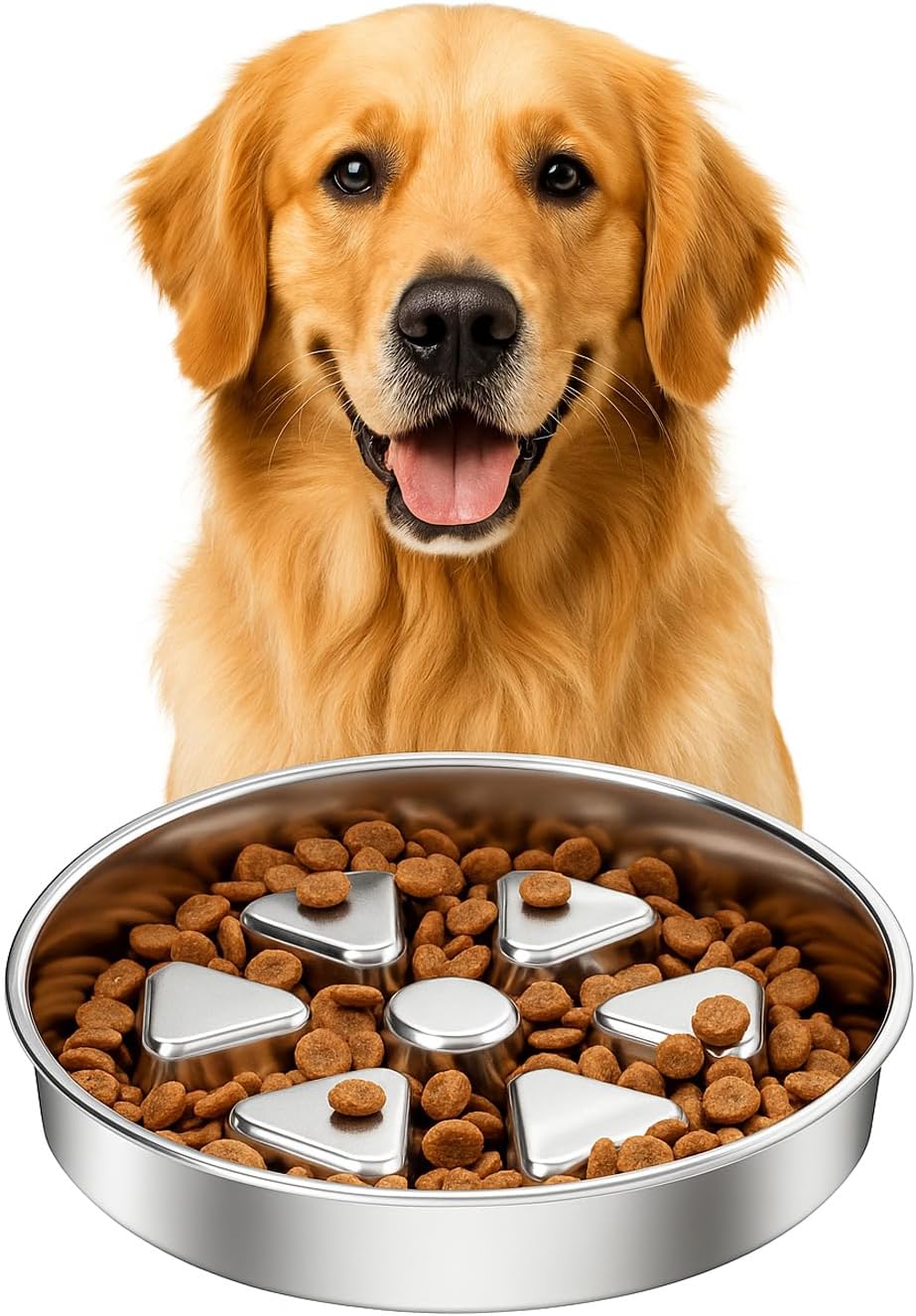
This slow feeder bowl uses a raised 0.98-inch center to slow dogs down and encourage healthier eating, which can reduce gulping, choking, and bloating during meals. Made from food-grade 304 stainless steel, the bowl resists corrosion and is easy to rinse or run through the dishwasher for regular cleaning. The silicone anti-slip ring keeps the bowl steady on most floors so energetic eaters are less likely to tip or slide it. At about 2.5 cups capacity and a low profile, it is sized for medium to large dogs and works with dry kibble or wet food. The construction feels sturdy and the smooth stainless surface does not retain odors or residues. The main limitations are its single-size capacity, which may be small for very large dogs with high food intake, and the low rim height that could let some enthusiastic eaters reach around the obstacle rather than being forced to work the food through tighter channels. Still, for everyday home use this bowl combines durable materials, stability, and simple cleaning into a practical slow-feeding solution.
Best for: Buyers who want a durable, easy-to-clean slow feeder that performs reliably for everyday home meals and prioritizes stability and material quality.
Less Ideal for: People who need larger capacity bowls for very large breeds or multiple dogs, or those seeking an extra-challenging maze-style slow feeder.
- Raised center design slows eating to help reduce gulping and aid digestion
- Food-grade 304 stainless steel is durable, hygienic, and corrosion-resistant
- Silicone non-slip ring keeps the bowl stable during use
- Dishwasher-safe and easy to clean, resists odor and residue buildup
- Single capacity may be too small for very large or multi-dog households
- Low profile design may be less challenging for highly determined fast eaters
Verdict: The best easy-clean food bowl for pet owners who value minimal maintenance, featuring dishwasher-safe materials or removable components that simplify cleaning after every meal.
Choosing the Right Dog Food Bowl Fast Eater: Key Factors to Consider
Slow-feeding Mechanism
The way a bowl slows a dog down directly determines its effectiveness. Maze-style interiors, raised ridges, or multiple shallow compartments require a dog to work around obstacles and take smaller bites, which increases meal duration and reduces gulping. Different mechanisms work better for different dogs; some respond to raised mazes while others need separate compartments to force alternating biting. Think about your dog's feeding habit and chewing style when choosing a mechanism.
Mechanism placement and depth also affect how easily the bowl can be cleaned and whether kibble gets trapped in narrow crevices. Simpler, shallow obstacles tend to be easier to wash and maintain. If your dog prefers wet food, choose a design where wet food does not pool in the recesses and is still easy to scoop out for cleaning.
Material and Safety
Material choice affects long-term durability, hygiene, and safety. Nonporous materials like stainless steel and certain hard plastics resist bacteria buildup and are less likely to retain odors. Ceramic can be sanitary if glazed and chip-free, but chips can harbor bacteria and create hazards. Avoid materials that scratch easily, as scratches can trap food particles and microbes.
Also consider whether the material is dishwasher-safe and food-grade certified. For dogs that chew at their bowls, sturdier materials will last longer and reduce the chance of ingestion of broken fragments. Weight of the material matters too; heavier bowls are more stable but harder to move for refilling and cleaning.
Stability and Anti-slip Features
A bowl that slides around while your dog eats defeats its purpose and can lead to more frantic eating or mealtime frustration. Anti-slip bases, rubber rings, or heavier construction help keep the bowl stationary so the slow-feeding mechanism functions as intended. Stability is especially important for excited eaters who push with their nose or paws while trying to access food.
For households with hardwood or tiled floors, a non-skid base prevents noise and potential mess. If your dog tends to flip bowls, look for designs with a low center of gravity or a wide footprint. Consider how easy it is to remove the anti-slip element for cleaning without losing performance.
Capacity and Portion Control
A slow-feeding bowl must match your dog's typical meal size. If the bowl is too small, you will need to split portions or refill during mealtime, which undermines the slow-feed benefit. If the bowl is too large, food can spread out and reduce the intended challenge of the slow-feeding features. Check the bowl's volume in relation to your dog's daily ration and feeding frequency.
Portion control features such as marked measurements or compartment sizing help you serve consistent meals. For multi-dog households, consider whether the bowl's capacity and design suit the range of sizes you feed. Some bowls can be combined with portioning strategies, like premeasured meals, to ensure consistent intake while preserving the slow-feeding effect.
Cleaning and Maintenance
Regular, thorough cleaning prevents bacterial growth that can cause digestive upset. Look for bowls with smooth, accessible interiors that do not trap food in deep crevices. Dishwasher-safe components reduce cleaning time and ensure high-temperature sanitation when needed. Removable inserts or modular designs simplify scrubbing and drying.
Consider how often you will need to clean the bowl and whether your household routine supports that frequency. High-maintenance designs may perform well but become impractical if cleaning is cumbersome. Inspect the seams and joints where residue can collect, and prefer designs that allow full access for a sponge or brush.
Suitability for Wet Food and Kibble
Not every slow-feed bowl works equally well for both wet and dry food. Shallow mazes can hold wet food in pockets, making scooping difficult and increasing waste. Conversely, deep obstacles can hide kibble and make measuring or mixing supplements harder. Choose a design that matches the type of food you primarily serve.
If you alternate wet and dry feeding, prioritize versatile designs with smooth surfaces and removable inserts. That flexibility maintains the slow-feeding benefit across meal types and reduces the need to own multiple bowls.
How Long Should a Typical Meal Last for a Fast Eater?
A practical target for slowing a fast eater is making a meal last roughly three to ten minutes, depending on size and activity level. Small dogs and puppies may finish in the lower end of that range, while large, highly driven dogs may still take several minutes even with an effective slow-feeding bowl.
If a bowl increases meal time from under a minute to several minutes, it is usually providing a meaningful benefit. Monitor your dog for signs of frustration or stress; if increased meal time causes anxiety, try a milder obstacle or break meals into smaller, supervised servings.
- Aim for measurable slowing without causing stress
- Adjust expectations by dog size and feeding motivation
- Break meals into smaller portions if needed
Can Slow-feeding Bowls Help with Digestive Issues?
Slowing the pace of eating often reduces gulping and the amount of air a dog ingests during meals, which can lower the risk of digestive upset and reduce regurgitation. For dogs prone to bloat or severe gastric issues, slowing intake is one management strategy that owners and veterinarians consider alongside diet and meal schedule changes.
However, a bowl alone is not a medical solution. If your dog has chronic vomiting, obvious abdominal pain, or other serious symptoms, consult a veterinarian. Use slow-feeding bowls as part of a broader approach that may include smaller meals, feeding elevated portions if advised by a vet, and dietary adjustments.
- Reduces air swallowing by promoting smaller bites
- May lower mild digestive upset, not a cure for serious conditions
- Combine with veterinary advice for chronic or severe issues
Which Bowl Shapes Are Easiest to Clean and Why?
Bowls with shallow, wide mazes and removable inserts are generally easiest to clean because the interior is accessible and there are fewer deep crevices where food can lodge. Smooth surfaces and materials that resist staining and odor absorption also simplify maintenance.
Avoid bowls with many tiny channels or fixed, deep ridges unless they disassemble for cleaning. If you feed wet food regularly, prioritize designs that allow you to reach every nook with a brush or that are dishwasher-safe to ensure effective sanitation.
- Removable inserts simplify scrubbing
- Shallow, smooth channels are more hygienic
- Dishwasher-safe materials reduce effort and ensure sanitation
How to Transition a Dog to a Slow-feeding Bowl
Introduce the new bowl gradually to avoid mealtime anxiety. Start by placing familiar food in the slow-feeding bowl but in slightly larger pieces or at a reduced maze complexity so your dog can learn the new routine without frustration. Praise and patience help reinforce positive associations.
If your dog resists, offer short practice sessions with treats in the bowl before full meals. You can also mix traditional feeding with slow-feed sessions, gradually increasing the challenge as the dog adapts. Monitor body language for signs of stress and slow the transition if needed.
- Start with low complexity and increase over several days
- Use treats and positive reinforcement to build acceptance
- Mix old feeding method with new to ease the change
Do Elevated or Weighted Stands Help Fast Eaters?
Elevated bowls can change swallowing angle and may help some dogs eat more comfortably, but elevation alone does not reliably slow eating. In some cases, elevation paired with slow-feed designs can improve posture while still reducing gulping. Weighted stands increase stability, keeping the bowl from sliding and allowing the slow-feed features to function properly.
Consider your dog's size and any orthopedic issues when selecting elevation. For most fast eaters, the primary slowing effect comes from the bowl's internal design rather than its height, so prioritize internal mechanisms while using elevation mainly to improve ergonomics and stability.
- Elevation affects posture more than eating speed
- Weighted stands improve stability for determined eaters
- Combine elevation with slow-feed features for comfort and control
When to Seek Veterinary Advice About Rapid Eating
If your dog shows signs of distress during or after meals, such as repeated vomiting, severe belching, drooling, lethargy, or abdominal pain, seek veterinary care promptly. Rapid eating can be a symptom or a contributing factor to more serious conditions, and a professional can rule out underlying medical causes.
Also consult a veterinarian if your dog has a sudden change in appetite or feeding behavior, or if attempts to slow feeding do not reduce regurgitation or other symptoms. A vet can recommend diagnostic steps and tailor feeding strategies to your dog's medical needs.
- Seek vet care for persistent vomiting, pain, or lethargy
- Ask about medical causes if eating behavior changes suddenly
- Use slow-feed bowls alongside professional guidance when needed
How We Chose the Best Dog Food Bowl Fast Eater
We evaluated bowls using criteria that matter most for dogs that eat quickly and for owners who need practical, reliable solutions. Primary factors included the effectiveness of slow-feeding features such as mazes, raised ridges, and compartment layouts that force smaller bites and longer feeding time. Durability and material safety were assessed next, focusing on nonporous, food-safe materials that resist scratching and bacteria buildup. Ease of cleaning was essential, with preference for bowls that disassemble or are dishwasher-safe to maintain hygiene after messy slow-feed sessions. Stability and anti-slip design were weighed to reduce spill risk and keep the bowl in place while a determined eater works through a meal. Finally, portion control and capacity mattered to ensure the bowl works for typical meal sizes across dog weights and feeding schedules. We excluded bowls that rely solely on electronic timers or treats dispensing mechanisms, or that require extensive assembly for everyday use. We also filtered out products with materials commonly associated with rapid wear or difficult sanitation. The final list focuses on practical, low-maintenance designs that demonstrably slow eating without adding complexity to daily feeding.
Our full evaluation process is outlined in our review methodology.
FAQ
Will a slow-feeding bowl stop my dog from choking?
A slow-feeding bowl reduces the risk of choking by encouraging smaller bites and slower intake, which lowers the chance of large pieces becoming lodged. It is not a guarantee against choking, so supervise meals for dogs with a history of choking and consult a veterinarian for high-risk cases.
Can I use a slow-feed bowl for both wet and dry food?
Many slow-feed bowls work with both wet and dry food, but some maze designs trap wet food in pockets and are harder to clean. Choose a design with smooth, removable parts if you plan to rotate wet and dry meals frequently.
How often should I clean a slow-feeding bowl?
Clean the bowl after every meal if possible, or at least once daily for wet food and every few days for dry kibble. Regular cleaning prevents bacterial buildup and keeps the feeding surface hygienic.
Will my dog learn to beat a slow-feeding bowl?
Some dogs adapt their technique over time and may become faster at navigating obstacles, but you can manage that by rotating bowl styles, increasing complexity gradually, or breaking meals into smaller portions to maintain slower intake.
Are slow-feeding bowls suitable for puppies?
Puppies can use slow-feeding bowls, but choose designs with shallow obstacles and monitor closely. Very young puppies may struggle with complex mazes, so introduce gentler options and supervise meals until they learn to feed safely.
Final Verdict
Choose a slow-feeding bowl that matches your dog's size, eating style, and the types of food you serve. Prioritize an effective internal mechanism, easy cleaning, and stable construction to ensure the bowl slows intake without introducing new problems. Balance complexity with your dog's tolerance and be prepared to adjust portion sizes or transition strategies if your dog seems frustrated. When in doubt, focus on measurable improvements in meal duration and consult a veterinarian for any ongoing digestive or breathing concerns. With the right bowl and sensible feeding habits, most fast eaters can enjoy safer, calmer meals.

