

If your dog inhales meals in seconds, choosing the right slow-feeding food bowl can cut gulping, reduce choking risk, and ease digestive upset. A bowl built to slow down eating changes mealtime behavior by creating deliberate pauses and smaller mouthfuls. In this guide we shortlisted seven top options designed specifically to slow feeding while remaining practical for daily use. We evaluated each bowl on how effectively it moderates pace, how easy it is to clean, and how well it stays in place during a meal. Below you will find concise explanations of what matters, followed by our top picks and actionable advice for using slow-feeding bowls safely and effectively.
Top Picks at a Glance
| Best Overall Food Bowl The top all-around slow-eating bowl for most dog owners | Outward Hound Fun Feeder Slo Bowl Medium |  |
| Best Budget Food Bowl A low-cost slow-feed option that still slows gulping effectively | YINEYA Slow Feeder Dog Bowl |  |
| Best Slow-Feed Food Bowl Specialized interior patterns or inserts to drastically slow eating pace | KADTC Slow Feeder Dog Bowl |  |
| Best Stainless-Steel Food Bowl Durable, nonporous metal bowl that resists odors and damage | kactoily 304 Stainless Steel Slow Feeder Bowl 2.5 cups |  |
| Best Elevated Food Bowl Raised design that improves posture and reduces neck strain | XiaZ Elevated Dog Bowl Stand Large |  |
| Best Large-Capacity Food Bowl Bigger bowl size for multi-dog feeding or large-breed portions | Oiwliur Slow Feeder Stainless Steel Bowl 5 Cups |  |
| Best Dishwasher-Safe Food Bowl Easy-to-clean materials and parts that withstand dishwasher cycles | Welloyed 6" Ceramic Slow Feeder Bowl |  |
Outward Hound Fun Feeder Slo Bowl Medium
Best Overall Food Bowl

| Capacity | 2 cups |
|---|---|
| Material Type | Plastic |
| Dishwasher Safe | Top rack dishwasher safe |
| Recommended Uses For Product | Dry Food, Wet Food |
The Outward Hound Fun Feeder Slo Bowl uses raised ridges, deep grooves, and a simple maze pattern to stretch mealtime and keep dogs engaged while they eat. It is intended for small to medium breeds and holds roughly 2 cups of dry or wet food, so you can use it for a single meal portion. The shallow design and manual operation make it easy to fill and dishwasher-safe on the top rack for regular cleaning. Non-slip features reduce sliding and spills during use, and the plastic is stated to be free of BPA, PVC, lead, and phthalates. The bowl comes in selectable slow levels so you can match the maze difficulty to your dog's eating speed, but the shallow profile may not suit very fast or very large chewers and plastic can show wear over time. It is not meant as a chew toy and should be replaced if damaged. For buyers who want a straightforward, easy-to-clean puzzle bowl that reliably slows eating for medium breeds, this is a practical option.
Best for: Buyers who need a reliable puzzle-style feeder to slow a small to medium dog’s eating pace and prefer something easy to clean and maintain.
Less Ideal for: Owners seeking a stainless steel solution, a bowl for large or very aggressive chewers, or those who need larger meal capacity should consider other options.
- Molded ridges and maze pattern meaningfully slow eating and increase engagement
- Top-rack dishwasher safe for easy cleaning
- Non-slip base reduces sliding and spillage during meals
- Made without BPA, PVC, lead, or phthalates
- Plastic construction can wear or scratch over time and is not chew-proof
- Shallow 2-cup capacity may be small for large breeds or multi-dog feeding
Verdict: The best overall food bowl balances effective slow-feed design, durable construction, ease of cleaning, and size options to suit most dogs and households.
YINEYA Slow Feeder Dog Bowl
Best Budget Food Bowl

| Material Type | Polypropylene |
|---|---|
| Capacity | 10 ounces |
| Recommended Uses For Product | Dry Food |
| Dog Breed Size | Medium, Small |
| Additional Features | Durable, Easy to Clean, Nonslip |
This YINEYA slow feeder is a low-cost puzzle bowl that uses a raised maze pattern to make dogs eat more slowly and reduce gulping. It holds roughly 1 to 2 cups of dry kibble depending on size and works with dry or wet food, so it can be used as a daily feeding bowl for small and medium breeds or as a supplemental slower-feeding option. Made from food-grade polypropylene with non-slip rubber pads, it is lightweight, durable, and resists breaking compared with ceramic alternatives. The shallow maze channels are wide enough to rinse clean by hand and the bowl is dishwasher-safe for easy maintenance. Expect a simple manual design with no removable inserts or adjustable resistance, so very determined fast eaters may still extract food quicker than from more elaborate puzzle feeders. For most owners looking for an inexpensive, easy-to-clean way to slow a dog's speed at mealtime, this bowl delivers practical performance without complexity.
Best for: Budget-minded owners who want a straightforward, easy-to-clean slow feeder for small or medium dogs to reduce gulping and minor digestive issues.
Less Ideal for: Owners seeking an adjustable or highly engaging puzzle feeder for very fast, food-motivated dogs should consider more complex interactive bowls instead.
- Maze design slows eating for small to medium dogs
- Food-grade polypropylene is lightweight and less breakable than ceramic
- Dishwasher-safe and easy to rinse for quick cleaning
- Non-slip rubber pads help keep the bowl stable during meals
- Shallow, fixed maze pattern offers limited challenge for highly determined fast eaters
- Single-piece manual design has no adjustable difficulty or interactive elements
Verdict: The best budget food bowl provides a reliable slow-eating design and acceptable durability for owners who need an inexpensive, practical solution.
KADTC Slow Feeder Dog Bowl
Best Slow-Feed Food Bowl

| Capacity | 1.1 pounds |
|---|---|
| Material Type | Polypropylene |
| Operation Mode | Manual |
| Age Range Description | All Life Stages |
This KADTC slow feeder turns mealtime into a paced, interactive task by requiring dogs to paw a clear rotating top so kibble drops from an outer chamber into a central bowl. You set the difficulty by widening or narrowing the outlet, which can stretch a fast 30-second gulp into a 5–60 minute meal depending on kibble size and setting. The wide low profile works for small to large breeds and the 4-cup outer chamber is large enough to replace a regular dinner bowl for most dogs. Rubber feet and included stick-on grip pads help prevent sliding, and the whole polypropylene unit is dishwasher safe and free of BPA, PVC, and phthalates. It needs no batteries and is simple to teach by demonstrating the spin once or twice. Limitations include that wet or sticky foods will not work and it is a feeder not a chew toy, so supervision is advised with heavy chewers or very destructive dogs.
Best for: Owners who prioritize reliably slowing fast eaters while also wanting a durable, easy-to-clean feeder that adds simple mental stimulation at mealtimes.
Less Ideal for: People who feed wet or sticky diets, or households with dogs that destroy toys and will chew plastic feeders should look for sturdier alternatives or supervised use.
- Adjustable outlet creates a wide range of difficulty to slow eating from 5 to 60 minutes
- Large 4-cup outer chamber holds a full meal for most dogs so it can replace a regular bowl
- Dishwasher-safe, food-grade polypropylene with no BPA, PVC, or phthalates
- Rubber feet and included adhesive grip pads reduce sliding on hard floors and carpet
- Not suitable for wet, sticky, or very large kibble that will not drop through
- Not intended as a chew toy so very aggressive chewers need supervision or removal after meals
Verdict: The best slow-feed food bowl uses built-in mazes, ridges, or inserts to reduce gulping and prolong mealtimes for fast eaters.
kactoily 304 Stainless Steel Slow Feeder Bowl 2.5 cups
Best Stainless-Steel Food Bowl
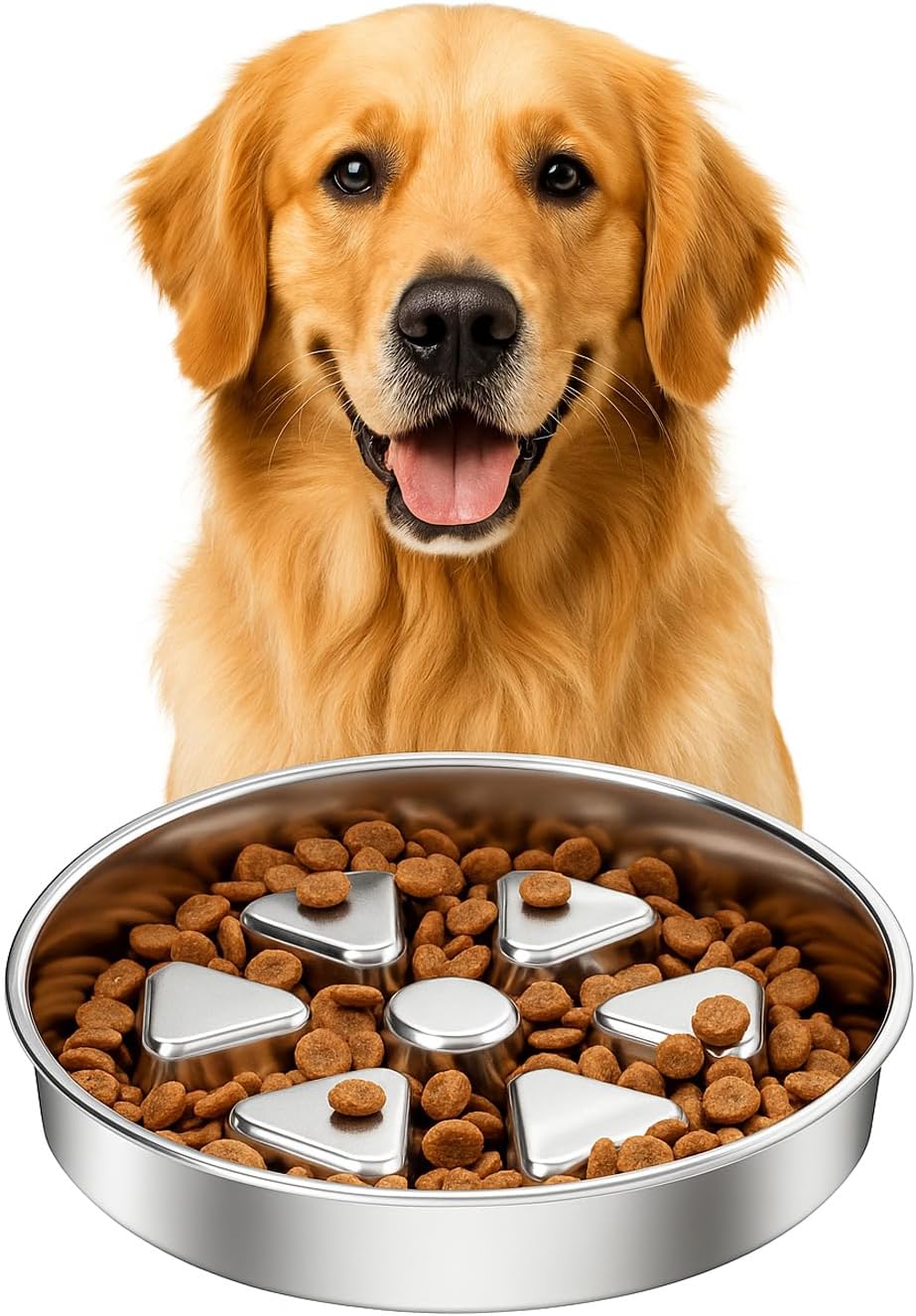
| Material Type | Stainless Steel |
|---|---|
| Capacity | 2.5 cups |
| Recommended Uses For Product | Dry Food, Indoor, Wet Food |
| Additional Features | Durable, Easy to Clean, Nonslip, Slow |
| Product Care Instructions | Dishwasher Safe |
This slow feeder bowl uses a raised 0.98-inch center to slow dogs down and encourage healthier eating, which can reduce gulping, choking, and bloating during meals. Made from food-grade 304 stainless steel, the bowl resists corrosion and is easy to rinse or run through the dishwasher for regular cleaning. The silicone anti-slip ring keeps the bowl steady on most floors so energetic eaters are less likely to tip or slide it. At about 2.5 cups capacity and a low profile, it is sized for medium to large dogs and works with dry kibble or wet food. The construction feels sturdy and the smooth stainless surface does not retain odors or residues. The main limitations are its single-size capacity, which may be small for very large dogs with high food intake, and the low rim height that could let some enthusiastic eaters reach around the obstacle rather than being forced to work the food through tighter channels. Still, for everyday home use this bowl combines durable materials, stability, and simple cleaning into a practical slow-feeding solution.
Best for: Buyers who want a durable, easy-to-clean slow feeder that performs reliably for everyday home meals and prioritizes stability and material quality.
Less Ideal for: People who need larger capacity bowls for very large breeds or multiple dogs, or those seeking an extra-challenging maze-style slow feeder.
- Raised center design slows eating to help reduce gulping and aid digestion
- Food-grade 304 stainless steel is durable, hygienic, and corrosion-resistant
- Silicone non-slip ring keeps the bowl stable during use
- Dishwasher-safe and easy to clean, resists odor and residue buildup
- Single capacity may be too small for very large or multi-dog households
- Low profile design may be less challenging for highly determined fast eaters
Verdict: The best stainless-steel food bowl offers long-lasting, hygienic performance and is ideal for owners prioritizing durability and easy sanitation.
XiaZ Elevated Dog Bowl Stand Large
Best Elevated Food Bowl

| Capacity | 4 cups |
|---|---|
| Material Type | Acrylonitrile Butadiene Styrene, Plastic |
| Additional Features | Adjustable, Anti Vomiting, Collapsible, Durable, Elevated |
| Operation Mode | Manual |
The XiaZ elevated bowl stand pairs slow-feed plastic bowls with a height-adjustable ABS plastic stand so larger or older dogs can eat and drink without hunching over. It is intended for medium and large breeds and includes a collapsible, portable stand with non-slip pads and a silent strip to keep the unit stable during vigorous feeding. The stand adjusts across multiple heights to suit different dog sizes and stages, and the included slow-feed bowl surfaces help break up gulps to slow eating and reduce regurgitation. Assembly is straightforward and the unit folds for travel, but care instructions specify hand wash only and the bowls and stand are plastic rather than stainless steel, which some buyers may prefer for longevity or dishwasher use. Practical benefits include joint-friendly feeding posture for dogs with mobility or neck issues and reduced floor mess thanks to the anti-slip design, while limitations are the plastic construction and the need to confirm fit from the size chart before ordering to ensure the tallest setting matches your dog.
Best for: Buyers seeking a raised slow-feeding solution for medium to large dogs, especially older pets or dogs with neck, joint, or vomiting issues who benefit from an upright eating position.
Less Ideal for: People who prioritize dishwasher-safe stainless-steel bowls or who need a very compact, lightweight travel feeder should consider other materials or models.
- Adjustable multi-height stand adapts for different dog sizes and ages
- Slow-feed bowl design helps reduce rapid eating and vomiting
- Non-slip pads and quiet strip keep the stand stable during use
- Collapsible design folds for easier transport and storage
- Plastic construction and hand-wash care only may limit long-term durability
- Maximum height must be checked against your dog measurements before purchase
Verdict: The best elevated food bowl combines a slow-feed surface with a raised stand to help larger or older dogs eat more comfortably.
Oiwliur Slow Feeder Stainless Steel Bowl 5 Cups
Best Large-Capacity Food Bowl

| Material Type | Stainless Steel |
|---|---|
| Capacity | 5 cups |
| Additional Features | Nonslip |
| Product Care Instructions | Hand Wash Only |
| Power Source | Battery Powered |
The Oiwliur slow feeder is a stainless steel bowl shaped with internal ridges to slow a dog's eating and a rubberized non-slip base to keep it steady during mealtimes. It is intended for use with dry or wet food and water and holds up to 5 cups, so it works for single-meal portions for small to medium dogs or combined feeding for multiple smaller pets. The 304 stainless steel construction resists rust and is easy to clean by hand or in the dishwasher, which helps prevent lingering odors and staining over time. The manual operation and simple shape make it durable against chewing and rough use compared with plastic slow feeders, and the low profile helps dogs reach food while slowing their pace. Limitations are the flat, compact footprint that may not suit very large breeds that need raised feeders and the fixed internal pattern that cannot be adjusted for different slowdown levels.
Best for: Buyers who prioritize a durable, hygienic metal bowl that slows eating and is simple to clean will appreciate this product for everyday feeding of small to medium dogs or multi-pet setups.
Less Ideal for: Owners seeking an elevated feeder or an adjustable slow-feed solution for very large breeds should consider other formats designed for height or variable resistance.
- 304 stainless steel resists rust and is food-safe
- Non-slip rubber base keeps bowl stable during feeding
- 5-cup capacity handles typical single meals for small to medium dogs
- Dishwasher-safe finish makes cleaning and odor control easy
- Low, compact profile may be awkward for very large or tall dogs
- Fixed slow-feeder pattern cannot be changed to alter eating resistance
Verdict: The best large-capacity food bowl is sized to handle bigger meal volumes while still incorporating features that slow down rapid eating.
Welloyed 6" Ceramic Slow Feeder Bowl
Best Dishwasher-Safe Food Bowl

| Material | Ceramic, Porcelain |
|---|---|
| Capacity | 11 ounces |
| Recommended Uses For Product | Indoor |
| Additional Features | Dishwasher Safe, Lead-free, Microwave safe |
The Welloyed 6" Ceramic Slow Feeder Bowl uses a petal-shaped ridge pattern to slow fast eaters and turn meals into a mild puzzle, helping reduce choking, vomiting, and rapid gulping. Designed for small dogs and cats, the heavy ceramic construction keeps the bowl stable during enthusiastic feeding and the matte glaze resists stains and lingering odors. It is microwave-safe for warming food and rated dishwasher safe for quick cleaning, which suits owners who prefer low-effort maintenance. The ceramic material avoids plastic-related concerns and is sturdy against chewing, but the shallow 11-ounce capacity and low profile limit it to small servings and smaller pets. Because the slow-feed pattern is integral to the ceramic, you cannot remove or reconfigure the maze for different difficulty levels, and ceramic is heavier and more breakable than plastic or silicone alternatives. For someone prioritizing a wash-easy, attractive slow feeder for small breeds or cats, this bowl balances functionality and style effectively.
Best for: Pet owners who want a low-maintenance, dishwasher-tolerant slow feeder for small dogs or cats and value a stable, attractive ceramic bowl over lightweight options.
Less Ideal for: Those who need larger capacity bowls, adjustable/disassemblable slow feeders, or a lightweight, unbreakable option for outdoor or travel use should consider alternatives.
- Dishwasher-safe and microwave-safe ceramic for easy cleaning and reheating
- Petal ridge maze slows eating to help reduce choking and gulping
- Heavy ceramic base provides stability to minimize tipping and spills
- Matte glazed surface resists stains and odors for simpler maintenance
- Integral ceramic maze cannot be disassembled or adjusted for variable difficulty
- Smaller 11-ounce capacity restricts use to small dogs and cats
- Ceramic construction is heavier and breakable if dropped
Verdict: The best dishwasher-safe food bowl is designed for owners who want a slow-feed option that disassembles or tolerates dishwashing for fast, thorough cleaning.
Choosing the Right Dog Food Bowl Slow Down Eating: Key Factors to Consider
Bowl Design and Obstruction Pattern
The way a slow-feeding bowl is shaped determines how effectively it reduces eating speed. Look for raised ridges, mazes, or maze-like partitions that break a single large portion into many smaller pockets. These obstacles force the dog to pick at food rather than gulping it all at once. Different obstruction geometries work better for different kibble sizes and for wet versus dry food.
A good design balances challenge and accessibility. If the obstructions are too tight, small dogs or dogs with short snouts may become frustrated. If they are too shallow, the dog can still sweep up mouthfuls quickly. Consider the typical behavior of the dog: enthusiastic gulper, breathy brachycephalic, or grazes slowly. The right pattern will meaningfully slow meal pace without causing stress.
Material and Cleaning
Materials affect durability, safety, and hygiene. Stainless steel and high-grade, food-safe plastics resist staining and absorbing odors, and they are often dishwasher safe for convenient cleaning. Silicone inserts are flexible and can be easier to clean in intricate mazes because they can be flipped inside out and scrubbed.
Avoid porous materials that can retain food particles or bacteria. Also consider how easy it is to reach into crevices to remove trapped bits of wet food. Regular cleaning prevents buildup that could reduce the bowl's effectiveness or create health risks.
Size, Capacity, and Portioning
Choose a bowl size that matches your dog's daily portion and eating style. A bowl that is too small will cause frequent refills and added frustration; a bowl that is too large may dilute the maze effect if food spreads too thinly across the surface. Capacity matters for feeding puppies who require smaller, more frequent meals or for large breeds that need larger single portions.
Also think about portioning cues. Some slow-feeding bowls work best when you divide meals into several smaller servings placed across the maze. That approach can further extend mealtime and allow more precise control of calories.
Stability and Slip Resistance
A bowl that moves while your dog eats reduces the slowing effect and can increase mess and frustration. Look for wide bases, low centers of gravity, or rubberized non-slip rings on the bottom. Some bowls include suction cups or rubber feet that keep the bowl stationary on tile or laminate floors.
For dogs that push or flip bowls, stability becomes not only a convenience issue but a safety one. A stable bowl also reduces noise and prevents spilled food, which makes feeding less stressful for both dog and owner.
Ease of Use for Different Food Types
Not all slow-feeding bowls handle wet food, canned food, or mixtures of wet and dry equally well. Wet food can stick in narrow channels and require more thorough cleaning, while kibble flows differently and may fall into pockets more predictably. Some bowls are specifically shaped to handle both; others are optimized for dry kibble alone.
Consider your usual feeding style. If you rotate wet toppers or switch between textures, choose a bowl with broader channels and durable, nonstick surfaces so feeding remains slow without excessive cleanup.
Maintenance and Durability
Daily use exposes bowls to repeated cleaning and occasional impacts. Choose materials and construction that withstand frequent dishwashing, repeated scrubbing, and the occasional drop. Look for bowls with replaceable parts or removable inserts so worn pieces can be swapped out without replacing the entire bowl.
Durability also affects long-term cost and environmental impact. A well-made bowl lasts longer and continues to slow feeding effectively over months and years instead of degrading into an ineffective shape.
How Do Slow-feeding Bowls Actually Reduce Choking and Bloat Risk?
Slow-feeding bowls reduce the amount of air a dog swallows by forcing the animal to work around barriers and pick at food. Eating more slowly tends to lower the speed of ingestion, which can decrease the volume of air swallowed during a meal and reduce the likelihood of regurgitation immediately after eating.
While bowl design cannot eliminate all risks, adopting a slow-feeding bowl combined with measured portion sizes and calm feeding routines often reduces the intense gulping behavior that contributes to digestive distress.
- Creates smaller access points so food is taken in smaller bites
- Encourages chewing and natural foraging behaviors
- Reduces competitive speed in multi-dog households when paired with separate stations
Will My Dog Adapt to a Slow-feeding Bowl?
Most dogs adapt within a few meals, but initial confusion or frustration is common. Introduce the bowl gradually: start with slightly smaller portions in the maze and supervise the first few feedings to guide the dog toward the feeding pockets.
If your dog appears overly stressed or gives up, shorten meal sessions and reward progress with praise or small treats placed in accessible pockets. Persistence and positive reinforcement help dogs learn the new routine without anxiety.
- Supervise early feedings to ensure the dog engages with the maze
- Avoid forcing access; patience helps most dogs adjust
- Use kibble-sized incentives to teach the dog where to look for food
How to Measure Success when Switching to a Slow-feeding Bowl
Track changes in meal duration, the dog's behavior immediately after eating, and any reduction in coughing, gulping, or regurgitation. A successful switch typically results in meals that take longer to finish and calmer post-meal behavior.
Also watch for unintended consequences such as weight changes or decreased appetite. If the bowl makes feeding take excessively long or the dog eats significantly less, adjust portion size or the bowl type to better match the dog's physical ability and motivation.
- Note average time to finish a meal before and after the switch
- Monitor stool quality and energy levels for digestive signs
- Adjust pattern or portioning if the dog avoids the bowl
Are There Special Considerations for Puppies or Brachycephalic Breeds?
Puppies and short-muzzled breeds often need shallower pockets and more open patterns to access kibble comfortably. Extremely deep or narrow channels can frustrate these dogs and discourage eating. For puppies, smaller portions spread across the maze are better than forcing larger quantities into tight spaces.
For brachycephalic breeds, choose slow-feeding bowls designed with wide, shallow barriers so the dog can use tongue and front teeth without uncomfortable stretching. Monitor these dogs closely for signs of respiratory difficulty and choose a bowl that reduces speed without causing extra effort to access food.
- Select wider, shallower patterns for short-nosed breeds
- Use smaller portion sizes and supervise puppy meals
- Consider elevated feeding only if veterinarian-approved for health needs
Cleaning Tips to Keep Maze Bowls Effective
Clean maze bowls after each use to prevent buildup that can trap food and odors. Remove any removable inserts and soak in warm, soapy water if needed. For stubborn residue, use a soft brush to reach into channels rather than abrasive pads that may scratch the surface.
If a bowl is dishwasher safe, place it on the top rack and use a regular cycle. For silicone inserts, flip and flex the material to ensure all trapped bits are released. Regular inspection keeps the maze working as designed and maintains sanitary conditions.
- Soak and brush narrow channels to remove stuck wet food
- Run dishwasher cycles for dishwasher-safe materials
- Replace inserts if wear creates food-trapping grooves
How We Chose the Best Dog Food Bowl Slow Down Eating
We applied a consistent editorial filter focused on real-world usability and safety for dogs that eat quickly. First, we prioritized bowls engineered to create small, separated feeding zones or obstructed surfaces that naturally force slower bites. Second, durability and cleaning practicality were essential: materials had to withstand regular washing without degrading or trapping food in crevices. Third, stability and non-slip features were evaluated so the bowl stays put rather than allowing the dog to flip or slide it while competing for food. Fourth, we considered bowl capacity and shape to ensure options work for different portion sizes and breed jaw types. We also checked for dishwasher-safe designs or otherwise easy-to-sanitize construction because hygiene matters for repeated daily use. We excluded any bowls that rely on electronic parts or complicated mechanisms that require frequent charging or delicate maintenance. We also excluded novelty designs that look novel but do not meaningfully change ingestion rate. Final selections balance effectiveness slowing intake, cleanability, sturdy construction, and straightforward day-to-day use.
Our full evaluation process is outlined in our review methodology.
FAQ
How long should a slow-feeding bowl make a meal last?
A typical goal is to extend a meal from under a minute to anywhere from three to fifteen minutes depending on portion size and the dog's motivation. Puppies and very food-motivated dogs may still finish faster; adjust the bowl pattern or portion sizes if meals take excessively long.
Can I put wet food in a slow-feeding bowl?
You can, but wet food may stick in narrow channels and require more thorough cleaning. Choose bowls with wider pathways or removable, flexible inserts if you plan to feed wet food regularly to avoid trapped residue.
Are slow-feeding bowls safe for all dogs?
Most healthy dogs can use slow-feeding bowls safely, but dogs with dental pain, decreased appetite, or certain medical conditions may struggle. Consult your veterinarian if you have concerns about how a new bowl will affect a specific dog's ability to eat.
Will a slow-feeding bowl stop my dog from gulping entirely?
A slow-feeding bowl reduces gulping by creating obstacles but may not eliminate the behavior completely. Combining the bowl with feeding routines such as calm one-on-one feeding and measured portions usually yields the best results.
How often should I replace a slow-feeding bowl?
Replace the bowl or any removable inserts when you see significant wear, deep scratches, or persistent staining and odors that do not clean out. Well-made bowls can last years, but hygiene and intact surfaces are the priority.
Final Verdict
When choosing a bowl to slow down eating, prioritize the interaction between the bowl's obstruction pattern and your dog's skull shape and feeding habits. Durable, easy-to-clean materials and stable bases make daily use practical, while the right size and pocket depth prevent frustration or avoidance. Expect an adjustment period and monitor meal length, digestive signs, and overall behavior. Ultimately, pick a bowl that meaningfully extends meal time without causing stress. That balance delivers safer, calmer feedings and supports better digestive comfort for fast eaters.

