

Finding the right food for a boxer puppy with a sensitive stomach matters because early nutrition shapes growth, coat health, and long-term digestive resilience. Puppies of this breed can be prone to gastrointestinal upset, food sensitivities, and nutrient needs that differ from other breeds. Choosing a formula that supports digestion while delivering the right protein, fat, vitamins, and minerals helps your puppy develop lean muscle and healthy bones without repeated tummy troubles. This guide shortlists seven top options for boxer puppies with sensitive stomachs and explains the evaluation criteria used. Read on to understand which features reduce upset, how to interpret ingredient and feeding guidance, and which tradeoffs to expect between digestibility and complete growth nutrition.
Top Picks at a Glance
| Best Overall Food A balanced, puppy-formulated food that suits most sensitive stomachs | Hill's Science Diet Puppy Sensitive Stomach & Skin |  |
| Best Budget Food An affordable puppy formula that still addresses basic digestive needs | IAMS Proactive Health Puppy Chicken 5 lb |  |
| Best Premium Food A higher-end puppy formula with superior ingredients and quality control | ROYAL CANIN Boxer Puppy Dry Dog Food 30 lb |  |
| Best Limited-Ingredient Food A simplified recipe with fewer proteins and carbs to reduce triggers | Nulo FreeStyle Limited+ Salmon 5.5 lb |  |
| Best Grain-Free Food A grain-free puppy formula for dogs reacting to wheat or corn | Merrick Grain Free Puppy Food 10 lb |  |
| Best High-Calorie Food A richer puppy formula to support rapid growth and high energy needs | Bully Max Puppy Food 24/14 |  |
| Best Digestive-Health Food Formulas with probiotics, prebiotics, or digestive enzymes for gut support | Purina Pro Plan Veterinary Diets HA Salmon 6 lb |  |
Hill's Science Diet Puppy Sensitive Stomach & Skin
Best Overall Food

| Flavor | Salmon & Brown Rice |
|---|---|
| Age Range Description | Puppy |
| Item Form | Dry Food |
| Unit Count | 64 Ounce |
| Animal Food Diet Type | Limited Ingredient |
Hill's Science Diet Puppy Sensitive Stomach & Skin is a dry puppy formula designed to reduce digestive upsets while supporting skin and coat during growth. It is used as an everyday puppy food or as a transitional diet when pups have mild stomach sensitivity; feeding instructions on the bag guide gradual switching. The recipe lists salmon as the first ingredient and includes prebiotic fiber to support a balanced gut microbiome, plus DHA from fish oil for brain and eye development and vitamin E and omega fatty acids for skin health. Practical benefits include easier digestion for sensitive puppies, nutrients targeted at immune and cognitive development, and a single-source fish protein focus that can simplify ingredient tracking. Limitations are that it is a dry kibble so dogs that require wet food or very limited-ingredient veterinary prescriptions may need other options, and the formula still contains multiple grains and added ingredients that some owners avoiding certain grains or novel-protein approaches might not prefer.
Best for: Buyers who prioritize a vet-recommended, digestive-friendly everyday puppy food that also supports skin and coat health for growing dogs.
Less Ideal for: Owners seeking a strict novel-protein, grain-free, or veterinary-prescription elimination diet should consider specialized formulas instead.
- Prebiotic fiber to support gut microbiome and help reduce occasional digestive upset
- Salmon is the first ingredient, providing a high-quality fish protein and DHA for development
- Added vitamin E and omega fatty acids to nourish skin and promote a healthy coat
- Clinically proven antioxidants including vitamins C and E to support immune health
- Contains multiple grains and shared protein sources, so not a novel-protein or grain-free prescription option
- Dry kibble format may not suit puppies needing canned diets or strict veterinary therapeutic feeds
Verdict: The best overall food for boxer puppies with sensitive stomachs that balances digestibility, complete nutrition, and palatability for everyday growth and health.
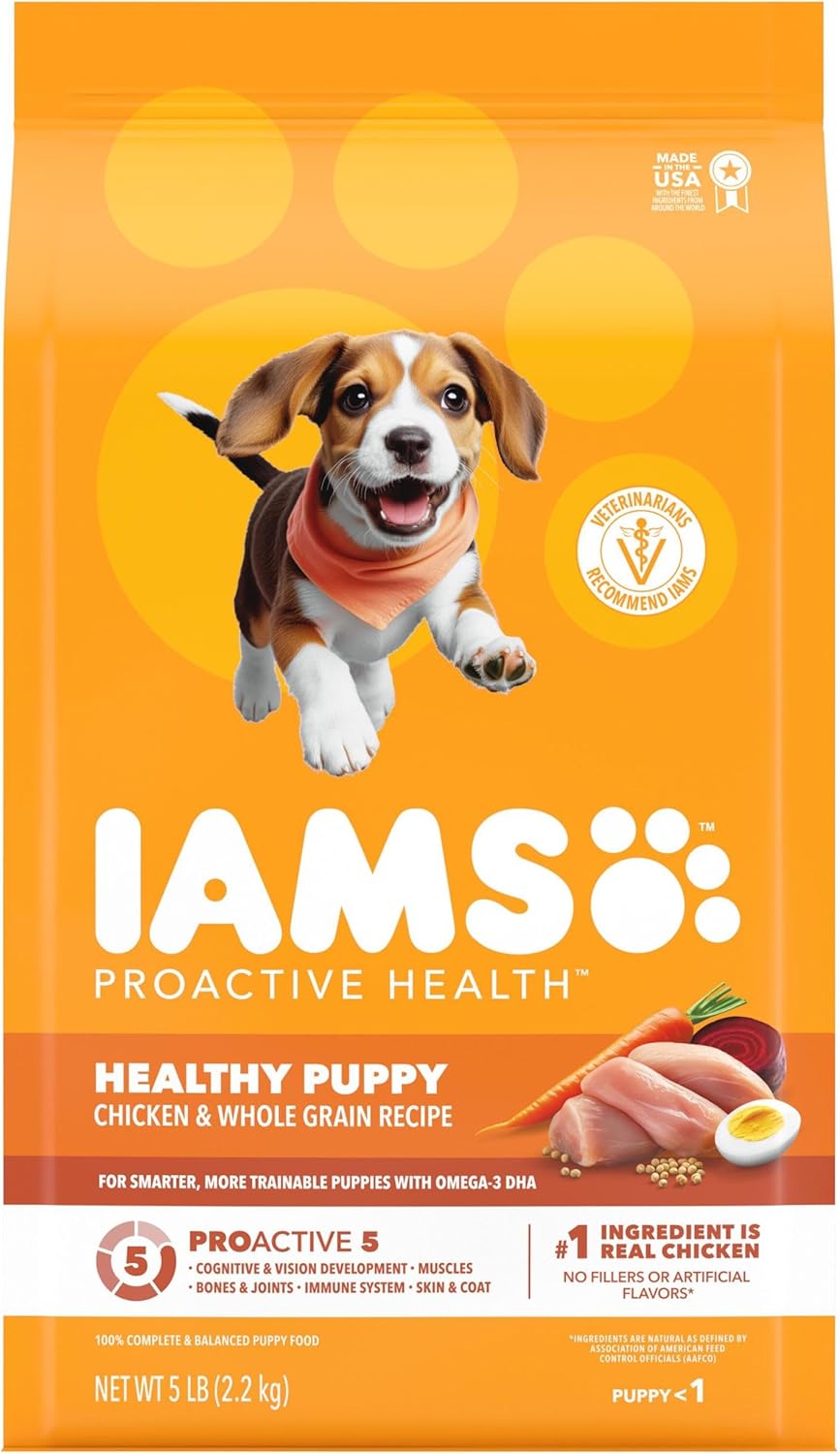
IAMS Proactive Health Puppy Chicken 5 lb
Best Budget Food
| Flavor | Chicken |
|---|---|
| Age Range Description | Puppy |
| Item Form | Dry Kibble |
| Specific Uses For Product | Digestive Health |
| Special Ingredients | Fish Oil, Dried Egg Product |
IAMS Proactive Health Healthy Puppy Chicken & Rice is a 5 lb dry kibble designed as a complete growth diet for small and medium breed puppies and for pregnant or nursing dogs. It uses real chicken as the #1 ingredient and includes dried egg product and fish oil to boost animal protein and omega-3s for cognitive development and skin and coat support. The formula highlights digestive health and includes prebiotic fibers alongside vitamins and minerals to support bones, joints, immune function, and muscle development. In everyday use it feeds like a typical puppy kibble: follow the feeding guide by age and weight and adjust for activity level, with fresh water available at all times. For buyers prioritizing budget and approachable nutrition, this recipe delivers standard puppy-focused benefits from a large pet brand and is widely available in small package sizes that minimize waste if you want to trial it. Keep in mind the ingredient list includes grains, chicken by-product meal, and common allergens such as egg, fish, and soy, so it is not a hypoallergenic or grain-free option for severe food sensitivities.
Best for: Cost-conscious new puppy owners who want a complete, veterinarian-recommended growth formula with animal protein and added DHA, and who need an affordable starter bag to test tolerance.
Less Ideal for: Owners seeking a hypoallergenic, limited-ingredient, or grain-free recipe for puppies with diagnosed food sensitivities should consider specialized veterinary formulas instead.
- Real chicken listed as the first ingredient for animal-based protein
- Includes omega-3 DHA from fish oil to support cognitive development and skin health
- Formulated with vitamins, minerals, and antioxidants for growth, immune support, and joint health
- Available in a small 5 lb bag that is convenient for trying a new formula or avoiding long-term storage
- Contains common allergens and grain ingredients, so not suitable for puppies with confirmed food allergies
- Includes chicken by-product meal rather than exclusively whole-muscle protein
Verdict: The best budget food for owners who need an economical puppy diet that remains gentle on sensitive stomachs while meeting core nutritional requirements.
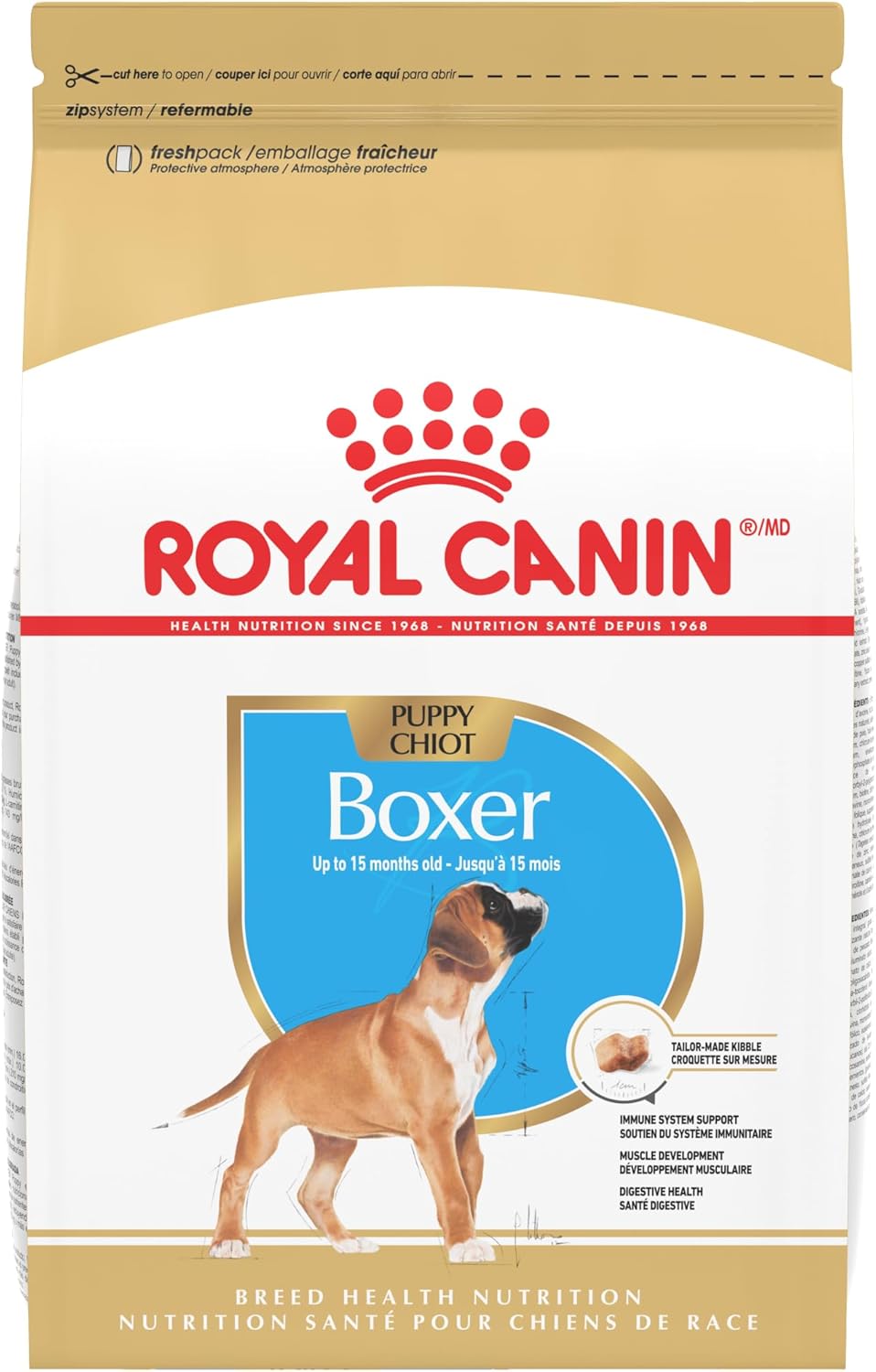
ROYAL CANIN Boxer Puppy Dry Dog Food 30 lb
Best Premium Food
| Age range | Puppy (8 weeks to 15 months) |
|---|---|
| Breed recommendation | Boxer |
| Item form | Pellet |
| Flavor | Chicken |
| Package size | 30 lb Bag |
Royal Canin Boxer Puppy Dry Dog Food is a breed-targeted kibble designed for purebred Boxer puppies from 8 weeks to 15 months. The wave-shaped, short-muzzle friendly kibble helps Boxers pick up and chew more easily, while a blend of antioxidants including vitamins C and E supports developing immune systems. The formula provides precise protein levels and added L-carnitine for muscle support and healthy weight management, and includes prebiotics and high-quality proteins to promote digestion and stool quality. In practice this eats like a typical dry puppy diet: serve per the feeding guide and transition to the adult Boxer formula after about 15 months. Ingredients list includes chicken by-product meal, grains, and a range of vitamins, minerals, glucosamine and chondroitin for joint support. Buyers should expect a veterinary-style, breed-focused recipe rather than a grain-free or single-protein specialty formula, and ingredient sourcing reflects a mix of common pet-food components. The product is most useful for owners who want a nutrition profile tailored to Boxer growth needs and chewing anatomy.
Best for: Owners of purebred Boxer puppies who want a focused, breed-tailored growth diet that aids chewing, immune development, and muscle support during the first 15 months.
Less Ideal for: Puppy owners seeking grain-free, limited-ingredient, or single-protein novelty diets, or those feeding mixed-breed litters with divergent size needs.
- Kibble shape and texture designed for Boxers short muzzles to improve pick-up and chewing
- Antioxidant complex with vitamins C and E to support developing immune system
- Protein level and L-carnitine included to support muscle development and weight management
- Prebiotics and high-quality proteins to promote digestive health and stool quality
- Contains chicken by-product meal and multiple grains rather than single-source or grain-free protein
- Formulation is breed-specific so it may not suit mixed-breed puppies with different size or nutritional needs
Verdict: The best premium food for owners willing to invest in top-quality ingredients, stricter sourcing, and added functional nutrients to support sensitive digestive systems.
Nulo FreeStyle Limited+ Salmon 5.5 lb
Best Limited-Ingredient Food

| Flavor | Salmon |
|---|---|
| Item Form | Dry |
| Age Range Description | Adult |
| Special Ingredients | BC30 Probiotic |
| Package Size Name | 5.5 lb Bag |
Nulo FreeStyle Limited+ Salmon is a grain-free dry kibble built around a single animal protein source, deboned salmon, and formulated with probiotics and prebiotic fibers for digestive support. It is typically fed as a complete diet for puppies and adults who need a simplified ingredient list; the recipe delivers about 30% crude protein to support lean muscle growth and includes omega fatty acids, biotin, and zinc to promote skin and coat health. Practical benefits include a focused formula that avoids common triggers such as chicken, eggs, peas, grains, and artificial colors, plus BC30 probiotic technology intended to help sensitive stomachs absorb nutrients more effectively. Because it is a limited-ingredient diet it can simplify rotation and elimination trials for pups with suspected food sensitivities, but the grain-free formulation and use of legumes and chickpea flour mean it is not a hypoallergenic veterinary prescription diet and may not suit every allergy case. The 5.5 lb bag size is convenient for testing with puppies before committing to larger bags, though active large-breed puppies may require faster refills due to higher caloric needs.
Best for: Puppy owners seeking a short, transparent ingredient list and a single high-quality protein to support growth while minimizing common dietary triggers.
Less Ideal for: Families needing a veterinary prescription hypoallergenic diet or those who want a grain-inclusive formulation for breeds with specific carbohydrate tolerances.
- Single animal protein source (deboned salmon) reduces ingredient complexity for sensitivity testing
- High protein level (about 30% crude) to support lean muscle and growth
- Includes BC30 probiotic and prebiotic fibers to support digestion and nutrient absorption
- Added omega-3 and omega-6 fatty acids plus biotin and zinc for skin and coat health
- Grain-free formula includes chickpeas and chickpea flour which may still trigger sensitivities in some dogs
- 5.5 lb bag may be small for larger or very active puppies requiring frequent feeding
Verdict: The best limited-ingredient food for puppies whose sensitivities may be linked to common allergens, offering a shorter ingredient list to simplify diagnosis and digestion.
Merrick Grain Free Puppy Food 10 lb
Best Grain-Free Food

| Flavor | Beef |
|---|---|
| Unit Count | 10 Pounds |
| Age Range Description | Puppy |
| Allergen Information | Gluten Free |
| Animal Food Nutrient Content Claim | High Protein |
Merrick Premium Grain Free Dry Puppy Food is a kibble-based puppy formula built around deboned beef as the first ingredient and smaller-sized pieces for young mouths. It is designed for daily feeding to support growth with high protein and fat content from animal sources, DHA for brain development, and added glucosamine and chondroitin for joint support. The recipe emphasizes whole-food ingredients with about half the formula composed of produce, fiber, vitamins and minerals, and contains omega fatty acids to help skin and coat. Practical benefits include a grain-free, gluten-free profile for puppies with grain sensitivities and a texture sized for puppies, plus nutrient levels aimed at active growth. Limitations to note are that the formula is relatively high in protein and fat compared with some puppy diets, which may not suit every puppy or household feeding strategy, and owners should follow the feeding chart closely to avoid overfeeding. Also, any diet change for a puppy with skin issues should be made under veterinary guidance to confirm grains are the cause.
Best for: Puppy owners seeking a balanced grain-free puppy diet to try when grains are suspected contributors to skin sensitivity and who prioritize real meat and growth-focused nutrition.
Less Ideal for: Owners whose puppies require a prescription or hypoallergenic veterinary diet for confirmed food allergies or whose vets recommend lower fat/protein intake should consider veterinarian-recommended alternatives.
- Real deboned beef as the first ingredient for high-quality animal protein.
- Grain-free and gluten-free formulation suitable for puppies with grain sensitivities.
- Includes DHA to support brain development and smaller kibble for puppy mouths.
- Added glucosamine and chondroitin to help developing hips and joints.
- Relatively high protein and fat levels may be more than some puppies require.
- Not a veterinary therapeutic formula for diagnosed skin conditions; vet oversight may be needed.
Verdict: The best grain-free food for puppies that appear to tolerate diets without grains better, providing alternative carbohydrate sources while supporting sensitive stomachs.
Bully Max Puppy Food 24/14
Best High-Calorie Food

| Crude Protein | 24% |
|---|---|
| Crude Fat | 14% |
| Calories | 419 cal/cup |
| Primary Flavor | Lamb |
Bully Max Puppy Food is a meat-forward dry kibble designed to support healthy muscle growth, energy needs, and digestive health in growing puppies. It supplies 24% protein and 14% fat with 419 calories per cup, so it is typically used as a primary daily diet for puppies that need extra calories and protein during growth phases. Notable features include lamb meal as the first ingredient, added pork and fish meal for concentrated animal protein, and a TruMune postbiotic blend alongside prebiotics and probiotics to support gut health and immune development. Practical benefits include concentrated nutrition for steady weight gain and muscle development, formula gentleness for sensitive stomachs, and omega fatty acids for skin and coat support. Important limitations are that the formula is calorie-dense so portioning must be monitored to avoid excessive weight gain in less active puppies, and some owners may prefer a chicken-inclusive protein if lamb/pork is not suitable for their dog. It is best used with a feeding plan adjusted for breed, activity, and growth rate.
Best for: Puppy owners seeking a high-protein, calorically rich formula to support muscle development and growth, especially for puppies that benefit from digestive support.
Less Ideal for: Owners who need a lower-calorie or lower-protein puppy food for less active or quickly maturing breeds should consider gentler formulations instead.
- High protein (24%) and calorie density (419 cal/cup) to support muscle growth and energy
- Lamb meal listed as the first ingredient for concentrated animal protein
- Includes TruMune postbiotics plus prebiotics and probiotics for digestive and immune support
- Formulated without corn, wheat, soy, or artificial colors and suitable for sensitive stomachs
- High calorie density requires careful portion control to prevent overfeeding
- Chicken-free formulation may not suit puppies that tolerate or need chicken-based diets
Verdict: The best high-calorie food for growing boxer puppies that need extra energy and weight gain without upsetting their sensitive digestion when properly balanced.
Purina Pro Plan Veterinary Diets HA Salmon 6 lb
Best Digestive-Health Food

| Flavor | Salmon |
|---|---|
| Item Form | Kibble |
| Unit Count | 96 Ounce |
| Specific Uses For Product | Allergy; Digestive Health; Sensitive Stomach; Gastrointestinal; Poultry Free |
| Target Species | Dog |
Purina Pro Plan Veterinary Diets HA Hydrolyzed Salmon is a veterinary diet kibble that uses a single hydrolyzed protein source and a single carbohydrate source to reduce the chance of adverse food reactions and support digestive health. It is typically fed as a sole diet under veterinary guidance for dogs with allergies, sensitive stomachs, or gastrointestinal concerns and can be introduced gradually per the feeding directions. Notable product features include hydrolyzed soy protein isolate and hydrolyzed salmon as proteins, coconut oil for medium-chain triglycerides, a highly digestible carbohydrate base, and added antioxidants and vitamins for overall nutrition. In practice this means simpler ingredient exposure, easier digestion for some dogs, and a formula intended to minimize gastrointestinal irritation while still providing balanced nutrients. Limitations are that it is a prescription-style veterinary diet so you should use it with your veterinarian and it may not be necessary for dogs without confirmed sensitivities; some ingredients like corn starch and processed oils may concern buyers seeking novel-protein or grain-free options.
Best for: Puppy owners seeking a veterinarian-recommended diet to soothe digestive upset or suspected food reactions and willing to follow a vet-guided feeding plan.
Less Ideal for: Owners looking for a grain-free, novel-protein, or whole-food limited-ingredient puppy diet for routine feeding without veterinary indication should consider other options.
- Hydrolyzed protein and single carbohydrate source to reduce antigenic exposure
- Formulated for digestive support and sensitive stomachs
- Contains coconut oil for MCTs which can aid energy and digestion
- Includes vitamins and antioxidants for complete nutrition
- Available in a 6 lb bag suitable for trying the diet before committing to larger sizes
- Contains corn starch and some processed oils rather than novel or limited-ingredient whole foods
- Should be used under veterinary supervision as a therapeutic diet
Verdict: The best digestive-health food for puppies with chronic upset, supplying targeted gut-supporting ingredients to improve stool quality and nutrient absorption.
Choosing the Right Dog Food Boxer Puppy Sensitive Stomach: Key Factors to Consider
Digestibility
Digestibility affects how much of the food your puppy actually absorbs. Highly digestible diets reduce stool volume, lower intestinal irritation, and help sensitive puppies extract essential nutrients without taxing the gut. Look for easily broken-down proteins and carbohydrates and added digestive aids.
Formulations that include supplemental digestive enzymes, prebiotics, or probiotic cultures can help stabilize gut flora and improve nutrient uptake. For boxer puppies, whose digestive systems can be reactive, choosing a food with proven digestibility indicators can mean fewer episodes of vomiting or loose stools and more consistent growth.
Protein Source and Level
Protein supplies the building blocks for muscle and tissue during rapid puppy growth. For sensitive-stomach puppies, the quality and number of protein sources matter more than absolute protein percentage. Single-source or limited protein formulas reduce the chance of triggering a sensitivity.
A moderately high protein level supports lean mass development, but it should come from named animal proteins or well-digested alternatives. Avoid foods that use vague terms for protein ingredients, as those can hide mixed sources that sometimes correlate with adverse reactions.
Fat Content and Fatty Acid Profile
Fat is a dense energy source for active boxer puppies and supports brain development. The type of fat also impacts stool quality and skin health. Diets with balanced omega-3 and omega-6 fatty acids support skin barrier function, reduce inflammation, and can ease itchiness that often accompanies food sensitivities.
Excessively high fat can trigger soft stools in sensitive puppies, while too little fat will not meet energy needs. Choose a formula with moderate fat and clear labeling of the fatty acid sources to balance energy and digestive tolerance.
Carbohydrate Type and Fiber
Carbohydrates are the primary digestible energy source after fat and protein. For puppies with sensitive stomachs, easily digestible carbs such as cooked rice and certain tubers are gentler than complex grain blends. Soluble fiber helps normalize stool consistency and feeds beneficial gut bacteria, while insoluble fiber aids transit.
Look for a carbohydrate profile that favors single, well-tolerated grains or grain-free alternatives known for easy digestion. The right fiber blend can improve stool formation and reduce gastrointestinal upset when introduced gradually.
Essential Vitamins, Minerals, and Bone Support
Growing boxer puppies need a precise balance of vitamins and minerals to develop bones and organs correctly. Calcium and phosphorus ratios are especially important for large-breed puppies to prevent abnormal bone growth. Trace minerals like zinc support skin health, and B vitamins support energy metabolism.
Formulas targeted at puppies should explicitly meet growth-stage nutrient profiles. For sensitive-stomach puppies, absorption matters as much as content, so pairing mineral balance with good digestibility helps ensure those nutrients are effectively used.
Formulation Simplicity and Additives
Simpler formulations with fewer ingredient groups reduce the chance of exposing a puppy to an offending component. Avoiding unnecessary artificial colors, flavors, and preservatives minimizes potential irritants. Natural preservatives and clearly identified whole-food ingredients tend to be easier to assess when diagnosing sensitivities.
That said, some functional additives such as fish oil, probiotics, or specific antioxidants can be beneficial. The key is a balance: include helpful extras that support digestion and skin, while keeping the overall ingredient list focused and transparent.
How Do I Transition My Boxer Puppy to a New Sensitive-stomach Formula Without Causing Upset?
Transition slowly over at least 7 to 10 days, mixing increasing proportions of the new food into the current food to allow gut bacteria and digestive enzymes to adapt. Start with about 10 percent new food and increase the ratio every two to three days while monitoring stool consistency and appetite.
If your puppy shows signs of intolerance such as vomiting, refusal to eat, or watery stools, slow the transition further or pause at the previous ratio for a few extra days. Keep feeding times consistent and avoid adding table scraps, which can confuse the digestive adjustment and mask how the puppy responds to the new formula.
- Begin with 10% new food, increase every 2–3 days
- Monitor stool and energy levels daily
- Pause or slow progression if symptoms appear
What Feeding Schedule and Portion Sizes Work Best for Boxer Puppies?
Puppies generally do well with multiple smaller meals a day to stabilize blood sugar and reduce digestive stress. For boxer puppies, feed three to four times daily until about six months, then transition to two meals per day. Follow the feeding guidelines on the puppy formula and adjust portions based on weight gain and body condition.
Regularly weigh or body-check your puppy and modify portions if you see rapid weight gain or poor weight gain. A lean, muscular condition is the goal; persistent loose stools may indicate overfeeding or intolerance to the current formula.
- 3–4 meals per day until ~6 months, then 2 meals daily
- Adjust portions based on growth and stool quality
- Consistent feeding times help digestion
Which Ingredients Commonly Trigger Sensitivities in Puppies?
Common triggers include beef, dairy, chicken, and certain grains for some puppies. Artificial additives, intense flavorings, and ambiguous meat by-products can also provoke reactions. Sensitivity patterns vary, so an ingredient that affects one puppy might be fine for another.
If you suspect a specific ingredient, try an elimination approach with a limited-ingredient or novel-protein formula under guidance. Note that true food allergies are less common than intolerances; persistent or severe symptoms warrant veterinary input.
- Common culprits: beef, dairy, chicken, some grains
- Artificial additives can worsen digestive issues
- Consider elimination diets to isolate triggers
When Should I Consult a Veterinarian About Ongoing Stomach Issues?
Seek veterinary advice if vomiting, diarrhea, loss of appetite, or lethargy persists beyond 24 to 48 hours, or if symptoms are severe such as blood in vomit or stool. Puppies can dehydrate quickly, so timely evaluation is important. A vet can rule out infections, parasites, metabolic issues, or structural problems that mimic food sensitivity.
Your veterinarian can also recommend diagnostic tests and guide a supervised elimination diet or a prescription plan if needed. They will help balance the need for digestive rest with ongoing growth and nutrient requirements.
- Persistent symptoms beyond 24–48 hours require a vet
- Watch for severe signs: blood, lethargy, rapid dehydration
- Vets can recommend diagnostics or supervised diets
Are Grain-free Diets Better for Boxer Puppies with Sensitive Stomachs?
Grain-free diets are not inherently better for sensitive stomachs; suitability depends on which ingredients trigger a puppy's symptoms. Some puppies tolerate grain-free formulas well, while others do fine with gentle grains such as cooked rice or oats. The important factor is overall digestibility and the absence of the specific offending ingredient.
When considering grain-free options, evaluate the carbohydrate source and fiber content. Ensure the diet still meets puppy growth nutrient profiles. If you suspect a grain sensitivity, try a trial with a clear start and monitoring plan before committing long term.
- Grain-free is not automatically superior
- Look for gentle, digestible carbohydrate sources
- Monitor results during a defined trial period
How Can I Support Skin and Coat Health Alongside a Sensitive-stomach Diet?
Skin and coat issues often accompany food sensitivities. Choose formulas that include omega-3 and omega-6 fatty acids to support skin barrier function and reduce inflammation. Adding a vet-approved fish oil supplement can help if the diet is low in those fatty acids.
Maintain parasite prevention and regular grooming, as external factors contribute to skin problems. If dryness or itch persists despite dietary changes, consult your veterinarian to rule out allergies or dermatological conditions that may need targeted treatment.
- Prefer diets with balanced omega fatty acids
- Consider vet-approved supplements for extra support
- Address external causes like parasites and grooming
How We Chose the Best Dog Food Boxer Puppy Sensitive Stomach
We looked for formulas specifically suited to young dogs that often experience digestive sensitivity and focused on attributes that matter for boxer puppies. Primary evaluation criteria included digestibility markers such as single-source or limited proteins, inclusion of prebiotics and probiotics, and the presence of easily digestible carbohydrate sources. Growth-targeted nutrient balance was vetted by checking protein and fat ratios appropriate for active large-breed puppies, plus calcium-to-phosphorus balance to support healthy skeletal development. We also considered ingredient transparency and the use of named, high-quality proteins rather than vague meat meals; the inclusion of omega fatty acids for skin and coat health; and the absence of common irritants like excessive artificial additives. Palatability and texture were considered because persistent refusal or selective eating can exacerbate weight and growth issues in puppies. Excluded from consideration were formulas aimed solely at adult dogs, weight-loss therapeutic diets, and products that lack clear feeding guidance for growing puppies. We prioritized products with clear nutritional profiles and components that reduce the risk of GI upset while still meeting growth-stage nutrient needs.
Our full evaluation process is outlined in our review methodology.
FAQ
How quickly should I expect improvement after switching foods?
Improvement often appears within a few days to two weeks for mild intolerances, though complete stabilization can take longer as gut flora adapts. If there is no improvement after two weeks or symptoms worsen, consult your veterinarian.
Can probiotics help a puppy with a sensitive stomach?
Probiotics often help by restoring healthy gut bacteria and improving stool consistency. Choose formulas with research-backed strains and follow dosing guidance for puppies. Benefits are usually seen within days to a couple of weeks.
Is feeding raw or home-cooked food a good option for sensitive puppies?
Home-cooked or raw diets can work for some owners but require careful planning to meet growth-stage nutritional needs and to avoid pathogens. If considering these approaches, consult a veterinarian or a veterinary nutritionist to ensure balanced nutrition and safe handling.
How do I tell the difference between an intolerance and an allergy?
Intolerances typically cause digestive upset such as gas, vomiting, or diarrhea and are dose-dependent, while allergies often produce skin signs like itching, redness, and sometimes digestive issues. A veterinary assessment and elimination diet can help differentiate the two.
Should I rotate puppy foods to prevent sensitivities?
Rotating foods can expose puppies to a broader nutrient mix but may confuse a sensitive digestive system if changes are frequent. For puppies with known sensitivities, keeping a consistent, well-tolerated formula is usually best until the digestive system matures.
Final Verdict
Prioritize digestibility, a clear single or limited protein source, and a balanced growth nutrient profile when choosing food for a boxer puppy with a sensitive stomach. Accept that tradeoffs exist between palatability and ingredient simplicity: a simpler, well-digested formula may be less varied but often leads to more dependable stool quality and steady growth. If you see persistent or severe symptoms, seek veterinary input to rule out medical causes. With patience in transitioning and attention to protein, fat, and fiber sources, you can select a puppy food that supports healthy development while minimizing digestive upset.

