

If your boxer struggles with frequent gas, the right dog food can make a noticeable difference in daily comfort and household odor. Boxers have a sensitive digestive system and high energy needs, so you want formulas that prioritize easy-to-digest proteins, moderate fat, and limited fermentable carbohydrates. This guide covers seven top picks shortlisted for boxers with gas and explains the nutritional features that help reduce gas while keeping your dog fit and satisfied. Use the evaluation notes to match a formula to your boxer's age, activity level, and known sensitivities.
Top Picks at a Glance
| Best Overall Food for Boxers with Gas A balanced, digestion-friendly formula that soothes gassy boxers | ROYAL CANIN Boxer Adult Dry Dog Food 30 lb |  |
| Best Budget Food for Boxers with Gas An affordable digestive-friendly recipe that doesn’t break the bank | Purina ONE Lamb & Rice Dog Food 8 lb |  |
| Best Limited-Ingredient Food Simpler recipes with fewer ingredients to identify triggers easily | Instinct Limited Ingredient Diet Lamb 20 lb |  |
| Best Grain-Free Food Formulas without grains for dogs suspected of grain sensitivity | Taste of the Wild Pacific Stream 28 lb |  |
| Best High-Protein Food Higher-protein recipes for active boxers who need sustained energy | Blue Buffalo Wilderness Salmon 4.5 lb |  |
| Best Sensitive-Stomach Food Gentle, easily digestible diets formulated specifically for tummy issues | Hill's Science Diet Perfect Digestion 22 lb |  |
| Best Premium Food Higher-end formulas with superior ingredients and advanced digestive support | Purina Pro Plan Veterinary Diets EN Gastroenteric 25 lb |  |
ROYAL CANIN Boxer Adult Dry Dog Food 30 lb
Best Overall Food for Boxers with Gas

| Flavor | Chicken |
|---|---|
| Age Range Description | Adult |
| Breed Recommendation | Boxer |
| Package Size Name | 30 lb Bag |
| Animal Food Diet Type | Veterinary Diet |
Royal Canin Boxer Adult is a breed-targeted dry formula designed for purebred Boxers 15 months and older. It delivers tailored kibble shape for short muzzles, a measured protein level and added L-carnitine to support muscle mass and ideal weight, plus taurine, EPA and DHA aimed at heart support. The kibble shape and texture make it easier for Boxers to pick up and chew, which helps with consistent intake, and the antioxidant complex supports cellular health and nutrient absorption. In practice it is used as a primary maintenance diet for adult Boxers and mixes easily with wet food if you want to vary meals. Limitations include a grain-containing ingredient list and use of some by-product meals, which may matter for owners prioritizing limited-ingredient or grain-free diets, and it is formulated specifically for purebred Boxers rather than multibreed needs. For owners seeking a science-backed, breed-focused maintenance diet that emphasizes muscle and cardiac nutrients, this formula covers the essentials well.
Best for: Buyers who want a breed-specific, science-backed maintenance diet that supports a Boxer's muscle tone and cardiac health while offering good palatability and easy kibble uptake.
Less Ideal for: Owners seeking grain-free, novel-protein, or limited-ingredient diets for allergy management should consider other formulas.
- Kibble shaped for Boxers' short muzzles to improve pick-up and chewing
- Protein level and L-carnitine to help maintain muscle and healthy body condition
- Contains taurine, EPA and DHA for targeted heart support
- Antioxidant complex to support cellular health and nutrient absorption
- Includes grain and some by-product meal ingredients, so it is not limited-ingredient or grain-free
- Formulated specifically for purebred Boxers and may be less appropriate for mixed-breed dogs with different needs
Verdict: The best overall food for boxers with gas that balances digestibility, appropriate protein and fat levels, and fiber to reduce flatulence while meeting everyday nutritional needs.
Purina ONE Lamb & Rice Dog Food 8 lb
Best Budget Food for Boxers with Gas
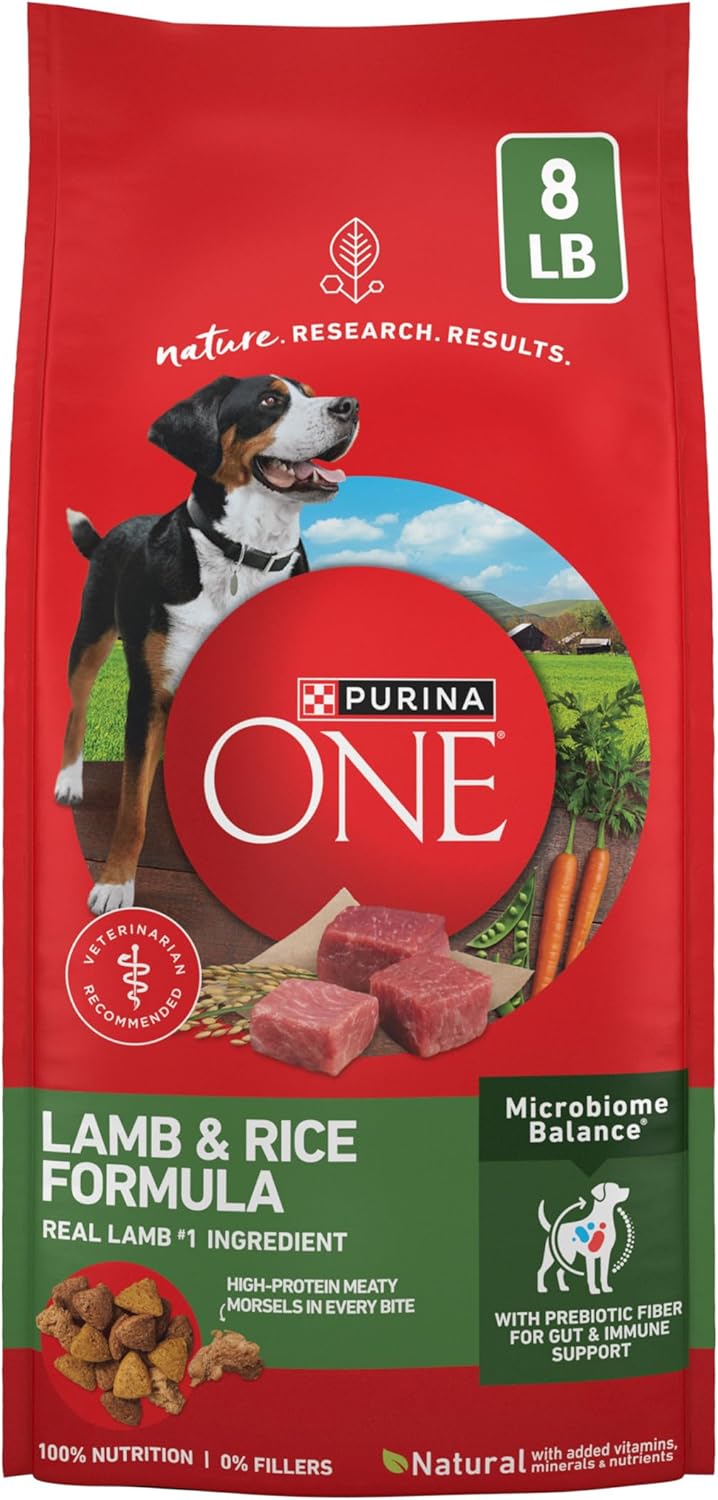
| Flavor | Lamb & Rice |
|---|---|
| Age Range Description | Adult |
| Unit Count | 128 Ounce |
| Item Form | Kibble |
Purina ONE Lamb & Rice is a conventional dry adult dog food that uses real lamb as its primary ingredient and a SmartBlend of nutrients aimed at supporting muscle, heart, gut and coat health. It is fed as a complete daily diet in measured portions using the feeding chart on the bag, providing crunchy kibble plus occasional softer morsels that many dogs find palatable. Notable features include prebiotic fiber for microbiome balance, sources of glucosamine from lamb and chicken by-product meal for joint support, and added vitamins and minerals for eye and immune support. For budget-minded owners this formula delivers a high protein profile and broad targeted benefits without specialty ingredients or premium novel proteins, so it covers routine nutrition needs reliably. Limitations are typical of mainstream formulas: it contains common grains and by-product meal rather than single-source novel protein, so dogs with specific allergies or those needing a limited-ingredient or grain-free diet should look elsewhere.
Best for: Owners seeking an affordable, everyday adult dog food that provides complete nutrition and multiple targeted health supports without premium specialty ingredients.
Less Ideal for: Owners who need a limited-ingredient, novel-protein, or grain-free diet for diagnosed food sensitivities should choose a specialized formula instead.
- Real lamb listed as the first ingredient for a recognizable protein source
- Includes prebiotic fiber to support gut microbiome and digestion
- Added vitamins and minerals for eye, immune and overall maintenance
- Contains sources of glucosamine to help support joint health
- Widely available standard kibble that many dogs accept readily
- Contains common grains and chicken by-product meal which may not suit dogs with ingredient sensitivities
- Not a limited-ingredient or grain-free formula for elimination-diet needs
Verdict: The best budget food for boxers with gas that provides basic digestive support and acceptable ingredient quality for owners prioritizing cost without sacrificing tolerability.
Instinct Limited Ingredient Diet Lamb 20 lb
Best Limited-Ingredient Food

| Flavor | Lamb |
|---|---|
| Item Form | Dry, Raw |
| Breed Recommendation | All Breed Sizes |
| Unit Count | 320 Ounce |
| Special Ingredients | Grain-Free, Limited Ingredients |
This Instinct Limited Ingredient Diet is a grain-free dry dog food built around a single animal protein and one vegetable to support dogs with food sensitivities. The recipe lists grass-fed lamb as the primary protein and includes freeze-dried lamb pieces that coat each kibble to boost flavor and provide some raw nutrition without needing refrigeration. You would use it as a daily maintenance diet or as part of a transition plan for pets with digestive issues, following the recommended 5 to 7 day switch. Notable features include its simple ingredient philosophy, added omegas and antioxidants for skin and coat support, and a high-protein formulation that aims to be easily digestible. Practical benefits are fewer potential allergens to trigger sensitivities and increased meal interest from the freeze-dried coating. Important limitations are that it is still a dry kibble—so dogs needing higher moisture intake may require additional wet or fresh food—and the single-protein approach may not suit pets that need novel proteins or hydrolyzed diets prescribed by a veterinarian.
Best for: Pet parents who prioritize a short, clear ingredient list and need a grain-free option for dogs with food sensitivities or mild digestive issues.
Less Ideal for: Owners who require veterinary-prescribed hypoallergenic or moisture-rich therapeutic diets should look at clinical formulas or wet food alternatives.
- Single animal protein formula that simplifies ingredient sourcing for sensitive dogs
- Freeze-dried raw pieces on each kibble to increase palatability and add raw nutrition elements
- Grain-free and free of common fillers like corn, wheat, and soy
- Includes natural omegas and antioxidants to support skin, coat and immune health
- Dry kibble format does not provide significant moisture so additional wet food or water is often needed
- May not be suitable for dogs needing a novel or veterinary-prescribed hydrolyzed protein
Verdict: The best limited-ingredient food for boxers with gas that uses a short, focused ingredient list to minimize potential stomach irritants and help pinpoint food sensitivities.
Taste of the Wild Pacific Stream 28 lb
Best Grain-Free Food

| Flavor | Smoke-Flavored Salmon |
|---|---|
| Unit Count | 448 Ounce |
| Age Range | Adult |
| Animal Food Diet Type | Limited Ingredient |
| Allergen Information | Grain-Free |
Taste of the Wild Pacific Stream is a grain-free adult dry kibble that uses real smoke-flavored salmon and fish meal as primary protein sources and delivers about 32% protein for active dogs. It is typically fed as a complete daily diet and includes probiotic strains, fruits and vegetables for antioxidants, and omega fatty acids to support skin and coat—features that make it suitable for dogs with suspected grain sensitivities or owners seeking grain-free formulas. The bagged kibble is designed for all breed sizes and emphasizes digestion support through species-specific probiotics and prebiotic ingredients. Practical benefits include a strong meat-first ingredient list and nutrients aimed at muscle and joint support, but buyers should note it is a higher-protein formula that may not suit dogs needing low-fat or limited-calorie diets and the product is made in a facility that may handle grains so trace amounts are possible. Feeding should be adjusted by activity level and in consultation with a veterinarian for dogs with special dietary needs.
Best for: Owners who want a grain-free adult formula with meat-forward ingredients and added probiotics for digestion, especially for dogs that tolerate higher-protein diets and need skin and coat support.
Less Ideal for: Owners seeking a strictly grain-free guaranteed facility process or those whose dogs require low-fat, therapeutic, or calorie-restricted diets should consider other options.
- Real fish and fish meal listed as first ingredients for high-quality protein
- Grain-free recipe that uses sweet potatoes and peas as digestible carbohydrate sources
- Includes proprietary K9 strain probiotics and prebiotic ingredients to support digestion
- Contains omega fatty acids and antioxidants from fruits and vegetables for skin and coat health
- Produced in a facility that also processes grains, so trace cross-contact is possible
- Higher protein and calorie density may not be ideal for dogs requiring low-calorie or weight-loss diets
Verdict: The best grain-free food for boxers with gas that removes common cereal grains to reduce digestive upset for dogs suspected of grain-related intolerance.
Blue Buffalo Wilderness Salmon 4.5 lb
Best High-Protein Food

| Flavor | Salmon |
|---|---|
| Age Range Description | Adult |
| Item Form | Dry |
| Special Ingredients | grain free |
| Guaranteed Analysis – Crude Protein | 34.0% min |
Blue Buffalo Wilderness Salmon is a grain-free, high-protein dry kibble that uses deboned salmon as the primary ingredient to support lean muscle and energy in adult dogs. It is typically fed as a main daily ration and includes LifeSource Bits for added vitamins, minerals, and antioxidants formed at lower temperatures. The formula lists 34% crude protein and includes fish meal, chicken meal, peas, and flaxseed to provide digestible protein and omega fatty acids for skin and coat support. For boxers prone to gas, the recipe avoids common fillers like corn, wheat, and soy and includes probiotics and fermentable fibers from ingredients such as dried chicory root and specific fermentation extracts that can help gut balance. Buyers should note it is grain-free and uses pea and potato starch as carbohydrate sources, which some dogs tolerate well but others may not; dogs with severe sensitivity may need a novel single-protein or limited-ingredient diet instead. The bag size and feeding guidelines make portioning straightforward, and the ingredient list emphasizes real meat first and a broad nutrient profile rather than an extremely limited-ingredient approach.
Best for: Boxers whose owners want a high-protein, grain-free adult kibble that emphasizes real salmon and includes digestive-supporting ingredients to help reduce gas and maintain muscle.
Less Ideal for: Dogs that require a very limited-ingredient, single-protein prescription or those with known sensitivities to peas, potatoes, or other legumes should consider a veterinary elimination diet instead.
- High protein content (34% crude protein) with deboned salmon listed first
- Grain-free formula that omits corn, wheat, and soy
- Includes omega-3 and omega-6 sources to support skin and coat health
- Contains prebiotic and probiotic fermentation ingredients to support digestion
- LifeSource Bits add a blend of antioxidants, vitamins, and minerals formed at lower temperatures
- Uses multiple legumes and starches (peas, pea protein, tapioca, potatoes) which can trigger sensitivity in some dogs
- Not a limited-ingredient or single-protein formula for dogs with severe food sensitivities
Verdict: The best high-protein food for boxers with gas that supplies extra lean, digestible protein to support muscle and energy while using ingredients chosen to limit flatulence.
Hill's Science Diet Perfect Digestion 22 lb
Best Sensitive-Stomach Food

| Flavor | Chicken, Brown Rice, & Whole Oats |
|---|---|
| Age Range Description | Adult 1-6 |
| Item Form | Dry Food |
| Specific Uses For Product | Digestive Support |
| Unit Count | 352 Ounce |
Hill's Science Diet Adult Perfect Digestion is a dry dog food designed to improve digestive regularity and reduce occasional digestive upset. It is typically fed as a complete daily diet for adult dogs and is formulated with chicken as the first ingredient plus a proprietary ActivBiome+ prebiotic blend intended to support the gut microbiome and promote firmer, more consistent stools within about a week. The recipe includes digestible grains and added fibers like pumpkin and dried beet pulp to soothe digestion and supply soluble fiber, while vitamins C and E provide antioxidant support. Practical benefits for dogs with sensitive stomachs include a focus on gut-targeted nutrition and guidance for gradual transition from previous food to minimize upset. Limitations are that it is a grain-containing formula and not marketed as a limited-ingredient novel-protein diet, so dogs with specific protein allergies or severe food intolerances may need a veterinary elimination diet or prescription feeding instead.
Best for: Buyers seeking a readily available, vet-recommended adult dry food that targets mild digestive upset and aims to reduce gas and irregular stools through prebiotics and gentle fibers.
Less Ideal for: Owners whose dogs have confirmed protein-specific allergies, require a prescription therapeutic diet, or who prefer grain-free or single-ingredient elimination diets should consider alternatives.
- Proprietary ActivBiome+ prebiotic blend to support gut microbiome and regularity
- Chicken as first ingredient providing a familiar, digestible protein source
- Includes soothing fiber sources such as pumpkin and dried beet pulp to help firm stools
- Clinically supported antioxidants (Vitamins C and E) for immune support
- Clear feeding and transition guidance to reduce introduction upset
- Contains multiple grain ingredients, so not suitable for owners seeking grain-free options
- Not formulated as a novel or single-protein limited-ingredient diet for confirmed protein allergies
Verdict: The best sensitive-stomach food for boxers with gas that focuses on highly digestible proteins, soothing fibers, and probiotics to calm digestion and reduce gas.
Purina Pro Plan Veterinary Diets EN Gastroenteric 25 lb
Best Premium Food

| Flavor | Chicken |
|---|---|
| Item Form | Kibble |
| Specific Uses For Product | Digestive Health; Prescription; Gastrointestinal; Antioxidants |
| Unit Count | 400 Ounce |
| Target Species | Dog |
Purina Pro Plan Veterinary Diets EN Gastroenteric is a prescription-style dry formula aimed at dogs with sensitive digestion or recovering from gastrointestinal upset. It is used as a staple feed or transitional therapeutic diet under veterinary guidance and features highly digestible carbohydrate and protein sources plus a select prebiotic fiber to support the gut microbiome. Antioxidants are included to support immune function while an optimized fiber level helps intestinal motility, and the formula provides high-quality protein for maintenance and recovery. In practice this kibble works well for dogs that need easy-to-digest meals and for pet owners following a vet-directed feeding plan; it mixes predictably with water if softer texture is needed. Limitations are that it is a therapeutic veterinary diet so it is intended for targeted digestive issues rather than everyday indulgence, and ingredient choices like brewers rice and corn mean it is not a limited-ingredient or grain-free option for dogs with specific ingredient sensitivities.
Best for: Owners of Boxers who prioritize long-term gut health and are seeking a veterinary-formulated, highly digestible diet to reduce flatulence under veterinary guidance.
Less Ideal for: Owners looking for a grain-free, limited-ingredient, or non-prescription everyday premium kibble should consider alternatives better matched to those priorities.
- Formulated for digestive support with a highly digestible recipe and targeted prebiotic fiber
- Includes antioxidants to support immune health alongside gut support
- High-quality protein to help maintain body condition during recovery
- Available in a large 25 lb bag suitable for multi-dog households or long-term use
- Contains common grains like brewers rice and whole grain corn, so not suitable for grain-free plans
- Designed as a veterinary diet so it should be used under veterinary supervision rather than as an over-the-counter everyday food
Verdict: The best premium food for boxers with gas that combines top-quality, well-sourced ingredients, targeted digestive aids, and rigorous formulation for owners willing to invest in long-term gut health.
Choosing the Right Dog Food Boxer Gas: Key Factors to Consider
Protein Source and Digestibility
Protein is essential to maintain muscle mass and energy in boxers, but the source and how digestible it is make a big difference for gas. Highly digestible proteins reduce the amount of undigested material reaching the colon, which in turn lessens fermentation by gut bacteria and lowers gas production. Animal-based proteins that appear high on the ingredient list and named whole-meat sources typically digest better than vague meat meals or unspecified byproducts.
When choosing a formula, look for single or limited protein sources if your dog has suspected sensitivities. Hydrolyzed proteins or novel proteins can help dogs prone to food-triggered flatulence. Also consider life stage needs: puppy formulas emphasize different amino acid ratios than adult maintenance foods, and digestibility targets should match the intended age group.
Fat Content and Fatty Acid Balance
Fat provides concentrated energy for active boxers, but excessive fat can slow gastric emptying and increase digestive upset, including gas. Moderate fat levels that satisfy caloric needs without overloading the digestive tract are preferable for dogs prone to flatulence.
The type of fat matters too. Balanced omega-3 and omega-6 fatty acids support skin and joint health and may reduce low-grade inflammation that can worsen digestive symptoms. Avoid formulas with extremely high fat percentages unless recommended for a specific caloric need and monitored by a veterinarian.
Fiber Type and Fermentability
Fiber affects stool quality and fermentation. Soluble fibers like beet pulp and certain prebiotic fibers can normalize stool and support beneficial bacteria, but highly fermentable fibers may increase gas in sensitive dogs. Insoluble fibers help bulk stool and support regularity without contributing as much to fermentation.
Select formulas that balance fiber types and avoid excessive amounts of fermentable carbohydrates. For boxers with gas, a modest fiber level with a higher proportion of moderately fermentable or insoluble fibers often yields firmer stools and less odor.
Carbohydrate Quality and Grain Choices
Carbohydrates supply accessible calories, but low-quality or highly fermentable carbs can feed gas-producing gut bacteria. Ingredients like whole grains, cooked legumes, and certain starches differ in how they affect digestion. Highly processed starches and legumes can be more fermentable in some dogs.
If your boxer shows sensitivity, consider formulas that use easily digestible carbohydrate sources or limited-ingredient carbohydrate blends. Grain-free does not automatically reduce gas and may introduce other digestion variables, so choose on the basis of ingredient quality and your dog's individual response rather than marketing claims alone.
Additives, Probiotics, and Digestive Aids
Formulas that include probiotics, digestive enzymes, or natural digestive aids can help reduce flatulence by supporting balanced gut flora and improving nutrient breakdown. Probiotics help reestablish beneficial bacterial populations, while enzymes can aid in breaking down proteins, fats, and carbohydrates before they reach the colon.
Check labels for clinically backed probiotic strains and reasonable enzyme blends. Avoid reliance on formulas that list generic proprietary blends without specifying strains or enzyme activity. These additives can be especially helpful when switching foods or addressing chronic, nonmedical gas issues.
Palatability and Feeding Practicality
Even the best digestive formula is ineffective if your boxer refuses to eat it. Palatability matters, but highly tasty recipes that rely on heavy fats or intense flavoring can accidentally worsen gas for sensitive dogs. Choose formulas that balance taste with digestive-friendly ingredients.
Consider kibble size and texture for ease of eating, how the formula fits with your feeding routine, and whether the food works with any supplements or medications your dog takes. Transition strategies and clear feeding guidelines also matter to prevent stomach upset during diet changes.
How Long Before I See Improvement in Gas After Switching Foods?
Most dogs show measurable changes in gas and stool quality within two to four weeks after a diet change, but individual response times vary. The gut microbiome needs time to adapt to new substrates, and slow transitions reduce the chance of temporary worsening.
If you see no improvement after six to eight weeks, or if symptoms worsen, consult your veterinarian to rule out medical causes such as parasites, pancreatitis, or food intolerance that require targeted treatment.
- Transition gradually over 7 to 10 days to avoid digestive upset.
- Track stool consistency and odor to judge improvement.
- Reduce variables by changing only one factor at a time, such as protein source or fiber type.
Can Probiotics and Enzymes Help with Boxer Gas?
Yes, probiotics and digestive enzymes often help reduce gas by improving nutrient breakdown and stabilizing gut flora. Look for formulas that include well-researched probiotic strains or consider a veterinarian-recommended supplement if the food does not contain them.
Remember that not all probiotics are the same. Effectiveness depends on strain viability, colony-forming unit counts, and whether the strains survive processing and stomach acid to reach the intestine.
- Probiotics can reduce fermentation-related gas over several weeks.
- Enzymes act quickly to aid digestion of proteins, fats, and carbohydrates.
- Consult your veterinarian before adding supplements, especially for dogs on medication.
Should I Try a Limited-ingredient or Novel-protein Diet?
Limited-ingredient and novel-protein diets can be helpful when food sensitivity is suspected as the cause of gas. By simplifying the ingredient list and using a single protein source the dog has not previously eaten, you reduce potential triggers for abnormal fermentation and inflammation.
An elimination trial supervised by your veterinarian is the most reliable way to confirm a sensitivity. During a trial, feed the prescribed single-protein formula exclusively for the recommended period and monitor changes in gas and other symptoms.
- Use limited-ingredient diets for suspected food-related gas.
- Novel proteins are not a guaranteed fix but can identify triggers.
- Work with a veterinarian for a controlled elimination trial.
Practical Feeding Tips to Reduce Gas in Boxers
Simple changes to feeding habits often reduce gas. Feed smaller, more frequent meals rather than one large meal to improve digestion and reduce air swallowing. Use a slow-feeder bowl if your boxer eats quickly, since rapid consumption increases ingested air and can worsen flatulence.
Maintain consistent feeding times and avoid sudden treats or table scraps that introduce new, hard-to-digest ingredients. Keep hydration steady, as adequate water helps digestive transit and nutrient breakdown.
- Divide daily ration into two or three meals.
- Use controlled portions and measure food by weight.
- Avoid rich human foods, especially dairy and fatty scraps.
When Should I See a Veterinarian About Persistent Gas?
If gas is accompanied by other signs such as weight loss, diarrhea, vomiting, abdominal pain, blood in the stool, or marked behavior changes, seek veterinary attention promptly. These symptoms can indicate underlying disease rather than a simple dietary sensitivity.
Chronic, severe, or sudden-onset gas also warrants professional evaluation. Your veterinarian can run diagnostic tests to check for infections, intestinal parasites, pancreatic insufficiency, or inflammatory bowel disease that require specific treatment.
- Immediate vet visit for severe systemic signs.
- Schedule an appointment if no diet-based improvement after 6 to 8 weeks.
- Bring a feeding history and stool samples if requested.
How We Chose the Best Dog Food Boxer Gas
We evaluated candidate foods for boxers with gas using criteria focused on digestive tolerance and real-world feeding needs. Primary filters included protein source digestibility, the presence and types of fiber, and carbohydrate quality. We also assessed fat levels and the balance of omega fatty acids to ensure adequate energy without promoting digestive upset. Ingredient transparency and absence of common trigger ingredients were checked to lower the risk of food-sensitive flatulence. Palatability and formulation suitability for a medium-large, active breed were considered so the recommended foods meet caloric needs without overtaxing digestion. Formulas with unbalanced nutrient profiles, unclear ingredient sourcing, or extreme fat levels were excluded. We prioritized options that limit fermentable oligosaccharides and use single or limited protein sources when appropriate for sensitivity management.
Our full evaluation process is outlined in our review methodology.
FAQ
Is grain-free food better for boxers with gas?
Not always. Grain-free formulas remove certain carbohydrate sources but can replace them with other fermentable ingredients. The effect on gas depends on the specific carbohydrate and fiber profile rather than simply whether the formula contains grains.
Can food allergies cause excessive gas in boxers?
Yes, food allergies or intolerances can cause increased gas along with skin problems, itching, or gastrointestinal upset. An elimination trial or veterinary testing can help determine if a specific ingredient is responsible.
Will switching to wet food stop gas immediately?
Switching to wet food may change stool moisture and odor but will not necessarily stop gas right away. Any diet change should be gradual, and the new formula must address the underlying digestive triggers to reduce gas.
Are there specific ingredients I should avoid to reduce gas?
Highly fermentable carbohydrates, excessive fats, and vague meat-byproduct listings can contribute to gas in sensitive dogs. Look for clear, high-quality ingredients and a balanced fiber profile to minimize fermentation.
How should I transition my boxer to a new food to minimize gas?
Gradually mix increasing amounts of the new food with the current one over 7 to 10 days. Monitor stool and gas, and slow the transition if you notice worsening symptoms. Sudden changes are more likely to cause temporary digestive upset.
Final Verdict
Focus on easily digestible protein, moderate fat, and a balanced, lowly fermentable fiber profile when choosing food for a boxer with gas. Consider formulas with targeted probiotics or enzymes and use limited-ingredient approaches when food sensitivity is suspected. Monitor progress over several weeks and adjust feeding practices alongside diet changes to minimize gas while meeting your boxer's energy needs. Prioritize steady improvements in stool quality and comfort, and consult a veterinarian if symptoms persist or worsen.

