

Feeding a pug the right food matters more than you might expect. Pugs have compact bodies, unique facial anatomy, and a tendency toward weight gain and digestive sensitivity, so choosing a formula that matches their calorie needs, kibble size, and nutrient balance makes everyday feeding easier and healthier. This guide shortlists the top food brands suited to pugs and explains why each type of formula may work for your dog. Below we cover the key nutrition and practical factors we used to select these top picks, including ingredient quality, calorie density, kibble shape, and digestive support. Use the quick notes to find the best fit for your pug's age, activity level, and health profile.
Top Picks at a Glance
| Best Overall Food Brand for Pugs A well-rounded formula that suits most pugs' nutritional needs | ROYAL CANIN Pug Adult Dry Dog Food 10 lb |  |
| Best Budget Food Brand for Pugs An affordable option that still meets basic pug dietary requirements | Kibbles 'n Bits Mini Bits Bacon & Steak 3.5 lb |  |
| Best Premium Food Brand Higher-end recipes with superior ingredients and manufacturing standards | ORIJEN Small Breed Dry Dog Food 4 lb |  |
| Best High-Protein Food Brand Formulas with elevated protein for active, muscular, or lean-body needs | Purina ONE True Instinct Turkey & Venison 7.4 lb |  |
| Best Grain-Free Food Brand Recipes without grains for owners preferring grain-free formulations | Nature's Recipe Grain Free Small Breed 4 lb |  |
| Best Limited-Ingredient Food Brand Simple recipes with few ingredients to minimize food sensitivities | Blue Buffalo Basics Turkey Small Breed |  |
| Best Sensitive-Stomach Food Brand Gentler formulas designed for easy digestion and reduced upset | Cesar Small Breed Dry Dog Food 5 lb |  |
ROYAL CANIN Pug Adult Dry Dog Food 10 lb
Best Overall Food Brand for Pugs

| Flavor | Chicken |
|---|---|
| Age Range Description | Adult |
| Item Form | Pellet |
| Breed Recommendation | Pug |
| Unit Count | 160 Ounce |
Royal Canin Pug Adult Dry Dog Food is a breed-targeted kibble designed for purebred Pugs 10 months and older. The formula uses a cloverleaf kibble shape sized for a Pug's short, square muzzle to make picking up and chewing easier, and includes EPA and DHA from fish oil for skin and coat support plus L-carnitine and controlled protein for muscle maintenance and weight management. In practice this food is fed as a complete daily diet and is aimed at owners who want tailored nutrition rather than a generic small-breed formula. The packaging lists ingredients like brewers rice, chicken by-product meal and fish oil and notes the product is intended for skin health, muscle support and weight control. Buyers should expect a veterinary-style, nutrient-focused diet rather than novel ingredients or grain-free recipes, and dogs with specific ingredient sensitivities may need to check the ingredient panel. For Pugs that benefit from breed-shaped kibble and focused support for coat and weight, this is a practical, science-backed option.
Best for: Owners wanting a breed-specific, nutritionally focused daily diet for adult Pugs that supports skin, muscle and weight control and who prefer a formula designed around Pug jaw shape and feeding behavior.
Less Ideal for: Owners seeking grain-free, limited-ingredient, or specialty protein diets for food-sensitive dogs should consider alternative formulas.
- Kibble shape and size tailored to Pug muzzle and chewing behavior
- Includes EPA and DHA from fish oil to support skin and coat health
- Formulated with controlled protein and added L-carnitine for muscle support and weight management
- Positioned as a complete diet for adult Pugs 10 months and older
- Contains common grains and chicken by-product meal which may not suit dogs with ingredient sensitivities
- Not a novel-ingredient or grain-free recipe for owners seeking alternative formulations
Verdict: The best overall food brand for pugs balances appropriate calorie density, nutrient profile, palatability, and digestibility for the common health and size needs of the breed.
Kibbles 'n Bits Mini Bits Bacon & Steak 3.5 lb
Best Budget Food Brand for Pugs

| Flavor | Bacon and Steak |
|---|---|
| Life Stage | Adult |
| Breed Size | Small |
| Unit Count | 56 Ounce |
| Item Form | Pellet |
Kibbles 'n Bits Mini Bits Bacon & Steak is a small-breed dry dog food built around bite-sized crunchy kibbles mixed with chewy meaty bits to boost palatability for picky eaters. It is intended for adult small dogs and is served straight from the bag using the provided feeding guide; the mini kibble size makes it easy for small mouths to pick up and chew. The formula emphasizes taste with bacon and steak flavors and includes a mix of grains, meat meals, and added vitamins and minerals to deliver complete and balanced nutrition for adult dogs. Practical benefits include strong taste appeal that can help coax a finicky dog to eat, small pieces that suit toy and small breeds, and easy portioning for daily feeding. Important limitations are its ingredient list, which relies heavily on corn, wheat and soy and includes coloring and preservatives, and that it is not formulated for puppies or dogs with specific ingredient sensitivities. For buyers prioritizing flavor on a budget, this bag offers an economical, convenient option to revive interest at mealtime but owners seeking grain-free or limited-additive recipes should look elsewhere.
Best for: Buyers who need an inexpensive, highly palatable dry food to encourage regular eating in adult small-breed dogs and who prioritize taste and convenience over grain-free or limited-ingredient formulations.
Less Ideal for: Owners looking for grain-free, limited-ingredient, or puppy-specific nutrition, or those managing food allergies or strict ingredient-sensitive diets should consider other formulas.
- Mini kibble size tailored for small mouths and easier chewing
- Crunchy kibble plus chewy meaty bits increases palatability for picky dogs
- Sold in a small 3.5 lb bag that is easy to store and portion
- Complete and balanced for adult small-breed nutrition with added vitamins and minerals
- Formula contains common grains and multiple additives including artificial colors and preservatives
- Not suitable for puppies under one year or dogs with grain/ingredient sensitivities
Verdict: The best budget food brand for pugs delivers necessary calories and essential nutrients at a lower price while remaining reasonably digestible and palatable for cost-conscious owners.
ORIJEN Small Breed Dry Dog Food 4 lb
Best Premium Food Brand

| Flavor | Grain Free Small Breed Dog Recipe |
|---|---|
| Item Form | Dry Kibble |
| Age Range Description | All Life Stages |
| Unit Count | 64 Ounce |
ORIJEN Small Breed is a premium, grain-free dry dog food designed specifically for small dogs and all life stages. It delivers a very high proportion of animal ingredients, with the first five components listed as fresh or raw poultry and fish and an overall WholePrey approach that includes meats, organs, and bones to supply naturally occurring nutrients. The kibble is shaped for small mouths and is coated with freeze-dried bits for added flavor, making it suitable for picky eaters. Typical use is twice-daily feeding adjusted to activity and body condition, and the formulation emphasizes protein density to support lean muscle, skin and coat health, and digestive balance. Practical benefits include limited reliance on synthetic additives, a broad spectrum of animal-sourced nutrients, and ingredient sourcing from reputable regions. Important limitations are that it is grain-free which may not be necessary for every dog, and the richer formula can require careful portion control during transitions to avoid digestive upset or excess calories in less active pets.
Best for: Owners who prioritize premium animal proteins, carefully sourced ingredients, and advanced nutrition to support long-term health and coat condition in small-breed dogs.
Less Ideal for: Owners looking for a low-calorie, grain-inclusive diet or those whose dogs have no specific need for a high-protein, grain-free formula.
- Very high animal-ingredient content with whole meats and organs for nutrient density
- Kibble shape and size tailored for small-breed mouths
- Includes freeze-dried coating to boost palatability for picky eaters
- Formulated for all life stages supporting skin, coat, and digestive health
- Grain-free, protein-rich formula may be more than some small dogs need calorie- and digestion-wise
Verdict: The best premium food brand prioritizes higher-quality ingredients, stricter sourcing or manufacturing controls, and enhanced nutrient profiles for owners who want top-tier nutrition.
Purina ONE True Instinct Turkey & Venison 7.4 lb
Best High-Protein Food Brand

| Flavor | Turkey & Venison |
|---|---|
| Protein claim | 30% Protein |
| Form | Dry kibble |
| Target life stage | Adult |
Purina ONE True Instinct Turkey & Venison is a high-protein dry formula that uses real turkey as the first ingredient and includes venison to deliver roughly 30 percent protein for adult dogs. It is intended for everyday feeding and supports muscles, heart health, skin and coat, and joint support via natural glucosamine sources and added vitamins and minerals. The kibble mixes crunchy morsels with meaty pieces to improve palatability, and the recipe omits poultry by-product meal and artificial flavors or preservatives. Practical benefits include a nutrient-dense recipe that can be served dry or moistened and a feeding guide to help owners transition and portion properly. Limitations to consider are that the ingredient list still contains common grains and soy, and the formula is for adult maintenance so it is not appropriate for puppies, pregnant, or nursing dogs without switching to a puppy formula. For budget-minded buyers seeking a chicken-free, protein-forward option, this delivers solid everyday nutrition at a mainstream brand level.
Best for: Cost-conscious owners who want a chicken-free, protein-forward adult dry food that covers everyday nutrition and supports muscle and coat health.
Less Ideal for: Owners seeking grain-free recipes or specialized veterinary therapeutic diets, or those feeding puppies and pregnant or nursing dogs should look elsewhere.
- Real turkey listed as the first ingredient and added venison for a meat-forward protein profile
- Approximately 30% protein to support muscle maintenance and healthy heart function
- Formulated without poultry by-product meal and without artificial colors or flavors
- Includes natural sources of glucosamine and added vitamins and minerals for joint, coat, and immune support
- Contains common grains and soy which may not suit grain-free or sensitive-diet dogs
- Formulated for adult maintenance only and not suitable for puppies or nursing mothers
Verdict: The best high-protein food brand provides a higher percentage of quality animal protein to support muscle maintenance and energy for more active pugs or those needing extra lean mass support.
Nature's Recipe Grain Free Small Breed 4 lb
Best Grain-Free Food Brand

| Flavor | Chicken |
|---|---|
| Life Stage | Adult |
| Breed Size | Small |
| Unit Count | 64 Ounce |
Nature's Recipe Grain Free Small Breed Chicken, Sweet Potato & Pumpkin is a small-bag dry formula aimed at adult small dogs that need a simpler, grain-free diet. It uses real chicken and chicken meal up front, with sweet potato and pumpkin supplying digestible carbohydrates and fiber, and includes added vitamins, minerals and antioxidants to support digestion, immune health and skin and coat. Typical use is daily feeding for small adult dogs following the provided portion chart; the kibble size and nutrient profile are tailored to smaller mouths and energy needs. Notable product points are the grain-free ingredient set, lack of artificial colors and flavors, and the inclusion of pumpkin and fiber-friendly ingredients that can help sensitive digestions. Limitations are that the formula still contains multiple plant proteins and pea/legume ingredients rather than being single-protein, and the 4 lb bag is small for multi-dog households so you may need more frequent repurchases. For a small dog with suspected grain sensitivity who benefits from a shorter ingredient focus, this is a practical, shelf-stable option with recognizable first ingredients.
Best for: Buyers who need a grain-free, straightforward dry formula tailored to adult small dogs and want recognizable animal-first ingredients to help narrow potential food triggers.
Less Ideal for: Owners seeking a true single-ingredient or novel-protein elimination diet or those who need larger bulk bags for multiple dogs should consider other options.
- Real chicken listed as the first ingredient for clear animal-protein focus
- Formulated specifically for small-breed adults with kibble and calorie profile in mind
- Includes pumpkin and sweet potato to support digestion and provide fiber
- No artificial colors, flavors or preservatives listed
- Grain-free recipe for dogs with grain sensitivities
- Not a single-protein or strictly novel-protein limited-ingredient recipe
- Contains legumes and multiple plant ingredients that can still trigger sensitivities in some dogs
- Small 4 lb bag may require frequent repurchase for households with multiple dogs
Verdict: The best grain-free food brand offers a diet that omits grains while supplying alternative carbohydrate and fiber sources that keep meals balanced and digestible for dogs that benefit from grain-free diets.
Blue Buffalo Basics Turkey Small Breed
Best Limited-Ingredient Food Brand

| Flavor | Turkey & Potato |
|---|---|
| Age Range Description | Adult |
| Item Form | Pellet |
| Animal Food Diet Type | Limited Ingredient |
| Breed Recommendation | Small Breeds |
Blue Buffalo Basics Turkey Small Breed is a limited-ingredient dry food designed for adult small dogs with sensitive digestion or skin. It uses deboned turkey as the primary protein and potato, oatmeal, and brown rice as gentle carbohydrate sources, plus fish oil and flaxseed for omega fatty acids to support coat and skin health. The formula includes increased protein and calories to meet small-breed energy needs and contains LifeSource Bits for added antioxidants intended to support immune health. Practical benefits include a shorter ingredient profile that helps when narrowing down sensitivities, easily digestible starches, and added joint support from ingredients like turkey meal and glucosamine sources. Important limits are that it is sized and balanced specifically for small breeds and comes only as a 4 lb bag here, so it may require more frequent repurchasing for multi-dog households, and the single-animal-protein focus may not suit dogs needing novel proteins beyond turkey.
Best for: Buyers simplifying their dog’s diet to identify food sensitivities will appreciate a short, turkey-first ingredient list and formulas geared to small-breed energy needs.
Less Ideal for: Owners seeking multi-breed or large-breed complete feeds, or those who need a novel protein other than turkey, should consider other options.
- Real deboned turkey is listed first for a single high-quality protein source
- Limited-ingredient recipe avoids common allergens like corn, wheat, soy, dairy, and eggs
- Formulated for small breeds with higher protein and calorie levels to meet energy needs
- Includes omega-3 and omega-6 sources to support skin and coat health
- Only the small-breed 4 lb bag is shown which means more frequent replenishment for larger households
- Turkey is the sole primary protein so it may not work for dogs allergic to turkey or needing a novel protein
Verdict: The best limited-ingredient food brand uses a short, focused ingredient list and single protein or carbohydrate sources to help owners identify and manage potential food sensitivities.
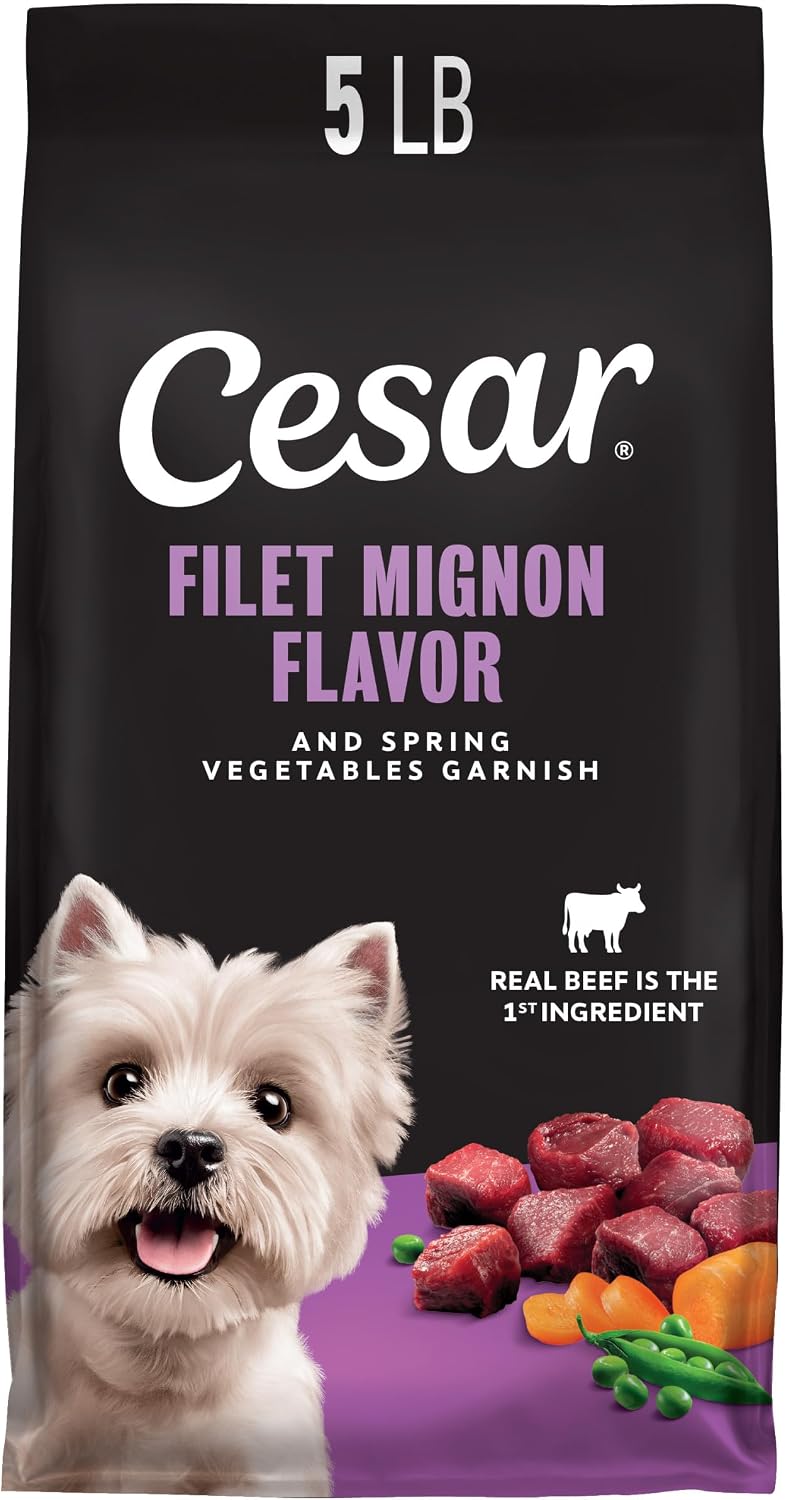
Cesar Small Breed Dry Dog Food 5 lb
Best Sensitive-Stomach Food Brand
| Flavor | Filet Mignon |
|---|---|
| Item Form | Dry Kibble |
| Breed Recommendation | Small Breeds |
| Unit Count | 80 Ounce |
| Age Range Description | Adult |
Cesar Small Breed Dry Dog Food is a small‑kibble dry formula designed for adult small-breed dogs, combining crunchy kibble with soft, tender pieces to appeal to picky eaters. It is typically fed as a complete daily meal or mixed with wet Cesar trays for added moisture; feeding guidelines are provided by weight to help portion correctly. The recipe lists real beef first and indicates a focus on easy digestion and dental health through kibble texture, and the product claims 36 essential nutrients for small dogs. Practical benefits include bite-sized pieces for small mouths and a formula intended to be easy to digest, which can help reduce mealtime waste and picky refusal. Important limitations are the ingredient list, which includes multiple grains, by‑products, and several preservatives and artificial colors that some owners avoid when managing true food sensitivities, and the bag is not resealable which can affect freshness between servings. Overall this is a convenient, palatable small‑breed option that leans toward taste and digestibility rather than being a limited‑ingredient or hypoallergenic therapeutic diet.
Best for: Owners of small adult dogs who prioritize palatability and a bite‑sized, easy‑to‑digest everyday kibble that works well alone or blended with wet food.
Less Ideal for: Dogs with diagnosed food allergies, those requiring limited‑ingredient or veterinary prescription gastrointestinal diets, or owners seeking grain‑free or additive‑free formulas.
- Small, crunchy kibble and soft pieces designed for small mouths and picky eaters
- Real beef listed as the first ingredient for higher protein appeal
- Formulated to be easy to digest and provides 36 essential nutrients for adult small dogs
- Feeds as a complete meal or can be mixed with wet trays to add moisture
- Includes grains, meat by‑products, preservatives, and artificial dyes that may trigger sensitivities in some dogs
- Bag is not resealable which can affect long‑term freshness
Verdict: The best sensitive-stomach food brand features easily digestible proteins, gentle fiber, and supportive nutrients to reduce gastrointestinal upset and improve stool quality for dogs with sensitive digestion.
Choosing the Right Dog Food Pug: Key Factors to Consider
Calorie Density and Portion Control
Pugs are prone to weight gain because of their compact frame and lower exercise needs relative to size. A food with appropriate calorie density makes it easier to feed satisfying portions without overdoing daily energy intake. Pay attention to feeding guidelines and whether the brand provides small-portion options or clear measuring tools.
High-calorie foods may be useful for underweight or highly active individuals, but for most pugs a moderate-calorie formula helps maintain ideal body condition. Also consider whether the food clumps or compresses in the bowl, which can affect how much the dog actually eats per scoop.
Kibble Size and Shape
Brachycephalic breeds like pugs often struggle with large or oddly shaped kibble. Small, rounded, or shallow-cupped kibble is easier to pick up with a short muzzle and reduces the risk of gulping that can lead to air swallowing and digestive upset.
Look for brands that list dimensions or show scale in packaging photos. Some recipes designed for small or toy breeds explicitly shape kibble for short faces, which can improve eating comfort and decrease mealtime mess.
Digestibility and Stool Quality
Highly digestible protein and fiber sources reduce stool volume and odor, which is helpful for indoor-living pugs. Ingredients that are gentle on the gut, such as named meat meals or single-protein options, often produce firmer, smaller stools that are easier to manage.
Prebiotic fibers and controlled fat levels also affect stool consistency. If your pug has prior digestive sensitivity, consider gradual transitions and formulas labeled for sensitive digestion, while monitoring stool over several days to judge tolerance.
Protein and Amino Acid Balance
Pugs need adequate protein to maintain lean muscle, especially if they are stocky. The source and quality of protein matter more than an isolated crude protein number. Look for recipes that list specific meat sources early in the ingredient list and include complementary amino acid profiles.
Excessively high protein is not necessary for a sedentary pug and can increase calorie density, so balance protein needs with activity level. For growing puppies and active adults, choose formulations that support muscle development without oversupplying calories.
Fat Content and Fatty Acid Profile
Fat fuels energy and supports skin and coat health, but too much fat promotes weight gain in pugs. Check the guaranteed analysis for fat levels appropriate to your dog's life stage and activity. Omega-3 and omega-6 fatty acids contribute to coat sheen and can reduce inflammation, which benefits pugs that develop skin fold irritation or allergies.
Consider whether the formula provides named sources of omega fatty acids, such as fish oil or flaxseed, and whether the ratio of omega-6 to omega-3 is appropriate for general skin support.
Life-stage Formulation and Special Needs
Puppy, adult, and senior pugs have different nutrient targets. Puppies need higher calorie density and specific calcium-to-phosphorus ratios for growth, while seniors may require joint support, lower calories, and more digestible proteins. Select a formula designed for your pug's life stage to avoid nutritional gaps.
Also consider whether your pug has special needs such as food sensitivities, dental issues, or joint concerns. Many brands offer limited-ingredient, soft-moist, or joint-support recipes that address these common pug issues without forcing unwanted tradeoffs.
How to Switch Your Pug to a New Food Without Upset
Introduce a new food gradually over 7 to 10 days by mixing increasing proportions of the new formula with the old. Start with about 25 percent new food for two to three days, then move to 50 percent, then 75 percent before switching entirely. This approach gives gut bacteria time to adapt and reduces the risk of diarrhea or vomiting.
Monitor stool consistency and appetite during the transition. If you see persistent loose stools or vomiting after a full transition, slow the process and consult your veterinarian. Keep hydration steady and avoid giving extra treats that could mask intolerance to the new food.
- Follow mixing schedule: 25% → 50% → 75% → 100%
- Watch stool for firming or loose output
- Pause or slow down if digestive signs appear
Feeding Guidelines for Different Life Stages and Activity Levels
Adjust daily portions based on your pug's age, activity, and body condition. Active young adults may need more calories than a couch-bound senior. Use body condition scoring rather than strictly following package cups because individual metabolism varies.
Weigh your dog monthly for the first year and every few months after. For weight loss, reduce daily calories slightly and increase low-impact activity such as short walks. For weight gain, increase calorie density with nutrient-dense options and more frequent small meals.
- Use body condition score over visual guesswork
- Divide daily allowance into two or more meals to prevent gulping
- Adjust portions based on monthly weight checks
Addressing Common Pug Feeding Challenges
Pugs commonly experience picky eating, fast eating, and skin fold issues. To manage picky eating, rotate proteins occasionally within the same brand family and offer warm, slightly moistened food to enhance aroma. For fast eaters, consider slow-feeder bowls or spreading food across multiple small dishes to reduce gulping.
Skin fold irritation benefits from nutrients that support skin health and from proper grooming. If your pug develops chronic skin problems, evaluate food ingredients for common allergens and consult your veterinarian about elimination diets.
- Warm food slightly to increase aroma for picky eaters
- Use slow-feeder bowls to slow rapid consumption
- Check ingredient lists if skin or allergy signs persist
When to Consider Wet or Mixed Feeding
Adding wet food or broth to kibble can boost palatability and hydration, especially for seniors with reduced appetite. Mixing a modest portion of wet food into dry kibble can also help dogs that struggle with small kibble shapes to get more moisture and mouthfeel.
Be mindful of calories and dental effects. Wet additions add calories quickly, so adjust dry portions accordingly. For long-term dental health, provide appropriate chew options and regular dental care since wet diets alone do not clean teeth.
- Use wet food to increase palatability and hydration
- Adjust dry food portions to account for added calories
- Maintain dental routine alongside wet feeding
Reading Labels: What Matters Beyond Marketing Claims
Prioritize named whole-protein sources near the top of the ingredient list. Ingredients listed vaguely as by-products or unspecified meat sources make it harder to assess protein quality. Also check for added sugars, excessive fillers, or artificial preservatives that offer little nutritional benefit.
Guaranteed analysis gives crude nutrient bounds but not digestibility. Look for accompanying feeding guidance and whether the brand publishes calorie-per-cup information. If you are evaluating life-stage suitability, confirm the recipe meets standard nutrient profiles for growth or adult maintenance.
- Look for named meats first on the ingredient list
- Avoid recipes with unnamed meat sources and excess fillers
- Confirm calorie density to calculate accurate portions
How We Chose the Best Dog Food Pug
We focused on criteria that matter specifically for pugs: calorie density to prevent obesity, kibble size and shape for brachycephalic mouths, digestible protein and fiber sources to reduce stool volume, and nutrient profiles that support skin and coat health. We prioritized formulas with clear ingredient sourcing, appropriate levels of omega fatty acids, and added joint or digestive support where relevant for small, stocky breeds. Texture and kibble geometry were considered to ensure pugs can pick up and chew food comfortably without excessive air swallowing. We excluded foods formulated exclusively for large breeds, recipes with unclear ingredient lists, and formulas that rely heavily on fillers with little nutritional value. Veterinary therapeutic diets were not considered unless they matched common maintenance needs for otherwise healthy pugs. Our evaluation also weighed manufacturing transparency, availability of multiple life-stage formulas, and user-focused packaging features that help with portion control. The final shortlist reflects balanced tradeoffs between palatability, nutrient density, and practical feeding concerns for pugs.
Our full evaluation process is outlined in our review methodology.
FAQ
How many calories should a typical adult pug eat each day?
Calorie needs vary with activity and age, but most adult pugs require a moderate daily calorie intake because of their compact build. Use the food's calorie-per-cup figure and your dog's ideal weight to calculate portions, then adjust based on monthly weight checks and body condition.
Is grain-free food better for pugs with skin issues?
Grain-free diets are sometimes chosen for perceived allergy reduction, but true food allergies are uncommon and usually protein-based. If you suspect a food-related skin problem, try a controlled elimination using limited-ingredient diets under veterinary guidance rather than assuming grain-free is inherently better.
Should pugs eat more protein to preserve muscle?
Adequate protein helps maintain muscle, but excessive protein raises calorie density, which can cause weight gain. Match protein levels to life stage and activity, and prioritize high-quality named protein sources rather than simply higher crude protein numbers.
Can small kibble help with breathing or choking risks?
Smaller, well-shaped kibble can make it easier for a pug to pick up food and may reduce gulping, but it does not change the underlying brachycephalic airway structure. Slow-feeding strategies and supervised meals also help reduce the risk of choking or swallowing large mouthfuls.
When should I consult a veterinarian about my pug's diet?
Consult a veterinarian if your pug shows unexplained weight change, persistent digestive upset, chronic skin problems, or signs of joint discomfort. A vet can recommend diagnostic steps, special therapeutic diets, or supplements tailored to medical needs.
Final Verdict
Choose a formula for your pug by prioritizing calorie control, appropriately sized kibble, and digestible protein sources. Balance fat and omega fatty acids to support coat and skin without risking excess weight, and pick a life-stage formulation that matches growth or senior needs. Accept tradeoffs: higher palatability often means higher calories, and therapeutic approaches may require veterinary oversight. Use monthly weight checks and body condition scoring to guide portion adjustments and select a food that fits your pug's daily routine and long-term health goals.

