

Feeding a Golden retriever puppy the right food matters more than you might think. Puppies of this breed grow quickly and need balanced nutrients to build bone, muscle, and a resilient immune system while avoiding excessive weight gain. The wrong formula can contribute to joint stress, digestive issues, or uneven growth rates. This guide highlights seven top food brands selected for Golden retriever puppies. We focused on recipes that support controlled growth, joint health, and digestibility. Below you will find the criteria we used to narrow the list, practical buying factors to consider, and answers to common questions so you can pick the best fit for your puppy.
Top Picks at a Glance
| Best Overall Food Brand for Golden Retriever Puppies Balanced puppy formulas tailored for growth, nutrients, and palatability | Royal Canin Golden Retriever Puppy 30 lb |  |
| Best Budget Food Brand for Golden Retriever Puppies Affordable puppy nutrition that still covers essential growth-stage needs | Pedigree Puppy Dry Dog Food 3.5 lb |  |
| Best Premium Food Brand Higher-end recipes with superior ingredients and added nutritional benefits | ORIJEN Puppy Dry Dog Food 4.5 lb |  |
| Best High-Protein Food Brand Protein-forward formulas to support muscle growth and active development | Diamond Puppy Dry Dog Food 40 lb |  |
| Best Limited-Ingredient Food Brand Simpler recipes designed to minimize allergens and digestive triggers | Zignature Puppy Formula 25 lb |  |
| Best Grain-Free Food Brand Grain-free formulas for owners avoiding grains while maintaining balanced nutrition | Taste of the Wild High Prairie Puppy 5 lb |  |
| Best Sensitive-Stomach Food Brand Gentle, easily digestible recipes with digestive support for sensitive pups | Hill's Science Diet Puppy Sensitive Stomach & Skin |  |
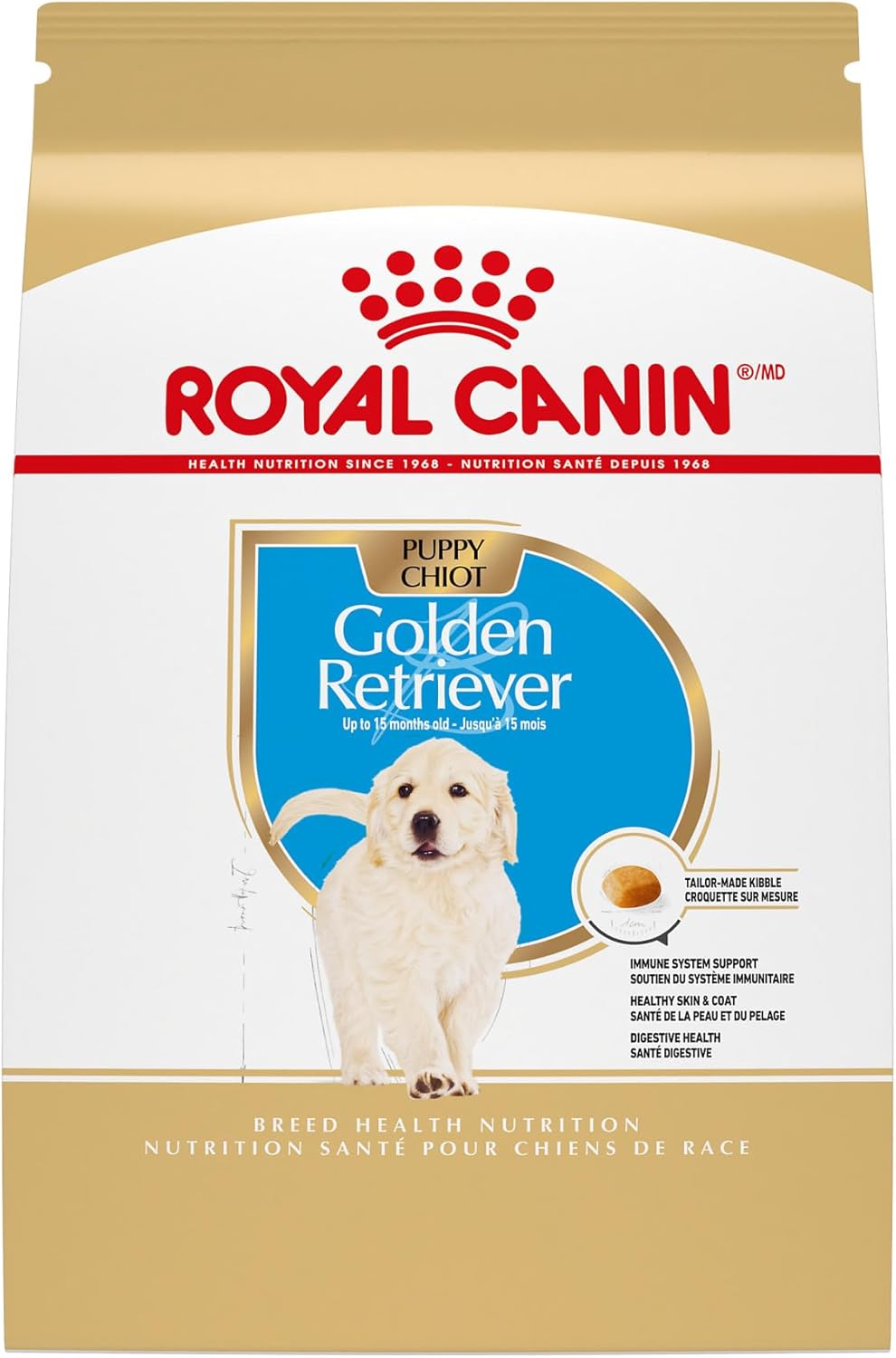
Royal Canin Golden Retriever Puppy 30 lb
Best Overall Food Brand for Golden Retriever Puppies
| Flavor | Chicken |
|---|---|
| Age Range Description | Puppy |
| Breed Recommendation | Golden Retriever |
| Dog Breed Size | Large |
| Item Form | Pellet |
Royal Canin Golden Retriever Puppy is a breed-specific dry kibble designed for Golden Retriever puppies from 8 weeks to 15 months. The formula uses a specialized kibble shape made to fit a Golden Retriever puppy's straight muzzle and scissor bite, encouraging chewing and easing intake, while protein, prebiotics, and added antioxidants support digestion and immune development. Omega fatty acids including EPA and DHA plus targeted nutrients like glucosamine and chondroitin support skin, coat condition and joint development in a large-breed growth phase. In daily use it functions as a complete feeding solution for breeders and owners who want a tailored, science-backed diet rather than a generic puppy food. Practical benefits include consistent stool quality from prebiotics and high-quality proteins and easier feeding thanks to the breed-tailored kibble geometry. Limitations to note are the inclusion of some common cereal ingredients and chicken by-product meal in the ingredient list, which may concern owners preferring grain-free or novel-protein formulas, and that this is a large 30 lb bag intended for multi-month feeding rather than trial-sized sampling.
Best for: Owners who want a puppy food specifically formulated for Golden Retrievers and prioritize tailored nutrition to support growth, digestion, immune health, and coat condition.
Less Ideal for: People seeking grain-free diets, novel-protein recipes for food sensitivities, or those who prefer to trial a small bag before committing to a large quantity.
- Breed-specific kibble shape and texture tailored for Golden Retriever puppy bite
- Formulated to support immune development with antioxidants and vitamin E
- Contains prebiotics and high-quality proteins to promote digestive health and stool quality
- Includes EPA and DHA plus skin-and-coat nutrients to support coat condition
- Large 30 lb bag suitable for ongoing feeding of a growing large-breed puppy
- Contains grain ingredients and chicken by-product meal that some buyers avoid
- Large bag size is not convenient for first-time testing or small households
Verdict: The best overall food brand for Golden Retriever puppies, offering balanced growth nutrition, reliable ingredient quality, and palatable recipes suited to large-breed development.
Pedigree Puppy Dry Dog Food 3.5 lb
Best Budget Food Brand for Golden Retriever Puppies

| Flavor | Chicken & Vegetable |
|---|---|
| Age Range Description | Puppy |
| Item Form | Dry Kibble |
| Unit Count | 56 Ounce |
| Animal Food Nutrient Content Claim | High Protein, No Added Sugar |
Pedigree Puppy Dry Dog Food is a straightforward, budget-friendly puppy kibble made from chicken-based protein, grains, and added vitamins and minerals to support growth. You would typically use it as a daily staple while transitioning a young dog from weaning to adult food, following the feeding guide on the package to match your puppy's weight and age. The formula emphasizes high-quality protein sources for muscle development and includes 36 vitamins, minerals, and amino acids intended to support immune health, brain development, and bone strength. In practice this means an owner gets a complete and balanced commercial diet that is easy to portion and serve dry or softened with water for very young pups. Ingredient-wise it contains common commodity grains and by-product meals rather than premium single-source meats, so it delivers required calories and nutrients at a lower cost but not the cleanest ingredient panel. Expect good availability and consistent kibble size, but owners seeking grain-free, novel proteins, or limited-ingredient formulas will need to look elsewhere.
Best for: Value-conscious puppy owners who need an affordable, complete puppy kibble that supports growth and daily feeding routines.
Less Ideal for: Owners who require grain-free, novel-protein, or limited-ingredient veterinary diets for food sensitivities should consider specialty formulas instead.
- Formulated specifically for puppies with nutrients to support growth and immune health
- Contains high-protein sources to support muscle development
- Includes 36 vitamins, minerals, and amino acids for complete and balanced nutrition
- Easy-to-follow feeding guide for age and weight makes portioning simple
- Uses ingredient list with grains and by-product meals rather than single-source premium proteins
- Not suitable for owners seeking grain-free or limited-ingredient diets
Verdict: The best budget food brand for Golden Retriever puppies that keeps costs low while still meeting essential growth-stage nutrient profiles and basic quality standards.
ORIJEN Puppy Dry Dog Food 4.5 lb
Best Premium Food Brand

| Flavor | Puppy Recipe |
|---|---|
| Item Form | Dry Kibble |
| Unit Count | 72 Ounce |
| Age Range Description | Puppy |
| Animal Food Diet Type | Raw |
ORIJEN Puppy is a grain-free dry dog food designed to deliver high-protein, nutrient-dense nutrition for growing puppies. It uses an 85 percent fresh-or-raw animal ingredient approach with wholeprey components such as muscle, organs, and bones so pups get a concentrated source of amino acids, vitamins, and minerals without relying on synthetic additives. Typical use is twice-daily feeding guided by the brand chart, and the kibble includes a freeze-dried coating for added palatability. Practical benefits include a protein-forward recipe to support muscle and brain development, small kibble size aimed at puppies, and added functional ingredients for digestive and immune support. Limitations to consider are the grain-free formulation itself, which may not be necessary for all puppies and can be higher in calories and protein than some owners expect, and the bag size is modest at 4.5 pounds which may require more frequent repurchasing for larger litters or bigger-breed pups.
Best for: Puppy owners who want a grain-free, biologically inspired diet that emphasizes fresh animal ingredients and nutrient density to support rapid growth and development.
Less Ideal for: Owners who prefer lower-protein or grain-inclusive recipes, those feeding adult dogs or puppies with specific caloric restrictions, or caretakers who need larger bulk bags to avoid frequent restocking.
- High inclusion of fresh or raw animal ingredients for complete amino acid profile
- WholePrey meats and organs provide naturally occurring vitamins and minerals
- Grain-free recipe for owners avoiding grains or managing suspected grain sensitivities
- Small kibble and nutrient profile formulated specifically for puppies
- Includes freeze-dried coating to boost palatability and encourage eating
- Smaller 4.5 lb bag may require frequent repurchasing for larger or multiple puppies
- Protein- and calorie-dense formula may be excessive for puppies that need lower energy diets
Verdict: The best premium food brand for owners who want top-tier ingredients, targeted nutrients for healthy growth, and elevated quality control.
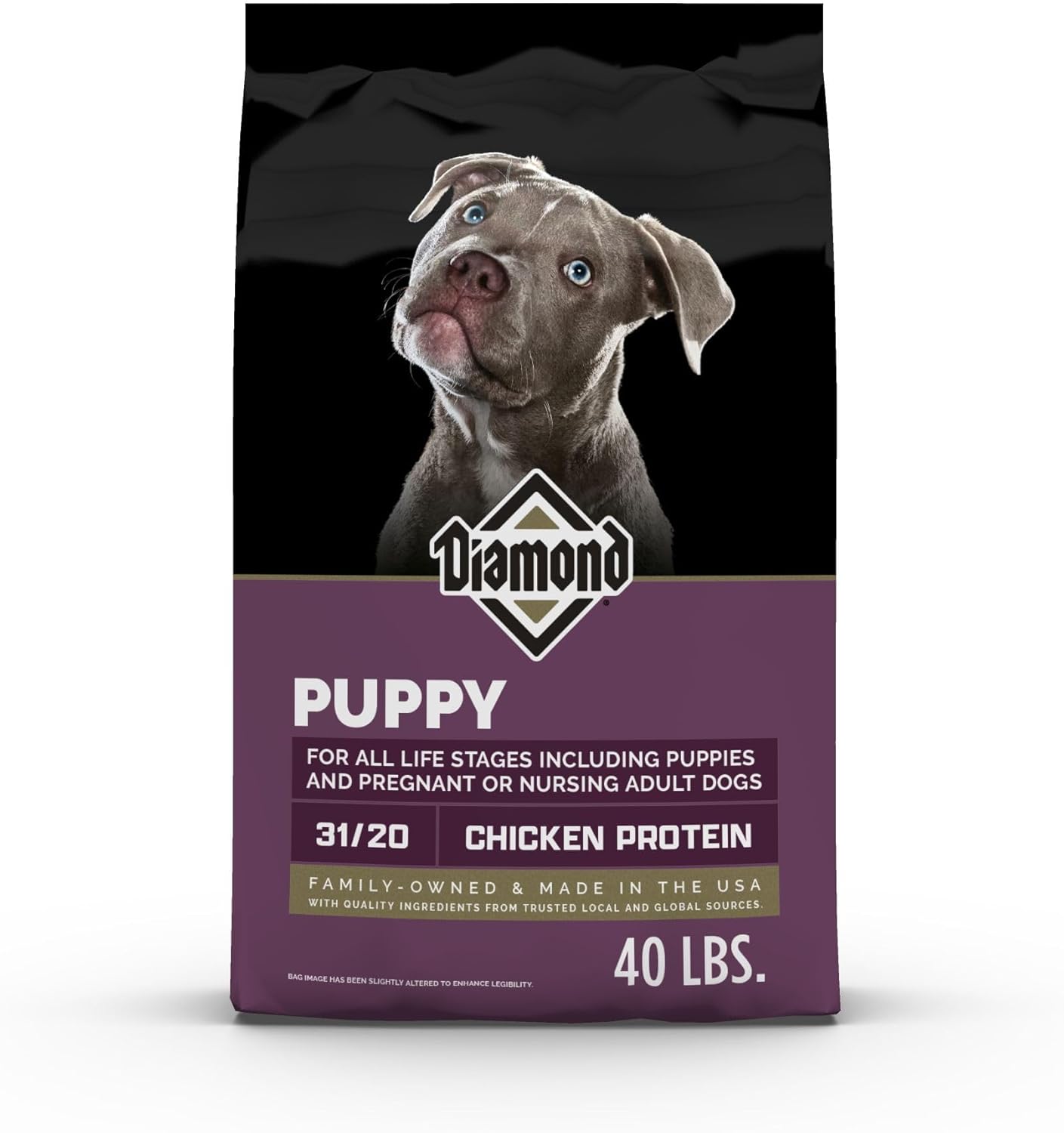
Diamond Puppy Dry Dog Food 40 lb
Best High-Protein Food Brand
| Flavor | Puppy |
|---|---|
| Item Form | Pellet |
| Breed Recommendation | Large Breeds |
| Animal Food Diet Type | Veterinary Diet |
| Unit Count | 640 Ounce |
Diamond Puppy is a 40-pound dry dog food designed for growing puppies and pregnant or nursing dogs, with chicken protein listed first and added DHA from salmon oil for brain and vision support. It is typically used as a staple daily diet during a puppy's first year and can be portioned according to the feeding guide and adjusted with a veterinarian. Notable features include high protein to support muscle development, calcium for bone and tooth growth, a probiotic blend and antioxidants for digestive and immune health, and smaller kibble that is easier for young mouths to chew. In real-world use the large bag delivers cost-per-pound value, making it attractive for owners feeding big-breed puppies that consume a lot of food, and the formula's nutrient focus suits rapid growth phases. Buyers should note the ingredient list includes chicken by-product meal and grain ingredients rather than premium single-protein or grain-free sources, so it is a budget-conscious choice rather than a boutique or limited-ingredient diet.
Best for: Buyers raising large-breed or fast-growing puppies who prioritize complete growth nutrition and need an economical, nutrient-dense bag to feed a hungry dog affordably.
Less Ideal for: Owners seeking limited-ingredient, novel-protein, or grain-free diets for allergy management or buyers who want only whole-meat first ingredients should consider alternative formulas.
- High protein with chicken as first ingredient to support muscle growth
- Includes DHA from salmon oil for brain and vision development
- Calcium and nutrient profile targeted for growth and bone support
- Added probiotics and antioxidants to support digestion and immune health
- Large 40 lb bag provides lower cost per feeding for large-breed puppies
- Contains chicken by-product meal and grain ingredients rather than single whole-muscle protein
- Not formulated as a limited-ingredient or grain-free recipe for dogs with specific sensitivities
Verdict: The best high-protein food brand for supporting muscle development, energy needs, and healthy growth in active puppies.
Zignature Puppy Formula 25 lb
Best Limited-Ingredient Food Brand

| Flavor | Turkey |
|---|---|
| Age Range Description | All Life Stages |
| Item Form | kibble |
| Special Ingredients | Probiotics, Multi-Protein Sources, Limited Ingredients, Omega-3, Omega-6, DHA |
| Package Size Name | 25 lb |
Zignature Puppy Formula is a limited-ingredient kibble designed for growing puppies that need a simpler protein profile and digestive support. It uses turkey and whitefish as primary proteins and includes added probiotics plus a tailored DHA and omega-3/6 blend to support brain development and skin and coat health. Typical use is as a complete daily diet for puppies across sizes with feeding guidelines by weight and age to ensure growth needs are met. The formula emphasizes digestive health and allergy-friendly sourcing by listing fewer, identifiable proteins and avoiding common fillers; that can make elimination feeding and sensitivity troubleshooting easier. Practical benefits include a multi-protein approach for balanced amino acids, built-in probiotics to help with stool consistency during transitions, and an AAFCO-backed all life stages claim so you can transition puppies fully onto the food. Limitations are that the kibble still contains multiple protein sources and legumes, which some highly reactive dogs may react to, and the 25 lb bag may be bulky for small households or trialing a new diet. Follow the recommended 7-day transition to reduce digestive upset when switching.
Best for: Buyers who need a puppy formula that narrows ingredient sources and prioritizes digestive support while still covering growth nutrient needs.
Less Ideal for: Owners seeking a single-protein prescription or an elimination diet for confirmed severe protein allergies should consider veterinary-recommended single-source options instead.
- Limited-ingredient focus with primary proteins listed as turkey and whitefish
- Added probiotics for digestive support during growth and diet changes
- Includes omega-3, omega-6 and DHA to support brain development and skin and coat health
- Feeding guidelines for age and weight simplify portioning during puppy growth
- Contains multiple protein sources and legumes so may not suit puppies with strict single-protein allergies
- Large 25 lb bag is not ideal for testing a new food or for households with limited storage
Verdict: The best limited-ingredient food brand for puppies that need minimal, transparent ingredient lists to reduce allergy risk and ease digestion.
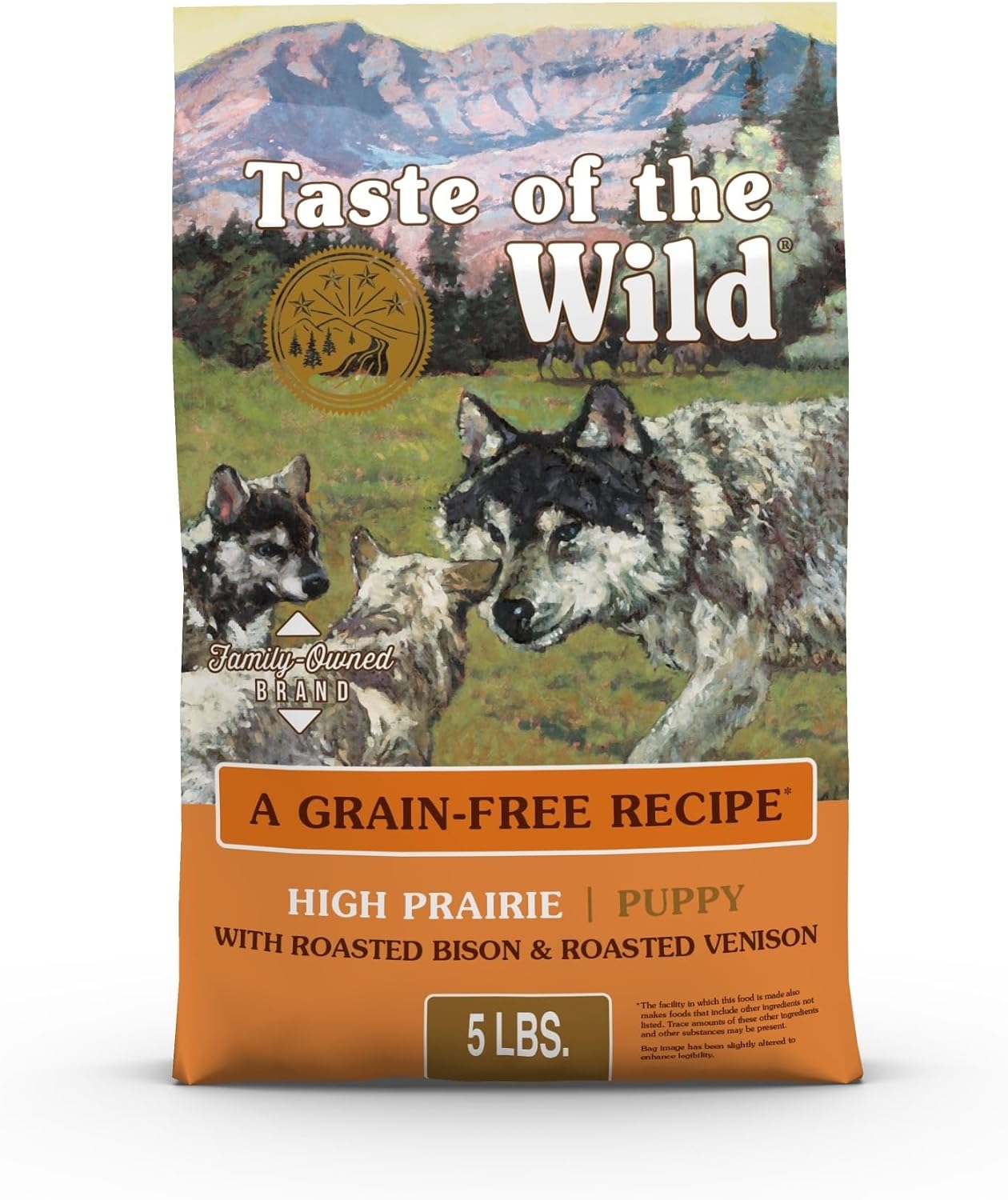
Taste of the Wild High Prairie Puppy 5 lb
Best Grain-Free Food Brand
| Flavor | Roasted Bison & Roasted Venison |
|---|---|
| Crude Protein | 28.0% minimum |
| Crude Fat | 17.0% minimum |
| Unit Count | 80 Ounce |
Taste of the Wild High Prairie Puppy is a grain-free dry kibble built around real roasted meats (bison and venison) and a 28% minimum crude protein level to support muscle development in growing dogs. It is typically fed as a complete diet for puppies, pregnant or nursing mothers, and active young dogs that need concentrated calories and higher protein. The formula includes salmon oil for DHA, omega fatty acids for skin and coat, and a proprietary probiotic blend to support digestion. Practical benefits include high protein from multiple animal sources, added fatty acids for energy and development, and fruits and vegetables for antioxidant support. Because it is grain-free and relatively rich in protein and fat, it suits puppies with high energy needs but may be more calorically dense than required for sedentary or less active pups. Also, the use of multiple legumes and novel proteins may not be appropriate for dogs with specific sensitivities. Feed amounts should be adjusted by age and activity and offered with fresh water.
Best for: Puppy owners who need a nutrient-dense, high-protein kibble for active growth, performance or for nursing mothers seeking extra calories and muscle support.
Less Ideal for: Owners of low-activity puppies, dogs on restricted-calorie plans, or pups with known sensitivities to legumes or novel proteins should consider other diets.
- High protein (28% minimum) to support muscle growth
- Real roasted meats listed first for species-appropriate protein
- Proprietary probiotic blend to aid digestion and gut health
- Includes DHA and omega fatty acids for brain and coat development
- Grain-free formula with fruits and vegetables for antioxidants
- Calorie-dense formulation may be excessive for low-activity puppies
- Contains legumes and multiple novel ingredients that can trigger sensitivities in some dogs
Verdict: The best grain-free food brand for owners seeking formulas without grains that still deliver complete nutrition appropriate for puppy growth.
Hill's Science Diet Puppy Sensitive Stomach & Skin
Best Sensitive-Stomach Food Brand

| Flavor | Salmon & Brown Rice |
|---|---|
| Age Range Description | Puppy |
| Item Form | Dry Food |
| Unit Count | 64 Ounce |
| Animal Food Diet Type | Limited Ingredient |
Hill's Science Diet Puppy Sensitive Stomach & Skin is a dry puppy formula designed to reduce digestive upsets while supporting skin and coat during growth. It is used as an everyday puppy food or as a transitional diet when pups have mild stomach sensitivity; feeding instructions on the bag guide gradual switching. The recipe lists salmon as the first ingredient and includes prebiotic fiber to support a balanced gut microbiome, plus DHA from fish oil for brain and eye development and vitamin E and omega fatty acids for skin health. Practical benefits include easier digestion for sensitive puppies, nutrients targeted at immune and cognitive development, and a single-source fish protein focus that can simplify ingredient tracking. Limitations are that it is a dry kibble so dogs that require wet food or very limited-ingredient veterinary prescriptions may need other options, and the formula still contains multiple grains and added ingredients that some owners avoiding certain grains or novel-protein approaches might not prefer.
Best for: Buyers who prioritize a vet-recommended, digestive-friendly everyday puppy food that also supports skin and coat health for growing dogs.
Less Ideal for: Owners seeking a strict novel-protein, grain-free, or veterinary-prescription elimination diet should consider specialized formulas instead.
- Prebiotic fiber to support gut microbiome and help reduce occasional digestive upset
- Salmon is the first ingredient, providing a high-quality fish protein and DHA for development
- Added vitamin E and omega fatty acids to nourish skin and promote a healthy coat
- Clinically proven antioxidants including vitamins C and E to support immune health
- Contains multiple grains and shared protein sources, so not a novel-protein or grain-free prescription option
- Dry kibble format may not suit puppies needing canned diets or strict veterinary therapeutic feeds
Verdict: The best sensitive-stomach food brand for puppies that require gentler formulas, added digestive support, and predictable tolerance during feedings.
Choosing the Right Dog Food Golden Retriever Puppy: Key Factors to Consider
Protein Quality and Amount
Protein supplies the amino acids puppies need for muscle growth and tissue repair. For Golden retriever puppies you want high-quality animal protein sources listed near the top of the ingredient panel rather than vague meat by-products. The absolute percentage matters, but so does digestibility; easily digestible proteins mean more usable nutrients per calorie.
Too much protein alone is not a problem for most puppies, but balance matters. Pairing adequate protein with proper calorie control helps ensure lean growth rather than excessive weight gain, which can strain developing joints.
Calcium, Phosphorus and Growth Rate Control
Bone development is highly sensitive to mineral ratios and energy intake during rapid growth. The calcium-to-phosphorus ratio should fall within recommended ranges for large-breed puppies to lower the risk of skeletal problems. Equally important is the overall caloric density: formulas designed for large-breed puppies typically have controlled calories per cup to prevent overly rapid weight gain.
Feeding guidelines should be clear and portion recommendations adjusted by age and expected adult weight. Managing growth rate through both nutrient ratios and portion control reduces long-term joint issues.
Joint-supporting Nutrients
Golden retrievers are prone to hip and elbow issues as they age, so early inclusion of joint-supporting nutrients can be beneficial. Ingredients such as glucosamine, chondroitin, and omega-3 fatty acids contribute to cartilage health and help modulate inflammation. While these nutrients do not guarantee prevention, consistent dietary support during growth can help maintain joint function.
Look for formulas that provide measurable amounts of these nutrients and avoid relying on vague 'supports mobility' claims without clear inclusion levels.
Digestibility and Gut Health
A digestible diet reduces stool bulk, improves nutrient absorption, and lowers the chance of digestive upset. Gentle carbohydrate sources, a clear animal-protein source, and added prebiotics or probiotics can all promote stable digestion. Puppies transitioning from weaning may be especially sensitive, so formulas formulated for gastrointestinal tolerance are often a better choice.
Consider how ingredient changes or a new feeding schedule might affect your puppy and choose a recipe with proven digestibility for sensitive stomachs if needed.
Energy Density and Feeding Practicality
Energy density determines how many calories are delivered per cup or gram and affects feeding portions as your puppy grows. High-calorie diets can be convenient for tiny appetites but may encourage too-rapid weight gain in a large-breed puppy. Conversely, overly dilute diets require large serving volumes that may be impractical to feed and store.
Check packaging for clear feeding charts by age and expected adult weight, and favor formulas that make portion adjustments simple as the puppy moves through growth stages.
Ingredient Transparency and Manufacturing Consistency
Knowing exactly what goes into a recipe helps you assess nutritional suitability and spot potential allergens. Transparent labels with named meat sources, carbohydrate types, and nutrient guarantees make it easier to evaluate a formula. Manufacturing consistency is also important because sudden formula changes can disrupt digestion or nutrient intake.
Look for brands that publish nutrient analyses and provide lot-to-lot consistency in their recipes rather than frequent ingredient substitutions.
How Much Should a Golden Retriever Puppy Eat at Each Stage?
Feeding amounts change rapidly during the first year. Most large-breed puppies need smaller, more frequent meals early on and gradually shift to two meals per day by adulthood. Portion guidance should be based on the puppy formula's calories per cup and the puppy's expected adult weight rather than chronological age alone.
Monitor body condition regularly: you should be able to feel ribs without excess fat covering and see a visible waist. Adjust portions if the puppy is gaining weight too quickly or appears underweight, and consult your veterinarian for tailored adjustments.
- 6 to 12 weeks: four small meals daily
- 3 to 6 months: three meals daily
- 6 months to adult: two meals daily, adjusting portions
What Proteins and Carbs Work Best for Sensitive Stomachs?
Sensitive puppies often do better with single, named protein sources such as chicken, salmon, or lamb and gentle carbohydrate options like brown rice, sweet potato, or oats. Highly processed fillers can increase stool volume and trigger sensitivities in some dogs.
If your puppy shows signs of intolerance, try a limited-ingredient formula or rotate to a different single-protein diet gradually over a week to monitor response. Probiotics and prebiotic fibers can also help stabilize digestion.
- Prefer named meat sources over generic 'meat meal' terms
- Choose whole-food carbohydrates when possible
- Introduce dietary changes slowly over 7 to 10 days
Can Diet Reduce Long-term Joint Problems?
Diet alone cannot guarantee that joint disorders will be avoided, but proper nutrition during growth reduces risk factors. Controlling energy intake to avoid excessive weight gain, ensuring correct mineral ratios, and including joint-supporting nutrients all contribute to healthier joint development.
Combining nutrition with appropriate exercise management and veterinary checkups gives the best chance of reducing lifelong joint stress.
- Moderate, breed-appropriate exercise is important alongside diet
- Avoid rapid growth spurts caused by high-calorie diets
- Look for measurable amounts of glucosamine and omega-3s in formulas
How to Transition Your Puppy Between Formulas
Switching foods abruptly can cause gastrointestinal upset. Use a gradual transition over 7 to 10 days by mixing increasing proportions of the new food into the old. Watch for changes in stool consistency, appetite, or energy levels during the transition.
If your puppy has a history of sensitivity, extend the transition period and consult your veterinarian before making major ingredient changes.
- Day 1–3: 75% old food, 25% new
- Day 4–6: 50% old, 50% new
- Day 7–9: 25% old, 75% new
- Day 10: 100% new food
Special Considerations for Multi-puppy Households
When feeding more than one puppy at the same time, monitor individual intake because dominant puppies can consume more than their share and leave others underfed. Separate feeding areas or supervised meals can help ensure each puppy receives the correct portion for its age and size.
Labeling bowls or using scheduled feeding with staff or family members keeping track of portions reduces the chance of overfeeding and helps maintain consistent growth across puppies.
- Use separate bowls spaced apart to prevent food guarding
- Weigh puppies weekly to ensure steady growth
- Offer measured meals rather than free feeding in multi-puppy homes
How We Chose the Best Dog Food Golden Retriever Puppy
We evaluated a wide set of puppy food recipes that are appropriate for large-breed, fast-growing puppies and narrowed them using concrete, breed-relevant criteria. First, we prioritized formulations with appropriate protein levels and amino acid profiles to support muscle development without encouraging overly rapid growth. Second, we looked for calcium and phosphorus ratios and controlled calories per serving to reduce the risk of abnormal bone development and joint stress common in large breeds. Third, we considered the inclusion of joint-supporting nutrients such as glucosamine and chondroitin, along with omega-3 fatty acids for inflammation control and cognitive development. Fourth, digestibility and ingredient quality were weighed, with attention to real animal protein sources and easily digestible carbohydrates to help reduce stool volume and gastrointestinal upset. Fifth, we examined manufacturing consistency and clear feeding guidelines tailored to growth stages. We excluded formulas intended for adult or small-breed dogs, novelty single-meal products, and recipes that lack basic nutrient transparency. The final list reflects products that meet breed-specific developmental needs, provide clear nutrient information, and offer formulations designed to control growth rate and support joint health.
Our full evaluation process is outlined in our review methodology.
FAQ
When should I switch my Golden retriever puppy to adult food?
Many Golden retriever owners transition to adult food between 12 and 18 months, depending on the puppy's size, maturity, and activity level. Consult your veterinarian and monitor body condition; wait until growth plates are closer to closure to avoid supplying excess calories during development.
How do I know if a puppy formula is too calorie-dense?
A calorie-dense formula will require smaller portions to meet daily energy needs. If the recommended serving leaves the puppy gaining weight rapidly or losing a visible waist, the diet may be too calorie-dense. Compare feeding charts to your puppy's growth trajectory and adjust portions or choose a lower-calorie puppy formula.
Are grain-free diets better for Golden retriever puppies?
Grain-free diets are not inherently better and often are unnecessary unless your puppy has a diagnosed grain intolerance. Many whole grains provide digestible energy and fiber. Discuss suspected tolerances with your veterinarian before selecting a grain-free option.
Should I add supplements for joints or omega-3s?
Supplements can help in some cases, especially if a formula lacks joint-supporting nutrients, but they should be used under veterinary guidance. Excessive supplementation can create imbalances, so prioritize a complete diet designed for growth and consult your vet before adding targeted supplements.
What signs indicate a food allergy or intolerance?
Common signs include chronic itching, recurrent ear infections, persistent soft stools or diarrhea, and poor coat condition. If you suspect an allergy or intolerance, work with your veterinarian to trial a limited-ingredient or novel-protein diet and to rule out other causes.
Final Verdict
Choose a puppy food that balances high-quality protein with controlled calories and appropriate mineral ratios to support steady, healthy growth in Golden retriever puppies. Prioritize digestibility, clear ingredient sourcing, and the presence of joint-supporting nutrients if your puppy is prone to stiffness or limited mobility. Accept that tradeoffs exist: higher-quality ingredients and breed-specific formulations often mean more careful portioning and gradual transitions. Use feeding charts, regular weight checks, and veterinary guidance to pick the best long-term solution for your puppy's development.

