

Feeding a Cavalier puppy the right diet matters more than many owners expect. These small-breed puppies have unique growth rates, calorie needs, and sensitivities that make a standard puppy formula either too rich or insufficient. This guide shortlists seven top puppy foods chosen to support steady growth, healthy weight, and easy digestion for Cavalier puppies. Below you will find options selected for the breed's typical energy requirements, kibble size, and digestive tolerance, plus the evaluation criteria used to compare them.
Top Picks at a Glance
| Best Overall Food for Cavalier Puppies A well-balanced pick tailored to growing Cavalier puppy needs | Royal Canin Cavalier King Charles Puppy 3 lb |  |
| Best Budget Food for Cavalier Puppies An affordable option that still meets basic puppy nutritional needs | Pedigree Puppy Dry Dog Food 3.5 lb |  |
| Best Premium Food Higher-end formulations prioritizing quality ingredients and growth support | ORIJEN Small Breed Dry Dog Food 10 lb |  |
| Best Small-Breed Food Kibble and recipes sized and balanced for small-breed puppies | Hill's Science Diet Puppy Small & Mini |  |
| Best High-Protein Food Formulas with higher protein for muscle development and energy | Purina Pro Plan Puppy Chicken & Rice 6 lb |  |
| Best Limited-Ingredient Food Simpler recipes for sensitive stomachs or ingredient intolerances | Instinct RawBoost Puppy Food 3.5 lb |  |
| Best Wet Food Canned or pouch options for hydration and easy palatability | Blue Buffalo Homestyle Recipe Puppy Wet Food |  |
Royal Canin Cavalier King Charles Puppy 3 lb
Best Overall Food for Cavalier Puppies

| Flavor | Chicken |
|---|---|
| Age Range Description | Puppy |
| Item Form | Dry Kibble |
| Specific Uses For Product | Digestive Health, Immune Support |
This Royal Canin formula is a small-breed, breed-specific dry kibble created for Cavalier King Charles Spaniel puppies from about 8 weeks to 10 months. The recipe pairs a specialized kibble shape sized for the Cavalier's tapered muzzle with nutrients targeted at immune support, heart health, and digestive function. It includes an antioxidant complex with vitamin E, taurine plus EPA/DHA and L-carnitine for cardiac support, and high-quality proteins plus prebiotics to promote digestion and stool quality. In practice the shaped kibble makes it easier for small puppies to pick up and chew, and the nutrient mix supports puppies during rapid growth without needing separate supplements. Limitations to note are that ingredients include cereal grains and chicken by-product meal rather than single-source whole meats, and the formula is breed-specific so it is less useful for mixed litters or multiple-breed households seeking one bag to feed different breeds. The 3 pound bag is convenient for trialing the diet or for owners of a single puppy, but larger households will need larger bag sizes or more frequent purchases.
Best for: Owners who want a tailored, science-backed puppy diet specifically matched to Cavalier King Charles Spaniel growth and developmental needs and who prioritize breed-targeted nutrition.
Less Ideal for: Households feeding multiple breeds or owners seeking a single-ingredient, grain-free, or novel-protein puppy diet should consider a more general or alternative formula.
- Kibble shaped and sized for Cavalier puppy muzzle and bite pattern
- Nutrient blend supports immune development with antioxidants and vitamin E
- Includes cardiac-supporting nutrients taurine, EPA/DHA and L-carnitine
- Prebiotics and high-quality proteins to aid digestion and stool quality
- Uses chicken by-product meal and cereal grains rather than single-source whole muscle proteins
- Breed-specific formula limits usefulness for feeding mixed-breed litters
Verdict: The best overall food for Cavalier puppies that balances age-appropriate nutrition, digestibility, and palatability to support healthy growth and coat development.
Pedigree Puppy Dry Dog Food 3.5 lb
Best Budget Food for Cavalier Puppies

| Flavor | Steak & Vegetable |
|---|---|
| Age Range Description | Puppy |
| Item Form | Dry Kibble |
| Unit Count | 56 Ounce |
| Target Species | Dog |
Pedigree Puppy Dry Dog Food is a traditional, affordable puppy kibble formulated to support growth and basic developmental needs. It is designed for daily feeding and includes high protein sources, DHA, calcium and phosphorus to support muscle, brain and bone development, plus a mix of vitamins and minerals to support immune health. The bag works well for routine feeding at home and can be served dry or softened with water for younger puppies. Ingredients include animal meals, chicken by-product meal and grains, so digestibility and ingredient quality are typical for value-focused formulas rather than premium grain-free or limited-ingredient diets. Practical benefits are straightforward: widely available, familiar feeding guidelines for different puppy weights, and added micronutrients like DHA. Important limitations are that the formula contains multiple common allergens and colored additives, and it is not aimed at owners seeking grain-free, single-protein, or specialty ingredient lists for sensitive pups.
Best for: Buyers prioritizing low-cost, complete puppy nutrition who want a straightforward, easy-to-feed formula for routine daily meals.
Less Ideal for: Owners of puppies with food sensitivities, those who need grain-free or single-protein diets, or buyers seeking premium ingredient lists and novel proteins.
- Formulated with DHA and minerals to support brain and bone development
- Complete and balanced for daily puppy feeding with established feeding guidelines
- Includes high-protein sources to support muscle growth
- Versatile serving—can be fed dry or softened with water for younger puppies
- Contains multiple common allergens and artificial color additives
- Uses by-product meals and grains rather than premium single-source proteins
Verdict: The best budget food for Cavalier puppies for owners who need a lower-cost diet that still provides essential nutrients and acceptable digestibility for daily feeding.
ORIJEN Small Breed Dry Dog Food 10 lb
Best Premium Food

| Flavor | Grain Free Small Breed Dog Recipe |
|---|---|
| Age Range Description | All Life Stages |
| Item Form | Dry Kibble |
| Unit Count | 160 Ounce |
ORIJEN Small Breed is a protein-forward dry kibble designed for small dogs and formulated to mirror ancestral diets by using fresh and raw animal ingredients. It is typically fed twice daily and comes in a small-bite kibble that is easier for small mouths to pick up, with the first ingredients listing multiple fresh or dehydrated poultry and fish sources plus organ meats for nutrient density. The formula emphasizes WholePrey components and reports about 85% animal ingredients from the unprocessed state, which supports muscle maintenance and higher energy needs for active small breeds. The freeze-dried coating boosts palatability, and the recipe excludes common fillers like corn, wheat, soy, and tapioca. Buyers should note this is a grain-free, high-protein diet so portioning should be monitored to maintain weight, and the rich ingredient mix may be more expensive than standard formulas. Transition gradually over 10 to 14 days to reduce digestive upset when switching to this richer diet.
Best for: Boston Terriers or other small, active dogs that need a protein-dense diet to support muscle and energy should consider this food, especially if you prioritize whole-animal ingredients and palatability.
Less Ideal for: Dogs that require a lower-protein or limited-ingredient diet for medical reasons or owners seeking a budget-focused everyday kibble should consider alternatives.
- Very high proportion of animal-based ingredients including fresh and dehydrated meats and organs
- Small-bite kibble shaped for easier eating by small breeds
- Grain-free formula with no corn, wheat, soy or tapioca
- Freeze-dried coating improves palatability and flavor acceptance
- Formulated to support digestive, immune, and skin and coat health
- Rich, high-protein formula may require careful portion control to avoid excess calorie intake
- Grain-free specialty ingredients typically come at a higher price point
Verdict: The best premium food for owners willing to invest in superior ingredient quality, targeted nutrient profiles, and formulations designed to optimize development and long-term health.
Hill's Science Diet Puppy Small & Mini
Best Small-Breed Food
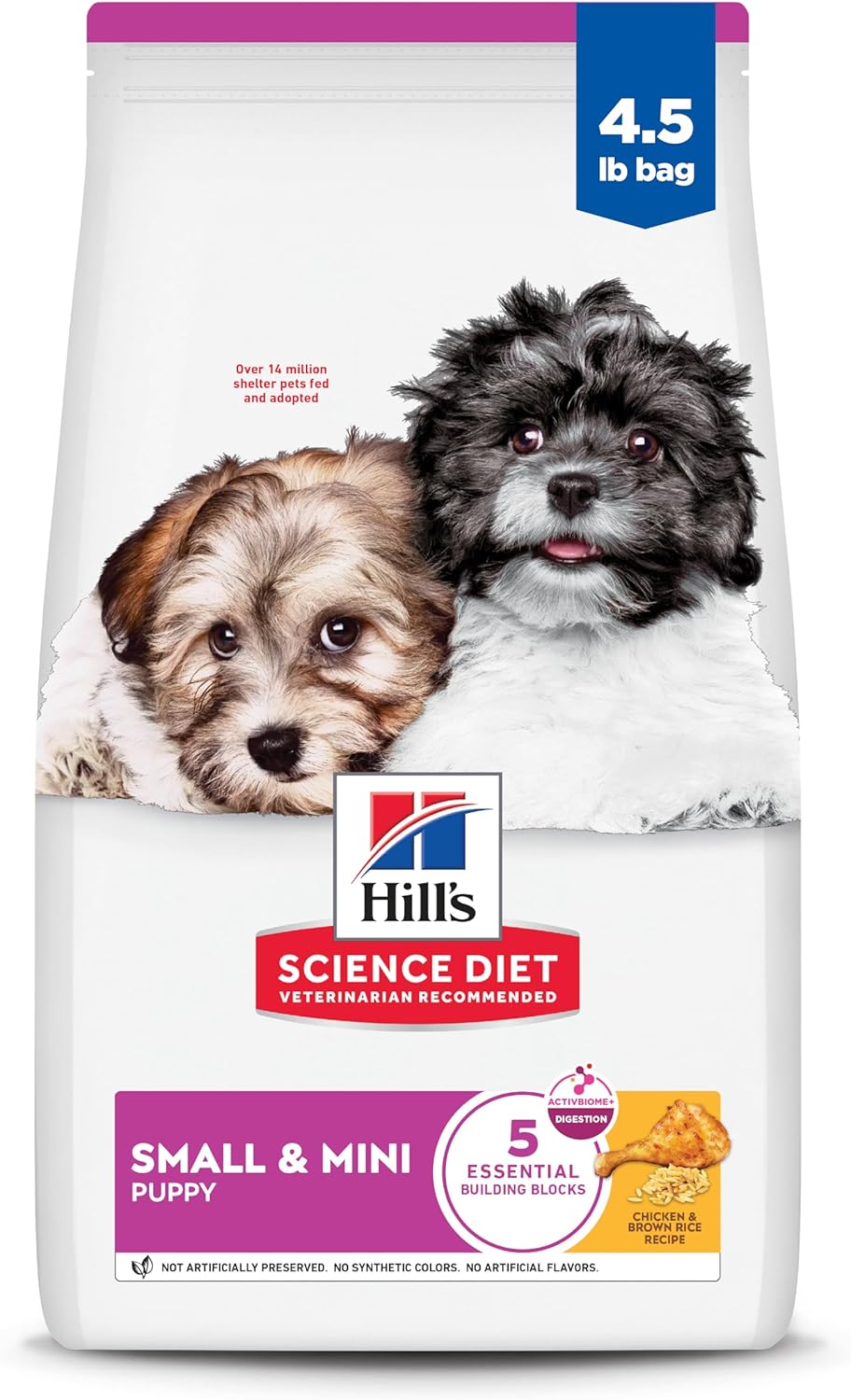
| Flavor | Chicken & Brown Rice |
|---|---|
| Age Range Description | Puppy |
| Specific Uses For Product | Small & Mini Breeds Puppy Premium Nutrition |
| Unit Count | 72 Ounce |
Hill's Science Diet Puppy Small & Mini is a dry kibble formulated specifically for toy and small-breed puppies, combining concentrated calories, high-quality proteins, and nutrients aimed at early development. The small nibble size and calorie density make it convenient for frequent small meals and help meet the higher metabolic needs of little puppies. Notable features include DHA and fish oil for brain and eye development, balanced minerals to support growing bones and teeth, a special antioxidant blend for immune support, and prebiotic fibers to aid digestion. In practice the food is used as a complete diet from weaning through the puppy stage with feeding amounts adjusted to body condition; the bag includes feeding guidelines and the manufacturer recommends transitioning over seven days. Limitations are that the ingredient list includes grains and several plant proteins, so owners preferring grain-free or novel-protein formulas for allergy management may need alternatives, and the 4.5 lb bag size may require frequent repurchasing for multi-puppy households. For most small-breed puppies this provides a vet-focused, nutrient-dense base for growth.
Best for: Buyers seeking a veterinary-recommended, nutrient-dense puppy formula tailored to toy and small breeds who prioritize brain, bone, and immune development in early life.
Less Ideal for: Owners who need a grain-free, limited-ingredient, or novel-protein diet for food sensitivities should look at specialized alternatives.
- Kibble sized for small and toy breed mouths
- Contains DHA and fish oil to support brain and eye development
- Antioxidant blend and vitamins to support immune health
- Prebiotic fibers to support digestion and gut microbiome
- Formulated with concentrated calories and high quality proteins for growth
- Contains grains and common plant proteins that may not suit dogs with specific food sensitivities
- Smaller 4.5 lb bag may require frequent repurchase for multiple puppies
Verdict: The best small-breed food for Cavalier puppies that need appropriately sized kibble, concentrated nutrition, and energy levels matched to small-breed metabolism.
Purina Pro Plan Puppy Chicken & Rice 6 lb
Best High-Protein Food

| Flavor | Chicken & Rice |
|---|---|
| Age Range Description | Puppy |
| Item Form | Dry |
| Specific Uses For Product | Hip and Joint Support |
| Animal Food Nutrient Content Claim | High Protein |
Purina Pro Plan High Protein Dry Puppy Food Chicken & Rice is a puppy formula designed to support active growth with real chicken as the primary protein source. It is typically fed as a daily dry kibble for puppies and can be offered moistened during weaning or fed dry as puppies mature. Notable features include DHA from fish oil to support brain and vision development, added calcium and phosphorus for bone and tooth growth, live probiotics for digestive health, and antioxidants to support immune development. In practice this formula helps build lean muscle and provides concentrated nutrients for puppies that need higher protein intake, and its digestible recipe reduces the chance of stomach upset during diet transitions. Limitations include the presence of some by-product meals and grain ingredients, which may be less suitable for owners seeking grain-free or novel-protein diets, and the ingredient list includes salts and common additives that some sensitive puppies may not tolerate. Feeding amounts should be adjusted as puppies grow and you may want to consult your veterinarian for breed-specific needs.
Best for: Buyers looking to support active, growing puppies with a higher-protein, vet-backed kibble that emphasizes muscle development and digestive support.
Less Ideal for: Owners seeking a grain-free, novel-protein, or limited-ingredient puppy diet for allergy-prone dogs should consider specialized formulas instead.
- Real chicken listed as the first ingredient for bioavailable animal protein
- Includes DHA from fish oil to support brain and vision development
- Live probiotics and highly digestible formula to ease digestion and stool quality
- Added calcium, phosphorus and minerals to support bone and tooth growth
- Contains poultry by-product meal and common grains rather than novel or grain-free sources
- Includes multiple added ingredients and preservatives that some owners may avoid
Verdict: The best high-protein food for puppies that benefit from extra protein for lean muscle growth and active development while maintaining balanced vitamins and minerals.
Instinct RawBoost Puppy Food 3.5 lb
Best Limited-Ingredient Food

| Flavor | Puppy (Chicken & Brown Rice) |
|---|---|
| Item Form | Dry Kibble |
| Special Ingredients | Apple, Barley, Blueberry, Carrot, Cranberry |
| Allergen Information | Pea-Free, Soy Free, Wheat Free |
| Unit Count | 56 Ounce |
Instinct RawBoost Puppy Food combines crunchy kibble with soft freeze-dried raw chicken pieces to deliver a higher-protein, nutrient-focused diet for growing puppies. It is used as a complete dry food for puppies and is intended to be fed according to age and weight-based guidelines; the formula highlights cage-free chicken and chicken meal as top ingredients, with brown rice, oatmeal, fruits and vegetables for fiber and micronutrients. Notable features include added DHA for brain and eye development, calcium and phosphorus for bone growth, and probiotics and omega-rich ingredients like salmon oil and ground flaxseeds for digestive and skin support. The formula avoids common fillers like corn, wheat, soy, peas, lentils and artificial preservatives, which simplifies the ingredient profile for dogs with suspected sensitivities. Practical limitations are that it is still a multi-ingredient commercial kibble rather than a strict single-protein limited-ingredient diet, and puppies with very specific protein allergies may need an elimination or novel-protein formula instead. For owners transitioning pups to this mix, follow the provided gradual switch guide to reduce digestive upset.
Best for: Buyers looking to simplify a puppy diet toward recognizable, higher-protein ingredients and reduce common filler ingredients while still feeding a complete dry food.
Less Ideal for: Owners who need a true single-protein or veterinary-prescribed elimination diet for confirmed food allergies should choose a dedicated limited-ingredient or novel-protein formula instead.
- Cage-free chicken listed as the first ingredient for high-quality animal protein
- Contains freeze-dried raw chicken pieces for enhanced flavor and added nutrient density
- Includes DHA plus calcium and phosphorus targeted for puppy development
- Free from corn, wheat, soy, peas, lentils, and artificial preservatives
- Contains probiotics and omega sources (salmon oil, flaxseeds) to support digestion and skin/coat
- Not a single-protein or strictly limited-ingredient diet for severe allergies
- Contains multiple grains and ingredients that may still trigger some sensitivities
- Only sold in this 3.5 lb bag size which may be small for larger litters
Verdict: The best limited-ingredient food for puppies with suspected food sensitivities, offering a shorter ingredient list to help identify triggers and improve tolerance.
Blue Buffalo Homestyle Recipe Puppy Wet Food
Best Wet Food

| Flavor | Chicken |
|---|---|
| Age Range Description | Puppy |
| Item Form | Wet |
| Unit Count | 150 Ounce |
| Number of Items | 12 |
Blue Buffalo Homestyle Recipe Chicken Puppy wet dog food is a paté-style canned formula designed to serve as a complete meal or a topper for young puppies. It uses real chicken as the first ingredient and includes brown rice, barley, peas, carrots, sweet potatoes, blueberries and cranberries, plus fish oil as a DHA source to support cognitive development. The soft texture and savory paté make it easy to mix with dry kibble or serve on its own for picky eaters, and the added moisture helps puppies stay hydrated and swallow food more easily. It is formulated without poultry by-product meals, corn, wheat, soy, artificial flavors or preservatives and lists protein, fat, fiber, moisture and DHA percentages on the label so you can match it to feeding guidelines. Practical limitations are that wet food is heavier to store and requires refrigeration of leftovers, and feeding volume must be adjusted by weight and age per the directions to avoid overfeeding. For breeders or owners who want a moist, palatable complete puppy meal with ingredients focused on growth and cognitive support, this is a reliable option.
Best for: Puppy owners who need a moist, highly palatable complete food to support growth, picky appetites, or to use as a topper to increase intake and hydration.
Less Ideal for: Owners seeking the lowest-cost long-term feeding option or a lightweight travel food should consider dry kibble or other formats instead.
- Real deboned chicken listed first for higher-quality protein
- Includes DHA source from fish oil to support cognitive development
- Soft paté texture improves palatability and mixes easily with dry food
- Formulated without corn, wheat, soy or poultry by-product meals
- Requires refrigeration after opening and takes up more storage space than dry food
- Feeding requires careful portioning by puppy weight and age to prevent overfeeding
Verdict: The best wet food for puppy feeding when you want higher moisture content, strong palatability, and an easy-to-eat texture ideal for finicky or weaning puppies.
Choosing the Right Dog Food Cavalier Puppy: Key Factors to Consider
Protein Quality and Level
Protein supplies the amino acids puppies need for muscle development and immune function. For Cavalier puppies, choose formulas where a named animal protein is among the first ingredients rather than vague meat meals.
Protein percentage should be appropriate for puppy growth without being excessive. Too little protein can slow development; too much can stress developing kidneys and encourage accelerated growth, which increases orthopedic risk. Look for digestible sources such as chicken, turkey, or fish and complete amino acid profiles to support lean tissue growth.
Calorie Density and Portion Control
Small breeds have higher metabolic rates per pound and may need calorie-dense food in small portions. Calorie density determines how much volume you feed per meal and affects weight management during rapid growth phases.
Choose a formula with clear kcal per cup or per kilogram information so you can measure accurately. Pay attention to feeding guidelines tailored to small-breed puppies and be prepared to adjust portions based on body condition rather than solely following the package chart.
Kibble Size and Texture
Kibble size affects how easily a Cavalier puppy can pick up and chew food. Very large or hard kibble can frustrate a small puppy and lead to gulping, while overly tiny pellets can encourage rapid eating and potential choking risks if swallowed whole.
Opt for small-breed or puppy-specific kibble geometries designed for toy mouths. Texture that softens with saliva or can be moistened without falling apart helps puppies transitioning from milk to solid food maintain interest and digestibility.
Digestibility and Gastrointestinal Sensitivity
Cavalier puppies can be prone to sensitive stomachs, so digestibility is a major concern. Ingredients that are easy to digest reduce the risk of loose stools and poor nutrient absorption.
Look for formulas with moderate fiber, prebiotic sources to support gut flora, and single-source carbohydrate choices if sensitivity is present. Avoid diets with heavy filler loads or abrupt ingredient complexity that can upset a developing digestive system.
Essential Fatty Acids and Coat Health
Omega-3 and omega-6 fatty acids support skin health, a glossy coat, and cognitive development in puppies. Cavaliers often show breed-specific coat needs that respond well to a balanced fatty acid profile.
Seek formulas that list fish oil, flaxseed, or other omega-rich ingredients and specify minimum levels of DHA and EPA where possible. Adequate fatty acids also help reduce dry skin flaking and support learning and vision development during early months.
Mineral Balance and Skeletal Support
Calcium and phosphorus balance is critical during a puppy's growth to prevent developmental orthopedic problems. The ratio and absolute amounts matter more than simply having these minerals present.
Choose diets formulated to meet recognized puppy-growth standards with specified calcium-to-phosphorus ratios. Avoid overly high mineral concentrations intended for large-breed puppies, and prefer formulas that state they are complete for growth to ensure correct micronutrient profiles.
How Many Calories Should a Cavalier Puppy Eat Each Day?
Daily calorie needs vary by age, current weight, activity level, and whether your puppy is intact or neutered. Small-breed puppies like Cavaliers typically require more calories per pound than larger breeds, so even modest portion sizes can deliver the energy they need.
Start with the kcal-per-day guidance on the chosen puppy formula and monitor your puppy's body condition weekly. Adjust portions in small increments if the puppy is gaining weight too quickly or appearing thin. Frequent short meals can help stabilize energy levels and reduce the chance of hypoglycemia in very young puppies.
- Weigh your puppy regularly to track growth against breed averages.
- Feed multiple small meals daily rather than one or two large meals during early months.
- Use the food's calorie information to calculate portions rather than guessing by volume alone.
When Should I Switch From Puppy to Adult Food?
Most toy-breed puppies reach adult size earlier than larger breeds. For Cavalier puppies, consider transitioning when growth has slowed and the puppy has reached its near-adult weight, often between 9 and 12 months, depending on individual development.
Transition gradually over 7 to 10 days by mixing increasing proportions of the adult formula into the puppy diet to avoid digestive upset. If your puppy is still filling out or the veterinarian advises continued growth support, delay the switch until physical maturity is clearer.
- Look for steady, moderate growth rather than rapid spikes when deciding to switch.
- Consult your veterinarian if you have concerns about skeletal maturity or weight management.
How to Manage Common Feeding Problems in Cavalier Puppies
Gulping, picky eating, and occasional loose stools are common in small puppies and often reflect feeding routine or formula selection rather than serious health problems. For gulping, use puzzle feeders or spread meals across a shallow dish to slow intake. If picky eating occurs, maintain a regular schedule and avoid frequent treat substitutions that reduce appetite for complete meals.
For loose stools, rule out sudden diet changes and consider a short trial of a more digestible formula with moderate fiber and prebiotics. If diarrhea persists for more than 24 to 48 hours, or if you see signs of dehydration, seek veterinary attention promptly.
- Introduce new foods slowly over a week.
- Keep feeding times consistent to promote appetite regulation.
- Monitor stool quality and hydration closely during dietary changes.
Can Supplements Help My Cavalier Puppy Thrive?
A complete puppy food should supply all essential vitamins and minerals, so supplements are usually unnecessary unless recommended by a veterinarian. Targeted supplements can help in specific situations, such as omega-3s for dry skin or probiotics for temporary digestive upset.
Avoid broad supplementing without guidance because excesses of certain nutrients, particularly vitamins and minerals, can be harmful to growing puppies. Always consult your veterinarian before adding supplements and provide specific dosing based on the puppy's weight and health status.
- Use supplements only to address a diagnosed deficiency or vet-recommended condition.
- Choose veterinary-formulated products with clear dosing instructions for puppies.
Preparing Kibble for Picky or Teething Puppies
During teething, some puppies find dry kibble harder to chew. Lightly moistening kibble with warm water or puppy-safe broth can increase palatability and make chewing easier without changing the diet. Soaking is also useful for transitioning from milk to solids.
When moistening, do so only for a short period and discard any leftovers after the meal to prevent bacterial growth. Alternatives include offering a small amount of wet puppy food mixed with kibble for variety while keeping most calories from the complete dry formula.
- Soak kibble for a few minutes until softened but not mushy.
- Avoid adding human foods that are high in salt, sugar, or fat.
Reading Labels: What Guarantees and Wording Mean
Pet food labels include statements like complete and balanced, feeding directions, and an ingredient list in order of predominance. 'Complete and balanced' for growth means the product meets recognized nutritional profiles for puppies. Guaranteed analysis shows minimums and maximums for key nutrients but does not indicate digestibility.
Focus on named ingredients in the top positions and check the guaranteed analysis for protein, fat, and fiber numbers. Also look for statements indicating the formula is suitable for growth or small breeds to ensure it was formulated with juvenile nutrient needs in mind.
- Prioritize named meat proteins near the top of the ingredient list.
- Use guaranteed analysis to compare macronutrient levels across formulas.
How We Chose the Best Dog Food Cavalier Puppy
To build this list we applied breed-appropriate nutritional and practical filters so each pick meets the day-to-day needs of Cavalier puppies. First, we required formulas designed for puppies or small-breed growth stages with clear protein and fat targets that match small-breed metabolism. We prioritized high-quality protein sources listed near the top of the ingredient panel and easily digestible carbohydrate sources to reduce gastrointestinal sensitivity. We also evaluated nutrient density and calorie content to support steady, controlled growth rather than rapid weight gain, and we checked for appropriate calcium-to-phosphorus ratios for healthy bone development. Kibble size and texture were considered to ensure young Cavaliers can chew and ingest without stress. Finally, we looked at common allergen avoidance and the presence of essential fatty acids for skin and coat health. Excluded from the shortlist were adult formulas, extremely high-calorie large-breed growth diets, and dehydrated or raw patterns that lacked consistent nutrient guarantees. We focused on complete puppy diets that supply balanced nutrition and practical feeding characteristics for a small, fast-growing toy-breed puppy.
Our full evaluation process is outlined in our review methodology.
FAQ
How often should I feed my Cavalier puppy each day?
Feed young Cavalier puppies three to four times per day to maintain stable energy and prevent hypoglycemia. As they approach adulthood, you can reduce to two feedings per day depending on the puppy's tolerance and your routine.
Is grain-free food better for Cavalier puppies?
Grain-free is not inherently better and depends on the puppy's individual sensitivities. Many puppies tolerate grains well; choose grain-free only if a veterinarian identifies a grain sensitivity or an ingredient-specific intolerance.
What signs show my puppy is getting too many calories?
Rapid, excessive weight gain, a lack of visible waist from above, and difficulty feeling ribs with light pressure are signs of overfeeding. Adjust portion sizes and consult your veterinarian to set an appropriate feeding plan.
Can I mix wet food with dry kibble for my Cavalier puppy?
Yes. Mixing a small amount of wet food with kibble can increase palatability and moisture intake. Keep most calories from a complete diet and introduce changes gradually to avoid digestive upset.
When should I be concerned about my puppy's stool consistency?
Occasional soft stools are common during dietary changes, but persistent diarrhea, blood in stool, or lethargy accompanying loose stools warrants prompt veterinary attention.
Final Verdict
Choose a puppy food that balances digestible, high-quality protein with appropriate calorie density and a kibble size your Cavalier can manage. Prioritize formulas that state puppy growth support and show proper mineral ratios to protect skeletal development. Weigh the tradeoffs between richer, more calorie-dense options and leaner, highly digestible formulas based on your puppy's activity and body condition. Use regular weighing and veterinary guidance to adjust feeding, and focus on steady, healthy growth rather than rapid increases in size.

