

Choosing the right food for a Chesapeake Bay retriever matters more than simply filling a bowl. these active, muscular dogs need diets that support lean muscle, joint health, and a weather-resistant coat. you also need food that fits your dog's life stage, activity level, and any food sensitivities. This guide shortlists seven top options and explains the nutrition and ingredient priorities that matter for the breed. below the product picks you will find a clear breakdown of evaluation criteria to help you choose the best match for your retriever's needs.
Top Picks at a Glance
| Best Overall Dog Food for Chesapeake Bay Retriever A complete, balanced pick optimized for this breed’s needs | Hill's Science Diet Adult 1-6 Chicken & Barley |  |
| Best Budget Dog Food for Chesapeake Bay Retriever A lower-cost formula that still meets basic nutritional needs | Kibbles 'n Bits Original 31 lb |  |
| Best Premium Dog Food Higher-end formulas with superior ingredients and targeted benefits | Blue Buffalo Life Protection Formula 34 lb |  |
| Best High-Protein Dog Food Formulas with elevated protein for active, muscular dogs | Purina Pro Plan Sport 30/20 Chicken & Rice 37.5 lb |  |
| Best Grain-Free Dog Food No-grain recipes for dogs with grain sensitivities or owner preference | Taste of the Wild Pacific Stream 28 lb |  |
| Best Large-Breed Dog Food Nutrition tailored for bigger dogs’ joint and growth needs | Royal Canin Labrador Retriever Adult Dry Dog Food 30 lb |  |
Hill's Science Diet Adult 1-6 Chicken & Barley
Best Overall Dog Food for Chesapeake Bay Retriever

| Flavor | Chicken & Barley |
|---|---|
| Age Range Description | Adult 1-6 |
| Item Form | Pellet |
| Unit Count | 560 Ounce |
| Dog Breed Size | Medium |
Hill's Science Diet Adult 1-6 Chicken & Barley is a veterinary-oriented dry dog food that supplies high quality protein, natural fibers, and omega-6 fatty acids for everyday adult nutrition. It is typically fed as a maintenance kibble for active adult dogs and includes ActivBiome+ prebiotic fiber blend and antioxidants to support digestion and immune health. The formula lists chicken as the first ingredient and also contains whole grains such as barley and wheat that provide steady energy. Practical benefits include targeted nutrients for skin and coat health, lean muscle support from concentrated protein sources, and guidance on feeding amounts printed on the bag for weight management. Limitations to consider are the inclusion of common grains and some plant-derived ingredients that owners managing grain-free or novel-protein diets may wish to avoid, and that this is a general adult maintenance formula rather than a breed- or joint-specific therapeutic diet. For Chesapeake Bay Retrievers needing a balanced, vet-recommended everyday diet that supports coat and digestion, this product is a solid baseline but may need pairing with breed-specific joint supplementation if higher joint support is required.
Best for: Owners seeking a balanced, veterinarian-recommended everyday adult diet that supports coat condition, digestion, and lean muscle for an active breed.
Less Ideal for: Dogs that require grain-free, novel-protein, or prescription joint support should consider specialized or veterinary therapeutic diets instead.
- High-quality chicken-first protein for lean muscle maintenance
- Includes ActivBiome+ prebiotic fibers and antioxidants to support digestion and immune health
- Contains omega-6s and vitamin E for skin and coat condition
- Formulated for adult dogs with feeding guidance to help maintain healthy weight
- Contains common grains and plant ingredients that are unsuitable for grain-free or limited-ingredient needs
- Not a prescription joint or mobility formula for dogs with established orthopedic issues
Verdict: The best overall dog food for a Chesapeake Bay Retriever that balances appropriate calories, protein, joint and coat support, and digestibility for everyday health and activity.
Kibbles 'n Bits Original 31 lb
Best Budget Dog Food for Chesapeake Bay Retriever

| Flavor | Savory Beef & Chicken |
|---|---|
| Age Range Description | Adult |
| Item Form | Pellet |
| Container Type | Bag |
| Unit Count | 496 Ounce |
Kibbles 'n Bits Original is a 31 pound bag of dry adult dog food that pairs crunchy kibble with chewy meaty bits to make meals more appealing. It is designed for daily feeding and delivers complete and balanced nutrition for adult dogs with 23 essential vitamins and minerals and added antioxidants. Typical use is straightforward as a maintenance diet for full-grown dogs, fed once or twice daily according to the recommended portion guide. Practical benefits for a budget-conscious owner of an English Mastiff include a very large bag size that reduces per-meal cost and a calorie-dense formula to help meet the breed's high energy needs. The inclusion of basic vitamins, minerals, and antioxidants supports general wellness, while the mix of textures helps picky eaters. Important limitations are ingredient quality and formulation details not aimed specifically at giant-breed joint support or elevated protein/fat levels often recommended for Mastiffs, so you may want to supplement with targeted joint support or choose a higher-spec giant-breed formula if long-term joint health is a priority.
Best for: Owners of English Mastiffs prioritizing an affordable, everyday maintenance diet that keeps a large dog fed without high per-pound cost and who plan to add targeted supplements if needed.
Less Ideal for: Owners seeking a specialized giant-breed formula with explicit joint support, higher-quality protein sources, or a premium ingredient list should consider other options.
- Large 31 lb bag reduces cost per feeding for big dogs
- Complete and balanced adult formula with 23 vitamins and minerals
- Antioxidant-rich claim supports general wellness
- Signature crunchy kibble plus meaty bits improves palatability
- Ingredients list includes fillers and several preservatives and artificial colors
- Not formulated specifically for giant-breed joint support or elevated protein/fat needs
Verdict: The best budget dog food for a Chesapeake Bay Retriever that provides dependable nutrition and necessary vitamins and minerals without premium pricing.
Blue Buffalo Life Protection Formula 34 lb
Best Premium Dog Food

| Flavor | Chicken & Brown Rice |
|---|---|
| Age Range Description | Adult |
| Item Form | Dry Kibble |
| Special Ingredients | Antioxidant |
| Allergen Information | Corn-Free, Preservative-Free, Soy Free, Wheat Free |
Blue Buffalo Life Protection Formula is a grain-inclusive adult dry kibble built around real deboned chicken and wholesome grains like brown rice, oatmeal, and barley, with LifeSource Bits added for antioxidant and vitamin support. It is used as a daily maintenance diet to support muscle, immune, digestive, skin and coat, and joint health, and includes glucosamine and omega fatty acids for mobility and coat condition. The kibble also contains natural prebiotic fiber for digestion and avoids corn, wheat, soy, artificial flavors, and preservatives. Practical benefits include a familiar ingredient profile for dogs that tolerate grains, a clear feeding guide for weight ranges, and a formula developed by nutritionists that targets multiple lifestage needs. Limitations are that it is not grain-free and contains ingredients like chicken meal and peas that some dogs with specific sensitivities may not tolerate, so dogs with known ingredient allergies or those requiring a novel-protein or limited-ingredient diet may need an alternative.
Best for: Owners seeking a premium, nutritionist-formulated everyday kibble that emphasizes quality protein, antioxidant support, and extra joint and coat nutrients for active adult dogs.
Less Ideal for: Owners who need a grain-free, novel-protein, or limited-ingredient prescription-style diet for dogs with diagnosed food allergies or severe sensitivities should look elsewhere.
- Real deboned chicken listed as the first ingredient for high-quality protein
- LifeSource Bits provide a targeted blend of antioxidants, vitamins, and minerals
- Includes glucosamine and omega fatty acids to support joint and skin health
- Formulated without corn, wheat, soy, artificial flavors, or preservatives
- Natural prebiotic fiber to help support digestion and stool quality
- Contains grains and common ingredients like chicken meal and peas that may not suit dogs with specific ingredient sensitivities
- Not a novel-protein or limited-ingredient formula for dogs with diagnosed food allergies
Verdict: The best premium dog food for owners who want top-tier ingredients, focused nutrient profiles, and extra support for coat, joints, or performance.
Purina Pro Plan Sport 30/20 Chicken & Rice 37.5 lb
Best High-Protein Dog Food
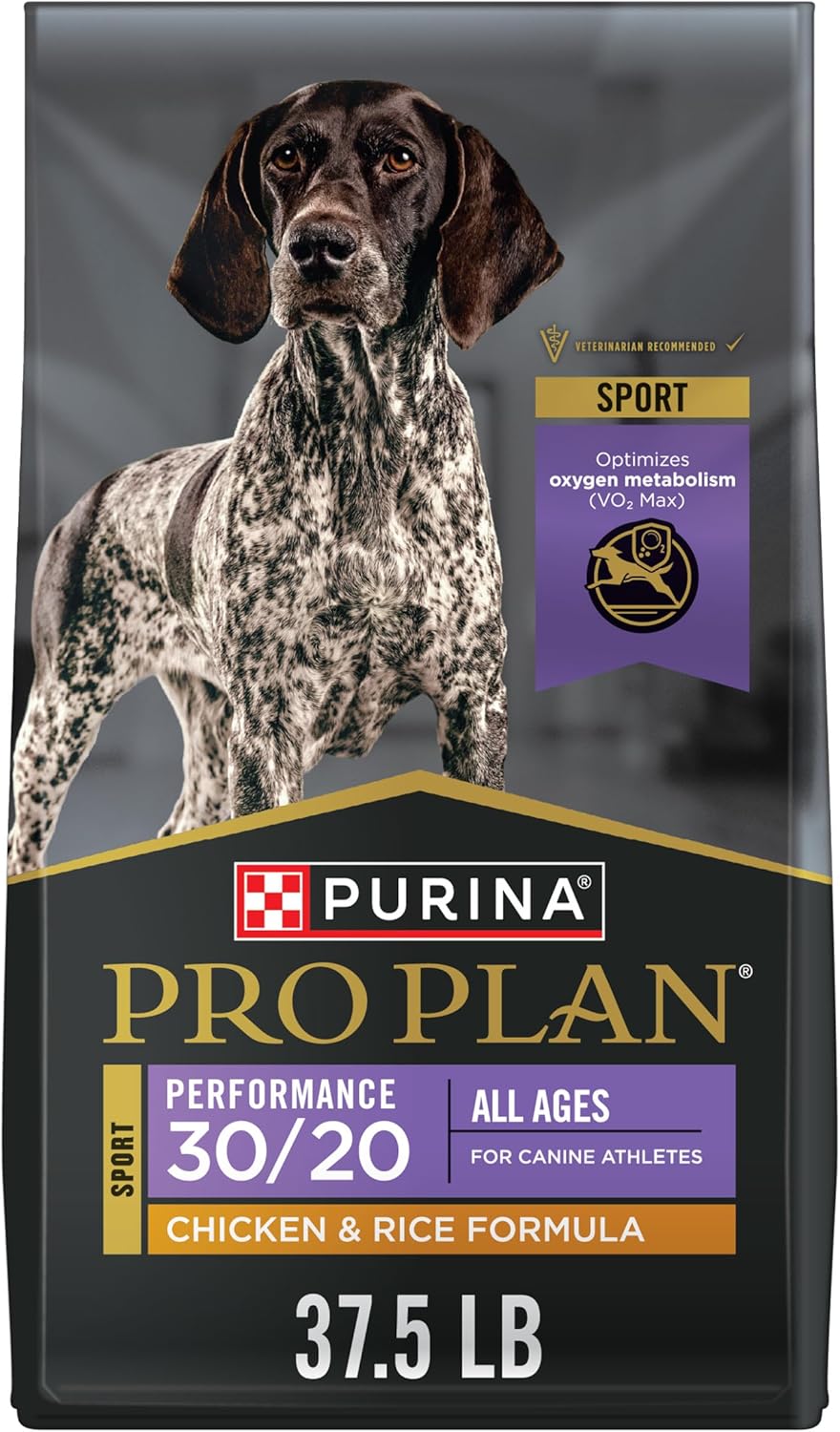
| Flavor | Chicken & Rice |
|---|---|
| Protein:Fat | 30% protein / 20% fat |
| Life Stage | All Life Stages |
| Package Size | 37.5 lb |
| Form | Dry |
Purina Pro Plan Sport 30/20 Chicken & Rice is a concentrated, high-protein dry formula aimed at physically active dogs. It delivers about 30% protein and 20% fat with chicken listed as the first ingredient, plus added amino acids, EPA and glucosamine to help support muscle repair and joint mobility after exercise. You would typically feed this as the main daily diet for an athletic adult dog or during training cycles, using the package feeding guidelines and adjusting for activity level. The formula emphasizes endurance and metabolic support with antioxidant and vitamin mixes to support immune health. Practical benefits include dense calories for dogs that burn a lot of energy, targeted nutrients to help maintain lean mass, and joint-support ingredients for heavy-use joints. Important limitations are that it is a calorie-dense, performance-focused diet that may be excessive for less active or overweight dogs, and the ingredient list contains poultry by-product meal and cereals that some owners avoid when seeking limited-ingredient or grain-free options.
Best for: Owners of athletic or working Golden Retrievers who prioritize maintaining lean muscle, endurance and joint support during heavy training or high-activity periods.
Less Ideal for: Golden Retrievers that are sedentary, prone to weight gain, or require a limited-ingredient or grain-free prescription should consider alternative formulas.
- High protein-to-fat ratio (30/20) supports muscle maintenance and energy for active dogs
- Real chicken is the first ingredient for animal-based protein
- Includes amino acids, EPA and glucosamine to support post-exercise muscle recovery and joint health
- Concentrated calories and nutrients useful for highly active or working dogs
- Not formulated for low-activity or weight-management needs due to high calorie density
- Contains poultry by-product meal and corn ingredients, which may not suit owners preferring limited-ingredient diets
Verdict: The best high-protein dog food for Chesapeake Bay Retrievers that need greater protein to support muscle maintenance, energy, and active lifestyles.
Taste of the Wild Pacific Stream 28 lb
Best Grain-Free Dog Food

| Flavor | Smoke-Flavored Salmon |
|---|---|
| Unit Count | 448 Ounce |
| Age Range | Adult |
| Animal Food Diet Type | Limited Ingredient |
| Allergen Information | Grain-Free |
Taste of the Wild Pacific Stream is a grain-free adult dry kibble that uses real smoke-flavored salmon and fish meal as primary protein sources and delivers about 32% protein for active dogs. It is typically fed as a complete daily diet and includes probiotic strains, fruits and vegetables for antioxidants, and omega fatty acids to support skin and coat—features that make it suitable for dogs with suspected grain sensitivities or owners seeking grain-free formulas. The bagged kibble is designed for all breed sizes and emphasizes digestion support through species-specific probiotics and prebiotic ingredients. Practical benefits include a strong meat-first ingredient list and nutrients aimed at muscle and joint support, but buyers should note it is a higher-protein formula that may not suit dogs needing low-fat or limited-calorie diets and the product is made in a facility that may handle grains so trace amounts are possible. Feeding should be adjusted by activity level and in consultation with a veterinarian for dogs with special dietary needs.
Best for: Owners who want a grain-free adult formula with meat-forward ingredients and added probiotics for digestion, especially for dogs that tolerate higher-protein diets and need skin and coat support.
Less Ideal for: Owners seeking a strictly grain-free guaranteed facility process or those whose dogs require low-fat, therapeutic, or calorie-restricted diets should consider other options.
- Real fish and fish meal listed as first ingredients for high-quality protein
- Grain-free recipe that uses sweet potatoes and peas as digestible carbohydrate sources
- Includes proprietary K9 strain probiotics and prebiotic ingredients to support digestion
- Contains omega fatty acids and antioxidants from fruits and vegetables for skin and coat health
- Produced in a facility that also processes grains, so trace cross-contact is possible
- Higher protein and calorie density may not be ideal for dogs requiring low-calorie or weight-loss diets
Verdict: The best grain-free dog food for owners seeking formulas without corn, wheat, or other grains while still delivering balanced nutrition for the breed.
Royal Canin Labrador Retriever Adult Dry Dog Food 30 lb
Best Large-Breed Dog Food

| Flavor | Chicken |
|---|---|
| Age Range Description | Adult |
| Specific Uses For Product | Hip and Joint Support |
| Breed Recommendation | Labrador Retriever |
| Item Form | Pellet |
Royal Canin Labrador Retriever Adult is a breed-targeted dry kibble designed for Labradors 15 months and older that combines a shaped kibble with a tailored nutrient profile to address common breed needs. The donut-shaped pieces help slow fast eaters, while a controlled calorie and fat level aims to maintain a healthy adult weight for an active large-breed dog. The formula includes EPA, DHA, glucosamine and chondroitin to support bone and joint comfort, and specific nutrients intended to strengthen the skin barrier and promote coat condition. In practice this food is served as a daily maintenance diet and pairs well with portion control and regular exercise for weight management. Ingredients include multiple grain sources, chicken by-product meal and added functional supplements, so digestibility and ingredient sourcing reflect a focus on targeted nutrition rather than novel-protein or grain-free approaches. Buyers should expect a veterinary-style, breed-focused diet that prioritizes clinical benefits for Labradors but does not mirror high-end single-protein or grain-free ingredient lists.
Best for: Buyers seeking a practical, breed-specific maintenance diet that balances calorie control, joint support, and skin health for typical adult Labradors.
Less Ideal for: Owners who need limited-ingredient, novel-protein, or grain-free diets for food-sensitive dogs should consider alternative formulas.
- Breed-formulated recipe with nutrients tailored to Labrador Retriever needs
- Donut-shaped kibble designed to slow fast eating
- Calorie and fat levels adjusted to help maintain healthy adult weight
- Contains EPA, DHA, glucosamine and chondroitin for joint support
- Nutrients to support skin barrier and coat condition
- Uses multiple common grains and chicken by-product meal rather than single high-end protein sources
- Not a novel-protein or grain-free formula for dogs with specific ingredient sensitivities
Verdict: The best large-breed dog food for Chesapeake Bay Retrievers that focuses on joint support, controlled calorie density, and the right nutrient ratios for larger adult dogs.
Choosing the Right Dog Food Chesapeake Bay Retriever: Key Factors to Consider
Protein Quality and Amount
Protein is the building block of muscle tissue and repair. Chesapeake Bay retrievers are a robust, active breed that benefit from diets where named animal proteins appear first on the ingredient list. Higher-quality protein sources supply essential amino acids that support lean mass, recovery after exercise, and overall metabolic health.
Amount matters too: calories from protein should be balanced with fat and carbohydrates to match activity level. Puppies and highly active adults often need higher protein percentages than sedentary adults. also consider digestibility; two diets with similar protein percentages can differ widely in how well that protein is absorbed and used.
Joint and Mobility Support
Large, athletic dogs commonly experience joint wear over time, so look for diets that include clinically relevant levels of glucosamine and chondroitin or are formulated to complement joint supplements. omega-3 fatty acids from fish oil or other marine sources reduce inflammation and support joint comfort and mobility.
Consistent intake of these nutrients from a maintenance diet can help support long-term mobility, especially when paired with appropriate exercise and weight management. when evaluating options, prefer formulas that list these nutrients with clear ingredient sources rather than vague claims.
Calorie Density and Activity Match
Calorie needs vary widely in the breed depending on age, neuter status, and daily activity. working or highly active retrievers will need denser, higher-calorie formulas, while older or less active dogs need maintenance or lower-calorie recipes to prevent weight gain.
Choose foods with calorie and macronutrient profiles that let you portion correctly. feeding guidelines are a starting point; owners should adjust portions based on body condition score and energy. selecting a formula that aligns with your dog's typical workload reduces the need for frequent ration changes.
Essential Fatty Acids for Skin and Coat
The Chesapeake Bay retriever's dense, water-resistant double coat benefits from omega-3 and omega-6 fatty acids to maintain sheen, skin health, and barrier function. adequate intake of EPA and DHA supports coat condition and can help manage seasonal shedding and dry skin.
Look for named sources like fish oil or specific marine ingredients. fatty acid levels should be balanced with overall caloric intake to avoid excess weight gain while still providing visible coat benefits over time.
Life-stage and Formula Variety
Nutrient needs change from puppy to adult to senior, and large-breed growth phases carry special requirements for bone and joint development. choose formulas designed for the appropriate life stage: growth formulas for puppies with controlled calcium and phosphorus, maintenance for adults, and senior recipes with adjusted calories and joint support.
If you plan to use the same brand throughout life, check that it offers consistent formulas across stages so transitions are smoother and fewer ingredient surprises occur.
Digestive Tolerance and Ingredient Sensitivity
Some dogs tolerate a wide range of ingredients, while others show signs of digestive upset or food sensitivities. when a retriever shows loose stools, itchiness, or recurrent ear infections, consider limited-ingredient diets or recipes with single protein sources and easily digestible carbohydrates.
Fiber sources and probiotic support also influence stool quality and gut health. owners should watch for gradual improvements after a diet switch and consult a veterinarian for persistent issues or suspected allergies.
How Much Should My Chesapeake Bay Retriever Eat Each Day?
Daily feeding amounts depend on life stage, body condition, and activity. most adult retrievers require moderate to high daily calories compared with smaller breeds. start with the feeding guideline on the package, then adjust portions using your dog's body condition score as the guide.
Monitor weight and muscle tone over several weeks. increase portions for hard-working dogs or reduce servings for dogs that gain weight easily. split daily calories into two meals to help regulate energy and reduce the risk of digestive upset.
- Puppies need more frequent feeding and higher calorie density per pound of body weight.
- Active or working dogs may need 10 to 20 percent more calories than typical maintenance guidelines.
- Seniors often need fewer calories and formulas with joint and joint-supporting nutrients.
Can Diet Help with Joint Stiffness and Early Arthritis?
Diet plays a supportive role in mobility management. consistent intake of glucosamine and chondroitin, combined with EPA and DHA, can help reduce inflammation and support cartilage health over time. these nutrients are not a cure but can be part of a broader plan that includes weight control and appropriate exercise.
If signs of stiffness appear, discuss options with your veterinarian to evaluate whether a therapeutic diet or targeted supplement is appropriate. early interventions that combine diet, weight management, and tailored activity often produce the best functional outcomes.
- Look for diets that specify glucosamine or marine omega-3 levels.
- Maintain optimal body condition to reduce joint stress.
- Adjust exercise intensity rather than stopping activity completely.
Which Ingredients Commonly Cause Digestive Issues?
Common triggers include certain grains, novel proteins, or low-quality fillers that some dogs struggle to digest. food sensitivity symptoms often show as chronic loose stool, gas, or skin irritation. switching to a limited-ingredient or single-protein formula can help identify the problem source.
Also consider rapidly introduced diet changes as a cause of temporary digestive upset. when you switch foods, do it gradually over 7 to 10 days by mixing increasing proportions to avoid stomach upset.
- Common culprits: soy, some grain meals, and artificial additives in sensitive dogs.
- Consider probiotic-enriched formulas for dogs with recurring soft stool.
- Always rule out medical causes with your veterinarian before assuming a food allergy.
How to Transition Your Retriever to a New Food Safely
A gradual transition over a week to ten days helps reduce digestive upset. begin by mixing 25 percent of the new food with 75 percent of the current diet, and increase the new food proportion every two to three days. watch stool quality and energy levels through the change.
If digestive signs worsen during the transition, pause at the last comfortable mix ratio for a few days or consult your veterinarian. sudden, complete swaps are more likely to cause temporary stomach upset and should be avoided.
- Keep feeding times and portion sizes consistent during the transition.
- Monitor for changes in stool, appetite, and activity; those are the best short-term indicators.
- For dogs with sensitive stomachs, extend the transition to two weeks.
Do Homemade or Raw Diets Work for This Breed?
Homemade and raw diets can meet nutritional needs but require careful planning to ensure balanced macro and micronutrients. large, active dogs need adequate calcium, phosphorus, and vitamin D for bone health, plus sufficient protein and essential fatty acids for muscle and coat.
If you choose a homemade or raw route, work with a veterinary nutritionist to create a complete feeding plan and consider periodic bloodwork to check nutrient status. improperly balanced home diets carry a risk of deficiencies or excesses that affect long-term health.
- Ensure calcium and phosphorus ratios are appropriate for growth or maintenance.
- Include a reliable source of EPA and DHA for coat and inflammatory support.
- Regular veterinary oversight reduces the risk of nutritional gaps.
How We Chose the Best Dog Food Chesapeake Bay Retriever
We prioritized formulations and attributes that directly affect the health and performance of Chesapeake Bay retrievers. first, we looked for high-quality animal protein as a primary ingredient to support the breed's muscular build and higher activity needs. second, we evaluated joint and mobility support, including glucosamine, chondroitin, and omega-3 fatty acids, because hip and elbow stress is a long-term concern for this size and activity level. third, we checked macronutrient balance and calorie density to ensure options can meet energy needs without promoting excess weight. Fourth, coat and skin support were considered through sources of omega fatty acids and micronutrients that preserve the dense, water-resistant coat. fifth, ingredient transparency and limited-ingredient options were favored where suitable, to help owners managing food sensitivities. finally, we considered formula variety for life stages and activity levels so owners can match growth, adult maintenance, and senior needs. products were excluded if they lacked clear ingredient sourcing or did not include established joint or essential fatty acid support.
Our full evaluation process is outlined in our review methodology.
FAQ
How do I choose the right calorie level for my Chesapeake Bay retriever?
Start with the feeding guideline on the label and adjust based on body condition score. increase calories for working or highly active dogs and reduce them for seniors or less active pets. monitor weight over several weeks and adjust portions rather than changing formulas frequently.
Are grain-free diets necessary for Chesapeake Bay retrievers?
Grain-free diets are not inherently required and often depend on individual tolerance. many dogs do fine on moderate grain inclusion, while some with sensitivities benefit from limited-ingredient or novel-protein recipes. consult your veterinarian if you suspect a grain-related issue.
What signs indicate my retriever needs a diet change for joint health?
Look for reduced willingness to jump, slower recovery after exercise, stiffness after rest, and changes in gait. if you notice these signs, evaluate body condition first and discuss dietary joint support and exercise modification with your veterinarian.
How long after switching foods will I see coat or skin improvements?
Visible improvements in coat sheen and skin condition often take several weeks to a few months as new nutrients are incorporated. consistent omega-3 intake and balanced micronutrients help, but results depend on the underlying cause and overall health.
Can I feed puppy food to an adult retriever for extra calories?
Puppy formulas are higher in calories and specific growth nutrients and are not recommended long term for adult dogs. using an adult maintenance formula with a higher calorie density or feeding controlled portion increases is a safer way to boost energy intake for active adults.
Final Verdict
Prioritize high-quality animal protein, appropriate calorie density, and consistent joint and fatty acid support when choosing food for a Chesapeake Bay retriever. match the formula to life stage and activity level, and watch body condition rather than relying solely on package guidelines. Tradeoffs are inevitable: higher-calorie, performance-focused diets support activity but require portion control to prevent weight gain, while limited-ingredient diets aid sensitive dogs but may offer less variety. choose a balanced option that fits your dog's energy needs and move forward with a monitored feeding plan.

